There are 175 new cases of Covid-19 in the community today.The Ministry of Health said today’s cases include five in Taranaki first announced on Thursday but today officially added to the case numbers.Most (159) are in Auckland,…
Tag Archives: oceania
Sad end in search for missing Queensland woman
A Queensland woman has been found dead in her car, two days after she was reported missing.
Krissie-Lee Sheridan was reported missing on Thursday after she failed to arrive at her destination.
Police launched an appeal for information, saying the 26-year-old was driving a white 1995 Toyota Prado from Hervey Bay to Blackwater on Wednesday morning.

At the time she was reported missing it was not known what route Ms Sheridan had taken.
She was last in contact with her family when she left Urangan at about 10.30am on Wednesday.

Police and family held grave fears for her safety, saying it was out of character for her not to make contact.
Queensland Police found her body inside her vehicle north of Gin Gin in the Bundaberg region in Queensland yesterday afternoon.
She was involved in a single car crash and Ms Sheridan was was the sole-occupant inside the car, police confirmed.
A report is now being prepared for the coroner.
Forensic Crash Unit officers are investigating what caused the crash.
Something never seen hiding inside this diamond
A rare mineral from deep inside Earth's mantle has been found in an unlikely place – embedded inside a flawed diamond.
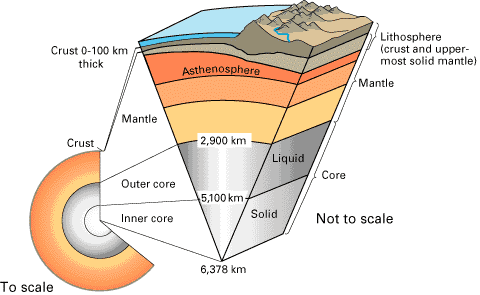
The Calcium silicate perovskite mineral, dubbed Davemaoite, has never before been seen as it originates from 660 kilometres below the surface.
The diamond was originally found decades ago in Botswana at the Orapa mine.
READ MORE: The good COVID-19 news NSW hasn't had since August
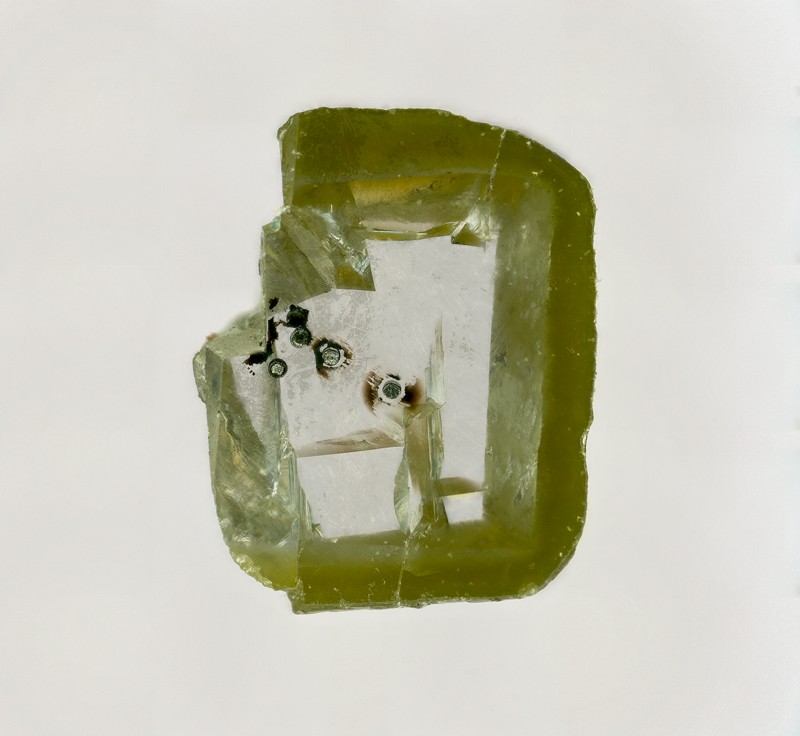
Oliver Tschauner, a geochemist at the University of Nevada, Las Vegas studied the precious gem alongside colleagues.
Typically Davemaoite can only exist in high pressure forms but the fact it was trapped inside the diamond allowed scientists to study it in its near-purest form.
READ MORE: Largest ever funnel web sent to Australian Reptile Park
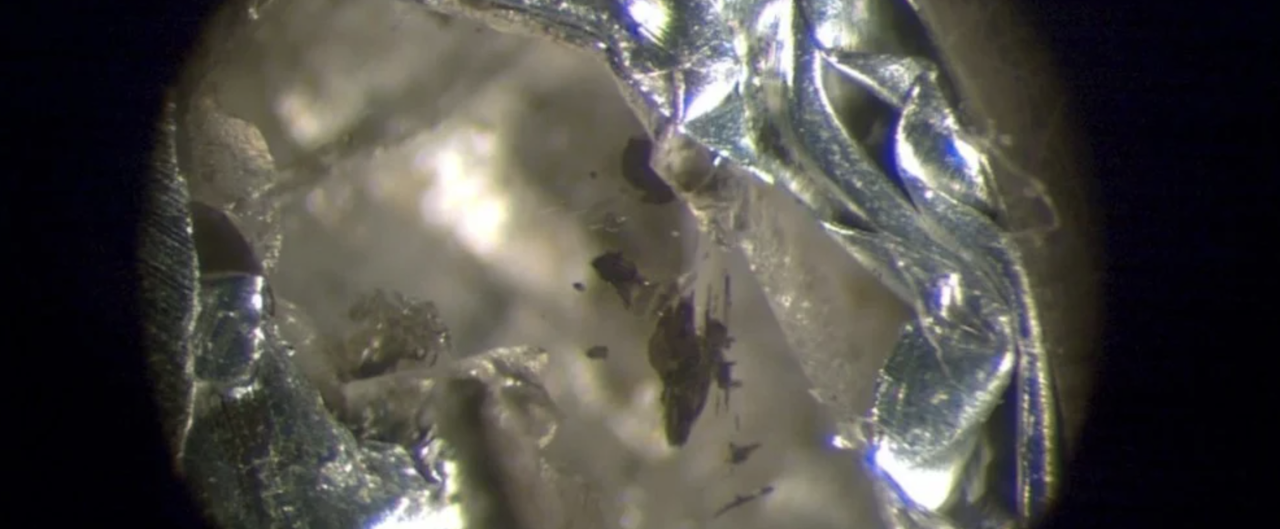
Their findings were published in the journal Science this week.
The research said Davemaoite contains weekly radioactive elements "including the heat-generating elements thorium and uranium, which have half-lives longer than the geologic history of Earth".
Because of this, scientists think the mineral helps manage how heat moves through deep Earth.
It's believed Davemaoite makes up five to seven per cent of the Earth's mantle, which is about 2900 kilometres thick, and makes up 84 per cent of Earth's total volume.
Local Focus: Māmā, pēpi, whānau and vaccine
Hapu māmā were the focus of a very important wānanga in Rotorua on Thursday.The informal drop-in kōrero at Apumoana Marae was about the Covid vaccine during pregnancy and post-partum.It was the first of a number…
Nine in court after big Northland drugs bust
Nine people have appeared in court after a joint Police and Customs operation in Northland uncovered more than $8 million worth of drugs, including 17kg of methamphetamine.Twelve people who police said were linked to the Head Hunters…
Police rescue two people after boat sinks in Wellington Harbour
Two people have been rescued from Wellington Harbour by the Police Maritime Unit after their boat sank near Somes Island this morning.A wave had swamped the stern of the boat, stalling its engine. While they were trying to restart…
Mayor Goff unleashes on anti-lockdown protesters blocking highways across NZ in 'Great Gridlock'
Auckland Mayor Phil Goff has unleashed on anti-lockdown protesters as “crass and stupid” who blocked highways across the country leading to major delays for thousands of motorists.The Freedoms & Rights Coalition protest group planned…
What are 'bomb cyclones' and what makes them different?
In August, a rapidly developing storm off Australia's east coast brought snow, high winds and dangerous surf to the country's south-east.
At the time, the Bureau of Meteorology (BoM) said the storm could be categorised as a "bomb cyclone".
Though it did not make landfall, its effect on the weather across parts of Australia showed the hefty impact these winter storms can have.
READ MORE: Increased flooding risk for Australia's east and north
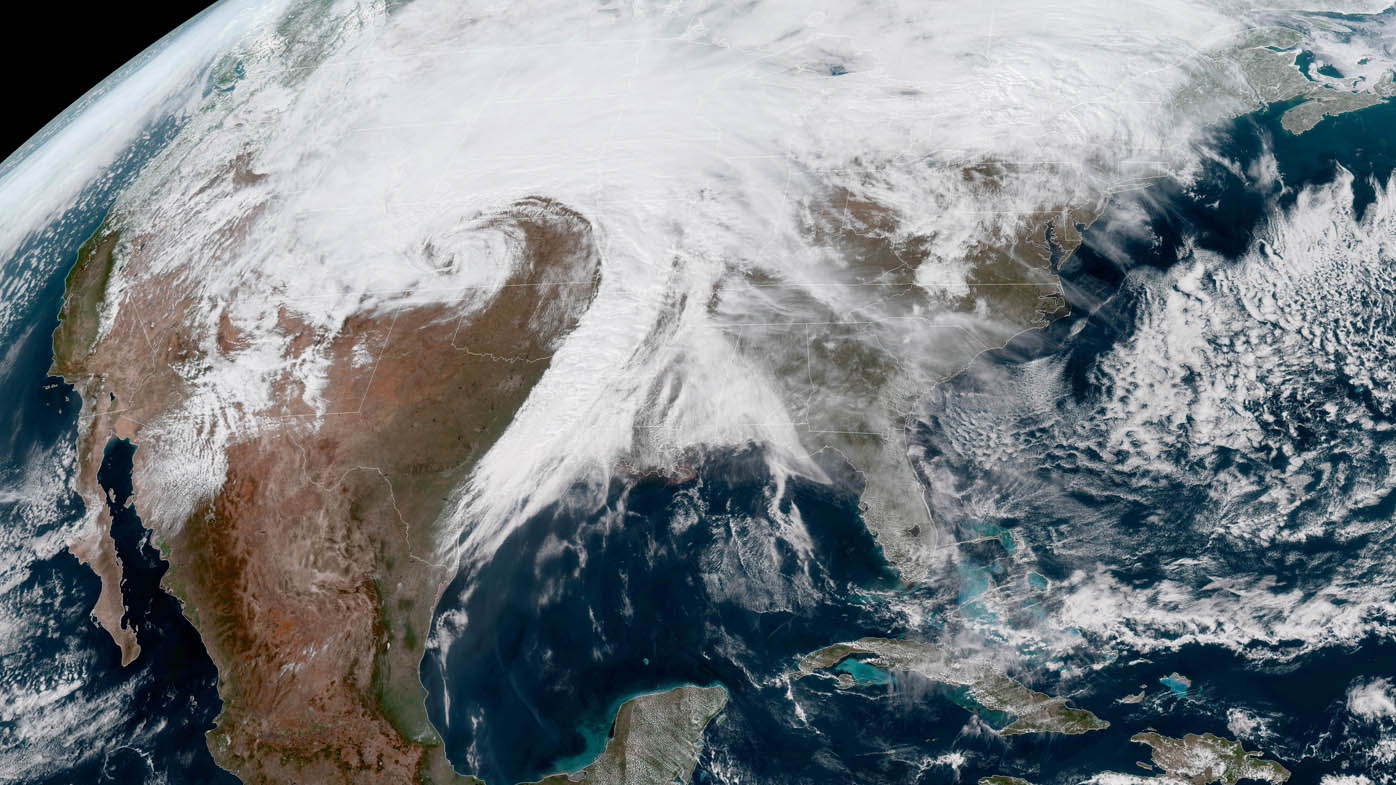
Despite the similarities in name, bomb cyclones have some key differences to their tropical cousins, and are often more dangerous – so what exactly are they?
What is a bomb cyclone?
A bomb cyclone is a non-tropical – also known as an extratropical – cyclone that develops extremely rapidly from a low-pressure system.
It forms when there's a swift pressure drop, with a decrease of at least 24 millibars (which measures atmospheric pressure) over 24 hours – an event known as bombogenesis.
EXPLAINER: What countries produce the most greenhouse gas emissions?
Most are formed in the Northern Hemisphere, particularly off the coasts of the US and Japan, but Australia's east coast is also battered by them.
They are most common in winter, with cold continental air and warm, moist ocean air providing the energy for a cyclone to develop.
What makes a bomb cyclone dangerous?
Compared to normal non-tropical cyclones, bombs are better at converting energy into motion.
Even if they don't make landfall, they bring dangerous winds and surf and cold weather to nearby landmasses, as one did for south-east Australia in August this year.
READ MORE: 'Code red' report amps up pressure on leaders to address climate crisis
The rapid development of a bomb cyclone makes it harder to forecast its exact intensity and timing, which increases the risks to life and property.
A devastating bomb cyclone in the US in 2019 brought blizzards and dangerous sweeping through the US Midwest, contributing to at least two deaths.
Do bomb cyclones often hit Australia?
As the Bureau of Meteorology explains, many of the East Coast Lows that form off Australia's shores meet the definition of a bombogenesis event.
There are about 70 bomb cyclones annually worldwide, though the ones that affect Australia's east and south coasts tend to be less rapid-forming than their Northern Hemisphere equivalents.
On average, two thirds of the bomb cyclones that form every year are north of the equator.
EXPLAINER: Why is petrol so expensive right now?
What's the difference between tropical and extratropical cyclones?
Tropical cyclones, of course, are more closely associated with Australia's northern regions and have dealt great damage to towns and regions over the years.
From a practical point of view, the difference between the storms is largely to do with temperature.
Extratropical cyclones, including bomb cyclones, are associated with cold and warm fronts, and are "cold-core" meaning they are colder at the centre than at the fringes.
By contrast, tropical cyclones are warm-core, but largely have little temperature change across their mass.
They derive their energy from latent heat release generated by cloud and rain formation from tropical air.
Tropical cyclones also have their strongest winds near the ground, while extratropical cyclone winds are strongest near the "tropopause" – between nine and 17 kilometres above the surface of the earth.
Is climate change going to affect bomb cyclones?
Extratropical cyclones on the whole are expected to shift closer to the North and South Poles in the future, which would mean fewer such winter storms in Australia.
Fewer studies have examined bomb cyclones specifically, but some suggest they have become more frequent, particularly in the Southern Hemisphere.
Some research has indicated that bomb cyclones will also move towards the poles, however.
Australia's East Coast Lows are expected to become less frequent due to climate change, particularly during winter – which is when bomb cyclones typically form.
However, rising sea levels and atmospheric moisture could potentially make those that do form in the future even more dangerous.
'The entire roof just ripped off'
A Melbourne woman and her grandmother have been left homeless after cyclonic winds tore the roof off their Chelsea home, leaving it destroyed.
Amber and her 76-year-old nan are now living in crisis accommodation after losing their unit and belongings in the destructive storm on October 29.
The wild weather event ravaged parts of Victoria last month, causing trees to collapse, rooves to be ripped from houses and power outages across 526,000 properties.
READ MORE: Victorian parks and trails to be closed for months due to wild weather
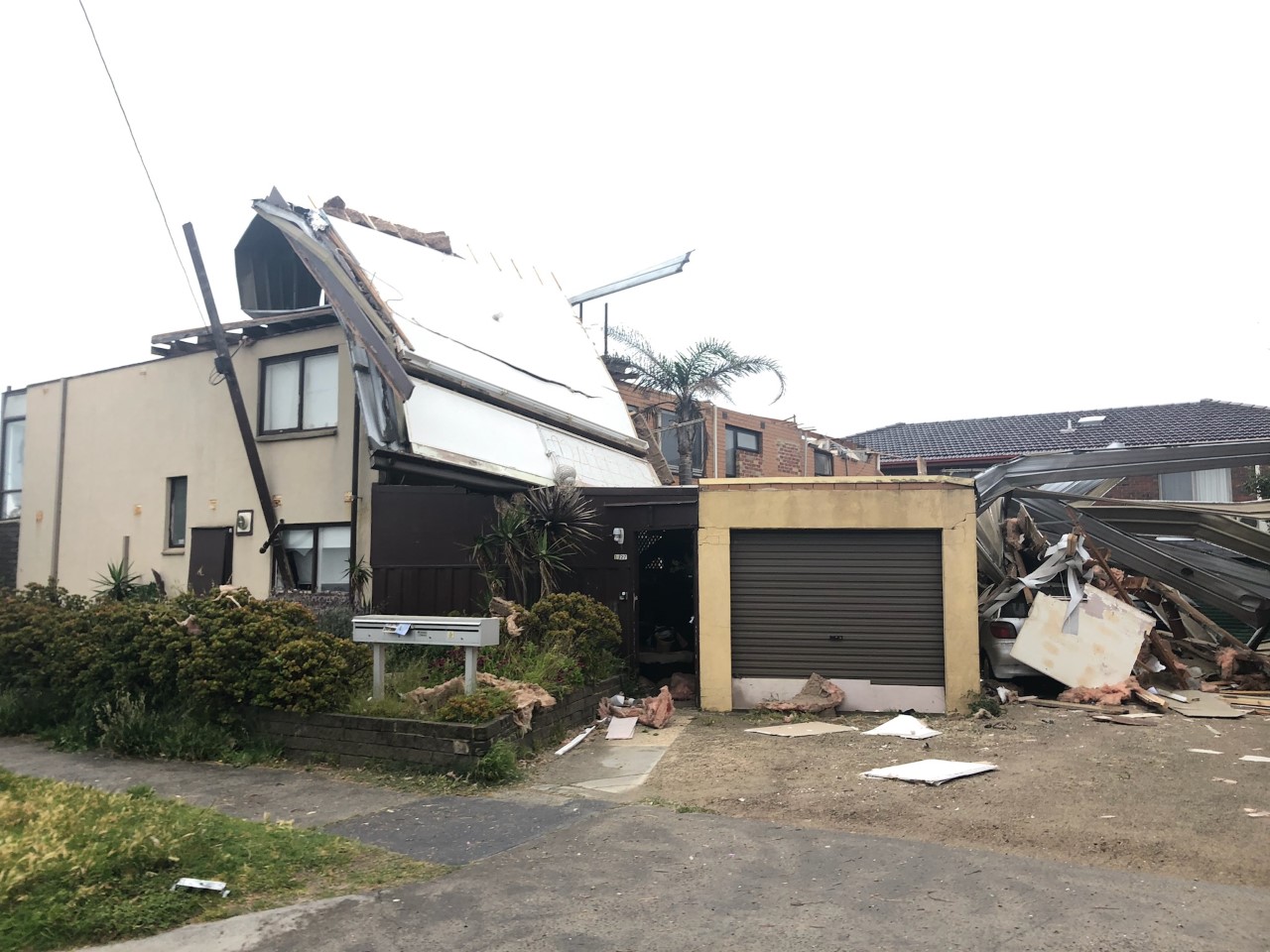
Speaking to 9News.com.au, Amber told of how the pair woke to hear the sound of wind shrieking outside about 8am that day.
"The wind just hit the entire room," she said.
"It slammed the bedroom door shut and suctioned it closed.
"We ran downstairs, terrified – we did not know what was going to happen."
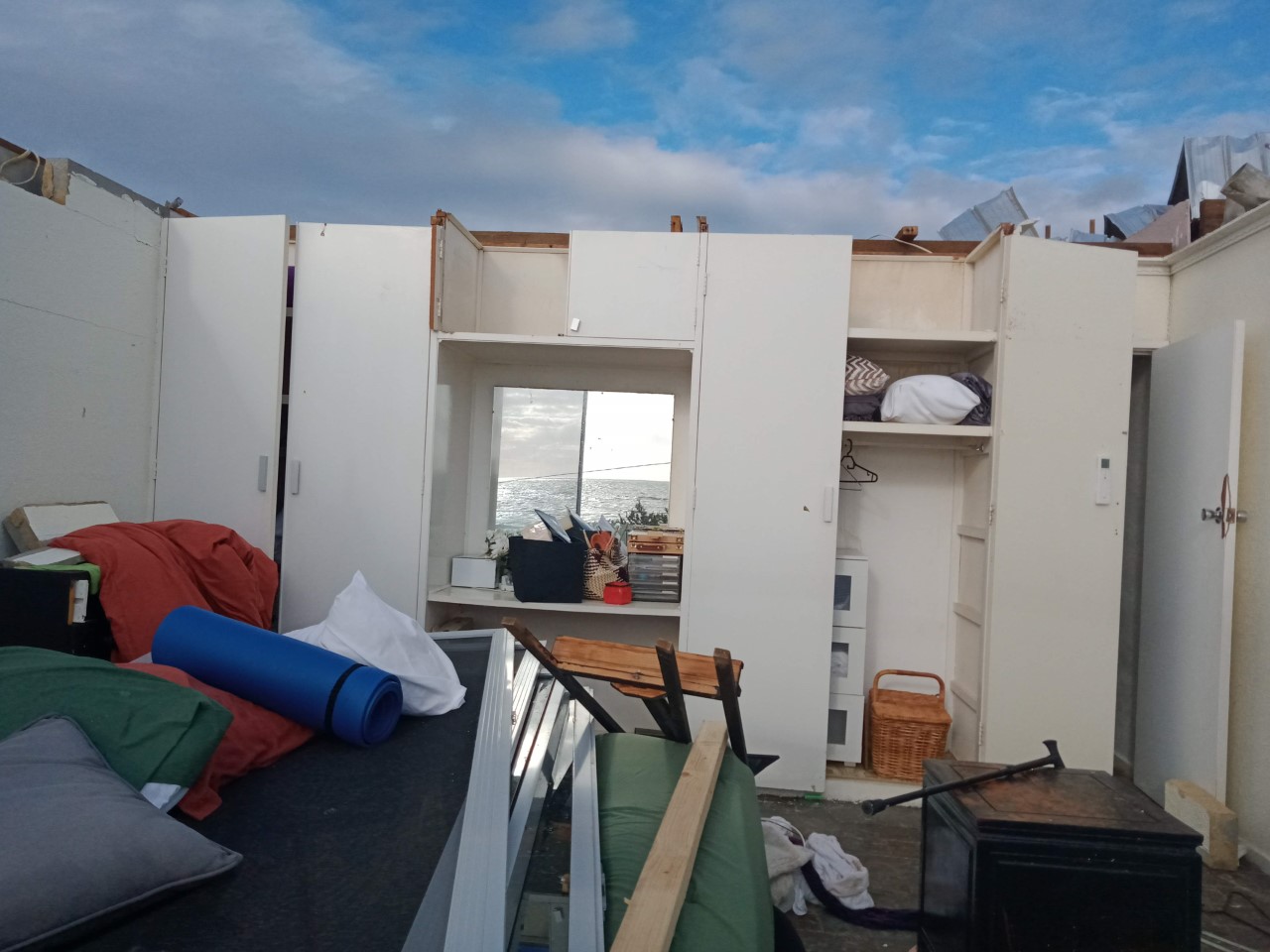
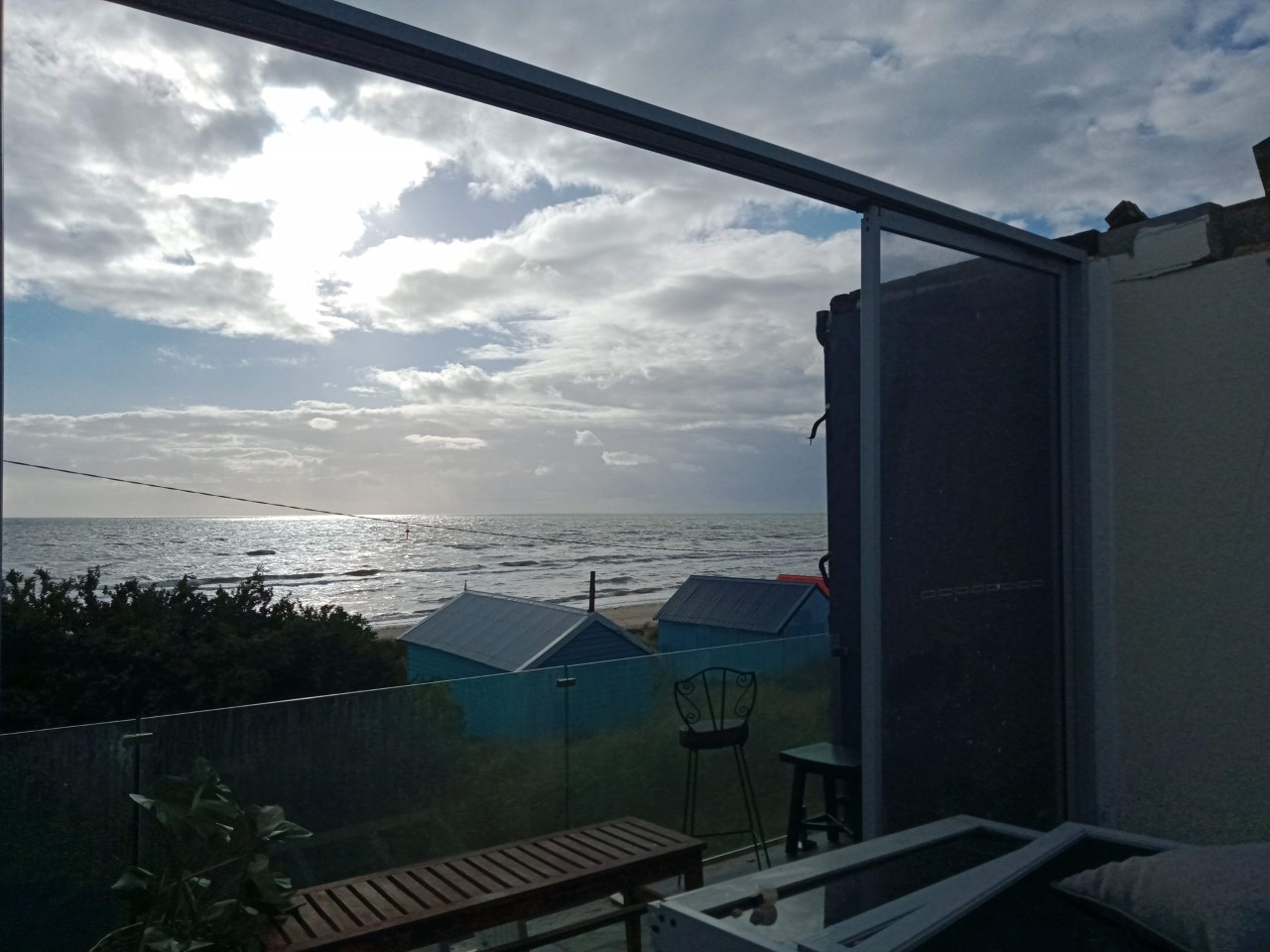
The pair then heard a ripping sound and as they looked out of their kitchen window, they were shocked to see the roof of their home flying off into the air.
"The doors broke away from where they were sitting," Amber told 9news.com.au.
"We just heard this tearing sound after that and we looked out the window and we just saw the debris from the roof just flying in the wind.
"The entire roof just ripped off. There was just metal and wood everywhere."
READ MORE: Cleanup continues after once-in-a-decade storm lashes Victoria
Amber and her grandmother are both pensioners and lost not only their home – but their car and most of their belongings in the storm.
The debris from the roof landed in their neighbour's backyard and on Amber's car, crushing it completely.
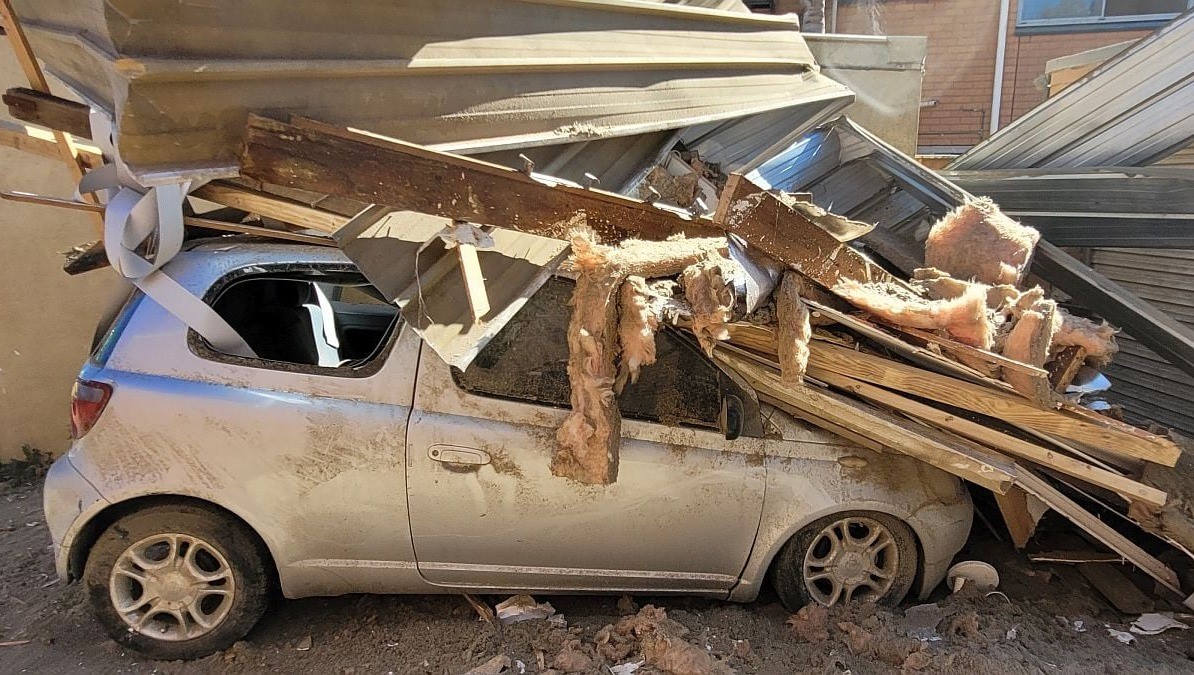
A range of emotions filled a petrified Amber and her nan next, but as she told 9news.com.au, they felt mostly helpless and scared.
"It was terrifying, we didn't know what we were going to do," she said.
"We were very shocked. I tried to call the SES, but I basically couldn't get through to anyone."
The pair would soon learn the winds — of nearly 150km/h — were the strongest seen in Victoria in more than a decade, and left a path of destruction across much of the state.
The beachside suburb of Chelsea – where they lived – was among one of the worst-hit areas in Melbourne.
The State Emergency Service (SES) received more than 3000 calls of assistance on that day alone – 2300 relating to fallen trees and 490 on building damage.
While in the seven days from 4pm on October 29, up until 4pm on November 4, SES volunteers responded to a total of 9898 requests for assistance.
Amber and her nan stayed inside their roofless home until help arrived.
"The wind was still raging," she said.
READ MORE: Dramatic moment powerline and tree collide in Melbourne storm
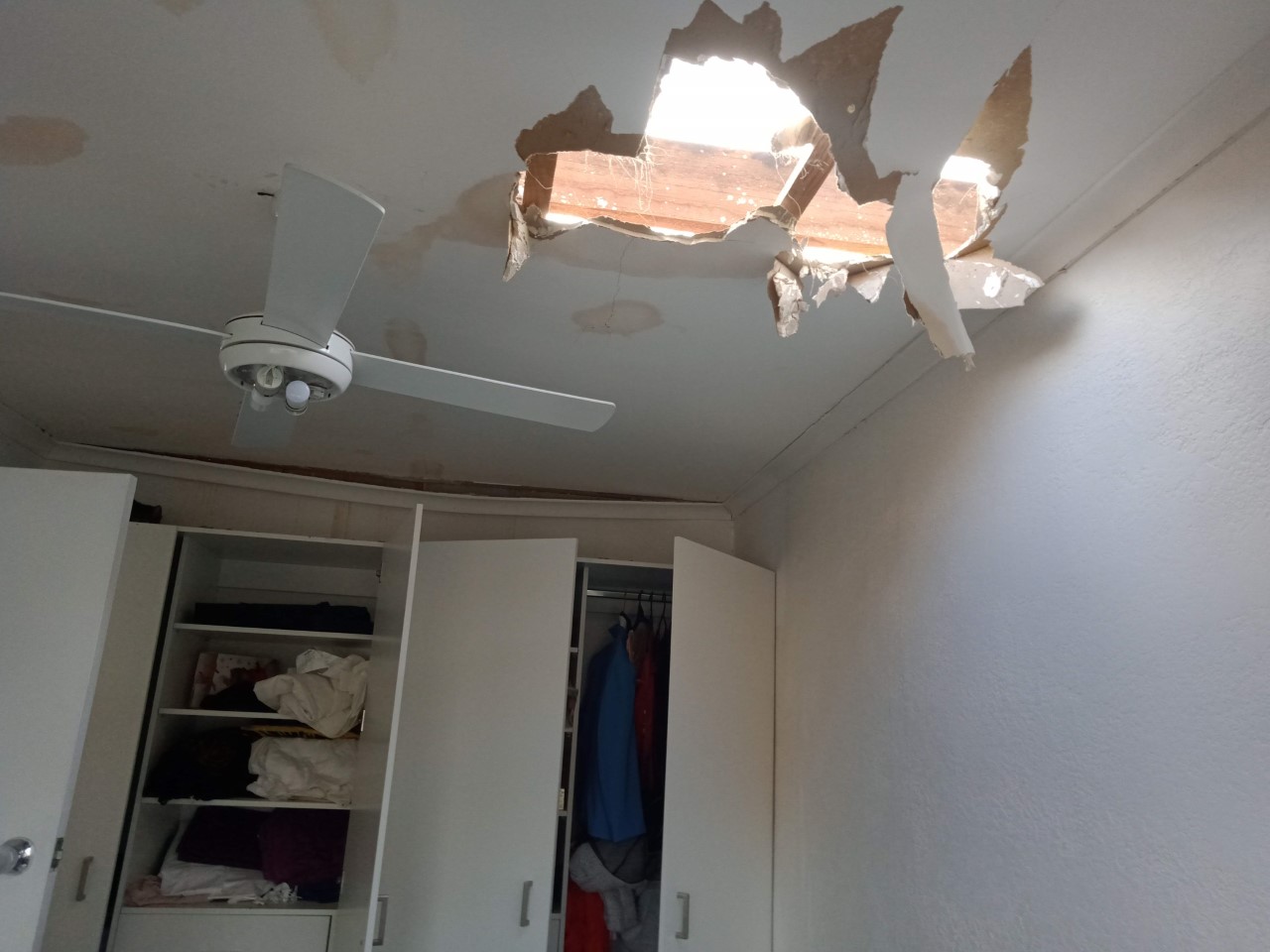
"We were scared to actually go outside because we didn't know if we would be hit by things falling around and there were live wires that had been ripped apart.
"After that, we didn't have anywhere to go, so now we are in crisis accommodation."
Amber and her nan were fortunate to escape the wreck without any injuries.
The pair are living in crisis accommodation until they find a new place to call home.
They lost everything in the storm and to make matters worse, their unit was discovered to be contaminated with asbestos, making it unsafe for them to return and collect their belongings.
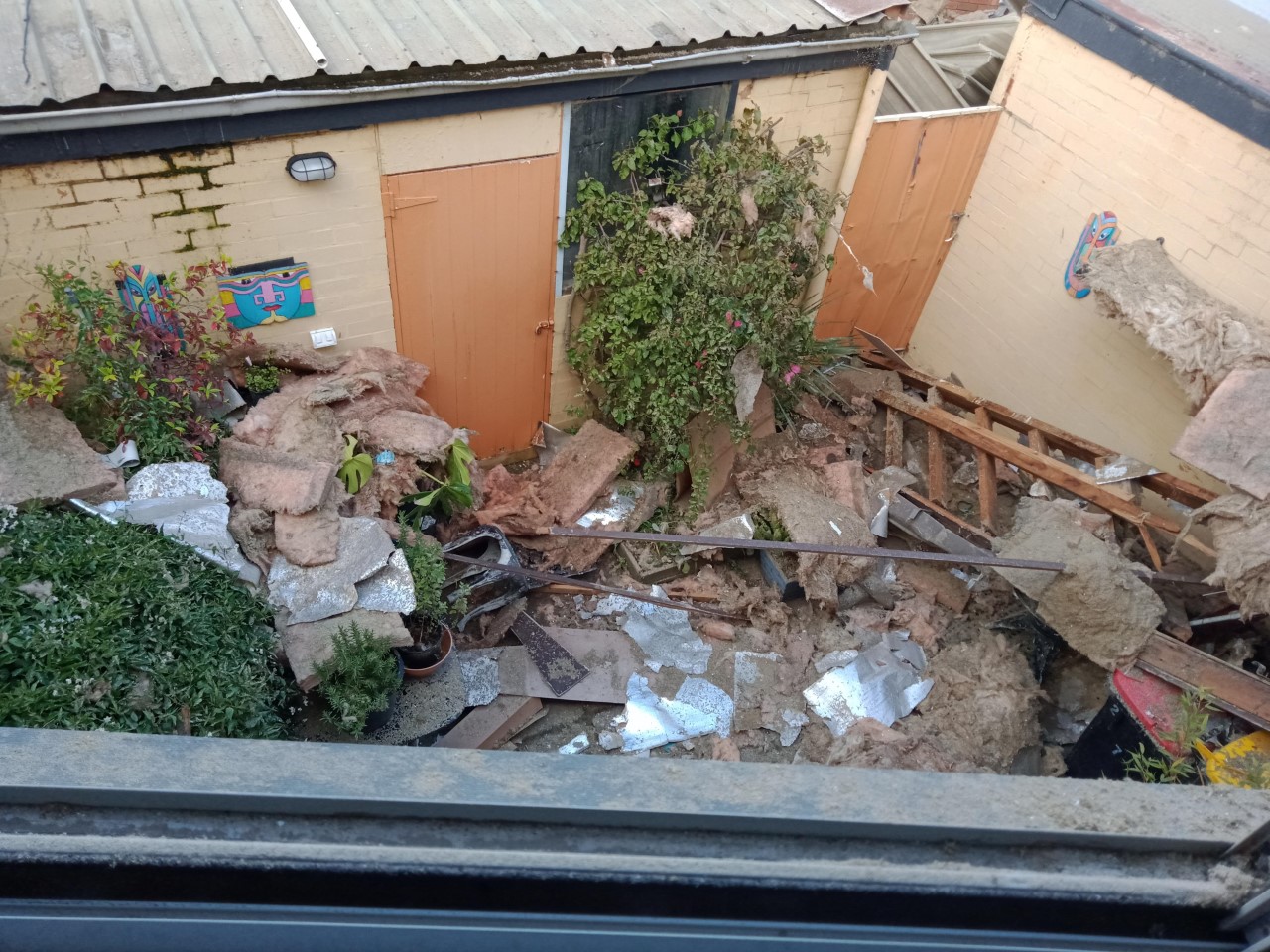
By that stage, their roofless house was already flooded with water, with their items damaged.
Fortunately, the pair's landlord managed to go back inside and grab a few items of clothing for them at the time, but it was too dangerous to collect anything more.
"We only had the clothes on our backs," Amber explained.
"I was in my pyjamas and my nan was in her dressing gown – nothing else.
"Everything in our bedrooms is basically gone."
Amber has started a fundraiser to raise money to replace their lost belongings.
"It's just been an absolute nightmare," she said.
"We have to replace everything. It's a lot of money to replace absolutely everything – so we started the fundraiser … any financial support would be much appreciated."
Family trapped in outback by floodwaters face long wait for rescue
A young family from Perth may have to wait up to two weeks for rescue after getting trapped by floodwaters in South Australia's outback.
The family-of-four set off an emergency locator device after getting bogged while driving in the Simpson Desert.
READ MORE: Victoria in firing line as intense low pressure system moves south
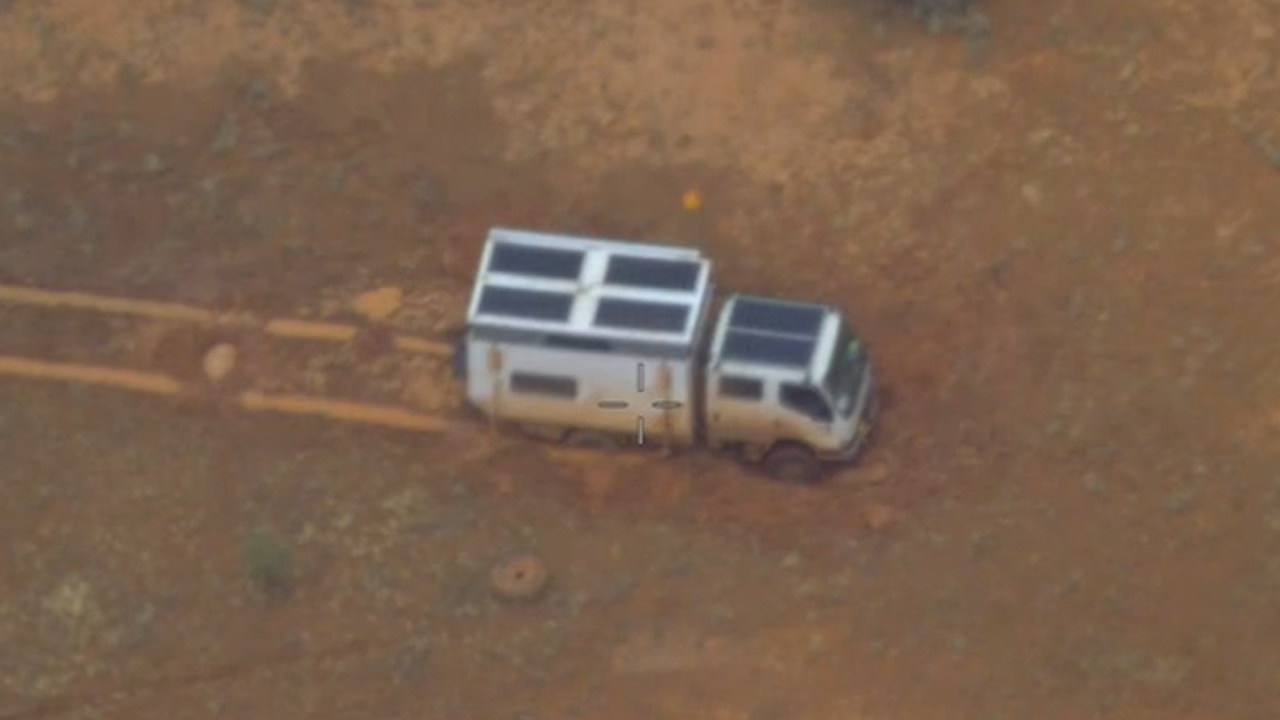
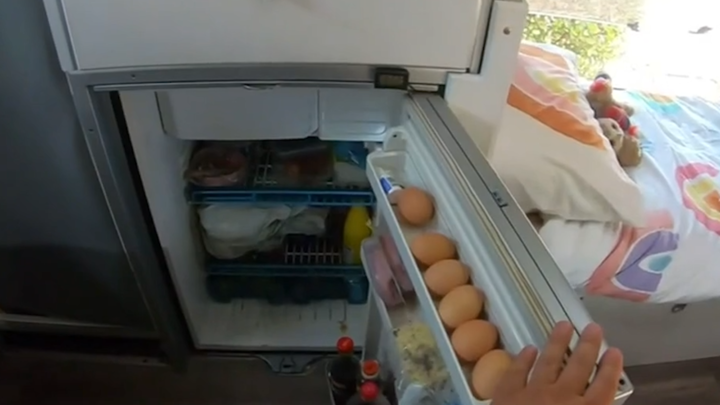
They have food and water and say they're doing OK, but rescue crews will struggle to get to them due to heavy rain.
South Australia saw near record-breaking rainfall when a low pressure swept across the state from Wednesday.
READ MORE: Worrying new COVID-19 crisis in countries with high vax rates
https://twitter.com/weatherzone/status/1458969113456381954
Over the past two days the state has experienced heavy rain and cyclonic winds of up to 70km/h, which blacked out Adelaide's CBD causing major peak hour delays.
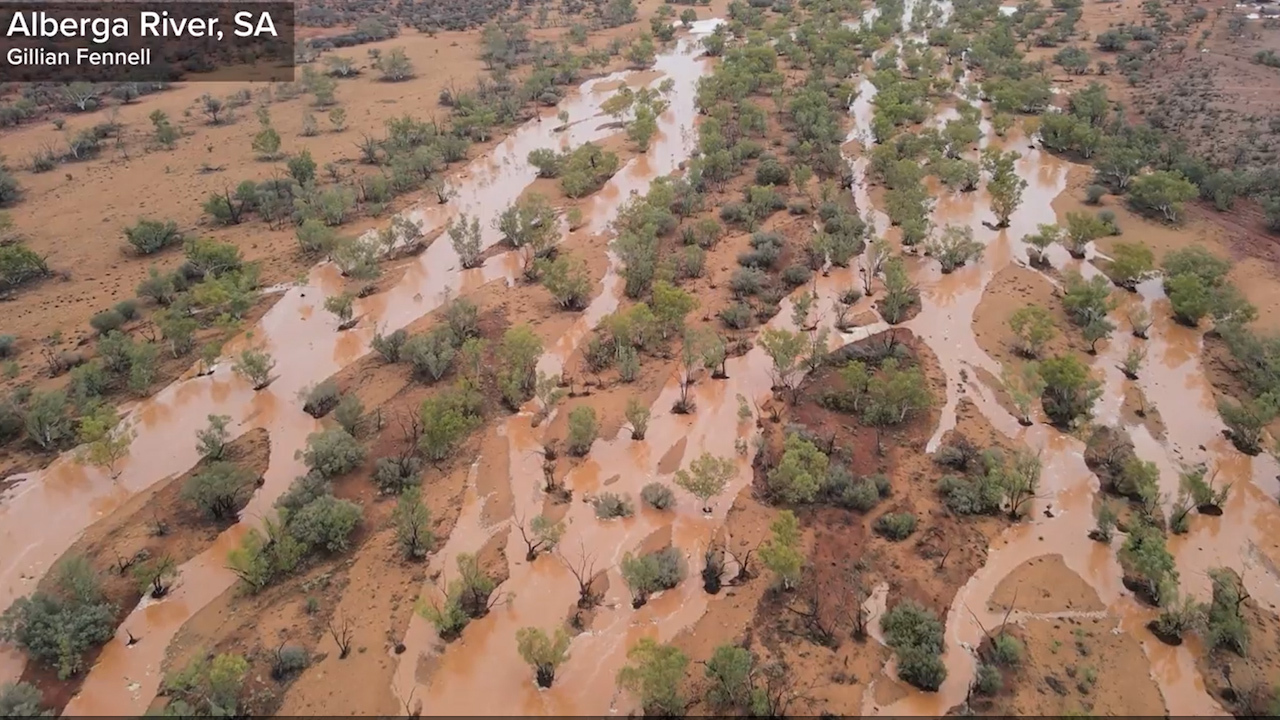
For the first time in a year and a half, water flowed through the Alberga River in the far north of the state.
While the deep low pressure system has moved away from South Australia, taking with it the heavy rain, showers may continue over the Flinders Ranges, the Bureau of Meteorology (BoM) warns.
It has issued a flood watch warning for the mountain ranges saying the showers could bring up to 10 – 20 mm of rain.