The Government is backing big summer festivals, with a pledge to carry most of the financial burden if organisers have to cancel events.But a DJ says smaller event organisers were furious today after the scheme was limited to big…
Tag Archives: oceania
Covid-19 Delta outbreak: PM Jacinda Ardern on anti-vaccination protests and message for the vaccinated
Prime Minister Jacinda Ardern said she did not have a message for the anti-vaccination protesters outside Parliament today, but she did have a message for the vaccinated: “thank you.” “What we saw today was not representative of…
Interislander ferry suffers second mechanical issue in as many weeks
Interislander’s Aratere ferry has suffered another mechanical issue after returning from dry dock work in Sydney.Less than two weeks ago the boat was affected by a fault that caused abnormal vibrations, which was identified during…
Man accused of Dunedin Countdown stabbing accused still can't be named
The man who allegedly stabbed four people in a Dunedin supermarket will continue to have his identity suppressed until at least next month.The 42-year-old appeared in the High Court at Dunedin by audio-visual link this morning on…
Christchurch Port Hills double fatal crash: Experts say Levi Fiddymont's brakes were not at fault
Crash experts found no fault with the brakes on a car that crashed on the Port Hills above Christchurch and killed two teenage sisters, a court heard today. Teenager driver Levi Fiddymont says his Subaru WRX’s brakes failed on…
Satellite images show China built mock-ups of US warships
Satellite photos show China has built apparent mock-ups of US warships in its remote north-western desert, possibly for practice for a future naval clash as tensions rise between the nations.
China has massively upgraded its military in recent years, and its capability and intentions are increasingly concerning to the US as tensions rise over the South China Sea, Taiwan and military supremacy in the Indo-Pacific.
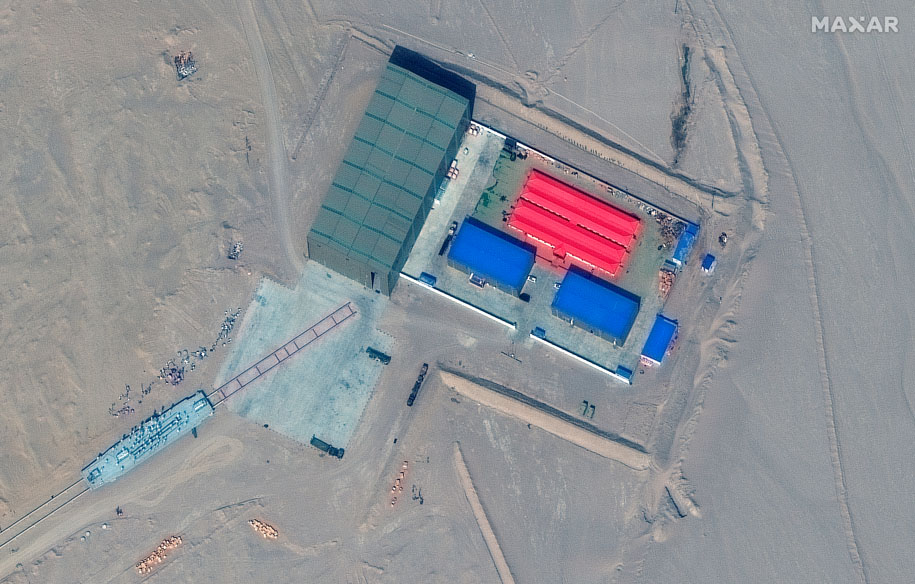
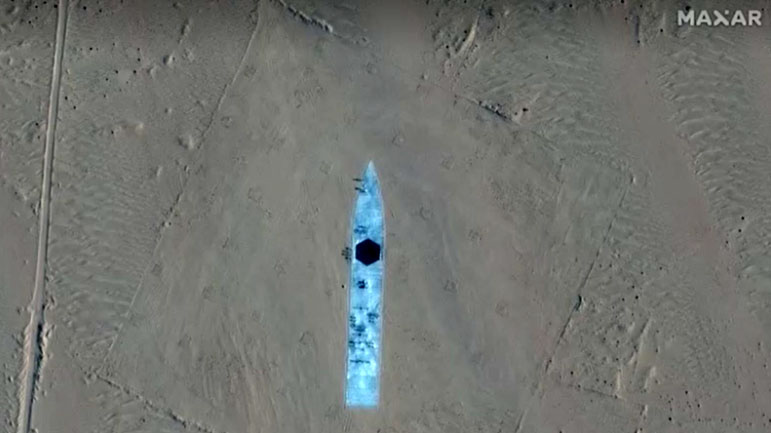
The images taken by Colorado-based satellite imagery company Maxar Technologies on Sunday show the outlines of a US aircraft carrier and at least one destroyer placed on a railway track.
READ MORE: Fears exclusive Melbourne Cup party is a 'super spreader' event
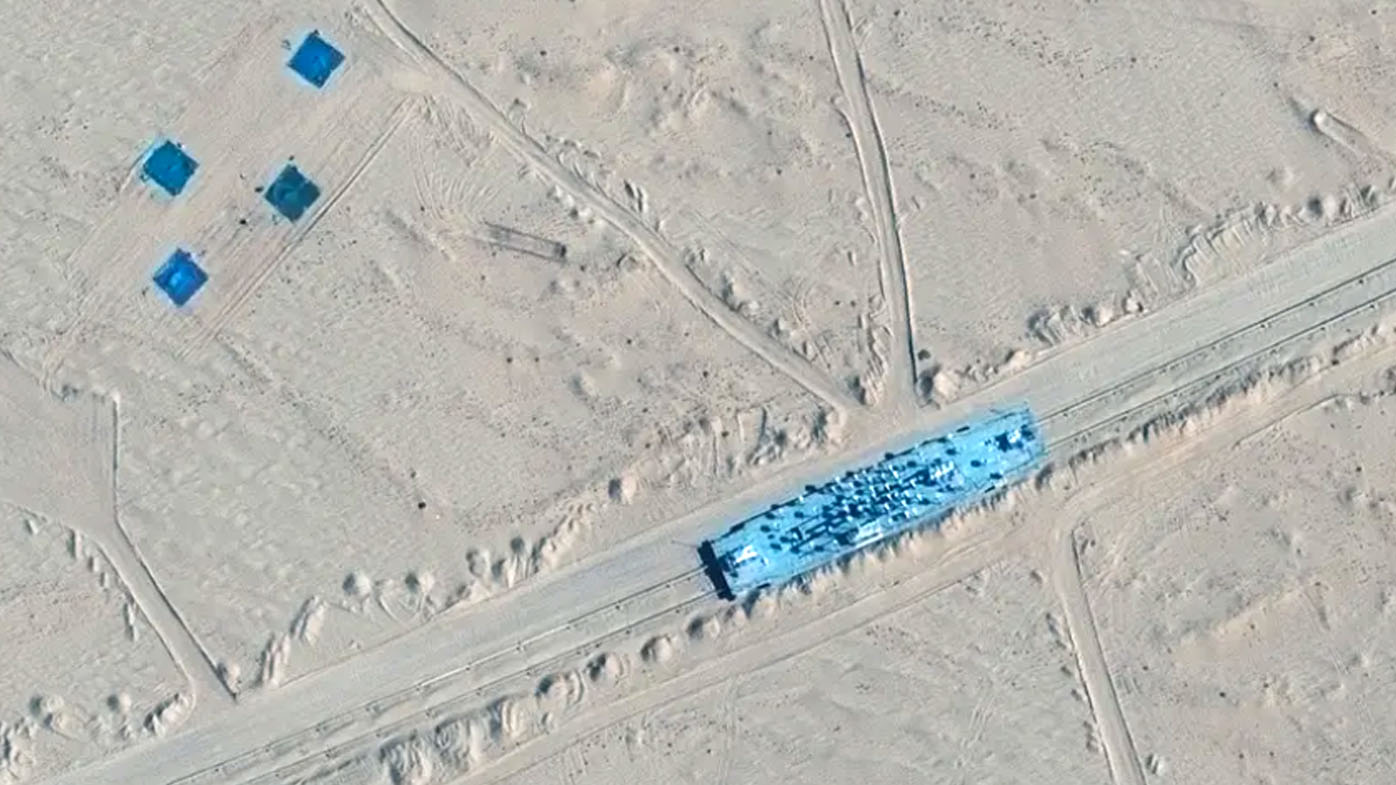
Maxar identified the location as Ruoqiang, a Taklamakan Desert county in the north-western Xinjiang region.
The independent US Naval Institute (USNI) said on its website that the mock-ups of American ships were part of a new target range developed by the People's Liberation Army.
It wasn't clear from the images how many details had been included in the apparent targets, although USNI said it had identified features on the destroyer including its funnels and weapons systems.
Chinese Foreign Ministry spokesperson Wang Wenbin said at a daily briefing on Monday that he had no information about the images, saying, "I'm not aware of the situation you mentioned."
China's massive military upgrade has emphasised countering the US and other countries' naval forces.
READ MORE: Aussie victims sent bizarre items in the post
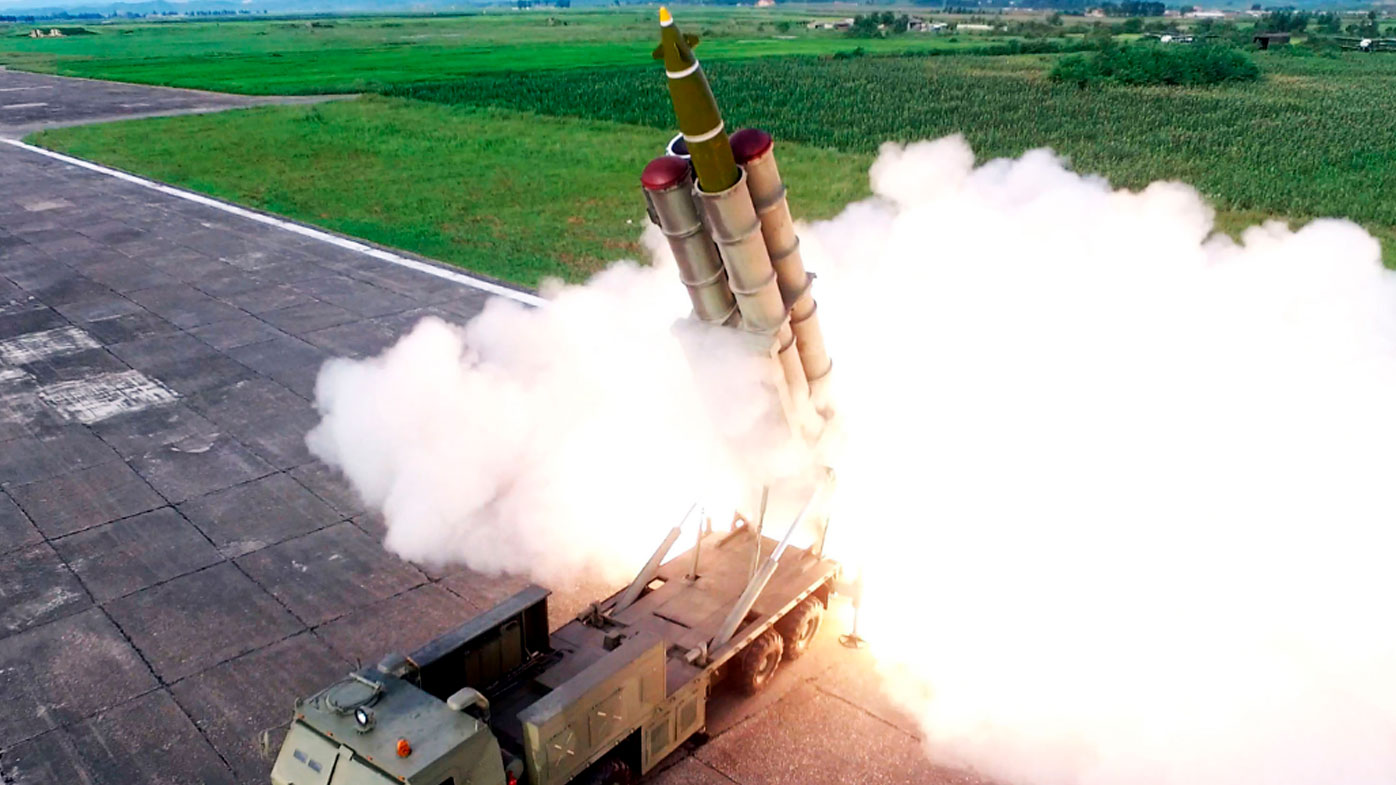
That includes the development of land, sea and air-launched missiles to repel and possibly sink opposing vessels, expressed most emphatically by the land-based DF-21D ballistic missile known as the "carrier killer".
Recent months have also seen a substantial increase in Chinese military flights just southwest of Taiwan, the self-governing island republic claimed by Beijing and which it threatens to annex by force.
Washington provides Taiwan with much of its weaponry and US law requires that it ensures the island can defend itself and treats threats to it as matters of "grave concern".
The images released by Maxar come amid growing concerns over the possibility of military conflict between the world's two biggest economies, who are at odds over a litany of political and economic issues.
The Pentagon this month issued a report saying China is expanding its nuclear force much faster than US officials predicted just a year ago.
That appears designed to enable Beijing to match or surpass US global power by mid-century, the report said.
READ MORE: Swooping crows with 'grudges' terrorise Gold Coast
US defence officials have said they are increasingly wary of China's intentions, largely with regard to the status of Taiwan.
"The PLA's evolving capabilities and concepts continue to strengthen (China's) ability to 'fight and win wars' against a 'strong enemy' — a likely euphemism for the United States," the report said.
China's navy and coast guard are also adding new vessels at a record pace, concentrating them in the South China Sea, the strategic waterway that China claims virtually in its entirety.
While the US Navy remains predominant, its resources are divided between the Indo-Pacific, the Persian Gulf, the Mediterranean and other regions where American interests lie.
Covid 19 Delta outbreak: Buller District Council distances itself from vax comments
The Buller District Council is distancing itself from vaccination comments made publicly by one of its employees.Rachel Fifield, Reefton’s economic development officer, announced she and her husband Murray Fifield are closing the…
Whanganui gets UNESCO recognition as a "City of Design"
Whanganui has been officially recognised as a UNESCO City of Design.That means Whanganui gets a place in the UNESCO (United Nations Educational, Scientific and Cultural Organization) Creative Cities Network and has its historic…
Epic rescue effort in UK's deepest cave ends happily
An injured man who was trapped deep inside one of the UK's longest cave systems for two days has been rescued.
The man, in his 40s, was pulled from Ogof Ffynnon Ddu cave in the Brecon Beacons, Wales on Monday night (local time).
He had fallen and suffered multiple injuries inside the 62km cave system, with an almighty rescue effort by hundreds of people needed to bring him to the surface.
READ MORE: How suspicion was raised at Perth clinic over alleged fake coronavirus vaccine injection
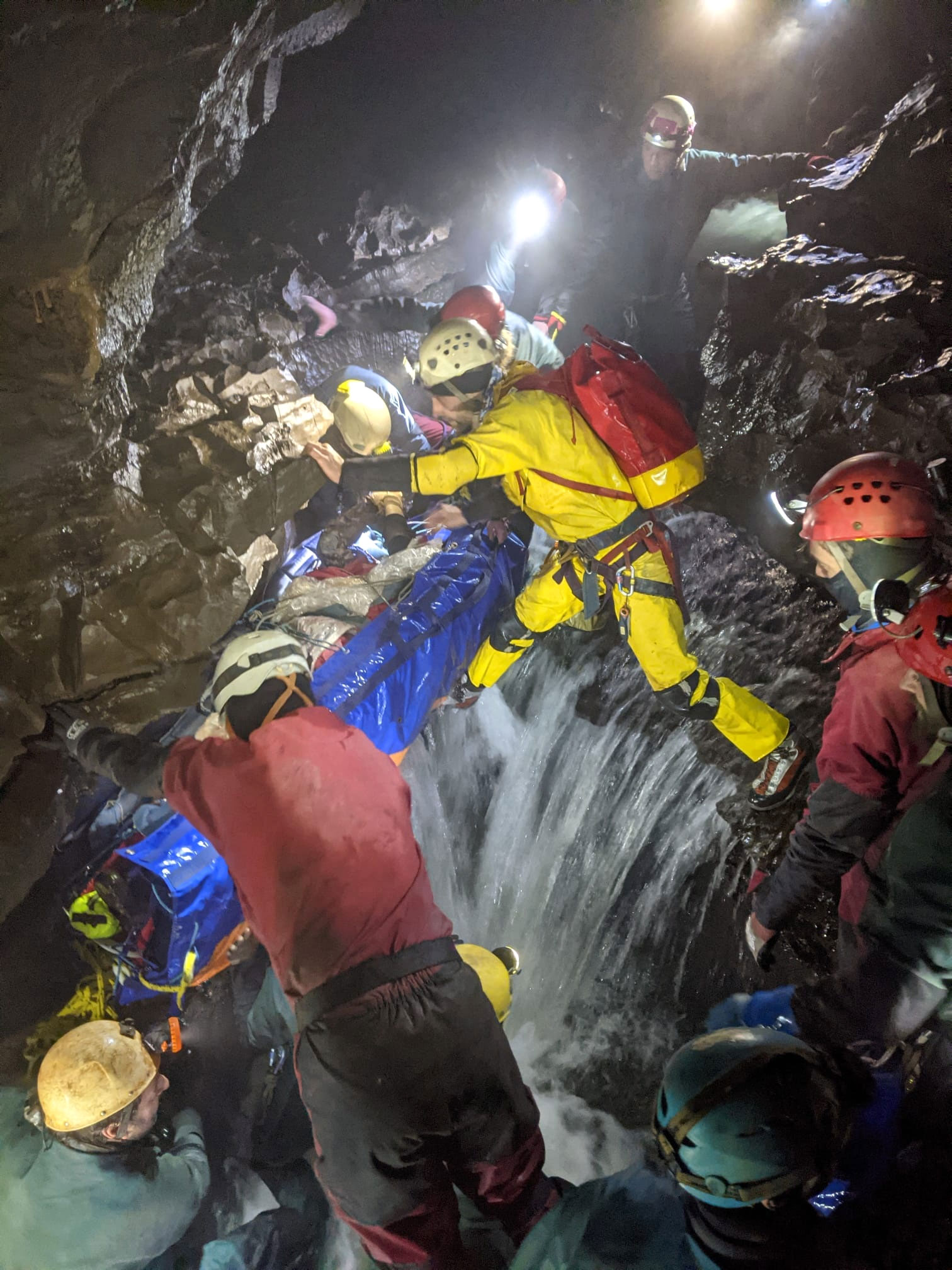
"The nature of the injuries and location deep underground has resulted in the longest stretcher carry in British cave rescue history," a South and Mid Wales Cave Rescue Team spokesperson said.
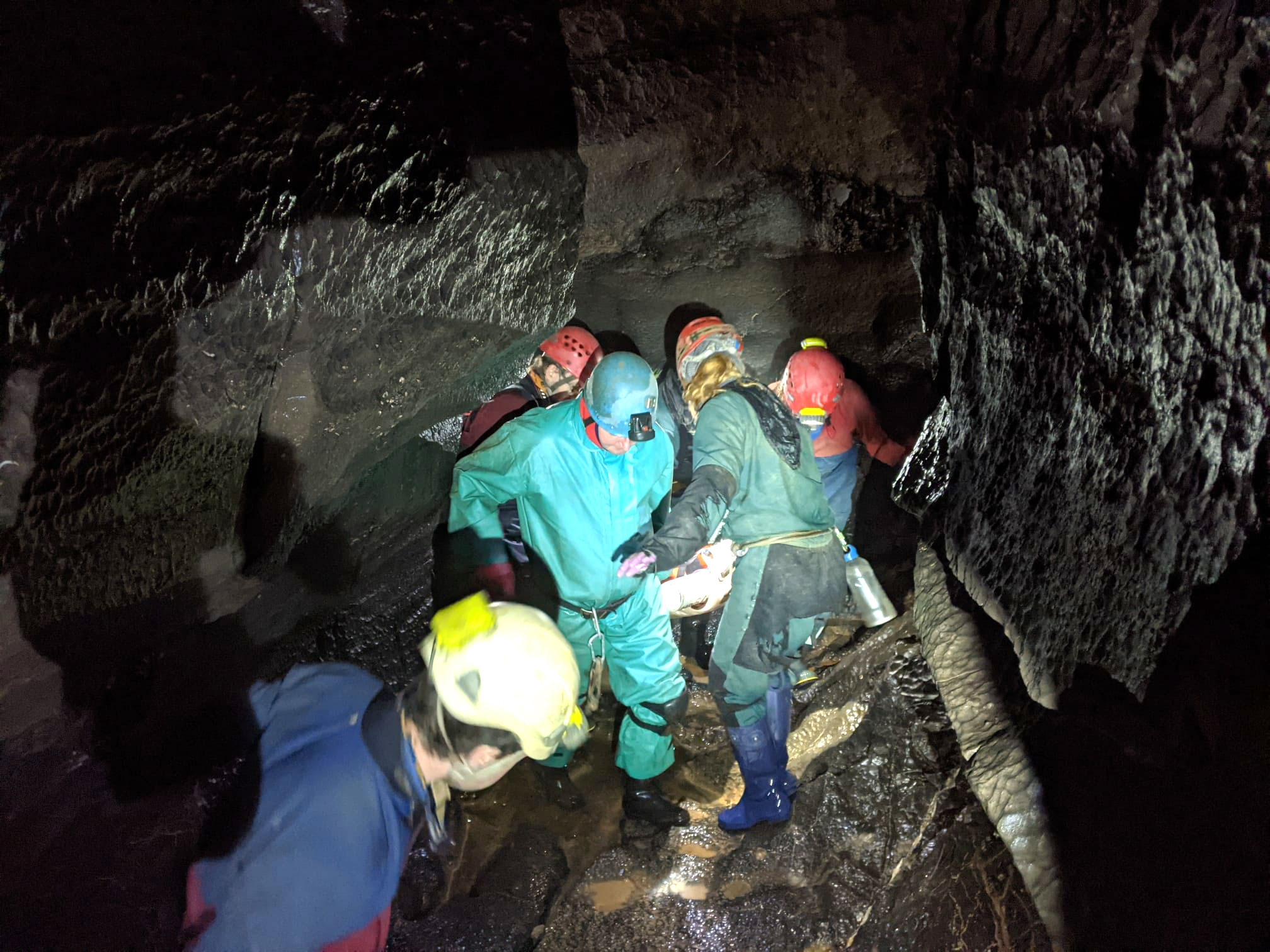
Over 300 volunteers from 10 rescue teams across the UK, working with emergency services, spent 54 hours manoeuvring the injured caver through "technically challenging terrain" towards the surface.
"The extraction of an injured caver from such a complex cave system creates many challenges including negotiating small tunnels, climbs, rivers and continuously uneven ground," the spokesperson said.
The man was reportedly an experienced caver, with injuries believed to include a broken jaw, leg and spinal injuries.
Others he went caving with rushed to get help after he fell.
READ MORE: The drugs Aussies are taking, and why ecstasy use has dropped off

READ MORE: Fears exclusive Melbourne Cup party is a 'super spreader' event
At a depth of 309.5m, Ogof Ffynnon Ddu is the deepest cave system in Britain.
It is also the third-longest, stretching for 60.6km under the Brecon Beacons in South Wales.
Only experienced cavers are given permission to explore.
Why more auroras could be on the way
Now that hurricane season is winding down in the USA, a different storm season is ramping up.
Originating 93 million miles away from Earth, solar storms – produced by the sun – have both stunning and potentially dangerous effects here on Earth.
"The sun provides us with life, with heat and light. But periodically is emits a blast of radiation that affects us here on earth and it can occur in different forms. When it occurs it can affect the technology that we rely on here on Earth," says Bill Murtagh, program coordinator at the National Oceanic and Atmospheric Administration's Space Weather Prediction Centre.
READ MORE: Fears exclusive Melbourne Cup party is a 'super spreader' event
The Space Weather Prediction Centre is a 24/7 operation that is constantly staring at the sun.
Using sensors on satellites and on Earth they looking for sunspots on the sun, which at times can be as much as 10 times the size of Earth.
Mr Murtagh forecasts space weather, just as meteorologists forecast the weather on Earth.
When those sunspots erupt, they can send a blast of energy toward Earth known as solar storms.
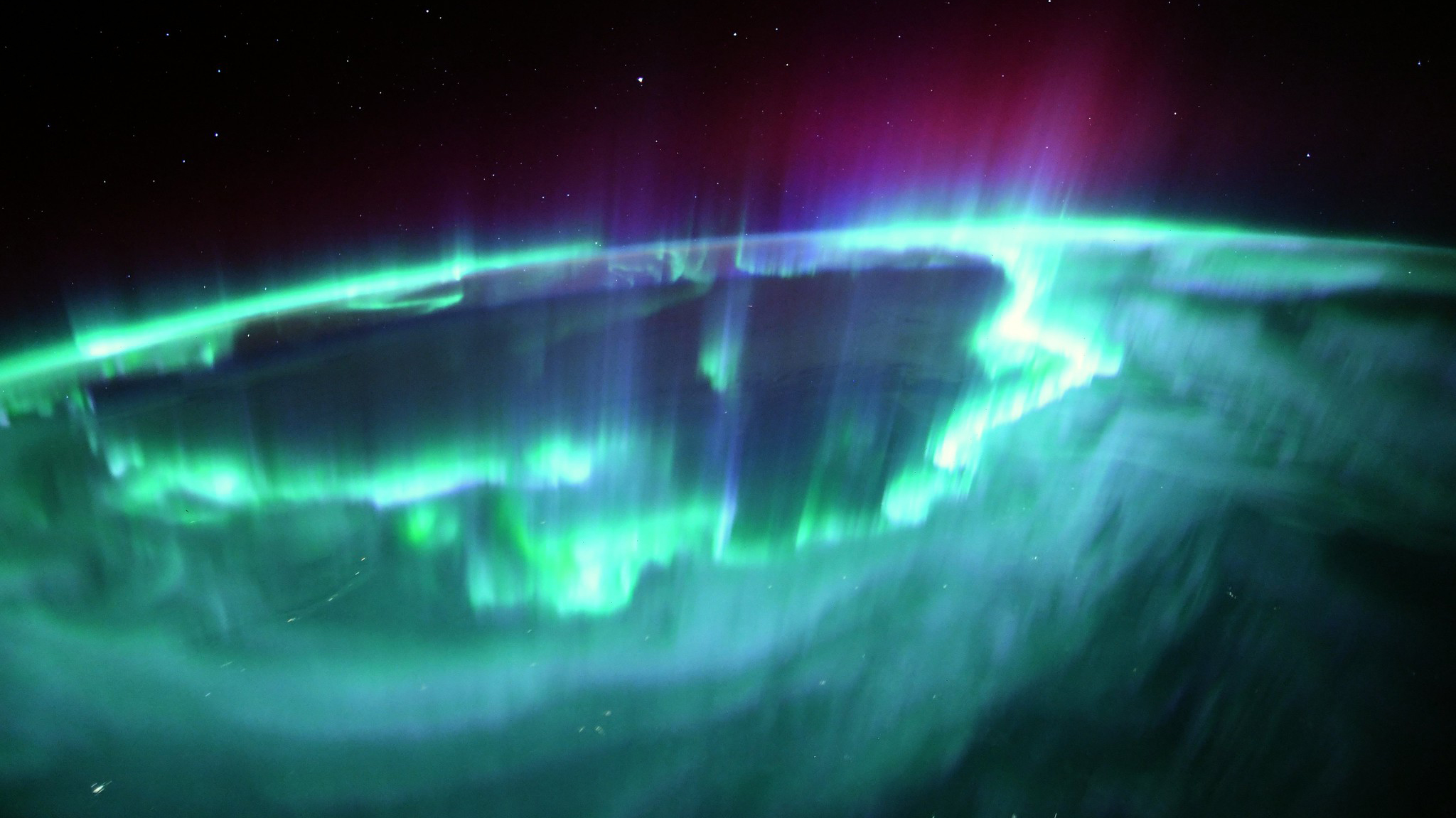
That's when we get the gorgeous glow of the aurora borealis, or northern lights.
The sunspots appear darker because they are cooler.
They are where the magnetic field is the strongest.
READ MORE: Drone captures video from inside category four hurricane in world first
These magnetic field lines will sometimes cross and get tangled – eventually bursting.
There are seasons when the sun becomes more active.
During this very active time, sunspots will appear on the surface of the sun and erupt more frequently.
This active season itself is somewhat predictable, as the sun's magnetic field flips polarity over an 11-year cycle.
READ MORE: Aussie victims sent bizarre items in the post
"The sun has negative and positive polarity, just like Earth. During this 11-year period it does a reversal of the polarity. So negative becomes positive and positive becomes negative. During the middle of that process and transition, that's when those sunspots emerge. So we go through a process when we are in the middle of this transition we get lots of sunspots and lots of space weather," says Mr Murtagh.
We have been in a period of solar minimum – the least amount of sunspots – for the last three to four years and now we are starting to come out of that.
The busy season for sunspots is beginning, meaning more opportunities to see the northern and southern lights, which Murtagh says should peak between 2023 and 2028.
Meteorologists know during December, January and February, you're not going to get much – if any – hurricane activity.
That's why there's hurricane season. Same for us, says Murtagh. We know during the solar maximum, we will see a lot more activity.
The two geomagnetic storms that occurred last week were level 3 storms; they produced stunning images from both ends of our planet.
READ MORE: Eastern states braced for week-long drenching
"When the eruption does occur, the coronal mass ejections that cause the northern lights, once they leave the sun, we have the ability to detect them, measure their size and speed and predict when they are going to get here with relative success," says Mr Murtagh.
Mr Murtagh says the bigger eruptions are the fastest, getting to Earth in as little as 16 hours.
But the smaller ones travel slower, and can take several days to get here.
READ MORE: Swooping crows with 'grudges' terrorise Gold Coast shopping district
Forecasting geomagnetic storms on a 150 million-km journey has its challenges, but he says their forecasts are always improving.
"Some of the big ones, you can bet your mortgage on it that you will see the aurora, but the smaller ones are a little tougher for forecast," says Mr Murtagh.
While the aurora is such a magical phenomenon that it tops bucket lists all over the world, there's also hidden dangers in space weather that can affect all of us.
"The sunspots are localised stressed magnetic structures on the sun that have the potential to erupt and release energy in the form of solar flares, coronal mass ejections, and when that occurs that radiation makes it's way to Earth and affects a lot of technology," says Mr Murtagh.
He forecasts solar flare radio blackouts as well as solar radiation storms.
These storms can be potentially dangerous to not only satellites and astronauts, but Earthlings as well.
"This radiation is the stuff that concerns us with the astronauts and a big concern for us as we press ahead with our goals to go back to the moon," says Mr Murtagh.
And now that space exploration has entered into the private sector, many more eyeballs beyond NASA are focused on space weather and the hazards it could create.
READ MORE: Mask mandate set to end in Queensland
Radiation storms could damage or destroy satellites, and even have an impact on airlines.
"For many people now who fly from the US to Asia, a lot of these flights go polar. These energetic particles, these radiation storms, when it hits Earth, these particles will slow down the magnetic field lines and concentrate in the high latitudes near the southern and northern pole," says Mr Murtagh.
While Earth's magnetic field acts as a cocoon to protect us from this harmful radiation, during these storms, radiation can sometimes still get through.
Mr Murtagh says because of this, the airlines will reroute the flight to avoid the poles or fly at a lower altitude to mitigate the radiation threat.
Space weather can also disrupt transformers and the power grid, temporarily impacting an entire region.
In March 1989, space weather caused the entire power grid to go out, affecting the entire city of Montreal as well as the province of Quebec.
NASA describes this day as: "The day the sun brought darkness."
"Recovery time would be measured in hours or days typically. However, If we sustained large damage to the high voltage transformers, then that could lead to recovery measured in weeks or months," says Mr Murtagh.
While most eyes are strictly on the weather from the clouds, the weather that comes from 93 million miles away is many times just as important.