Tag Archives: oceania

How fussy eating led to the extinction of the Megalodon

Before humans and early primates, before dinosaurs, and even before trees, there were sharks. Sharks have been around for more than 400 million years (although how long exactly remains contested).

They have survived five major mass extinctions.

But the sharks of long ago are not like the ones we see today.

READ MORE: Estimating the size of the largest ever killer shark
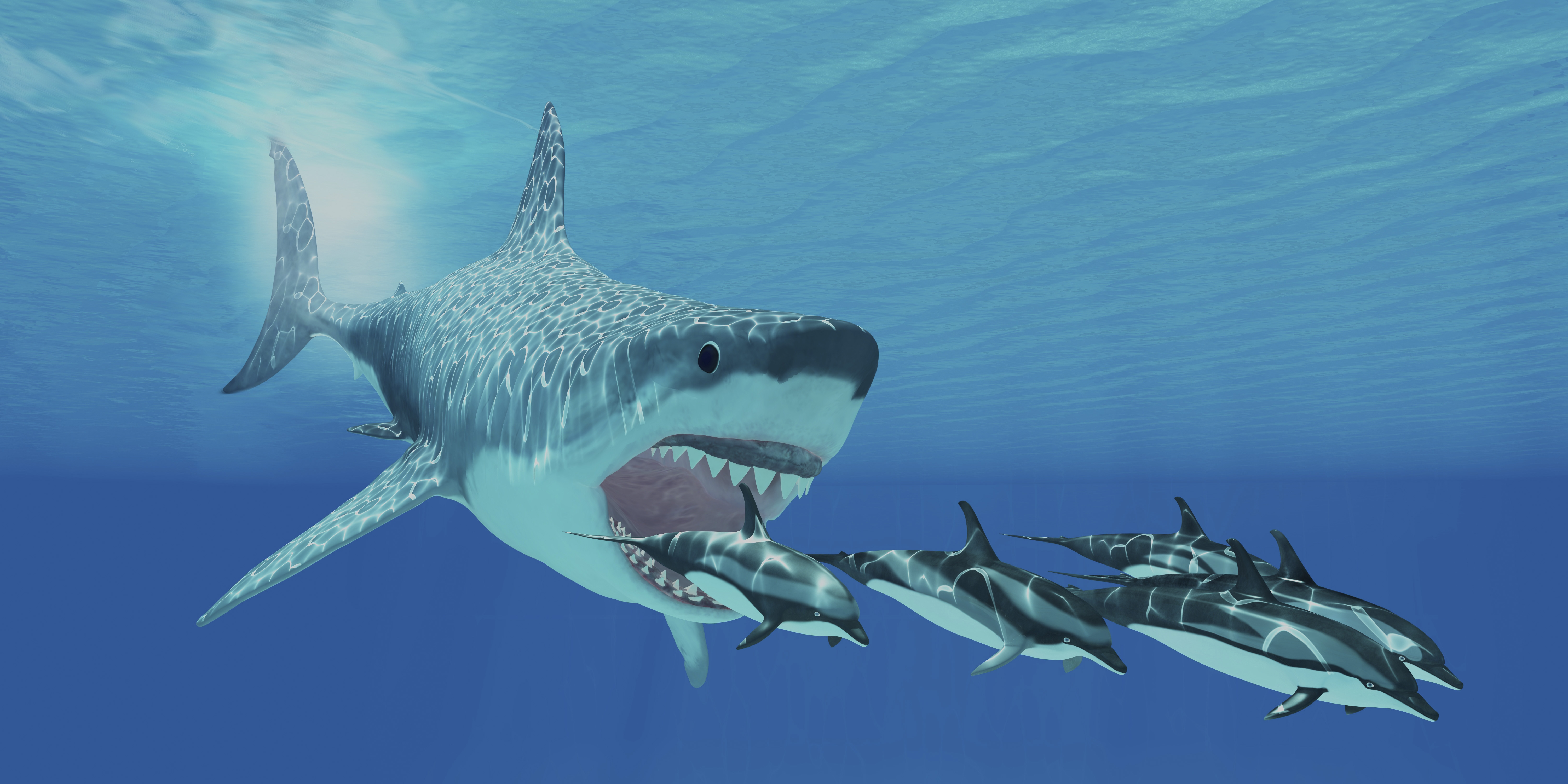
In fact, we still understand quite little about their long-term evolution. Research published earlier this week in the journal 'Current Biology', demonstrates how shark evolution over the past 83 million years has been driven by diet preference and climate change — leading to the diversity we see today.

As it turns out, being picky about your prey is a risky game for sharks to play.

When the scales tipped

One of the more peculiar patterns in biology is for very closely related orders of living animals to have greatly different numbers of species. A notable example is the difference in species number between mackerel sharks (the Lamniformes order) and ground sharks (the Carcharhiniformes order).

Both orders share nearly 170 million years of evolutionary history, and both have species found the world over. However, there are only 15 species of Lamniformes known today (including the great white shark), compared to more than 290 species of Carcharhiniformes (including hammerheads, tiger sharks and many species found on coral reefs).

But why do some orders of shark thrive, while others dwindle? To find out, we turned to the fossil record.

The fossil record reveals shark species in prehistoric times followed a very different pattern to species alive today. Before the "age of dinosaurs" ended some 66 million years ago, at the end of the Cretaceous Period, Lamniformes were more diverse than Carcharhiniformes.

To investigate this shift, we looked at changes in the shapes of shark teeth over the past 83 million years.

READ MORE: Megalodon shark babies were the size of a human adult, study says
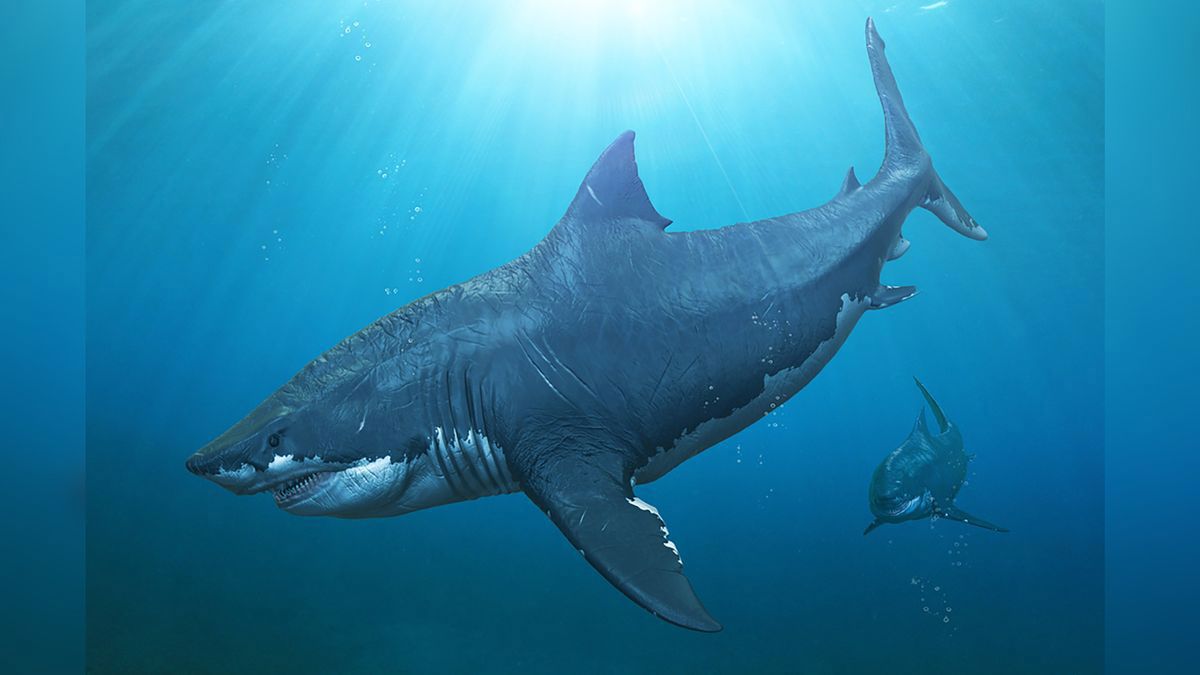
Why teeth?

Unlike their soft cartilaginous skeleton, shark teeth are made up of a substance called "enameloid", making them very hard. Sharks also continuously grow new teeth, which means their teeth provide an almost continuous fossil record.

Luckily, the shapes of shark teeth also provide rich information on their diets. For instance, a fish-eating shark is likely to have pointy, narrow teeth — often with multiple cusps to increase its chances of catching slippery prey (see the image of the mako shark below, a predominately bony-fish specialist).

By comparison, a shark that specialises in hunting seals is more likely to have broad teeth, which may be serrated to help with cutting. It is precisely this variation in tooth shape which we focused on in our latest study.

By examining more than 3000 teeth, we found a clear link between changes in tooth shape over time and changes in the environment that took place during and after the end-Cretaceous mass extinction — the same event that wiped out non-bird dinosaurs about 66 million years ago.

Plenty of fish, yet sharks can be choosy

During the Cretaceous, when Laminformes were more abundant, many shark species lived in inland seas that were common at the time. One example was the Western Interior Seaway, which divided North America into east and west "subcontinents".

However, towards the end of the Cretaceous, these inland seas started disappearing. Sea levels lowered and exposed entire chunks of land. Inland seas are rare today (the Caspian Sea is one example, but it too is receding).

The reduction in these marine ecosystems led to a significant loss of wildlife, including marine reptiles and cephalopod ammonites (relatives of squid and octopus) upon which many Cretaceous Lamniformes preyed.

As a result, many Lamniformes suffered extinction. On the other hand, Lamniformes with more generalised diets survived the extinction event — as did Carcharhiniformes, which also tend to have more generalised diets.

READ MORE: The true size of the ancient shark megalodon revealed
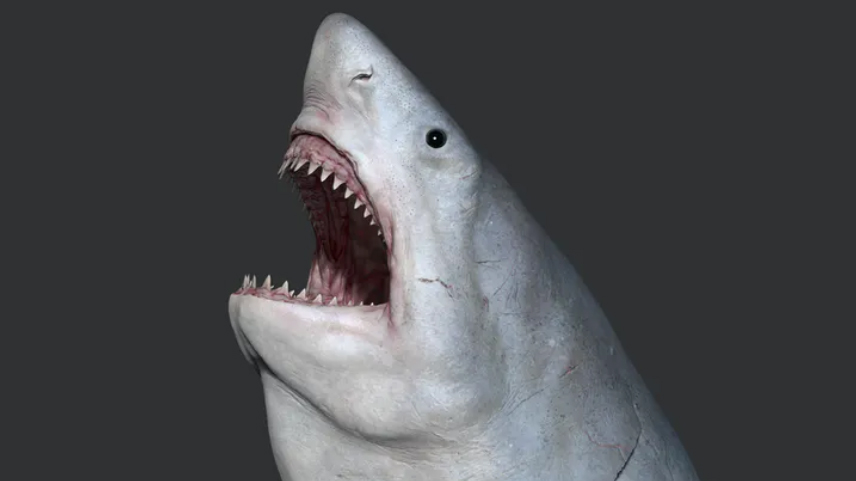
The giant megalodon

Why the meg went missing

A similar event may have occurred just a few million years ago to one of the most awe-inspiring lamniform sharks ever known: the meg (Otodus megalodon). The meg was the largest predatory shark species to have existed.

Megalodon was truly an imposing predator that lived during the Miocene and early Pliocene, roughly 4—23 million years ago. Based on its tooth shape, it likely specialised in eating whales, which were very diverse at that time.

Our results show the period in which it lived was also a turning point for Lamniformes, with record-low tooth disparity (a loss in the amount of shape variation).

Although it's still difficult to know why exactly the meg went extinct, it's likely its specialised diet, which might have included the giant sperm whale Leviathan melvillei, put it at a disadvantage as cooling climates during the Miocene and Pliocene led to changes in its preferred diet.

To generalise, it seems specialised diets, such as that of the megalodon and some Cretaceous Lamniformes, may have put these species at a greater risk of extinction.
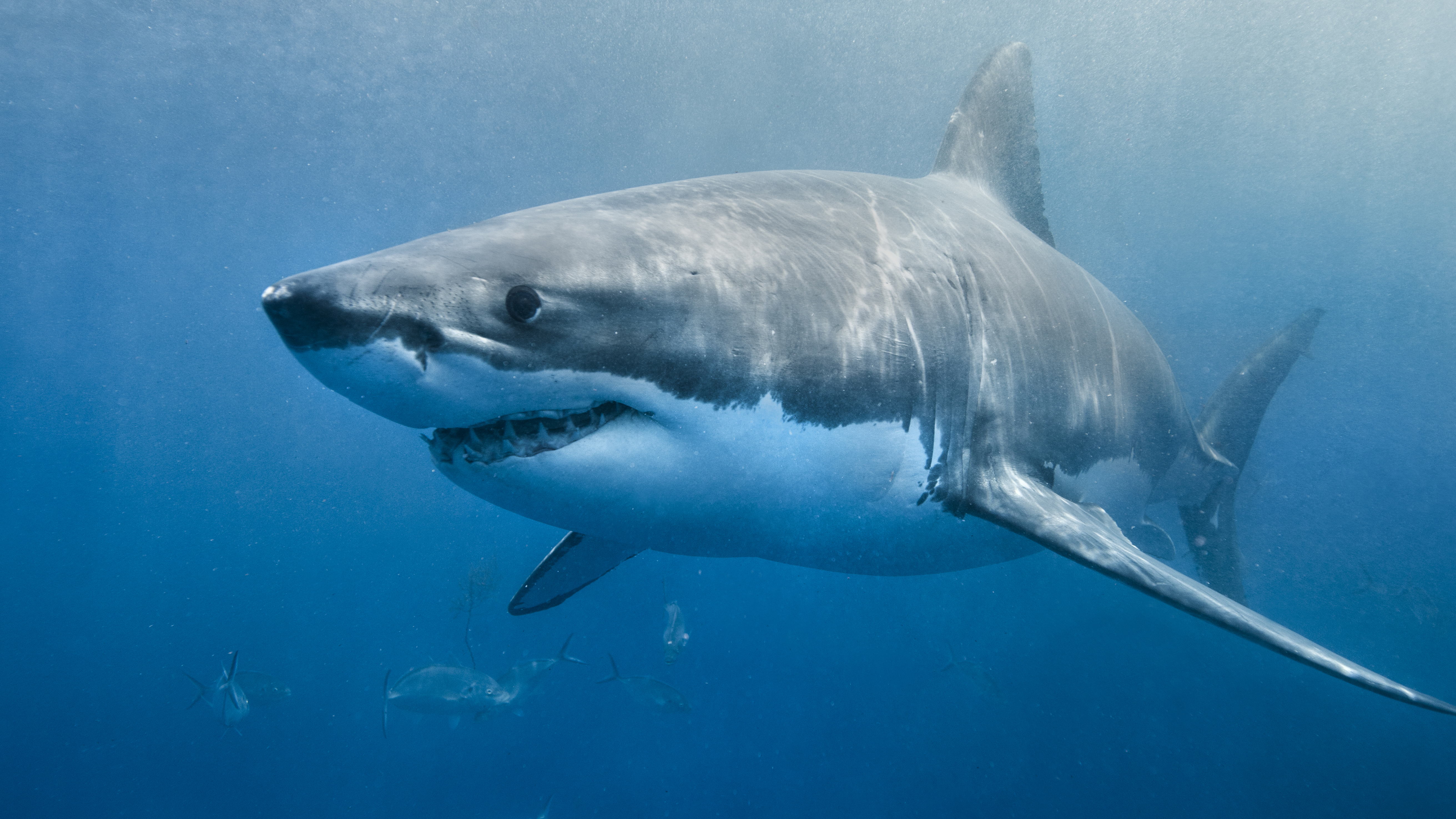
Mr Johnson said the shark was a Great White.

Today's species

So what does this mean for modern sharks?

By studying the stomach contents of modern Lamniformes, we found most species tend to feed on specific food groups. The thresher and mako sharks feed primarily on bony fish. The basking shark exclusively eats plankton, while adult great white sharks feed mainly on mammals.

Since Lamniformes were much more diverse in the past, our research indicates the low diversity of Lamniformes living today is likely the result of repeated extinction events.

By comparison, modern and past Carcharhiniformes are and were more flexible in their diets. They also benefited directly from the expansion of coral reefs over the past 50 million years.

Thanks to important biological insights offered by the fossil record, we now have evidence dietary specialisation and adaptability to environmental changes likely drove shark evolution over the past 83 million years — leading to the imbalance in Lamniformes and Carcharhiniformes species numbers today.

READ MORE: Megalodons became so big through cannibalism in utero
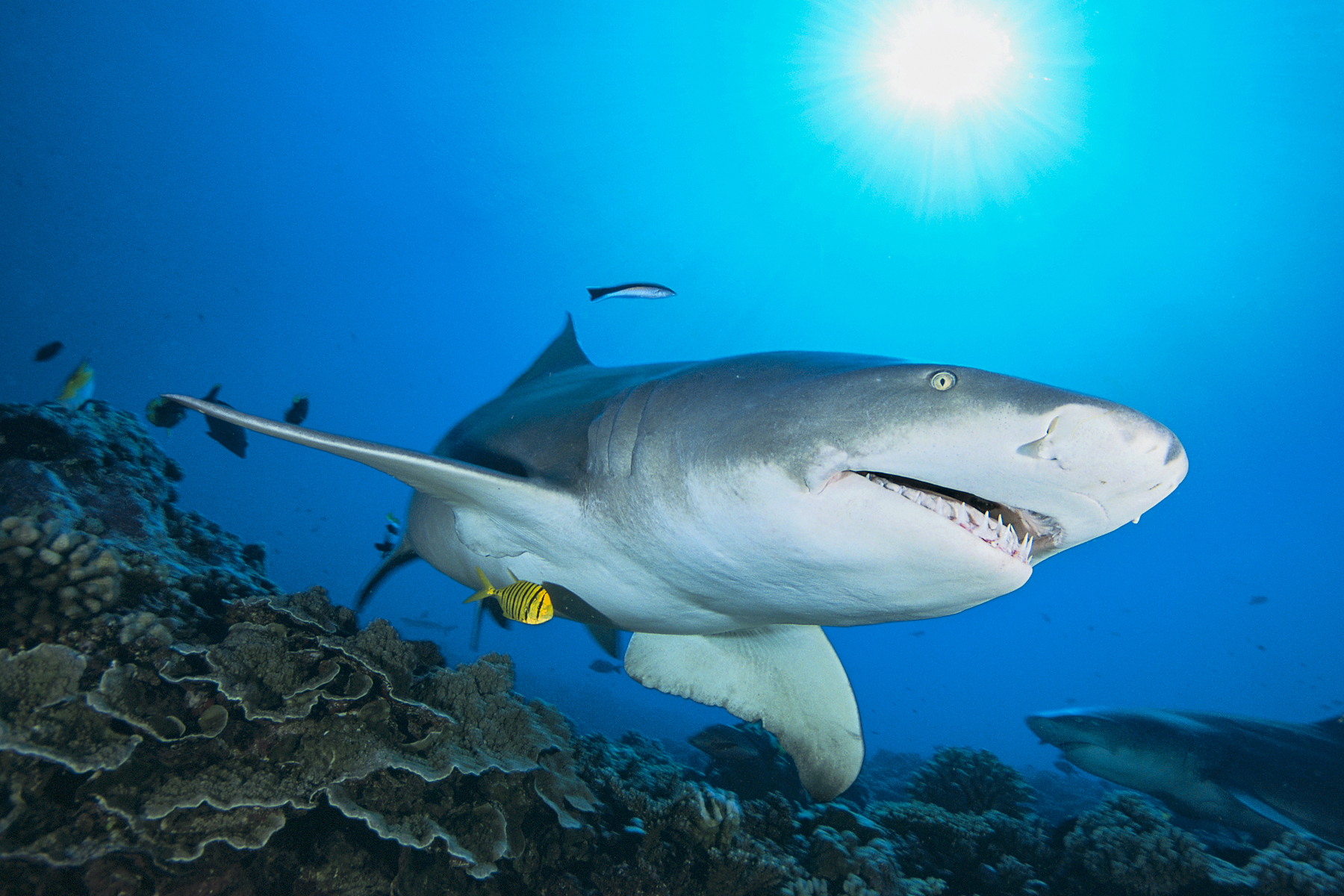
Lemon Shark

But what does the future hold? Although it's hard to say for sure, the news isn't great for Lamniformes. Of the 15 species remaining, five are classified as "endangered" or "critically endangered" by the International Union for Conservation of Nature and Natural Resources. Another five are considered "vulnerable".

Lamniformes are also mostly oceanic species with specialised diets, and are therefore particularly vulnerable to chronic overfishing and habitat destruction. And since our results indicate diet and prey availability underpinned much of the diversity among modern sharks, we think it will probably decide their survival in the future, too.

This article was written by Mohamad Bazzi, a postdoctoral research fellow, University of Zurich and Nicolas Campione, senior lecturer, University of New England.

It was originally published in The Conversation and has been reproduced with permission.
Six deaths, 477 new COVID-19 cases as NSW preps for re-opening

New South Wales has recorded 477 new COVID-19 cases and six further deaths in the 24 hours to 8pm last night.

Dr Jeremy McAnulty from NSW Health said the six latest victims were all men.

Two were aged in their 50s, one in his 60s, and three in their 70s.

EXPLAINER: What NSW residents can and can't do as the state enters 'Freedom Day'

https://twitter.com/NSWHealth/status/1446989973136179201?ref_src=twsrc%5Etfw

Five were unvaccinated, and one had had his first dose.

Dr McAnulty said health authorities were continuing to investigate the emergence of a different Delta strain in Sydney.

Eight people with that strain have so far been identified, seven in the one household.

Dr McAnulty said the strain showed no difference to mainstream Delta in terms of its transmission or any vaccine resistance.

Sydney set to re-open

In less than 24 hours, Sydney and large parts of NSW will exit a lockdown that has for the capital continued for 106 days.

As of 12.01am tomorrow, businesses can re-open and the five-kilometre travel restriction is lifted.

Home visits will be permitted and larger groups can congregate outside and at the pub.

READ MORE: NSW Premier denies ignoring health advice in lockdown exit plans

Significant restrictions will remain in place, and the new freedoms will only be available to people who have been fully vaccinated.

Premier Dominic Perrottet today urged people to treat everybody with kindness and respect, acknowledging the "challenges" that awaited in coming days.

"I just ask, treat everybody like your neighbour's daughter, or son," he said.

He hailed NSW's vaccination program, with 90.1 per cent reached for first doses.

"NSW is leading this country out of the pandemic," he said.

Health Minister Brad Hazzard warned that people should exercise caution.

"We are still in the middle of a pandemic," he said.

"Enjoy what we've all worked very, very hard for, but just be careful."

Customer Service Minister Victor Dominello said a pilot for the Service NSW vaccination passport was underway.

Five hundred people in Wagga Wagga, Lismore, Tamworth and Port Macquarie were taking part in the closed pilot.

"We worked with industry stakeholders and selected certain areas, like clubs, aged care facilities and taxis, and asked them to reach out to selected staff and customers," Mr Dominello said.

The vaccination passport will allow people to simultaneously check in to a venue and confirm their vaccination status.

Mr Dominello said so far the process had been shown to be "seamless".

"We're moving heaven and earth at pace to deliver this for NSW," he said.

The program is set to launch for the rest of NSW on October 18.

READ MORE: New South Wales hits 90 per cent single dose vaccination coverage

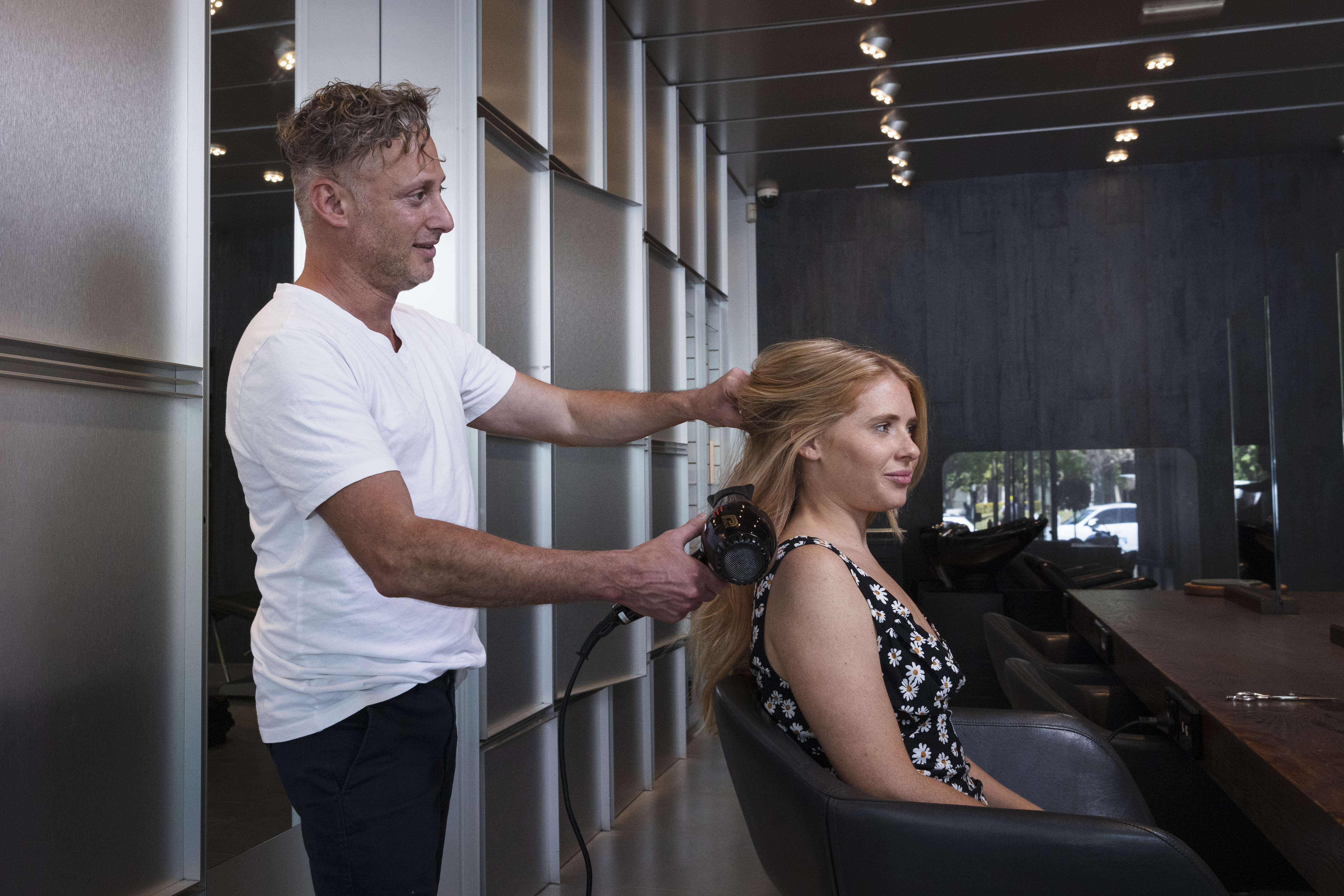
Sydney hairdresser Alan Buki told Today he was accepting his first client in months at 12.01am tonight – and is booked out all through until 9pm tomorrow.

"After nearly four months, the salon is finally opening," he said.

"The shop is out of control and the energy is infectious."

He said the salon was booked out for the next two months.

Premier Dominic Perrottet wasted no time in relaxing the regulations of NSW's roadmap out of lockdown, announcing greater crowd and home visit limits just days after being sworn in.

READ MORE: Major NSW roadmap to freedom changes revealed

He has also flagged that international borders could re-open on November 1, ahead of schedule.

The changes have faced criticism, but Mr Perrottet denied that health advice had been ignored and said the re-worked plan was a safe way for the state to re-open.

What comes next

Mr Perrottet again flagged re-opening the international border on November 1 as one of NSW's next major milestones.

He said Australia could not continue as a "hermit kingdom".

"We want to get returning Australians home first and foremost," he said.

NSW is currently conducting a home quarantine trial, with results to be brought before Cabinet soon.

Mr Hazzard also said 80 per cent vaccination levels could be reached in just one or two weeks.

Ten thousand set to attend Melbourne Cup, Victoria records 1890 new COVID-19 cases

Ten thousand fully-vaccinated Melburnians will be able to attend the Melbourne Cup while thousands will be able to go to a live music event on 30 October, the Premier has announced.

The news comes as the state has recorded 1890 new COVID-19 cases and a further five deaths in the past 24 hours.

Daniel Andrews confirmed Victoria is on track to ease restrictions this month, with 86 per cent of the eligible population aged over 16 having had one dose of a COVID-19 vaccine, and 58 per cent having had both doses.

READ MORE: Victoria records 1965 new COVID-19 cases, five further deaths

"So we are well on track to get to 70 per cent double dosed on time as the roadmap outlines. 80 per cent double dosed just a short time thereafter," he said.

Mr Andrews announced thousands of people would be able to attend a live music event at Melbourne's Sidney Myer Music Bowl on 30 October as part of a 'vaccinated-economy' trial in Melbourne.

On 2 November, 10,000 fans who live within 25km of Flemington Racecourse will be allowed to attend the famous Melbourne Cup.

"Whether you are a racegoer or not, whether you are a fan of the sport or not, that'll be a very important day for every single Victorian, a message to the rest of the country and the world about the fact that we are open," Mr Andrews said.

"We will hope we have that by that stage passed 80% double dosed, and we can then confirm that the last two events of the Melbourne Cup carnival will also have a crowds of up to 10,000 people."

READ MORE: How Victorians will prove they are fully-vaccinated against COVID-19

Ambulances lined up outside Sunshine Hospital in Melbourne.

Vaccinated economy trials are set to begin at 15 venues in six LGAs in regional Victoria tomorrow.

The developments come after the state set a national daily case number record yesterday with almost 2000 new COVID-19 cases.

Today's cases

Today's new cases take the state's total number of active cases to 18,342, with 609 currently in hospital, including 126 in intensive care and 88 on a ventilator.

The five deaths recorded today include a man in his 50s from Melbourne, a male in his 50s from Brimbank, a man in his 70s from Maribyrnong, a man in his 70s from Wyndham and a woman in her 80s from Yarra.

Already changes have been made to the state's lockdown rules, with Health Department deputy secretary Kate Matson confirming that secondary close contacts will not need to isolate.

While it has been the policy in Melbourne for some time, it will now be extended to all of Victoria.

READ MORE: Beloved deli owner dies with COVID-19

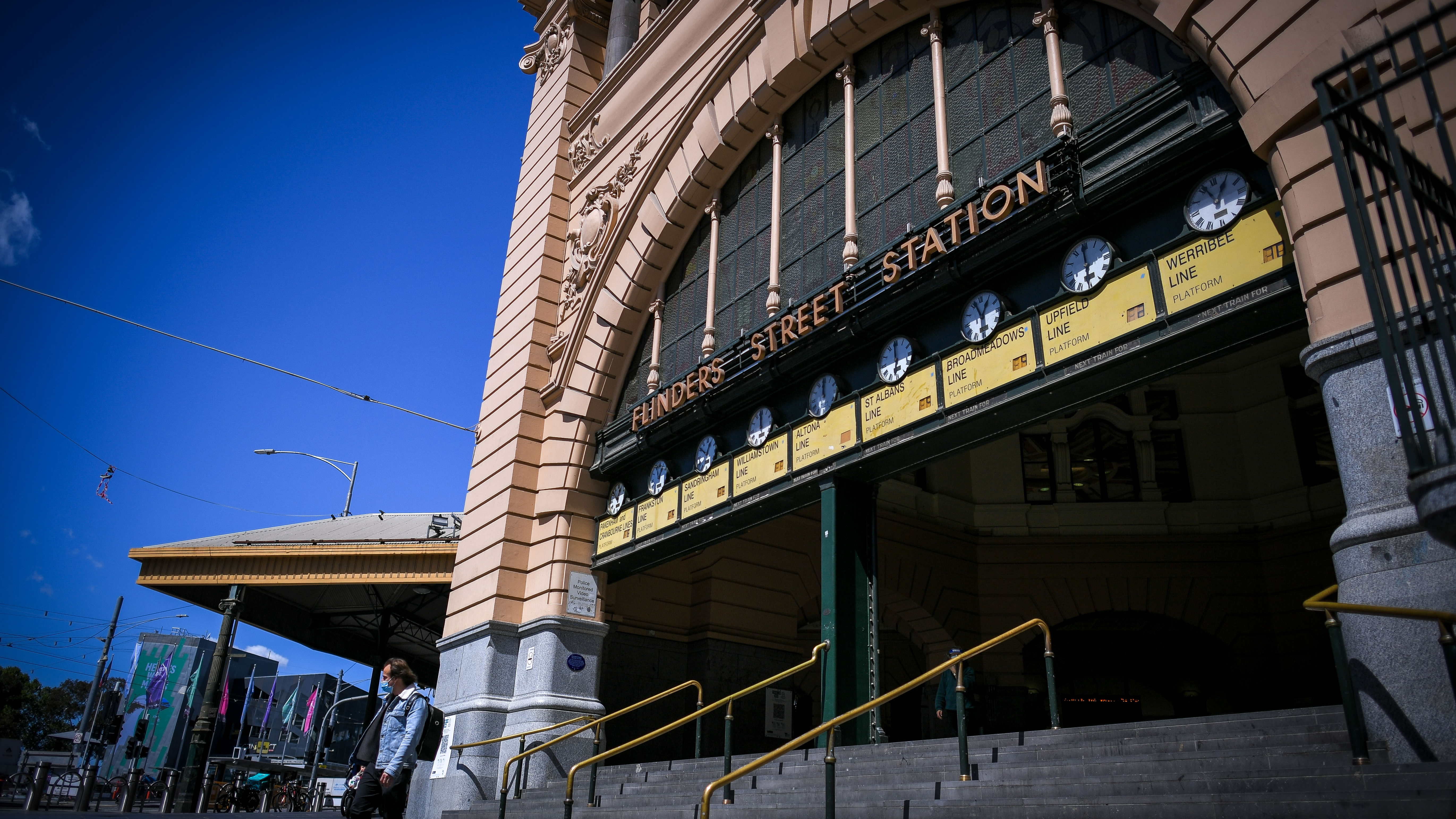
Empty Melbourne CBD under lockdown.https://twitter.com/VicGovDH/status/1446961166283165696

"It will also make it easier for household members of primary close contacts to get groceries and work while the primary close contact is isolated away from the rest of the household," Ms Matson said yesterday.

"Again, there is a very important difference between someone who is known to have come into contact with a confirmed case, and then someone who has come into contact with that primary close contact. And the risk is different.

"So this just recognises the changing risk and the changing environment that we are in we are no longer chasing COVID zero in Victoria, and we have 17,000 active cases in Victoria at this point in time."

But Ms Matson stressed that secondary close contacts who have symptoms should still get tested and isolate.

READ MORE: NSW Premier denies ignoring health advice in lockdown exit plans

Victoria is set to hit the 70 per cent milestone three days ahead of initial predictions, on October 23.

Major restrictions will remain in place, but Victorians will also be able to enjoy more freedoms.

The next bar of 80 per cent vaccination is expected to be cleared on November 3.

However, if that too comes several days early, thousands of Victorians could be trackside at the Melbourne Cup on November 2.

Midnight openings, months of bookings for Sydney businesses

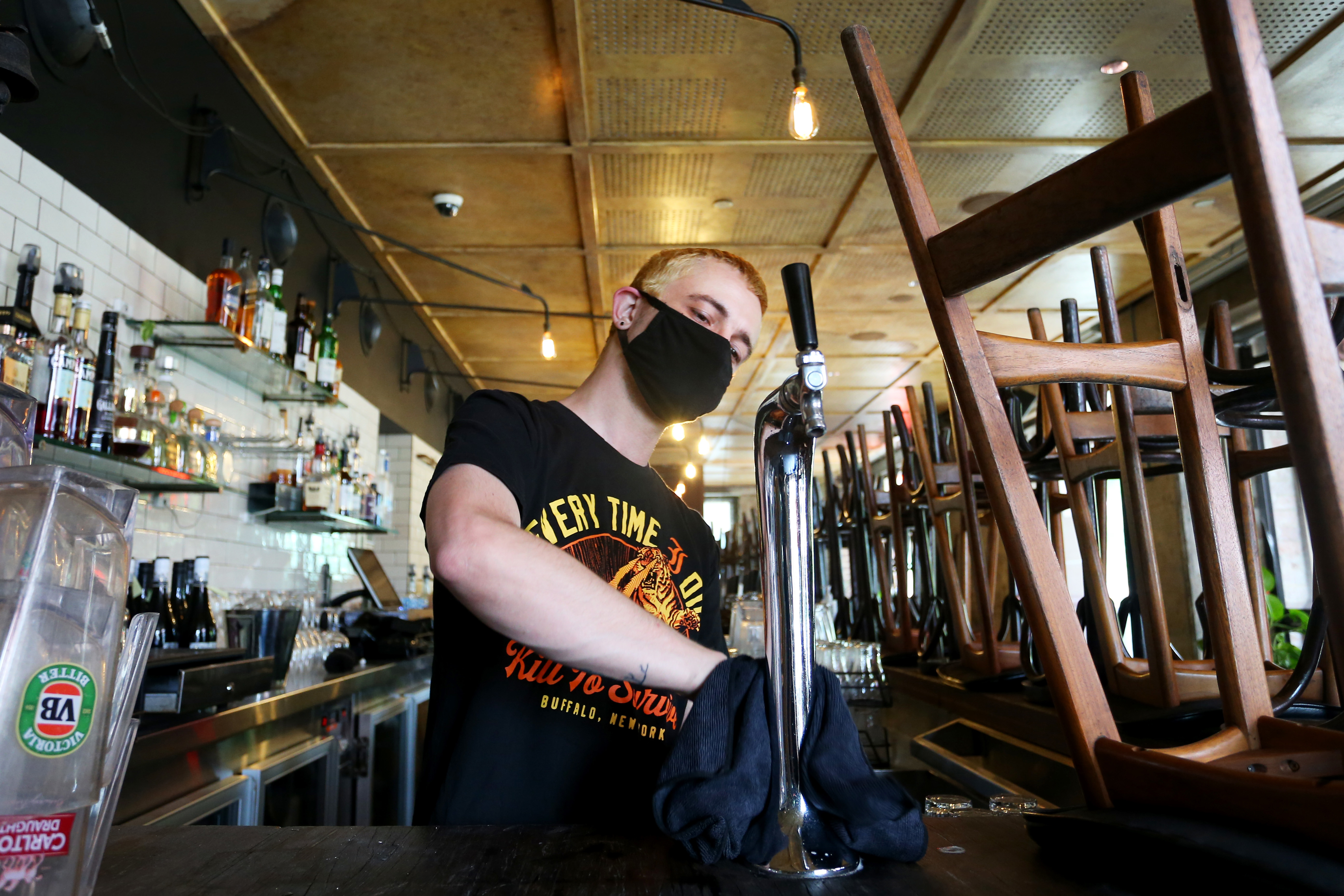
Businesses across Sydney are preparing for a deluge of returning customers when lockdown ends at midnight tonight.

Hairdresser Alan Buki told Today he was accepting his first client in months at 12.01am tonight – and is booked out all through until 9pm tomorrow.

"After nearly four months, the salon is finally opening," he said.

READ MORE: NSW just hours from freedom as state prepares for re-opening

"The shop is out of control and the energy is infectious."

He said the salon was booked out for the next two months – and that other salons were in a similar situation.

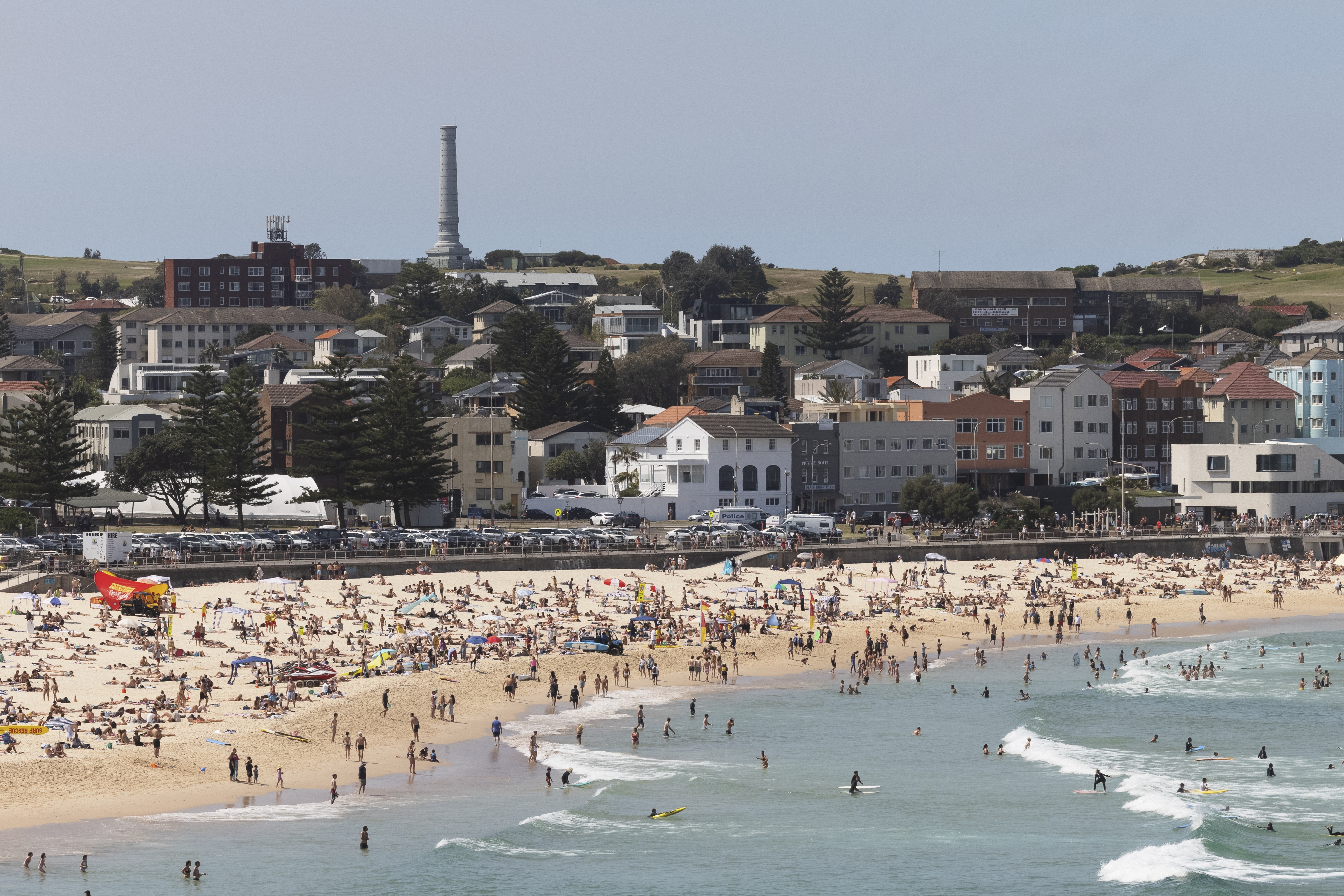
Ian Oakes and Alex Milne, who run Drake Eatery at Bondi Beach, said staff were putting in a "really big effort" to be ready for tomorrow.

READ MORE: NSW Premier denies ignoring health advice in lockdown exit plans

Plenty of bookings have been coming their way – but Ms Milne told Today they were a little worried about policing vaccinations.

"We know people can show their proof and we're obliged to check that," she said.

"I guess it's really hard for people to remember to bring that to a reservation, we are hoping we don't get any aggro people. Fingers crossed everyone is kind to us."

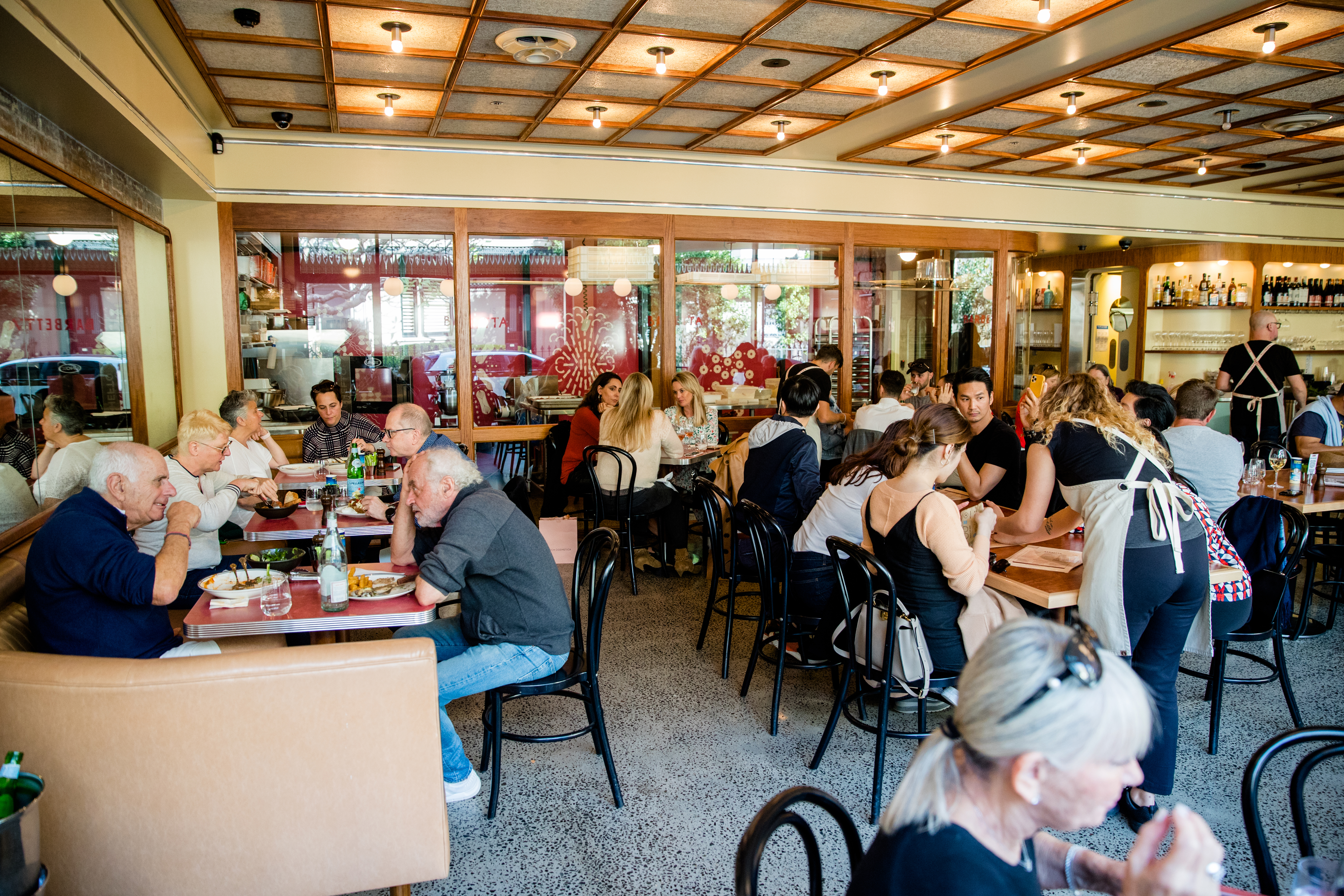
Mauro, the manager at Barbetta in Paddington recommended people make a booking rather than hope for a walk-in.

EXPLAINER: NSW's roadmap out of lockdown – all the changes at 70 per cent

"We actually are fully booked for the next few weeks, I would say three or four weeks," he said.

"We always leave some tables spare for people that want to try to do a walk-in, but I really recommend you book in."

He said the staff were "very, very excited" about finally re-opening after more than 100 days.