Tag Archives: oceania

Families who have lost work could be in for 'windfall'

Families could be in for a windfall, thanks to an announcement by the Prime Minister on COVID-19 disaster payments, but the government can't say how much it will cost.

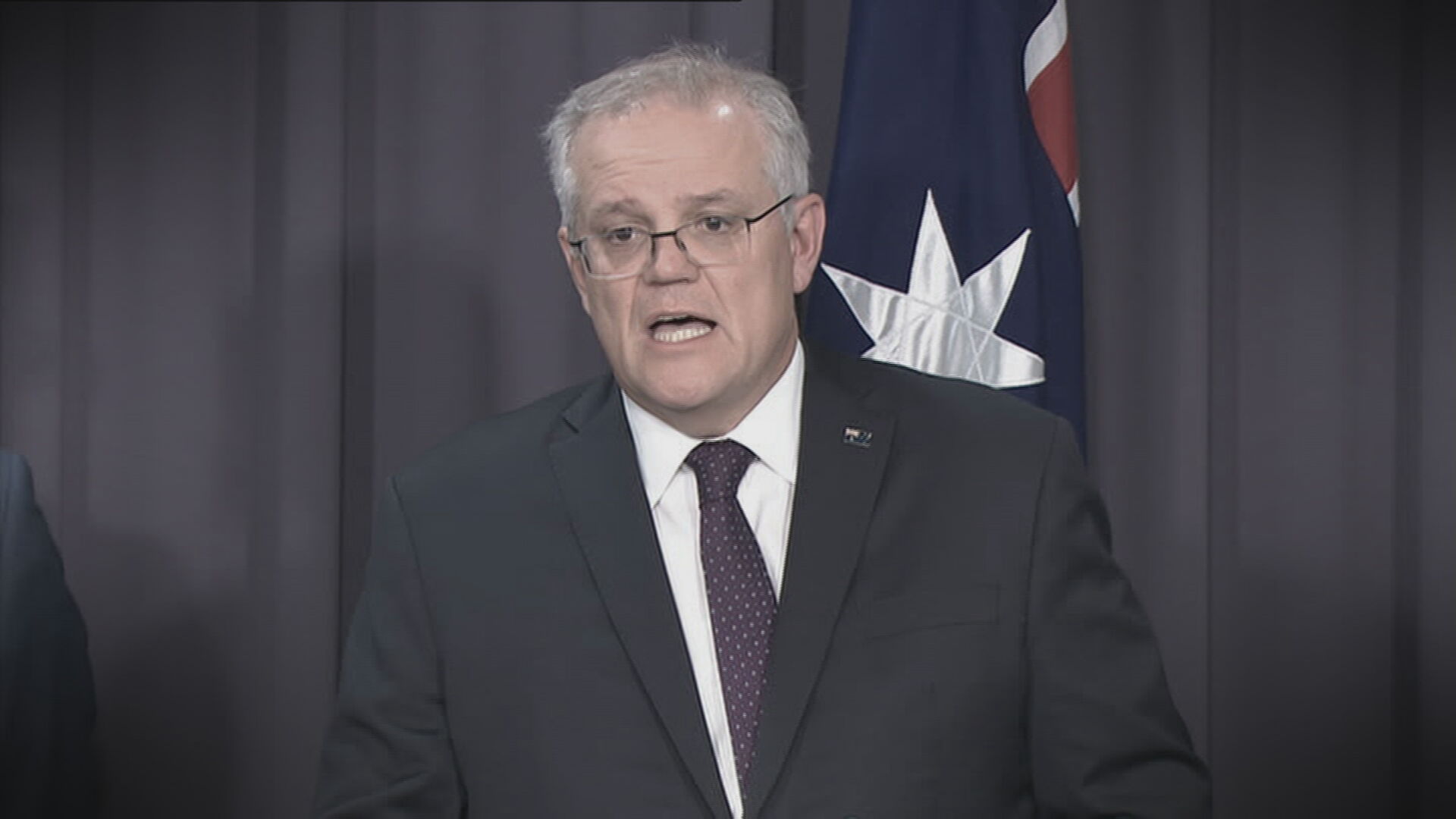
When the payment was introduced in June, guidelines said it was taxable, however in late July Scott Morrison changed that.

"I've made that very clear this morning, back through the system, they won't be taxable. JobKeeper, by the way was. And we are treating this as a disaster in these areas," he said on morning television.

READ MORE: Tony Abbott fined by NSW Police
Scott Morrison

That led to it not counting towards a family's income estimated used to calculate how much Family Tax Benefit and Child Care Subsidy they would receive.

In a statement, Services Australia which operates Centrelink services told 9News: "The COVID-19 Disaster Payment is a non-taxable payment, therefore people don't need to include the amount as assessable income in their tax returns next year. For the purposes Child Care Subsidy (CCS) or Family Tax Benefit (FTB), families do not need to include this payment in their family income estimate."

Tax accountants have told 9News families could wind up better off at tax time next year, because if they lose work, and receive the payment but have not updated their family income estimate to lower their salary, Centrelink will have underpaid them.

READ MORE: What it's like to work inside a COVID ward in Sydney right now
Fed pols

9News has been told that could mean a payment after tax time next year, or if families lower their income estimate now they could receive more Family Tax Benefit this year.

"It's a double bonus. It's extremely good news for those recipients," Tony Greco from the Institute of Public Accountants told 9News.

So far 1.8 million Australians have received the payment which are now at rates of $430 a week if you lose between 8 and 20 hours work a week, or $750 if you lose more than 20 hours a week.

It has cost taxpayer more than $6 billion.

"It's understandable people may not have realised, the disaster payment is tax-free and its retrospective to the third of June. So you've got a double bonus, it's not taxable for tax purposes nor is it counted towards family tax benefit," Mr Greco said.

READ MORE: NSW records 1599 new local COVID-19 cases, eight deaths
fed pols

"No-one saw this coming it was always taxable, it's going to cost more coin by the federal government."

JobKeeper payments were taxable for the people who received it, and the government has been criticised because some recipients have been pursued by Centrelink because of over-payments.

"JobKeeper when that was received by a worker it was assessable and counted towards family tax benefit," Mr Greco said.

Neither the Government Services Minister Linda Reynolds, nor the Treasurer Josh Frydenberg would comment publicly on the issue.
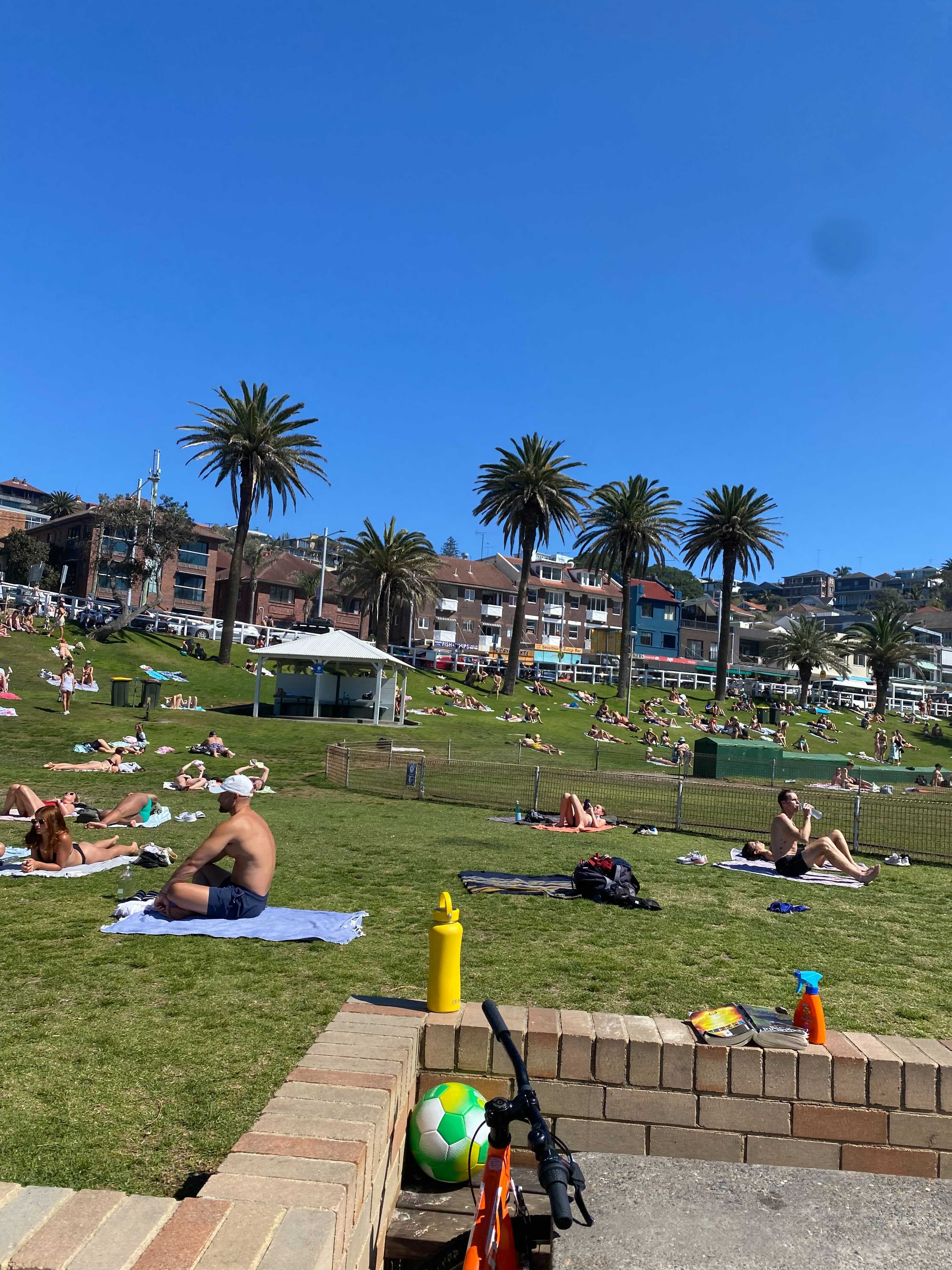

Sydneysiders flock to the beach as temperatures soar

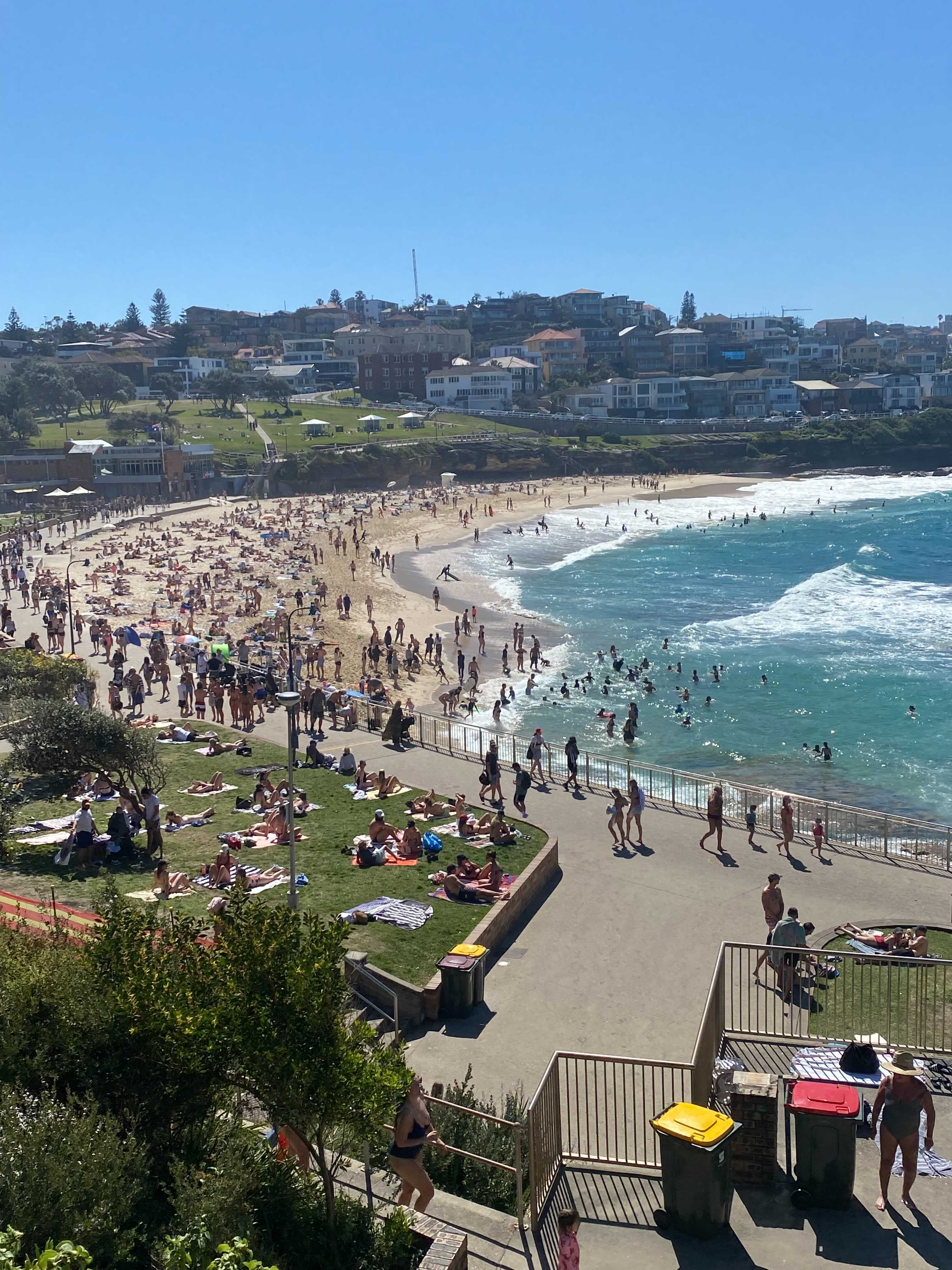
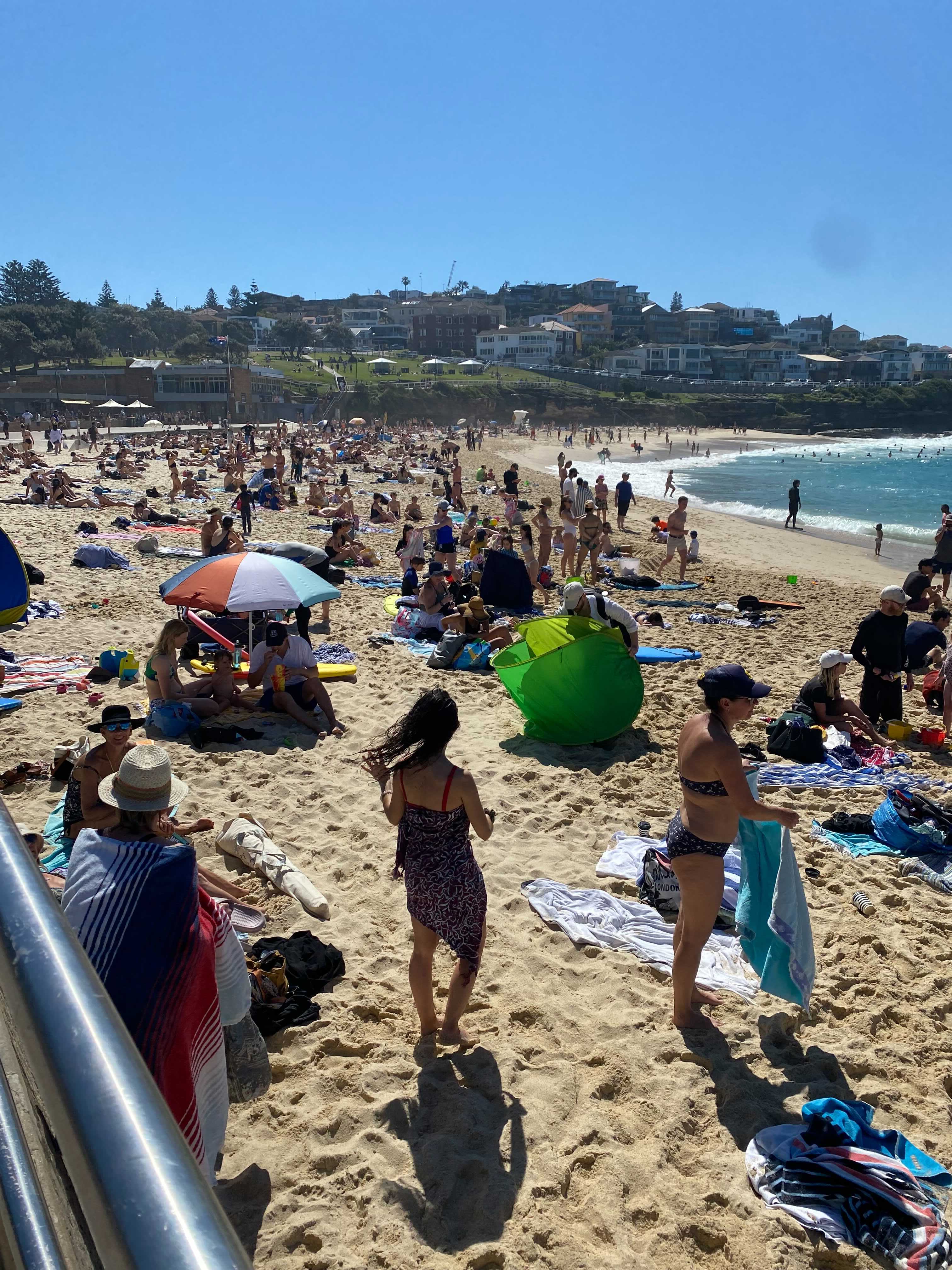
Sydney's beaches filled up early today as temperatures soared across New South Wales, with conditions peaking at 30 degrees in some areas.

Thousands of people flocked to beaches like Bronte, Bondi and Manly, to make the most of the sun's rays, on the hottest day of spring so far.

Health Minister Brad Hazzard said that being outdoors is the "safest place to be", after the state recorded 1599 new local COVID-19 cases today.

READ MORE: NSW records 1599 new local COVID-19 cases, eight deaths

Outdoor activities are known to pose a very minimal risk in virus transmission, prompting crowds to flock to the coast in droves.

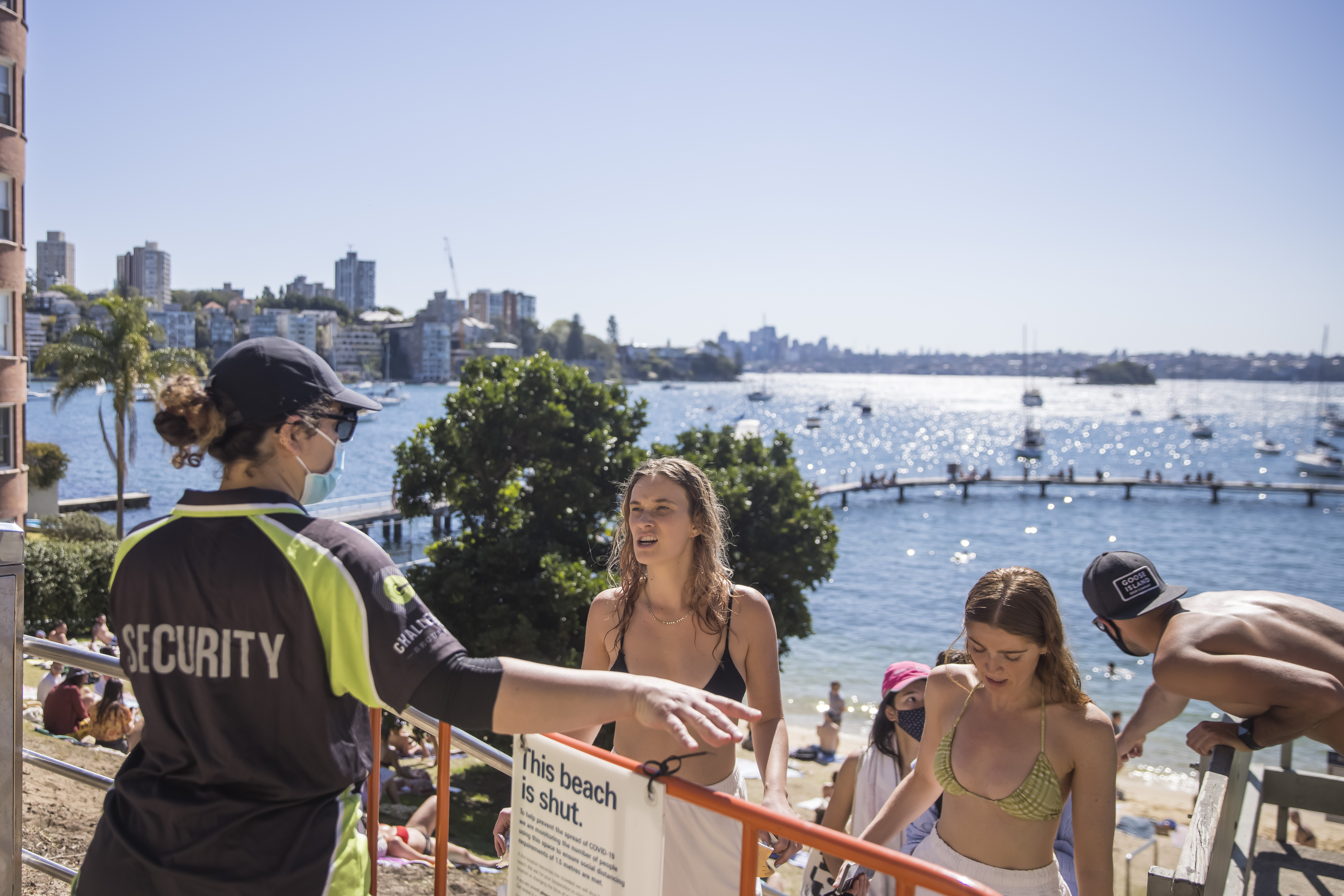
Late this afternoon, Camp Cove, at Watson's Bay, and Redleaf Beach at Double Bay were closed due to capacity limits.

In Sydney's metro, temperatures hit 29 degrees by lunchtime while in the city's west, Penrith recorded 30 degrees by 1pm.

https://twitter.com/Lifesaverhelo/status/1436548980163313665?ref_src=twsrc%5Etfw

READ MORE: Pregnant women warned to get jab as Victoria records 450 new virus cases

Mr Hazzard was asked on whether he holds concerns over beachgoers turning out in crowds at today's media conference, but said that outside activities are safe.

"No, I am concerned about people who are not vaccinated," he said.

"Fresh air we know is the safest place to be at the present time."

A raft of lockdown measures currently in place have been tightened by authorities in a bid to combat people entering beachside suburbs from outside of their LGA.

Checkpoints have been put in place along major roads in Bondi, with police out in full force to check drivers' licenses to ensure people aren't straying further than 5km from their home.

The hot weather is expected again tomorrow, but will trial off by the afternoon and becoming rainy with a noticeably cool change by Monday.

Rain is forecast for the majority working week, with sunny conditions expected to return again on Friday.

What it's like to work inside a COVID ward in Sydney right now

For months, health experts have been warning that the Delta strain of COVID-19 is more dangerous, contagious, and making people sicker.

Hospital staff are being pushed to the brink as case numbers soar across NSW, and more patients are sent to the ICU as the virus robs them of their ability to breathe.

Three respiratory nurses working in the coronavirus ward at a major Sydney hospital spoke to Nine.com.au about their experience dealing with surging cases, sicker patients, and staff shortages.

READ MORE: Sydney hospitals brace for influx of COVID-19 patients

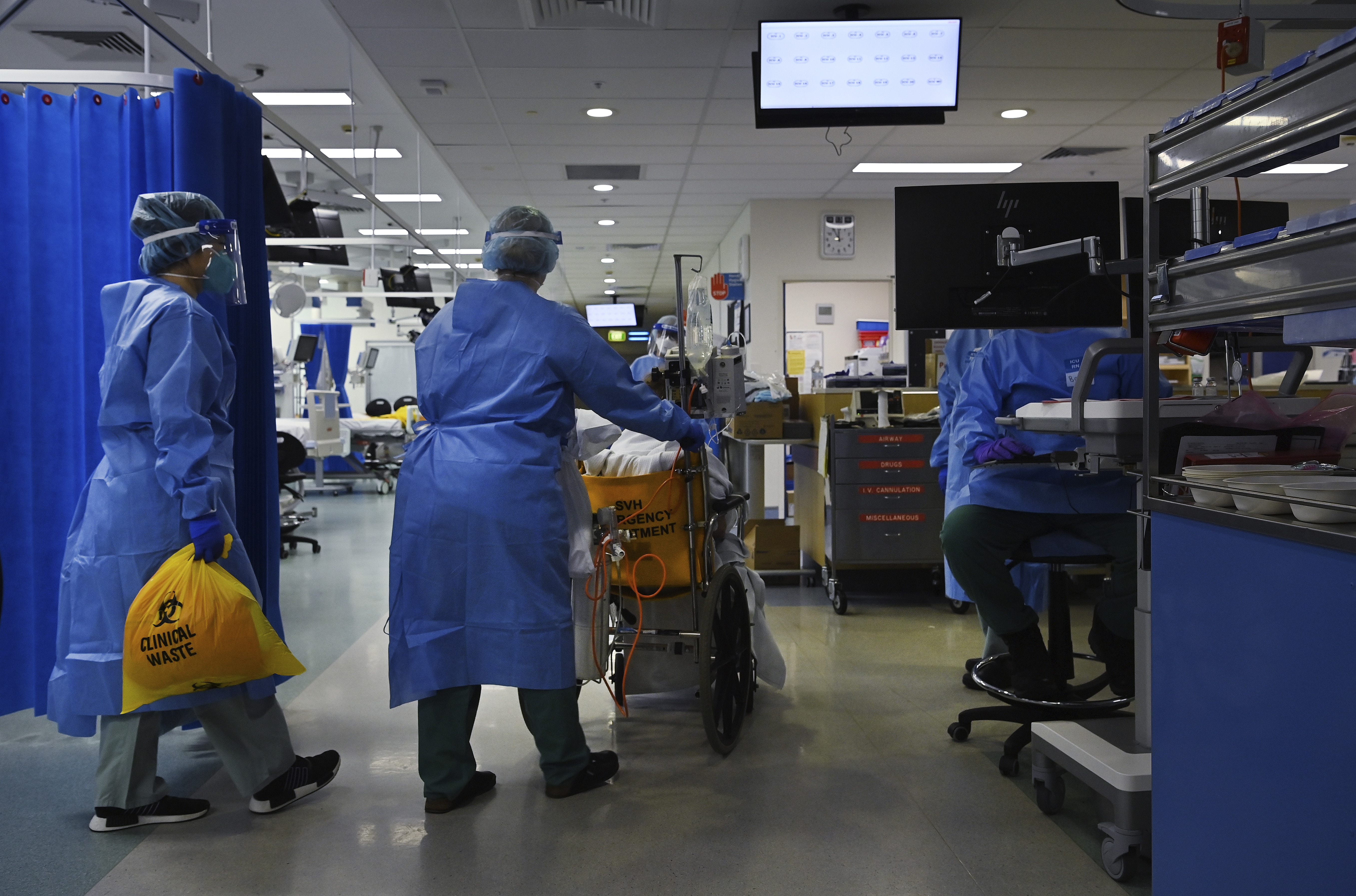
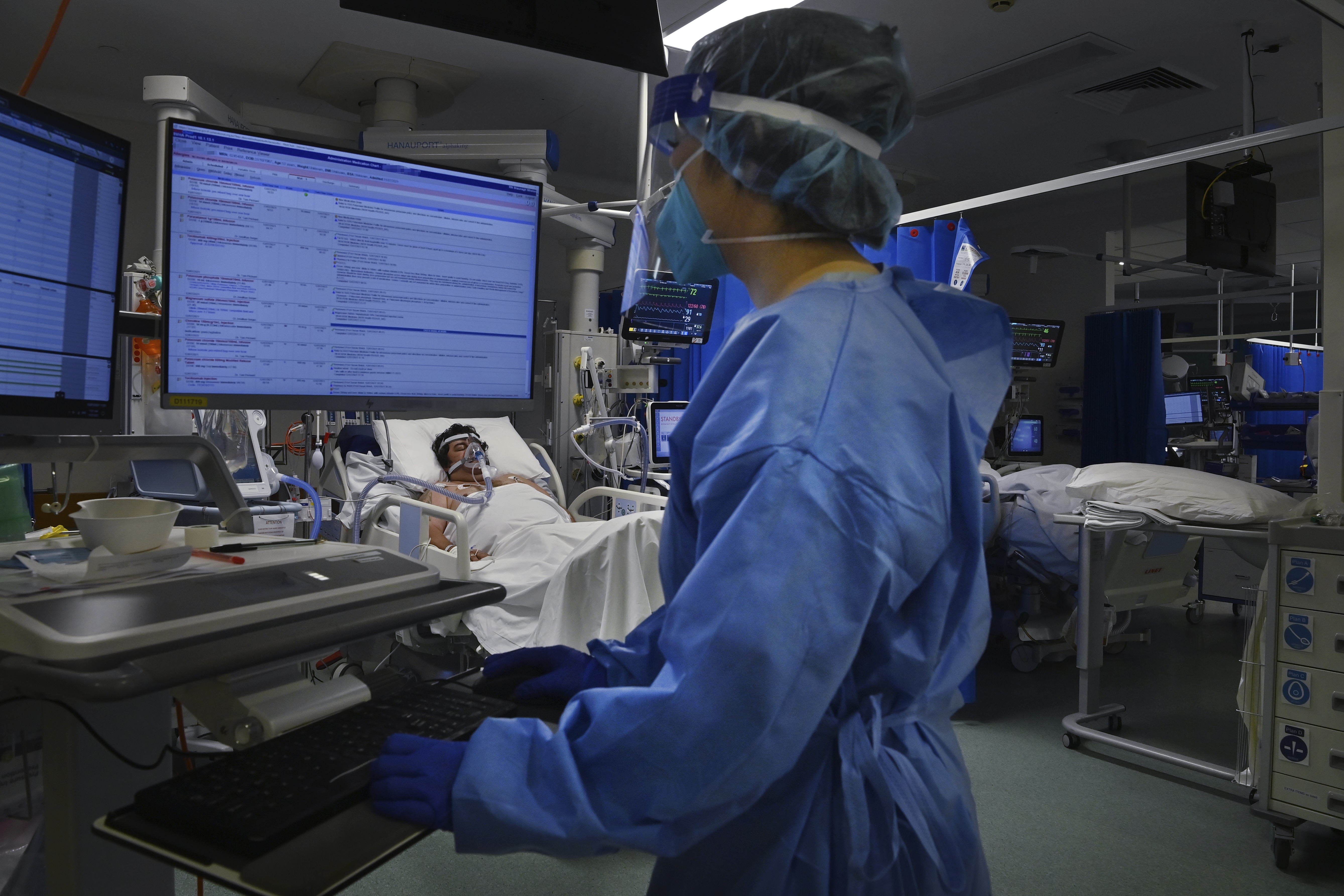
Patients in hospital with coronavirus are younger and sicker with the Delta strain. Pictured: Staff at St Vincent's Hospital ICU.

"I had to tell a man that his wife had died in intensive care at the weekend over an iPad," Liz* said.

"Even though it's not an ideal situation, we usually do always have a Mandarin-speaking nurse around, I didn't have that, and it was just … oh my gosh it was awful."

The patient's first language was not English and due to weekend staff shortages and a lack of interpreters, hospital staff needed to use a translation app until a social worker arrived.

"That's how we're communicating with a lot of our patients right now, via an app on an iPad," Liz added.

"We've also had to witness people saying their last goodbyes via this (video)."

Liz has been working as a nurse for over 15 years, first training overseas and then moving to Australia in 2009. She specialises in respiratory.

"It's my art, I love it, at the moment I can't see myself anywhere else," she said.

READ MORE: Expansion of rapid home testing for COVID-19 on the cards

But the pandemic has completely changed the sort of patients she sees, their ages, and the condition they are in when they come to the hospital.

"We don't know what we're going to encounter every day or how many patients we're going to see," she said.

"Obviously, our respiratory workforce wasn't enough to cover this pandemic, we've had to open two wards, what we call a mega-ward."

This means staff are redeployed from other parts of the hospital. But often they do not have the same level of training or expertise and need to be supervised.

"Everyone in our hospital supposedly has the same level of training PPE use, but we've noticed we've had to do a lot of stepping in and educating and supervising," Dana*, who has worked on the respiratory ward for three years, told Nine.com.au.

ICU staff care for a COVID-19 positive patient in St Vincents Hospital in July, 2021.

The patients are younger, and much sicker

Another hallmark of the Delta strain is that it is infecting younger people without any pre-existing health conditions.

While all deaths from this pandemic are tragic, the nurses say the cross-section of people getting incredibly unwell are totally different in this wave.

"I've sent people in their 20s down to intensive care… who are still down there," Liz said.

"It's a long process, it's a long recovery for some people, and this is a person without any past medical history, no health conditions."

Patients with young children are separated from their families, often unknowingly infecting their kids and loved ones.

"Pretty much everyone, their whole family catches it," Becky*, a third-year nurse told Nine.com.au.

The patients are also deteriorating quickly and often without much notice.

"They could be fine in the morning, they could be not needing any oxygen, their breathing is normal, and after eight hours they're hypoxic (low blood oxygen) and in respiratory distress and you're sending them to ICU," Dana said.

"Everyone's experience varies completely, of course there are still a lot of people getting it who have minimal symptoms, don't end up in hospital but you just don't know what you're going to be.

"You could be absolutely fine; you could be in ICU intubated in a few days.

"It's such a gamble,."

'They are just terrified'

Coronavirus patients also pose a risk to the nurses. A huge part of their job is the compassion and comfort that comes with the medical treatment. But this is now dangerous for hospital staff.

"I think one of the hardest parts is, obviously we avoid spending a lot of time in their room, so we can't do that thing that we usually do where we sit and have a chat and get to know each other, and it's a bit of a comforting interaction for them to feel supported and that you're interested in them, and keep an eye on them," Dana said.

"They are just always terrified, they're always terrified.

"You go in there and them look miserable, they're scared, they don't know if they're going to be okay, they're bored as hell because they are literally stuck in one room and can't do anything."

For some, the sickness, the isolation, or both becomes too much.

"They verbalise that they would actually just rather die," Liz added.

"We've had a few episodes where we've had patients that just want out, they just want out, they'd rather die."

More jobs, less time

With coronavirus wards kept separate from other parts of the hospital, respiratory nurses have taken on jobs usually completed by other staff.

"We've got a lot more jobs since the pandemic," Becky said.

"We're doing food service jobs, secretary stuff."

This is due to the increase in patients, and staff not wanting to come into the unit.

"We're essentially doing several jobs as well as being a registered nurse," Liz added.

One thing in common

The nurses said the people who are really sick or dying in the ICU all have one thing in common: they aren't vaccinated.

"All the sick ones are unvaccinated," Dana said.

There was a resounding message from the three women: "get vaccinated".

* The nurses' names have been changed to protect their identities.