Tag Archives: oceania

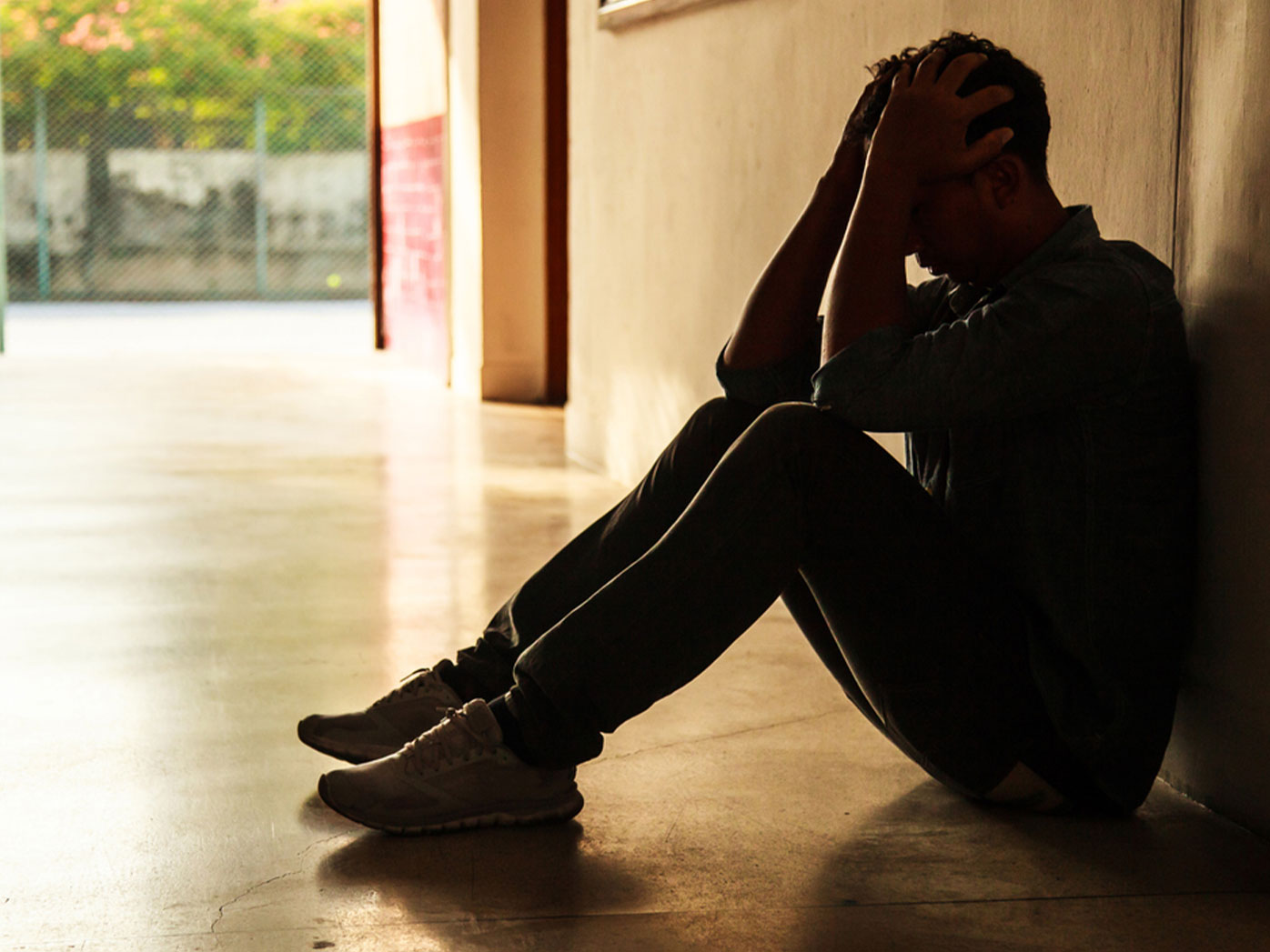
Victorians more concerned about mental health impacts of lockdown than virus

Victorians are more concerned about the impact of lockdown on mental health and jobs than contracting the virus.

A new YouGov poll found more than 60 per cent of people are worried about the impact of shutdowns on mental health, as well as the damage to businesses and job losses.

Sixty per cent of people are suffering from a lack of contact with family and friends.

Pam Jones, 45, from Melbourne's north-east, told 9News she is struggling to see the light at the end of the lockdown tunnel.

READ MORE: How to take care of your mental health in COVID-19 lockdown

The administration professional is worried about her daughters' wellbeing and her family in the UK, who she has not seen for two years.

"I'm trying to work from home and home school at the same time and it's incredibly, incredibly difficult," she said.

The mental repercussions of ongoing lockdowns are now of greater concern for many Victorians than the risk of catching COVID-19.

Calls to Lifeline continue to rise as Victoria's gruelling lockdown continues.

READ MORE: 'Shadow' mental health pandemic spreading among Victorian children

"These numbers are extraordinary," Lifeline Australia Chair John Brogden said.

"We've seen a 32 per cent increase in the number of calls we are receiving in Victoria compared to two years ago."

Professor Patrick McGorry from mental health group Orygen said the surge in psychological distress, particularly in children, needs urgent attention.

"Our modelling shows this mental ill health will last months and probably years. So we've got to have a solution now."

For mental health support, contact Lifeline on 13 11 14 or Beyond Blue on 1300 22 4636.

Last troops exit Afghanistan, ending America's longest war

The US has completed its withdrawal from Afghanistan, ending America's longest war.

The withdrawal closes a chapter in military history likely to be remembered for colossal failures, unfulfilled promises and a frantic final exit that cost the lives of more than 180 Afghans and 13 US service members, some barely older than the war.

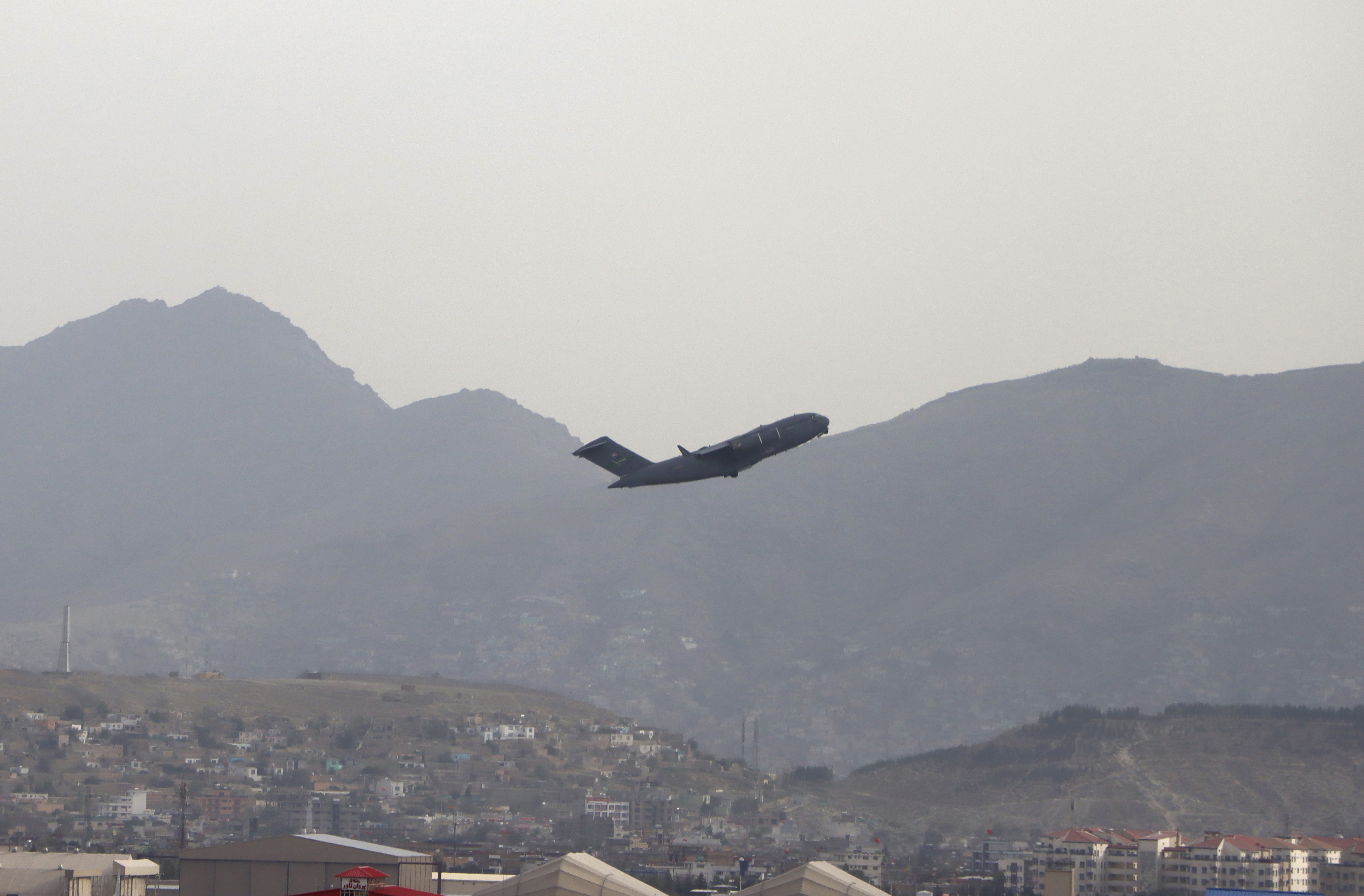
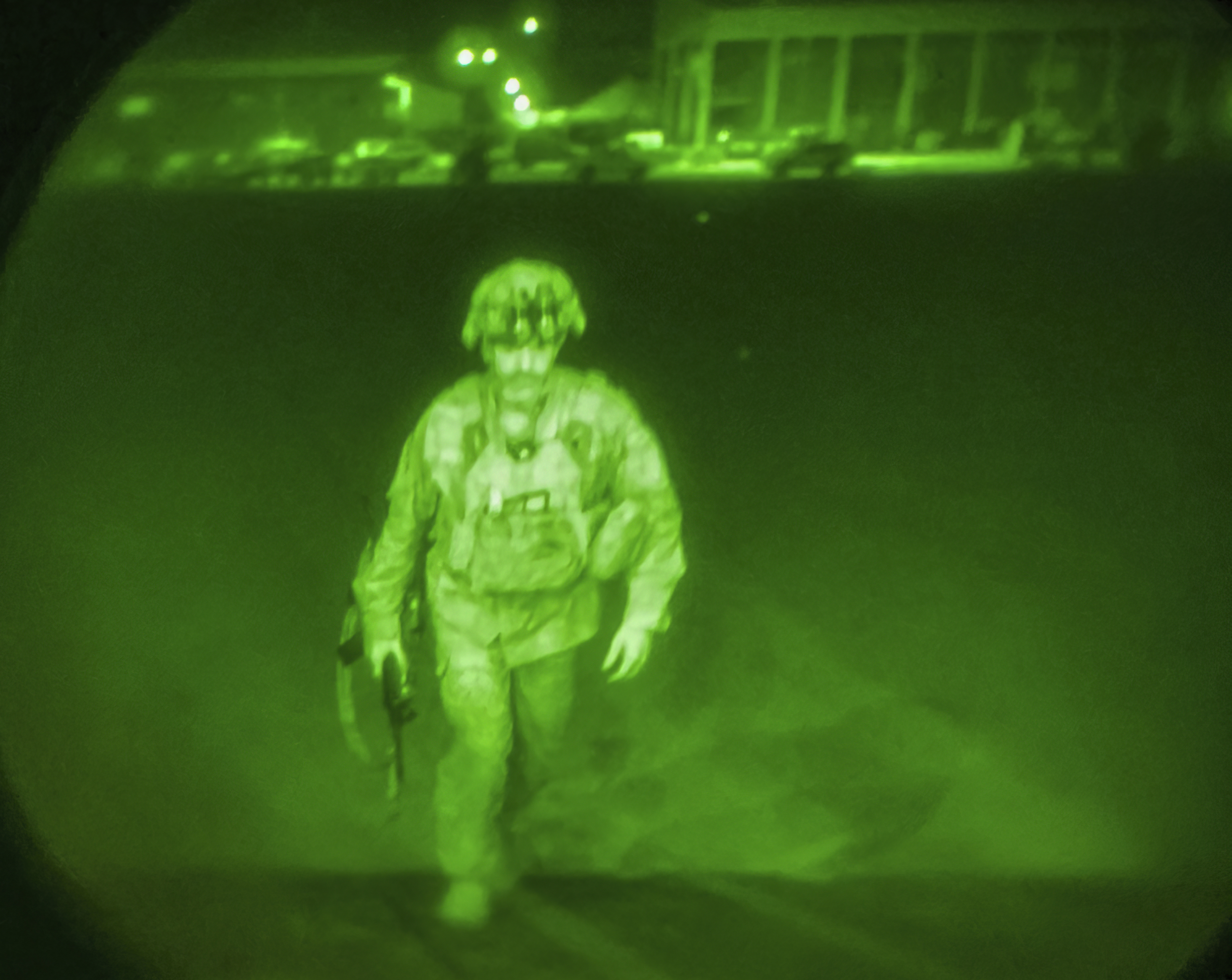
Hours ahead of President Joe Biden's August 31 deadline for shutting down a final airlift, and thus ending the US war, Air Force transport planes carried a remaining contingent of troops from Kabul airport.

READ MORE: Nine killed, including children, in US drone strike
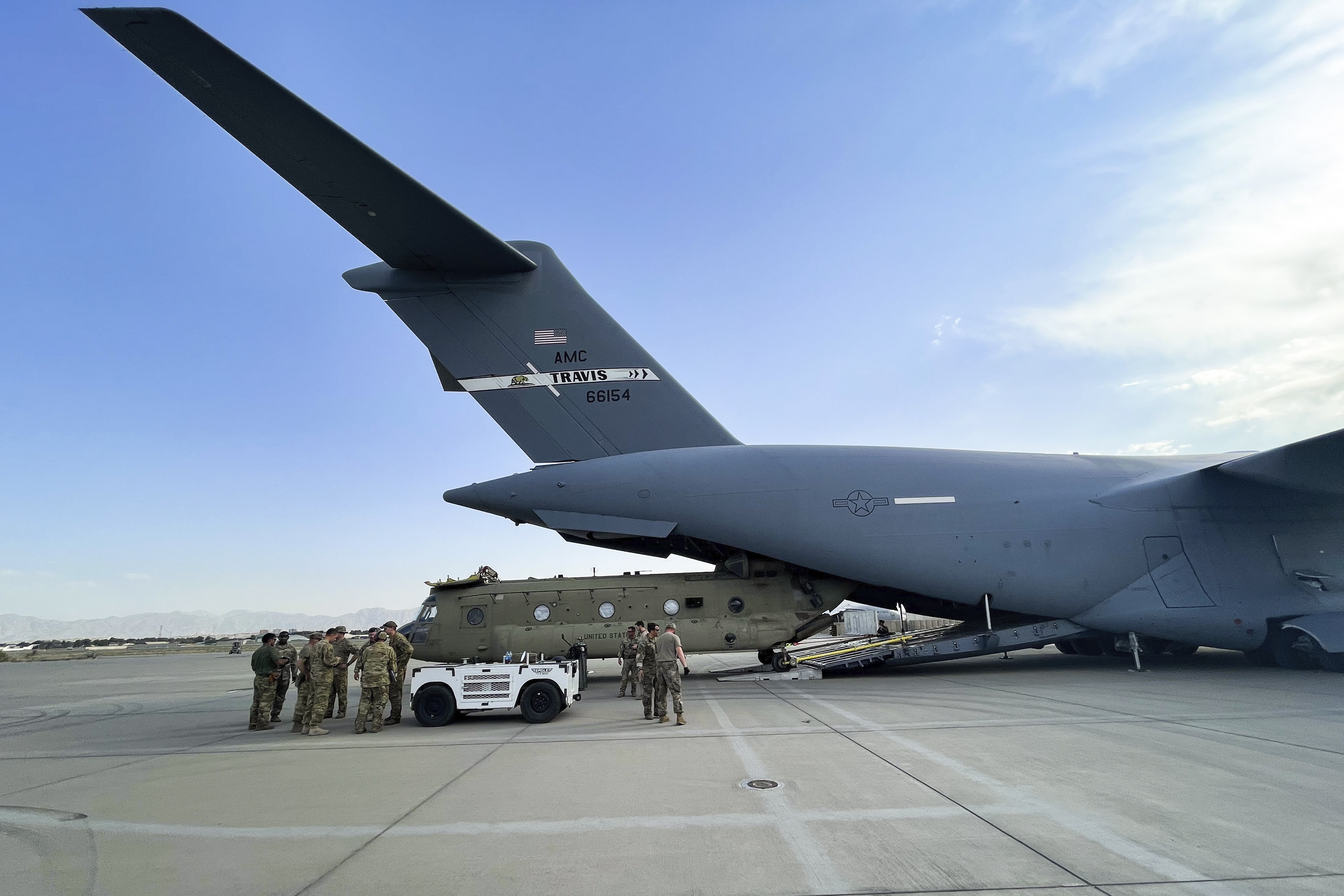
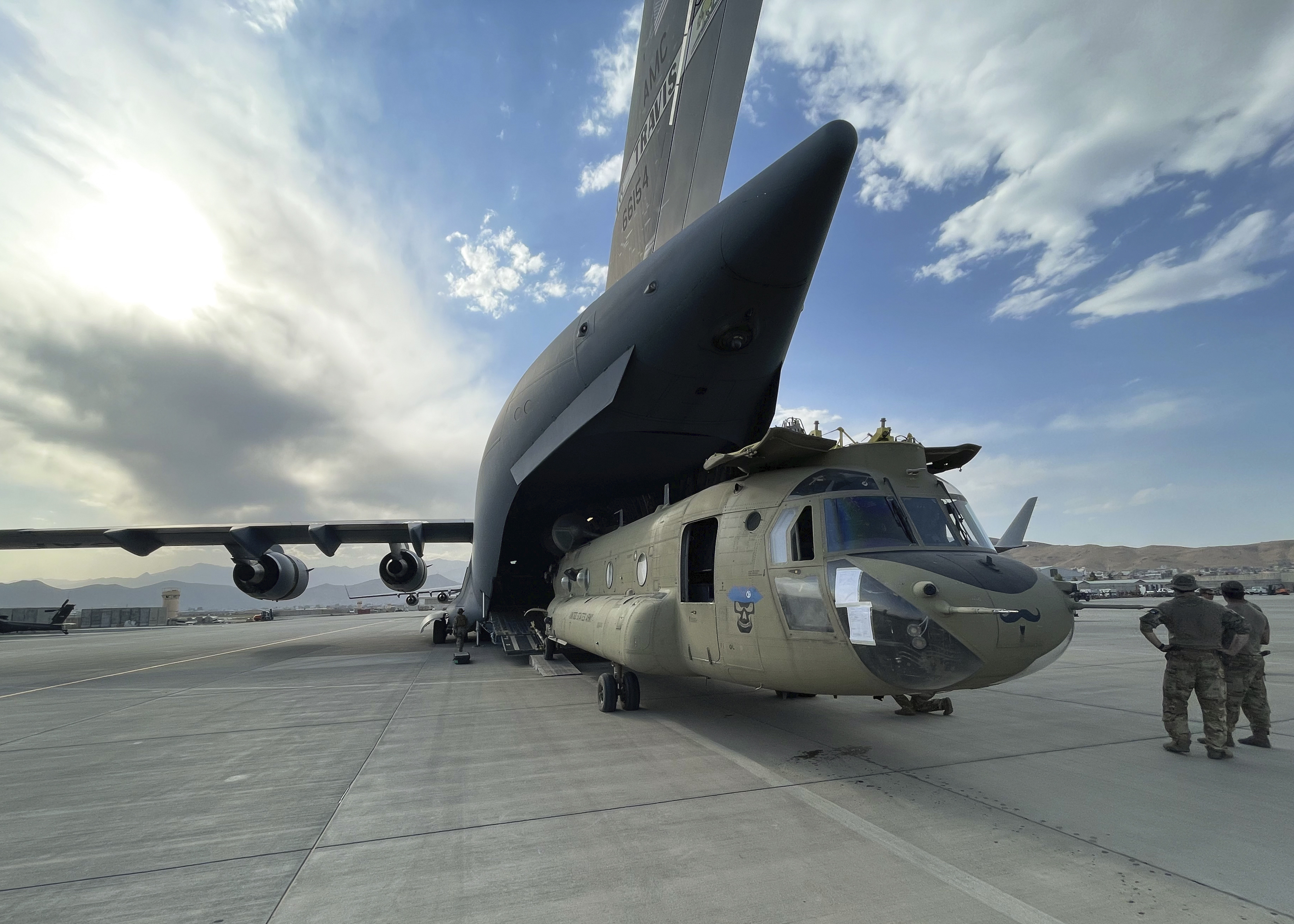
In this image provided by the Department of Defense, a CH-47 Chinook from the 82nd Combat Aviation Brigade, 82nd Airborne Division is loaded onto a U.S. Air Force C-17 Globemaster III at Hamid Karzai International Airport in Kabul, Afghanistan, Saturday, Aug, 28, 2021. (Department of Defense via AP)

Thousands of troops had spent a harrowing two weeks protecting the airlift of tens of thousands of Afghans, Americans and others seeking to escape a country once again ruled by Taliban militants.

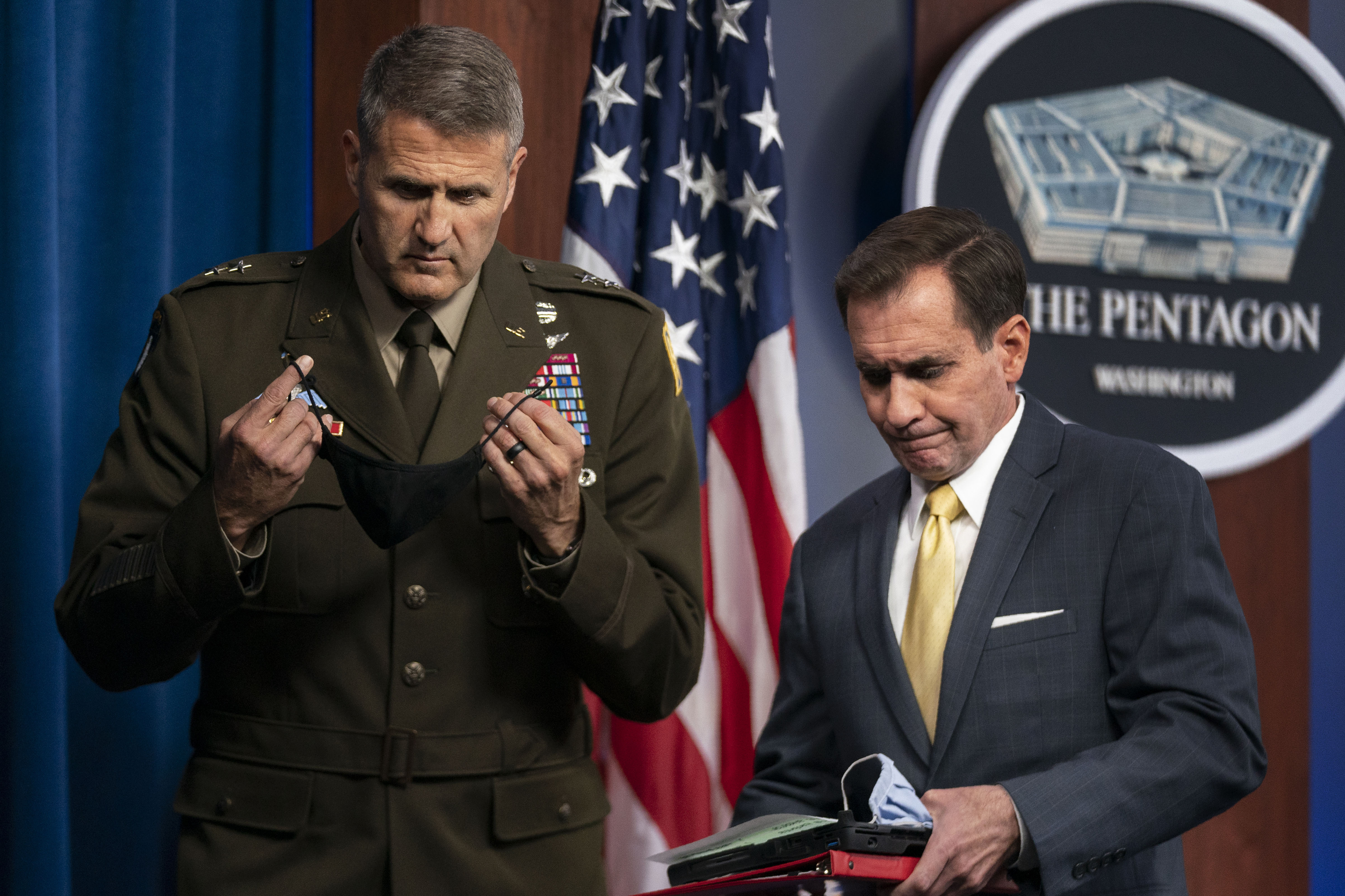
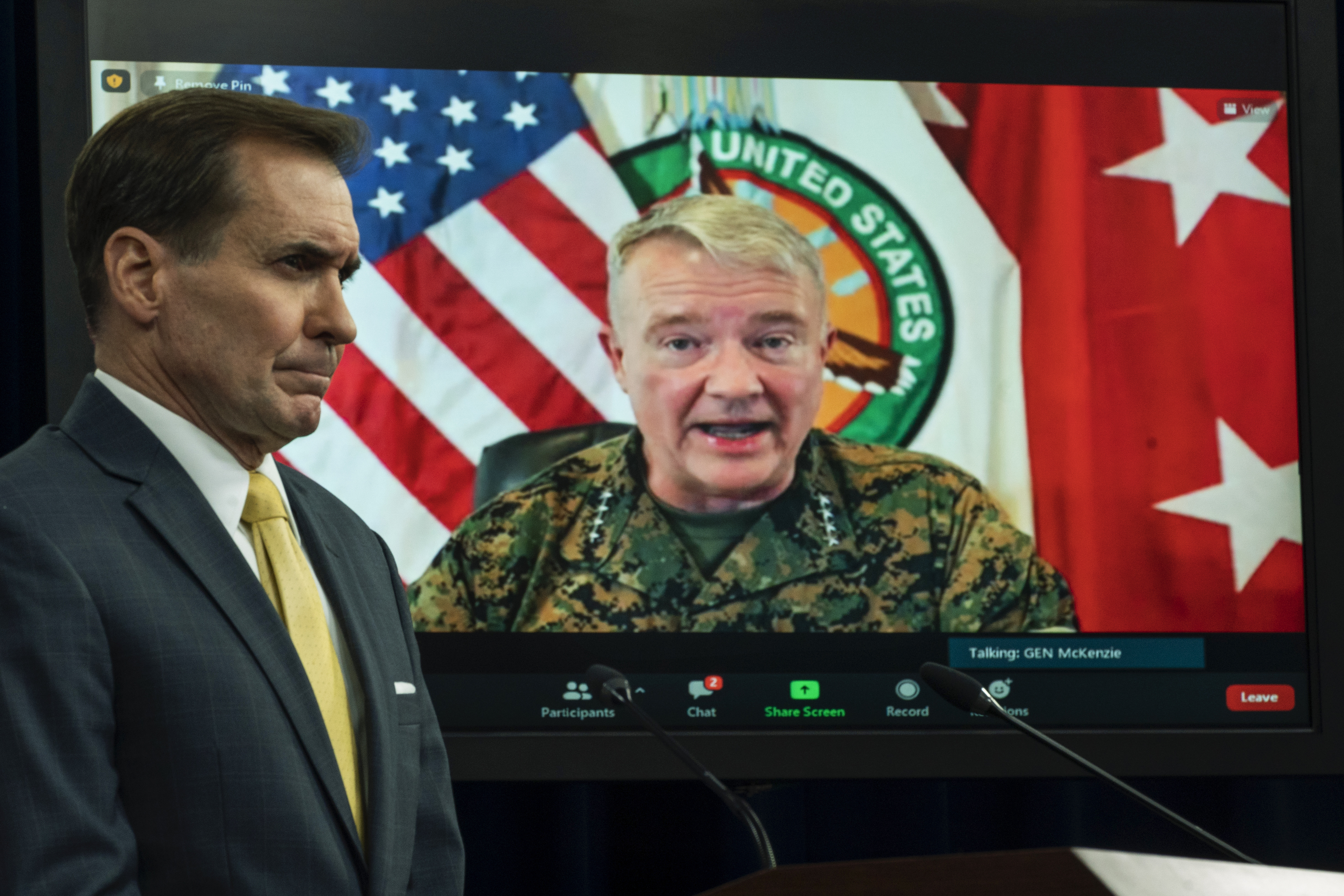
In announcing the completion of the evacuation and war effort, General Frank McKenzie, head of US Central Command, said the last planes took off from Kabul airport at 3.29pm Washington time, or one minute before midnight in Kabul.

He said a number of American citizens, likely numbering in "the very low hundreds," were left behind, and that he believes they will still be able to leave the country.

Secretary of State Antony Blinken put the number of Americans left behind at under 200, "likely closer to 100," and said the State Department would keep working to get them out.

He praised the military-led evacuation as heroic and historic and said the US diplomatic presence would shift to Doha, Qatar.

READ MORE: US dropped 'Ninja bomb' to kill terrorists in Afghanistan
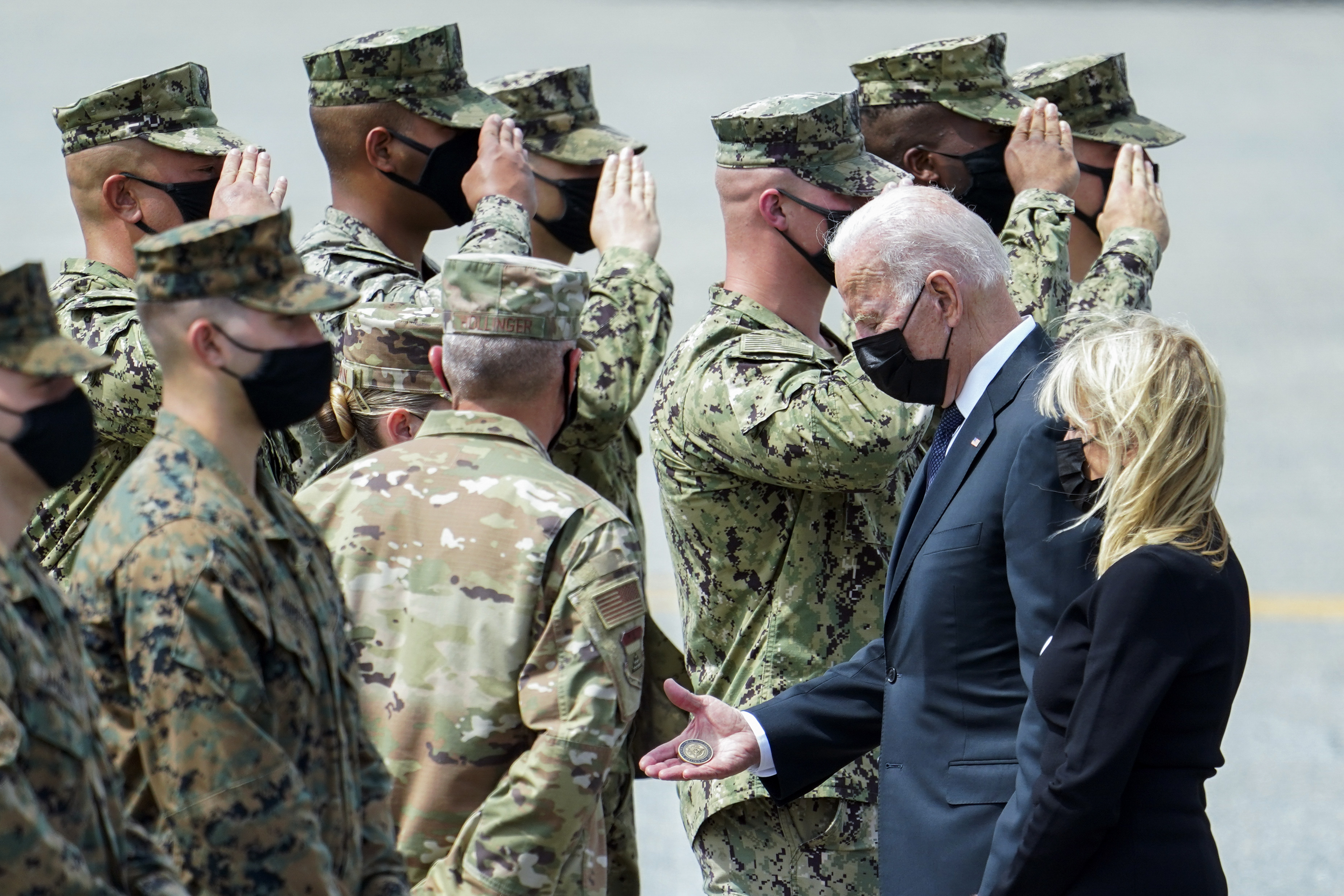
Mr Biden said military commanders unanimously favoured ending the airlift, not extending it.

He said he asked Mr Blinken to coordinate with international partners in holding the Taliban to their promise of safe passage for Americans and others who want to leave in the days ahead.

The airport had become a US-controlled island, a last stand in a 20-year war that claimed more than 2400 American lives.

The closing hours of the evacuation were marked by extraordinary drama.

American troops faced the daunting task of getting final evacuees onto planes while also getting themselves and some of their equipment out, even as they monitored repeated threats — and at least two actual attacks — by the Islamic State group's Afghanistan affiliate.
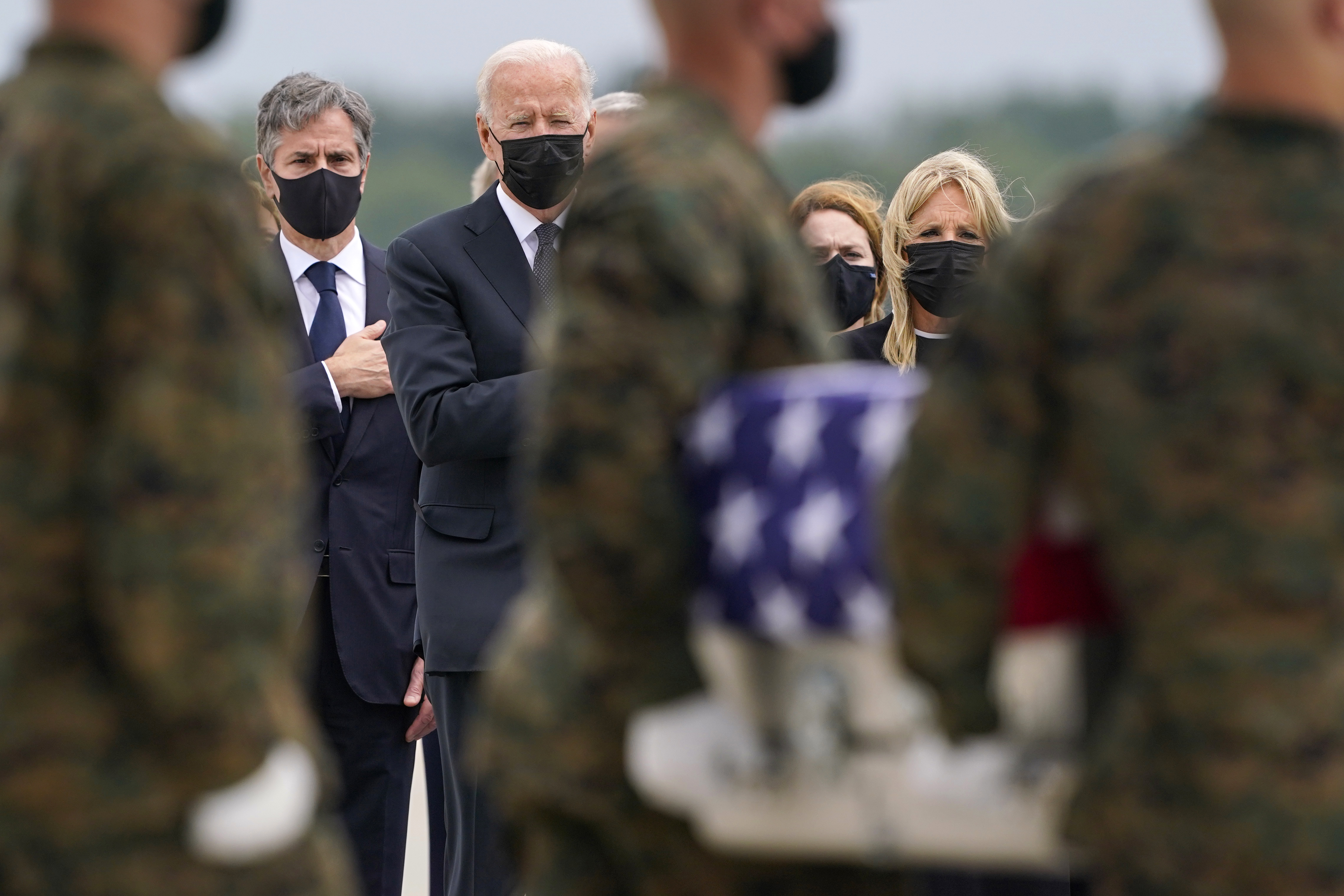
A suicide bombing on August 26 killed 13 American service members and some 169 Afghans.

More died in various incidents during the airport evacuation.

The final pullout fulfilled Mr Biden's pledge to end what he called a "forever war" that began in response to the attacks of September 11, 2001, that killed nearly 3000 people in New York, Washington and rural Pennsylvania.

His decision, announced in April, reflected a national weariness of the Afghanistan conflict.

Now he faces criticism at home and abroad, not so much for ending the war as for his handling of a final evacuation that unfolded in chaos and raised doubts about US credibility.

The US war effort at times seemed to grind on with no endgame in mind, little hope for victory and minimal care by Congress for the way tens of billions of dollars were spent for two decades.

READ MORE: Last troops exit Afghanistan, ending America's longest war
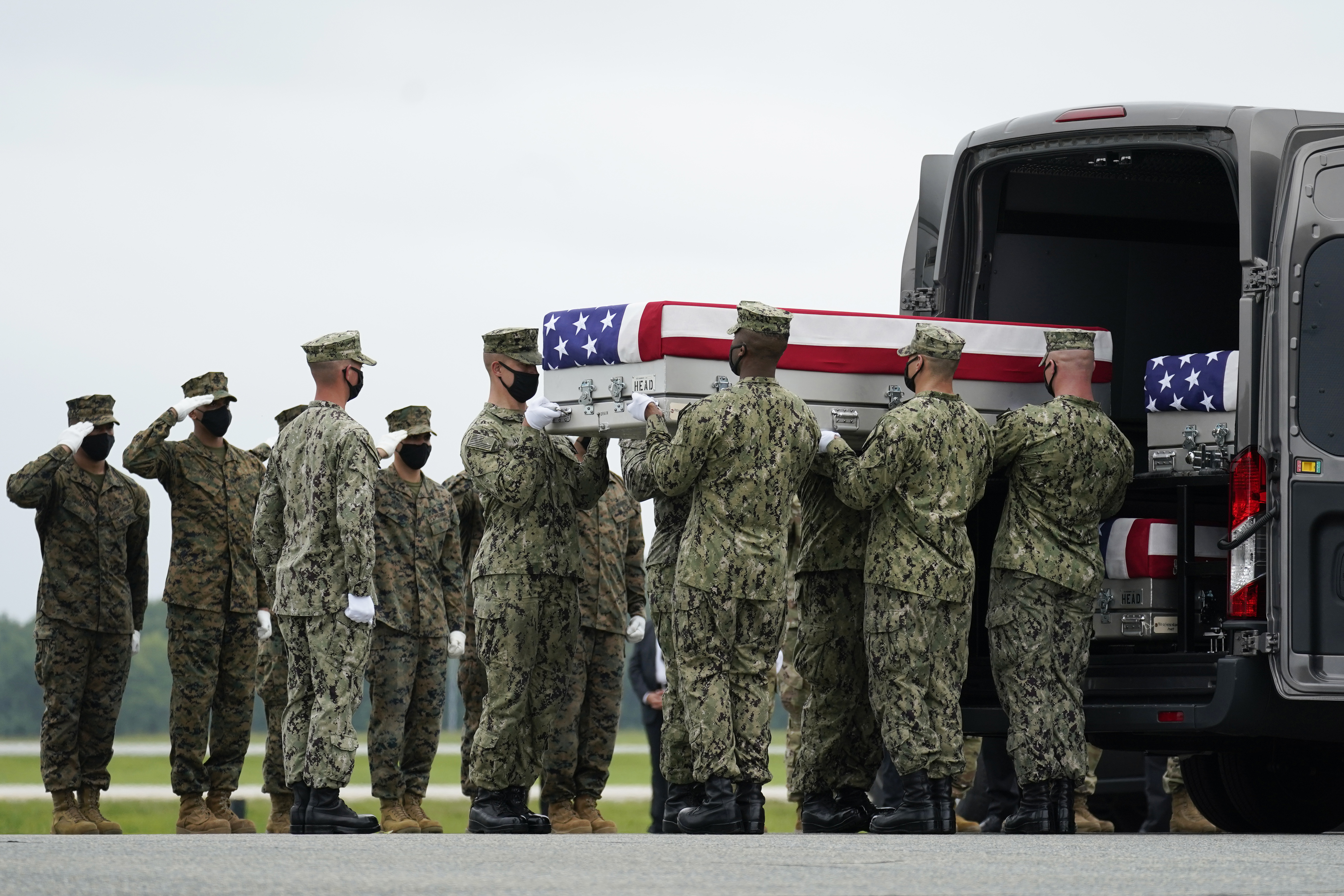
The human cost piled up — tens of thousands of Americans injured in addition to the dead.

More than 1100 troops from coalition countries and more than 100,000 Afghan forces and civilians died, according to Brown University's Costs of War project.

In Mr Biden's view, the war could have ended 10 years ago with the US killing of Osama bin Laden, whose al-Qaeda extremist network planned and executed the 9/11 plot from an Afghanistan sanctuary.

Al-Qaeda has been vastly diminished, preventing it thus far from again attacking the US.

Congressional committees, whose interest in the war waned over the years, are expected to hold public hearings on what went wrong in the final months of the US withdrawal.

Why, for example, did the administration not begin earlier the evacuation of American citizens as well as Afghans who had helped the US war effort and felt vulnerable to retribution by the Taliban?
It was not supposed to end this way.

The administration's plan, after declaring its intention to withdraw all combat troops, was to keep the US Embassy in Kabul open, protected by a force of about 650 US troops, including a contingent that would secure the airport along with partner countries.

Washington planned to give the now-defunct Afghan government billions more to prop up its army.

Mr Biden now faces doubts about his plan to prevent al-Qaeda from regenerating in Afghanistan and of suppressing threats posed by other extremist groups such as the Islamic State group's Afghanistan affiliate.

The Taliban are enemies of the Islamic State group but retain links to a diminished al-Qaeda.

The final US exit included the withdrawal of its diplomats, although the State Department has left open the possibility of resuming some level of diplomacy with the Taliban depending on how they conduct themselves in establishing a government and adhering to international pleas for the protection of human rights.
The speed with which the Taliban captured Kabul on August 15 caught the Biden administration by surprise.

It forced the US to empty its embassy and frantically accelerate an evacuation effort that featured an extraordinary airlift executed mainly by the US Air Force, with American ground forces protecting the airfield.

The airlift began in such chaos that a number of Afghans died on the airfield, including at least one who attempted to cling to the airframe of a C-17 transport plane as it sped down the runway.

By the evacuation's conclusion, well over 100,000 people, mostly Afghans, had been flown to safety.

The dangers of carrying out such a mission came into tragic focus last week when the suicide bomber struck outside an airport gate.

Speaking shortly after that attack, Mr Biden stuck to his view that ending the war was the right move.

He said it was past time for the US to focus on threats emanating from elsewhere in the world.

"Ladies and gentlemen," he said, "it was time to end a 20-year war."

READ MORE: Baby Afghan girl born mid-evacuation flight headed for UK
The war's start was an echo of a promise President George W. Bush made while standing atop of the rubble in New York City three days after hijacked airliners slammed into the twin towers of the World Trade Center.

"The people who knocked these buildings down will hear all of us soon!" he declared through a bullhorn.

Less than a month later, on October 7, Mr Bush launched the war.

The Taliban's forces were overwhelmed and Kabul fell in a matter of weeks.

A US-installed government led by Hamid Karzai took over and bin Laden and his al-Qaeda cohort escaped across the border into Pakistan.

The initial plan was to extinguish al-Qaeda, which had used Afghanistan as a staging base for its attack on the US.

The grander ambition was to fight a "Global War on Terrorism" based on the belief that military force could somehow defeat Islamic extremism.
Afghanistan was but the first round of that fight.

Mr Bush chose to make Iraq the next, invading in 2003 and getting mired in an even deadlier conflict that made Afghanistan a secondary priority until Barack Obama assumed the White House in 2009 and later that year decided to escalate in Afghanistan.

Mr Obama pushed US troop levels to 100,000, but the war dragged on though bin Laden was killed in Pakistan in 2011.

When Donald Trump entered the White House in 2017 he wanted to withdraw from Afghanistan but was persuaded not only to stay but to add several thousand US troops and escalate attacks on the Taliban.

READ MORE: US drone strike hits vehicle carrying IS bombers

Two years later his administration was looking for a deal with the Taliban, and in February 2020 the two sides signed an agreement that called for a complete US withdrawal by May 2021.

In exchange, the Taliban made a number of promises including a pledge not to attack US troops.

Mr Biden weighed advice from members of his national security team who argued for retaining the 2500 troops who were in Afghanistan by the time he took office in January.

But in mid-April he announced his decision to fully withdraw.
The Taliban pushed an offensive that by early August toppled key cities, including provincial capitals.

The Afghan army largely collapsed, sometimes surrendering rather than taking a final stand, and shortly after President Ashraf Ghani fled the capital, the Taliban rolled into Kabul and assumed control on August 15.

Some parts of the country modernised during the US war years, and life for many Afghans, especially women and girls, improved measurably.

But Afghanistan remains a tragedy, poor, unstable and with many of its people fearing a return to the brutality the country endured when the Taliban ruled from 1996 to 2001.

The US failures were numerous.

It degraded but never defeated the Taliban and ultimately failed to build an Afghan military that could hold off the insurgents, despite US$83 billion in US spending to train and equip the army.

With AP, CNN
Toyota restarts driverless vehicles after Paralympian injured in village

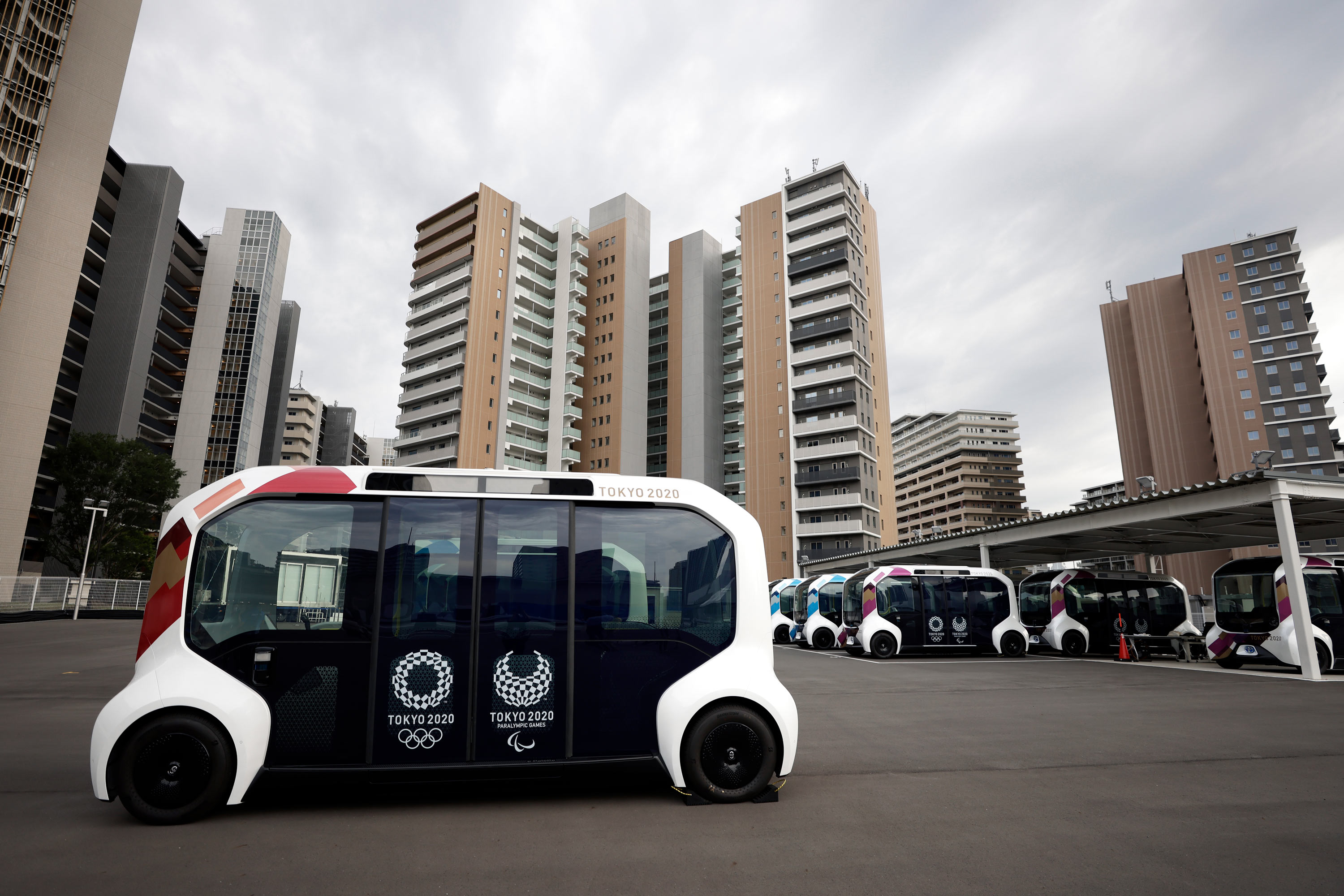
Toyota will restart operations of its self-driving vehicles at the Paralympic Games village in Tokyo following an accident.

The company halted services of e-Pallette pods after a vehicle collided with Aramitsu Kitazono, a visually impaired athlete and a member of Japan's judo team.

Kitazono was not seriously injured but he was unable to compete in his 81kg category at the Paralympic games because of the accident.

READ MORE: Border row as NRL family and friends allowed to fly into Queensland

Toyota will restart its operations of its autonomous vehicles at the Paralympic Games village in Tokyo following an accident.

The incident raised potential concerns about the limitations of autonomous driving technology.

"We would like to express our sincerest apologies to the individual that was injured due to this unfortunate collision and we wish them a speedy recovery," Toyota said in a statement.

READ MORE: Beloved dad vanishes after trip to rubbish tip

"We would also like to apologise for any inconvenience caused to those who use our mobility vehicles in the Athletes' Village."

The vehicles will now have more operator control and extra staff to ensure they do not hit any more people.

Cast and crew on Russell Crowe film forced into isolation

Production on Russell Crowe's new psychological thriller has been forced to stop, with a member of the crew having tested positive for COVID-19.

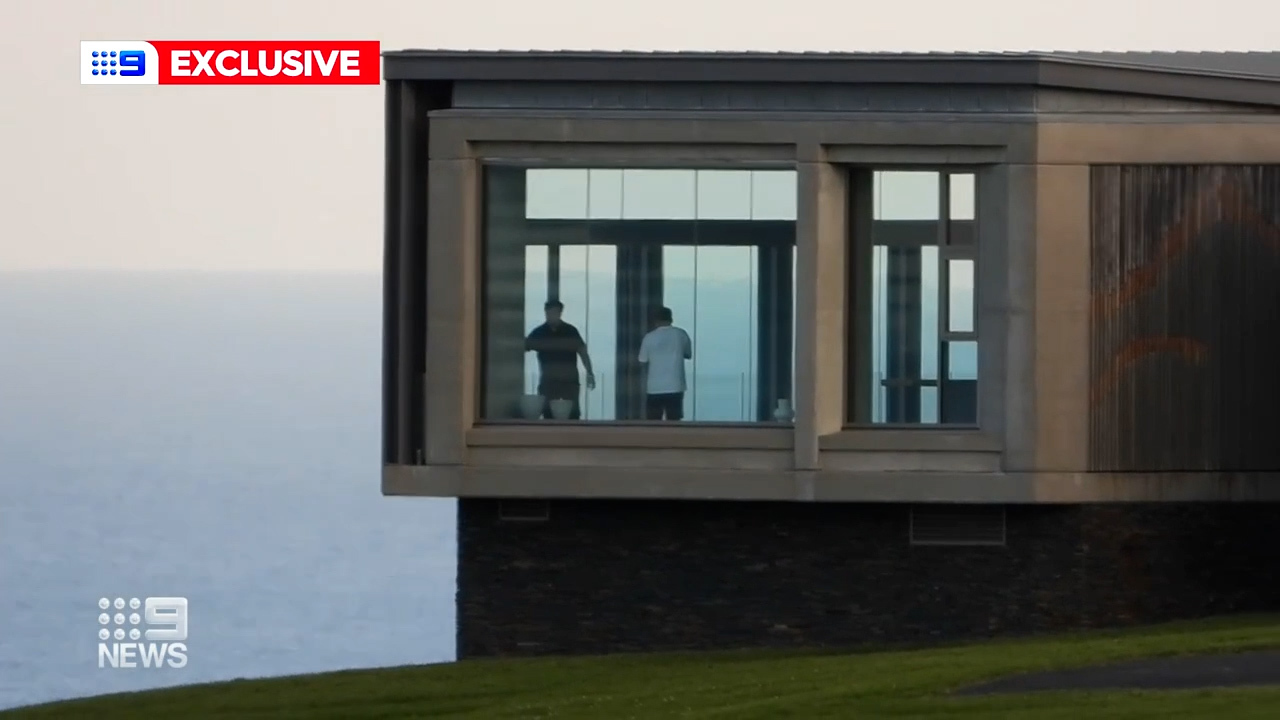
Filming of new movie Poker Face, which has been taking place in the penthouse at Crown in Sydney's Barangaroo has come to a halt today after the NSW COVID-19 outbreak infiltrated the production team.

A barista has tested positive for COVID-19 after working five shifts on set last week while unknowingly infectious.

LIVE UPDATES: Vaccine swap deal with Singapore announced

https://twitter.com/LaurenTomasi/status/1432563813455253506

Crowe took to Twitter this afternoon to announce the "unfortunate" development.

"We have had a confirmed positive COVID case amongst our crew and a second possible positive under further investigation by our PokerFace Covid team and NSWHealth," he posted.

Crowe said production had been paused and the entire team had been told to isolate while the outbreak was investigated.

https://twitter.com/russellcrowe/status/1432563181373718530?ref_src=twsrc%5Etfw

The actor said the cast and crew had been following strict protocols while filming throughout the NSW COVID-19 crisis, including everyone being tested for the virus three times a week for the past 11 weeks.

READ MORE: AFL Grand Final locked in for Perth

"The crew have been masked on set the whole time except for three individuals with medical exemptions," he said.

"We feel for the crew members involved, like all the people on this show they are both very committed team players and diligent in their approach to their work responsibilities."

https://twitter.com/russellcrowe/status/1424701482494881793

"We also feel for the wider community going through these difficult times. We hope this situation will be confined and we can be back up and running very soon."

Crowe revealed the crew had been just six days from finishing filming.

Russell Crowe

The movie, which also stars Elsa Pataky and Liam Hemsworth, was being filmed in the NSW coastal town of Kiama earlier this month.

At the time, the production occurring during the state's lockdown attracted criticism.

Member for Kiama Gareth Ward posted on Twitter than the production made "a total mockery" of the lockdown.

"People can't see family and friends, funerals limited to 10, no cases in Shellharbour but still locked down but apparently 'A-listers' producing movies is essential?" he wrote.

Crowe responded to criticism by posting that the film cast and crew were in a "bubble" that stopped them being in the community.

Camera discovery reveals last images of Australian mountain climber before he died

The hunt for the owner of a backpack led to the discovery of eerie photos of Australian man Steve Robinson's last mountain ascent before he died, and emotional memories for his climbing partner and family.

Found last year by Chris Hill, wedged in New Zealand's Hooker Glacier, at the bottom of Aoraki/Mt Cook, the backpack had personal items and a battered camera that contained an undeveloped film.

Initially, Mr Hill took the backpack to the police and asked the local community if they could shed light on who the owner might be.

READ MORE: Squatter cites archaic law in claiming ownership of $1m homestead

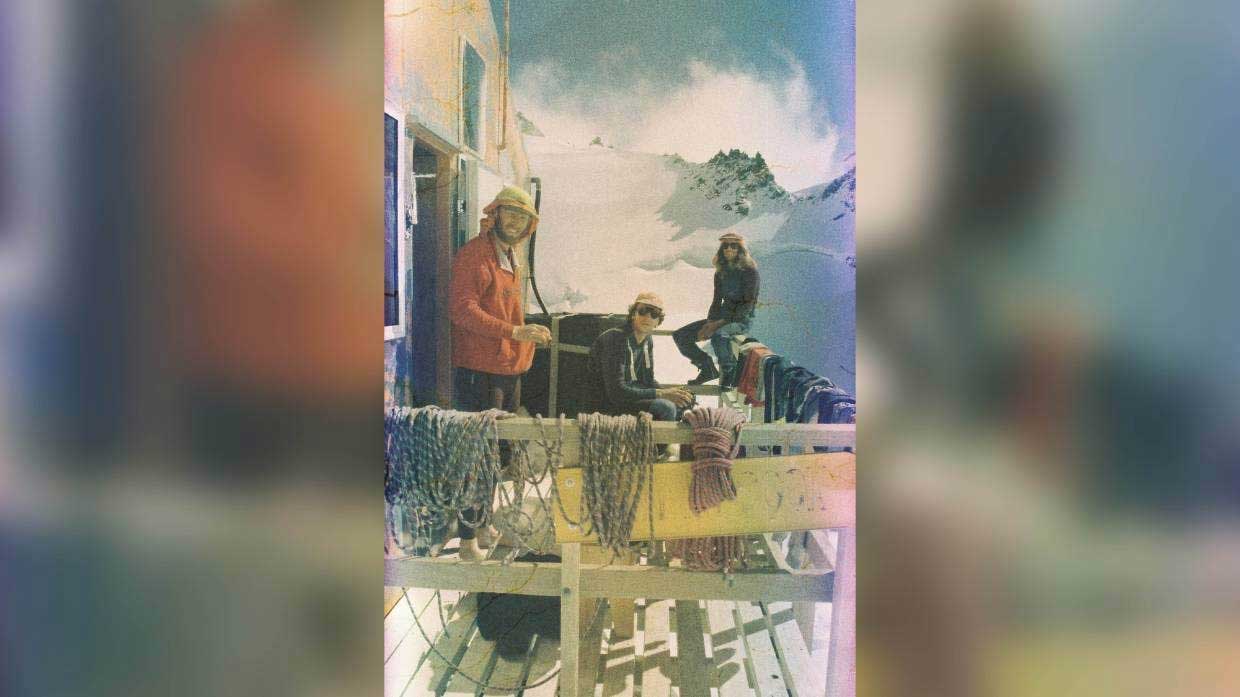
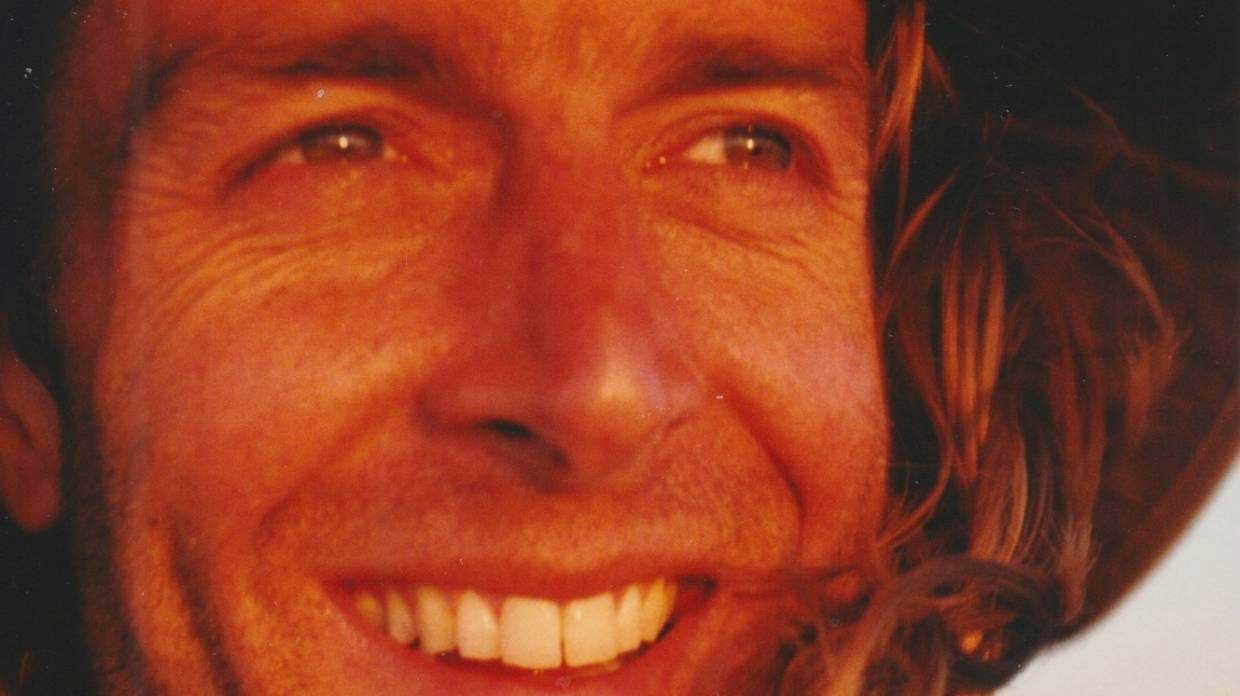
The last known image of Steve Robinson (far right) prior to him being killed in an avalanche at Mt Cook in 1997.

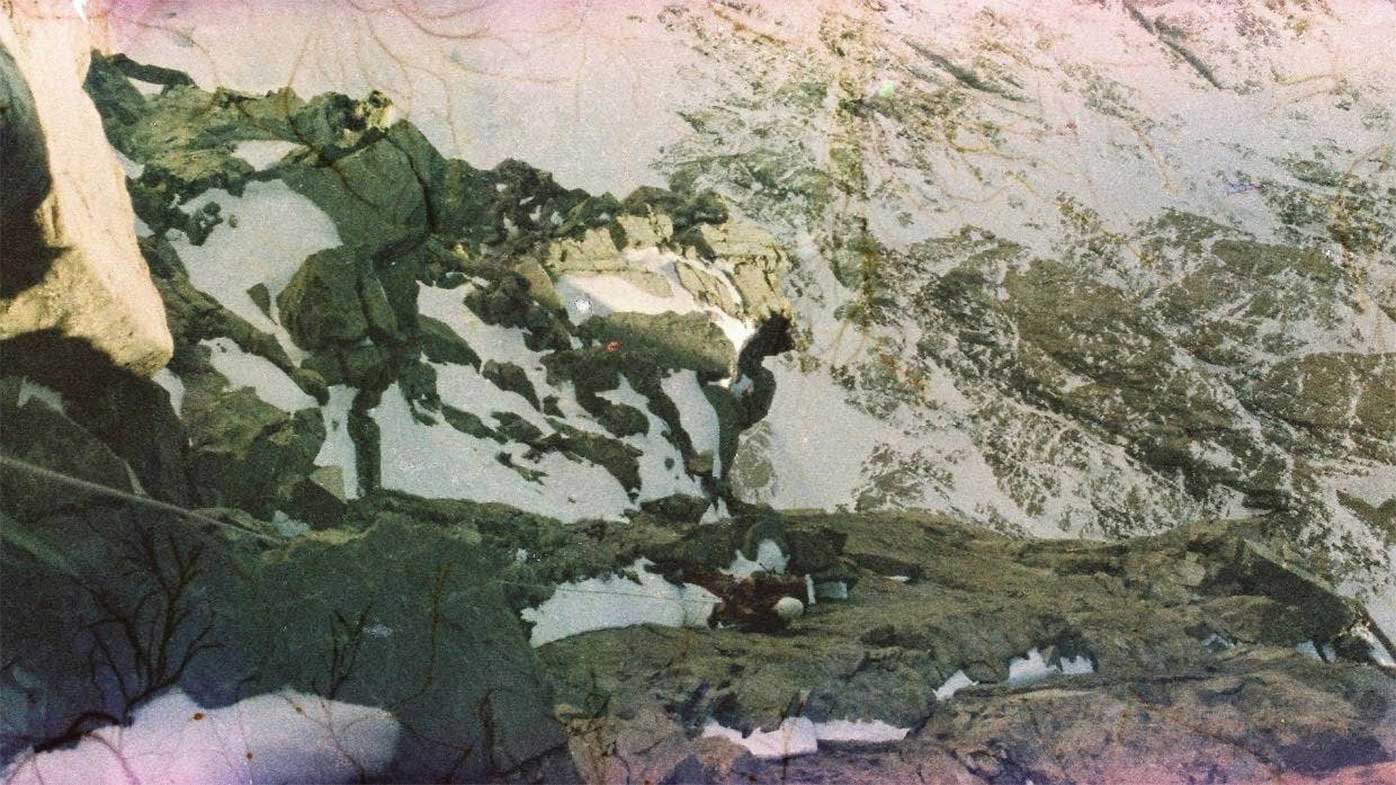
With no answers forthcoming, Mr Hill developed the remarkable photos documenting Mr Robinson's ascent of Aoraki/Mt Cook in 1997 and posted them on social media to see if they triggered anyone's memory.

On Saturday night, Mr Hill was contacted by Mr Robinson's climbing companion and friend Richard Stiles to say it was his backpack and he took the photos.

Speaking from his Lithgow home in Australia on Sunday, Mr Stiles recalled the tragic events that led to him losing his backpack and his mate.

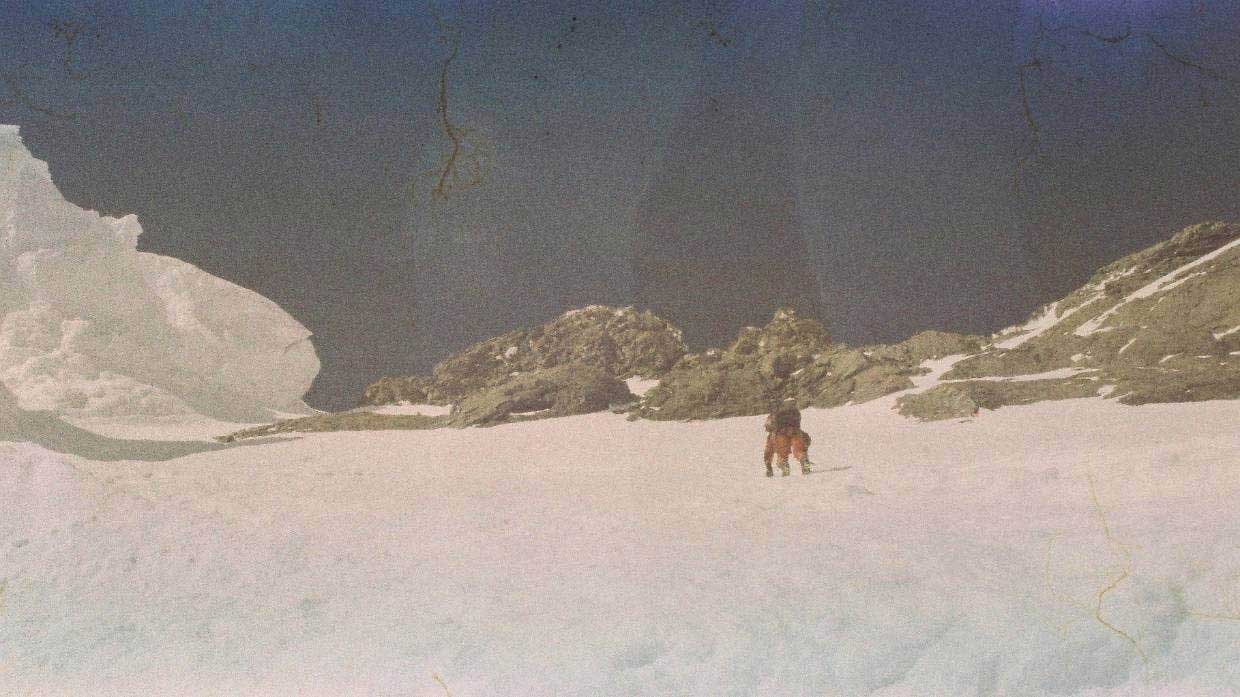
On March 28, 1997, after ascending the technically challenging Sheila Face and enduring one of the coldest nights they had ever experienced, Mr Stiles and Mr Robinson, also from Australia, were relieved to reach the summit of Aoraki/Mt Cook.

Describing the loose snow conditions they encountered during their climb as "intimidating and scary", Mr Stiles said he and Mr Robinson stopped on their descent for a much-needed breather on a ledge near Porter Col at 2600 metres and removed their backpacks.

Steve Robinson ascending Mt Cook before he was killed in an avalanche in 1997.

The pair thought they had completed the hardest part of their adventure.

Mr Stiles remembers every part of the next three seconds that changed his life.

As a block of ice the size of an apartment building fell and crashed onto the snow, the pair had only moments to react.

In the rush of noise and wind from the accompanying avalanche, Mr Stiles never saw Mr Robinson. Instead, unusually, he managed to turn from facing a rock wall to running down a steep slope.

In three seconds Stiles believes he managed to traverse 150 metres leaping in steps.

Narrowly clearing the edge of the avalanche, Mr Stiles was blown hundreds of metres down the slope before he stopped.

With all his climbing tools gone, and his backpack, he miraculously found his snow stake in the debris, but Mr Robinson had been buried and was nowhere to be seen.

"I knew he was gone."

Using the stake, Mr Stiles made his way down to Empress Hut and raised the alarm.

READ MORE: Is COVID to blame for the deadliest avalanche season in the US?

The photos also reveal breathtaking scenery on Aoraki/Mt Cook.

Making the call to Mr Robinson's mother in Australia on the helicopter flight back to Aoraki/Mt Cook village was hard, he said.

Now almost a quarter of a century later, Mr Stiles has faced a mixture of emotions since viewing the photos from the camera he thought he had lost.

He has no desire to see the backpack, but the discovery has made him reflect on the "fine" person Mr Robinson was.

At the time of his death, the 29-year-old was a doctorate in solar physics at New South Wales University in Sydney.

A competent adventurer, Mr Robinson was a "great guy", Mr Stiles said.

READ MORE: Australian woman killed after falling 500m in Austrian avalanche

"He was one of those people that the world could benefit from having him around."

Mr Stiles said he had never gone mountaineering again but still has a thirst for adventure, having crossed Bass Strait, separating Tasmania from the Australian mainland, in a kayak.

Speaking to Stuff from Geelong, Mr Robinson's sister Christine Schiesser said she was shocked to learn of the photos of her brother.

"It's a lot to process. It's completely astonishing to look at the photos and know these were the last images of my brother."

Steve was a remarkable person, she said, and was a gifted physicist who was at the forefront of the development of solar cell technology, as well as an accomplished surfer, kayaker, rock climber and mountaineer, and a much-loved brother, son and uncle.

"Most importantly, he had soul and an incredibly kind and generous heart."

Steve Robinson was a talented physicist prior to his death in 1997.

Prior to his death, Mr Robinson expressed a wish to take solar technology to the developing communities of South America so that they may have power for light, warmth and cooking, Ms Schiesser said.

She described the discovery of the backpack as being like a gift from beyond the grave.

"We miss him every day of our lives."

This story originally appeared on stuff.co.nz and has been republished with permission. Article by Nadine Porter.

New Zealand records 49 new coronavirus cases

There are 49 new cases of COVID-19 linked to the Delta community outbreak in New Zealand, bringing the total number of cases to 612.

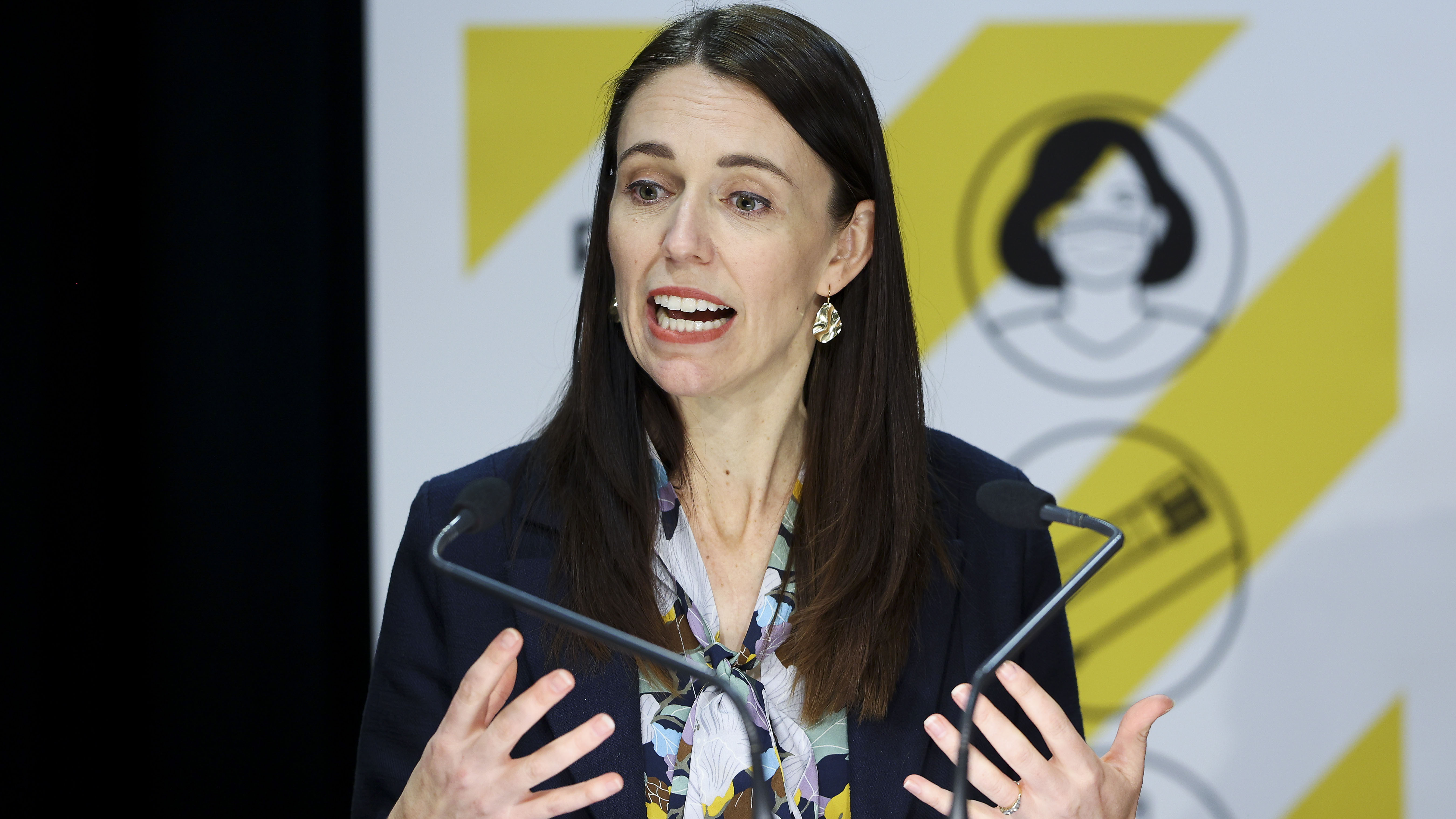
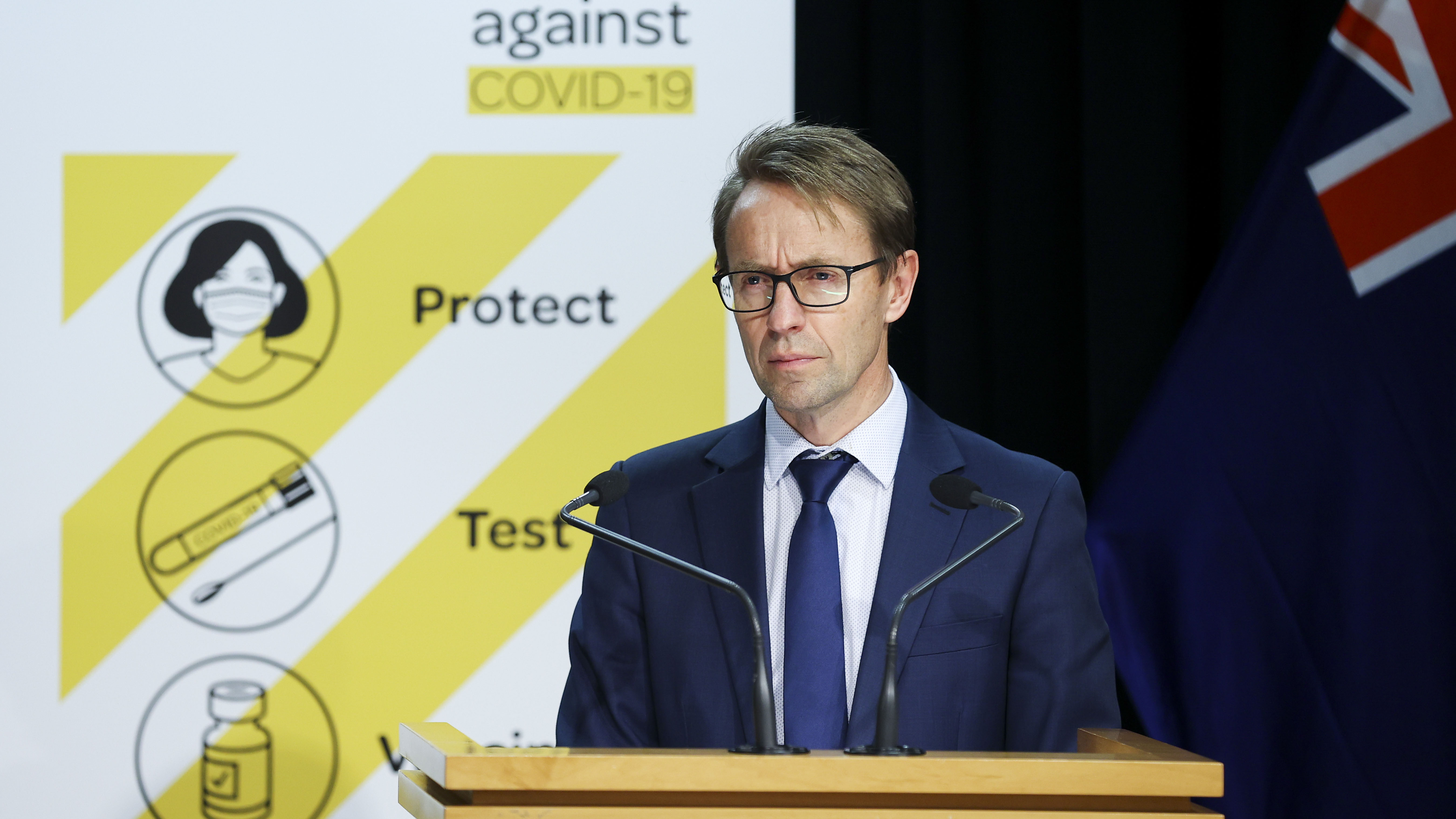
New Zealand Prime Minister Jacinda Ardern and Director-General of Health Dr Ashley Bloomfield gave the update in a press conference on Tuesday afternoon.

Among the recent cases was a prison officer at Spring Hill Corrections Facility, and a security officer at Auckland's Middlemore Hospital, it was revealed.

READ MORE: Auckland to remain in level four restrictions as city records 53 new cases

New Zealand Prime Minister Jacinda Ardern expressed a hope for 'sustained reductions' in case numbers over time.

All 49 new cases were in Auckland. This is the lowest number of new cases in six days.

Dr Bloomfield said that provided "further reassuring indication that our public health measures are rapidly, slowing the spread of the virus".

There have now been 597 community cases in Auckland and 15 in Wellington since the start of the Delta outbreak two weeks ago.

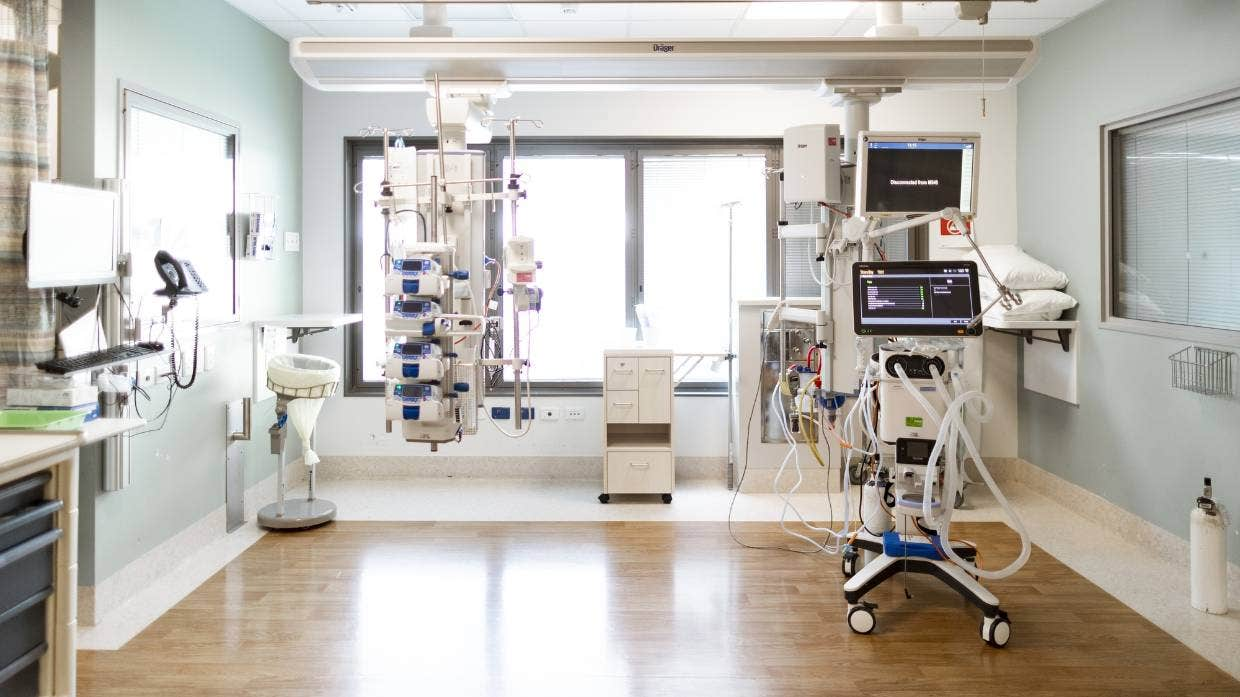
Thirty-three people are in hospital, eight of which are in intensive care. Two are on a ventilator.

A contract security officer on duty at Middlemore Hospital on August 26 tested positive for COVID-19 after exposure in the community.

Director-General of Health Dr Ashley Bloomfield believed the public health measures have slowed the rapid spread of the virus.

READ MORE: Critics mock New Zealand's risk-averse approach to COVID-19

The security staffer is fully vaccinated and while on duty at Middlemore was wearing full PPE, including an N95 mask.

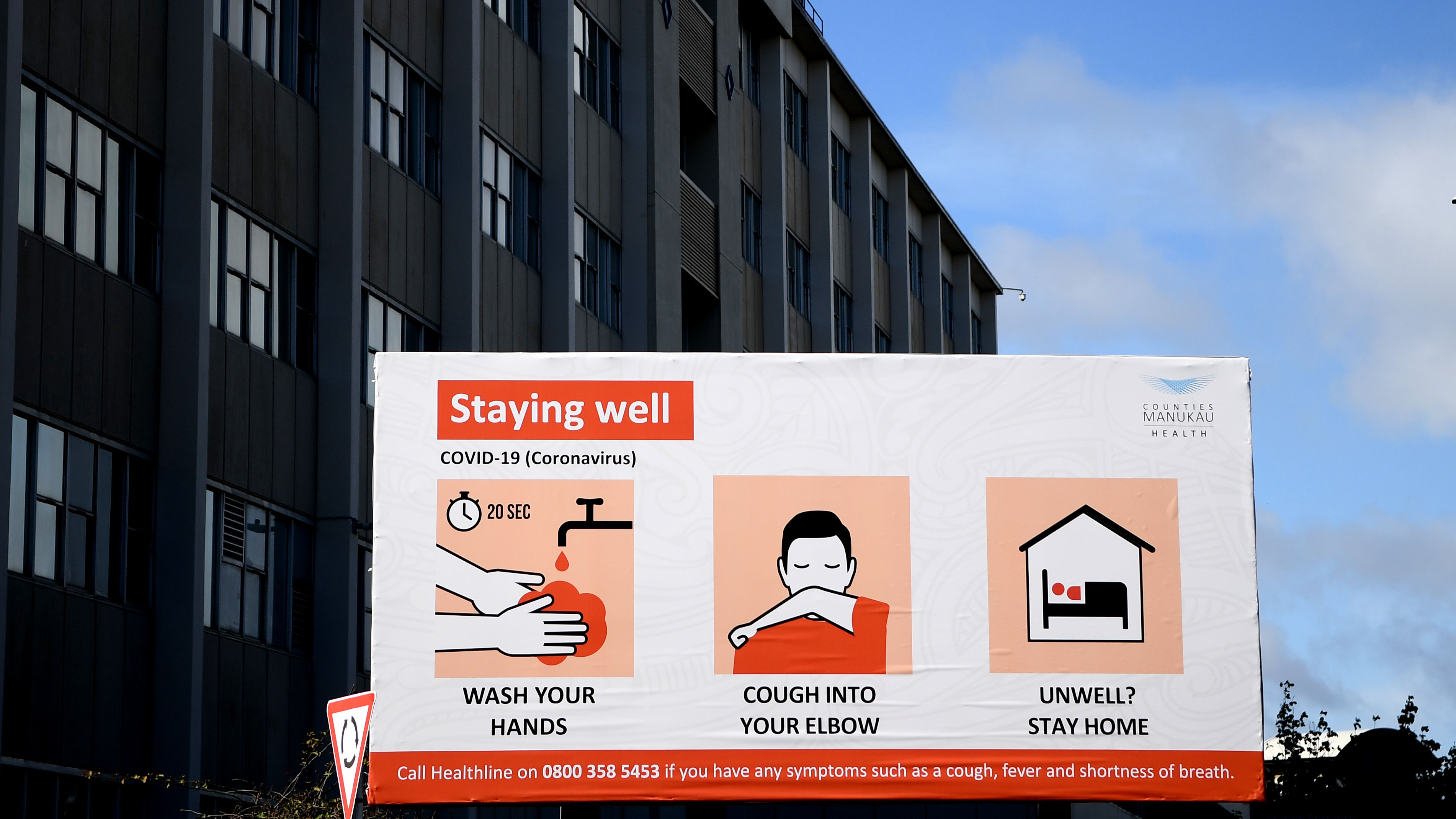
The risk of exposure to patients and staff is considered to be low, and to date no staff at Counties Manukau Health have contracted the virus while at work.

Dr Bloomfield also advised on Tuesday that 23 staff at Spring Hill Corrections Facility were asked to self-isolate and get tested after being in contact with a COVID-positive prison officer, who was fully vaccinated.

One hundred and twenty-three people in the unit are also being segregated and tested.

A contract security officer working at Middlemore Hospital on August 26 tested positive for Covid-19 after exposure in the community.

READ MORE: Auckland woman charged for allegedly forging mask exemption document

Dr Bloomfield said the ministry was also looking at whether wastewater testing could be utilised in that case.

Of note, 66 per cent of new cases reported to 9am on Monday were household contacts of an existing case, he said.

Of Monday's cases, 77 per cent did not create any new exposure events, reducing new potential chains of transmission. Twenty-three percent were considered infectious while in the community, compared with 30 per cent the day before and 35 per cent the day prior.

Six cases in the Auckland outbreak are under the age of one.

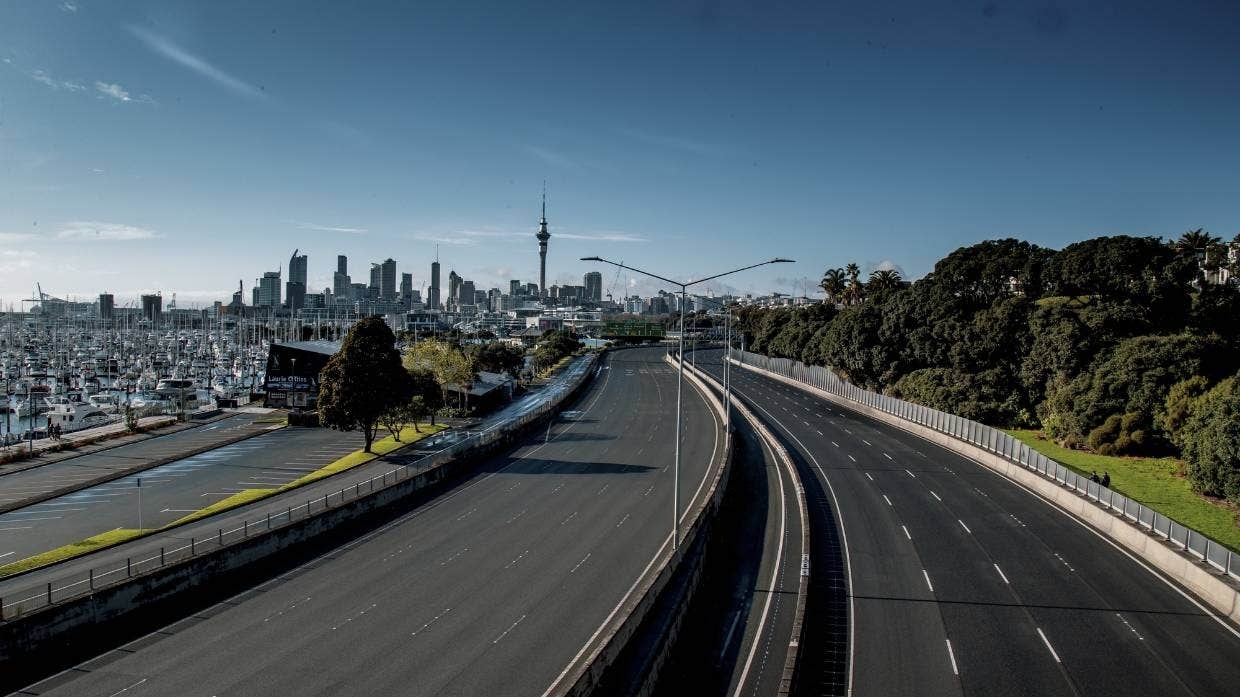
Auckland will remain at alert level 4 for a further fortnight, as the Delta community outbreak continues to grow.

READ MORE: Widow of New Zealand soldier killed in Kabul says deployment not in vain

None of those younger children are in hospital, and Dr Bloomfield believed the youngest person in hospital is aged 18.

"All of this information reinforces the importance of us doing everything we can to stamp the virus," Dr Bloomfield said.

There are currently seven sub-clusters in the outbreak, the largest of which remain the Assembly of God Church in Māngere (308 confirmed cases) and the Birkdale social cluster associated with Case A (78 cases).

Overall, 566 cases have been epidemiologically linked to another case or sub-cluster. The link has yet to be fully established for a further 46 cases.

Nineteen of the 49 cases announced on Tuesday had not yet been epidemiologically linked.

Eight people are in intensive care or high dependency care units with Covid-19 across the country. Two are on a ventilator.

READ MORE: Identifying source of neon green substance in Queenstown creek may take weeks

There were no new wastewater detections to report.

When asked whether she was encouraged by another decrease in daily case numbers, Ms Ardern said she wanted to see "sustained reductions" in case numbers over a period of time.

"It is good not to see some of the high numbers we were only a few days ago", but "we've still got a journey to go through", she said.

It has now been 14 days since Case A was detected in Auckland, which prompted a nationwide move to alert level 4.

All of New Zealand south of Auckland will move to alert level 3 from 11.59pm today.

Northland will remain at alert level 4 until 11.59pm on Thursday, pending the results of further testing. The Auckland region will remain in lockdown for another 14 days.

This story originally appeared on stuff.co.nz and has been republished with permission.