How long does protection from Covid-19 vaccines last?Experts don’t know yet because they’re still studying vaccinated people to see when protection might wear off. How well the vaccines work against emerging variants will also determine…
Tag Archives: oceania
Japan issues state of emergency as Olympics concerns mount
Japan is set to issue a third state of emergency for Tokyo and three western urban prefectures amid skepticism it will be enough to curb a rapid COVID-19 resurgence ahead of the Olympics in July.
Health and economy ministers in charge of the virus measures were meeting with experts on a government taskforce to obtain their preliminary endorsement for the plan.
Prime Minister Yoshihide Suga is set to formally announce later Friday a state of emergency for Tokyo, Osaka and its two western neighbors Kyoto and Hyogo from April 25 through mid-May.
READ MORE: Devastation grows as crematoriums overflow in India
Japan's third state of emergency since the pandemic began comes only a month after an earlier emergency ended in the Tokyo area. For days, experts and local leaders said ongoing semi-emergency measures have failed and tougher steps are urgently needed.
Past state of emergency measures, issued a year ago and then in January, were toothless and authorized only non-mandatory requests. The government in February toughened a law on anti-virus measures stipulating that authorities could issue binding orders for nonessential businesses to shorten hours or close in exchange for compensation for those who comply and penalties for violators.
Measures this time are to include shutdown orders for bars, department stores, malls, theme parks, as well as theaters and museums. Restaurants that do not serve alcohol and public transportation services are asked to finish early. Schools will stay open, but universities are asked to return to online classes.
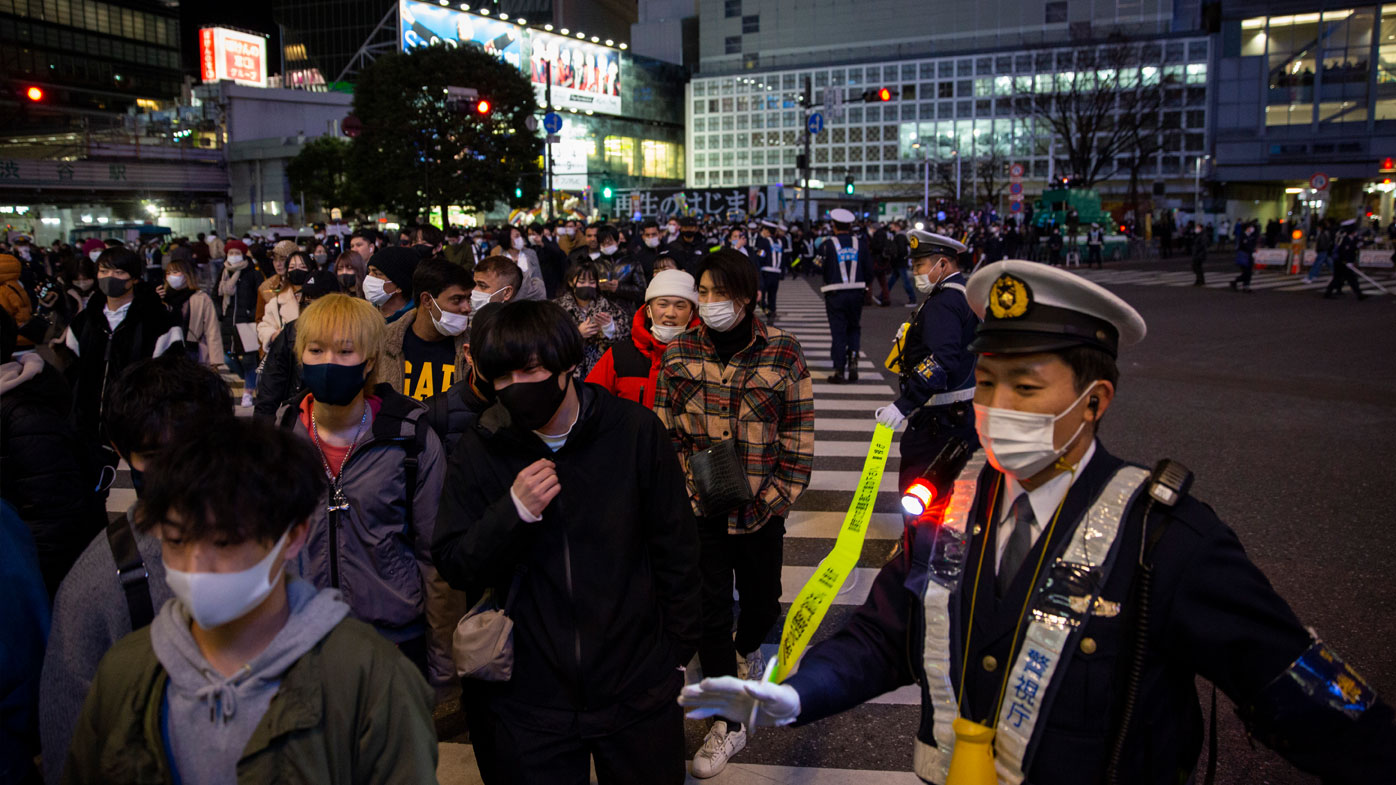
Mask-wearing, staying home and other measures for the general public remain non-mandatory requests, and experts worry if they will be followed.
READ MORE: Melbourne man tests positive to COVID-19 after Perth quarantine
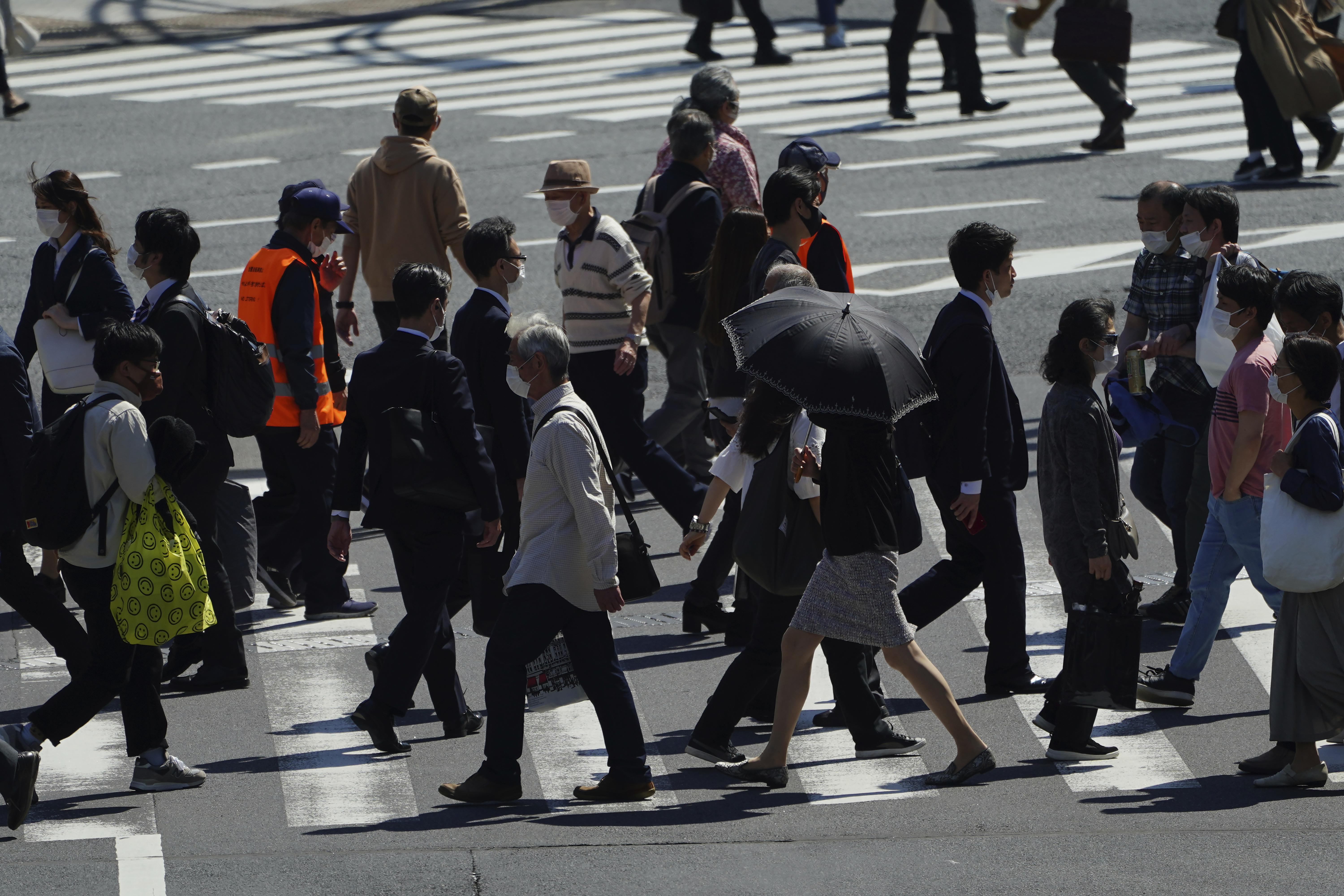
Japan, which has had about half a million cases and 10,000 deaths, has not enforced lockdowns. But people are becoming impatient and less cooperative and have largely ignored the ongoing measures as the infections accelerated.
Osaka, the epicenter of the latest resurgence, has since April 5 been under semi-emergency status, and the alert has since been expanded to 10 areas including Tokyo through May 11, a step promoted by the Suga government as an alternative to a state of emergency with less economic damage.
Osaka Governor Hirofumi Yoshimura, who requested the emergency earlier this week, said semi-emergency measures were not working and hospitals were overflowing with patients. Osaka doctors said a number of people were forced to wait at hotels and on ambulances.
Japan's latest resurgence, fueled by a new, more contagious variant detected earlier in Britain, has spread rapidly across the country.
It also has been slow to roll out vaccinations, leaving its population largely unprotected before the Olympics begin in July.
READ MORE: Family caught COVID-19 from across hotel corridor in Perth
The third emergency is largely intended as a short and intensive step to stop people from traveling and spreading the virus during the "Golden Week" holidays from late April through the first week of May.
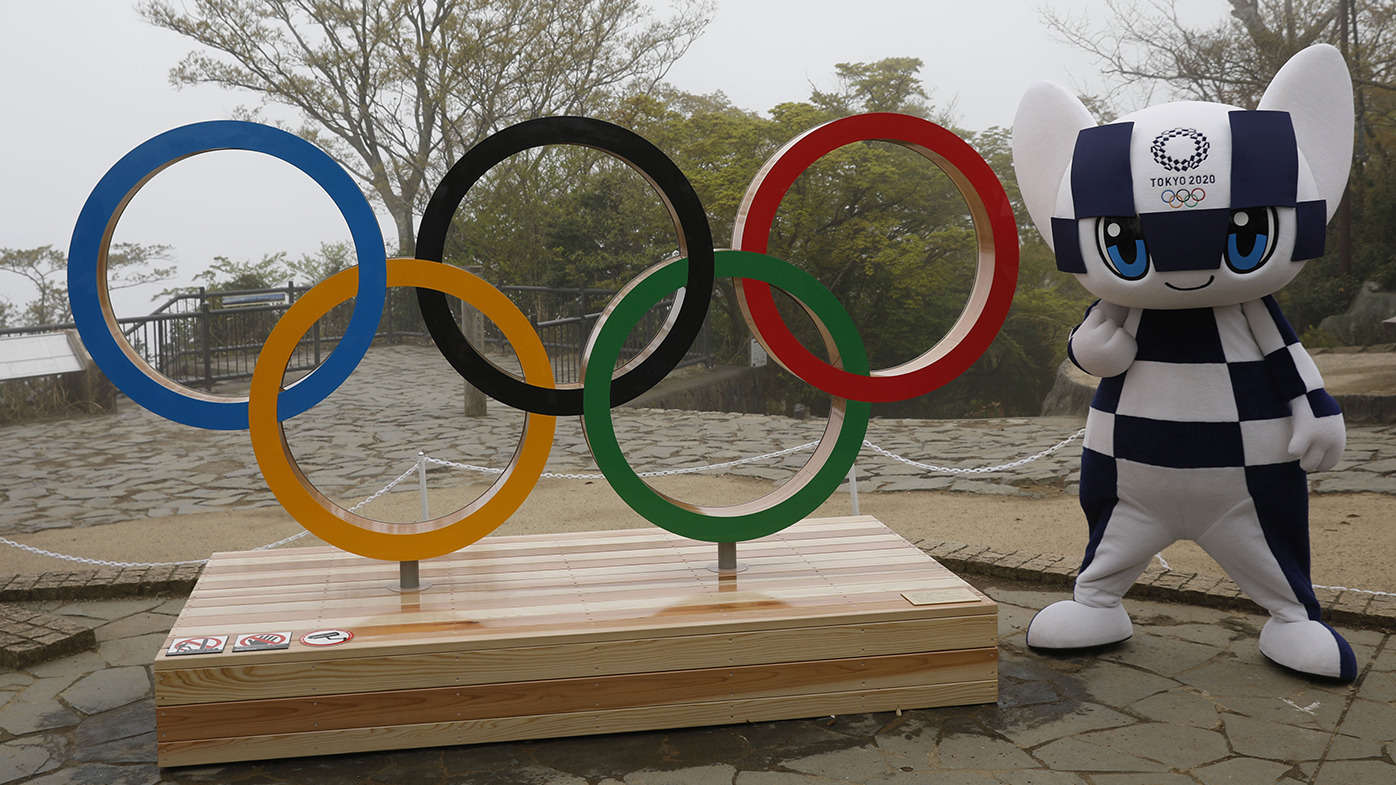
The May 11 end of the emergency, just ahead of an expected Japan visit of International Olympic Committee President Thomas Bach triggered speculation that the government is prioritizing the Olympic schedule over people's health.
Mr Bach's comment that the state of emergency is "not related to" the Olympics also fueled criticisms from opposition lawmakers and others.
Mr Suga has been reluctant to hurt the already pandemic-damaged economy and faced criticism for being slow to take virus measures.
Japan's inoculation campaign lags behind many countries, with imported vaccines in short supply, while its attempts to develop its own vaccines are still in the early stages. Inoculations started in mid-February but progress comes slowly amid shortage of vaccine supply and healthcare workers.
The rapid rise of the new patients flooding hospitals and would likely to cause further staff shortage and slowdown of vaccinations.
Local Focus: Electric vehicles force changes in electricity bills
The rise of electric vehicles is a threat to the nation’s power lines because it could increase consumption at peak times.So Unison Networks has made changes to how it charges electricity retailers.The change is designed to be…
Accused cocaine supplier busted with $70,000 at airport, jury hears
Cash amounting to $70,000 scattered throughout the luggage of an accused cocaine supplier was seized by a Customs officer as the man tried to flee New Zealand, a jury has heard.Ryszard Wilk is one of three men on trial at the High…
Central Auckland incident: Police arrest man at gunpoint – witness
There have been dramatic scenes involving armed police in central Auckland today, the latest in a series of gun-related incidents in the city.Police confirmed this afternoon’s drama was connected to a gun being fired at the luxury…
Herald afternoon quiz: April 23
Test your brains with the Herald’s afternoon quiz. Be sure to check back on nzherald.co.nz for the morning quiz tomorrow. To challenge yourself with more quizzes, CLICK HERE.
Man sentenced to jail for rape after removing condom without consent
A Wellington man has been sent to prison in what’s believed to be the first conviction for rape after the man removed a condom during sex without the woman’s consent. Jessie Campos, 48, was sentenced to three years and nine months…
Huge superyacht squeezes through tiny Netherlands canals
It's not every day you see a gigantic superyacht weaving through the narrow canals of the Netherlands.
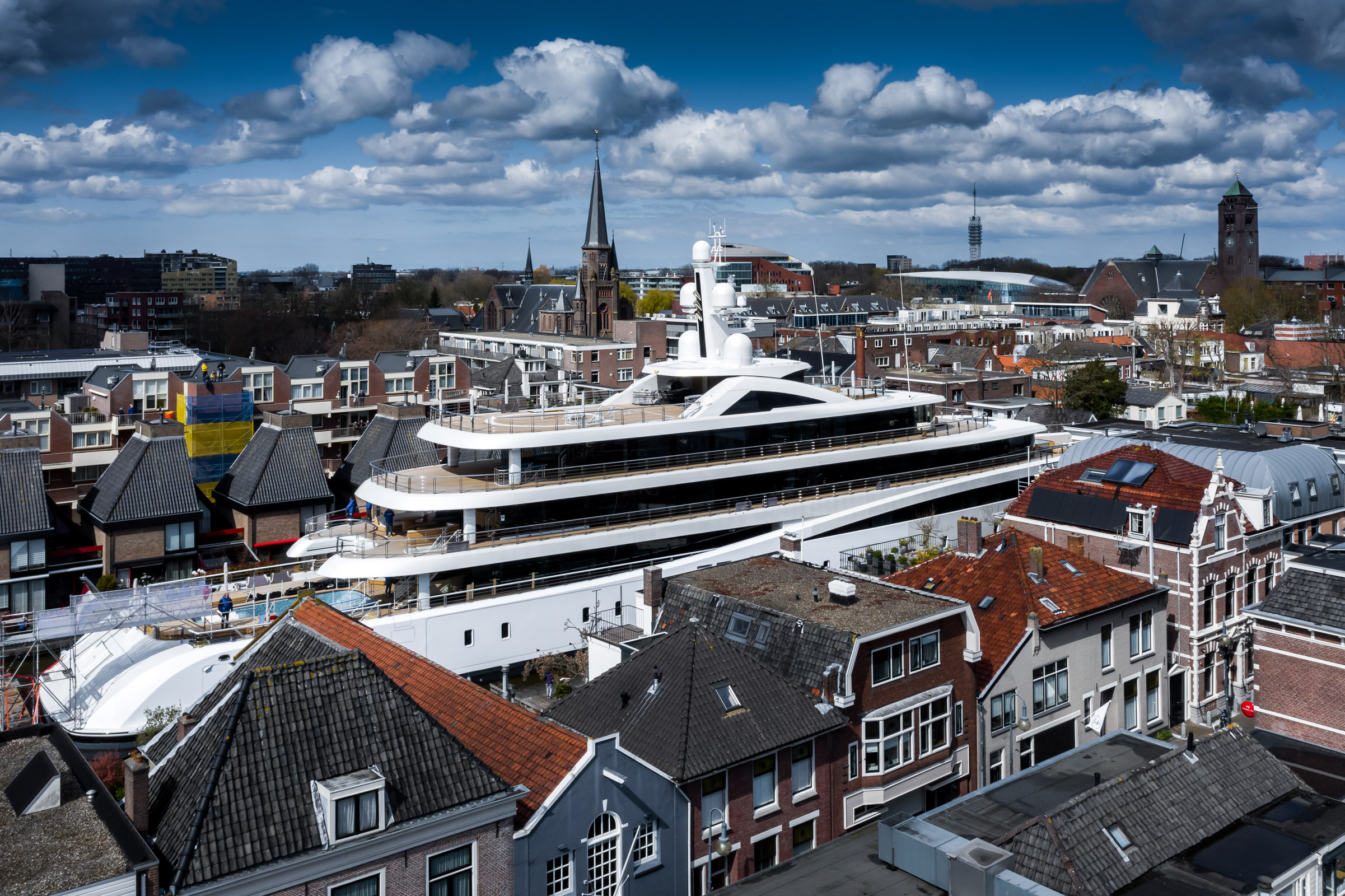
Thankfully photographer Tom van Oossanen was on hand to capture the astonishing scenes as Project 817, a 94-metre vessel built by Dutch shipyard Feadship, was transported from its Kaag Island facility to the North Sea at Rotterdam last week.
In a series of stunning images, the vessel, one of the largest to be launched in 2021, is guided through the water with tugboats, passing by houses and churches, as crowds look on in amazement.
READ MORE: 'A spaceship on water': Porsche-designed superyacht goes on sale
According to Mr Oossanen, around four to six superyachts are transferred along this route each year before going for sea trials, which usually take place in Amsterdam. However, few are as big as Project 817, likely to be known as Viva when it officially launches.
"It's always quite an operation," Mr Oossanen told CNN Travel.
"Everyone loves to see it."
But these manoeuvres lead to serious snarl ups on land and water. Got a dentist appointment? "Then you're not going to make it," Mr Oossanen said.
"Sometimes it takes an hour to go through a bridge, and with the amount of traffic we have in Holland, it soon builds up."
Kaag Island is one of two Feadship shipyards based inland (the other is in Aalsmeer, near Schiphol) which means every yacht delivered from here has to be painstakingly pulled the same way.
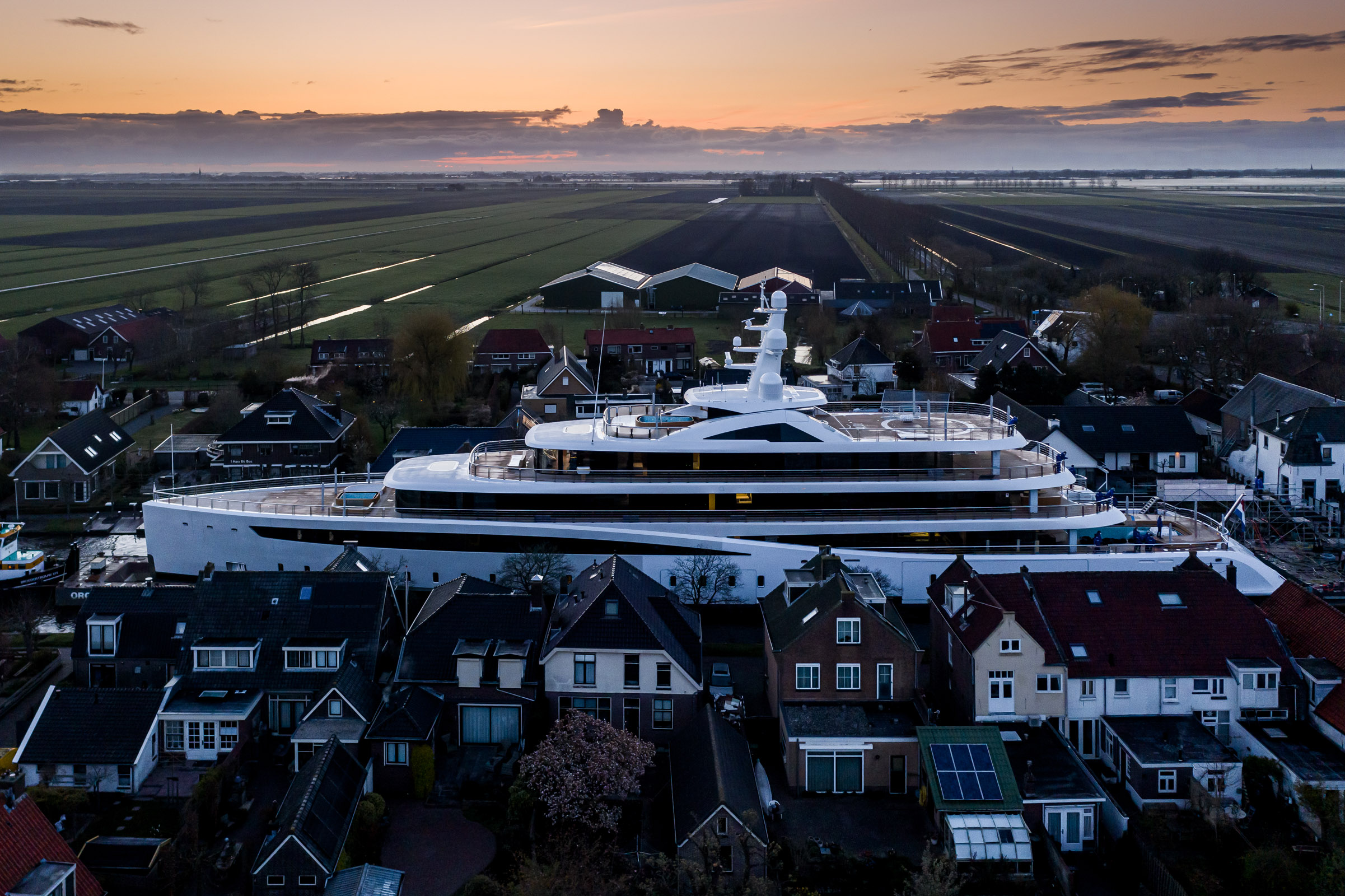
Tight fit
"They [the two shipyards] are actually quite far from the North Sea, so in order to transport the yachts to sea, they need to pass a small canal to Rotterdam," he explains. "There's only one way to go."
Some parts of the canals along the route are only a little wider than Project 817, which spans 13.6m from port to starboard, so to say the transfer required great care and attention is something of an understatement.
READ MORE: Are billionaires really self-isolating on superyachts?
"This boat has been fully designed to actually fit the waterway," Mr Oossanen said.
He said he had only ever seen four superyachts of this size taking this same journey.
"So they [the designers] probably couldn't add another centimetre to her length or another centimetre to her width," he said.
"They maximised the design by using the limitations of bridges and waterways, which is quite interesting."
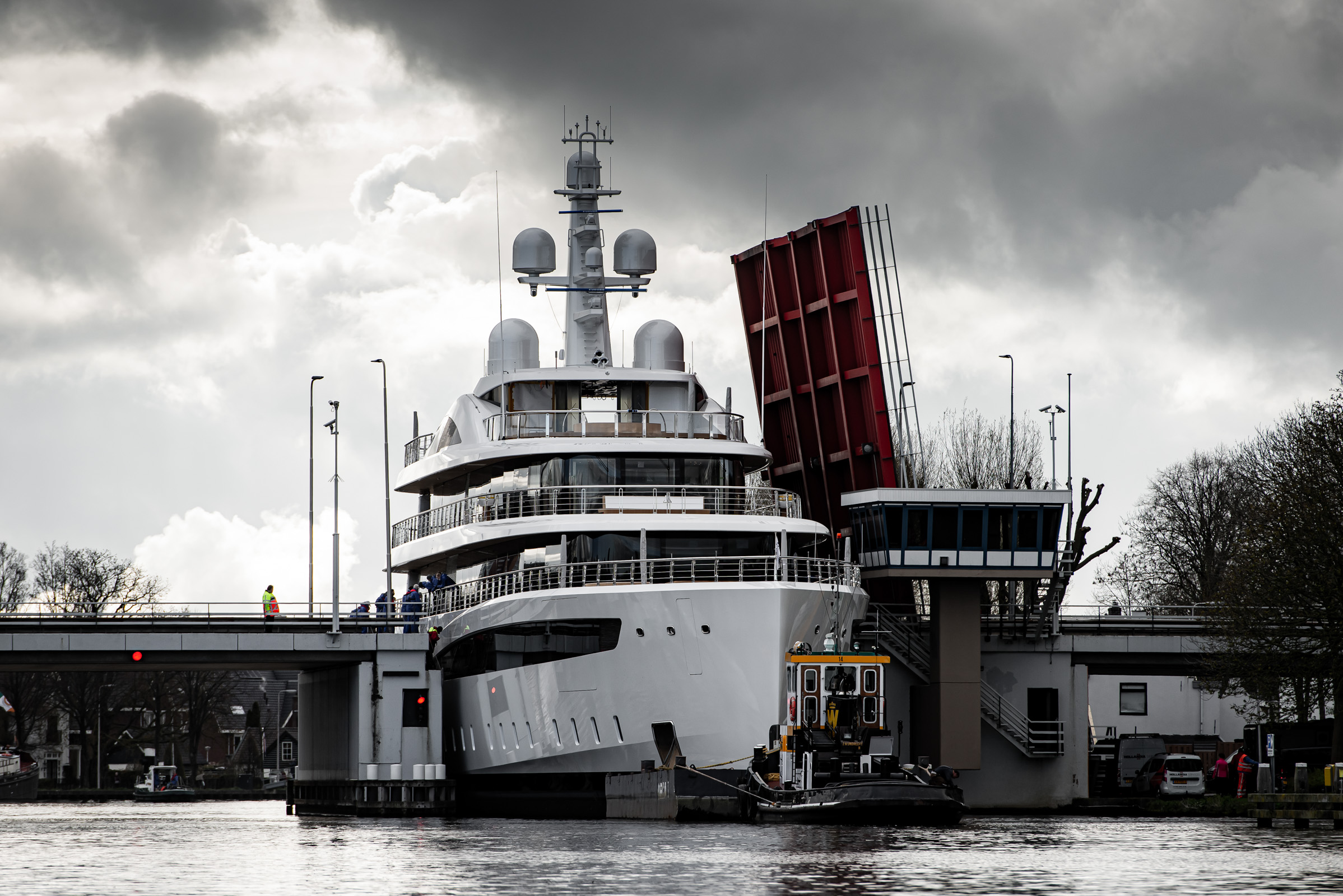
Feadship said the duration of a transfer was dependent on several different factors, such as the winds and bridge schedules, and can take between two to four days. The transportation of Project 817 took around four days.
During the first stage of the operation, Project 817 was moved from the Kaag Island shipyard to Lake Braassemermeer, where it was fitted with pontoons to raise it up, thus ensuring it wasn't too deep to maneuver through the canals.
Tug boats were then attached to the pontoons on either side of the superyacht, which was also wrapped with protective foil, in order to guide the vessel through the water with precision.
READ MORE: How cruise companies plan to return in a COVID-safe way
By this point, it was ready to be pushed and pulled along the canals, making its way across a small bridge in the tiny village of Woubrugge, as well as Alphen aan den Rijn, a town in the west of Holland, before reaching the Dutch city Gouda, located south of Amsterdam, a few days later.
A team of five experts and a crew on board usually guide a superyacht to the sea, according to Feadship.
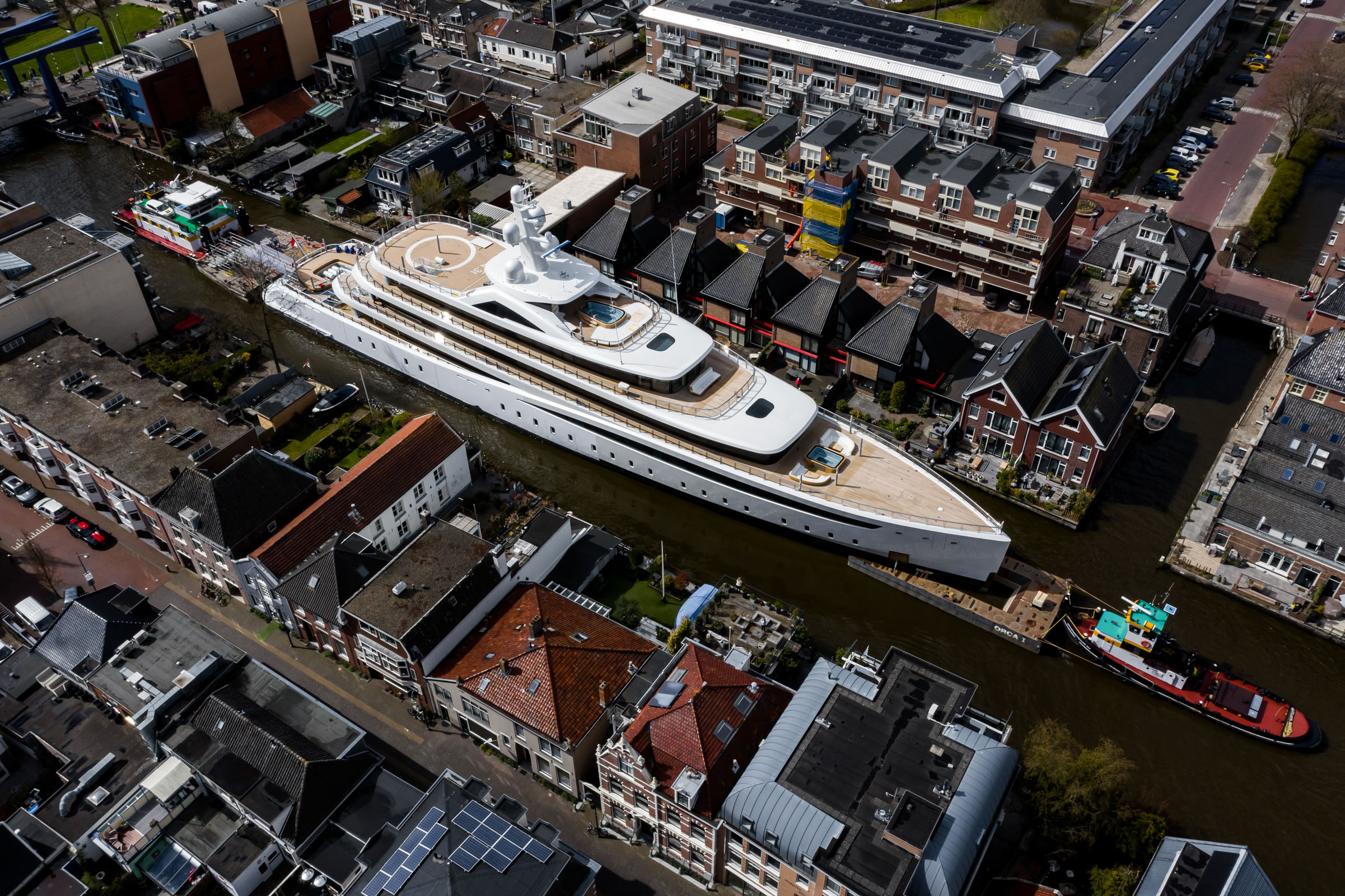
Tricky transfer
"It takes a long time," said Mr Oossanen.
"No one is in any rush, because you don't want to scratch the paint."
He said Feadship used the same transport company and tug boat drivers for each delivery in order to ensure a smooth transition.
"They [the captains] are very experienced in what they're doing," he said.
"There's obviously a lot of money involved, so you want to do things properly.
"And if you're going to rush things, things can go wrong."
It's perhaps no surprise that the transfer of Project 817 caused quite a stir on the ground, particularly while passing through the smaller villages along the way.
Some onlookers were absolutely bewildered by the sight of such a huge yacht in transit on the canal.
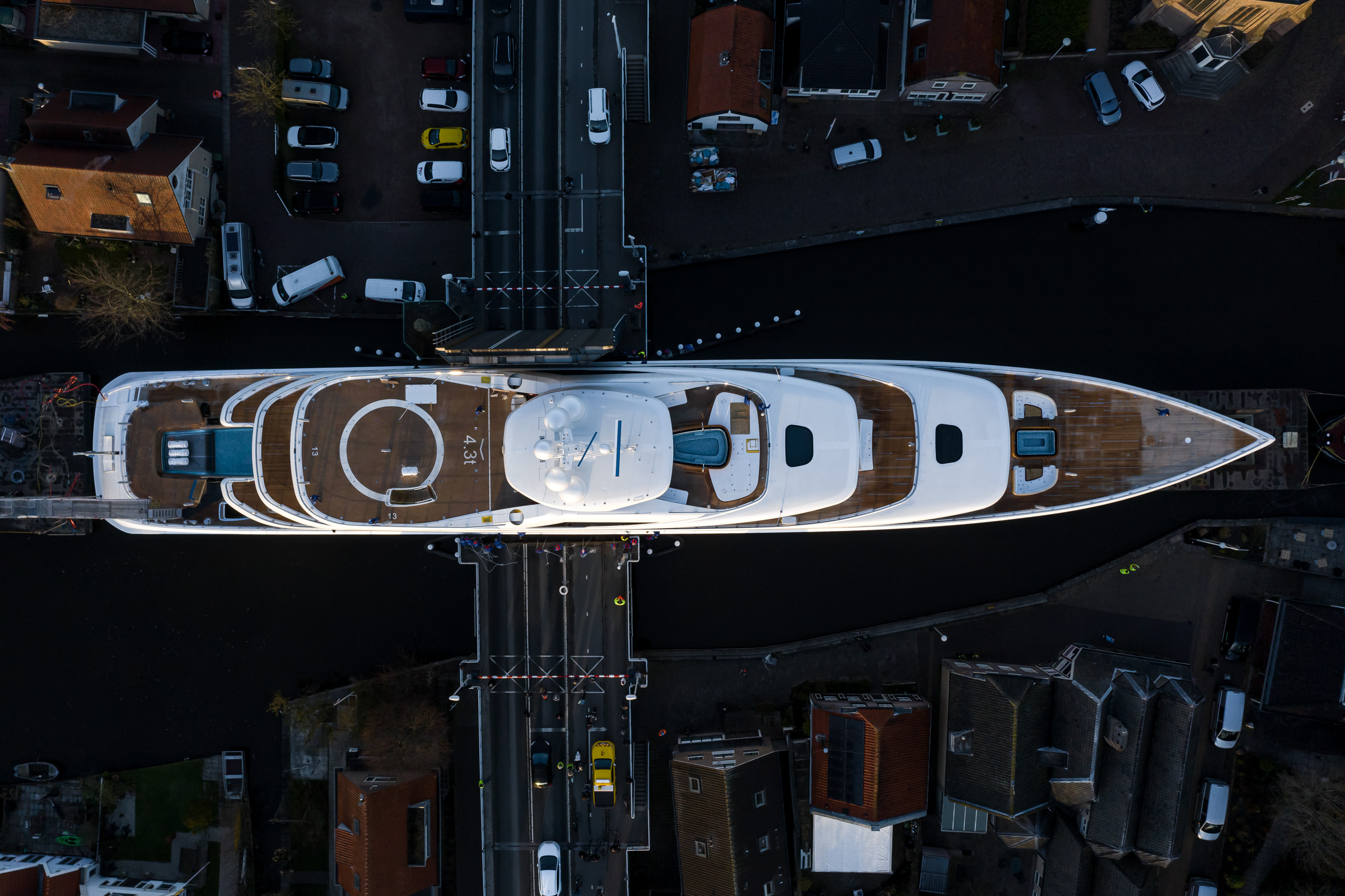
"People were actually asking questions like 'why would someone cruise his boat here?'" said Mr Oossanen, who followed Project 817 for the first two days of the transportation.
"Obviously it's not cruising. She's going to sea and she will never come back again."
While Mr Oossanen has photographed many such transfers, he stressed that no shoot was the same, and he's constantly trying to come up with new ways to showcase the vessels.
"Every boat is different," he said.
"It's always the same route, but I always try to find different angles.
"It's a challenge to picture it in a different way. I'm really glad this one worked out so well."
Last hurrah?
The photographer was particularly keen to document this journey, as he believes it may be the last time a vessel of this size is transported along this route.
Feadship opened a new facility in Amsterdam that has the capacity to build superyachts up to 160m long.
And a 140m dry dock has been fitted to its Makkum shipyard, allowing for the construction of yachts with wider beams.
The Dutch government has also confirmed plans to widen the locks at nearby Kornwerderzand, which ultimately means larger vessels will be able to sail directly from Makkum to the North Sea in the future.
"They can easily build up to 160m in a new facility, so why would they still transfer such a big boat through all these canals and go through all the hassle?" Mr Oossanen said.
"Knowing the inside information, I think seeing a 94m doing this route is either going to take a while, or might not happen [again] at all."
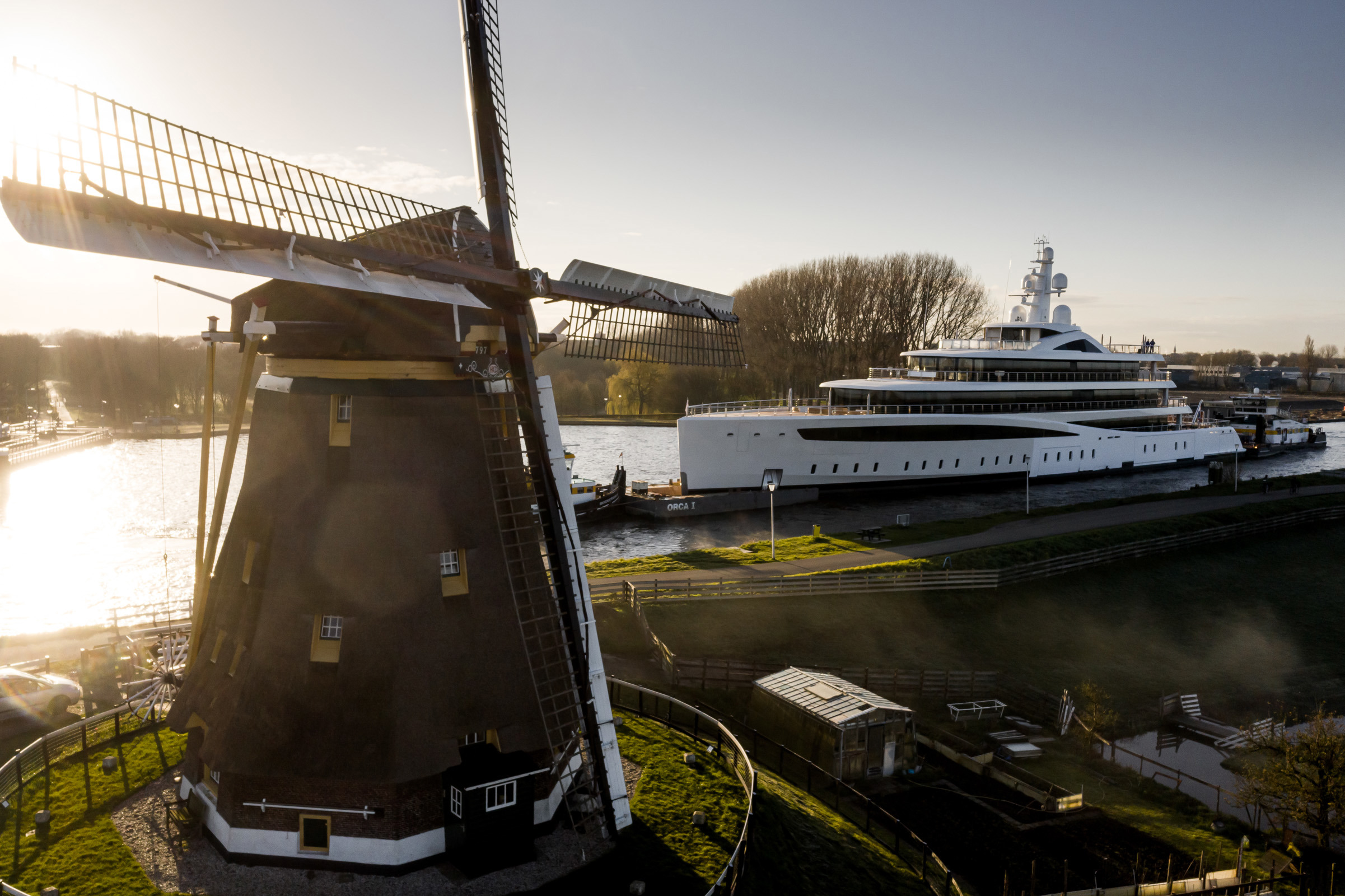
Designed by Azure Yacht Design & Naval Architecture and De Voogt, Project 817, which features a hybrid propulsion system, is a particularly striking sight to behold thanks to its pearl-white livery.
"By the time she's fully unwrapped, washed and cleaned, you're going to see her in the sun and she's going to twinkle like a star," Mr Oossanen said.
Feadship confirmed to CNN Travel that the vessel successfully reached Rotterdam and will soon be ready for sea trials.
Project 817 will be closely followed by a number of significant superyachts currently under construction in the Netherlands.
Heeson's 60m Project Falcon, the shipyard's largest steel yacht so far, is due to launch in the coming months, while Oceanco's 117m Project Y719 is also expected at some point this year.
Meanwhile, work is still underway on Feadship's 95m Project 1009, which is currently in the final stage of construction.
All councillors now sit on Bay of Plenty Regional Council's Māori committee
For the first time, all Bay of Plenty Regional councillors now sit on its Komiti Māori committee.Kohi Māori constituency councillor Toi Kai Rakau Iti said it was the first step in a longer journey the council must walk.Before…
Royal Commission into Abuse in Care blows $56m budget
From RNZ The Royal Commission of Inquiry into Abuse in Care has been told to rein in its skyrocketing spending and now has to work with Treasury to get back on track.Documents released to RNZ show operational spending has increased…