At 6am on Sunday, Auckland will move down to alert level 2 after a week at the more restrictive level 3. The rest of the country will drop from alert level 2 to 1. The changes come after five days of zero cases of community transmission….
Tag Archives: oceania
Two dogs narrowly escape danger while on an adventure
On an adventure without their owner, two lucky dogs narrowly escape danger on State Highway 1. When driving south on State Highway 1 near Karapiro Senior Constable Ali Methven spotted two dogs wandering with no owner in sight.The…
Covid 19 coronavirus: Contacts must continue isolating, despite lockdown exit
Auckland will exit alert level 3 restrictions this weekend, but health officials have given a stern reminder to those earlier ordered to isolate that they must continue to do so.The earlier failure by people who had been exposed…
Water pipe bursts on Wellington's Mt Victoria
A small pipe has burst on Wellington’s Mt Victoria, leaving a large spurt of water shooting out from the ground. Wellington Water said a repair crew was working on Majoribanks St when the 20mm pipe was hit. There has been no loss…
Covid 19 coronavirus: How are South Aucklanders staying informed?
John Pulu is one of the best-known television and radio personalities in New Zealand’s Pacific community. He not only fronts TVNZ’s Tagata Pasifika Saturday morning show, but also hosts a four-hour Tongan-language current affairs…
National Erebus Memorial in Parnell: Families 'not united' over decision
An Erebus family member has sided with Dame Naida Glavish and other protesters in opposition to the location of the National Erebus Memorial.The memorial is intended to pay tribute to the 237 passengers and 20 crew killed when…
Earthquake swarm/tsunami risk: Weeks of aftershocks expected after big shake off East Cape, Kermadecs
Scientists are expecting weeks of aftershocks after this morning’s big 7.1 East Cape quake – but the chances of it triggering something bigger than 8.5 are less than 1 per cent.GeoNet scientists have used forecast models to develop…
PM would 'support' coronial inquiry into Porter rape accuser's death
Prime Minister Scott Morrison has said he would support a coronial inquiry into the death of a woman who accused Attorney-General Christian Porter of a historical rape.
Mr Porter has strenuously denied the allegation.
Mr Morrison stopped short of calling for such an inquiry, saying it was "entirely a matter for the South Australian Coroner".
Despite this, he said if the coroner chose to go ahead with an inquiry he would support it.
READ MORE: Parents of Porter's accuser call for inquiry into her death
"The rule of law is the essential process by which all Australians are subject to," Mr Morrison said.
"And there is an equality before the law as well. Yesterday, I spoke about the presumption of innocence, the rules of evidence, the process of courts. The equality of the law is also important. You and I face the same law.
"We're subject to the same processes under that law. There's not one set of processes for one Australian and another set of processes for another."
Parents call for investigation
Yesterday, the woman's parents said they would support an inquiry into their daughter's death.
Releasing a statement via their lawyer, the parents of the deceased woman said any line of investigation that would shed light on the death of their daughter is welcomed.
"The family of the deceased continue to experience considerable grief arising from their loss," the statement read.
"They are supportive of any inquiry which would potentially shed light on the circumstance surrounding the deceased's passing.
READ MORE: NSW Police release details of dealings with Christian Porter's accuser
"They ask that their privacy be respected during this difficult time."
Mr Porter identified himself as the unnamed Cabinet minister at the centre of the allegations during a speech in which he said the events "never happened".
Mr Morrison yesterday rejected calls for an independent inquiry into the matter after NSW Police declared their investigation closed, likening it to a "mob process".
Mr Porter is currently taking a short period of leave.
Readers seeking support can contact Lifeline on 13 11 14 or beyond blue on 1300 22 4636.
Space-cations 'just around the corner' with orbital hotel in progress
If you're daydreaming of future travels while stuck at home during the pandemic, why fantasise about the beaches of Bali or the canals of Venice when vacationing in space could be in your future?
Back in 2019, Californian company the Gateway Foundation released plans for a cruise ship-style hotel that could one day float above the Earth's atmosphere.
Then called the Von Braun Station, this futuristic concept – comprised of 24 modules connected by elevator shafts that make up a rotating wheel orbiting the Earth – was scheduled to be fully operational by 2027.

READ MORE: SpaceX Mars prototype rocket explodes moments after landing
Fast forward a couple years and the hotel has a new name, Voyager Station, and it's set to be built by Orbital Assembly Corporation, a new construction company run by former pilot John Blincow, who also heads up the Gateway Foundation.
In a recent interview with CNN Travel, Blincow explained there had been some COVID-related delays, but construction on the space hotel is expected to begin in 2026, and a sojourn in space could be a reality by 2027.
"We're trying to make the public realise that this golden age of space travel is just around the corner. It's coming. It's coming fast," said Blincow.
A hotel like no other
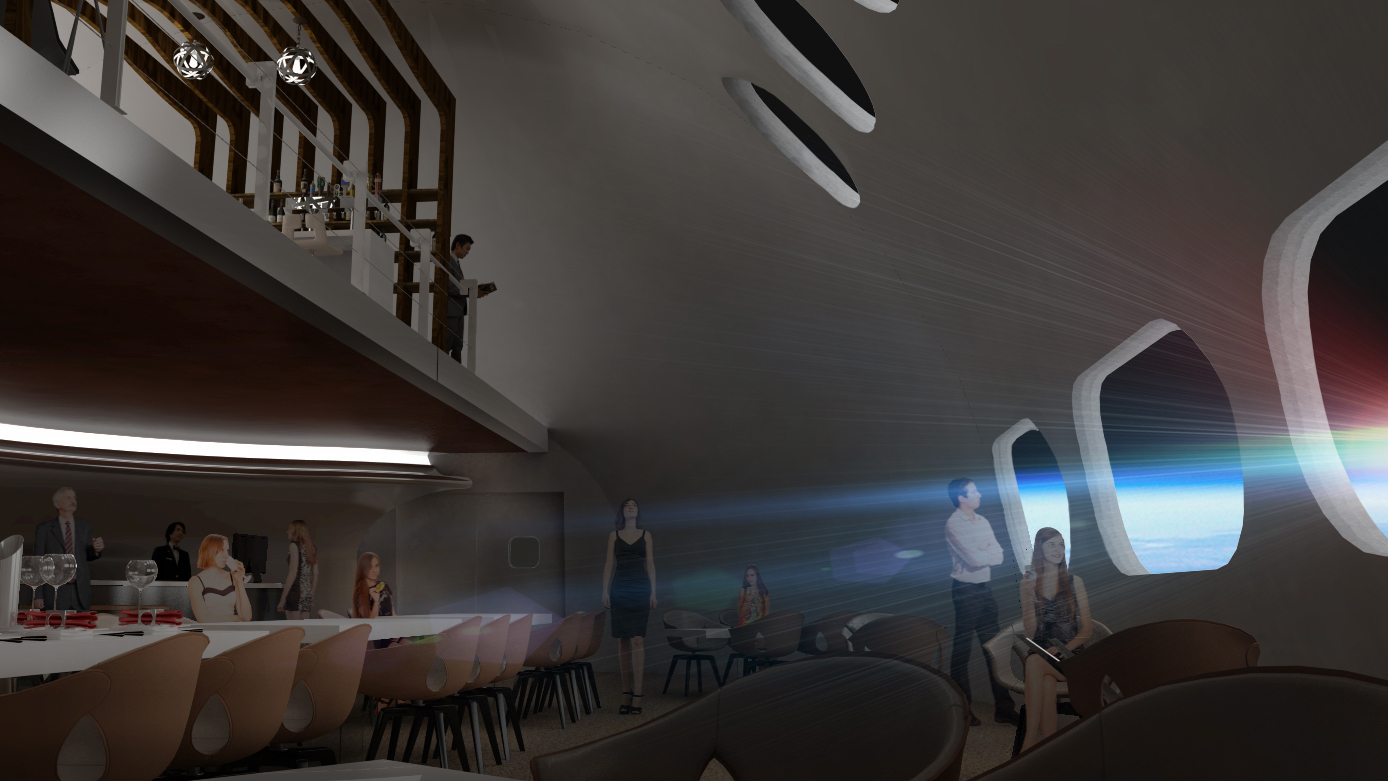
Renderings of what the hotel might look like suggest an interior not dissimilar to a luxury Earth-bound hotel, just with some pretty spectacular out-of-this-world views.
When the initial designs premiered a couple years ago, Tim Alatorre, senior design architect at Orbital Assembly Corporation told CNN Travel the hotel's aesthetic was a direct response to the Stanley Kubrick movie "2001: A Space Odyssey", which he called "almost a blueprint of what not to do."
"I think the goal of Stanley Kubrick was to highlight the divide between technology and humanity and so, purposefully, he made the stations and the ships very sterile and clean and alien," he said.
READ MORE: Some Earth microbes could survive briefly on Mars, study finds
Instead, Alatorre and his team want to bring a slice of earth to space via warm suites and chic bars and restaurants. Guests might be in space, but they can still enjoy regular beds and showers.
That's not to say the hotel will ignore the novelty of being in space altogether. There are plans to serve traditional "space food" like freeze dried ice cream in the hotel's restaurant.
Plus there will be recreational activities on offer that "highlight the fact that you're able to do things that you can't do on Earth," according to Alatorre.
"Because of the weightlessness and the reduced gravity, you'll be able to jump higher, be able to lift things, be able to run in ways that you can't on Earth," he said.
READ MORE: NASA Rover captures first sounds on Mars
How does it work?
So how exactly would the physics of a space hotel work?
Alatorre told CNN Travel that the rotating wheel would work to create a simulated gravity.
"The station rotates, pushing the contents of the station out to the perimeter of the station, much in the way that you can spin a bucket of water – the water pushes out into the bucket and stays in place," he said.
Near the centre of the station there's no artificial gravity, Alatorre explained, but as you move down the outside of the station, the feeling of gravity increases.
The hotel's original name was chosen because the concept was inspired by 60-year-old designs from Wernher von Braun, an aerospace engineer who pioneered rocket technology, first in Germany and later in the US.

While living in Germany, von Braun was involved in the Nazi rocket development program, so naming the space hotel after him was a controversial choice.
This was partly why the name's been changed, Blincow told CNN Travel.
"The station is not really about him. It's based on his design, and we like his contributions towards science and space," Blincow said.
"But you know, Voyager Station is so much more than that. It is the stuff in the future. And we want a name that doesn't have those attachments to it."
Space tourism is becoming an increasingly hot topic, and there are several companies trying to make it happen – from Virgin Galactic to Elon Musk's SpaceX.
SpaceX's StarShip system could help get Voyager Station off the ground.
"We cannot call SpaceX our partner, but in the future we look forward to working with them," Blincow told a recent live event promoting Orbital Assembly, advising viewers to "hang tight."
For now, the space hotel isn't advertising a room rate, but expect it to come with a pretty hefty price tag attached.
Virgin Galactic, for example, plans to launch passengers into sub-orbital space at $250,000 per person, per trip.
However the team behind Voyager Station have said they're hoping to eventually make a stay at the hotel equivalent to "a trip on a cruise or a trip to Disneyland."
'Starship culture'
While Voyager Station is perhaps the flashiest of Orbital's designs, it's actually just one facet of their space ambitions.
The team is also hoping to build research stations, and spark space tourism and commerce opportunities.
"We're designing the tools and machines right now that can build these structures very quickly," Blincow told CNN Travel.
The team imagine government or private companies might use modules for training crews "heading to Mars, the Moon and beyond," as Alatorre outlined at the 2021 live event.
The next stage in getting the Voyager Station off the ground is bringing more investors into the mix, and continuing with tests on the ground.
The eventual goal, as Alatorre put it back in 2019, is "to create a starship culture where people are going to space, and living in space, and working in space and they want to be in space. And we believe that there's a demand for that."
'I felt judged': Overweight Aussies too embarrassed to see GP
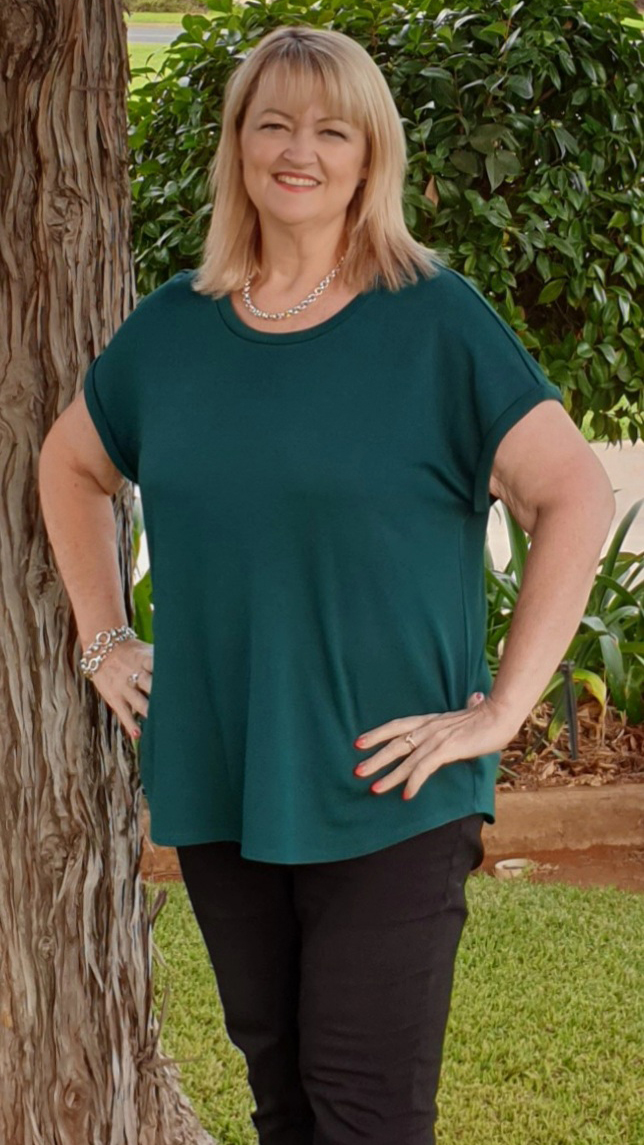
When Jo Garraway went to her local beautician to have her eyebrows shaped and the bed collapsed under her, not once, but twice, she knew she had to do something about her weight.
She had always struggled with being overweight, but it was when she left home aged 18 due to family issues, she really piled on the kilos.
In one year alone she put on 50kg, and by 2009 she tipped the scales at 184kg.
READ MORE: Research shows Australians with obesity wait nine years to get help

The community services worker from Griffith, NSW struggled to walk from the car park to the supermarket.
She developed type two diabetes and high blood pressure, and admits she was worried about her lifespan.
"I thought if I don't do anything, I'm not going to have a long life," she told 9News.
Ms Garraway said she ate a lot of junk food, and loved chocolate and hot chips especially – often eating so much she'd feel sick.
And while she did change her habits, trying "everything" to lose weight from big-name diets to exercising six days a week, she struggled to shift more than a few kilograms.
However, Ms Garraway said her GPs were unsympathetic when she went to ask for help.
"I just felt judged," she said.
"They were very staunch; 'here's the medication, try this, you need to walk more."

READ MORE: Drug that's been around for decades could be new weapon in obesity fight
"There was no ongoing support."
And while Ms Garraway did attempt to seek help, according to a new study which is part of a global obesity survey, most of the two-thirds of Aussies who are overweight or obese, won't.
The study found 20 per cent of overweight or obese Aussie are too uncomfortable to raise the issue with their GP.
And with 12.5m overweight or obese according to the Australian Institute of Health and Welfare- two thirds of the nation- that's a lot of people.
Dr Georgia Rigas, report leading author and chairwoman of the Royal Australian College of General Practitioners' Obesity Specific Interest Group, said "fat shaming" means people with weight problems are less likely to seek medical health.
"Our research showed that the majority of people living with obesity felt that they need to manage it 'on their own'. I can't think of any other chronic progressive disease where a person felt that way," Dr Rigas, said.
"Weight bias and stigma are rife in the community – including amongst healthcare professionals and the media.
"We all have a role to play in helping to change the narrative."
Eventually, Ms Garraway decided, after doing her own research, she needed a gastric bypass.
On the packed plane flying to Sydney for the operation, the mother-of-two had an experience that convinced her she'd made the right decision.
"I was trying not to encroach on the space of people but it must have looked terrible," she said.
"The flight attendant came and said to the person next to me, 'I'm moving you to a spare spot.'
"I just wanted to cry.
"I just felt like I was nothing."
After the bypass, she lost almost 90kg – the same as more than 50 bags of sugar.
She now weighs 97kg, and unlike when she was obese, said she "feels she has value".
She urged other people to engage with their doctors, and also wants GP's to learn more about how to help patients.
"It's scary to go to these doctors and talk about it," she said.
"But they don't then nothing changes.