A Manukau student leader has made a heartfelt plea to New Zealanders to stop criticising South Auckland over the latest Covid-19 outbreak.Micah Sili, student council president at Manukau Institute of Technology (MIT), asked for…
Tag Archives: oceania
Covid 19 coronavirus: Fate of rulebreakers falls to Ashley Bloomfield; KFC worker, Jacinda Ardern at odds over advice
VIRUS LATEST* ‘Ready and willing’: Business leaders demand details on government’s Covid recovery plan * ‘Give South Auckland a break’ – MIT leader * Four families, one school and a rule breaker: Papatoetoe cluster unravelled…
Abuse in Care Inquiry believes Lake Alice records missing
The Abuse in Care Inquiry believes there may be more than 100 undocumented people who spent time at the Lake Alice Psychiatric Hospital’s child and adolescent unit. It was revealed last year the number of people abused in care…
Herald morning quiz: March 2
Test your brains with the Herald’s morning quiz. Be sure to check back on nzherald.co.nz at 3pm for the afternoon quiz. To challenge yourself with more quizzes, CLICK HERE.
Green Wellington City councillor reconsiders controversial library vote
Green Wellington City councillor Laurie Foon has reconsidered her controversial vote supporting a proposal to privatise part of the central library building. It comes as some councillors are desperately seeking advice from council…
Moment car crashed into bar following alleged street brawl revealed
9News has obtained exclusive CCTV footage of the moment a Land Cruiser ploughed into a Darwin bar, sending a man flying through a glass door.
The stunning vision also appears to show the accused driver being assaulted in a violent street brawl prior to him allegedly getting behind the wheel.
Dale Talbot, 38, is allegedly chased down in the December footage, dropping onto the road in a foetal position before allegedly being punched, dragged and stomped on.

READ MORE: Ute engulfed by flames drifts across busy intersection
Joey Hazlebane, 25, Wade Hunter, 32, and Karlla Garling, 30, have been charged over the assault.
Today their lawyer, Peter Maley, told a court they will be pleading guilty to engaging in violent conduct and fighting in a public place. However, Ms Garling will be contesting her aggravated assault charge.
Mr Talbot's family says it is the alleged assault that drove him over the edge.

He is accused of getting into the Land Cruiser and driving it into the front of the Mitchell Street venue where the trio was reportedly standing.
The CCTV footage appears to show one man sent flying through the glass door as a woman and man throw punches through the driver's window.

The man that was sent flying allegedly comes back to the scuffle and police arrive shortly after to arrest the driver.
Mr Talbot is still in custody following the events.
'Heartbreaking': Horse of the Year cancelled due to Covid uncertainty
Land Rover Horse of the Year organisers have cancelled the 2021 event after 48 hours of discussions left them realising they wouldn’t be able to clear the hurdles put up by Covid uncertainty.A spokesperson for the Hastings event…
'It's clear': Netanyahu accuses Iran of attacking Israeli-owned cargo ship
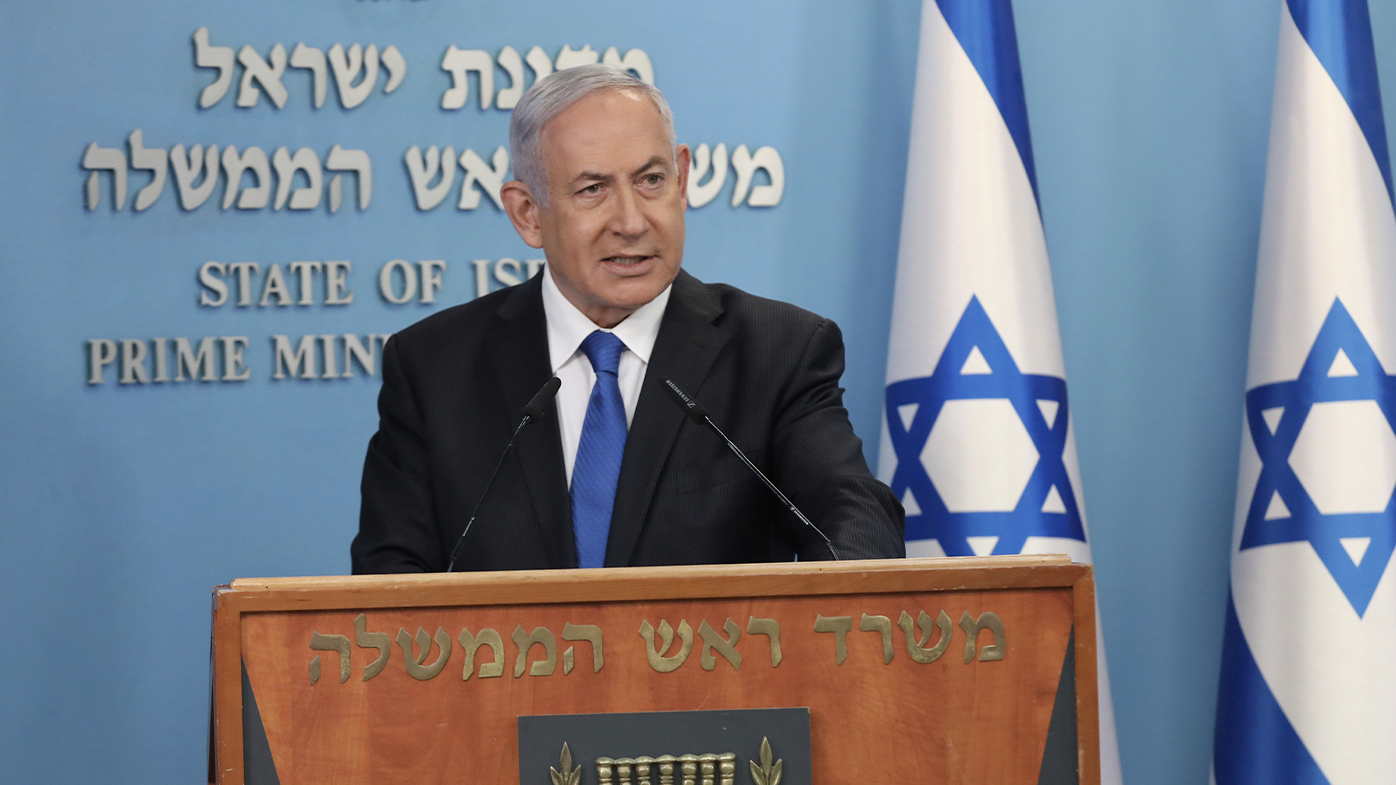
Israeli Prime Minister Benjamin Netanyahu has accused Iran of attacking an Israeli-owned ship in the Gulf of Oman last week.
Netanyahu spoke to Israeli public broadcaster Kan on Monday and said “it was indeed an act by Iran, that’s clear.”
“Iran is the greatest enemy of Israel, I am determined to halt it. We are hitting it in the entire region,” Netanyahu said.
READ MORE: Iran says Israel remotely killed military nuclear scientist
The explosion struck the Israeli-owned MV Helios Ray, a Bahamian-flagged roll-on, roll-off vehicle cargo ship, as it was sailing out of the Middle East on its way to Singapore on Friday.
The crew was unharmed in the blast, but the vessel sustained two holes on its port side and two on its starboard side just above the waterline, according to American defence officials.
The ship came to Dubai’s port for repairs on Sunday, days after the blast revived security concerns in Middle East waterways amid heightened tensions with Iran.
It remains unclear what caused the blast. The Helios Ray had discharged cars at various ports in the Persian Gulf before the explosion forced it to reverse course.
It docked in Dubai on Sunday for repairs and inspection.
US still open to Iran nuclear talks after Iran's rejection
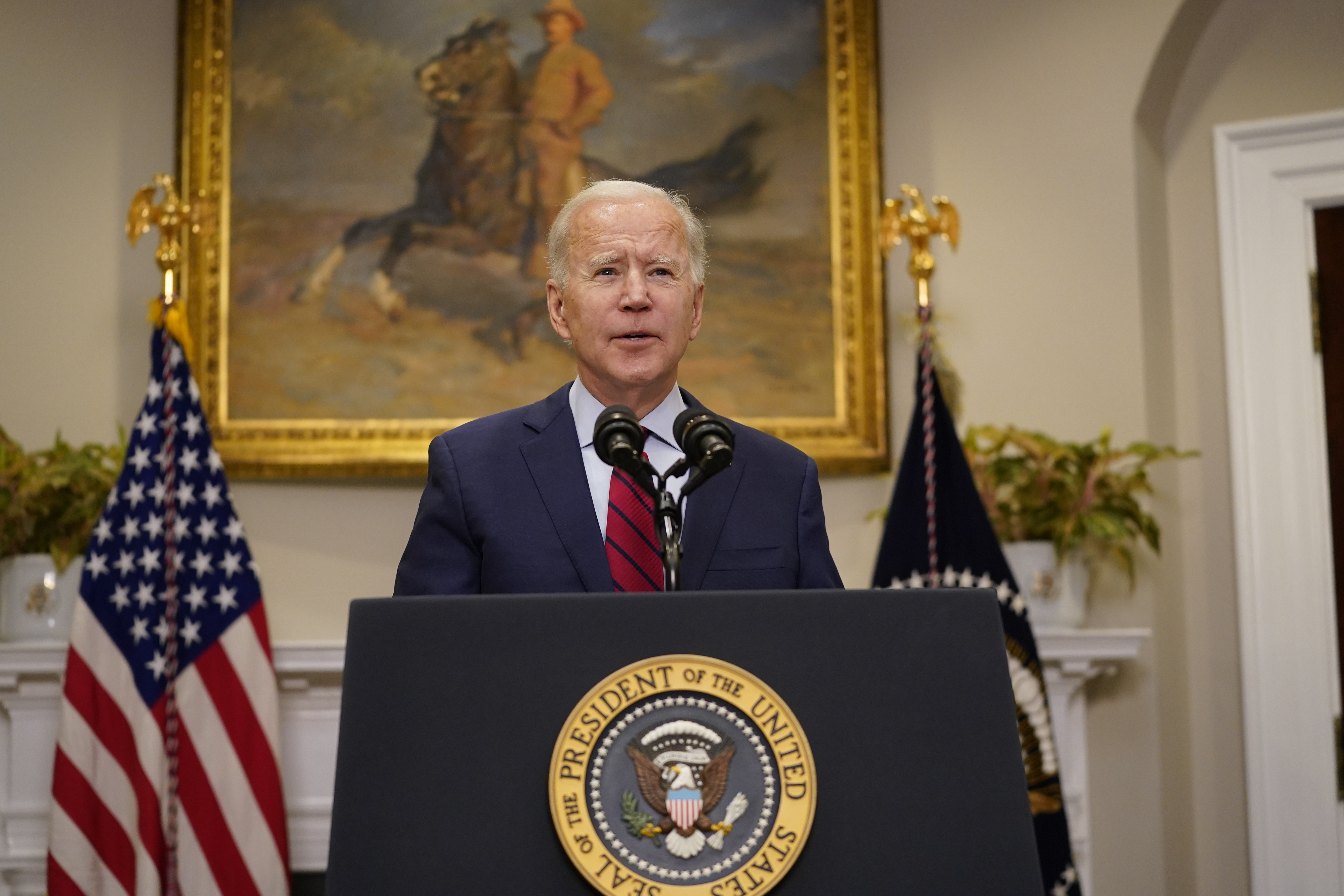
The Biden administration said it remains open to talks with Iran over the 2015 nuclear deal despite Tehran’s rejection of an EU invitation to join a meeting with the US and the other original participants in the agreement.
A senior administration official said the US was “disappointed” in the rejection but was flexible as to the timing and format of the talks and saw Iran’s decision to snub the European invitation as part of the diplomatic process.
The official said the US would be consulting with the other participants — Britain, China, France, Germany, Russia and the European Union — on the way forward.
READ MORE: One-third of aged care residents receiving substandard care, royal commission finds
The official was not authorised to discuss the matter by name and spoke on condition of anonymity.
Earlier Sunday, Iran turned down the offer for talks saying the “time isn’t ripe” for the meeting, at which the US would have participated as an observer.
Iran had been insisting that the US lift or ease sanctions imposed on it by the Trump administration under its “maximum pressure campaign” before sitting down with the United States.
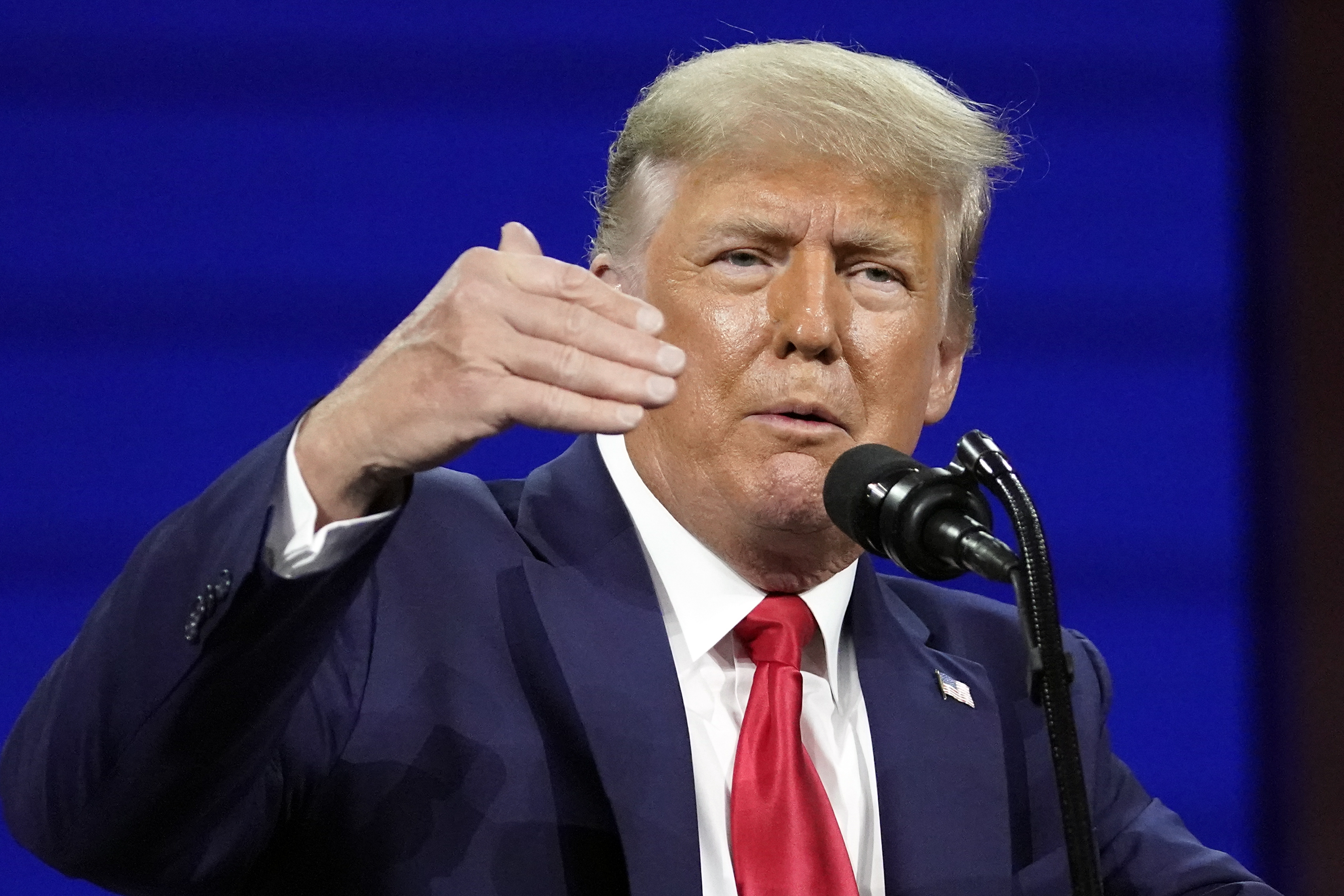
President Joe Biden has said repeatedly that the US would return to the deal that his predecessor, Donald Trump, withdrew from in 2018 only after Iran restores its full compliance with the accord.
"Considering US/E3 positions & actions, time isn’t ripe for the proposed informal meeting," Iranian foreign ministry spokesman Saeed Khatibzadeh said on Twitter.
He referred to the so-called E3, which comprises Britain, France and Germany.
“Remember: Trump failed to meet because of his ill-advised ‘Max Failure,'" he said.
“With sanctions in place, same still applies. Censuring is NOT diplomacy. It doesn’t work with Iran.”
The Biden administration announced earlier this month that it would accept an EU invitation to participate in a meeting of deal participants and at the same time rescinded a Trump determination from the UN Security Council that Iran was in significant breach of the agreement that all UN sanctions had been restored.
The UN move had little practical effect as nearly all members of the world body had rejected Trump's determination because the US was no longer a participant in the nuclear deal.
READ MORE: Is COVID to blame for the deadliest avalanche season in the US?
Biden administration officials said the withdrawal of the determination was intended to show goodwill toward its partners and at the same time had eased severe restrictions on the movement of Iranian diplomats posted to the UN.
Separately on Sunday, the State Department condemned a weekend attack by Iran-backed Yemeni rebels on Saudi Arabia, saying it damaged prospects for peace.
Along with the overtures to Iran on the nuclear front, the Biden administration also reversed several late Trump administration moves against Iranian-backed rebels in Yemen.
Secretary of State Antony Blinken rescinded his predecessor's designation that the Houthi rebels were a “foreign terrorist organisation,” a move that the UN and relief groups had said would make the already disastrous humanitarian situation in Yemen even worse.
READ MORE: Man wins half a million on lottery after finding winning numbers in fortune cookie
In addition, the Biden administration decided to halt all offensive assistance to Saudi Arabia for its military campaign against the Houthis in Yemen.
The Houthis, however, have stepped up their operations in the country, pressing ahead with an offensive in Marib province and launching attacks on Saudi Arabia.
On Saturday, Saudi authorities said they had intercepted a missile attack over their capital and reported that bomb-laden drones had targeted a southern province, the latest in a series of airborne assaults they have blamed on the Houthis.
State Department spokesman Ned Price on Sunday said the US “strongly condemns the Houthis’ attacks on population centres in Saudi Arabia.”
He said they “threaten not only innocent civilians but also prospects for peace and stability in Yemen” and called on the Houthis “to end these egregious attacks.”
“The United States remains committed to its longstanding partnership with the Kingdom of Saudi Arabia and to helping Saudi Arabia defend its territory as it faces attacks from Iranian-aligned groups," Price said.
On Friday, the Biden administration further strained ties with the Saudis when it published a declassified intelligence report finding that Saudi Arabia's crown prince had ordered an operation to capture or kill Jamal Khashoggi, a Washington Post journalist and US resident who was brutally slain at the Saudi consulate in Turkey.
Saudi Arabia has forcefully rejected the report's conclusions.
China working on new underground nuke silos, expert says
China appears to be moving faster towards a capability to launch newer nuclear missiles from underground silos, according to an American expert who analysed satellite images of recent construction at a missile training area.
The move could possibly be to improve its ability to respond promptly to a nuclear attack.
Hans Kristensen, a longtime watcher of US, Russian and Chinese nuclear forces, said the imagery suggested China was seeking to counter what it might view as a growing threat from the United States.
The US in recent years has pointed to China's nuclear modernisation as a key justification for investing hundreds of billions of dollars in the coming two decades to build an all-new nuclear arsenal.
There’s no indication the United States and China are headed toward armed conflict, let alone a nuclear one.
https://twitter.com/nukestrat/status/1364637521460793345
But the Kristensen report comes at a time of heightened US-China tensions across a broad spectrum, from trade to national security.
A stronger Chinese nuclear force could factor into US calculations for a military response to aggressive Chinese actions, such as in Taiwan or the South China Sea.
The Pentagon declined to comment on Dr Kristensen's analysis of the satellite imagery.
Last summer in its annual report on Chinese military developments, it said Beijing intended to increase the peacetime readiness of its nuclear forces by putting more of them in underground silos and operating on a higher level of alert in which it could launch missiles upon warning of being under attack.
“The PRC’s nuclear weapons policy prioritises the maintenance of a nuclear force able to survive a first strike and respond with sufficient strength to inflict unacceptable damage on an enemy,” the Pentagon report said.
More broadly, the Pentagon asserts China is modernising its nuclear forces as part of a wider effort to build, by mid-century, a military equal to and in some respects superior to the US military.
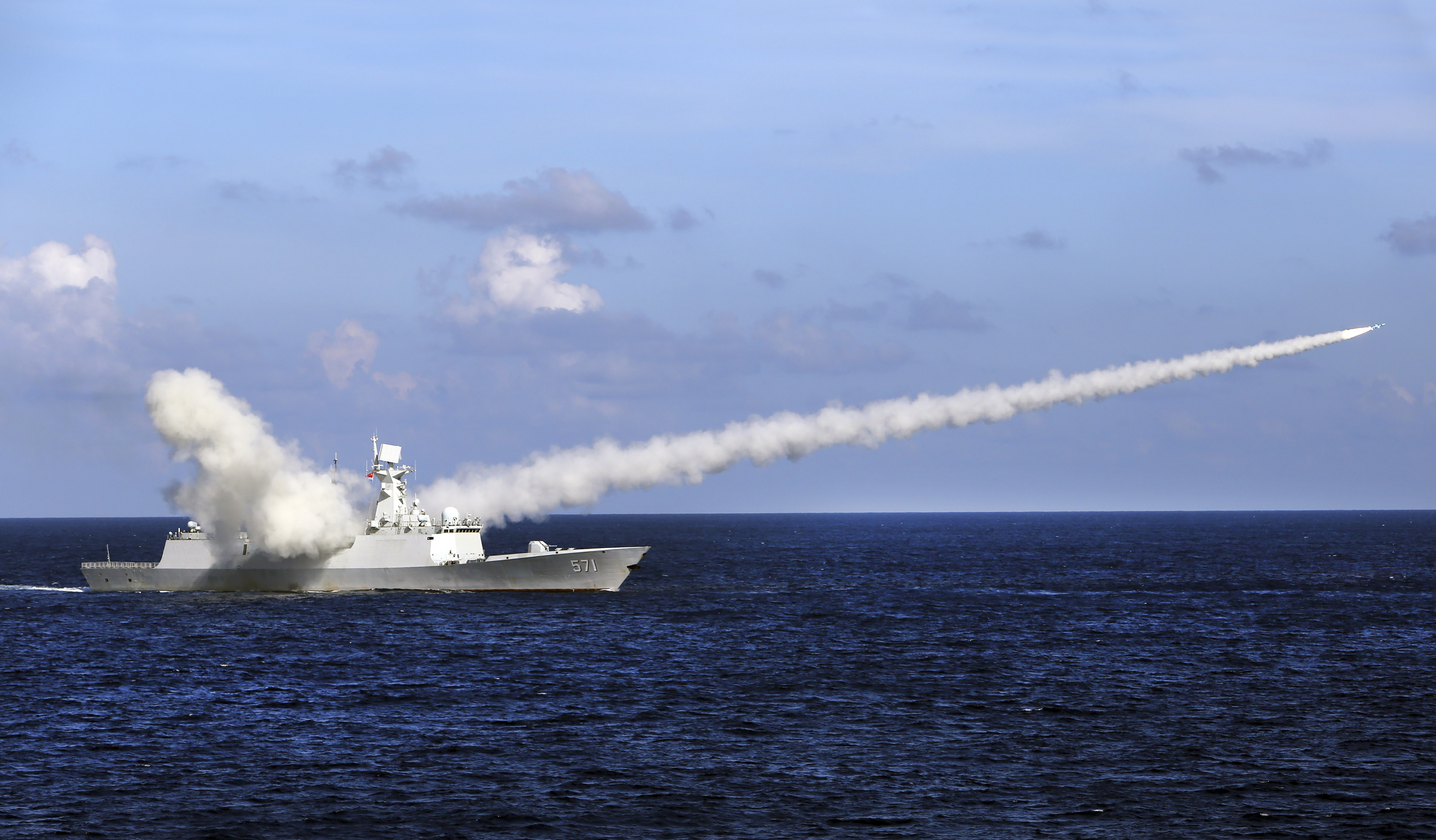
China's nuclear arsenal, estimated by the US government to number in the low 200s, is dwarfed by those of the United States and Russia, which have thousands.
The Pentagon predicts the People's Liberation Army Rocket Forces will at least double the size of its nuclear arsenal over the next 10 years, still leaving it with far fewer than the United States.
China does not publicly discuss the size or preparedness of its nuclear force beyond saying it would be used only in response to an attack.
The US, by contrast, does not rule out striking first, although President Joe Biden in the past has embraced removing that ambiguity by adopting a “no first use” policy.
Dr Kristensen, an analyst with the Federation of American Scientists, said the commercial satellite photos he acquired appeared to show China began construction late last year of 11 underground silos at a vast missile training range near Jilantai in north-central China.
Construction of five other silos began there earlier. In its public reports the Pentagon has not cited any specific number of missile silos at that training range.
These 16 silos identified by Dr Kristensen would be in addition to the 18-20 China now operates with an older intercontinental ballistic missile, the DF-5.
“It should be pointed out that even if China doubles or triples the number of ICBM silos, it would only constitute a fraction of the number of ICBM silos operated by the United States and Russia,” Dr Kristensen wrote on his Federation of American Scientists’ blog.
“The US Air Force has 450 silos, of which 400 are loaded. Russia has about 130 operational silos.”
Nearly all of the new silos detected by Dr Kristensen appear designed to accommodate China's newer-generation DF-41 ICBM, which can target Alaska and much of the continental US.
China already has a version of the DF-41 missile that can be transported by rail and road.
“They’re trying to build up the survivability of their force,” by developing silo basing for their advanced missiles, Kristensen said in an interview.
He said it raised some questions about the "fine line in nuclear strategy” between deterring a US adversary by threatening its highly valued nuclear forces and pushing the adversary into taking countermeasures making its force more capable and dangerous.
“How do you get out of that vicious cycle?” Dr Kristensen asked.
Frank Rose, a State Department arms control official during the Obama administration, said recently there was little prospect of getting China to join an international negotiation to limit nuclear weapons.
The Trump administration tried but failed, and Rose saw no reason to think that would change anytime soon.
“They're not going to do it out of the goodness of their heart,” he said.
But the official said they might be interested in talking if the United States was willing to consider Chinese concerns about related issues like US missile defences.
Dr Rose said China's main interest was in building up its non-nuclear force of shorter- and intermediate-range missiles which, combined with a cyberattack capability and systems for damaging or destroying US satellites, could push the United States out of the western Pacific.
This would complicate any effort US efforts to intervene in the event Beijing decided to use force against Taiwan, the semi-autonomous democracy Beijing views as a renegade province that must eventually return to the communist fold.