The chemical, containing phosphorous, reacts violently on contact with water.
Tag Archives: oceania
Police know ‘very little’ about Bondi Beach father-and-son gunmen
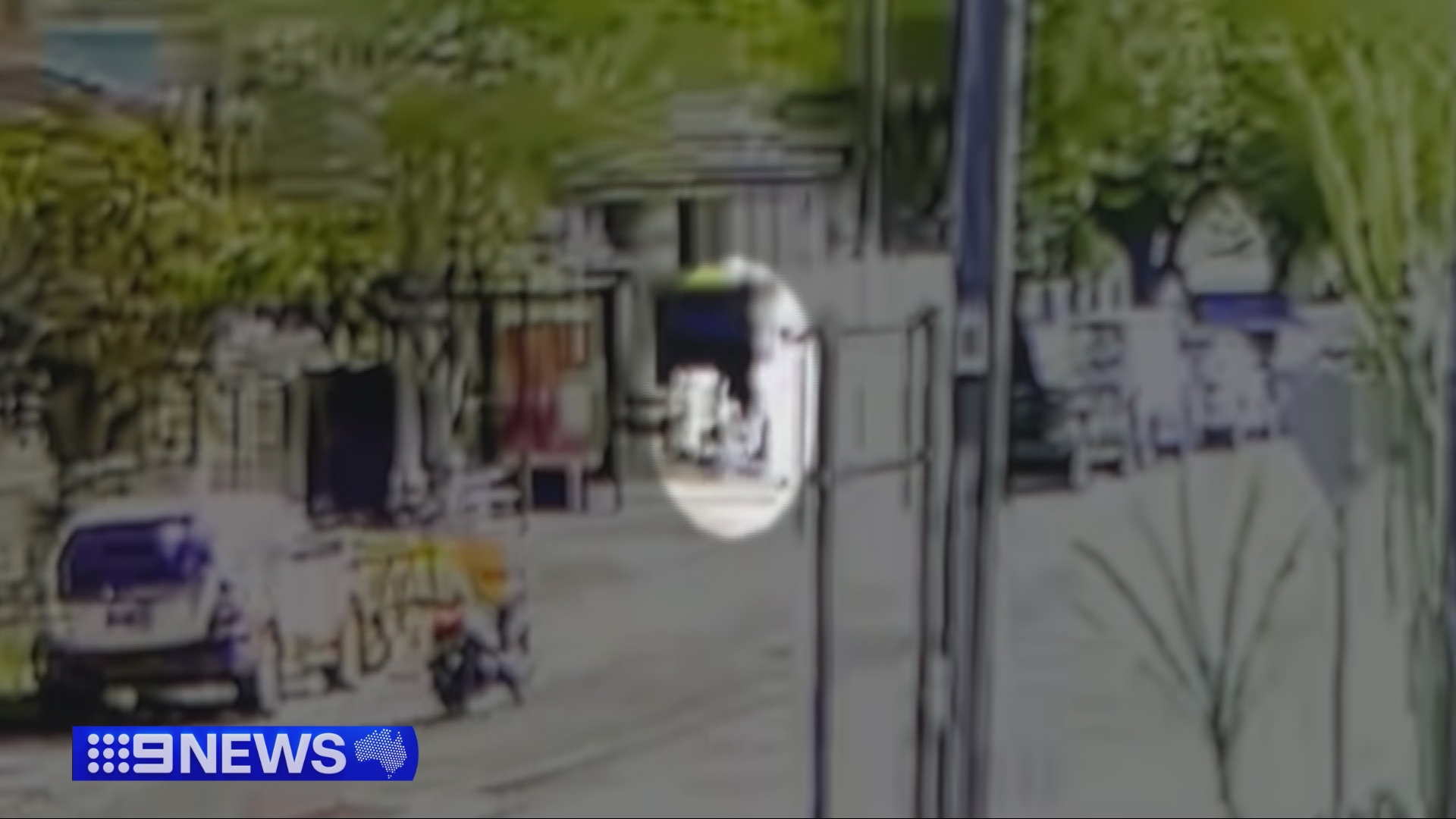
CCTV has captured the moment the father and son duo who allegedly carried out the Bondi Beach terror attack stepped out of their short-term rental in Campsie ahead of the massacre.
The footage obtained by 9News and the Sydney Morning Herald shows Sajid Akram, 50, and Naveed Akram, 24 leave the room they had rented for $90 a night about 5.15pm on Sunday.
The car then pulls away ahead of the 40-minute trip to Bondi Beach.
LIVE UPDATES: Sixteen dead after Bondi Beach terror attack
Police have revealed they know "very little" about the father and son duo.
Naveed was born in Australia in 2001, whilst his father arrived in Australia in 1998 on a student visa, and transferred to a partner visa in 2001.
Sajid was believed to be on a resident return visa (RRV) at the time of the shooting.
"They have [had] obviously a connection for quite a period of time within Australia," NSW Police Commissioner Mal Lanyon said.
"We are very much working through the background of both persons.
"At this stage, we know very little about them."
A police source told 9News crime reporter Emma Partridge that Naveed Akram may have had historical links to an Islamic State terror cell. It is believed an IS flag was located in his car at the scene.
READ MORE: Rabbi and French citizen identified as victims of Bondi Beach shooting attack
Australian Federal Police (AFP) Commissioner Nigel Ryan said Naveed had come onto ASIO's radar in 2019.
"He was examined on the basis of being associated with others and the assessment was made that there was no indication of any ongoing threat or threat of him engaging in violence," he said.
A Jewish event at Archer Park to celebrate the first day of Hanukkah was the target of the shooting.
The shooters were from Bonnyrigg in south-western Sydney, but had stayed in a short-term stay property in Campsie in the lead-up to the attack.
It is understood that the pair arrived at the Campsie property a few days ago.
Police later seized two rifles from the house.
Detectives have also spent the day going door-to-door speaking to neighbours and reviewing CCTV footage.
The neighbour of the shooters spoke to 9News crime reporter Emma Partridge, who described the residents as "weird people".
"Terrible, I never thought we [live] near something like this. It's scary," she said.
"They [are] just weird people not saying hello to anyone."
She said they had lived in the street since before she moved in six years ago.
Lanyon confirmed the older man was dead, while the other, his 24-year-old son, remains in hospital in a critical but stable condition under police guard.
READ MORE: How world leaders have reacted to the Bondi terror attack
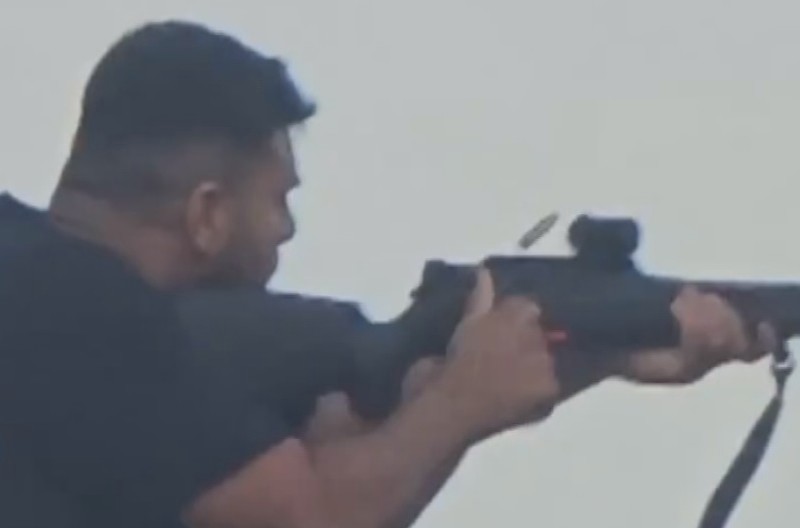
He said the younger man would "likely" face criminal charges, suggesting the accused would recover from his injuries.
"Based on his medical condition, it is likely that that person may face criminal charges," the commissioner said.
He also said licensed firearms were used in the attack and the father held a gun licence.
Lanyon said the 50-year-old had been a NSW licensed firearms owner for 10 years and owned six guns.
Six weapons have since been recovered, two of which were found at the Campsie property.
He confirmed the older gunman was a member of a gun club, which allowed him to obtain his firearms licence.
Lanyon insisted the test to obtain a firearms licence was stringent.
"The Firearms Registry conducts a thorough examination of all applications to ensure a person is fit and proper to hold a firearms licence," he said.
Pair 'lied to family about whereabouts' before attack
The family of the father-and-son duo deceived loved ones about their whereabouts leading up to the attack, it is alleged.
The mother of Naveed, Verena, told The Sydney Morning Herald that she had last spoken to her family on Saturday morning, and was told the father and son pair were in Jervis Bay on the NSW South Coast.
"He rings me up [on Sunday] and said, 'Mum, I just went for a swim. I went scuba diving. We're going … to eat now, and then this morning, and we're going to stay home now because it's very hot'," Verena said.
Premier rejects claim of intelligence failure
Lanyon said there was "no indication" in advance that either of the men allegedly involved in the shooting were planning the attack.
He also said he could not comment about potential motives for the attack.
"We're still very early in the investigation, we're happy to provide information," Lanyon said.
"I want to give our investigators the opportunity to investigate thoroughly without speculation.
"We heard a lot information was coming forward. I want to make sure it's accurate … our investigation will be thorough."
READ MORE: How you can donate blood in the wake of the Bondi terror attack

Lanyon confirmed police and ASIO were aware of the 24-year-old, but had no intelligence the pair were planning an attack.
NSW Chris Minns refused to call the attack an intelligence failure.
"It wouldn't be the right thing to do within 24 hours of this shocking, violent attack to be pronouncing failures here without the aid of an independent investigation," he said.
Former secretary for Home Affairs Mike Pezzullo told 9News that "not every cell is intercepted" by ASIO.
"They do a marvellous job – ASIO, the AFP, their state ministry counterparts," Pezzullo said.
"They can't be everywhere. And frankly, if they were, we'd be a police state."
Where are police investigating?
Officers swarmed on a property in Bonnyrigg in Sydney's west in the hours immediately after the shooting.
The property was the home of one of the gunmen.
Police have seized firearms licensed to the alleged shooter.
READ MORE: 'Daddy, what is that?': Family forced to run for their lives as Bondi shooting began
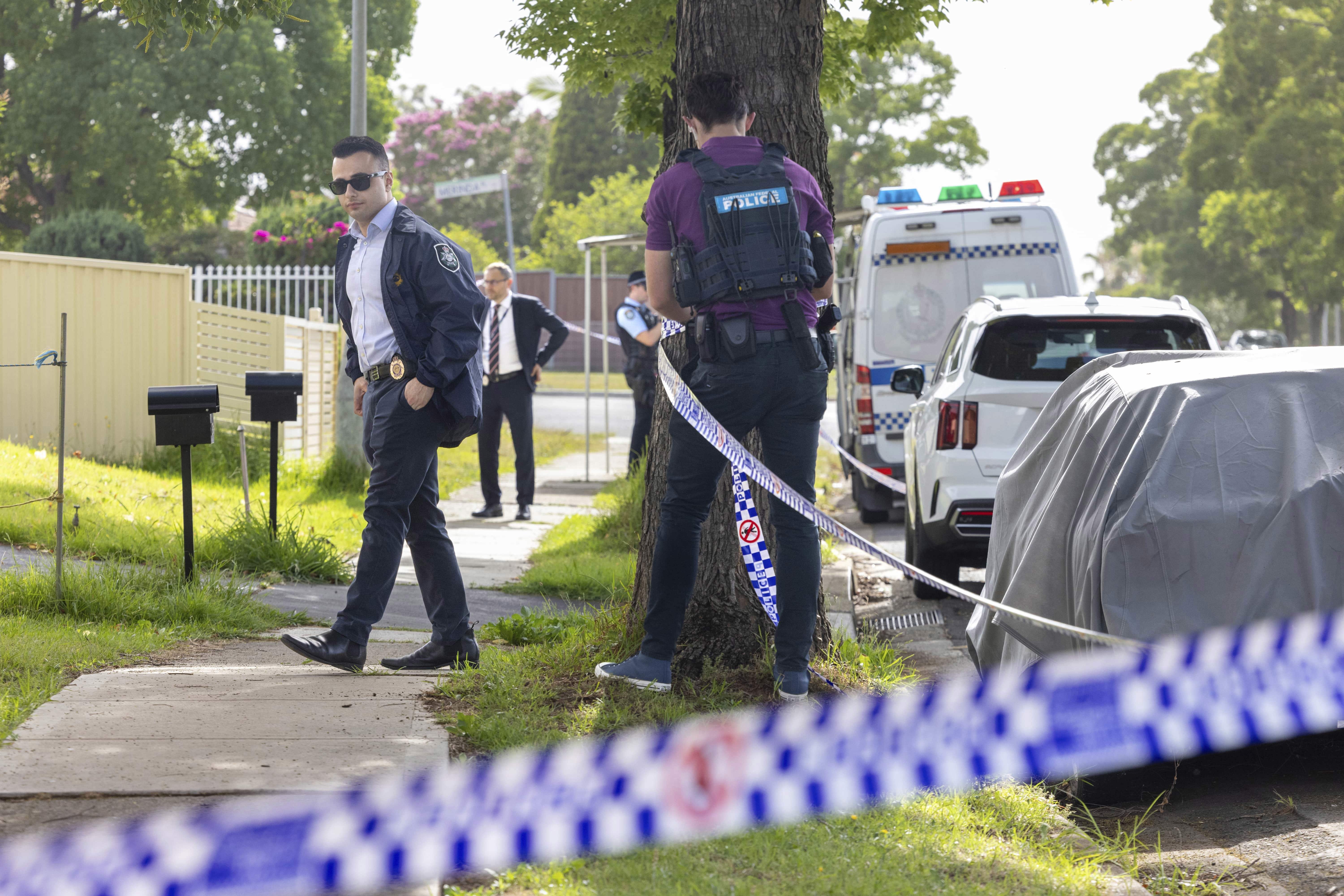
"Ballistics and forensic investigation will determine those six firearms are the six that were licensed to that man," Lanyon said.
Streets were closed off as tactical teams and detectives surrounded the scene.
Detectives are still at the scene this morning, with a heavy amount of police activity still seen outside of the house.
Police also raided a property in Campsie this morning, where the alleged gunmen are believed to have stayed immediately before the shooting.
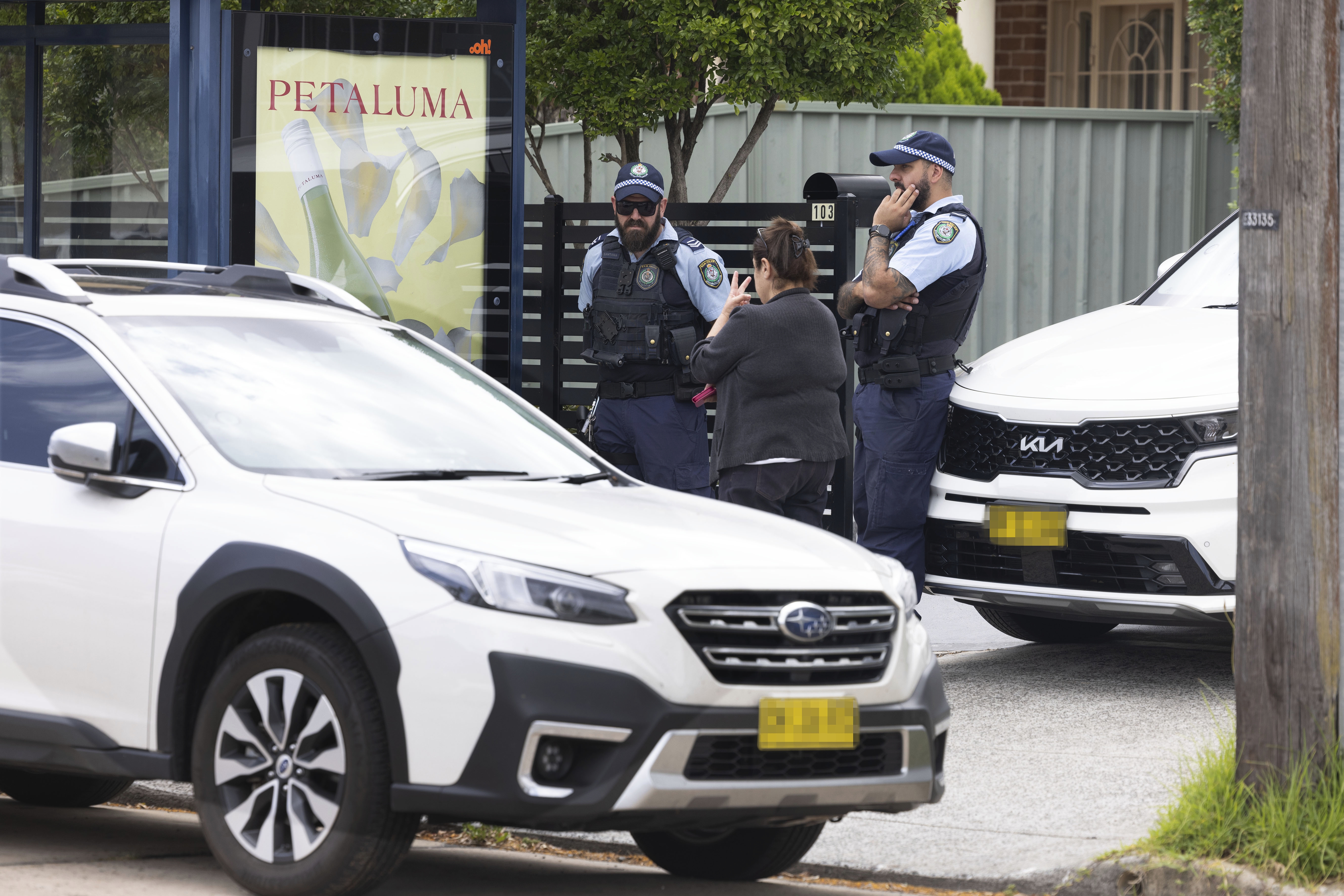
It is not known how long they had been staying at the property, but it is believed to be a short-term rental.
Large areas of Bondi Beach remain a crime scene today.
Those devices were removed and the exclusion zone was scaled back but the area remained a crime scene.
If you have been impacted by the terror attack in Bondi there is support available. To contact Lifeline Australia, call 13 11 14 or text 0477 13 11 14. For people under 25 years old, you can contact Kids Helpline at 1800 55 1800. Both of these are available on a 24/7 basis. If you wish to donate blood, you can find your nearest donor centre here
Two police officers named among dozens injured in Bondi shooting
Two police officers who were injured responding to a mass shooting at Bondi Beach yesterday evening have been named as probationary constable Jack Hibbert and constable Scott Dyson.
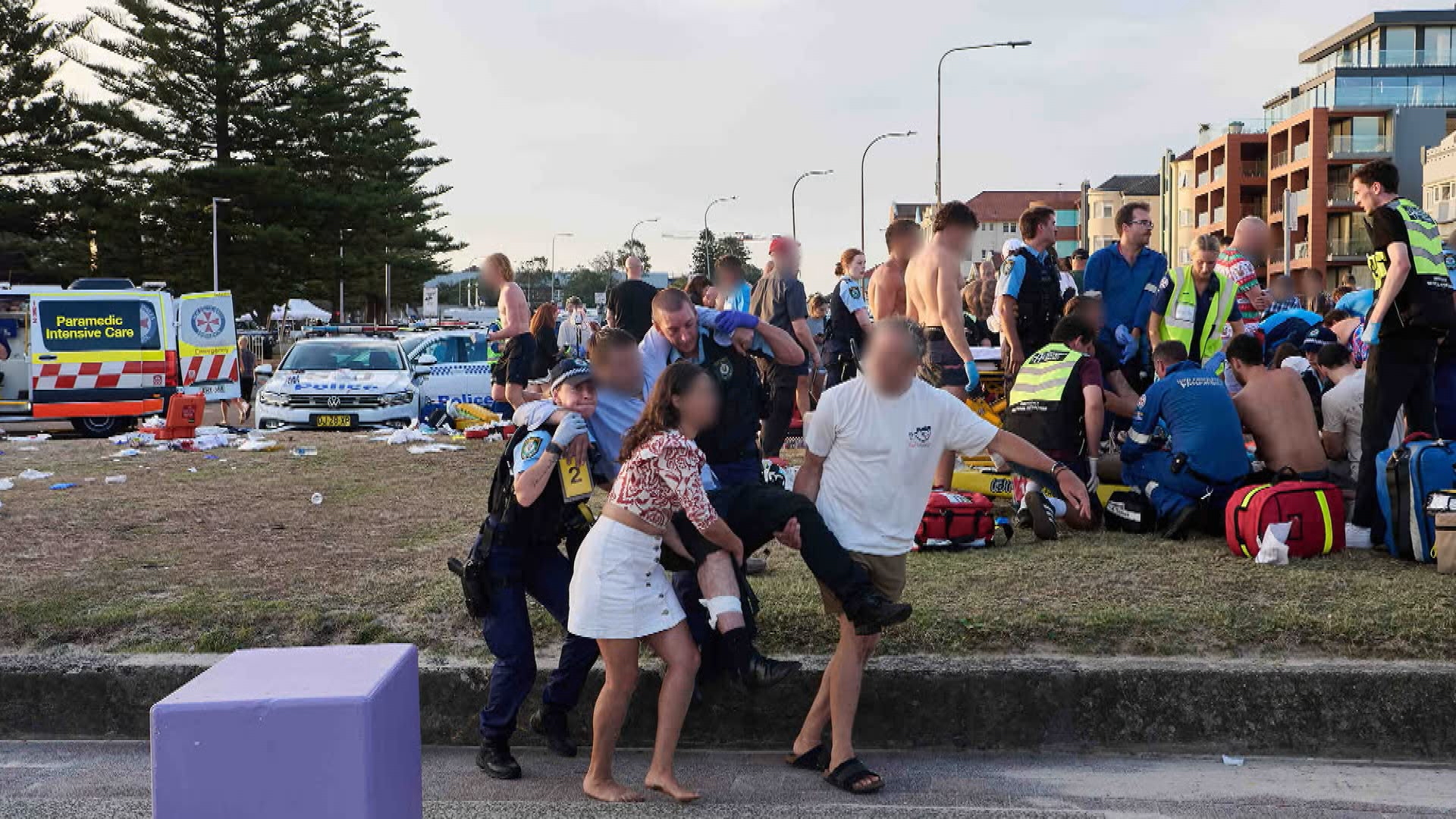
The officers were seriously injured after terrorists opened fire on people at the Hanukkah By The Sea religious celebration at Bondi Beach, killing 13 innocent people at the scene and another two who later died in hospital.
The two officers were among 42 people taken to hospital yesterday, 27 of whom remain in hospital.
LIVE UPDATES: Bondi Beach gunmen were father and son; sixteen people dead, more injured
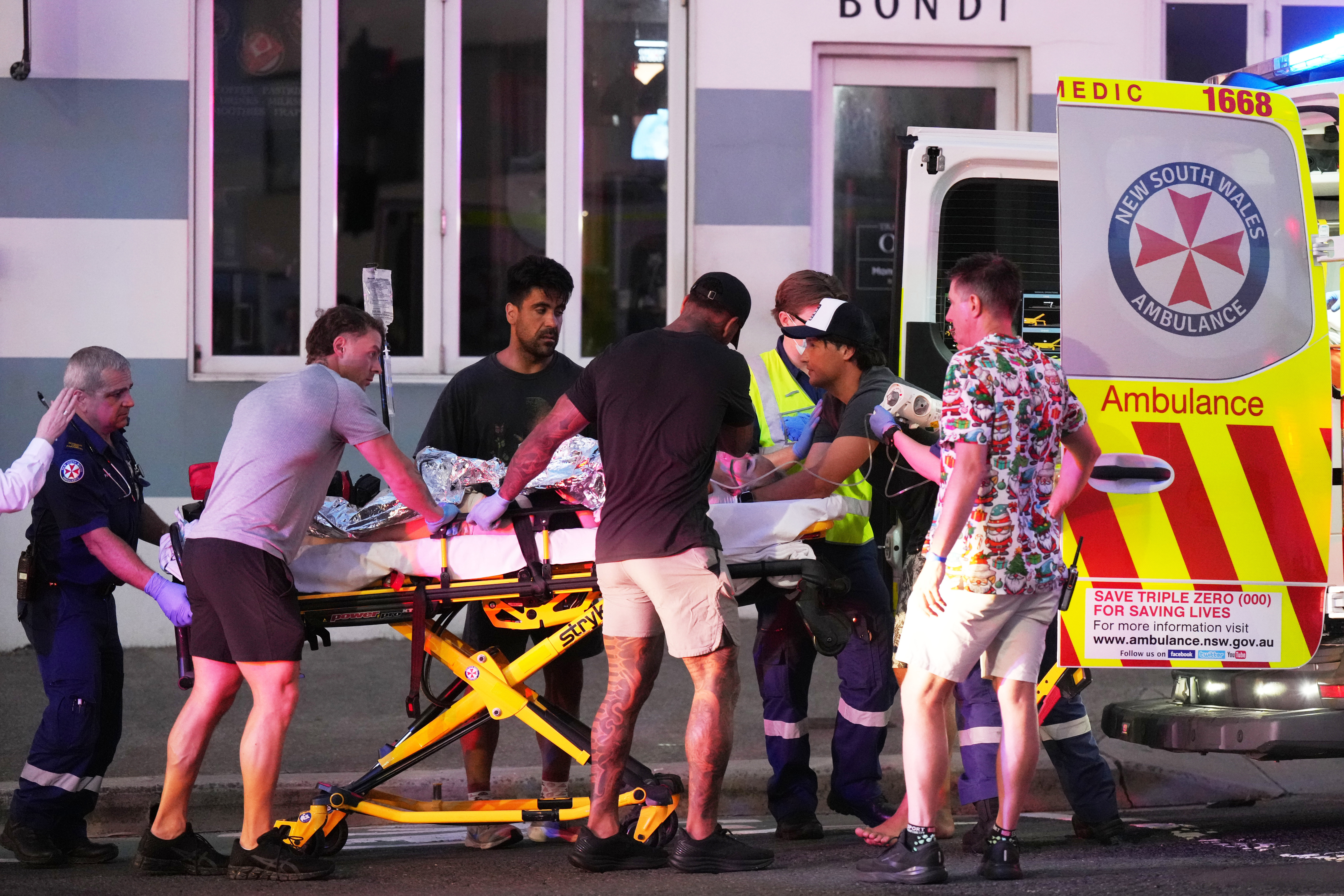
Hibbert has undergone surgery to his shoulder and eye at Royal Prince Alfred Hospital and may lose sight in that eye.
Dyson remains in a critical condition at St Vincent's Hospital.
NSW Police Commissioner Mal Lanyon said he has met with the families of the officers.
"Both sets of families are incredibly supportive of the support they are getting from the police family," Lanyon said.
Authorities this afternoon confirmed that currently, six people are in a critical condition, six are in a critical but stable condition and 15 people are stable.
NSW health minister Ryan Park said more than 100 paramedics responded to the attack yesterday afternoon, saving countless lives.
He said he was proud of the doctors and nurses that were working tirelessly to treat the injured.
"All of the hospitals involved, many across Sydney and Western Sydney, have responded in a way that has given the most seriously injured people the very best chance of survival and for that, I'm so grateful to our frontline clinicians, our nursing and our paramedic staff who have performed miracles over the last 24 hours," Park said.
"This is something that we prepare for.
"Although it is shocking and we never want to see it, major casualty events is something that NSW Health and hospitals have to, and the community would expect us to, prepare for.
"And that is why the response has been remarkable."
One of the terrorists responsible, Naveed Akram, 24, is among those in a critical condition in hospital under police guard.
Lanyon today suggested it is probable on the basis of his injuries, that he will survive to face criminal charges.
The other shooter, his father Sajid Akram, is understood to have been shot dead by police, taking the total death toll of the attack to 16.
READ MORE: Rabbis, Holocaust survivor, young girl and French citizen identified as victims of Bondi attack
NSW Health said 12 of the 27 people remaining in hospital tonight are in critical condition.
The patients are in hospitals across Sydney, including Prince of Wales, St George, Sutherland, Sydney Eye, St Vincent's, Royal Prince Alfred, Sydney Children's, Royal North Shore, and Liverpool
As of 5pm today, the conditions of those hospitalised included:
- Three people are stable at Prince of Wales Hospital
- One person is critical but stable, and two people are stable at St George Hospital
- Three people are stable at Sydney Eye Hospital
- Three people are critical, and two more are critical but stable at St Vincent's Hospital
- Three people are critical, two are in critical but stable and one is stable at Royal Prince Alfred Hospital
- Two people are stable at Sydney Children's Hospital in Randwick
- One person is critical but stable, and two people are stable at Royal North Shore Hospital
- Two people are stable at Liverpool Hospital
A community reception centre has been established at the InterContinental Sydney Coogee Beach.
Loved ones of those affected by the shooting and witnesses of the shooting are being urged to attend the centre and speak to support officers and investigators.
Anyone seeking general information is urged to contact the Public Information and Inquiry Centre (PIIC) by calling 1800 227 228 or for general mental health or victim support services visit: https://www.nsw.gov.au/nsw-government/bondi-beach-attack
Loved ones trying to get in touch can also use the Red Cross's Register.Find.Reunite service.
If you have been impacted by the terror attack in Bondi there is support available.
To contact Lifeline Australia, call 13 11 14 or text 0477 13 11 14. For people under 25 years old, you can contact Kids Helpline at 1800 55 1800. Both of these are available on a 24/7 basis. If you wish to donate blood, you can find your nearest donor centre here.
DOWNLOAD THE 9NEWS APP: Stay across all the latest in breaking news, sport, politics and the weather via our news app and get notifications sent straight to your smartphone. Available on the Apple App Store and Google Play.
Thousands pay tribute at Bondi Beach following terrorist attack

An outpouring of support has been shown by thousands at a vigil on Bondi Beach a day after the terrorist attack that claimed the lives of at least 16 people.
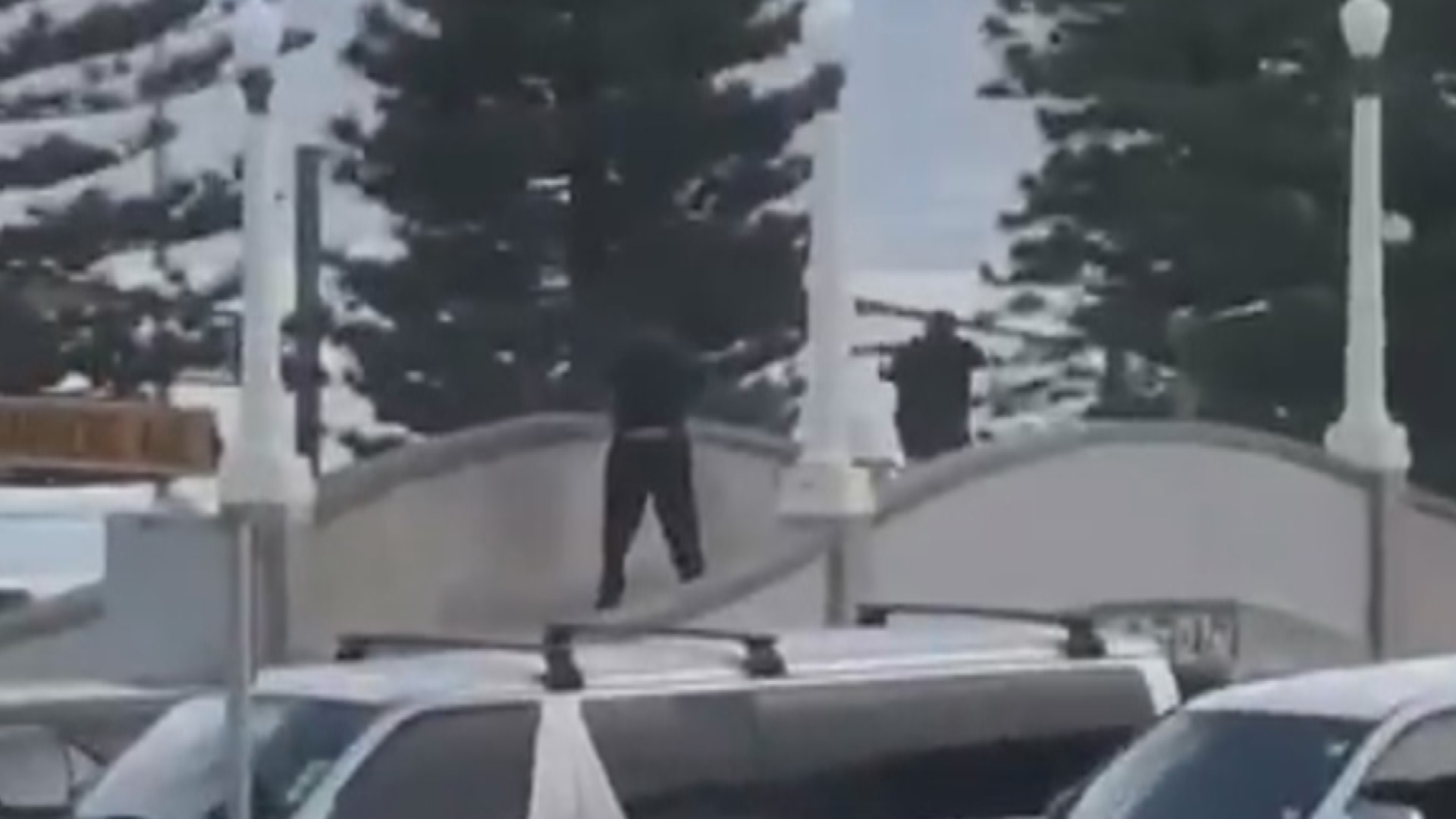
The iconic beach, which is normally packed at this time of year, had a different mood today as thousands lay flowers and tributes just metres away from the bridge where the two gunmen stood yesterday evening.
The vigil became a place of singing, prayer and mourning throughout the day as people passed through to pay their respects to the innocent lives lost.
READ MORE: 'Daddy, what is that?': Family forced to run for their lives as Bondi shooting began
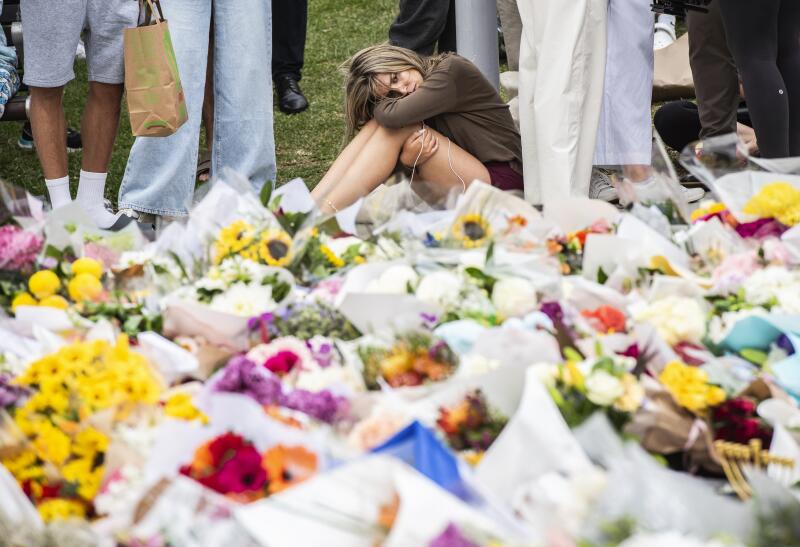
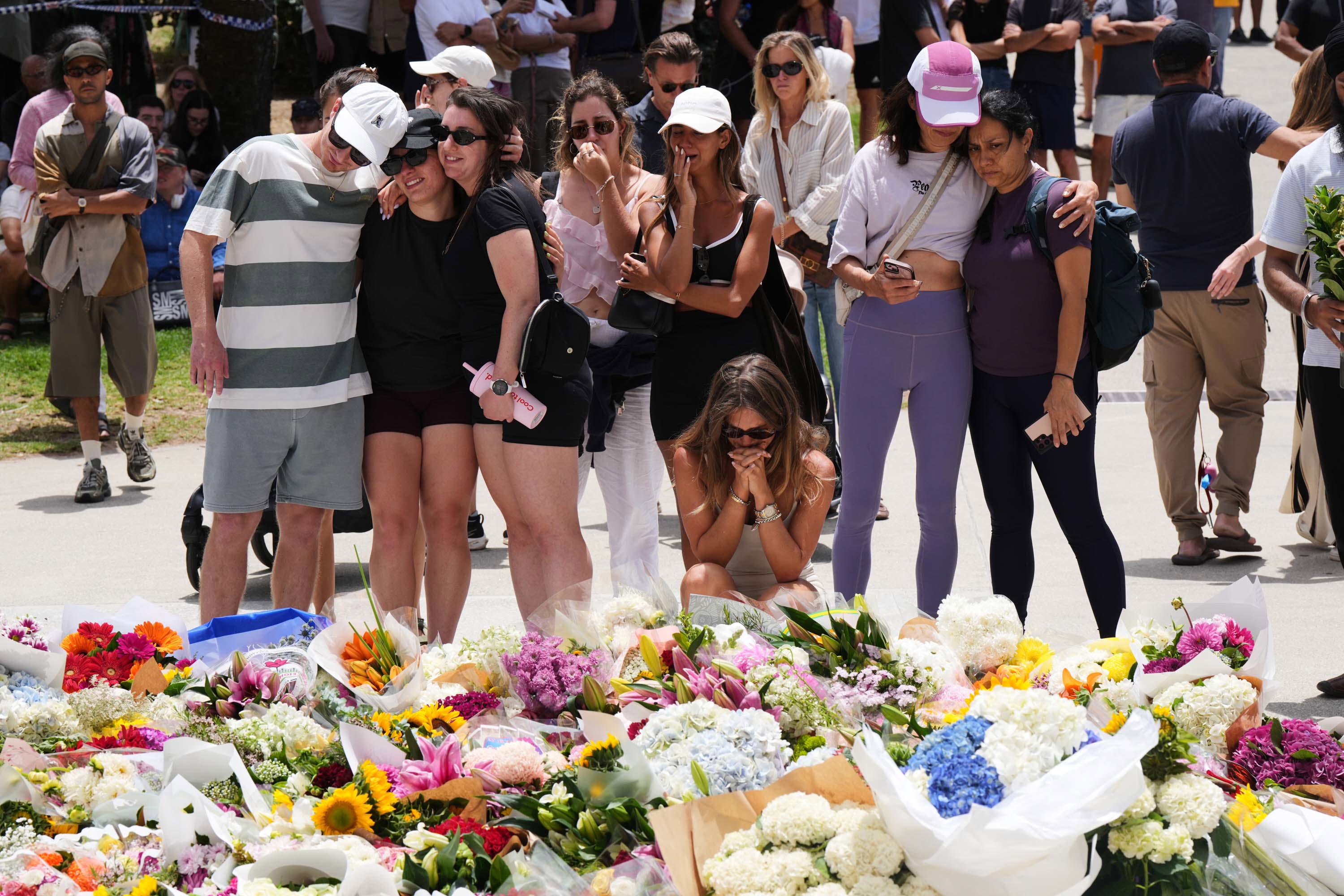
Prime Minister Anthony Albanese, Waverley Council Mayor William Nemesh and Governor-General Sam Mostyn were among some of the people in attendance.
Mostyn described the mood of the vigil as a "sombre feel".
"This is a community that's in deep grief," she said.
"As the representative of the head of state, I have no politics, no policies. I don't have money to dispense. I hold the national character.
"The governor-general's role is to show up, is to come and offer comfort, but also to call on all Australians.
LIVE UPDATES: Gunmen were father and son
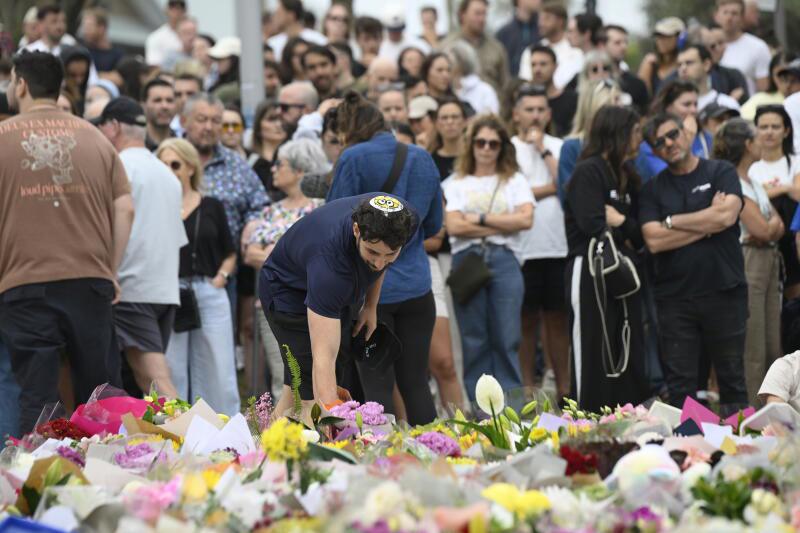
"We have a job to do, and that is to make sure that we pull out of this dark period, the shade, and into light."
"This is so un-Australian, and we all condemn this in the harshest words, and we need strict laws around this," Amar Singh from Turbans for Australia said.
"All these perpetrators should be punished to the max because this is not on.
"This senseless terrorism has no place in Australia. We must do more to protect communities like our wonderful Jewish friends."
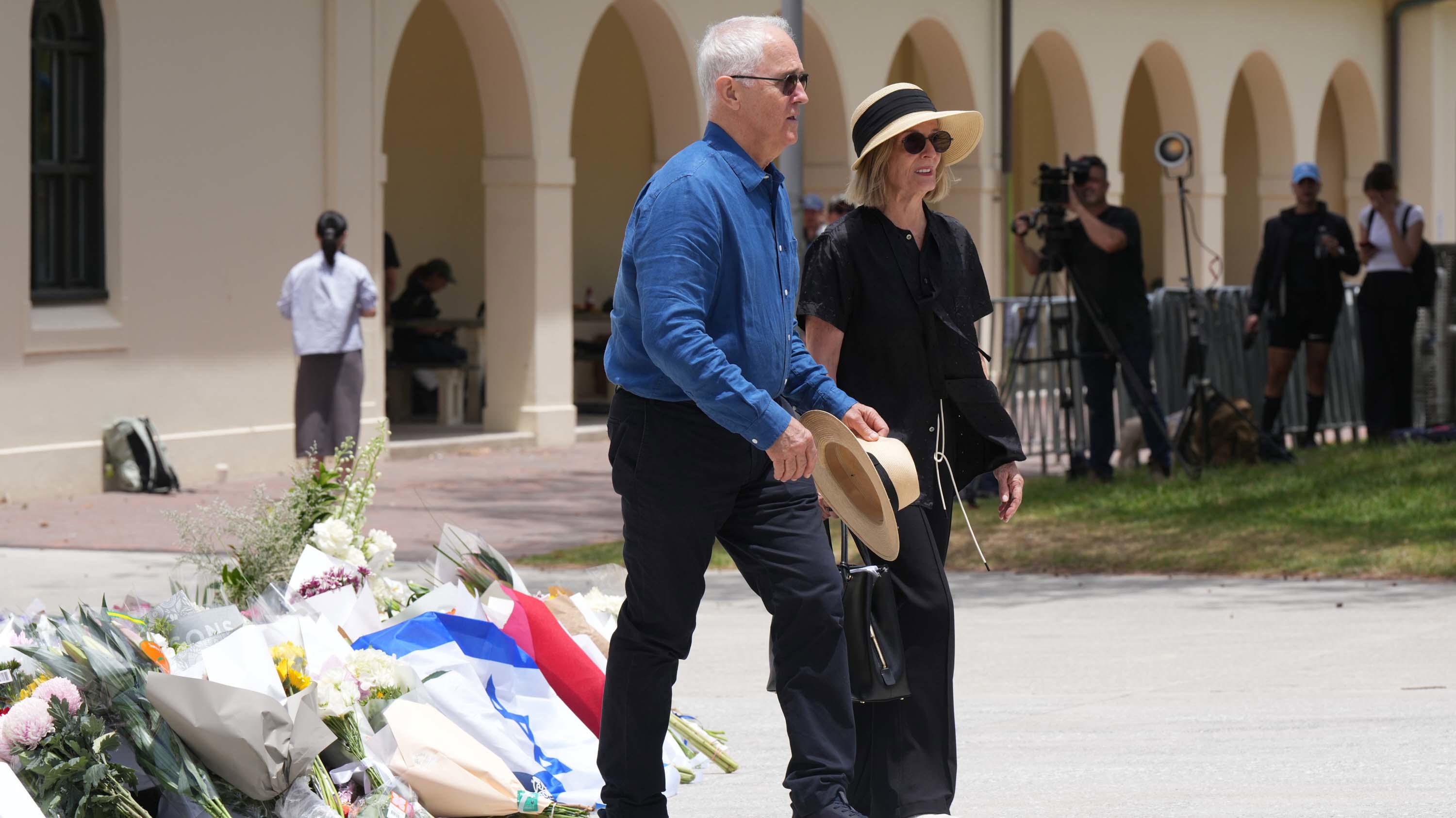
Former prime minister Malcolm Turnbull attended the vigil earlier today, laying flowers at the scene of the "surreal" attack.
"It's hard to believe. It really is surreal to imagine that this could happen in Bondi. This is part of our lives. It's part of our community," he said.
"It's very diverse, very multicultural.
"I spent my whole life in and out of Bondi. So it's just I'm still struggling to believe this happened, but it did.
'ABSOLUTE MASSACRE': Bloodied witness describes chaos
"So what we have to do is respond with love and with strength, with solidarity. We have to put our arms around the Jewish community.
"We have to show them that we love them, that we'll support them, and we'll stand by them. No matter what happens, and you know this, this is literally the worst that you could imagine."
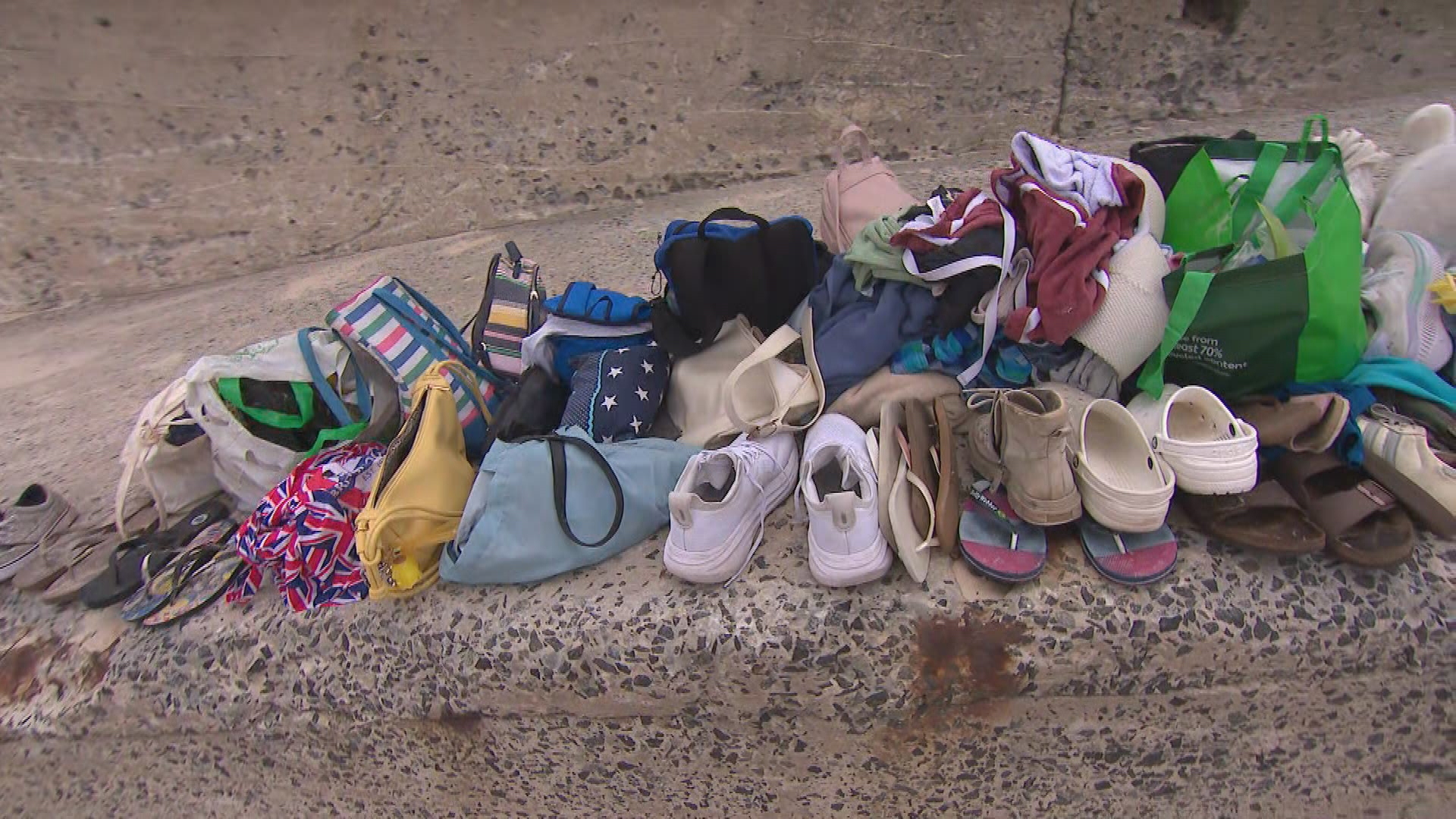
A sea of abandoned personal belongings from those who ran for their life has also lined the iconic beach.
The collection of items left behind, include children's toys, towels and deck chairs, as people fled for safety after two gunmen opened fire at Bondi Beach during the Hanukkah by the Sea celebration.
"I was in the water, and then suddenly I just see people jumping, so then I had to get out, and then I had to leave all my stuff," a young witness told 9News.
"Then I had to quickly run."
"We always send our children to have fun, and it was a holy day, it was Hannukah yesterday, it's just devastating," another witness told 9News.
"We couldn't sleep the whole night, especially when you send your most precious, your children."
"It's just awful."
"It's just traumatising, I see families broken," another young witness told 9News.
READ MORE: What we know about the Bondi Beach shooting
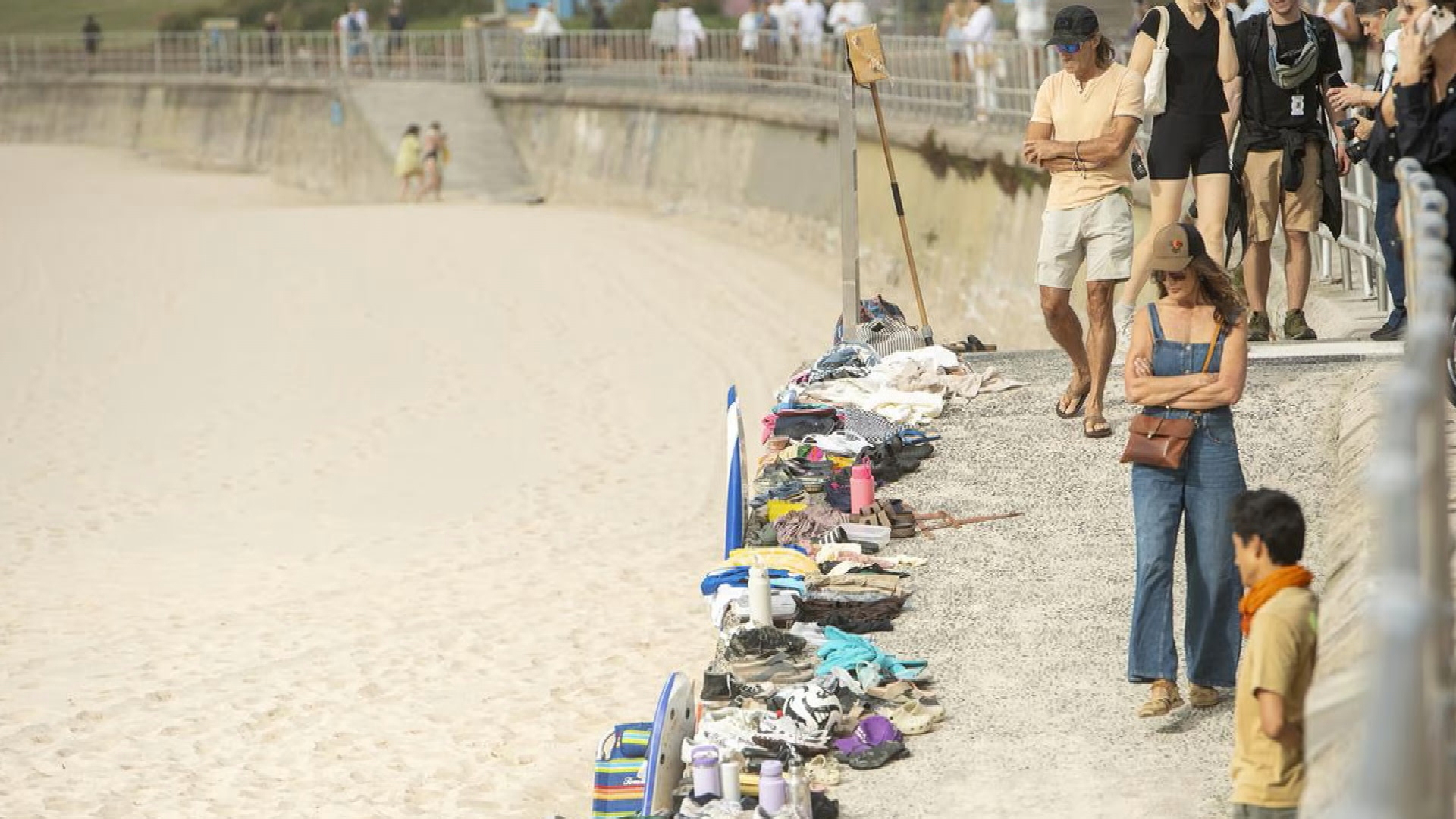
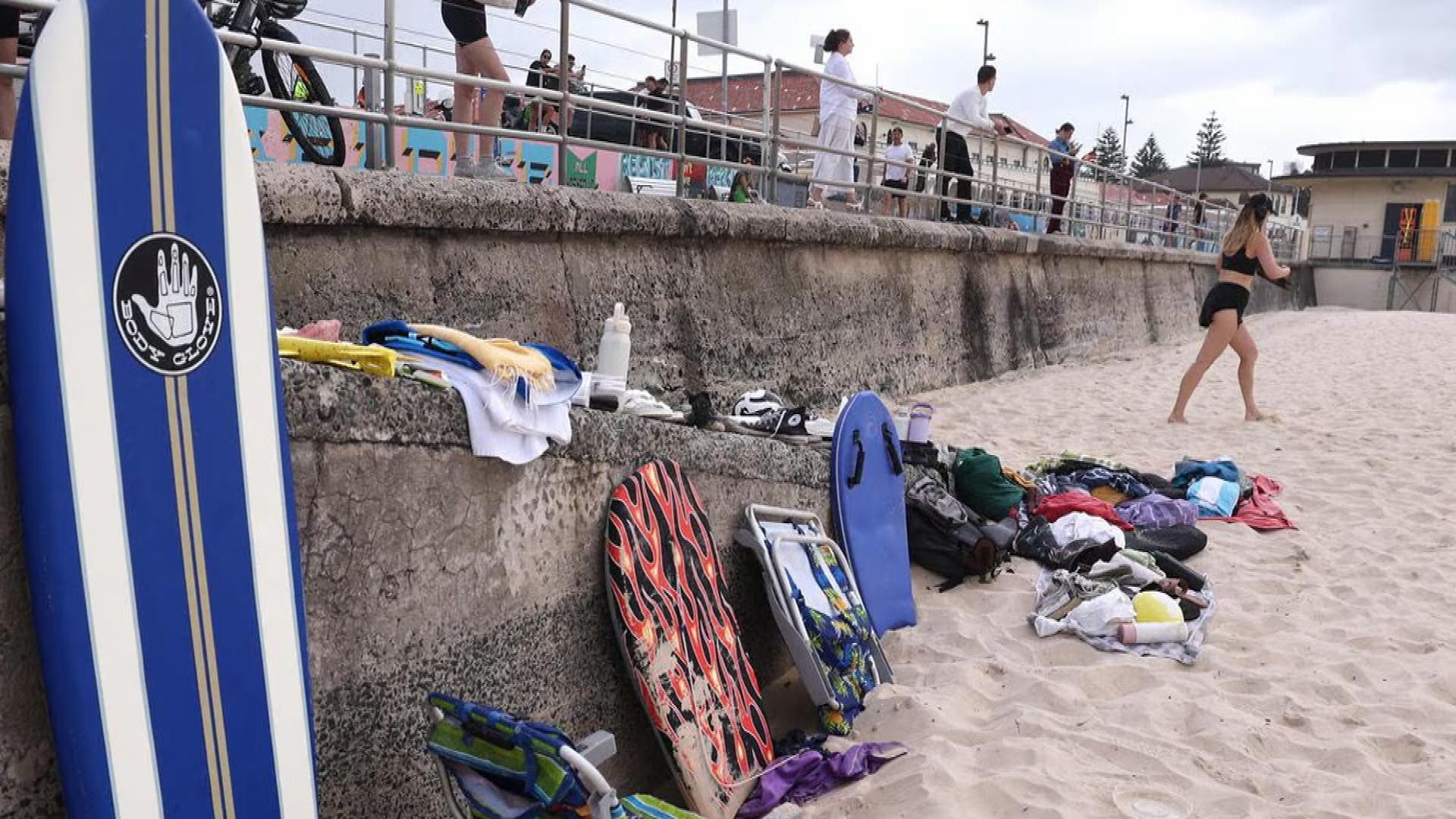
Bondi lifeguards have collected many of the possessions and are waiting for their owners to retrieve them.
If you have been impacted by the terror attack in Bondi there is support available. To contact Lifeline Australia, call 13 11 14 or text 0477 13 11 14. For people under 25 years old, you can contact Kids Helpline at 1800 55 1800. Both of these are available on a 24/7 basis. If you wish to donate blood, you can find your nearest donor centre here.
DOWNLOAD THE 9NEWS APP: Stay across all the latest in breaking news, sport, politics and the weather via our news app and get notifications sent straight to your smartphone. Available on the Apple App Store and Google Play.
Matilda, 10, was enjoying Hanukkah celebrations when she was fatally shot in front of her sister
A 10-year-old girl, a Holocaust survivor, a former police officer and a great-grandfather are among the 15 people who were killed in the father-and-son terrorist attack at Bondi Beach.
The death toll rose today, with dozens more injured after Sajid and Naveed Akram fired dozens of shots targeting Jewish people celebrating the first day of Hanukkah.
There are 27 people in several hospitals around Sydney in conditions ranging from stable to critical as of 1pm today, according to NSW Health.
LIVE UPDATES: Sixteen people dead, including a child
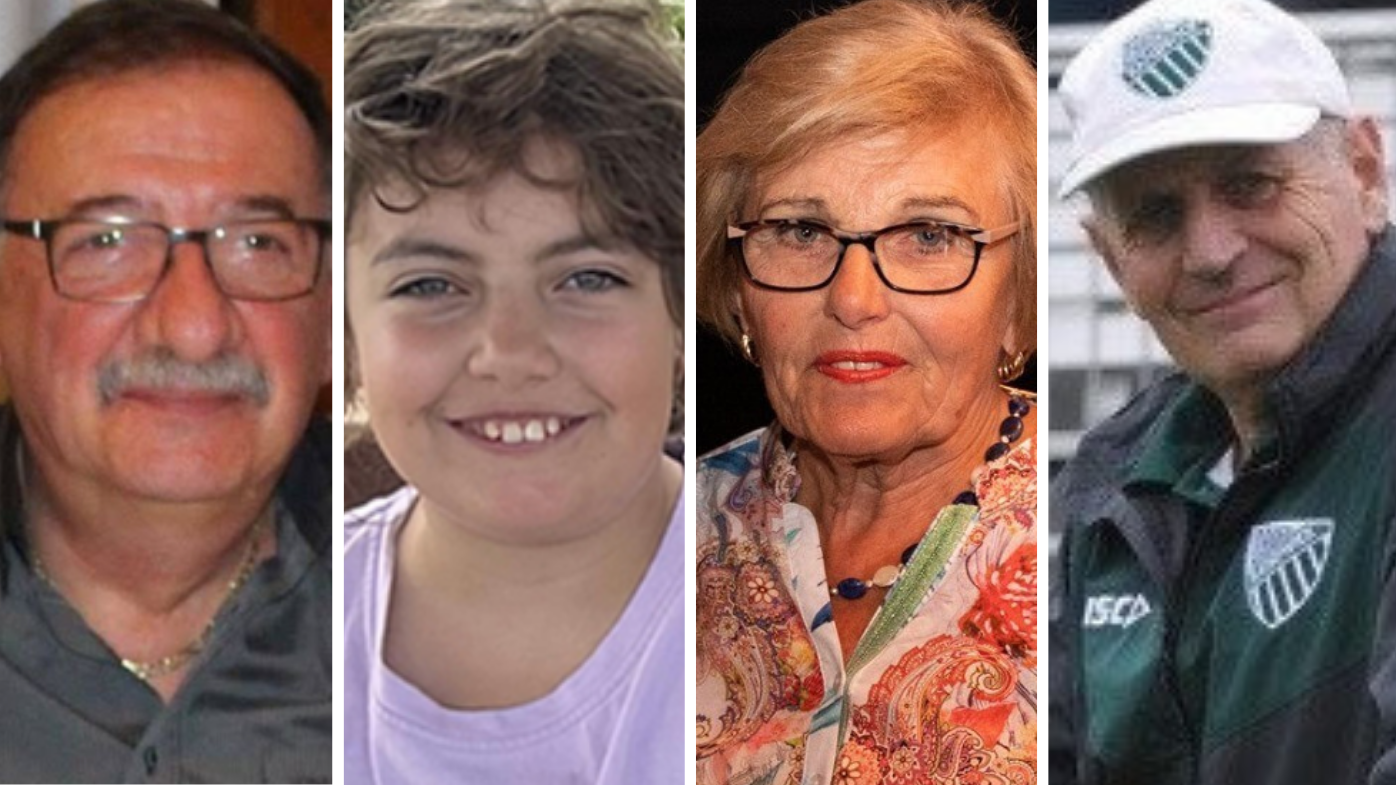
Two of those were sent to the Sydney Children's Hospital in Randwick, while two more were police officers, a constable who exchanged fire with the gunman and a probationary constable.
Ahmed El-Ahmed, the hero bystander who helped disarm one of the gunmen, is among the injured recovering at St George Hospital.
Those who died are yet to be formally identified, however police believe their ages range between 10 and 87 years.
Matilda, aged 10
The youngest victim has been identified as 10-year-old Matilda Britvan.
She and her six-year-old sister Summer were enjoying the celebrations yesterday when gunshots rang out.
Matilda was fatally shot in front of her sister.
Her aunt, Lina Chernykh, said the heartbroken family will never recover from their loss.
"A happy kid," she told 9News.
"She was open-hearted. Everywhere she goes, she was like a sun."
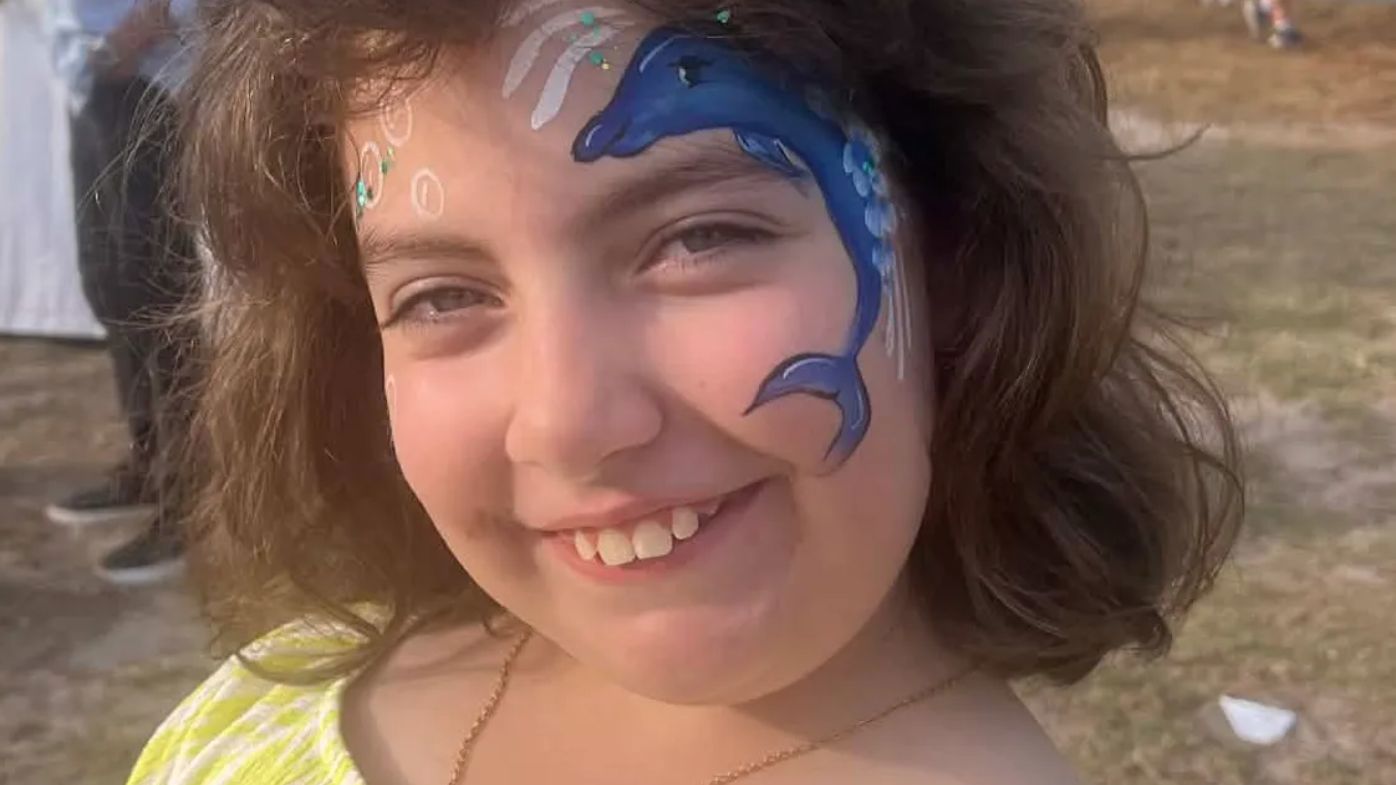
Matilda has been remembered as a "bright, joyful, and spirited child who brought light to everyone around her", according to her language teacher Irina Goodhew, who has launched a fundraising appeal for her mother and her family members.
"Yesterday, while celebrating Hanukkah, her young life was tragically taken. Her memory will live on in our hearts," she wrote on the fundraising site.
The family gave 9News permission to share Matilda's image.
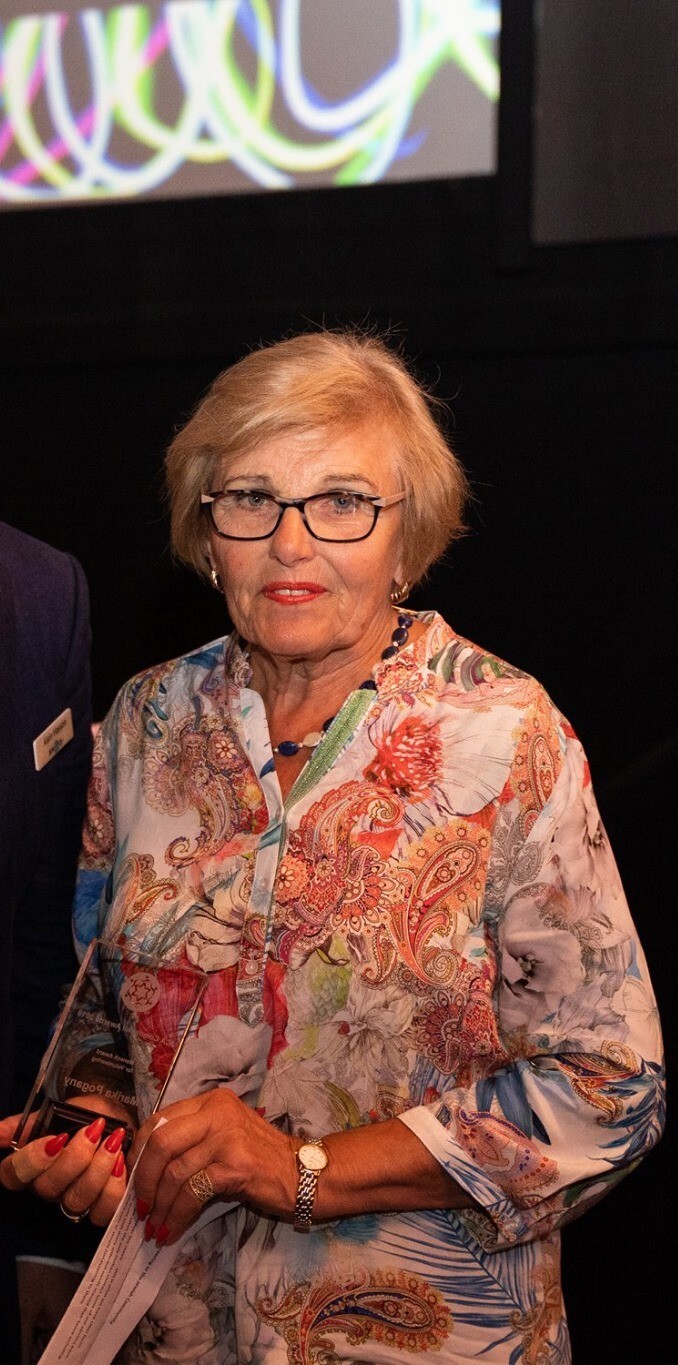
Marika Pogany
Marika Pogany was sitting in the front row of yesterday's event when she was fatally shot.
The 82-year-old was a decade-long volunteer for Meals on Wheels and won an award for service to her community after she delivered more than 12,000 kosher meals.
Her friends told 9News of decades of friendship, saying she was an "amazing person" and they were "very fond of her".
READ MORE: Police know 'very little' about Bondi Beach father-and-son gunmen
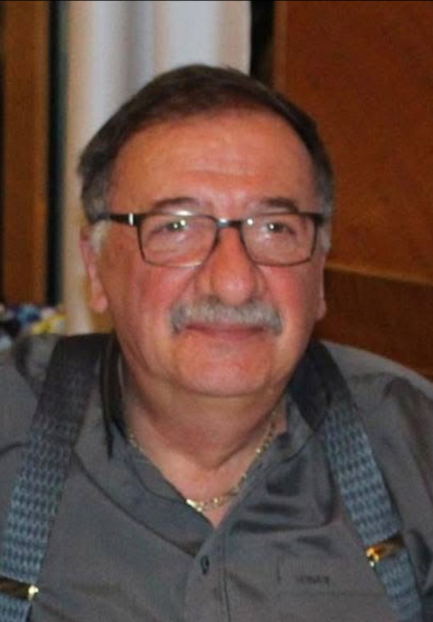
Great-grandfather Tibor Weitzen
Tibor Weitzen, a 78-year-old great-grandfather, has been named as one of the 15 people killed in Bondi.
He had reportedly gone to the event to celebrate the first day of Hanukkah yesterday with his wife and grandchildren and died shielding a family friend who also lost her life.
His granddaughter told 9News her family is "shattered" by his death.
"Just devastating. Honestly, I've got no words," she said.
"And we were just yesterday with him.
"We had coffee at Bondi Junction with him yesterday, and just.
"I didn't know this was going to be, you know, the last day."
READ MORE: Everything we know about the Bondi Beach shooting
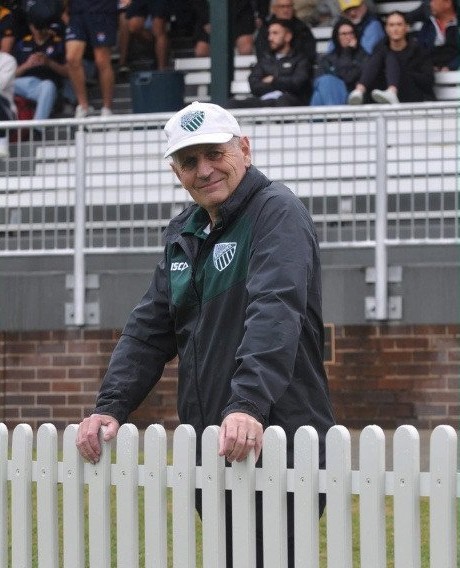
Former police officer Peter Meagher
Peter Meagher, a former police officer and Randwick Rugby volunteer and manager, was identified as one of the people killed in the attack.
His club said he served for almost 40 years with NSW Police and retired as a detective sergeant.
He had been working as a freelance photographer at the Hanukkah event when gunshots rang out.
"The tragic irony is that he spent so long in the dangerous front line as a police officer and was struck down in retirement while taking photos in his passion role is really hard to comprehend," the club said.
READ MORE: How everyday Aussies can help in the wake of the Bondi shooting
Meagher had worked as a long-time referee before spending much of the last decade as a first-grade manager and volunteer for Randwick Rugby.
His club said news of his death has hit the players, coaches, managers, volunteers and supporters "extremely hard".
"'Marzo', as he was universally known, was a much-loved figure and absolute legend in our club, with decades of voluntary involvement, he was one of the heart and soul figures of Randwick Rugby," the club said.
"Rest in Peace 'Marzo' – we all love you and will miss you greatly.
"We are devastated."
READ MORE: Aussie designer forced to hide under van as Bondi shooters 'circled'
Holocaust survivor Alex Kleytman
Alex Kleytman was a Holocaust survivor who died in yesterday's Bondi attack, according to Chabad, a US-based global Hasidic Jewish organisation that hosted the Hanukkah event at Bondi.
Aged 87 years old, he is the oldest known victim of the shooting.
He had survived the genocide with his mother and younger brother in Siberia before he and his wife, Larisa Kleytman, migrated to Australia from Ukraine.
They had been married for nearly 60 years.
Larisa, also a Holocaust survivor, confirmed his death to The Australian today.
"He came on Bondi Beach to celebrate Hanukkah, for us it was always a very, very good celebration, for many, many years," she said.
Rabbi Eli Schlanger
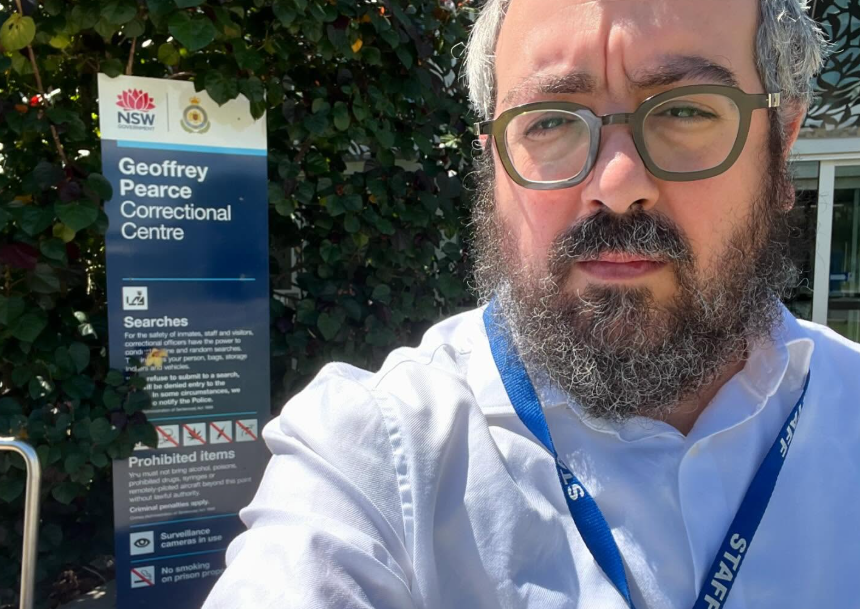
Eli Schlanger, 41, was a rabbi who worked as a chaplain for Corrective Services NSW.
He helped organise yesterday's Hanukkah event when he was shot dead.
He leaves behind his wife and five children, the most recent of whom was born just six weeks ago.
His brother-in-law, rabbi Mendel Kastel, said: "The family is broken", while his cousin, Zalman Lewis, remembered him as a "truly an incredible guy".
Rabbi Menachem Dadon, whose daughter was shot but survived, said he had held Schlanger as he died.
READ MORE: Billionaire donates nearly $100k to Bondi shooting hero
Alex Ryvchin, of the Executive Council of Australian Jewry, said Schlanger was the "best of us".
"This was a man who got up every morning with the purpose of doing good. That's all he did," he said.
"He drove around, and he gave things to charity, and he fed the needy. And he visited prisoners in prisons. And he just lived to do good things."
Corrective Services NSW Commissioner Gary McCahon said Schlanger was a "valued member" and was "devoted to supporting others with compassion and dignity".
"His loss will be felt by many. I extend my deepest condolences to his family, friends, colleagues, and the broader Jewish community during this immensely painful time," he said in a statement.
Rabbi Yaakov Levitan
Yaakov Levitan was another rabbi killed in yesterday's terrorist attack, Chabad confirmed.
He served as secretary of the Sydney Beth Din centre in Bondi Beach.
Reuven Morrison
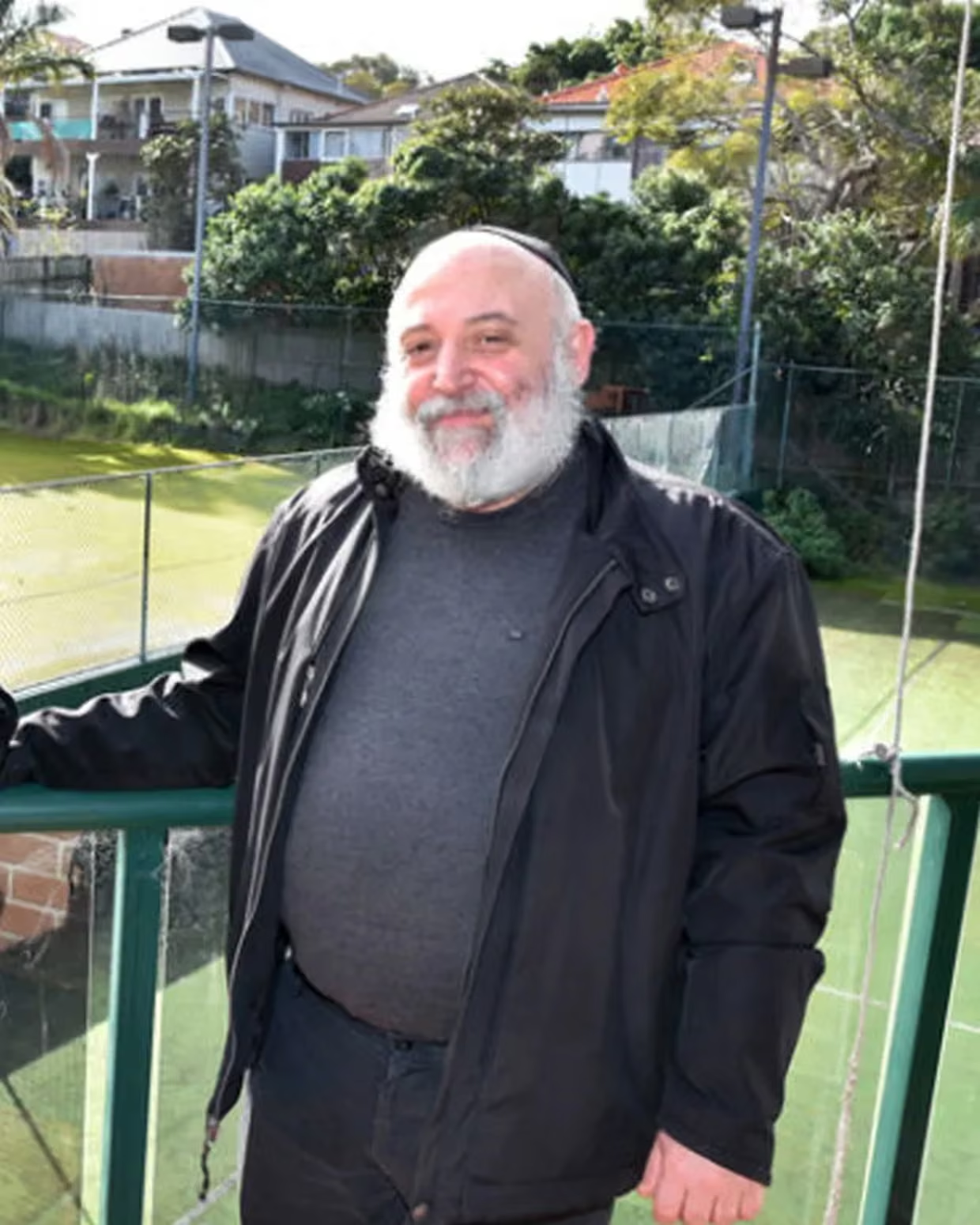
Reuven Morrison, an immigrant from the Soviet Union, was named as another victim of the terror attack.
He was a member of the community who divided his time between Sydney and Melbourne.
READ MORE: Albanese says 'justice will be done' after 'evil' attack at Bondi Beach
French citizen Dan Elkayam
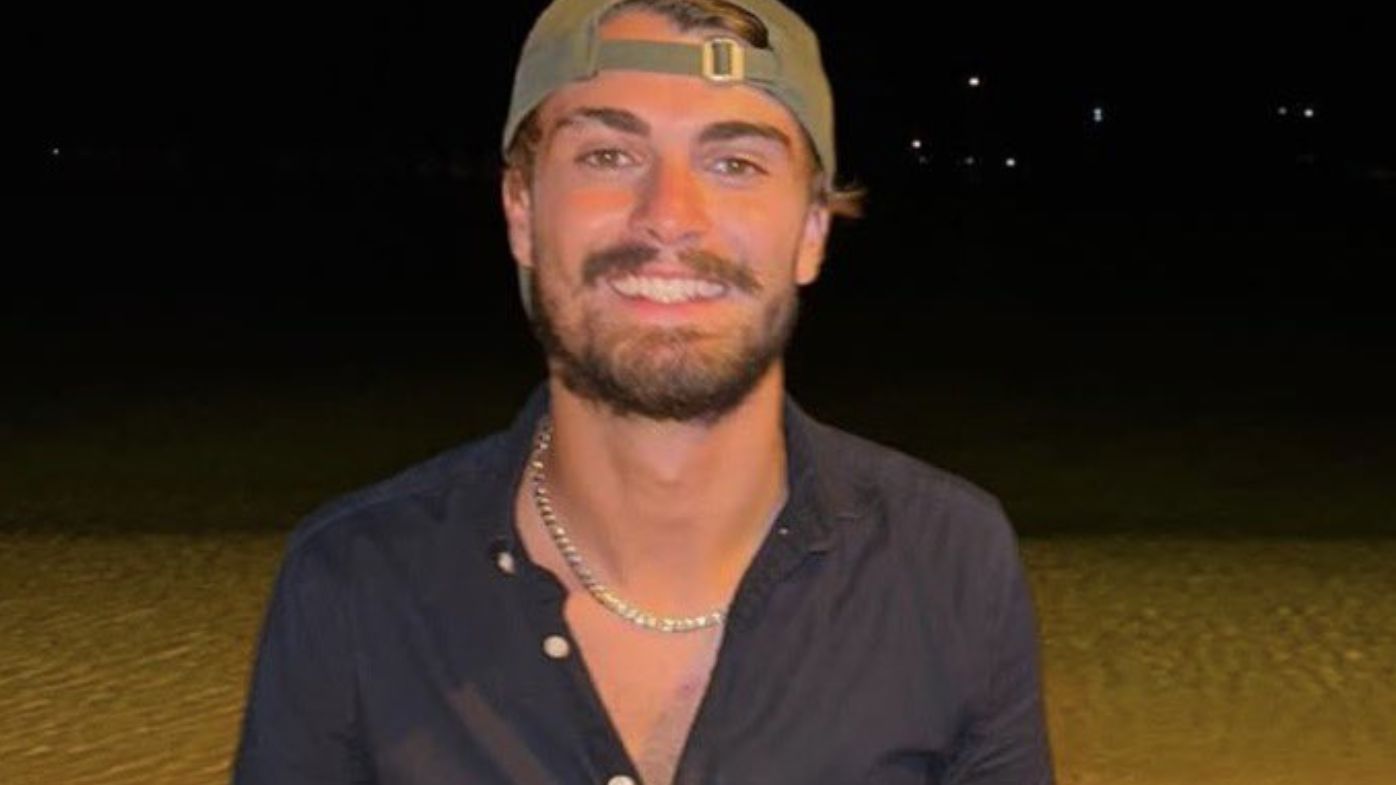
French national Dan Elkayam was identified as a victim by French President Emmanuel Macron and his Sydney football club.
"It is with deep sadness that I learned of the death of our compatriot Dan Elkayam in the anti-Semitic terrorist attack in Sydney," he said in a statement on X.
"My thoughts are with his family and loved ones, and I express to them the full solidarity of the nation."
French Foreign Minister Jean-Noel Barrot said the country was mourning with Elkayam, and described the shooting as "despicable".
"We mourn with his family and loved ones, with the grieving Jewish community and the Australian people," he said in a statement posted to X.
READ MORE: Former PM lays flowers at Bondi Beach vigil as tributes continue to grow
"This despicable act is yet another tragic manifestation of a revolting surge of antisemitic hatred that we must thwart.
"France will spare no effort to root out antisemitism wherever it emerges, and to combat terrorism in all its forms."
Elkayam was a member and premier league player of the Rockdale Ilinden football club's Premier League One team in southern Sydney.
The club said it was in "extreme shock and sadness" over the "horrendous, tragic and senseless events".
"Dan was an integral member of our PL1 Squad in 2025 – who was an extremely talented and popular figure amongst team mates," the club said.
"Our deepest and sincerest condolences to Dan's family, friends and all that knew him. He will be missed."
The Le Parisien newspaper reports that Elkayam, a Jew, was 27 and had moved to Australia about a year ago to work as an engineer.
If you have been impacted by the terror attack in Bondi there is support available.
To contact Lifeline Australia, call 13 11 14 or text 0477 13 11 14.
For people under 25 years old, you can contact Kids Helpline at 1800 55 1800.
Both of these are available on a 24/7 basis.
If you wish to donate blood, you can find your nearest donor centre here.
READ MORE ON THE BONDI TERROR ATTACK
LIVE UPDATES: Rabbi named among victims of the horrific Bondi terror attack
IN PICTURES: Bomb squad responding to Bondi shooting
READ MORE: Hero sneaks up on Bondi Beach gunman, wrestles weapon from him
DOWNLOAD THE 9NEWS APP: Stay across all the latest in breaking news, sport, politics and the weather via our news app and get notifications sent straight to your smartphone. Available on the Apple App Store and Google Play.
Former Kāpiti Coast GP Jared Cook given 10 months’ home detention for indecent acts
Kāpiti Coast GP Jared Cook abused teenage boys after befriending their families.
How everyday Aussies can help in the wake of the Bondi shooting
As the nation tries to come to terms with the horrors of last night's mass shooting at Bondi Beach, countless Australians are stepping forward to help.
Lifeblood Australia's website crashed because of the sheer number of people trying to find out where they could donate blood.
Its Sydney centre had lines snaking out the door and down the block this morning as hundreds turned up to donate.
LIVE UPDATES: Gunmen were father and son; Sixteen people dead, more injured in Bondi Beach shooting
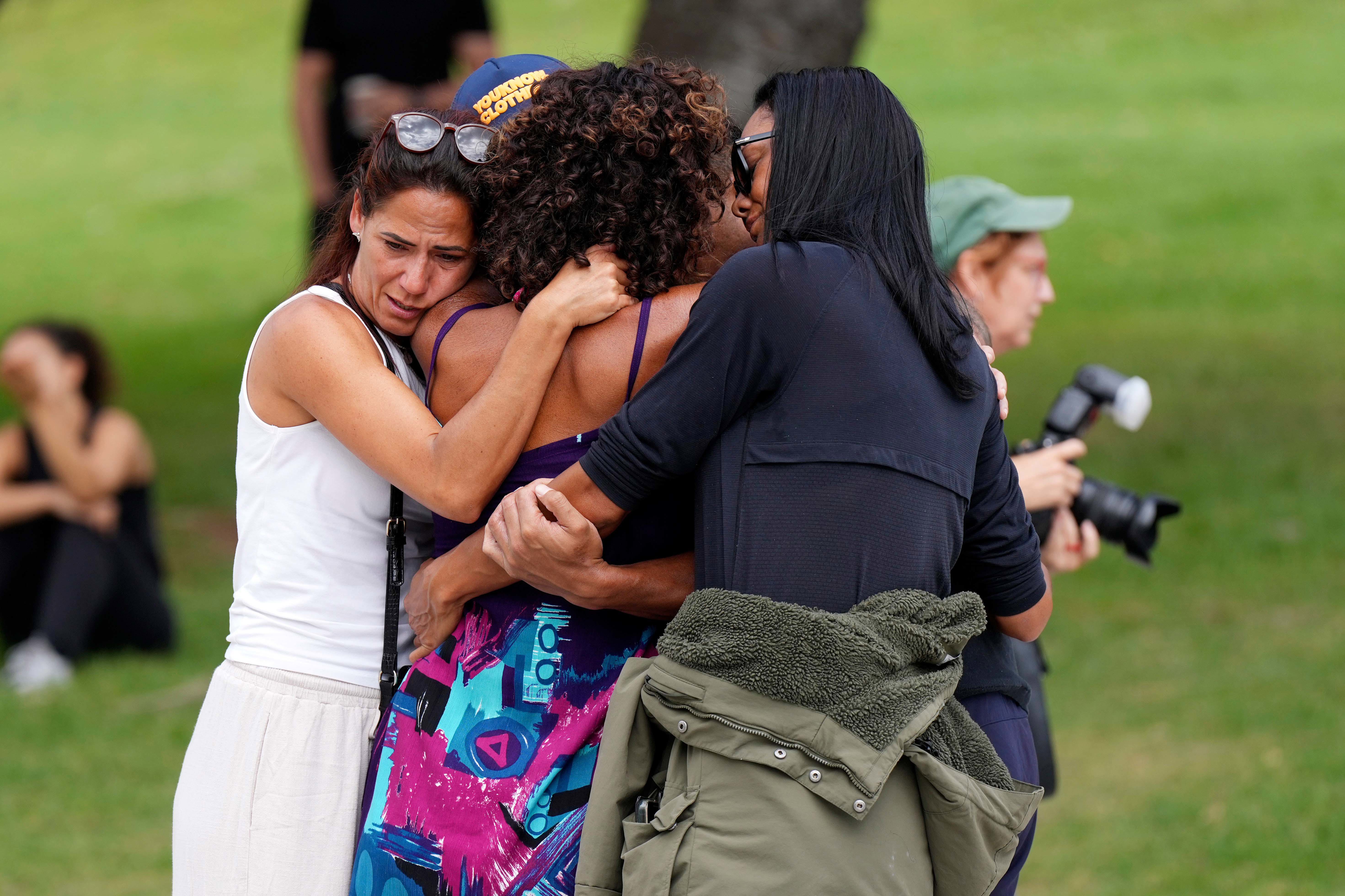
Vigils are being planned for the 15 innocents killed in the horrific attack, and police are calling members of the public to share valuable information.
Here's how everyday Australians can help in the wake of the Bondi Beach shooting.
Donate blood or plasma
Lifeblood issued an urgent callout for blood donations, especially type O negative (the universal donor type), in the wake of the attack.
Eligible Australians can donate blood, plasma, or platelets at a Lifeblood donor centre.
You can find your nearest centre here.
Donors must meet certain eligibility criteria. You can check your eligibility here.
READ MORE: What we know about the two Bondi Beach gunmen
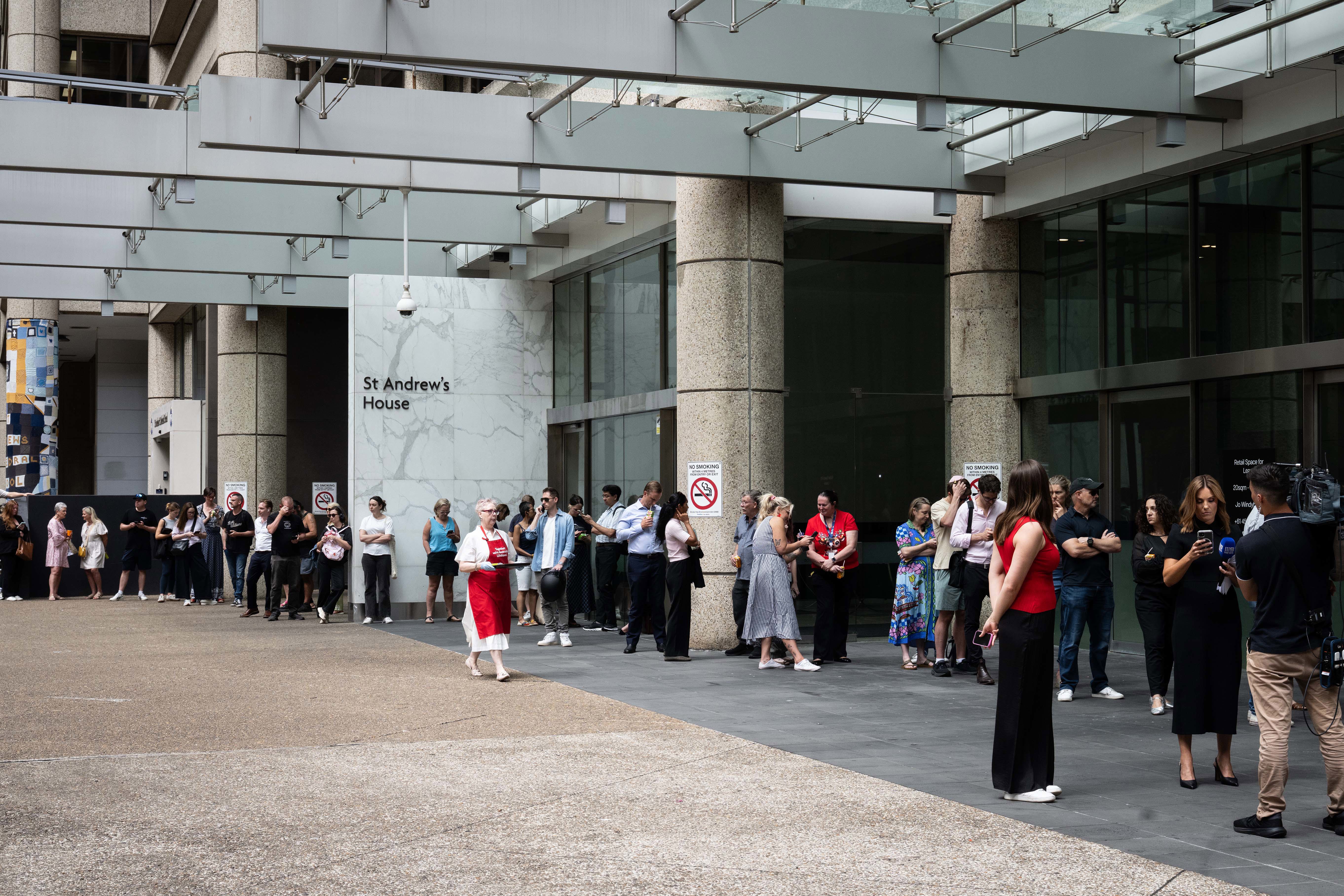
Donating blood takes about 10 minutes, with a one-hour appointment time.
Plasma takes about 45 minutes to donate, with a total appointment time of one and a half hours.
Donating platelets takes around an hour, with a total appointment time of two hours.
People are asked to be patient with the long lines.
Bondi Beach shooting vigils
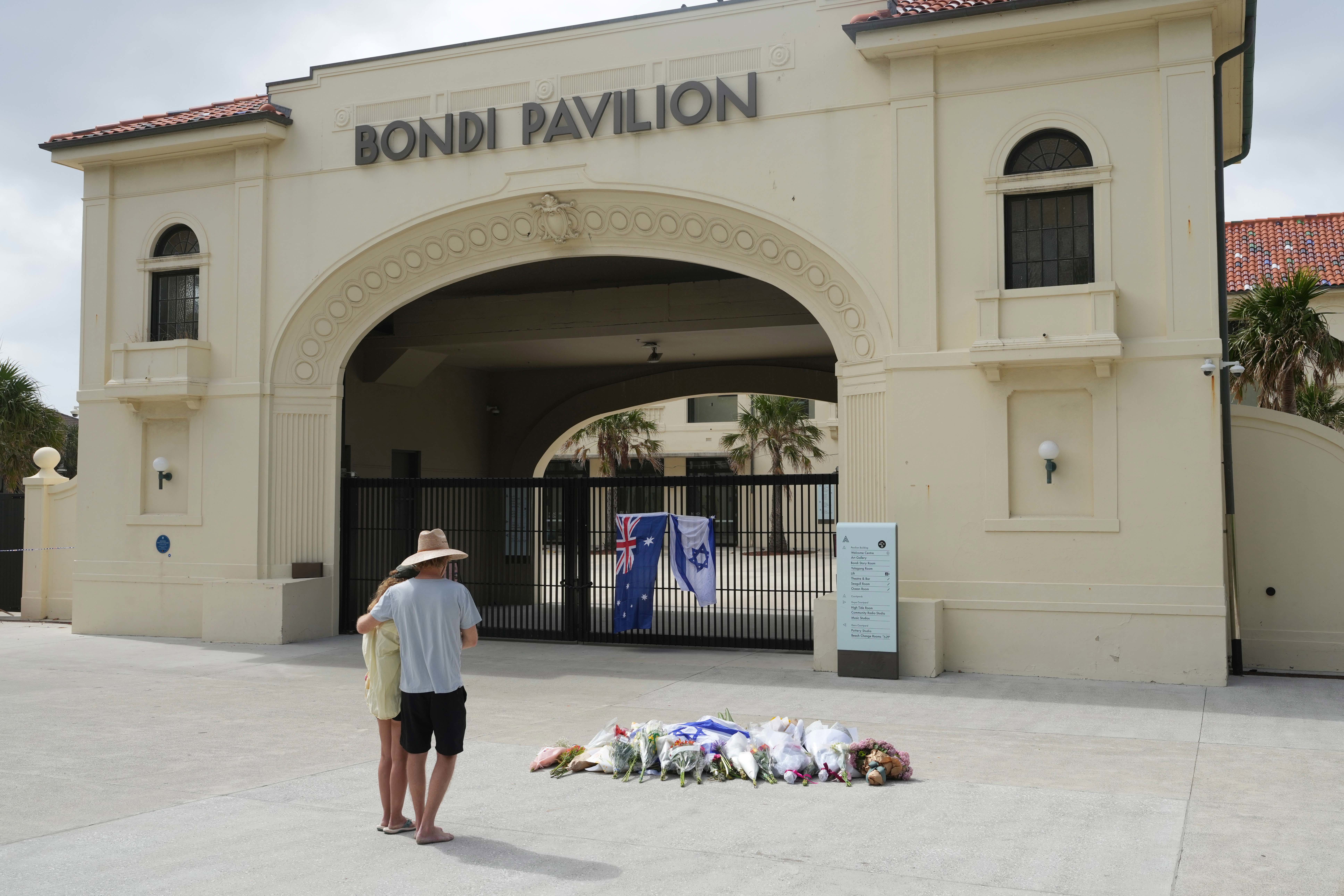
A memorial site has been established at the back of Bondi Pavillion, where the pile of flowers and other tributes is growing.
Vigils have already been held around the world for the shooting victims, including in the US, UK and parts of Europe.
More vigils are expected to be held in Bondi and around the country in the coming days.
A healing ceremony with the Indigenous community will be held in the centre of Sydney tonight.
The event is at 5.30pm at Hyde Park.
"As Indigenous people we hold a responsibility to safe guard, nurture and send love," Vanessa Turnbull Roberts said.
"It's who we are, who we have all been.
"This shooting took place on a land that was not the first time to have this happen."
READ MORE: 'Daddy, what is that?': Family forced to run for their lives as Bondi shooting began
Online condolence book
The NSW government has set up an online condolence book for people to leave messages of condolence in the wake of the attack.
You can send a message of condolence on the official NSW government website here.
Support for Australia's Jewish community
Prime Minister Anthony Albanese has urged Australians to show support for the nation's Jewish community.
The Jewish Council of Australia encouraged Aussies to stand with the Jewish community by lighting a candle in a window at 6.47pm on Monday night.
The gesture honours the festival of Hanukkah, an annual Jewish celebration of light and miracles.
Albanese and local member for Wentworth, Allegra Spender, backed the gesture and urged Aussies to reach out to members of local Jewish communities.
"The Jewish community are hurting today," Albanese said.
"Today, all Australians wrap our arms around them and say, 'we stand with you.'"
READ MORE: Rabbi and French citizen identified as victims of Bondi Beach shooting attack
How to help police
Anyone with information about the incident is urged to contact Crime Stoppers on 1800 333 000 or online here.
Information is managed on a confidential basis.
NSW Police are appealing for anyone with mobile phone or dashcam footage relevant to the Bondi shooting to send it directly to police.
You can submit video evidence to police through the NSW Police Force Evidence Submission Portal here.
Witnesses of the shooting are also being urged to attend a community reception centre in Coogee and speak to investigators.
The centre has been established at the InterContinental Sydney Coogee Beach, 242 Arden Street, Coogee NSW 2034.
If you have been impacted by the terror attack in Bondi there is support available.
To contact Lifeline Australia, call 13 11 14 or text 0477 13 11 14. For people under 25 years old, you can contact Kids Helpline at 1800 55 1800. Both of these are available on a 24/7 basis. If you wish to donate blood, you can find your nearest donor centre here.
DOWNLOAD THE 9NEWS APP: Stay across all the latest in breaking news, sport, politics and the weather via our news app and get notifications sent straight to your smartphone. Available on the Apple App Store and Google Play.
Disqualified driver Jesse Grimwood jailed after Blenheim hit-and-run leaves woman injured
A judge described Jesse Grimwood’s behaviour as ‘deplorable’.
Hollywood director Rob Reiner and wife stabbed to death in Los Angeles home
Hollywood director and actor Rob Reiner and his wife Michele have been found dead at their Los Angeles home.
Investigators believe they suffered stab wounds and a family member is being questioned by investigators, an LAPD official said.
The Reiner family confirmed the deaths in a statement to Variety.
READ MORE: What we know about the Bondi gunmen
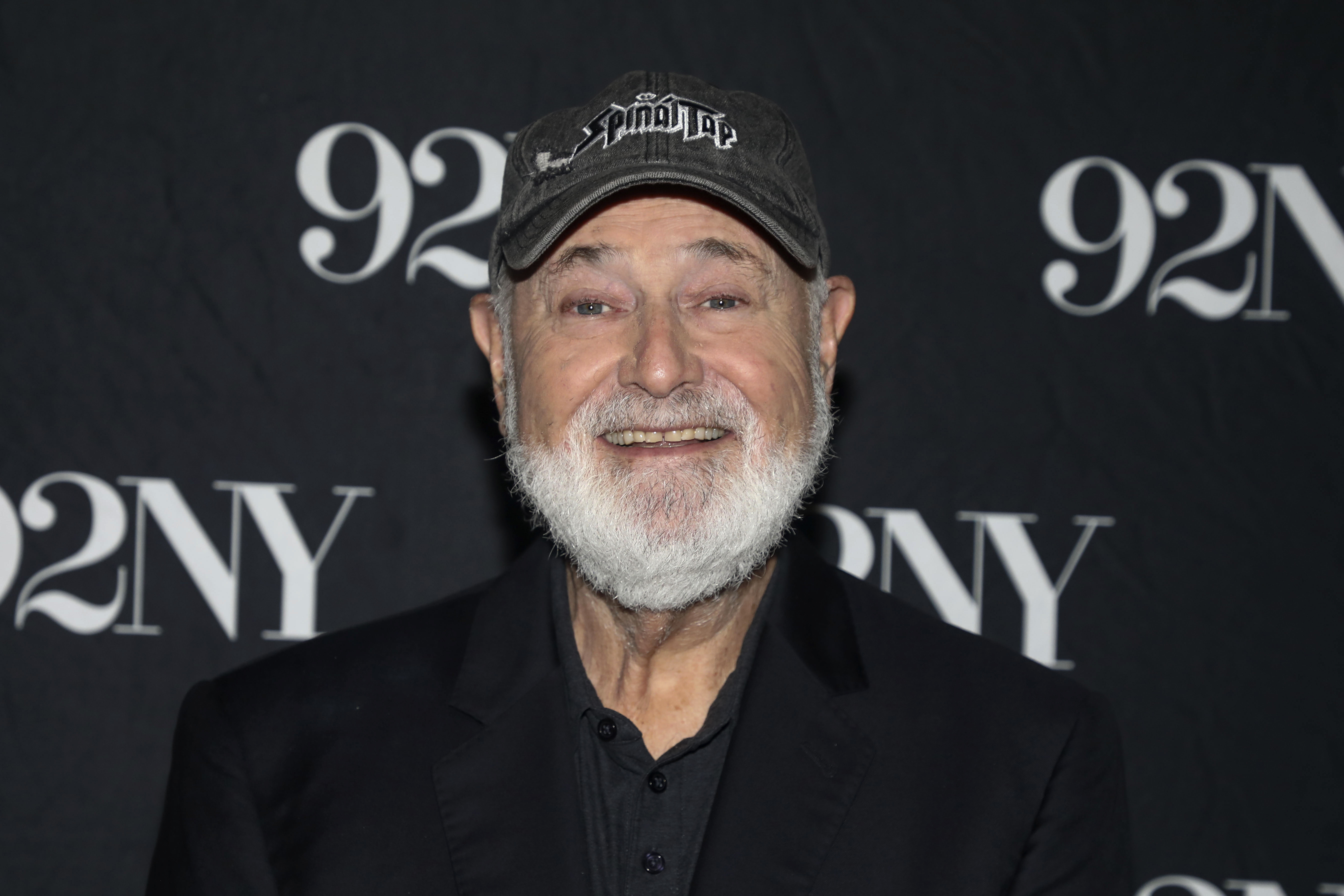
"It is with profound sorrow that we announce the tragic passing of Michele and Rob Reiner," the family said.
"We are heartbroken by this sudden loss, and we ask for privacy during this unbelievably difficult time."
The Los Angeles Fire Department said it responded to a medical aid request shortly after 3.30pm (10.30am AEDT) and found a 78-year-old man and 68-year-old woman dead inside.
Reiner turned 78 in March.
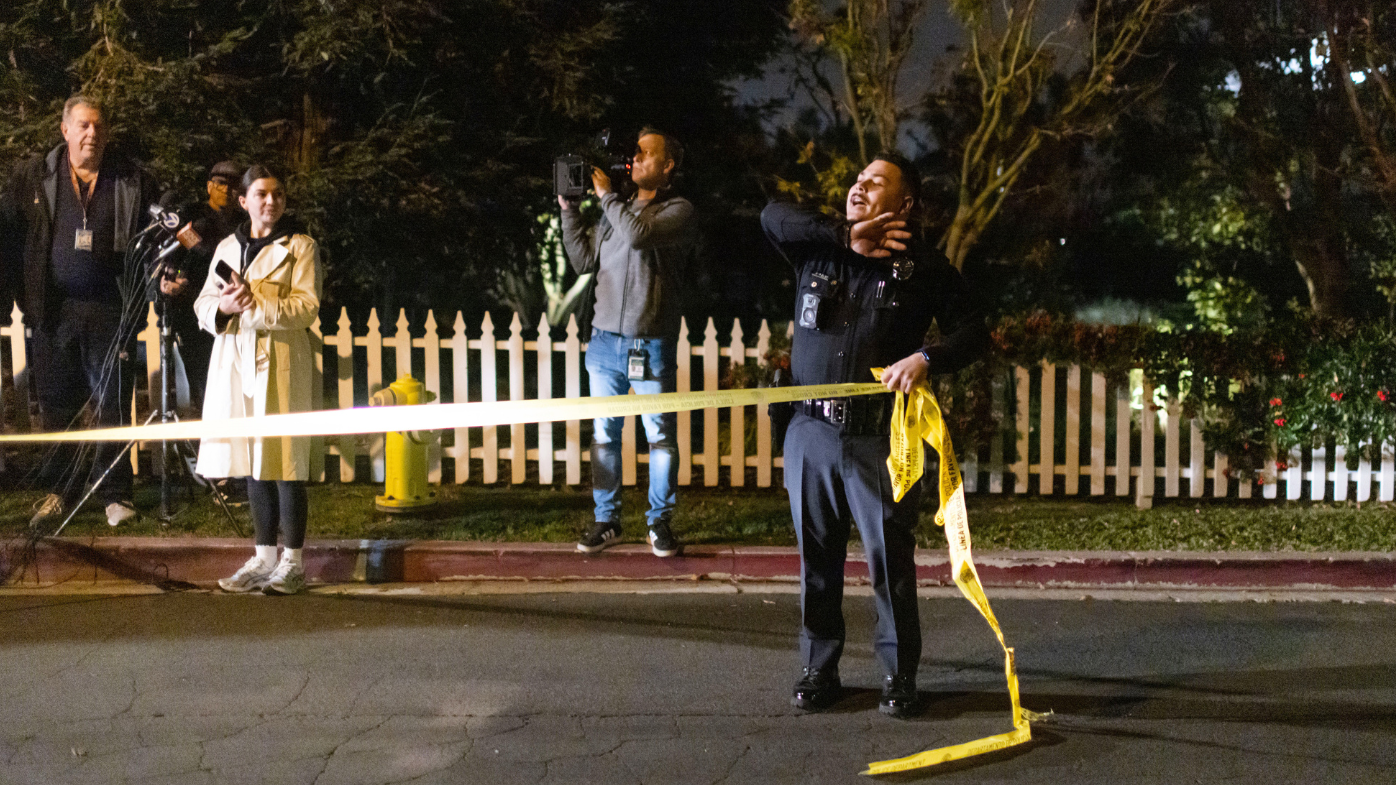
Detectives with the Robbery Homicide Division were investigating an "apparent homicide" at Reiner's home, Captain Mike Bland with the Los Angeles Police Department said.
Los Angeles authorities have not confirmed the identities of the people found dead at the residence in the upmarket Brentwood neighbourhood on the city's west side that's home to many celebrities.
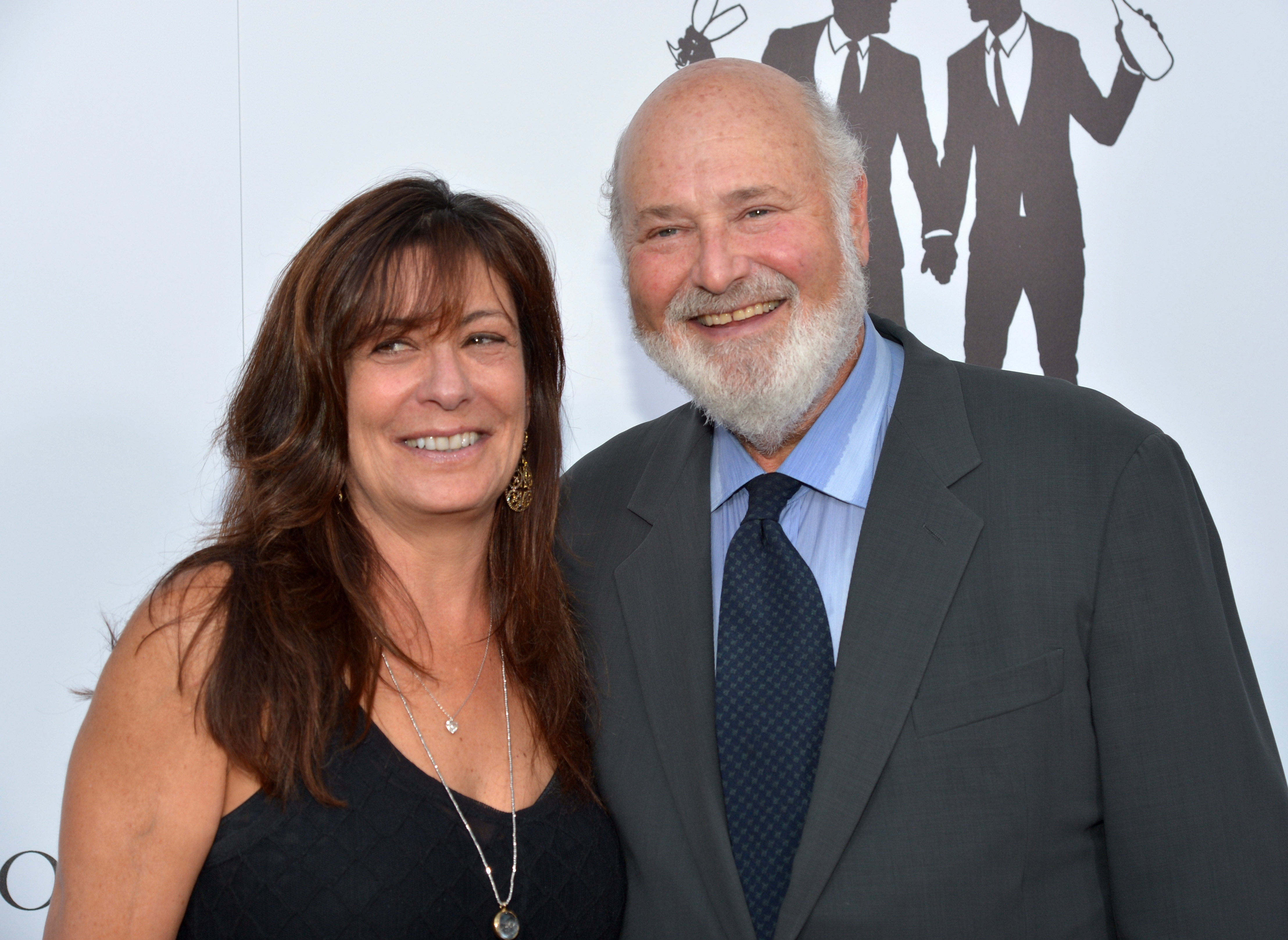
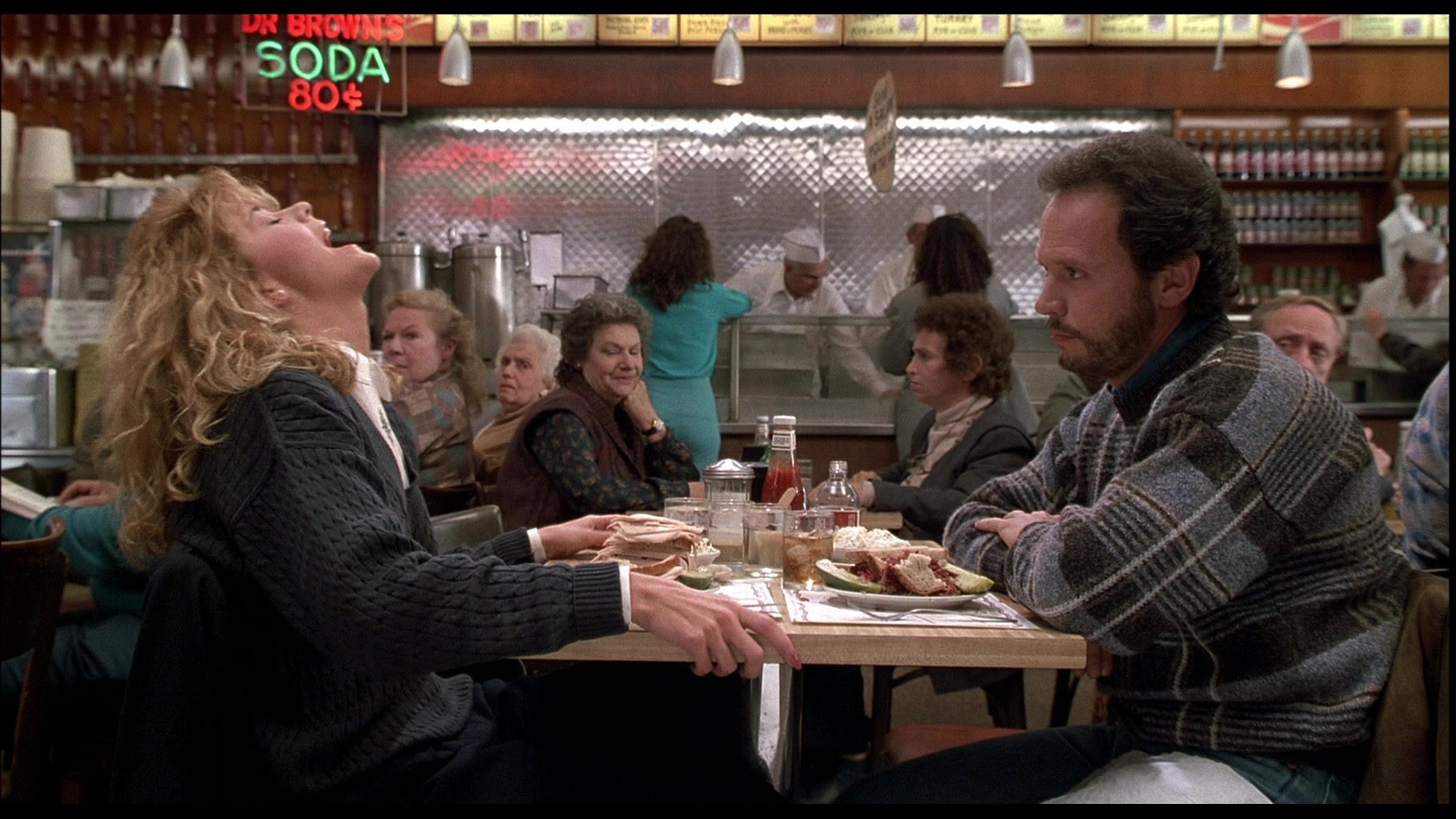
Reiner was long one of the most prolific directors in Hollywood, and his work included some of the most memorable movies of the 1980s and '90s, including This is Spinal Tap, A Few Good Men, When Harry Met Sally and The Princess Bride.
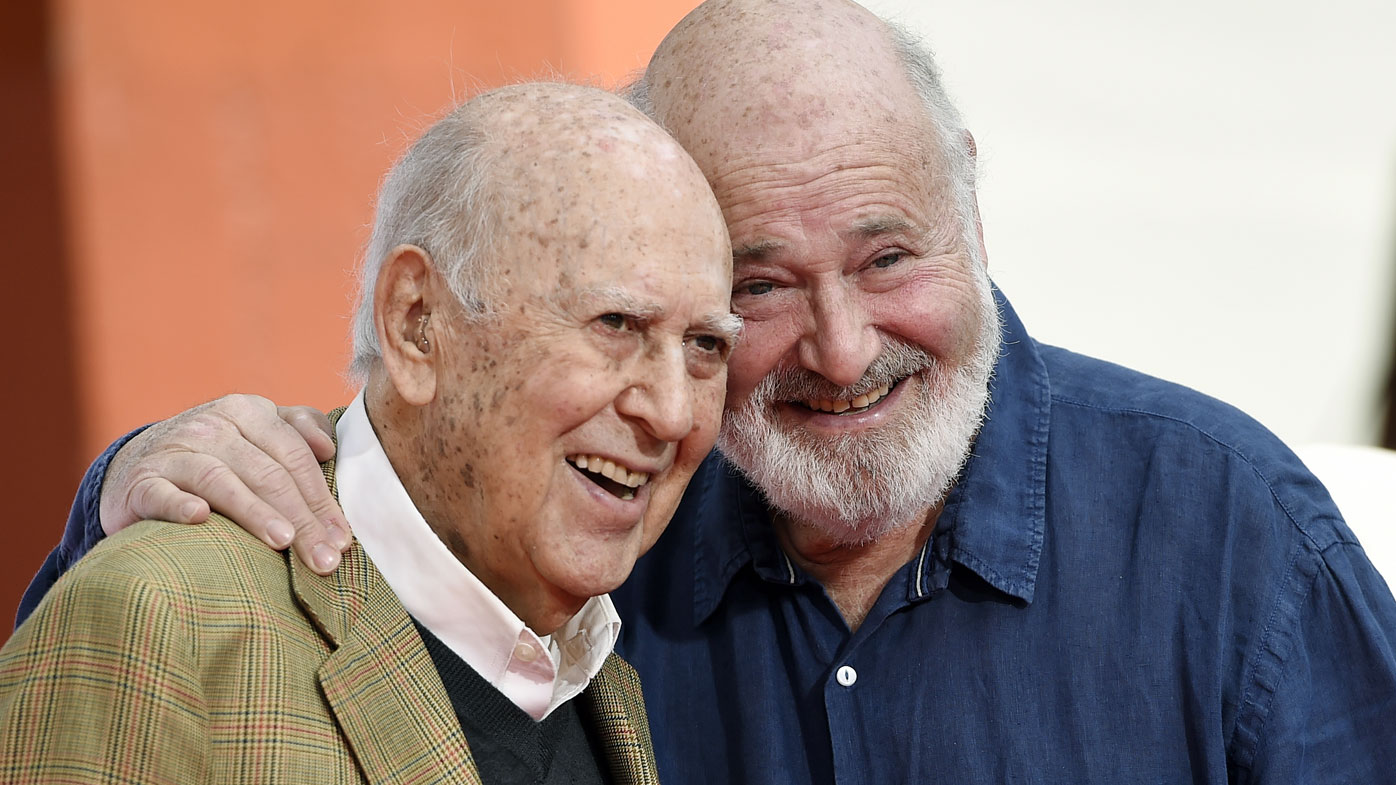
His role as Meathead in Norman Lear's 1970s TV classic All in the Family, alongside Carol O'Connor's Archie Bunker, catapulted him to fame and won him two Emmy Awards.
Relatives of Lear, the legendary producer who died in 2023, said they were bereft by the news.
"Norman often referred to Rob as a son, and their close relationship was extraordinary, to us and the world," said a Lear family statement.
"Norman would have wanted to remind us that Rob and Michele spent every breath trying to make this country a better place, and they pursued that through their art, their activism, their philanthropy, and their love for family and friends."
Messages to Reiner's representatives were not immediately returned on Sunday night.
Los Angeles Mayor Karen Bass called Reiner's death a devastating loss for the city.
"Rob Reiner's contributions reverberate throughout American culture and society, and he has improved countless lives through his creative work and advocacy fighting for social and economic justice," Bass said in a statement.
"An acclaimed actor, director, producer, writer, and engaged political activist, he always used his gifts in service of others."
The son of comedy legend Carl Reiner, Rob Reiner was married to photographer Michele Singer Reiner since 1989.
The two met while he was directing When Harry Met Sally and have three children together.
Reiner was previously married to actor-director Penny Marshall from 1971 to 1981.
He adopted her daughter, Tracy Reiner.
Carl Reiner died in 2020 at age 98 and Marshall died in 2018.
Killings are rare in the Brentwood neighbourhood.
The scene is about several kilometres from the home where O.J. Simpson's wife Nicole Brown Simpson and her friend Ron Goldman were killed in 1994.
– Reported with Associated Press
Grief as Sydney mourns those killed in Bondi Beach terror attack
At least 15 victims are confirmed dead, as well as a gunman, after a mass shooting at Sydney's Bondi Beach that targeted a Hanukkah celebration and has been deemed a terrorist attack.