Five children and two adults were taken to hospital after a caustic chemical was used.
Tag Archives: oceania
Ray Chung’s Better Wellington campaign group reveals big money donors
The Ray Chung-led group amassed a $157k war chest for its largely unsuccessful campaign.
Bondi Beach shooting: New Zealand Herald reporter details how experience went from idyllic summer day to a nightmare
Reporter Samuel Sherry details how his weekend away descended into a nightmare.
Waikato crash on Arapuni Rd: Police launch critical incident investigation after one killed
Police say a black BMW sped along Arapuni Rd shortly before the crash.
Firefighters battle large Waiinu Beach fire, nearby residents may be evacuated
Crews from 10 urban and rural stations are in attendance
Boy, 14, injured in Browns Bay hit-and-run, ‘broken mentally and physically’
A Givealittle has been set up to pay for a new bike for Blake.
How the Bondi Beach terror attack unfolded
The Bondi Beach terror attack, Australia's worst mass shooting in almost 30 years, has left at least 16 dead, including a gunman, and scores injured.
The horrific incident targeted Sydney's Jewish community, including families and children, at a beachfront Hanukkah event just before sunset on Sunday evening.
LIVE UPDATES: Bondi beach shooting
How the Bondi Beach terror attack unfolded
Emergency services were called to the Chanukah by the Sea event in Archer Park in Bondi at 6.43pm (AEST) following reports of gunshots.
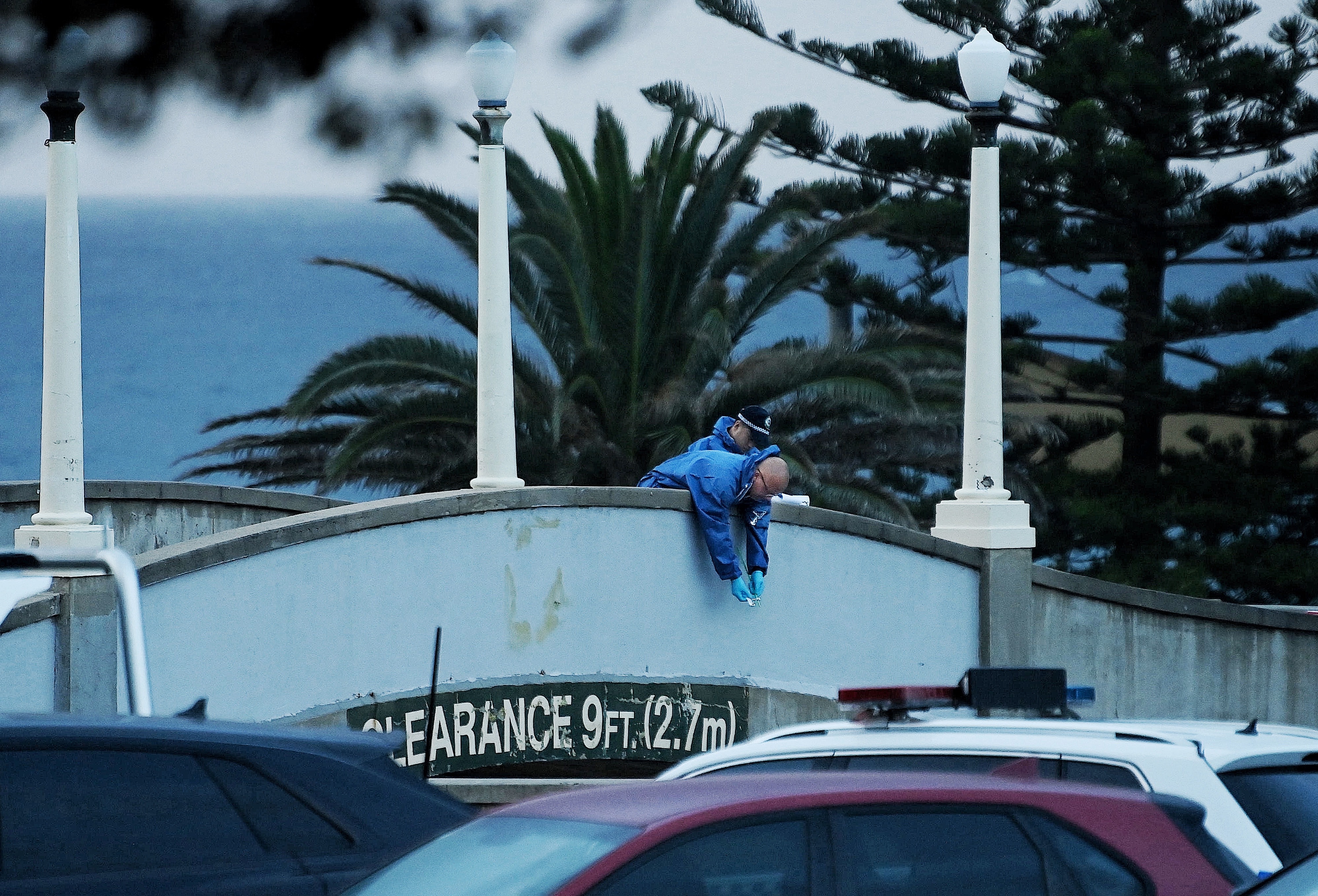
Two men wielding longarms opened fire from a small pedestrian footbridge near the grassy playground area at the northern end of Bondi Beach.
First responders were on the scene less than 10 minutes after the initial call.
It is understood more than 1000 people were in the immediate area of the family festival celebrating the first night of Hanukkah, an eight-day Jewish holiday.
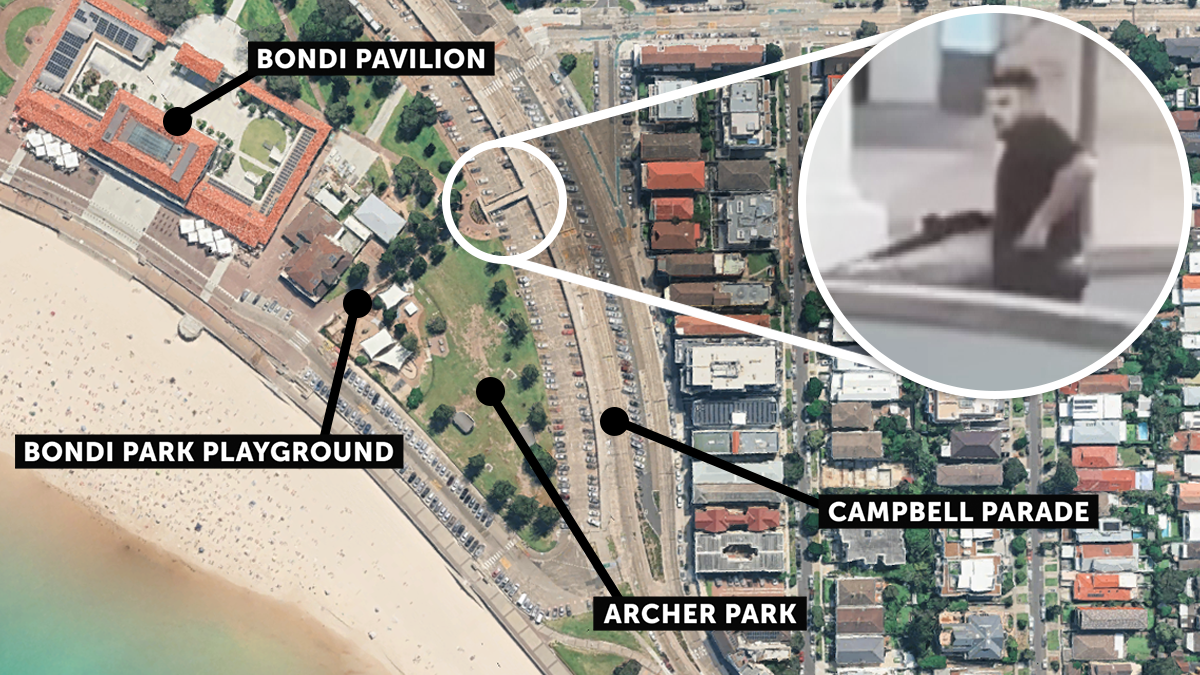
Eye witnesses have estimated hearing as many as 50 shots ring out.
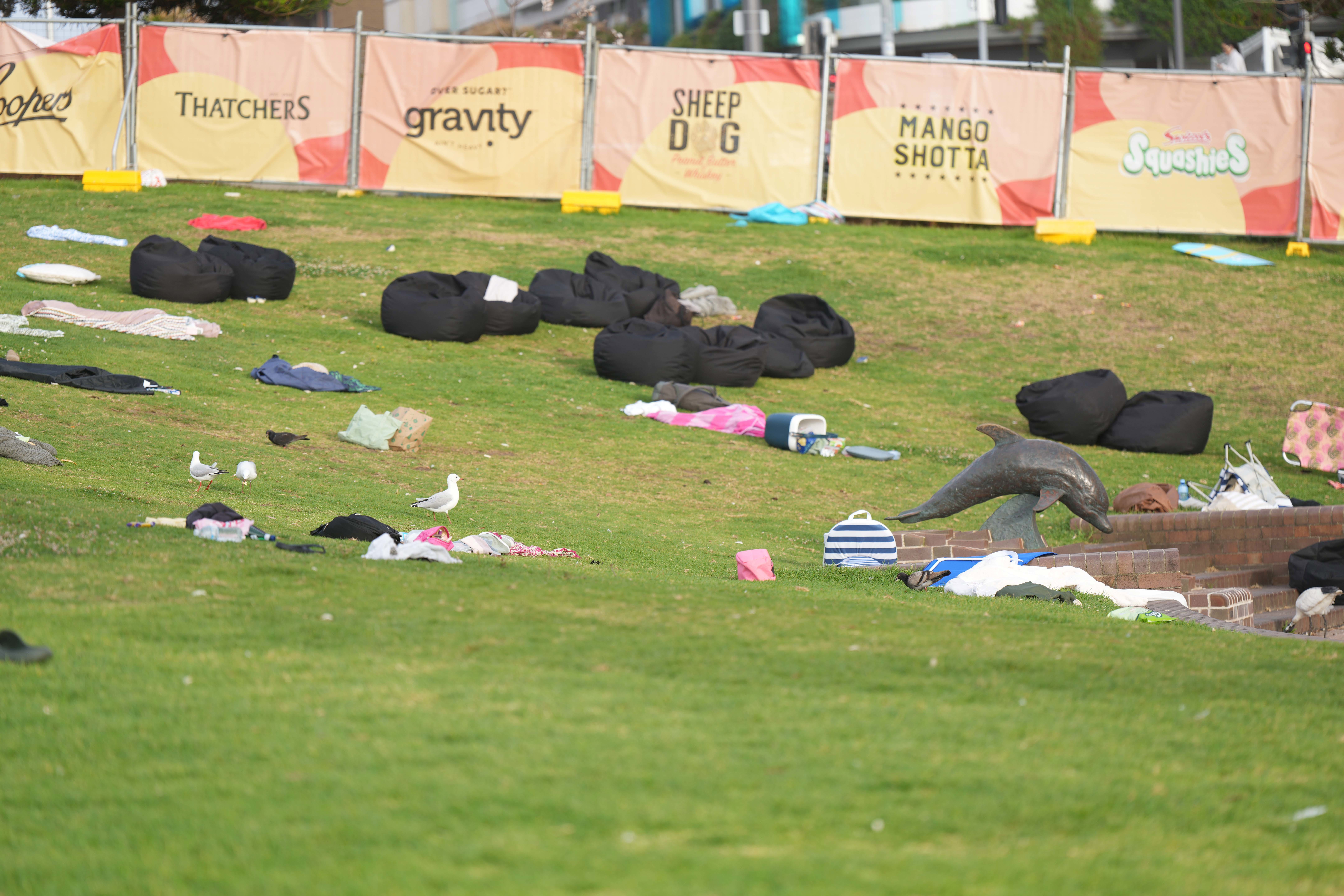
Many initially thought the gunfire were fireworks, before taking shelter as best they could – some running into the Bondi surf and others into nearby cafes, pubs and restaurants.
At about 7pm, NSW Police issued a critical warning through social media alerting the public of a "developing incident" at the iconic beach, urging them to avoid the area.
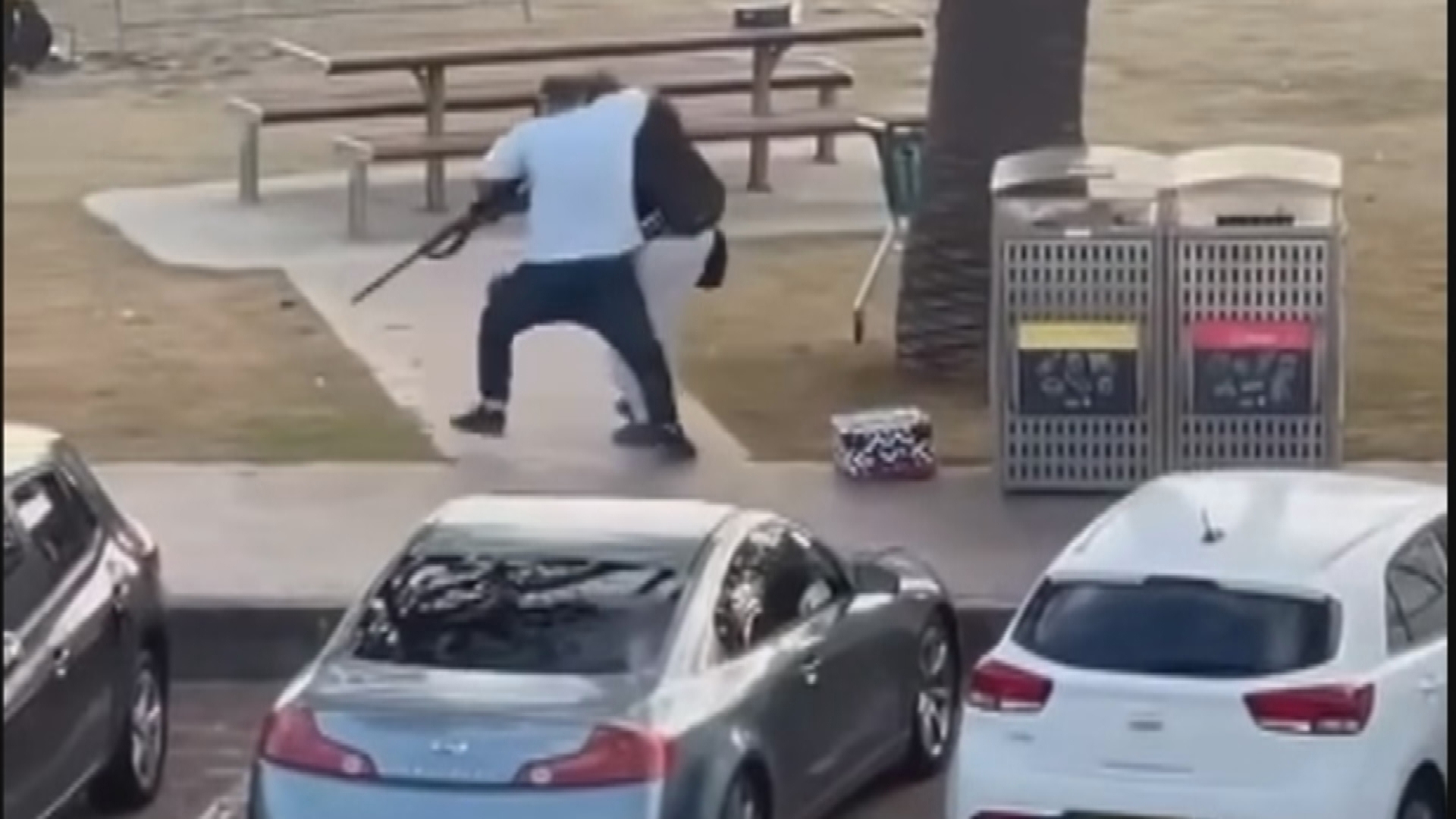
Social media was soon flooded with videos from the scene, with reports of multiple casualties and scenes of heroics.
Social media footage caught one man who wrestled a gun from an attacker.
WATCH: Hero wrestles gun from attacker
The man, later identified as Ahmed el Ahmed, a Sydney father of two, calmly crept up on one of the alleged shooters, before tussling with him and disarming him.
By 7.41pm, authorities said two people were in police custody. Shortly after, they confirmed earlier reports of a second alleged incident in nearby Dover Heights were false.
The horror of the shooting was confirmed at around 8.30pm when NSW Police Commissioner Mal Lanyon confirmed at least 12 people had died during the attack and at least 29 others had been injured.
During the same address, Lanyon declared the shooting a "terror incident".
One of the first victims identified in the mass shooting was Rabbi Eli Schlanger, an assistant Rabbi at Chabad of Bondi. He was a key organiser of the Chanukah by the Sea event.
READ MORE: What we know about the Bondi Beach shooting
'No place for this hate' says Prime Minister
Australian Prime Minister Anthony Albanese addressed the attack at a press conference at about 10pm on Sunday, labelling the scenes "shocking and distressing".

"An attack on Jewish Australians is an attack on every Australian and every Australian tonight will be, like me, devastated about this attack on our way of life," he told reporters.
"There is no place for this hate, violence and terrorism in our nation. Let me be clear we will eradicate it."
NSW Premier Chris Minns also spoke out: "This cowardly act of terrifying violence was designed to target Sydney's Jewish community," Minns said.
READ MORE: 'An absolute massacre': Man injured in Bondi Beach shooting tells of chaos
As night fell, news of the horror filtered around the world, with world leaders sending their thoughts and prayers to Australia.
Ukrainian President Volodymyr Zelenskyy said his nation standing "in solidarity with Australia in the face of the brutal terrorist attack".
French President Emmanuel Macron extended his thoughts, adding "we share the pain of the Australian people and will continue to fight relentlessly against antisemitic hatred".
READ MORE: 'Everyone started screaming': Witnesses recall moment shooters open fire at Bondi Beach

British Prime Minister Keir Starmer labelled the attack "deeply distressing:.
King Charles issued a statement about the horrific mass shooting, saying he was "appalled and saddened".
Meanwhile, Israeli Prime Minister Benjamin Netanyahu launched another personal criticism of Albanese, blaming him for the Bondi attack.
"I called upon you to replace weakness with action, appeasement with resolve," Netanyahu said in a video posted on the Israeli prime minister's official X account.
READ MORE: PM says 'justice will be done'
"Instead, prime minister, you replaced weakness with weakness and appeasement with more appeasement."
Netanyahu also said he "saluted" the "great man" who tackled one of the terrorists and disarmed him.
READ MORE: What we know about the Bondi attackers
New York City, Berlin, and London all ramped up security for Hanukkah events following the Bondi Beach attack.
New York City Mayor Eric Adams said extra protection was being deployed for Hanukkah celebrations and synagogues in New York City.
Berlin police said they were stepping up measures around the German capital's Brandenburg Gate, where a large electric menorah was lit to mark the first night of Hanukkah.
VICTIMS: Rabbi among those shot dead
The morning after
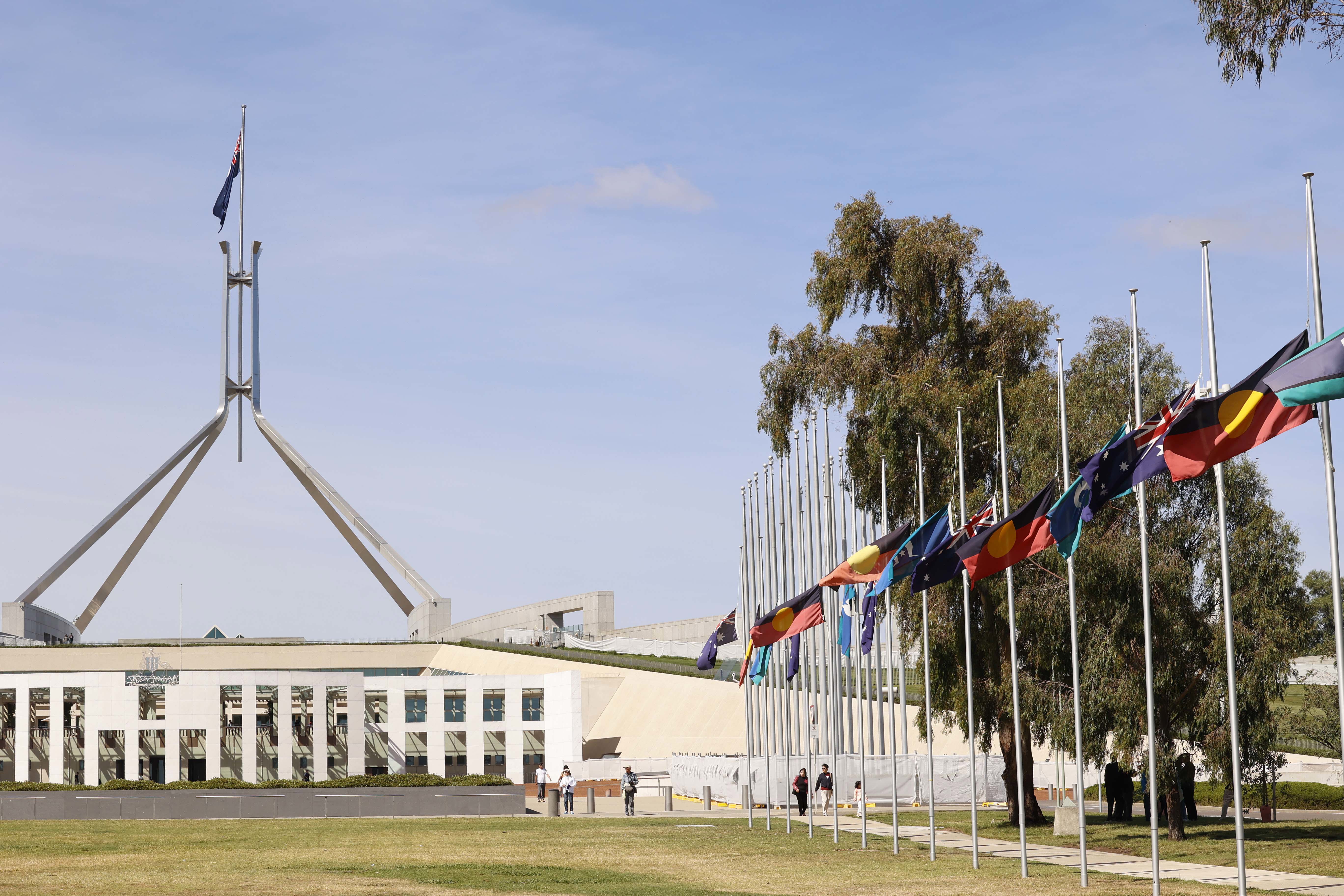
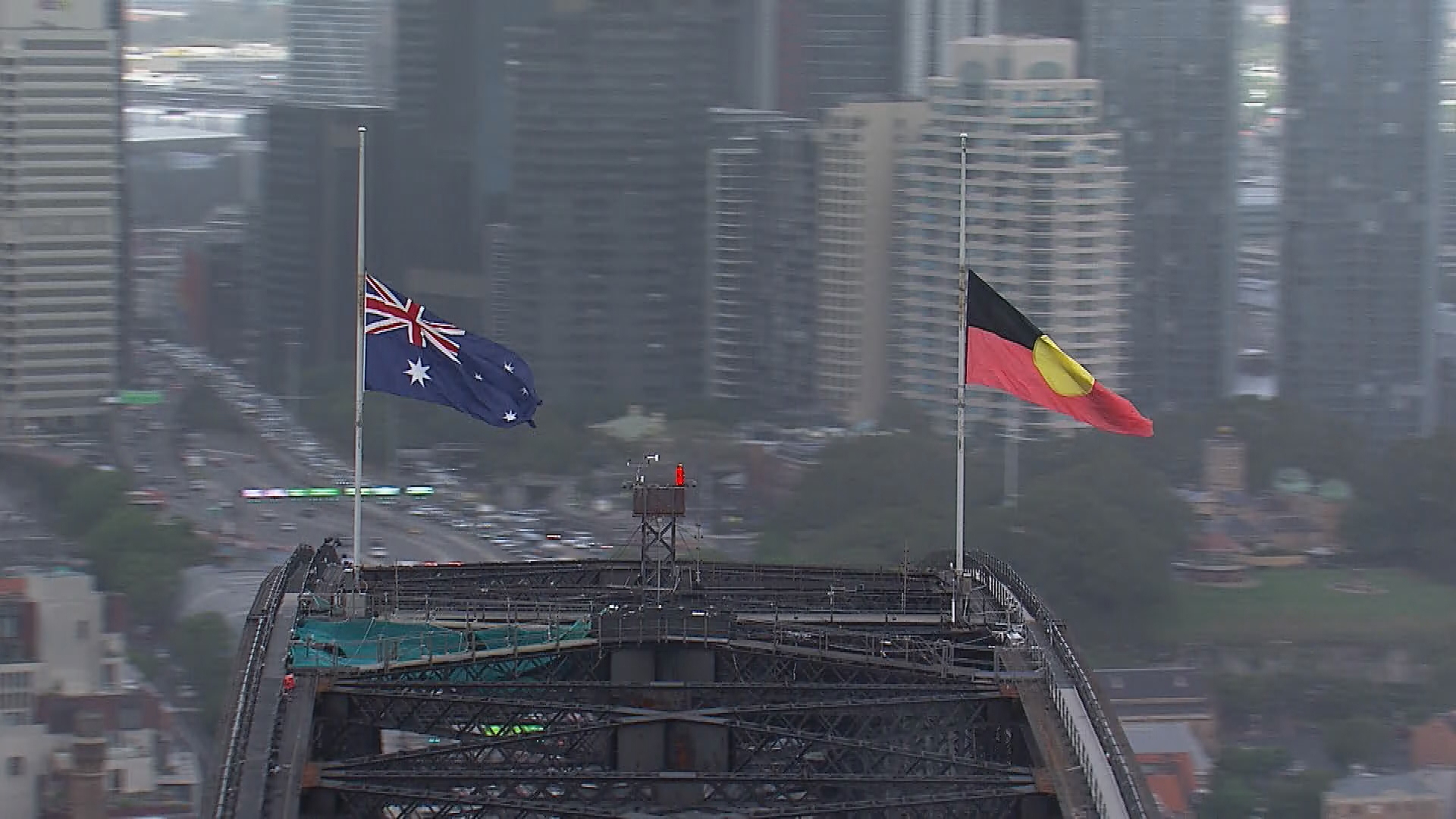
This morning, as Australians woke up, the national flags on the Sydney Harbour bridge were lowered in mourning for the victims of the attack.
This morning, the official death toll from the shooting rose to 16, including one child.
Dan Elkayam, a French national, has been identified among those killed in the attack.
French President Emmanuel Macron offered his sympathies in a statement on social media.
"I learn with deep sadness of the death of our compatriot Dan Elkayam during the antisemitic terrorist attack in Sydney," Macron said on X.
READ MORE: Bondi Beach shooting worst attack since Port Arthur massacre
"I think of his family and loved ones and express to them the full solidarity of the nation."
NSW Health today provided an update on the conditions of the patients rushed to hospital after yesterday's mass shooting.
There are 40 patients being treated across Sydney according to the latest details.

A spokesperson confirmed 42 patients were hospitalised, with two – a 10-year-old girl and a 40-year-old man, not surviving.
BONDI ATTACK: What we know so far
Police believe the ages of the victims range between 10 and 87 years old.
As of 8am (AEDT) today, 12 patients are in a stable condition at Prince of Wales Hospital.
Three patients are at St George, one is critical and two are stable.
One person is in a stable condition at Sutherland Hospital, while one person is in a critical condition at Sydney Eye Hospital.
Three patients are critical and five stable at St Vincent's Hospital. A further two people have been treated and discharged from St Vincent's.
Three patients critical but stable, one patient critical, one patient is stable, and one is yet to be assessed at Royal Prince Alfred Hospital.
One patient critical and two patients stable at Sydney Children's Hospital, in Randwick.
One patient is critical but stable and one is in a stable condition at Royal North Shore Hospital. Two patients are in a stable condition at Liverpool Hospital.
The two patients who died had been receiving treatment at Royal Prince Alfred Hospital, and Sydney Children's Hospital.
Campbell Parade at Bondi Beach remains closed this morning, drivers have been warned.
Eye witnesses have shared some of the horror from the nine minute attack.
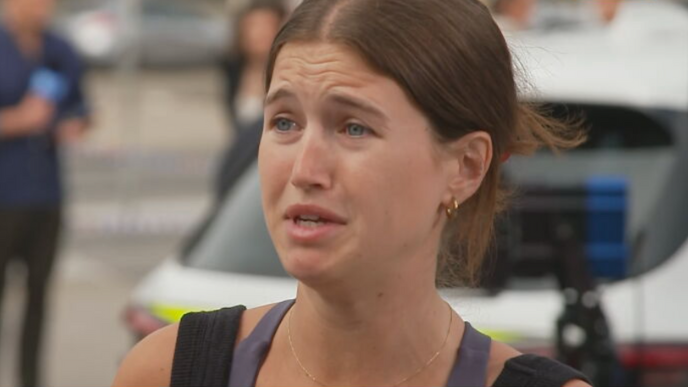
Bridget Sarks, who witnessed the terror, described seeing "blood everywhere".
"There were kids screaming and blood everywhere, it was really horrible," she told Today on Monday.
Sarks and her partner, Tommy, had pulled up behind one of the alleged gunman's car on their Vespa and were just metres from one of the suspects when he opened fire.
"He was in the white pants and I've never seen a gun like that in my life," she said.
Jacob Barnfield was finishing work in Bondi when he heard gunshots ring out near the promenade area at Bondi Beach. He ran towards the sound and the bloodshed.
"I started ducking and weaving through cars in the park, trying to get a bit closer to the bridge," Barnfield told Today on Monday.
"The closer the bridge, the more bodies you saw on the floor."
He said he witnessed NSW police open fire on one of the alleged gunmen.

This morning, the alleged gunmen behind the attack were identified as father and son Sajid Akram, 50, and Naveed Akram, 24.
Sajid is among the 16 killed in the attack. Naveed is in a critical condition in hospital under police guard.
NSW Police Commissioner Mal Lanyon confirmed on Monday that Akram was a licensed firearms holder for about 10 years.
There had been initial reports of a third shooter, however, Lanyon said authorities were no longer looking for a third suspect.
"If there's any other person associated with the two offenders that we believe was either involved or responsible for what took place, we'll take action," he told reporters.
"There were two persons involved yesterday. There were two persons in this atrocity. We are not looking for a third person who was involved in yesterday's attack directly."
Lanyon also confirmed two improvised explosive devices were found at the scene in Bondi and have been "rendered safe" by police specialists.
He said the bombs has been fairly "rudimentary", and likely to have been triggered by a wick.
"I think they were fairly basic in terms of their construction," he said.
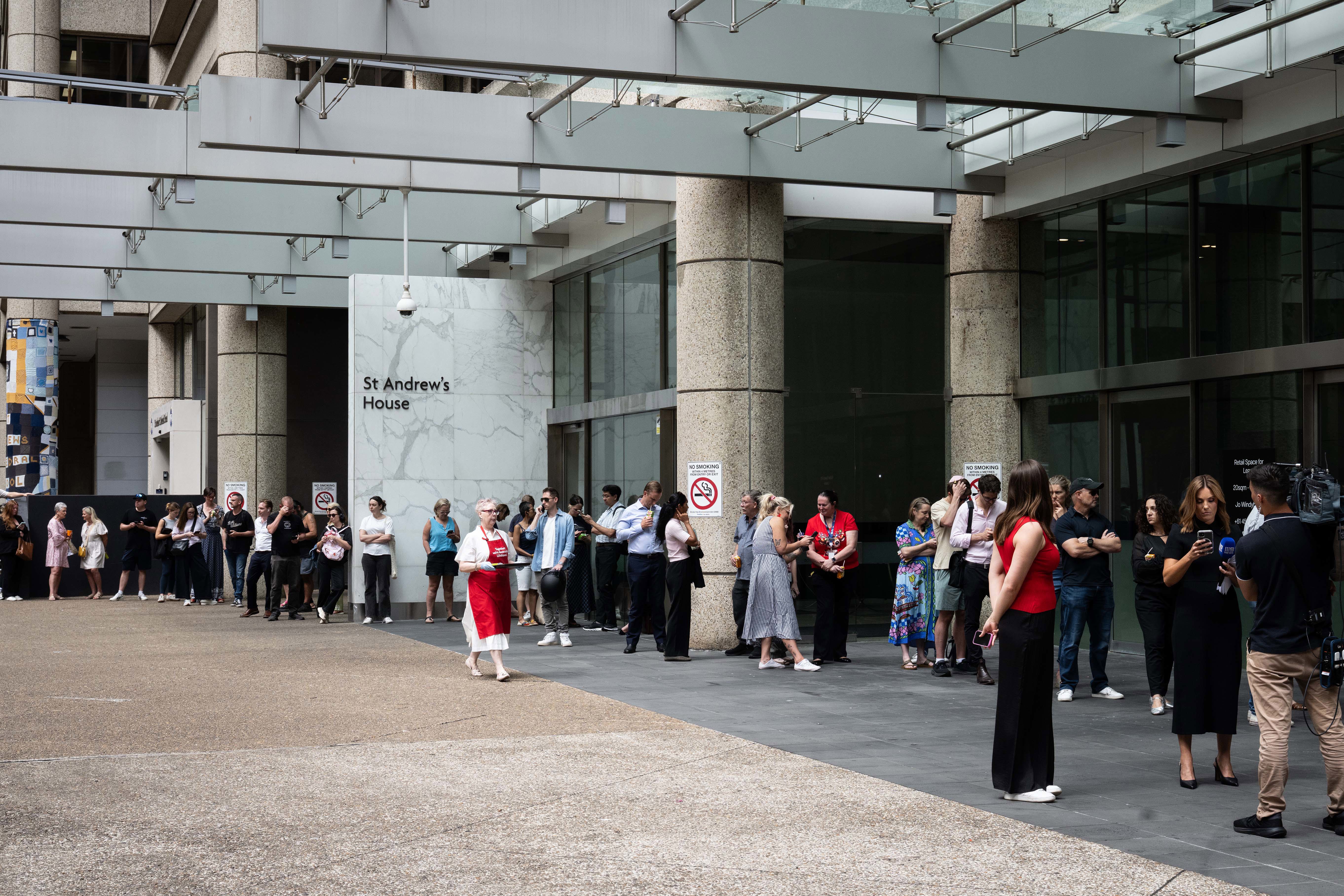
Long lines have been seen in the CBD as an appeal has been made for Sydneysiders to donate blood to help victims.
How children and teens may be impacted by the Bondi Beach shooting
The city of Sydney, Australia and the world over are reeling after the tragic events which unfolded at Bondi Beach yesterday afternoon.
Even if you weren't there, there is a strong chance the non-stop rolling news coverage has caused residual trauma to you, your children and your loved ones.
At least 16 people were killed and dozens injured when a father and son opened fire on attendees at a Hanukkah By The Sea religious celebration.
LIVE UPDATES: Gunmen were father and son; Sixteen people dead, more injured in Bondi Beach shooting

READ MORE: Rabbi identified as victim of Bondi Beach shooting attack
Harrowing video and photos from the scene, including witness accounts, grieving family members and as it happened phone footage of the gunmen were plastered across TV screens, newspapers and social media non-stop.
While crying, anxiety and heightened stress levels are normal responses to what we are seeing on the news, Lifeline advises that children and teenagers may react differently, but that doesn't mean they are any less distressed at what is unfolding.
The mental health organisation said young Australians may
- Ask repeated or detailed questions
- Become more clingy, withdrawn, or irritable
- Show changes in sleep, appetite, or behaviour
If that is the case in your household, Lifeline said it is important to reassure them they are safe right now and any questions they have are welcome.
Try to keep explanations calm, factual, and age appropriate because even though these reactions are normal, they can still feel isolating and overwhelming.
If a child appears very distressed, unsafe, or their behaviour changes significantly, consider seeking additional support from a GP, school counsellor, or mental health professional.
READ MORE: What we know about the two Bondi Beach gunmen
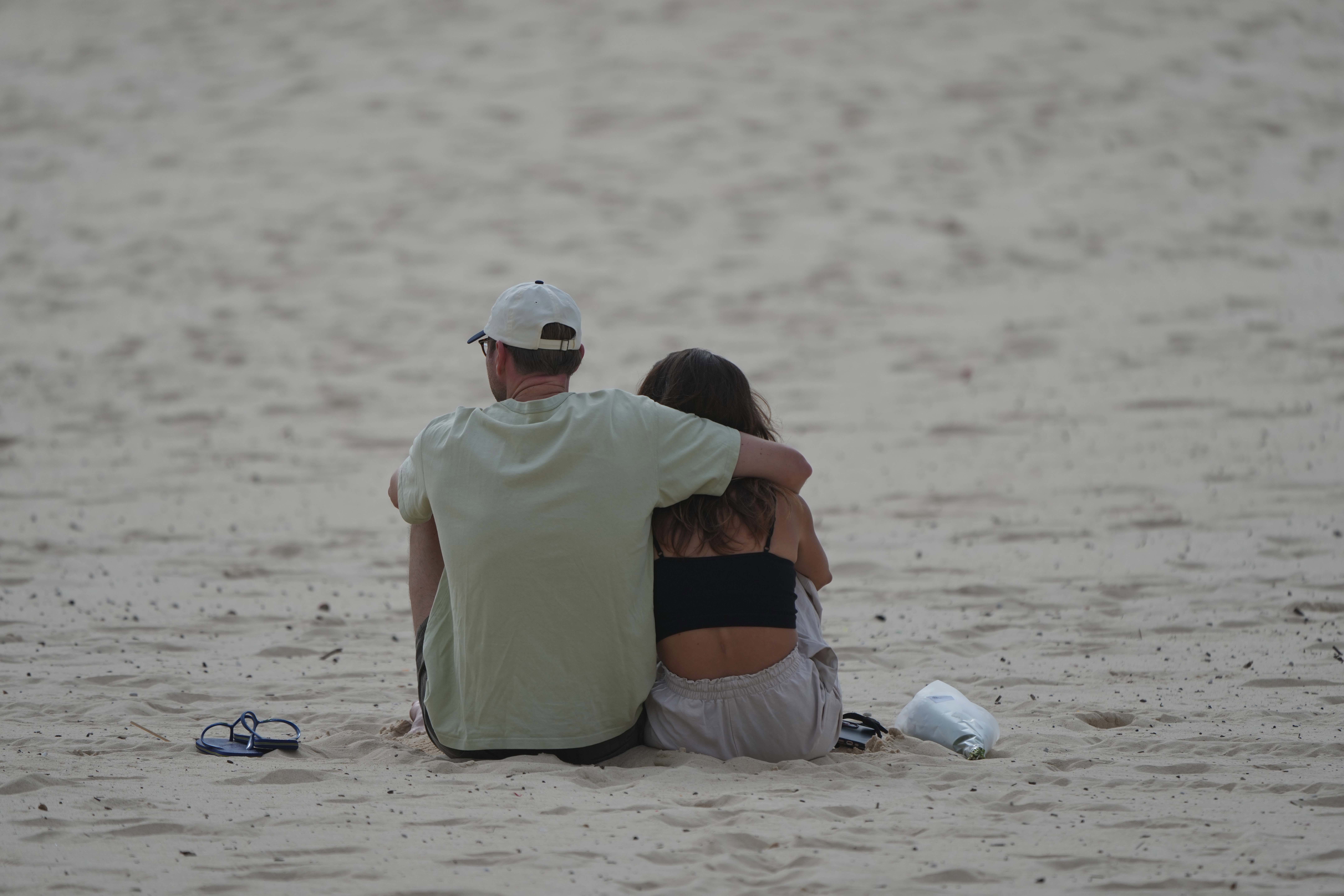
Lifeline said strong emotional reactions in the hours and days after an event like this are normal, understandable, and deserve support.
People often experience intense and shifting reactions. You might notice:
- Shock, numbness, or disbelief
- Fear or feeling constantly on edge
- Anxiety, panic, or racing thoughts
- Sadness, grief, or tearfulness
- Anger or irritability
- Physical symptoms such as nausea, headaches, shaking, or fatigue
- Trouble sleeping or concentrating.
If you have been impacted by the terror attack in Bondi there is support available. To contact Lifeline Australia, call 13 11 14 or text 0477 13 11 14. For people under 25 years old, you can contact Kids Helpline at 1800 55 1800. Both of these are available on a 24/7 basis.If you wish to donate blood, you can find your nearest donor centre here.
DOWNLOAD THE 9NEWS APP: Stay across all the latest in breaking news, sport, politics and the weather via our news app and get notifications sent straight to your smartphone. Available on the Apple App Store and Google Play.
Bondi attack likened to Port Arthur massacre 11 years after Sydney siege
At least 16 people have died following the Bondi Beach shooting, making it the worst mass shooting in Australia since the 1996 Port Arthur massacre.
Many more were injured in the terrorist attack last night, with more than 40 people in hospitals across Sydney today.
Prime Minister Anthony Albanese condemned the shooting as a "targeted" and "evil" act of antisemitism.
LIVE UPDATES: Gunmen were father and son; Sixteen people dead, more injured in Bondi Beach shooting
It occurred three years after the deadly Wieambilla ambush, and almost 11 years to the day since the Sydney Lindt café siege.
The Bondi attack is now the deadliest mass shooting in Australia in the 21st century, but it is not the only tragedy the nation has witnessed in the past 25 years.
Here is a timeline of some of the worst shootings in Australia since uniform gun laws were introduced after the Port Arthur massacre in 1996.
Bondi Beach shooting: December 14, 2025
Two gunmen opened fire on Bondi Beach just before 7pm (AEDT) on Sunday, which was also the first day of Hanukkah.
A Jewish event was being held on the beach when shots first rang out.
Beachgoers and bystanders scattered, some seeking shelter behind cars or taking refuge inside local businesses.
Dozens of people were shot and at least 16 people died, including one of the gunmen.
Improvised explosive devices were also found at the scene after the attack.
The shooting was declared a terror attack by NSW Police Commissioner Mal Lanyon within hours, and Albanese called it an "act of evil, antisemitism, terrorism".
9News confirmed the alleged shooters were Sajid Akram, 50, and his son Naveed Akram, 24.
Sajid died at the scene and Naveed remains critically injured in hospital under police guard.
READ MORE: What we know about the two Bondi Beach gunmen
Wieambilla shooting: December 12, 2022
Police arrived at a rural property in Wieambilla, Queensland on the afternoon of December 12 to conduct a welfare check and follow up a warrant.
When the residents, brothers Gareth and Nathaniel Train, and Gareth's wife, Stacey Train, did not emerge four police officers entered the property.
They were ambushed and shot at with rifles.
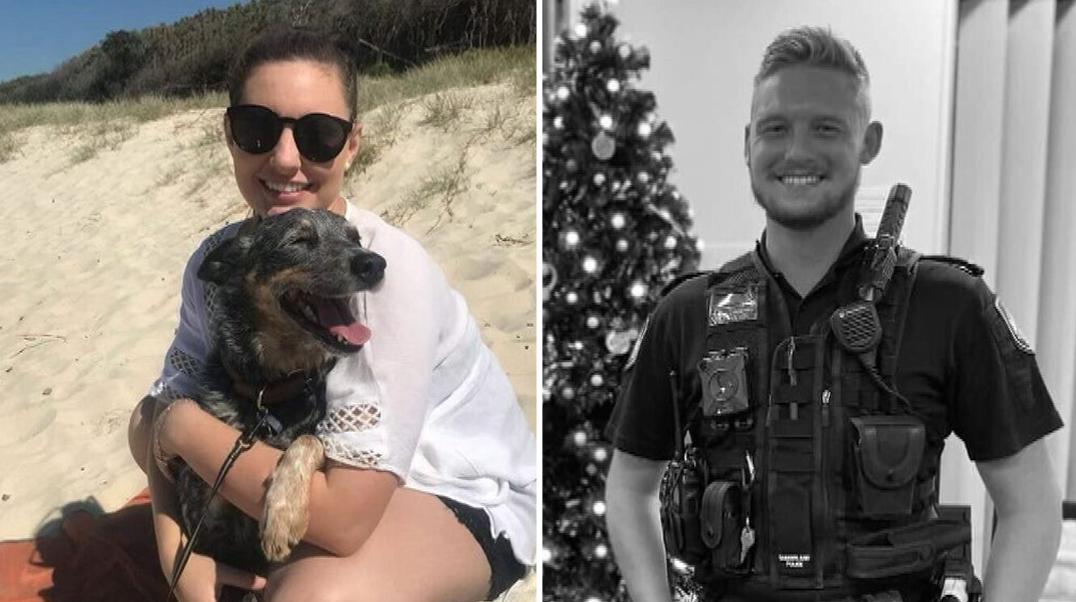
Constables Rachel McCrow, 29, and Matthew Arnold, 26, were killed.
The Trains shot another officer in the hip and lit a grass fire in an attempt to locate the fourth officer, who had hidden.
Alan Dare, a neighbour, was shot trying to flee the fire.
Additional police arrived to the scene and an hours-long standoff ensued. It ended with the deaths of Gareth, Nathaniel and Stacey Train.
An inquest in November 2025 found that the Trains were "psychotically unwell" with a "shared delusional disorder", but not terrorists.
READ MORE: Grief-stricken families disappointed by Wieambilla coronial findings
Darwin mass shooting: June 4, 2019
Benjamin Glenn Hoffmann was high on drugs when he began shooting at the Palms Motel in Darwin in the early evening of June 4, 2019.
He fired multiple shots inside the motel, calling out for someone named "Alex".
Police were called to the scene but Hoffmann fled in a vehicle.
He travelled to Gardens Hill Crescent residential apartments, where he fired more shots before moving to the Buff Club, a pub just metres away.
Hoffman continued to the Darwin Recycling Centre and NT Police Headquarters, before travelling in a ute back towards the city centre.
Police finally arrested him on a main road into the city, about an hour after the first shots were fired.
Four people were killed and a fifth was injured.
Hoffman was sentenced to three life sentences for the murders of Hassan Baydoun, 33, Michael Sisois, 57, and Rob Courtney, 52, and 15 years for the manslaughter of 75-year-old Nigel Hellings.
READ MORE: Darwin mass shooter sentenced to life in prison without parole
Margaret River shooting: May 11, 2018
The shooting at Osmington, Western Australia, in 2018 was the worst shooting incident in Australia since the Port Arthur massacre until the Bondi Beach attack.
An early morning Triple-Zero call brought police to a family farm where they discovered seven dead, including four children.
Katrina Miles, 35, and her four children – Taye, 13, Rylan, 12, Arye, 10, and Kayden, eight – were found dead in their beds.
Katrina's mother Cynda Miles, 58, was found dead in the main house and her father Peter Miles was found dead on the verandah.
Rifles were uncovered at the property and police quickly ruled the deaths a murder-suicide.
Police held Peter Miles responsible for the deaths of his wife, daughter, and grandchildren.
READ MORE: The family killed in the Margaret River mass murder-suicide
Sydney siege terrorist attack: December 15, 2014
On the morning of December 15, 2014, self-styled Muslim cleric Man Haron Monis walked into the Lindt Cafe on Martin Place.
An hour later, the store was locked down with more than a dozen hostages inside as Monis brandished a gun.
Café manager Tori Johnson was ordered to call Triple Zero and tell police the cafe was under attack.
Monis claimed bombs had been planted in Martin Place, Circular Quay and George Street. These claims were later proven false.
Police and tactical operations units arrived at the scene believing it to be a possible terror attack.
An hours-long standoff ensued and in the early hours of the morning of December 16, Monis shot Johnson dead.
Police subsequently forced entry to the café and confronted Monis, who was shot dead by police.
One of the hostages, Katrina Dawson, was also struck by bullet fragments and died.
READ MORE: Officer who shot Lindt Cafe terrorist says he was haunted by harrowing day
Port Arthur massacre: April 28, 1996
In 1996, Martin Bryant killed 35 people and injured 23 others in what remains to this day the deadliest mass shooting in Australian history.
The attack started with the murder of two people at Seascape, a bed and breakfast in the Tasmanian tourist town of Port Arthur.
He then travelled to the Port Arthur Historic Site, where he opened fire at the Broad Arrow Café.
Bryant murdered dozens of people in the cafe, gift shop and car park before fleeing the scene.
He killed more people as he left the historic site and at a service station nearby, where he also abducted a man. That man was later killed.
Eventually Bryant returned to Seascape Guesthouse, where an 18-hour standoff with police ensued.
He was captured by police on April 29 and subsequently sentenced to 35 sentences of life imprisonment for each of the murders.
He was also sentenced to 25 years for 20 attempted murders, among other charges.
READ MORE: Heartbreaking letters from dad who lost family in Port Arthur massacre revealed
If you have been impacted by the terror attack in Bondi there is support available.
To contact Lifeline Australia, call 13 11 14 or text 0477 13 11 14. For people under 25 years old, you can contact Kids Helpline at 1800 55 1800. Both of these are available on a 24/7 basis.
If you wish to donate blood, you can find your nearest donor centre here.
World reacts to Bondi Beach terror attack
The deadly gunshots fired at Bondi Beach in yesterday evening's terror attack have echoed around the world.
Global leaders and international media have reaction to the horrific shooting that has claimed the lives of at least 11 victims so far.
King Charles addressed the issue with a post on the royal family's official X account, saying he and Queen Camilla were "appalled and saddened".
LIVE UPDATES: Twelve dead after Bondi Beach terror attack
READ MORE: Hero sneaks up on Bondi Beach gunman, wrestles weapon from him

"In times of hurt, Australians always rally together in unity and resolve," he said.
"I know that the spirit of community and the love that shines so brightly in Australia – and the light at the heart of the Chanukah festival – will always triumph over the darkness of such evil."
The Prince and Princess of Wales, and UK Prime Minister Sir Keir Starmer, also expressed their horror and extended condolences.
READ MORE: What we know about the Bondi Beach shooting

While US President Donald Trump has been silent on social media, Secretary of State Marco Rubio has spoken out to "strongly condemn" the attack.
"Antisemitism has no place in this world," he wrote.
"Our prayers are with the victims of this horrific attack, the Jewish community, and the people of Australia."
READ MORE: What we know about the Bondi attackers

French President Emmanuel Macron said France extended its thoughts to victims and their loved ones.
"We share the pain of the Australian people and will continue to fight relentlessly against antisemitic hatred, which hurts us all, wherever it strikes," he said on X.
And in the middle of a trip to Europe amid ongoing efforts to end Russia's invasion, Ukrainian President Volodymyr Zelenskyy also spoke.
READ MORE: Bomb squad responding to Bondi shooting
https://x.com/RoyalFamily/status/2000216538037518621
"Ukraine stands in solidarity with Australia in the face of the brutal terrorist attack at Bondi Beach, Sydney, which targeted the Jewish community at the start of Hanukkah," he said.
"We express condolences to the families and loved ones of those killed and wish a swift and full recovery to all those who were wounded. Terror and hatred must never prevail – they must be defeated everywhere and every time."
New Zealand Prime Minister Christopher Luxon said he was "shocked" by the "distressing scenes" at Bondi.
READ MORE: Rabbi identified as victim of Bondi Beach shooting attack
https://x.com/Isaac_Herzog/status/2000147441329357010
"Australia and New Zealand are closer than friends, we're family," he said.
Notably, not all reactions were open-handedly sympathetic.
Israeli Prime Minister Benjamin Netanyahu, and President Isaac Herzog, both expressed sorrow and sympathy for the victim and for Australia's Jewish community, but blasted the federal government, claiming it had allowed antisemitism to fester.

"Our hearts go out to our Jewish sisters and brothers in Sydney who have been attacked by vile terrorists as they went to light the first candle of Chanukah," Herzog said.
"Time and again we called on the Australian government to take action and fight against the enormous wave of antisemitism that is plaguing Australian society.
"Our thoughts and prayers are with the Jewish community of Sydney and the entire Australian Jewish community at this horrific time."
Netanyahu, meanwhile, praised the actions of a man who was filmed tackling and disarming one of the gunmen, but lashed Prime Minister Anthony Albanese.
"I called upon you to replace weakness with action, appeasement with resolve," Netanyahu said in a video posted on the Israeli prime minister's official X account.
"Instead, prime minister, you replaced weakness with weakness and appeasement with more appeasement."
DOWNLOAD THE 9NEWS APP: Stay across all the latest in breaking news, sport, politics and the weather via our news app and get notifications sent straight to your smartphone. Available on the Apple App Store and Google Play.