Bodies are still being recovered from an inferno that tore through multiple high-rise buildings in Hong Kong, killing at least 44 and leaving hundreds missing.
Three men have been arrested on suspicion of manslaughter after the blaze spread across seven of the eight buildings in a housing complex in Tai Po district, a suburb in the New Territories.
Almost 300 people still remain unaccounted for, while at least 66 others have been hospitalised, 45 in a critical condition.
READ MORE: Crowdsourced site reveals devastating reality of Hong Kong inferno
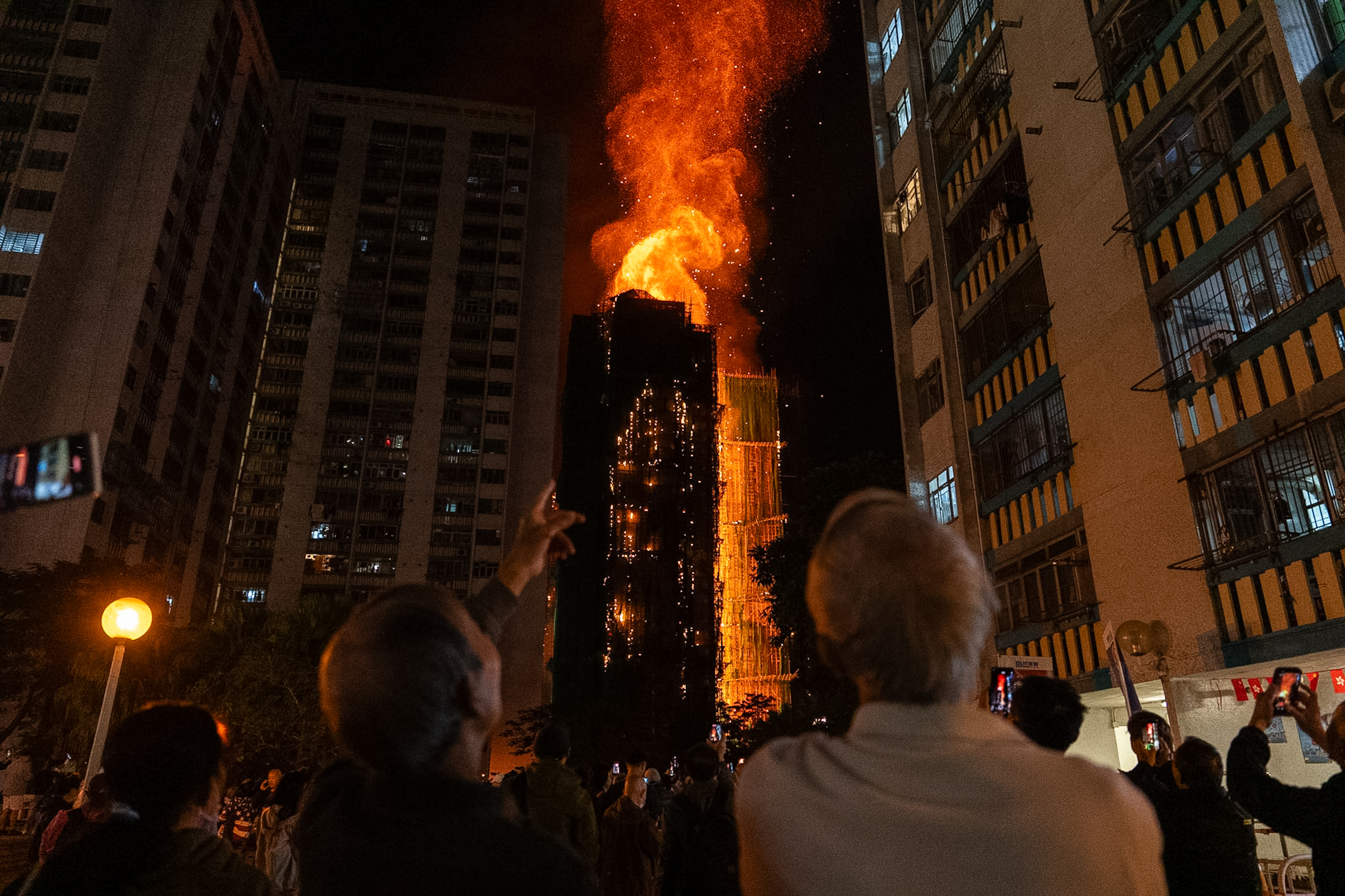

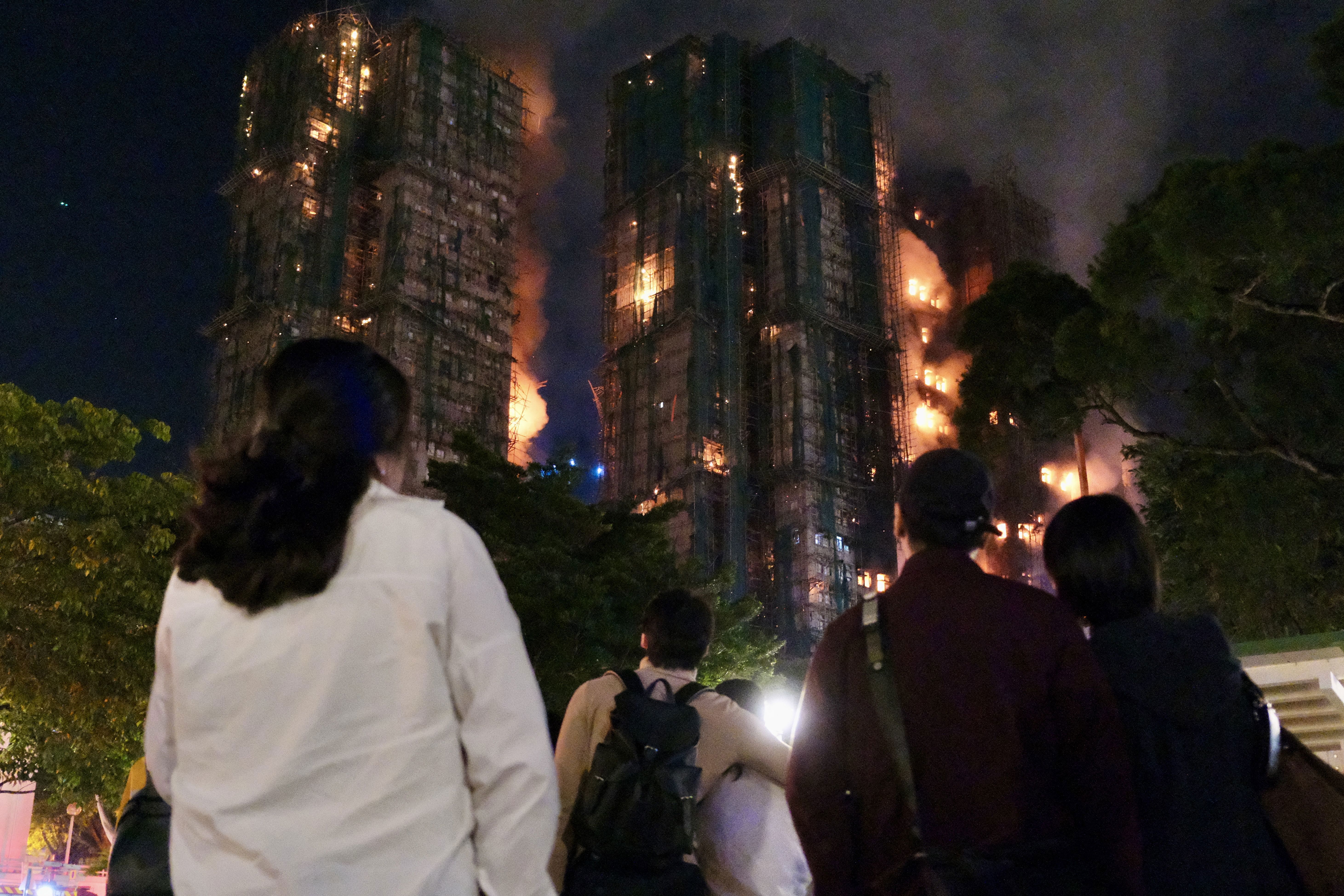
Bright flames and smoke shot out of windows as night fell.
Of the 44 so far confirmed dead, 40 died at the scene and four in hospital, officials have said.
The fire is likely the most deadly in Hong Kong since World War II.
Previously, the 1996 Garley building fire, which killed 41 people, was widely described as the worst peacetime fire in Hong Kong history.
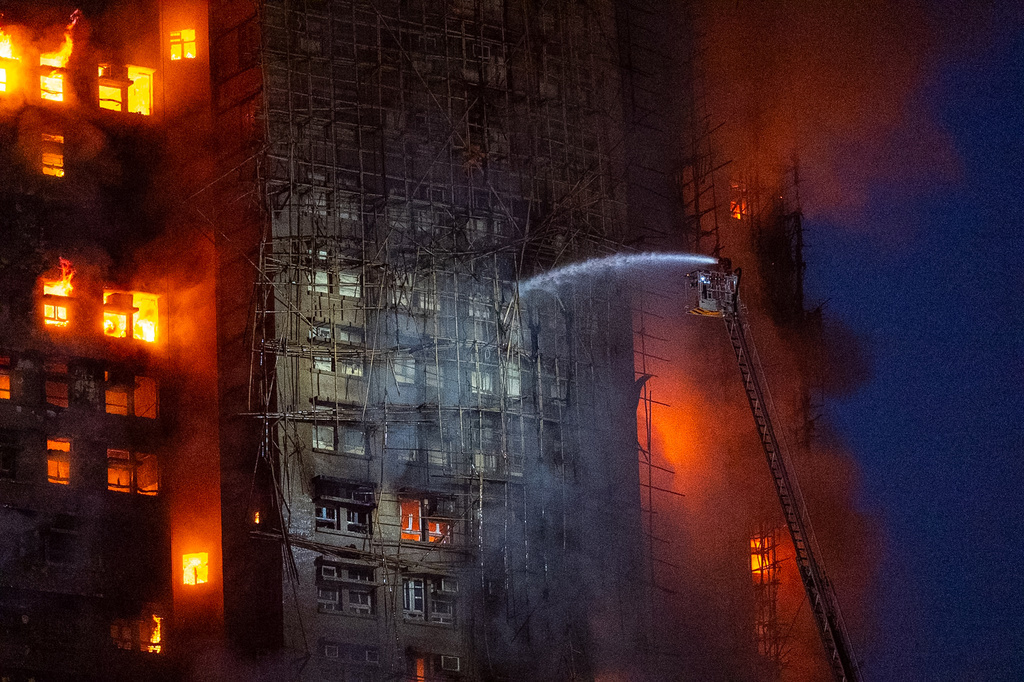
Fire crews tried desperately to save residents potentially left trapped on upper floors but the heavy smoke hampered efforts.
The South China Morning Post has reported the fires are now under control in four buildings.
READ MORE: $5 billion early Christmas gift could be on the cards for every Aussie


The Post quoted authorities as saying it may take until dusk to clear the three buildings where fires are still not under control.
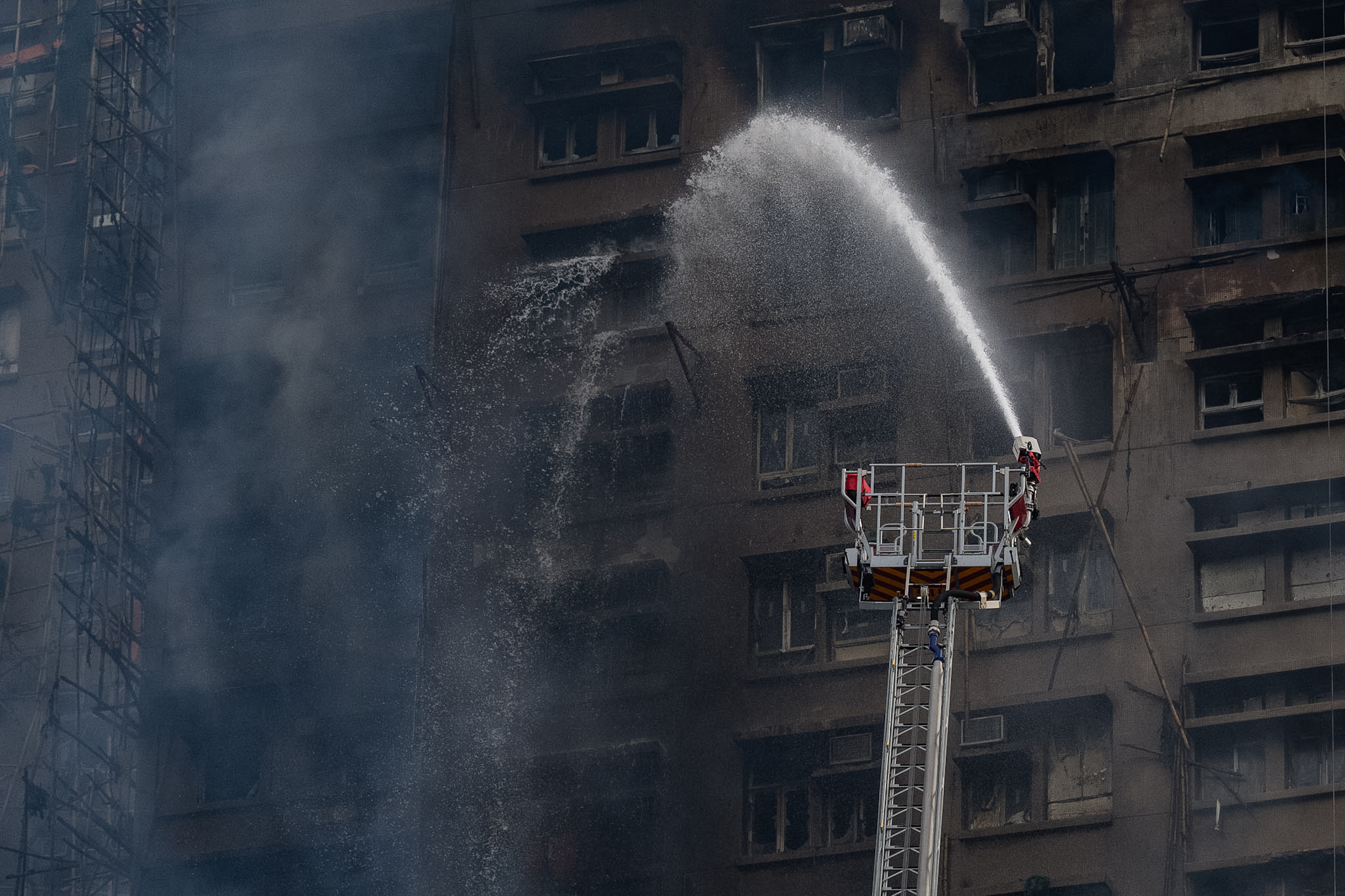
Photos emerging from the scene this morning show some of the extreme damage the buildings have sustained, including destroyed windows and scorched exteriors.
Fire may have rapidly spread due to 'unsafe scaffolding'
Investigators are looking into factors, including whether material on the exterior walls of high-rise buildings met fire resistance standards, as the rapid spread of the fire was unusual, authorities said.
The fire may have been spread by unsafe scaffolding and foam materials used during recent maintenance work, according to Hong Kong Police.
The exact cause of the fire has not yet been determined, and key questions for authorities remain.
They include why tower blocks were not evacuated more quickly once the fire began to spread from the first building, and whether flammable material, including polystyrene boards blocking windows of multiple apartments, may have contributed to the inferno.
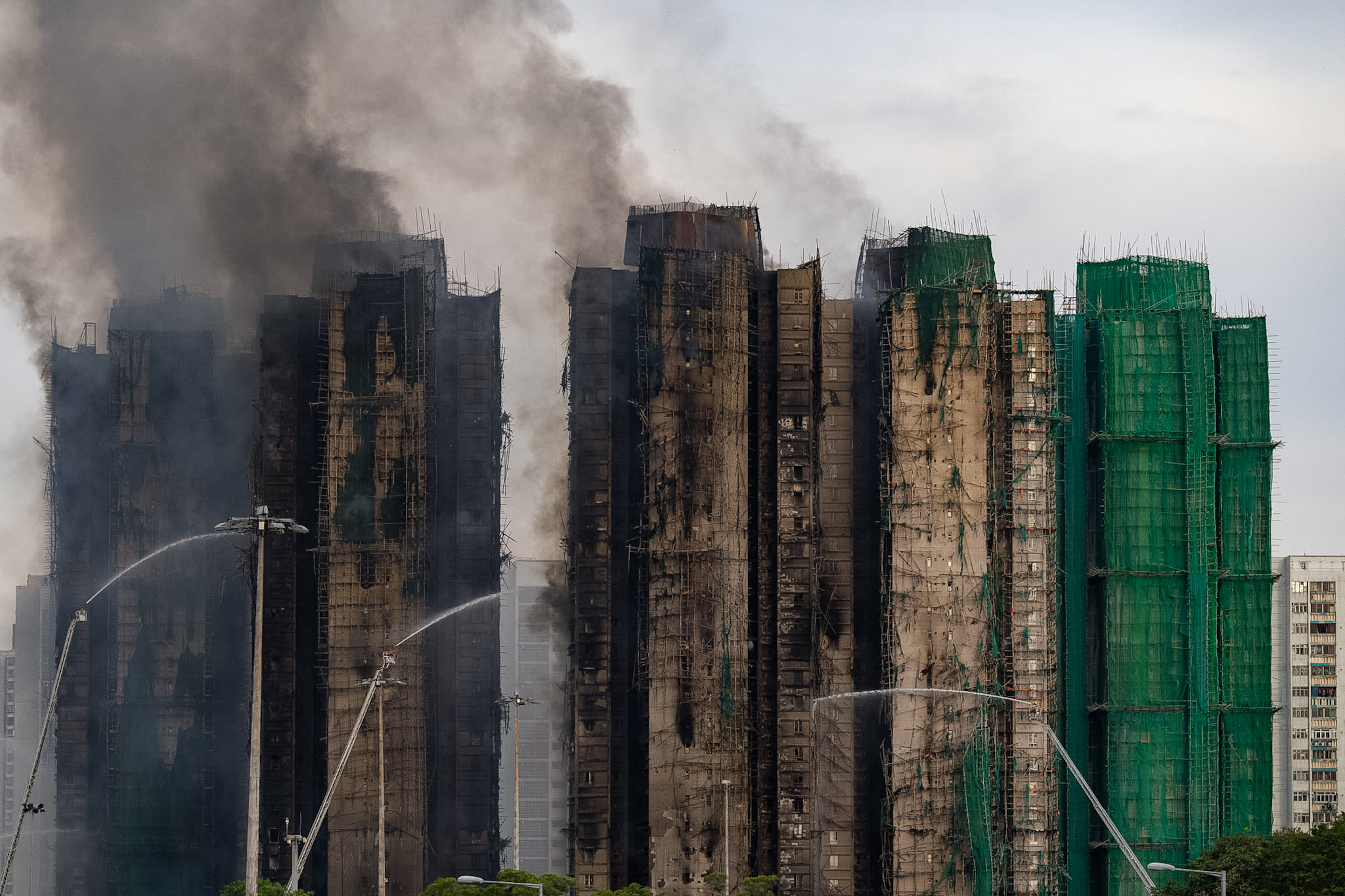
Officials added that they suspect other construction materials found at the apartments – including protective nets, canvas, and plastic covers – failed to meet safety standards.
Officials earlier said the fire started on the external scaffolding of one of the buildings, a 32-storey tower, and later spread to inside the building and then to nearby buildings, likely aided by windy conditions.
"Police and the Fire Services Department have already set up a dedicated investigation team to investigate" the fire and its cause, Hong Kong Chief Executive John Lee said.
The probe includes whether criminal elements are involved.
Fire chiefs said high temperatures at the scene made it difficult for crews to mount rescue operations. It was not immediately known how the fire started.
The raging fire sent up a column of flames and thick smoke as it spread quickly on bamboo scaffolding and construction netting that had been set up around the exterior of the housing complex.
READ MORE: Woman dead, man in hospital after shark attack at NSW beach
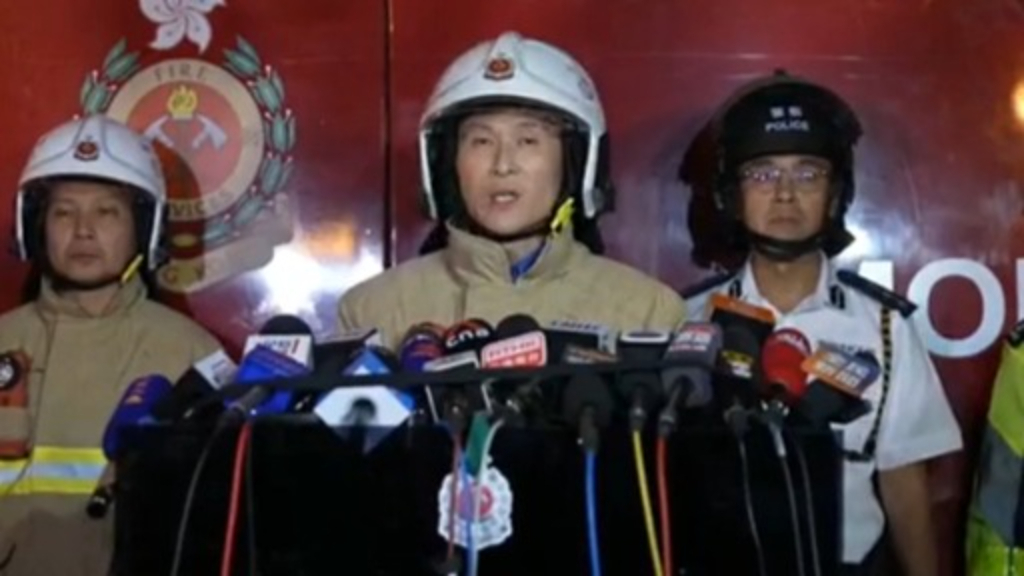
Hong Kong Director of Fire Services Andy Yeung Yan-kin said styrofoam was found inside the burning buildings, which helped enable the blaze to expand quickly.
Secretary for Security Chris Tang said early investigations deemed the quick spread of the fire suspicious.
"We have found that on the relevant building walls, the netting and waterproof tarpaulin material, once burned, showed spreading of the flames faster than [they should on] regulated materials. This is unusual," Tang said.
Criminal probe launched into fire
The three men arrested in relation to the fire at an apartment complex in Hong Kong are two directors and a consultant of a construction company, officials said at a press conference early Thursday morning local time.
Police are accusing the men of "gross negligence."
Police found the construction company name on inflammable polystyrene boards that firefighters found blocking some windows at the apartment complex.
He confirmed a criminal probe would take place alongside an investigation by firefighters.
Records show the housing complex consisted of eight blocks with almost 2000 apartments housing about 4800 people.
About 900 people were evacuated to temporary shelters.
Multiple buildings close to each other were set ablaze, with bright flames and smoke shooting out of windows as night fell. Authorities said that hundreds of firefighters, police officers and paramedics were deployed. Firefighters aimed water at the intense flames from high up on ladder trucks.
The blaze, which started mid-afternoon, was upgraded a level 5 alarm — the highest level of severity– as night fell. Authorities said that conditions remained very challenging for firefighters.
"Debris and scaffolding of the affected buildings (is) falling down," Derek Armstrong Chan, deputy director of Fire Service operations, said.
READ MORE: Chilling threats over fake one-star Google reviews
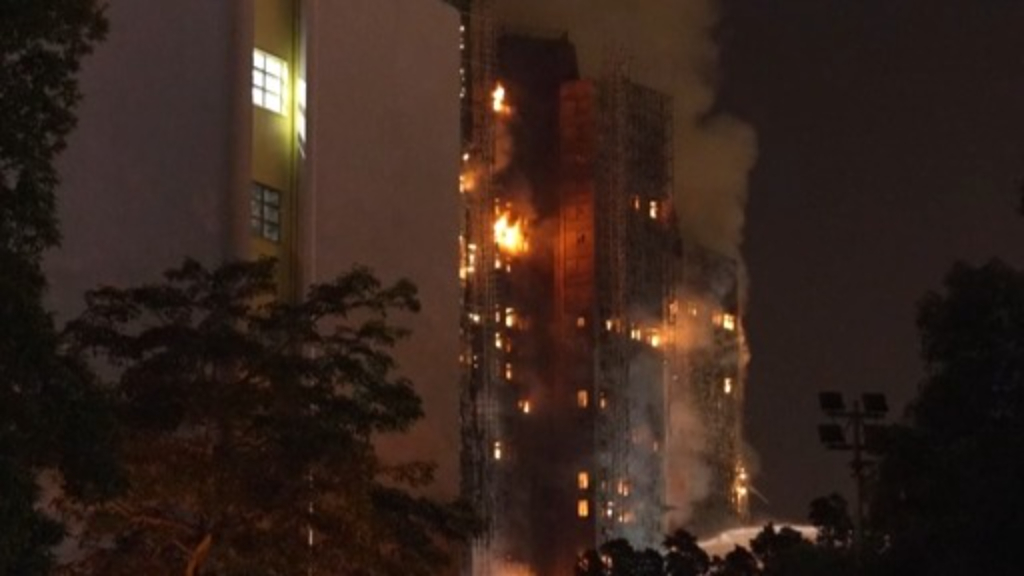
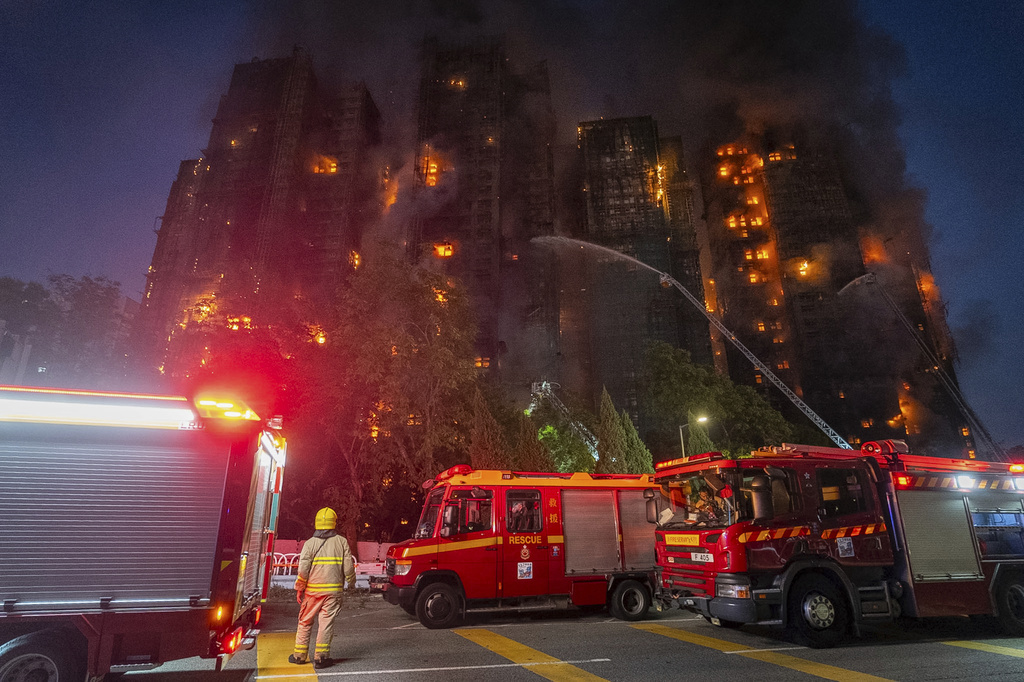
Temperatures are scorching hot inside Wang Fuk Court as the fire rages on, preventing firefighters from reaching the upper floors of some buildings, where residents are still trapped.
Addressing those stuck inside the burning buildings, Chan urged residents to close their doors and windows, and seal them with tape and wet napkins.
The fire department said that it received "numerous" calls requesting assistance. It said some residents remained trapped as of Wednesday night, but police declined to provide details about how many were missing or in danger.
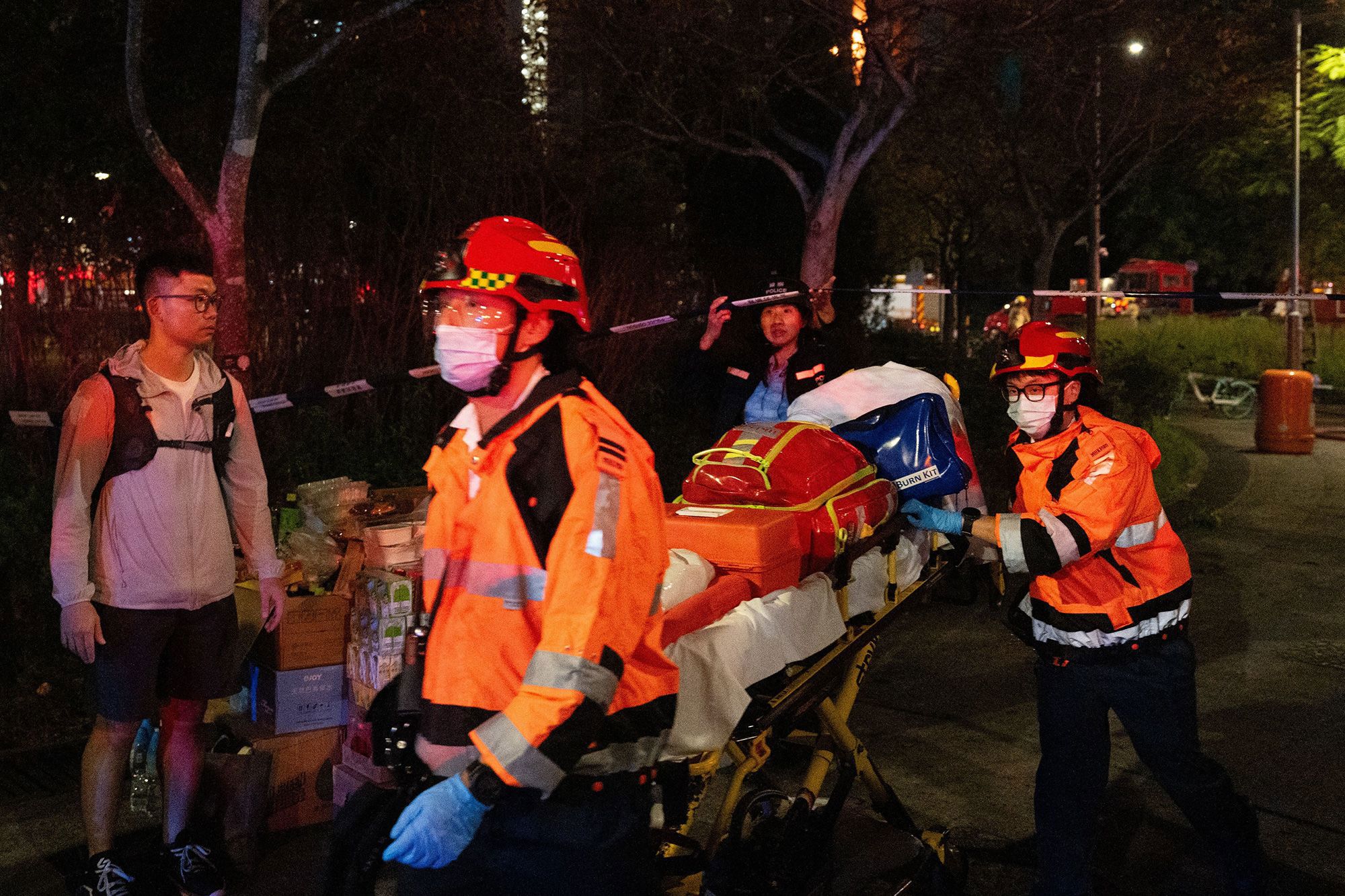
Firefighters deployed 128 fire trucks and 57 ambulances to the scene.
READ MORE: One dead, 100,000 without power after wild storms
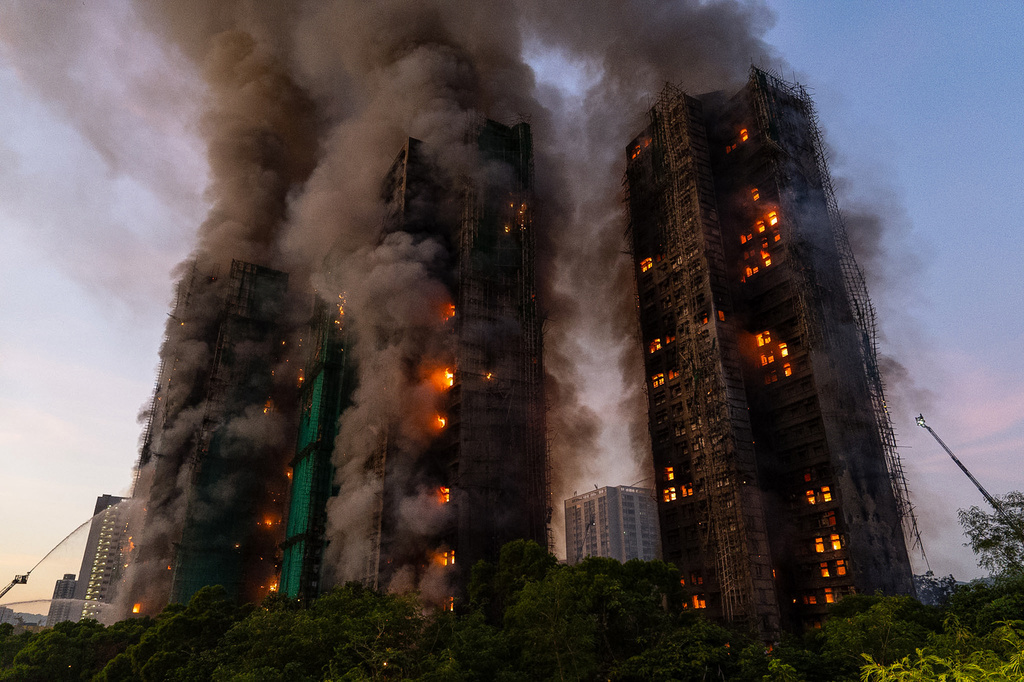
The dead included a 37-year-old firefighter, while another received treatment for heat exhaustion, Director of Fire Services Andy Yeung said.
A spokesperson for the Department of Foreign Affairs and Trade said the government's "deepest sympathies" were with the victims and their loved ones.
Australian officials are in contact with local authorities, but at this stage 9news.com.au understands no Australians have been affected.
Australians in need of emergency consular assistance can contact the 24-hour Consular Emergency Centre Hotline on 1300 555 135, or +61 2 6261 3305 if calling from overseas.
Chinese leader Xi Jinping on Wednesday expressed condolences to the firefighter who died and extended sympathies to the families of the victims, according to state broadcaster CCTV. He also urged efforts to minimise casualties and losses.
District officials in Tai Po have opened temporary shelters for people left homeless by the fire.
"I've given up thinking about my property," a resident who only provided her surname, Wu, told local TV station TVB.
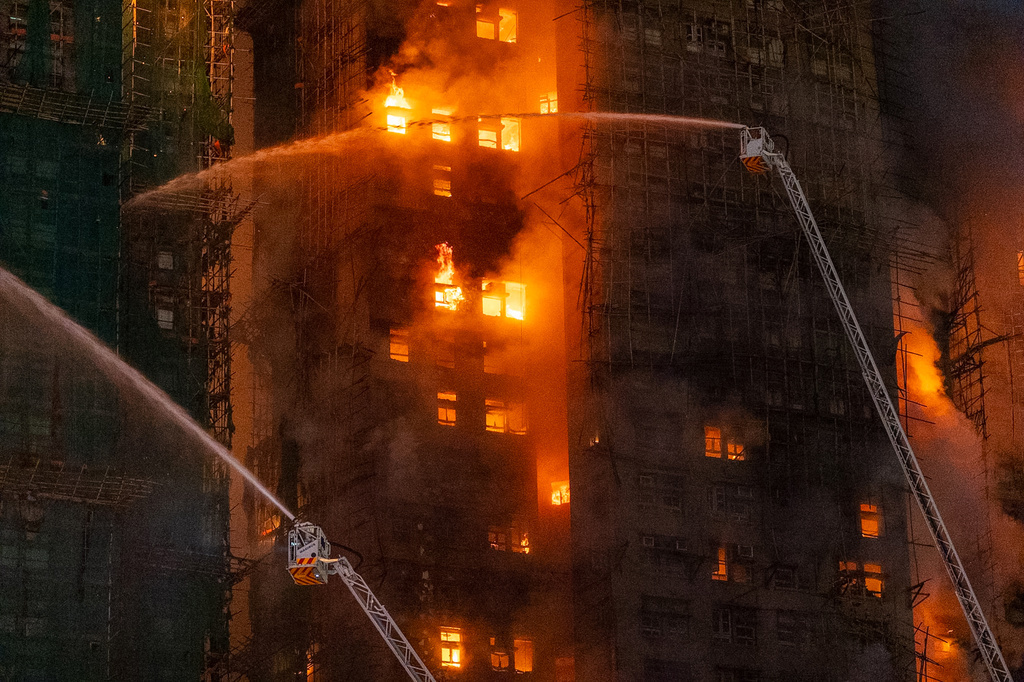
"Watching it burn like that was really frustrating."
Tai Po is a suburban area in the New Territories, in the northern part of Hong Kong and near the border with the mainland Chinese city of Shenzhen.
Bamboo scaffolding is a common sight in Hong Kong at building construction and renovation projects, though the government said earlier this year that it would start phasing it out for public projects because of safety concerns.
The fire is the most deadly in Hong Kong in years. In November 1996, 41 people died in a commercial building in Kowloon in a level 5 fire that lasted for around 20 hours.
Lee said the government had suspended its campaigning efforts ahead of an upcoming December 7 election, according to the South China Morning Post.
But he said a decision on whether to postpone the election would be made in the coming days, with the fire disaster taking top priority.
DOWNLOAD THE 9NEWS APP: Stay across all the latest in breaking news, sport, politics and the weather via our news app and get notifications sent straight to your smartphone. Available on the Apple App Store and Google Play.