Tag Archives: oceania

Australia’s deadliest jobs revealed

Just six industries were home to 80 per cent of deaths in the workplace last year.

Safe Work Australia has released its new Key Work Health and Safety Statistics Australia report, which revealed 188 people were fatally injured at work in 2024 – a decline on 200 in 2023.

The watchdog said 80 per cent of these deaths had taken place across just six industries – agriculture, forestry, and fishing; public administration and safety; transport, postal, and warehousing; manufacturing; health care and social assistance; and construction.

READ MORE: Inside Trump and Putin's two-hour phone call

The report also showed vehicle incidents remained the leading cause of job deaths (42 per cent, or 79 fatalities), followed by falls from a height (13 per cent, or 24 fatalities).

And while Australia's workplace safety generally compares well to the rest of the world, with an injury rate of 3.5 per cent compared to the global 12.1 per cent, Safe Work Australia says the impact is still deeply felt.

In 2023–24, there were 146,700 serious workers' compensation claims involving at least one week of working time lost, equivalent to more than 400 serious claims every day.

READ MORE: Woman randomly stabbed while walking to work in broad daylight

Claims for mental health conditions continue to rise and now account for 12 per cent of all serious claims, an increase of 14.7 per cent from the previous year.

The median time lost from work in these claims is almost five times that recorded across all other injuries and diseases.

"Our data show there is still more to be done to ensure every worker, regardless of occupation or industry, returns home safely at the end of the day," Safe Work Australia chief executive Marie Boland said.

"Behind every statistic is a person, a family, workmates, a community and a story."

DOWNLOAD THE 9NEWS APP: Stay across all the latest in breaking news, sport, politics and the weather via our news app and get notifications sent straight to your smartphone. Available on the Apple App Store and Google Play.
Are we in an AI tech bubble and what happens if it bursts?

According to the valuations, the company behind ChatGPT is now worth more than what the entire state of Victoria produces in a year, and it's not far off NSW.

Artificial intelligence, its builders say, has almost unlimited potential to radically transform – or maybe even destroy – the world.

But more and more finance, business and tech experts watching the staggering firehose of money pouring into the sector are starting to question whether the multitrillion-dollar industry is one big bubble. And what happens if it bursts?

READ MORE: Trump announces meeting with Putin after lengthy phone call

The Bank of England warned of an increasing risk of "a sharp market correction", Goldman Sachs CEO David Solomon said "a lot of capital" wouldn't deliver returns and the International Monetary Fund's chief economist, Pierre-Olivier Gourinchas, said after surging valuations and booming investments, "markets could reprice sharply".

Using simpler words, Amazon founder Jeff Bezos called it "kind of an industrial bubble".

Even Sam Altman, the head of ChatGPT maker OpenAI, asked directly if investors were "overexcited about AI", flat out said "yes".

"When bubbles happen, smart people get overexcited about a kernel of truth," he told reporters at The Verge and some other tech publications in August. 

"If you look at most of the bubbles in history, like the tech bubble, there was a real thing. Tech was really important. The internet was a really big deal. People got overexcited."

READ MORE: What La Niña declaration could mean for Australian weather

Sam Altman, Co-Founder and Chief Executive Officer, OpenAI, testifies before a Senate Committee on Commerce, Science, and Transportation hearing on Capitol Hill in Washington

What even is a bubble?

So, are they right? And what happens if the AI bubble bursts?

Stanford Graduate School of Business Professor Anat Admati says the concept of a bubble is not well defined, and it's almost impossible to identify one in real time.

"Stock valuation and timing stocks is very difficult because the stock reflects the entire future and all lots and lots of factors," she tells 9news.com.au.

"So the notion that you're diagnosing a bubble as it's happening is often folly. 

"People form beliefs and decide to trade, and it's a very dangerous game to play for investors, for pundits, journalists like yourself."

The OpenAI logo is seen on a mobile phone in front of a computer screen displaying output from ChatGPT.

Oxford Economics lead economist Adam Slater sees "some symptoms of a bubble", including rapid growth in tech stock prices and the fact tech stocks now comprise about 40 per cent of the S&P 500 stock market tracking the 500 leading US companies.

He also points to market valuations that appear "stretched" beyond their worth and "a general sense of extreme optimism in terms of the underlying technology, despite the enormous uncertainties around what this technology might ultimately yield".

Some analysts suggest AI could lead to productivity gains not seen since Europe after World War II, while Massachusetts Institute of Technology economist Daron Acemoglu has predicted a 0.7 per cent gain in US productivity over a decade.

"You've got this incredibly wide range of possibilities," Slater says. 

"Nobody really knows where it's going to land."

READ MORE: Cancelling a gym membership? These are your consumer rights in Australia

Is this the dotcom boom 2.0?

The easy comparison, which even Altman and his Open AI chairman, Bret Taylor, have made, is with the dotcom boom, when the tech-heavy NASDAQ surged almost 600 per cent in the mid-to-late '90s before wiping off almost all of those games in about a year and a half.

A swathe of start-ups were wiped out and even big hitters still around today such as Microsoft, Oracle and Intel took a battering on the markets.

Admati says it's too hard to predict whether a potential AI bubble bursting would do anything more than correcting the price of some companies, much less when it might happen.

"The internet bubble burst didn't change the entire world economy," she says. 

"It was a price correction in a relatively narrow sector."

Taylor puts a positive on the comparison, saying you could argue people pouring money into internet stocks in 1999 were broadly right.

"If you look at the internet bubble, a lot of people think about the flops, like Pets.com and Webvan," he tells The Verge. 

"Through the lens of the past 30 years, though, we've now gotten most of the largest companies in the world, including Amazon and Google, two of the largest companies in the world."

'It's the fear of missing out'

OpenAI is the most striking example of AI investment because it's come from nothing to be one of the world's most hyped companies  in a few years based solely on the promise of its tech. 

It is now valued at roughly $US500 billion ($771.9 billion), not too far below the GDP of Austria ($804.1 billion) or the 2023-24 GSP (gross state product) of NSW ($821 billion).

But the big boys are also shovelling money into their large language models and other AI research. 

Google is all-in on AI across its phones and even search and just this week announced another $US15 billion investment in an AI data hub, Amazon looks set to spend $US100 billion ($154.5 billion) on the technology this year, Apple boss Tim Cook told employees the AI revolution was "as big or bigger" as the internet, smartphones, cloud computing and apps.

Google Gemini assistant highlighting

Chipmaker NVIDIA's surge to become the biggest company in the world by market capitalisation – overtaking even Apple – was so dramatic that it spurred a wave of articles about how the name is pronounced (en-VID-eeyah, by the way).

It was driven by a ravenous demand for the company's high-end GPUs, prized above all else in battle for the massive amounts of computing power it takes to sustain these huge companies' AI computing demands.

So when it invested $US100 billion in OpenAI, which, as well as being one of its main customers, has a 10 per cent stake in chip rival AMD, eyebrows were raised at this "circular" financing. 

This July 13, 2010, file photo, shows an entrance to the Advanced Micro Devices Inc. (AMD) headquarters in Sunnyvale, Calif.

"A small group of companies is securing most of the major deals. News about multibillion-dollar investments from familiar companies such as OpenAI, Nvidia, CoreWeave, Microsoft, Google, and a few others is reported almost daily," Yale School of Management leadership expert Professor Jeffrey A Sonnenfeld and senior research fellow Stephen Henriques wrote in an opinion piece called This is how the AI bubble bursts.

"Should the bold promises of AI fall short, the dependence among these major AI players could trigger a devastating chain reaction, causing a widespread collapse similar to the 2008 Great Financial Crisis."

Henriques tells 9news.com.au the risks are likely closer to those of the dotcom boom, where there is promise that "will take a lot longer to materialise than people expect".

"It's the fear of missing out," Sonnenfeld says.

"Everybody you know thinks that the costs of missing it are too high, enterprise wise and career wise, to look like you're an anachronism."

In their article, the researchers point out that in less than three years, OpenAI has "gone from a parlour game to a pillar of the global economy".

"After pillar, you wonder if you're going to wind up with a pile of rubble, and how to then rebuild out of the shakeout, where you see a lot of damage and carnage done," Sonnenfeld tells 9news.com.au.

The upside

Bezos argues the AI boom will be good for the world even if the bubble bursts, describing it as  industrial, rather than financial or banking.

"The ones that are industrial are not nearly as bad. It could even be good because when the dust settles and you see who are the winners, society benefits from those inventions," Bezos said at a recent tech conference in Italy.

He compared it to a previous biotech bubble in the 1990s that resulted in new life-saving drugs.

"Every company gets funded, the good ideas and the bad ideas. And investors have a hard time in the middle of this excitement distinguishing between the good and bad ideas and so that's also probably happening today," he said.

Altman last month predicted people would "make some dumb capital allocations", resulting in short-term ups and downs.

But he was confident it would drive "a new wave of unprecedented economic growth", scientific breakthroughs, improvements to quality of life and "new ways to express creativity".

The information provided on this website is general in nature only and does not constitute personal financial advice. The information has been prepared without taking into account your personal objectives, financial situation or needs. Before acting on any information on this website you should consider the appropriateness of the information having regard to your objectives, financial situation and needs.

– Reported with Associated Press and Reuters

Wild footage shows the moment croc ‘comes charging’ for angler’s catch

Isla was on a fishing trip in the Kimberley last weekend desperately trying to reel in a barramundi when a large crocodile suddenly made a beeline for boat.

But it wasn't after the passengers – it was after her catch.

Wild footage of the moment shows the croc speeding towards the boat, then shifting trajectory to chase the flailing fish.

READ MORE: Inside Trump and Putin's two-hour phone call

The croc went straight for the fish Isla was trying to reel in.

It goes for the barramundi, briefly snagging the line as Isla and other passengers shout behind the camera.

But the fish slips away, narrowly avoiding a second pass from the croc before Isla manages to reel it in.

She called the experience "absolutely mental".

"We'd been out for probably an hour and a half and there were three or four [crocs] around the boat, actually," she told 9news.com.au.

"This one was just watching us for a while, and then saw his opportunity in my big barramundi and came charging for it."

READ MORE: Woman randomly stabbed while walking to work in broad daylight

The croc went straight for the fish Isla was trying to reel in.

Isla said the crocs seemed "pretty friendly" and mostly just watched from afar.

"I must admit, I probably should have been more nervous at the crocs, but I'm used to having them around because I see them a lot in the Kimberly," she said.

"I was more keen to just land my fish."

But the barramundi she reeled in ended up being a bit smaller than what she was after, so they ended up tossing it back.

"We like to keep our waters pristine and we had another fish in the boat already," she added.

Isla shared the clip of her unreal catch to TikTok, where it has since amassed more than half a million views.

READ MORE: Storms to bring winds, hail to millions today

Isla lives in Broome and was in the Kimberley for a fishing trip.

Originally from London, she lives in Broome with her partner, who runs a fishing charter and introduced her to barramundi fishing.

Though she's still getting the hang of it, she can now add "beat a croc to a barramundi" to her resume.

DOWNLOAD THE 9NEWS APP: Stay across all the latest in breaking news, sport, politics and the weather via our news app and get notifications sent straight to your smartphone. Available on the Apple App Store and Google Play.
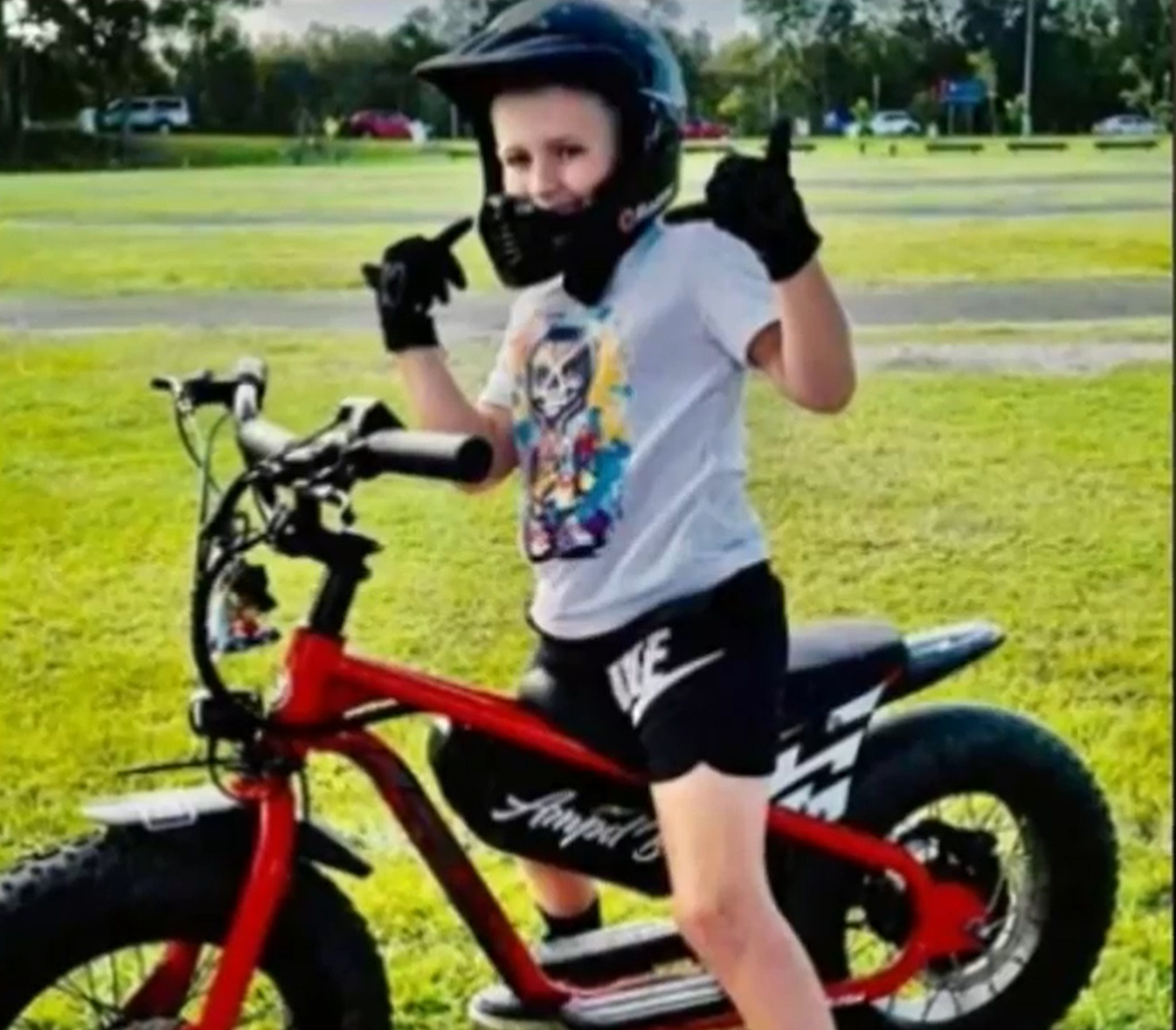
Rock legend dies aged 74

Ace Frehley, the original lead guitarist and founding member of the glam rock band KISS who captivated audiences with his elaborate makeup and smoke-filled guitar, has died. He was 74.

The American rock star died peacefully on Thursday (Friday AEDT )surrounded by family in the north-eastern state of New Jersey following a recent fall, according to his agent.

Family members said in a statement that they are "completely devastated and heartbroken", but will cherish his laughter and celebrate the kindness he bestowed upon others.

READ MORE: Inside Trump and Putin's two-hour phone call

Kiss, whose hits include Rock and Roll All Nite and Detroit Rock City, was known for its intense stage shows, which included fireworks, smoke and eruptions of fake blood performed by band members in black-and-white painted faces, platform boots and black wigs.

Frehley and his band mates were inducted into the Rock and Roll Hall of Fame in 2014.

DOWNLOAD THE 9NEWS APP: Stay across all the latest in breaking news, sport, politics and the weather via our news app and get notifications sent straight to your smartphone. Available on the Apple App Store and Google Play.
‘Kidding me’: Aussie’s hopeful attempt to dodge post office visit backfires

An Australia Post customer has been left scratching their head after missing an important parcel delivery – despite not only being home all day, but even putting up a sign to let the postie know.

The customer posted a photo earlier this week to Reddit showing them giving a thumbs-up after posting the sign on the mailbox.

"Auspost, I am home!" it read.

READ MORE: 'Are you at work?': Bluey fans wait up to 18 hours for a coin

Australia Post

"I can help with my package if need be as it is heavy. Please feel free to knock and ask!"

The customer said similar missed drop-offs had happened before.

"Very expensive and large package coming today … ain't no way in hell I'm driving to the airport to pick it up because of my area's driver!" they wrote.

"He loves to just put in the 'we missed you' note and speed off, and that's if he even finds the motivation to leave a note at all!"

READ MORE: Whatever you think about Peter Alexander's 'creepy' AI dogs, you're about to see a lot more ads like it

Australia Post

Despite their precautions, a predictable – if amusing – update soon followed.

"Are you f—— kidding me," they wrote, holding up a familiar red-and-white collection slip.

Oddly, despite the customer offering to help due to the package's weight, the "heavy" box was not checked on the card.

The customer's post sparked a long thread of replies, many of them featuring similar tales of woe.

READ MORE: Residents win fight against McDonald's over proposed restaurant on beloved street

Australia post delivery truck at The Rocks street. Sydney, NSW, Australia. 03 August 2021.

In follow-up replies, the customer clarified their package had weighed about 9 to 10 kilograms, well within delivery limits.

They also said they had since taken possession of their package.

"Hell, I barely even lodged a minor complaint at the office and haven't even called up auspost (sic) to back it," they said.

"I don't plan on pursuing it because there's no point, it'd only create more negativity and I already have my package."

An Australia Post spokesperson said delivery drivers were subject to "strict protocols", which required them to knock three times and wait 30 seconds.

"Drivers are also required to take a photo of the front door or intercom, and photos can be viewed through the Aus Post app," the spokesperson said.

"Customers with any concerns about their delivery are encouraged to contact Australia Post via our website (auspost.com.au) or calling 13 POST (13 76 78)."

DOWNLOAD THE 9NEWS APP: Stay across all the latest in breaking news, sport, politics and the weather via our news app and get notifications sent straight to your smartphone. Available on the Apple App Store and Google Play.
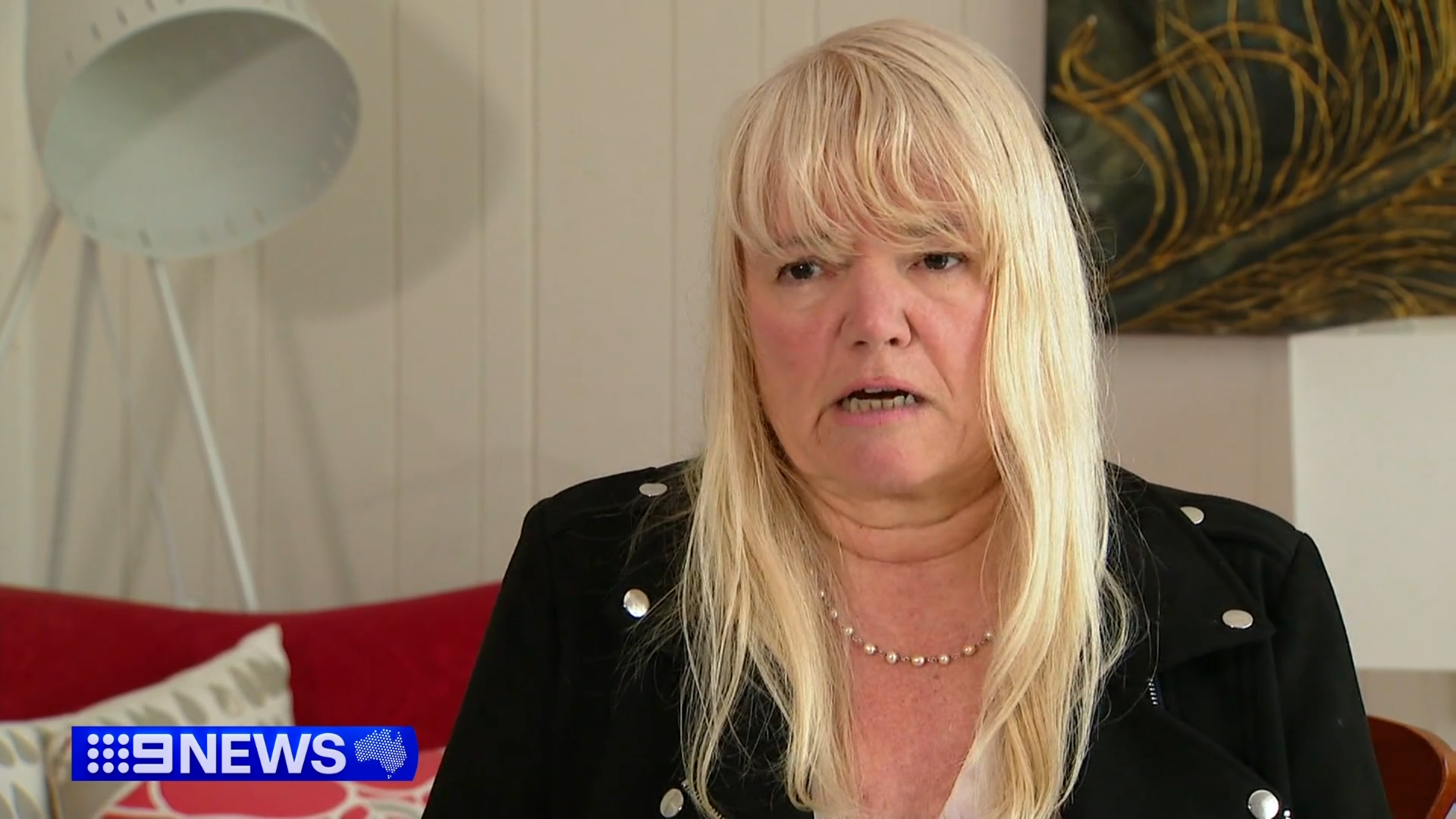
Jamie wanted a job at Woolies. He claims he was rejected after two AI interviews

Exclusive: A young Australian claims he was rejected from an entry-level job at Woolworths despite never speaking to a single human being in the hiring process.

Jamie, 24, said he applied to work part-time at his local Woolworths in NSW and was subjected to two "odd" AI interviews, only to be rejected six weeks later.

He called the whole experience "dystopian", especially coming from "one of the most profitable companies in Australia".

READ MORE: Hero tradie foils alleged attempted armed robbery

Jamie, 24, from NSW applied for a job at Woolies and said he was rejected after two AI interviews.

Woolworths' profits in 2024-25 hit nearly $1.4 billion.

"I find it really hard to believe the company that makes that much money every year couldn't afford to have a human interview me," Jamie told 9news.com.au.

But experts say this is what the future of job hunting looks like.

Jamie applied for a role at his local Woolworths in September and said the online application mentioned "AI may be involved" in the hiring process.

He didn't know what that meant at first.

"Almost immediately, I got the invite to do the first AI interview," Jamie said.

He had to provide written answers to questions from a text-based AI chatbot within a time limit.

"It kind of made me wonder, who is actually looking over this after you've completed it?" he said, calling the interview "strange".

A few days later, he got an email inviting him to another AI interview with a text-based chatbot.

This time he had to provide voice and video responses, which he wasn't entirely comfortable with.

"I'm not sure how I feel about this really massive company having access to my voice and video," he said.

Woolworths declined to comment, however 9news.com.au understands Woolworths uses AI as part of its hiring process for store roles.

Jamie said he didn't hear back from Woolworths until about six weeks later, when he received a generic rejection email with no human feedback.

"That was really like a little kick in the guts," he said.

He's just grateful he was able to support himself financially while waiting to hear back.

"If you're nearly destitute, or you're really struggling, living paycheck to paycheck or on Centrelink, that six-week wait could kill you," he said.

He shared his frustrations in a TikTok video which has since been viewed about 100,000 times.

READ MORE: Remains located on anniversary of missing woman's disappearance

Sydney, Australia 2021-01-07: Exterior view of Woolworths Miranda supermarket during the COVID-19 pandemic lockdown

Many Aussies like Jamie are resistant to the idea of AI job interviews but Associate Professor of workplace and business law at the University of Technology, Sydney Giuseppe Carabetta said we should probably get used to it.

"Larger organisations are using things like CV scanners, video interview analysis, and personality assessments or tests," he told 9news.

"This is generally about faster screening and processes – but there are problems, including the risk of biases where you have AI replicating historical discrimination by humans (algorithmic discrimination)."

There is currently no legislation that directly regulates the use of AI in recruitment but anti-discrimination laws require employers to ensure that recruitment practices do not discriminate based on attributes like race, sex, and ability.

Those laws technically apply to AI systems, but they often "fall between the legal cracks" in recruitment.

For example, an employer could land in hot water if an AI recruitment system automatically rejects applicants with feminine-sounding names (gender discrimination).

But even that could be hard for an employee to prove or pursue legally, as anti-discrimination law normally applies to the actions of a physical person.

Close-up Of A Robot's Hand Selecting Candidate Photograph

Carabetta said that AI use in recruitment is an area ripe for reform but "unfortunately the law is slow to adapt and legislative reform is not easy or quick".

And in the meantime, there's not much Aussies can do to avoid AI interviews.

"There is no direct legal right for jobseekers to request a human interview instead of an AI one," he said.

Aussies with a disability can request "reasonable adjustments" under the Disability Discrimination laws, which could include asking for a human interviewer.

"But for other candidates – for example, those uncomfortable with AI – there is no formal right to opt out of AI interviews."

Jobseekers can try to take steps to secure a human interview, like asking early on if interviews will be conducted using AI and voicing a preference for human interaction.

READ MORE: Cause of crash under investigation as soldier remembered as leader and mentor

They can also seek out employers that still emphasise 'traditional' recruitment methods, like handing in a physical resume, or reach out to hiring managers directly.

But there's no guarantee any of that will prevent jobseekers from having to deal with AI at some point in the hiring process.

Carabetta encouraged Aussie jobseekers to learn how AI is used in modern hiring and try to adapt to it – because it's "absolutely" not going away.

Have you got a story? Contact reporter Maddison Leach at Google Play.

A farmer found what looked like a buried doll. Then her fingers moved

Her arm was the first thing Shyam Babu saw, tiny and frail, poking through the mud like a discarded doll.

But this was no doll.

Covered with ants and bleeding from what doctors would later suspect were animal bites, the pig farmer had just made a terrifying discovery near a river in this north Indian village.

Wrapped in a towel, barely stirring, but slightly breathing, was a newborn baby girl buried beneath a foot of earth.

READ MORE: Trump announces meeting with Putin after lengthy phone call

Farmers plant rice saplings in a waterlogged paddy field in Uttar Pradesh on July 12, 2025.

"I went closer and saw that the child's fingers were moving. I went even closer and could sense a heartbeat," Babu recalled as he retraced his steps leading to the horrific discovery last month in the sugarcane and paddy fields of rural Shahjahanpur district in Uttar Pradesh state.

"I realised the child was alive…. Someone had buried a baby alive."

Terrified, he ran to raise the alarm. Soon a crowd was at the scene.

In a frantic but delicate rescue, captured on images and video reviewed by CNN, a policeman dug away the packed earth. The girl, later estimated to be about 15 days old, was completely smeared in mud. Gasping for air, her mouth and nostrils clogged with dirt. As she was lifted from the ground, she let out a weak, painful cry.

Rushed to the Shahjahanpur Medical College, she was found to have a severe infection, respiratory distress, injuries, and sepsis. The local police started searching for the girl's parents – and a motive.

Gourav Tyagi, a local officer investigating the case, told CNN they had three theories. Her parents could have believed their sickly child had died and buried her according to local customs. The newborn had syndactyly, a condition where two or more fingers or toes are joined together and could have been abandoned owing to the stigma around disabilities in parts of India.

And there was another angle: that she was discarded because of her gender, another victim of female infanticide in the world's most populous nation, where a deep-seated preference for sons can lead to girls being abandoned or killed.

Dr. Rajesh Kumar, a pediatrician in Shahjahanpur for two decades, told CNN he has seen four or five such cases before.

But he noted: "I have never seen a boy in such a situation… left alone and abandoned."

"There is pressure to birth a boy. A woman faces a lot of difficulty. They do not want girls so the woman goes to temples and does rituals to have a boy."

READ MORE: 'Kidding me': Aussie's hopeful attempt to dodge post office visit backfires

Doctors at the Shahjahanpur Medical College treat Pari on September 20, 2025, in Shahjahanpur, Uttar Pradesh, India

In the quiet hush of the neonatal intensive care unit at Shahjahanpur Medical College, the only constant sound was the monotone of the heart monitor, its low hum keeping watch over the baby sleeping inside the sterile incubator.

When she first arrived there, she was clinging to life. Her face was blue from a lack of oxygen, her body temperature dangerously low, and her blood pressure was so faint it was unrecordable. Against all odds, doctors initially saw a flicker of hope.

"Miracles do happen," Dr Kumar told CNN at the time, as the medical equipment worked to keep the tiny girl alive.

"Our hospital staff is taking care of her like family. Our nursing staff, ward nannies, and doctors are all taking care of her like she is our child."

Soon they had given her a name – Pari, the Hindi word for "angel."

Shahjahanpur district, where Pari was found, lies in the fertile, populous plains of north India. It is overwhelmingly rural, with most of its three million people working in agriculture. Paddies and wheat fields line the meandering roads between villages. The holy river Ganges skirts the district's southern border.

Beneath the surface of this agrarian life, traditional gender roles exert a powerful force. And it is this culture that paralysed Babu, 25, with fear after he found Pari.

"I did not have the courage to take the child out myself. I feared that people would see me, think the wrong things, and blame me instead," Babu said, before he ran to find his mother.

"If they find out it is a boy then it is okay. If it is a girl, then they get her aborted."

According to the last national census in India, carried out in 2011, Shahjahanpur had about 872 females for every 1000 males, a wider gap than a national average already imbalanced.

That imbalance, activists and locals say, is partly due to a deeply entrenched system of cultural, economic, and social biases that systemically devalues girls – and the desirability of raising them.

"There is pressure to birth a boy," said 60-year-old Nanhe Singh, from Shahjahanpur's Paina Bujurg village close to where Pari was found.

"A woman faces a lot of difficulty. They do not want girls so the woman goes to temples and does rituals to have a boy."

The preference for sons is rooted in a patriarchal structure where boys are expected to carry on the family lineage, inherit property, and perform essential last rites for their parents.

Daughters, on the other hand, are often perceived as a significant financial liability.

"One of the biggest issues with having a girl is the tradition of dowry" – the money or property that is often demanded by a groom's family at a wedding, vegetable seller Achal Kumar Gautam, 32 told CNN.

Despite being outlawed, this is a "tradition going on for generations and has to be followed," he said. "This becomes a burden over time for us. We have to pay the dowry, there is no other way around it. This is more expenditure which we would not have to do for a boy."

With such pressure to give birth to a son, some women turn to medical procedures to find out if they are carrying a boy or a girl, said another villager from Paina Bujurg, Sapna Singh.

"If they find out it is a boy then it is okay. If it is a girl, then they get her aborted. This happens here," the 28-year-old said. "People do this inside their homes, and no one gets to know outside."

To combat female feticide India enacted a law in 1994 prohibiting the use of medical technologies to determine the sex of a fetus. Yet, in these labyrinthine lanes of rural India, a dangerous and illegal abortion trade thrives.

READ MORE: Storms to bring winds, hail to millions today

Shyam Babu saw the baby's arm poking out from the mud in this field in Shahjahanpur. Pictured on September 20, 2025.

Shahjahanpur's superintendent of police Rajesh Dwivedi told CNN sex determination tests "have severely reduced over time," while acknowledging that it continues to happen "on the sly."

"We cannot change everything, but immense change has happened," he said.

According to activist Sunita Aralikar, illegal sex determination "is something that goes on in households of all classes."

Aralikar, who herself survived being buried alive as a baby 70 years ago, has dedicated her career to empowering women and fighting the deep-seated cultural biases that devalue girls.

She sees this latest tragedy as proof of how little has changed.

"This association of glory and success with a boy child, and failure and burden with a girl child is something that cuts across the country," she said.

A United Nations State of World Population report estimated India had 45.8 million "missing females" as of 2020 – a staggering figure driven by a combination of sex-selective abortions before birth and higher death rates for girls due to infanticide after birth.

According to Sapna Singh, families in her village often "scare and threaten" women who become pregnant. "They tell her they only want a son," she said, adding that the pressure can escalate dramatically. "They beat her up. Many people kill women if they are not birthing boys. It is not the woman's fault. They beat her, threaten her, and abuse her."

Kamaljeet Kaur, who has spent 18 years as a health volunteer in the villages of Shahjahanpur, described gender discrimination and female infanticide as a "systemic issue."

"It happens rampantly here," she told CNN.

The consequences for women who bear multiple daughters can be devastating, Kaur said. "If a woman has daughters, especially a second or a third, her life turns into hell," she said. "Men are continuing to follow old traditions and customs. She is abused, told she has no brains… her position in the family is based on whether she has a son or daughter."

This relentless abuse, Kaur noted, strips women of their voice, turning them into "a mute spectator to everything happening to her." And the silence is brutally enforced by the community itself.

"People do not raise their voice against this as they do not want to make enemies," Kaur said. "If you raise your voice, the local shop owner won't give you milk, neighbours won't help… you're basically isolated."

Local media reports from across Uttar Pradesh paint a similarly bleak picture.

In November of last year, a baby discovered by a roadside in Gorakhpur was treated by doctors and survived. That same month, residents in Bareilly discovered a 20-day-old girl abandoned in a field. In December, a 10-day-old baby girl was found dead in a garbage dump in the city of Baghpat.

This grim reality evokes a sense of sorrow and powerlessness among women in Paina Bujurg. Nanhe Singh said she was aware of Pari's case.

n the Shahjahanpur hospital, the first 24-hours after Pari was found gave the medical staff cause for hope. But then her condition deteriorated fast.

Necrosis – the death of body tissue – progressed to her face and scalp. Her breathing grew increasingly laboured, and doctors had to place her on oxygen support. She required a blood transfusion to keep her alive.

At two weeks old, Pari was severely malnourished and weighed less than 1.7 kilograms (3.7 pounds), making it difficult for her body to ward off any infection.

After a CNN team had left the area last month, police officer Gourav Tyagi confirmed that Pari had died. The police had still not managed to track down her parents and were widening their search, he told CNN.

"I did not have words when she passed away. It was hard to unplug all the monitors and let the baby go," said Sarita Singh, the nurse in charge of the newborn unit at the hospital. "We were her family."

Staff did not want her life to be defined by tragedy.

"When she came here, she looked beautiful," Singh said. "Which is why we named her Pari."

In 2015 Prime Minister Narendra Modi's government launched its "Beti Bachao, Beti Padhao" or "Save the Girl Child, Educate the Girl Child" campaign to address India's skewed ratio of children and to promote women's empowerment.

The government says the program has brought wider attention to gender discrimination and seen some success. The country's national sex ratio at birth rose from 918 girls per 1,000 boys in 2014-15 to 934 in 2019-20, according to data published by the government.

The gross enrollment ratio for girls in secondary education has increased from 77 per cent to 81 per cent in the same period, the same data showed.

However, the program has also faced some criticism. A parliamentary committee in 2021 noted that a disproportionately large percentage of the scheme's funds – nearly 79 per cent between 2016 and 2019 – was spent on media advocacy rather than on concrete health and education initiatives for girls.

"Some people drown the child… some bury her under the ground. Many people just give the child away in hospitals. They don't even take the girl child home."

Sarita Singh, nurse, Shahjahanpur Medical College

Billboards and broadcasts promoting the campaign to protect and educate India's girls are now ubiquitous in cities, towns and on the airwaves.

But the silence following Pari's death was deafening. Her story was largely overlooked by the national news channels and failed to spark sustained outrage.

For some, the campaign's impact also feels superficial. "People say the slogan… but in reality, no one is following it," Singh, the hospital nurse said. "It has only become a saying."

CNN has contacted the Uttar Pradesh government for a response.

The activist Aralikar believes that creating opportunities for female success is the key to shifting perceptions. "I'm not saying education and opportunities will erase the problem overnight, but it will at least level the playing field… Only when you start to see girls thrive do you believe they're worth investing in."

Meanwhile the police investigation and the search for Pari's parents continues.

"There is a deeply regressive thought about girl children that continues to this day," the nurse Singh said. "Some people drown the child… some bury her under the ground. Many people just give the child away in hospitals. They don't even take the girl child home."

For Babu, the man who found Pari, the encounter with her felt like an act of fate. He usually walks his pigs down a different path, closer to the river, he told CNN.

"But because destiny had it that I'd have to save her life, I ended up here," he said, pointing to the area near the road.

"My wife was very worried. She kept saying I should bring the baby home so we can look after her… I would work harder as a labourer and raise her. We would never cause any harm to our children."

The father of two girls clung to that sense of purpose all week, watching the news and waiting for updates on the child he believed he had saved. He had already begun to imagine a future for her, hoping she would live a "long life and be brilliant."

The news of her death shattered that hope. "I have goosebumps," he said upon learning of her death. "This is wrong."

"I wanted to meet her in the future. Strong, growing, healthy," he said, his voice heavy with emotion. "I took her out of the soil but she has returned to it."

Sign up here to receive our daily newsletters and breaking news alerts, sent straight to your inbox.

‘Are you at work?’: Bluey fans wait up to 18 hours for a coin

Hundreds of Bluey fans have lined up overnight, some for 18 hours, to get their paws on new Christmas collectable coins.

The coveted silver coin sold out in minutes when the Perth Mint opened its doors to a stampede this morning.

"People want them – demand is significantly outstripping supply," chief executive Paul Graham said.

READ MORE: Horror in broad daylight as woman walks to work in Melbourne

The coin was released by the Royal Australian Mint but Perth Mint is one of the authorised distributors.

Georgie waited 18 hours at the front of the line, dressed in Bluey gear from her dog-ears headband right down to her themed Crocs, to make sure she didn't miss out.

The Heeler family superfan Georgie said she was "excited, tired, and relieved, yeah, that I got one".

The 2025 release features a gold and a silver coin stamped with Bluey and Bingo in festive hats. 

The excitement in the queue was palpable.

"[I'm] just excited to get that coin in my hand," one fan said.

READ MORE: Mechanic banned from taking on apprentices after 'extreme' act

"It's just like getting candy really."

One man was even juggling work whilst waiting, breaking away from a video call briefly to say hi to 9News. 

"Are you at work right now?" 

"Yes I am," he replied with a laugh.

The gold Bluey coin will set you back $20, while the silver one cost $100 but sold out in just 20 minutes.

READ MORE: Underworld kingpin's case delayed after jail cell discovery

"I bought the last one, that's fantastic," one man said.

"I'm so happy, I was waiting so long and it's just fabulous."

For collectors it's money well spent but for parents, it's another pricey addition to the Christmas list. 

DOWNLOAD THE 9NEWS APP: Stay across all the latest in breaking news, sport, politics and the weather via our news app and get notifications sent straight to your smartphone. Available on the Apple App Store and Google Play.
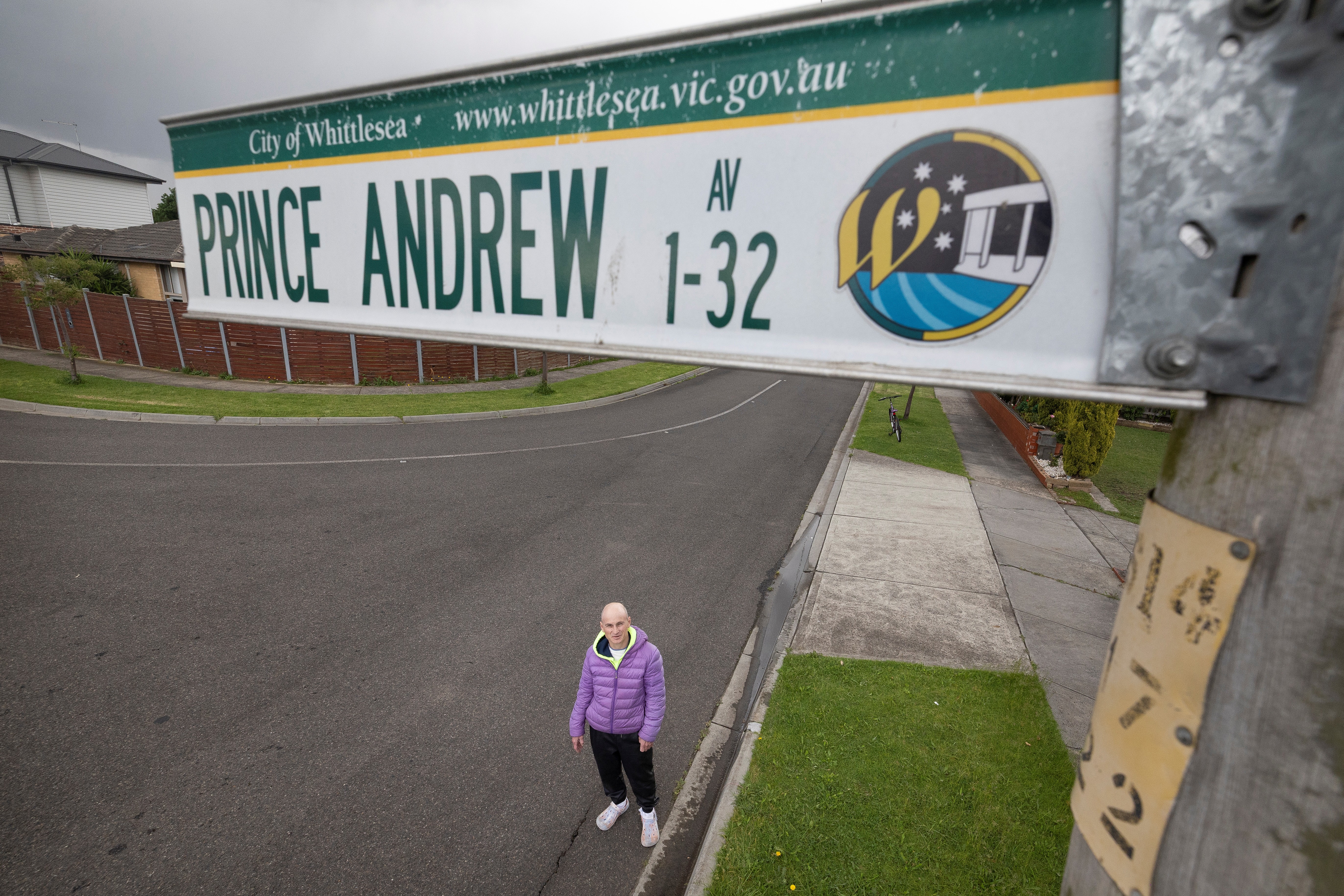
Uber driver helped police find remains in search for missing Victorian woman

Information from an Uber driver helped detectives find human remains believed to belong to missing woman Lucinda Williams on the third anniversary of her disappearance.

The remains were discovered today in regional Victorian bushland during a renewed two-day search.

Miller, 24, was last seen on October 16, 2022 after she took a rideshare car home from Melbourne to Neerim South in West Gippsland, regional Victoria, about 11.30am.

READ MORE: Trump secured peace deal through 'force', says former ambassador to Israel

Lucinda Miller

READ MORE: Hero tradie foils alleged attempted armed robbery

Her death is not being treated as suspicious.

Acting Inspector Paula Linford told reporters the remains still need to be forensically examined however said they are "consistent" with Miller.

Her body was found just 80 metres off the road in thick bushland.

It is still "very very early" days to determine a cause of death, Linford said.

She described Miller as "very unwell".

"That's about all I can say about that," she added.

A member of the public gave police some information and a "new place to start", which led them to look into rideshare data.

Lucinda Miller

An Uber driver then provided new intel to help pinpoint Miller's location.

"At the time, that was what he remembered," Linford said.

"But the new information that we received gave us the new location."

Clothing and a vodka bottle was found in the search.

Police used dogs capable of sniffing out electronic devices in the hope of finding Miller's phone.

However, her phone has not been located.

Lucinda Miller - search area

READ MORE: More than a million households at critical stress point

About 60 people were involved in the renewed search effort this week.

"Local police would like to extend their thanks to the Neerim South CFA, SES, DEECA and the AFP for their support and assistance," police said in a statement.

Authorities began scouring bushland arond two kilometres north of the original search area around McDougal Road in Neerim South on Monday.

Detectives appealed to anyone who had been walking in bushland around McDougal Road, near the intersection of Whitelaw Track, to come forward.

DOWNLOAD THE 9NEWS APP: Stay across all the latest in breaking news, sport, politics and the weather via our news app and get notifications sent straight to your smartphone. Available on the Apple App Store and Google Play.
Mum who faked six-year-old son’s cancer diagnosis admits to $11k deception

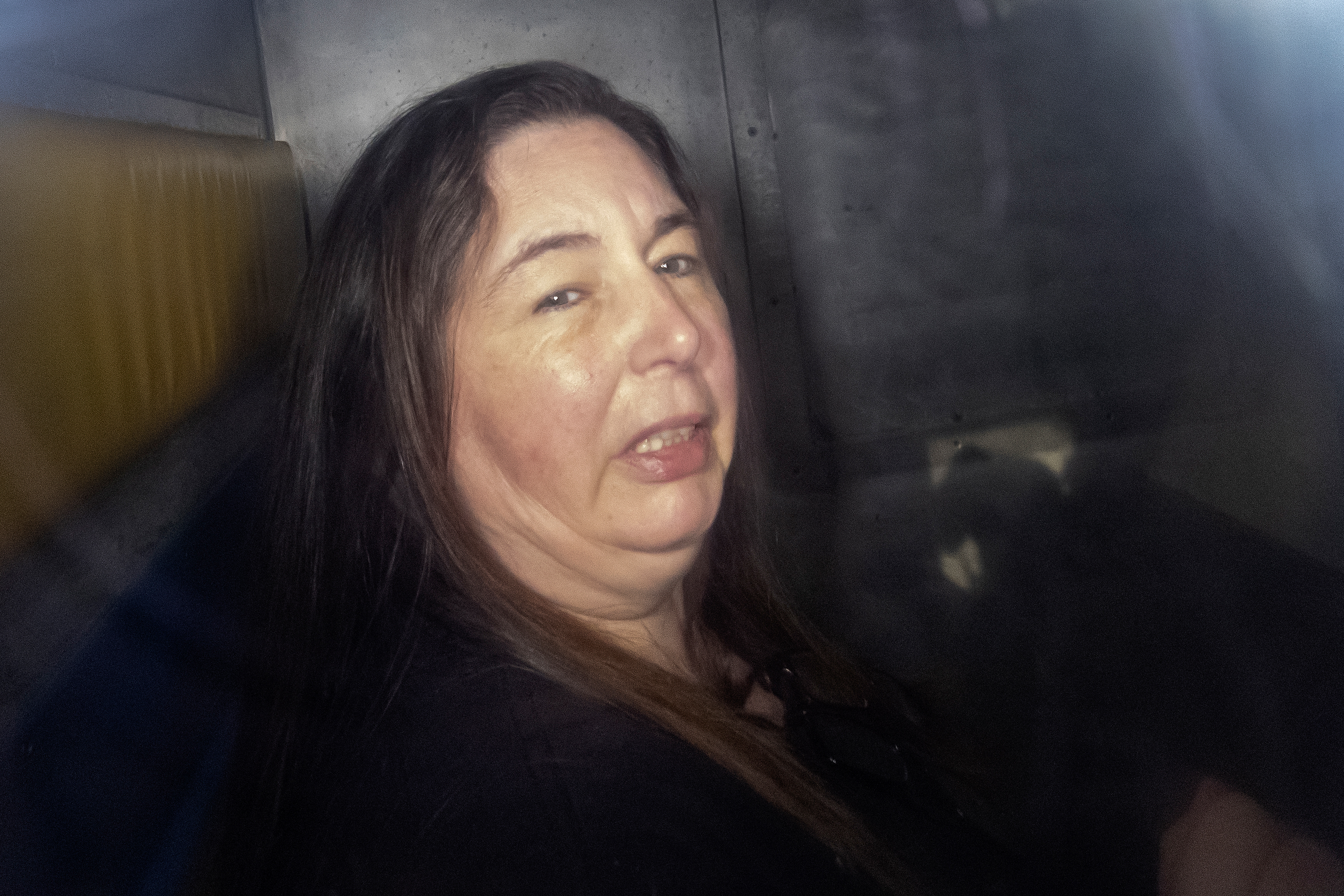
A mother who faked her six-year-old son's cancer diagnosis has pleaded guilty to charges linked to the deception.

The 45-year-old woman admitted 11 charges when she appeared in Adelaide Magistrates Court today.

The woman, from the western suburb of West Lakes, was arrested last December and accused of faking her son's cancer to secure $60,000 in donations from the community.

READ MORE: Aussie city set to shatter blistering 37-year heat record

A mother who faked her six-year-old son's cancer diagnosis has pleaded guilty to charges linked to the deception.

Prosecutors had alleged that she had been requesting donations through an online fundraising page and the child's school, after putting her son in a wheelchair with bandages to imitate radiotherapy treatment.

In May, all charges against the woman's husband were dropped and her charges were amended to one count of criminal neglect, 56 counts of deception to obtain a benefit and 14 counts of dishonestly dealing with property.

Today, prosecutors told the court the case had been resolved after plea bargain negotiations.

The woman, who appeared in court via video link from the Adelaide Women's Prison, admitted 10 charges of deception to obtain a benefit, totalling $11,500, for amounts ranging from $500 to $3000, between November 21 and December 12, 2024.

READ MORE: Israel, Hamas swap bodies after 'hostage' error threatens peace

A mother who faked her six-year-old son's cancer diagnosis has pleaded guilty to charges linked to the deception.

The criminal neglect charge did not proceed and the woman instead pleaded guilty to one aggravated count of acts likely to cause harm to a person aged under 12.

When police revealed the allegations last year, acting Assistant Commissioner John DeCandia said he "couldn't think of a more devious and cruel scheme".

"It's abhorrent that (a person) would seek to profit for their own personal greed and selfishness from such an insidious condition such as cancer which impacts so many families in our community," he said.

Magistrate Patrick Hill remanded the woman in custody to face the District Court on November 28, when a date for sentencing submissions is expected to be set.

DOWNLOAD THE 9NEWS APP: Stay across all the latest in breaking news, sport, politics and the weather via our news app and get notifications sent straight to your smartphone. Available on the Apple App Store and Google Play.