The group have borrowed money for accommodation after being left with no way home.
Tag Archives: oceania
Mark Rangihuna jailed for 11 years for raping young girl in Wellington 10 years ago
Mark Rangihuna has been jailed for raping the woman in Wellington about a decade ago.
Auckland ferry catches fire off Waiheke Island
‘The alarms are screaming and I can smell … smoke,’ a passenger said.
Health NZ warns of community measles spread after ferry exposure
About 350 ferry passengers have been contacted by Health NZ.
Bank accounts, legal information exposed in major university data breach
Western Sydney University has admitted large amounts of personal data, including bank details, passport details and students' visa information was exposed in recent data breaches.
In a statement to staff and students seen by 9news.com.au, university Vice Chancellor and President George Williams confirmed data stolen through an external system between June 19 and September 3 was behind two data breaches in August and earlier this month.
The first incident saw the data of around 10,000 former and current students released on the dark web, with the incident on October 7 seeing fraudulent emails sent to students and alumni claiming their degrees or ability to study at the university had been "revoked".
READ MORE: Student killed on way to work in motorcycle crash
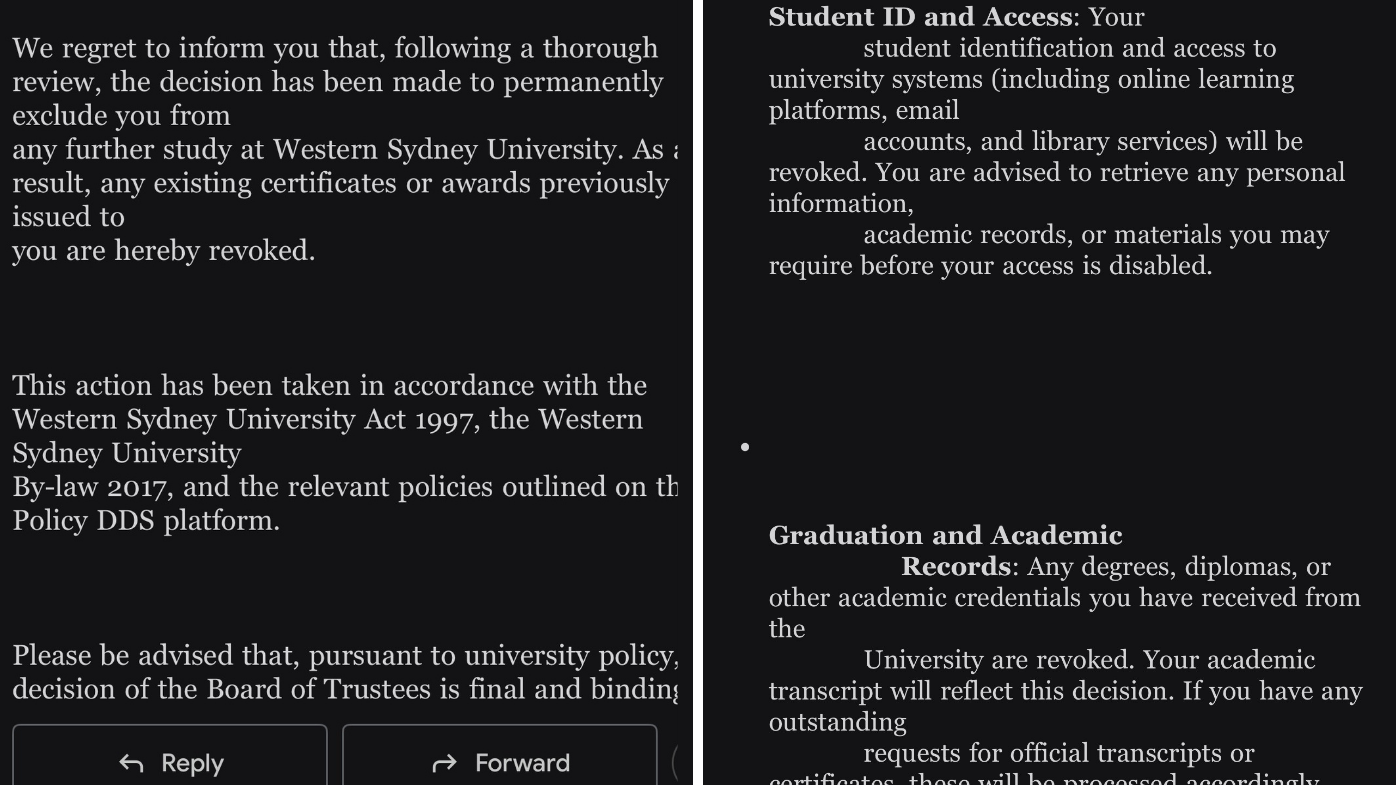
The university has confirmed stolen data was used to send the fraudulent emails, which impacted individuals told 9news.com.au caused serious mental and emotional stress.
"The University's investigations confirm that the fraudulent emails which were sent to some community members on 6 October 2025 used data stolen in this incident," Williams said.
Numerous complaints were received due to the lack of communication from the university after the emails were sent out, but it claimed they were instructed to remain quiet in the initial stages of the incident.
READ MORE: What to do when an attack occurs in a crowded place

"NSW Police requested the University refrain from notifying its community at the time to avoid interfering with ongoing Police investigations," Williams said in a statement.
"As soon as the University became aware, it reported the matter to NSW Police and the relevant regulatory authorities.
Williams also admitted a large amount of personal data of former and current students was exposed in the breach, including:
- Contact information (address, email address, phone number)
- Name, date of birth, student or staff ID
- Country of birth, nationality, citizenship and/or gender or identity information
- Ethnicity
- Employment and payroll details
- Bank account details
- Tax file number
- Driver licence details
- Passport details
- Visa information
- Complaint/case information
- Health and disability information
- Legal information.
READ MORE: Why COVID vaccine could help people with cancer live longer
The university said it is in contact with individuals who have been directly impacted by the data breach, with some notifications indicating the exact personal data that has been breached.
Western Sydney University claimed unauthorised access to key systems was obtained via third parties that supply IT services to the university.
Williams offered an apology to all staff and students, and said they were supporting those who have been impacted by both data breaches.
"I want to again apologise for the impact this is having, and give you my assurance that we are doing everything we can to rectify this issue and support our community," he said.
"We encourage all students, staff and alumni who receive notifications to take the recommended actions, regardless of steps taken in the past, and to use the support services available."
The university also stated an interim injunction prohibits transmission, publication and use of any information or material obtained by the former student in an unauthorised manner from the University's IT systems and network.
DOWNLOAD THE 9NEWS APP: Stay across all the latest in breaking news, sport, politics and the weather via our news app and get notifications sent straight to your smartphone. Available on the Apple App Store and Google Play.
COVID-19 mRNA vaccine could help people with cancer live longer, study finds
COVID-19 mRNA vaccines could help cancer patients live longer by helping the immune system fight tumours, a new study has found.
Patients with advanced lung or skin cancer who received a COVID-19 mRNA vaccine within 100 days of beginning treatment lived twice as long as those who did not, the US researchers found.
The median survival rate for those with lung cancer increased by over three years, with those suffering from skin cancer surviving up to 40 months longer, according to the study from The University of Texas MD Anderson Cancer Centre that was published in Nature today.
READ MORE: Truth behind Australia's birth rate 'crisis'
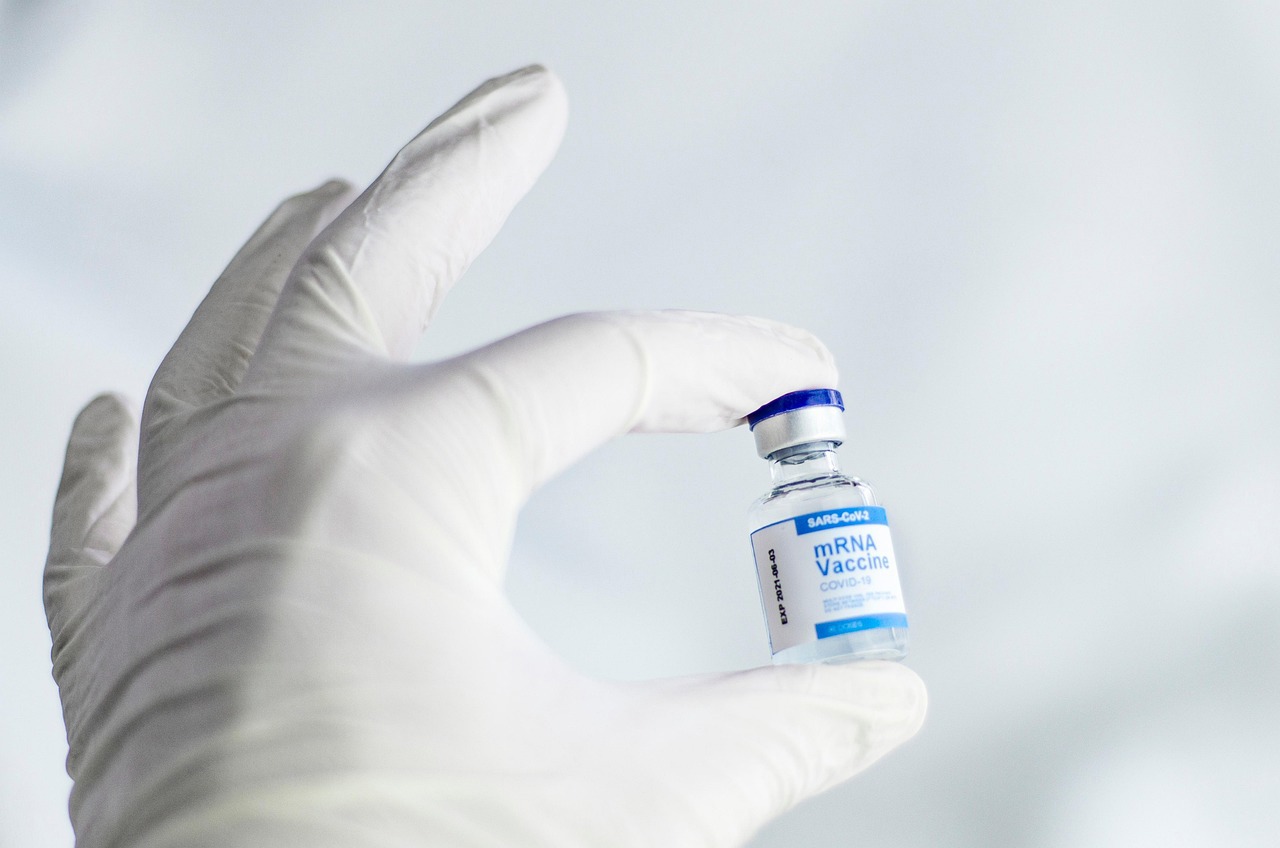
Experts believe that if the study results can be repeated, the vaccines could be an efficient and powerful option to treat cancer.
Associate Professor at the University of Queensland Seth Cheetham, who was not involved in the study, explained COVID-19 mRNA vaccines work in a similar fashion to many cancer treatments and help identify cancer cells for the immune system to fight.
"Many cancers are treated with drugs called immune checkpoint inhibitors which stop cancer cells from hiding from the immune system," he said.
"mRNA vaccines quickly 'wake up' the immune system.
"Within a day, blood from human volunteers given a COVID mRNA vaccine displayed a sharp rise in interferon, a natural antiviral alarm, and immune cells switched into a more alert state."
Cancer vaccines are in development and have shown some positive results, but they are expensive and have logistical challenges of their own.
However, COVID-19 mRNA vaccines are cheaper and more widely available, having already been used globally during the coronavirus pandemic.
Cheetham cautioned further trials and studies were required, but said the latest developments were promising.
"If these confirmatory trials are successful, doctors may soon have an unexpected powerful new option for treating cancer," he said.
DOWNLOAD THE 9NEWS APP: Stay across all the latest in breaking news, sport, politics and the weather via our news app and get notifications sent straight to your smartphone. Available on the Apple App Store and Google Play.
‘Under American command’: Nuclear expert’s China warning after Trump’s AUKUS remark
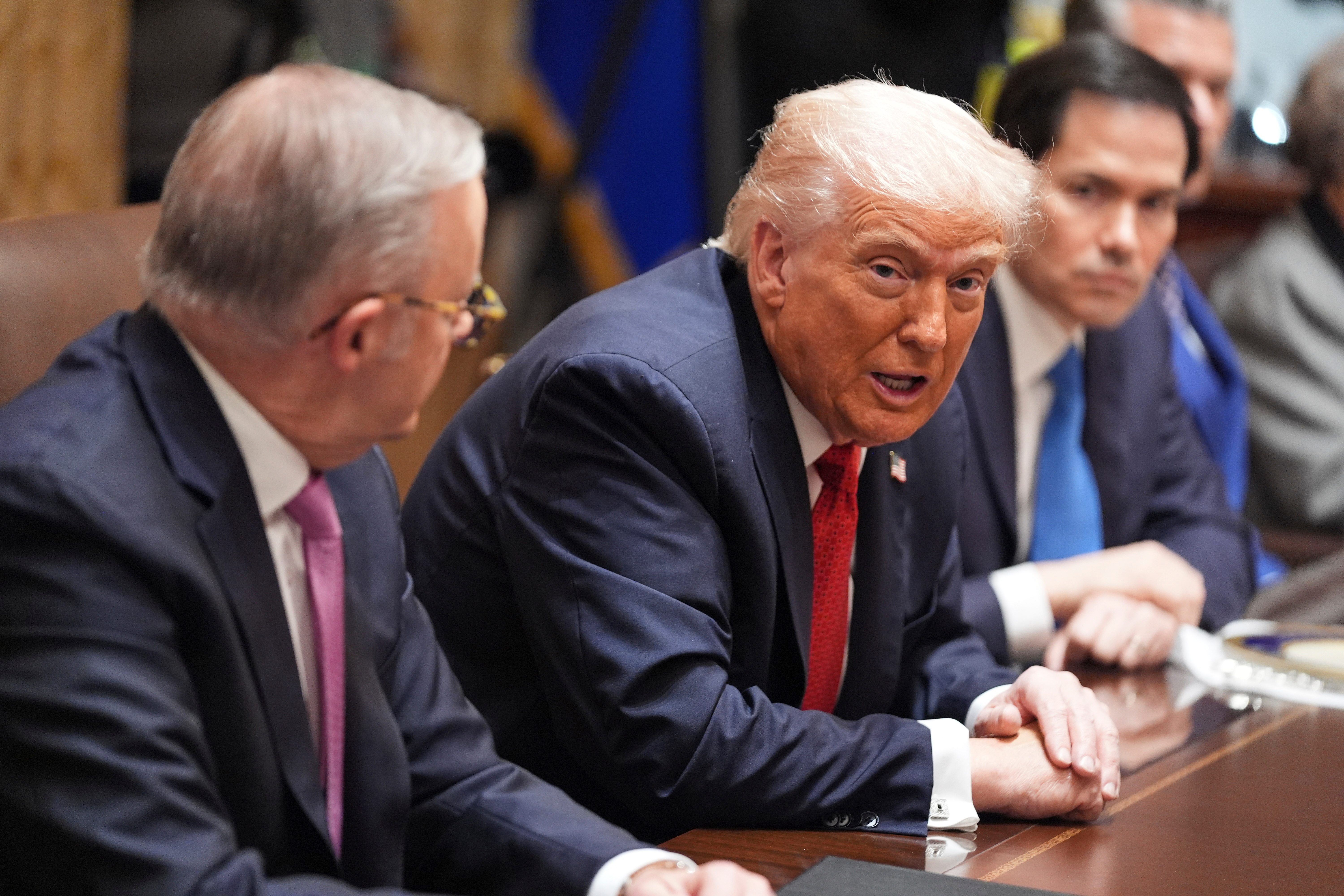
The embattled AUKUS pact was given renewed hope after US President Donald Trump offered a peachy endorsement during Anthony Albanese's White House visit.
One labelled a "terrible deal" by former PM Malcolm Turnbull, the AUKUS partnership has hung in the balance while optimism the US government will actually deliver nuclear submarines to Australia began to fade.
Albanese's mission to extricate a verbal agreement from Trump has been hailed a success – now questions linger over what it means for our sovereign military capability.
READ MORE: UK PM backs inquiry into Prince Andrew's rent-free mansion
READ MORE: Footage shows moment Russian drone strikes Ukrainian kindergarten
"There shouldn't be any more clarifications because we're just going full steam ahead building," Trump told the PM in a surprisingly full-throated assurance.
"We have the best submarines anywhere in the world and we're building a few more, under construction.
"Now we're starting, we have it all set, with Anthony we've worked on this long and hard and we're starting that process right now and I think it's really moving along really rapidly, very well."
However, any celebration about the future success of AUKUS may be premature, nuclear policy specialist and UNSW honorary professor Wayne Reynolds told 9news.com.au.
"All I've heard is Trump saying, no, AUKUS is going to go ahead full speed. Well, why shouldn't it?" Reynolds said.
"These submarines are Virginia class. There is no technology transfer. We're spending billions.

"They've got a base in Western Australia, which we're largely funding. They're rotating their submarines, and they've got us locked into an American strategy with respect to China.
"Why would you say no?"
Australia has already forked out $1.5 billion in the AUKUS pact, with another $1.5 billion to go in 2025, to acquire nuclear-powered but conventionally armed submarines.
A fresh Pentagon promise of a ghost fleet has given some much-needed fuel to a spluttering fire.
But Reynolds said the bigger question the Australian government needs to answer is how US-led submarines can fit into our long-term defence strategy.
READ MORE: Two men drown after being swept from Melbourne pier in extreme weather
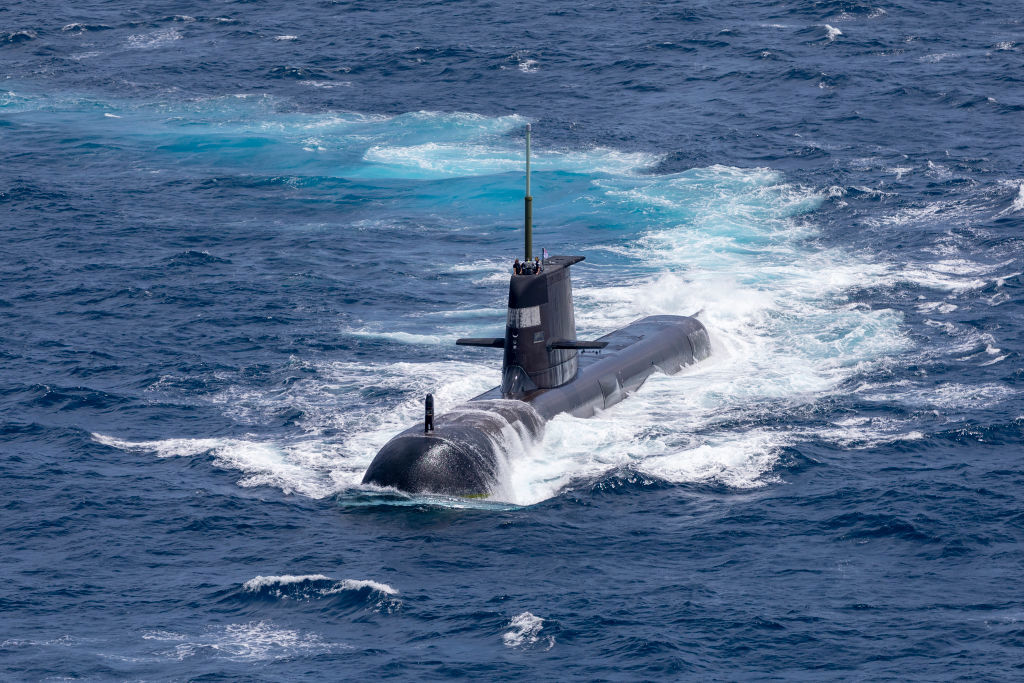
"I think there are legitimate questions about not only the affordability, but the capability," Reynolds said.
"Are these submarines the right answer? The question would be, well, where's [our] sovereign capability if the Americans decide to go on the attack?
"I think that needs to be investigated."
The next crucial step should be clearly defining Australia's role once the submarines are delivered in the early 2030s, Reynolds said.
Particularly, he warned, with our strategy on China.
"Most people in the defence industries here, they're still scratching their heads about, well, what's our role?" Reynolds added.
"If there is a war with China, if, are we in a position to utilise our submarines?
"If we've got American equipment, we are under American command."
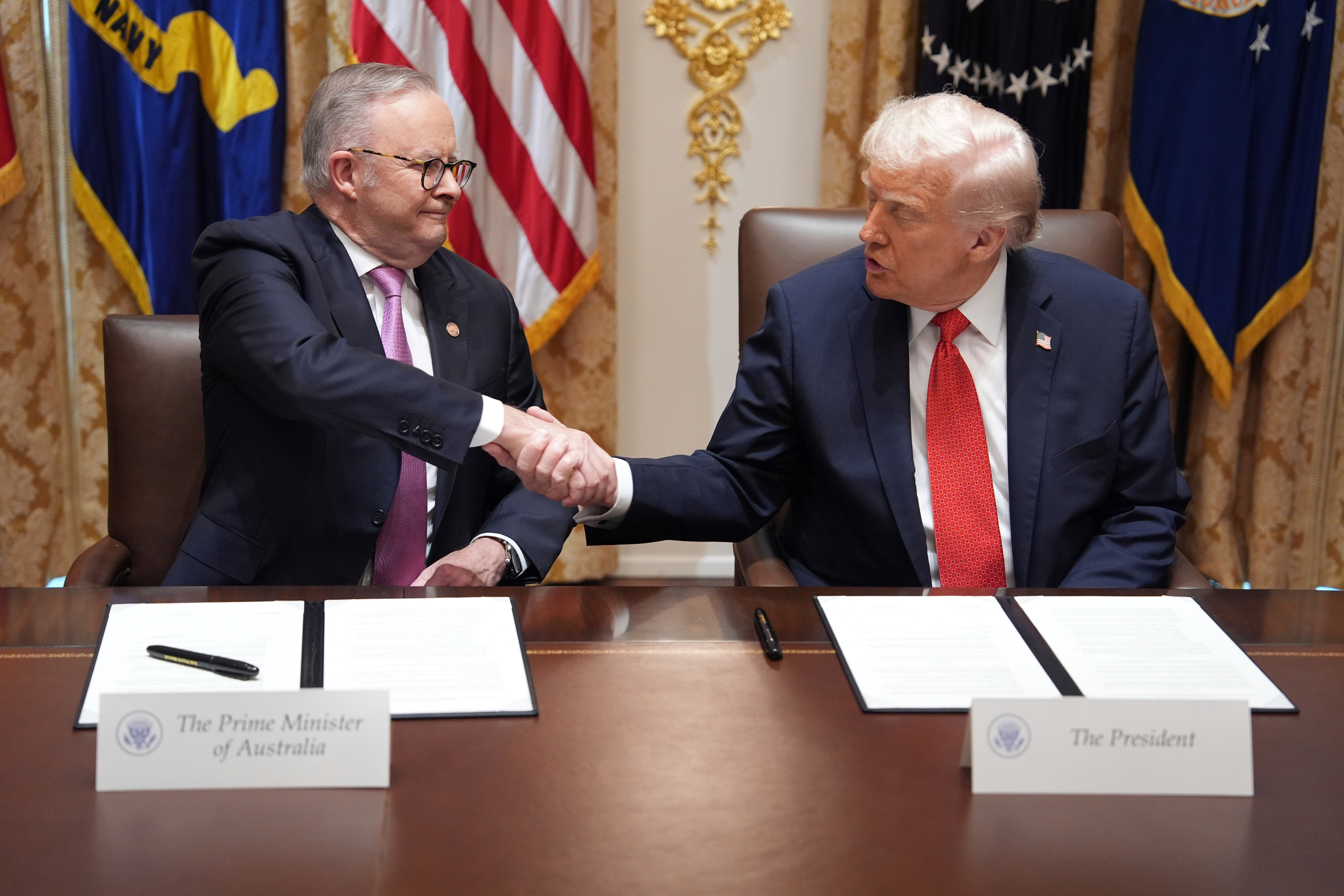
Back in Canberra, Richard Marles was noticeably excited by Trump's assurance.
If he still had any doubts – the defence minister hid them well.
"You can touch, feel and see AUKUS occurring. AUKUS is happening," Marles said in Adelaide on Tuesday.
"The remarks from President Trump last night are certainly the words that we've been looking for and affirmation from the Trump administration of their enthusiasm for the AUKUS endeavour."
DOWNLOAD THE 9NEWS APP: Stay across all the latest in breaking news, sport, politics and the weather via our news app and get notifications sent straight to your smartphone. Available on the Apple App Store and Google Play.
What the prime minister gifted the man who has everything
Prime Minister Anthony Albanese revealed what he gifted US President Donald Trump during his crucial visit to the White House.
Albanese travelled to Washington for his first face-to-face meeting with Trump since he began his second term as president on January 20.
It is customary for leaders to exchange gifts during state visits.
READ MORE: The 'new world order' threatening Australians' prosperity
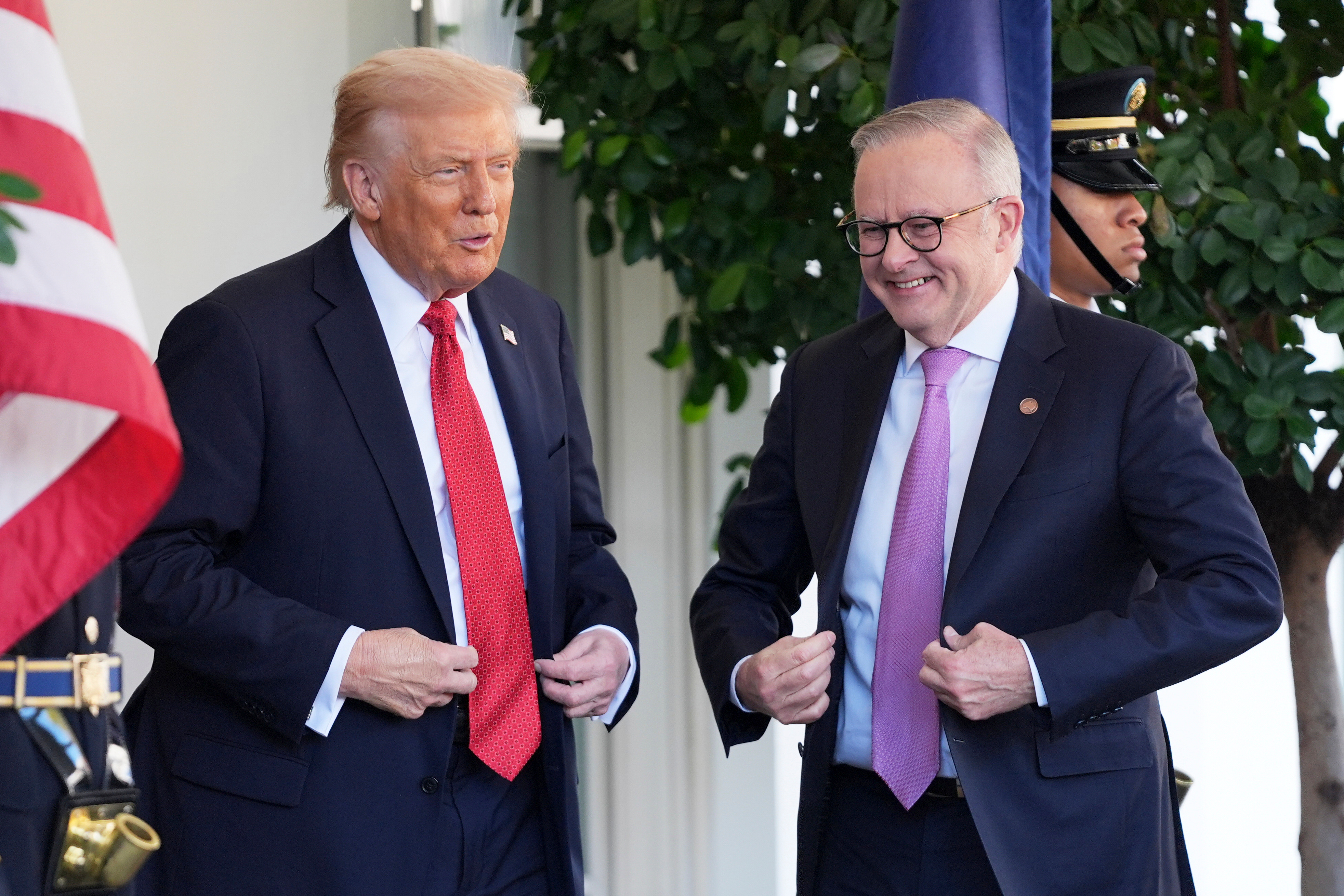
During a press conference yesterday, Albanese said he gifted Trump a submarine model — a not-so-subtle nod to the AUKUS pact, which Trump confirmed will go "full steam ahead" after months of speculation that the US may not honour the agreement.
He also gave First Lady Melania Trump jewellery and their newest granddaughter Uggs.
"We had a gift for Melania. We had jewellery, we had a submarine model for the President, and we had some Ugg booties for the president's newest granddaughter to come along, and I'm sure they will be very well received," he said.
Albanese did not share what he received from Trump, saying it will take a while for the gifts to go through all the proper checks.
"I'll probably get whatever has come to us in about three years and six months after it goes through all the security things and (Department of the Prime Minister and Cabinet), all of that," he said.
READ MORE: 'Not going to happen': Hanson rubbishes claim Joyce could lead One Nation
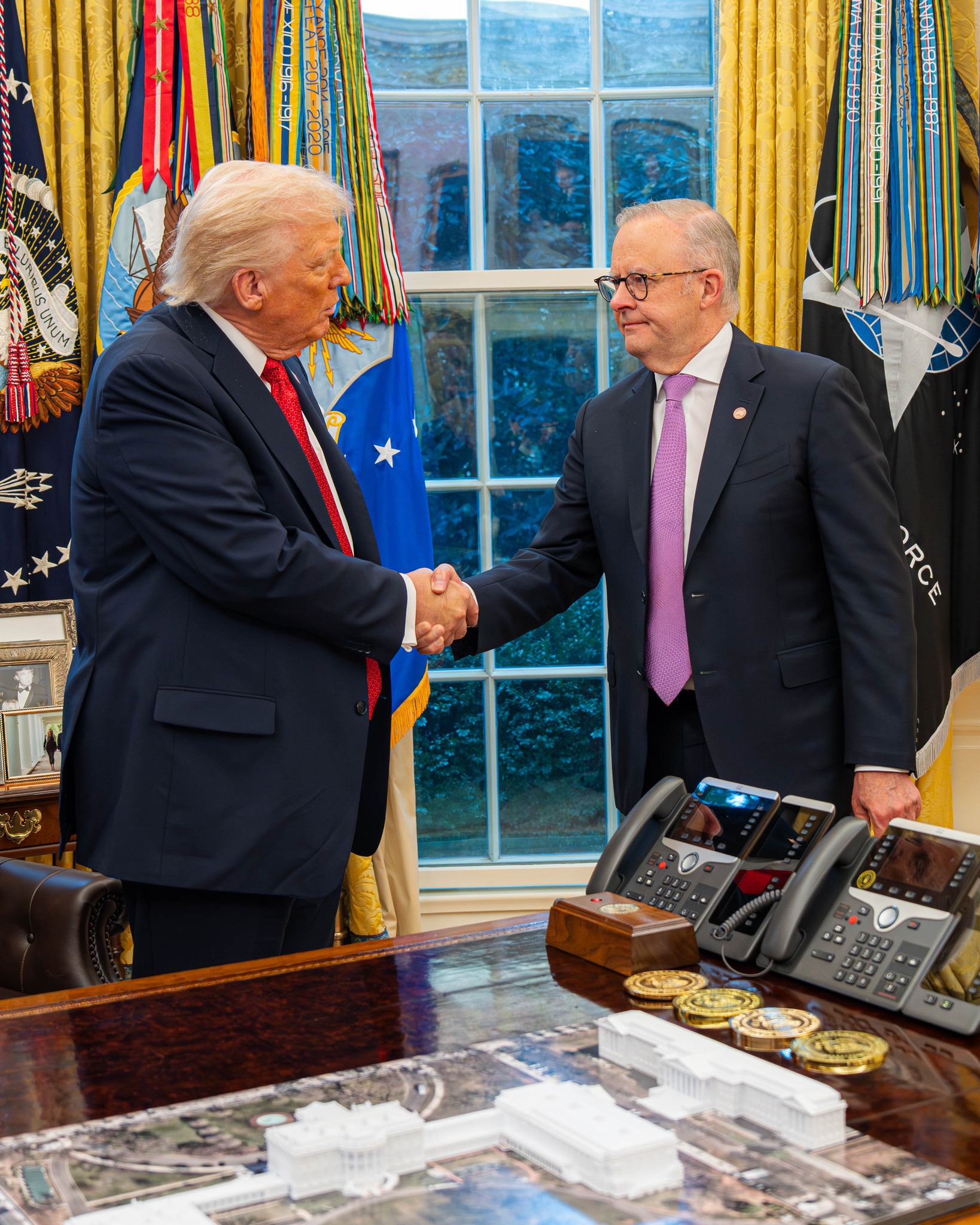
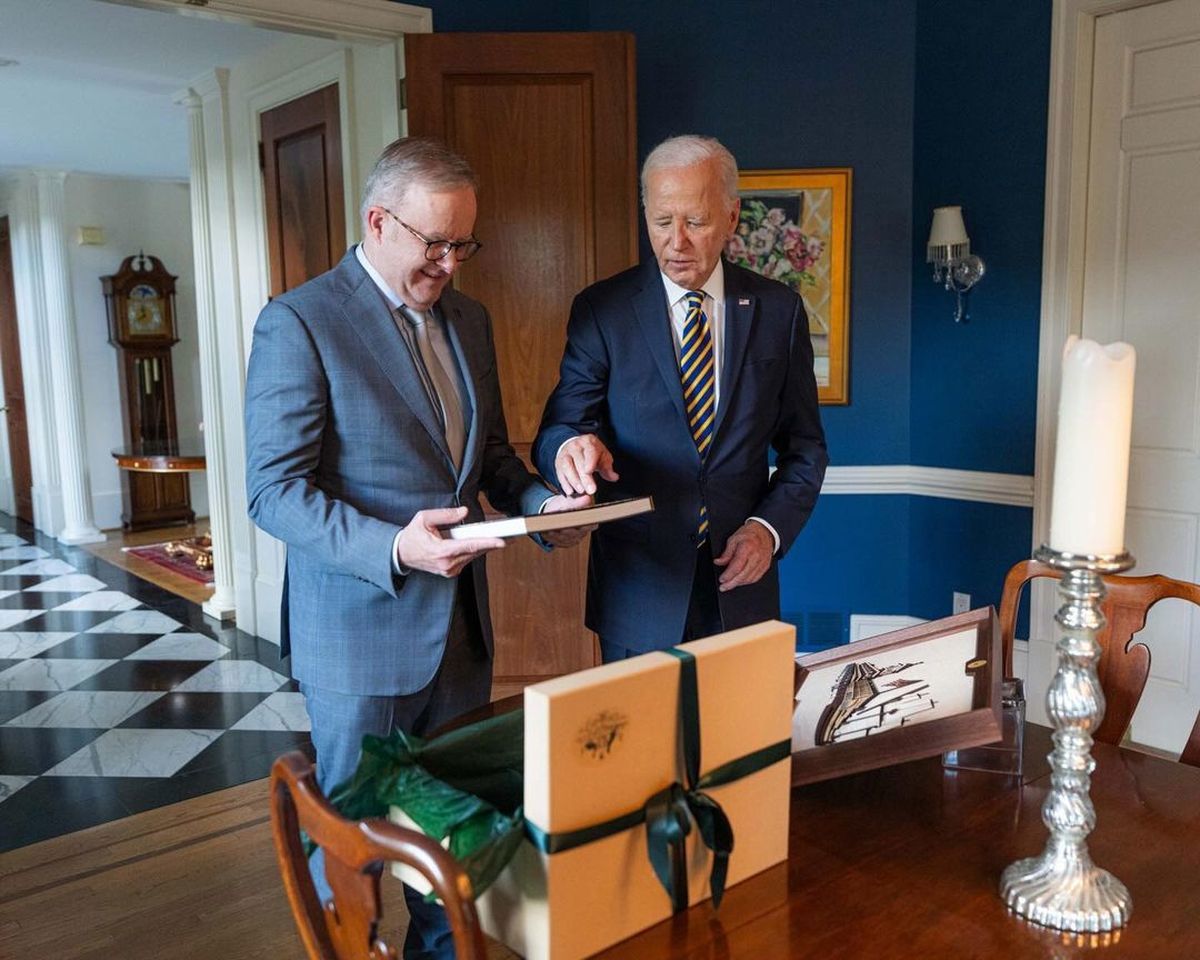
During Albanese's final meeting with former president Joe Biden at his personal home in 2024, he gifted him a leather Royal Australian Air Force jacket with his name on it.
He received a framed artwork depicting Delaware landmarks in return.
Australia is not traditionally a gift-giving country, but gifts can be exchanged as a show of good manners, goodwill and respect for other countries' customs.
The Department of the Prime Minister and Cabinet has strict rules for official gifts to avoid any potential conflicts of interest.
All gifts go through a security screening.
Albanese can only accept gifts valued at $750 from other governments and must declare gifts that exceed that limit on the public register.
READ MORE: Name of suspect in 1970 disappearance of toddler revealed
If he wishes to keep a gift that is over the allowable limit, he must pay the difference.
Gifts received while he is overseas on official government business are deemed to be property of the Commonwealth.
DOWNLOAD THE 9NEWS APP: Stay across all the latest in breaking news, sport, politics and the weather via our news app and get notifications sent straight to your smartphone. Available on the Apple App Store and Google Play.
Name of suspect in 1970 disappearance of toddler revealed
A man previously charged with kidnapping and murdering a little girl more than 50 years ago has been named for the first time in NSW parliament.
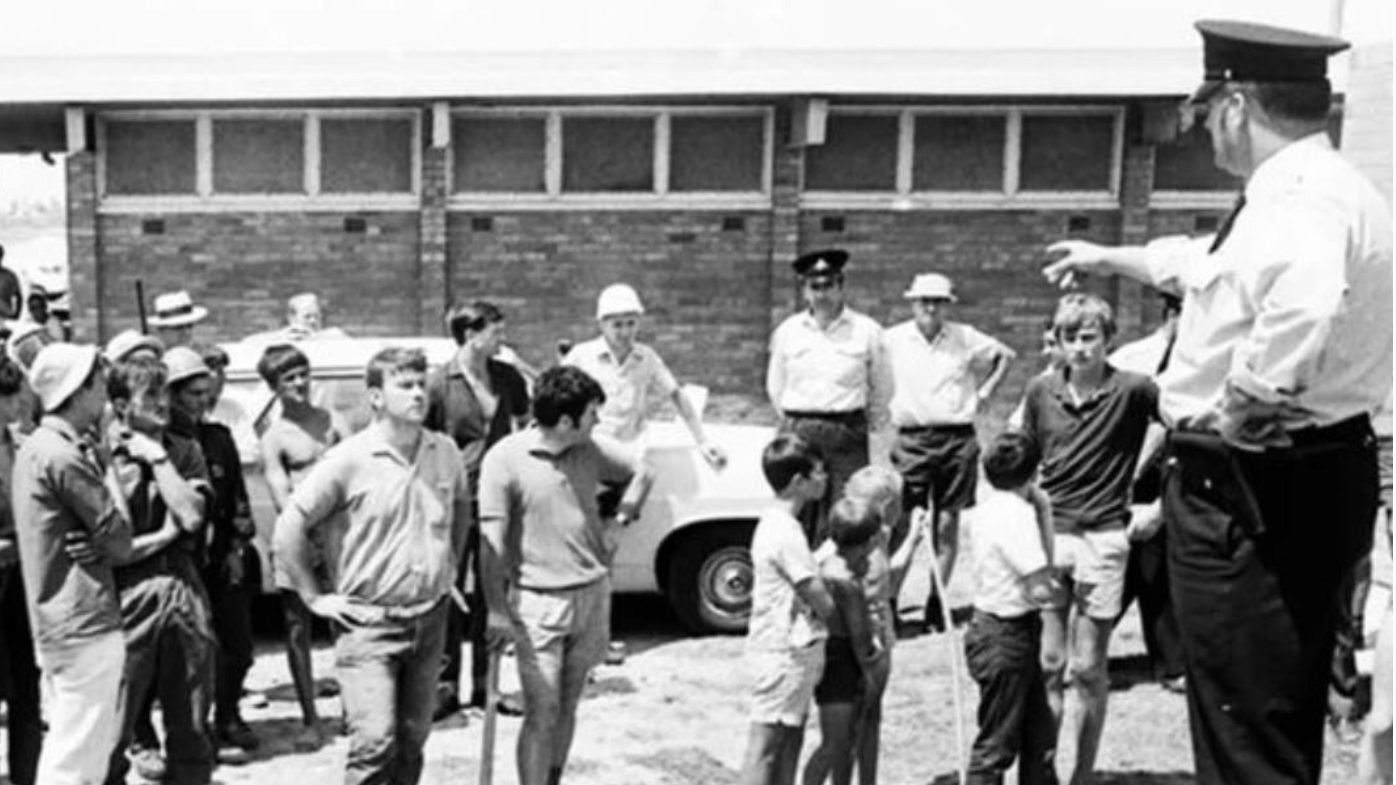
Cheryl Grimmer, a UK-born toddler, vanished from outside a shower block while on an outing with her family at Fairy Meadow Beach in the Illawarra, NSW.
Her disappearance has never been solved and a coronial inquest in 2011 found that she was likely dead and urged police to reopen the case.
READ MORE: Two men drown after being swept from Melbourne pier in extreme weather
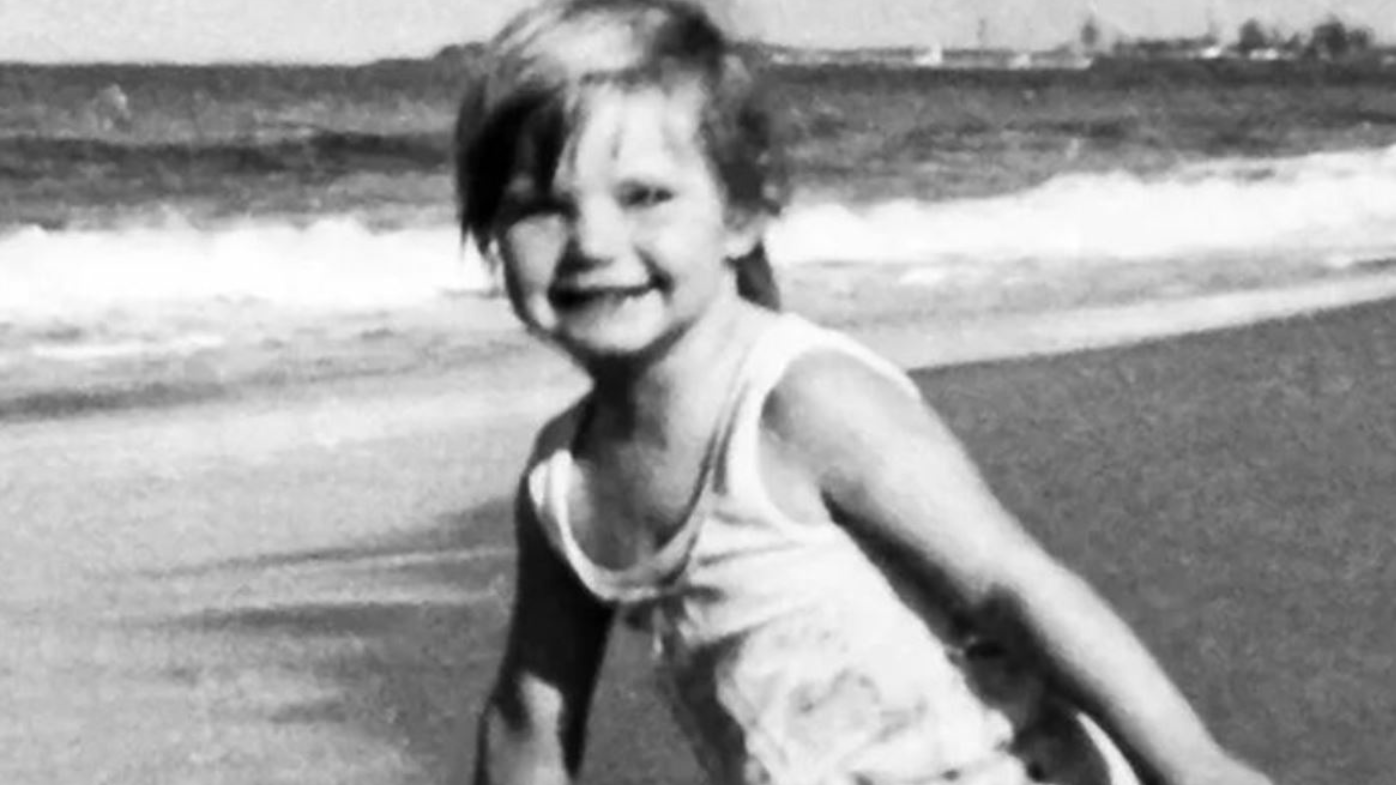
Investigators discovered records of a police interview in 1971, in which a 17-year-old boy allegedly admitted to police he had abducted and killed the girl.
Because of his age at the time, he has only been identified by the pseudonym "Mercury" until today, when Legalise Cannabis MP Jeremy Buckingham revealed his name in parliament.
Parliamentary privilege means MPs cannot be sued or prosecuted for what they say in parliament, though the house as a body may take action against MPs deemed to have abused privilege.
READ MORE: UK PM backs inquiry into Prince Andrew's rent-free mansion

9news.com.au is unable to reveal the identity of the man named by Buckingham because the media organisations are not protected by the same privilege.
No charges were laid during the Grimmer investigation in 1971, as police were unable to verify the details of the alleged confession and concluded it was false.
A renewed investigation saw Mercury arrested in 2017 and taken before the courts.
READ MORE: Footage shows moment Russian drone strikes Ukrainian kindergarten
He pleaded not guilty to Cheryl's abduction and murder.
However, the alleged confession was ruled inadmissible as evidence by the judge, who said that Mercury was a minor at the time and had not had the benefit of a parent or guardian present when the alleged confession was made.
The prosecution ultimately dropped the charges against Mercury, who is now in his 60s.
DOWNLOAD THE 9NEWS APP: Stay across all the latest in breaking news, sport, politics and the weather via our news app and get notifications sent straight to your smartphone. Available on the Apple App Store and Google Play.
‘Doom and gloom’: Truth behind Australia’s birth rate ‘crisis’
Australia's birth rate "crisis" made headlines when the Bureau of Statistics revealed it had fallen to its lowest level ever recently – supposedly well below "replacement" rates at 1.48.
But a focus on that number serves only to obscure the bigger structural issues in Australia's demographics and spread "doom and gloom", some experts say.
Glenn Capuano from data insights company .id said Austalia's birth rate had been falling fairly steadily since it peaked in 1961 at 3.54, and hadn't been above 2 since a brief rally in 2008-2009 attributed to the government's baby bonus.
READ MORE: Two men drown after being swept from Melbourne pier in extreme weather
It's a trend mirrored around much of the world, Capuano said, but it's not predicted to fall much further.
The biggest focus for demographers right now is the ageing of first-time parents – 32.1 years for mums and 33.9 years for dads.
Cost-of-living pressures, the receding prospect of home ownership, education and the desire to establish a career are pushing the timeline back for starting a family.
READ MORE: UK PM backs inquiry into Prince Andrew's rent-free mansion
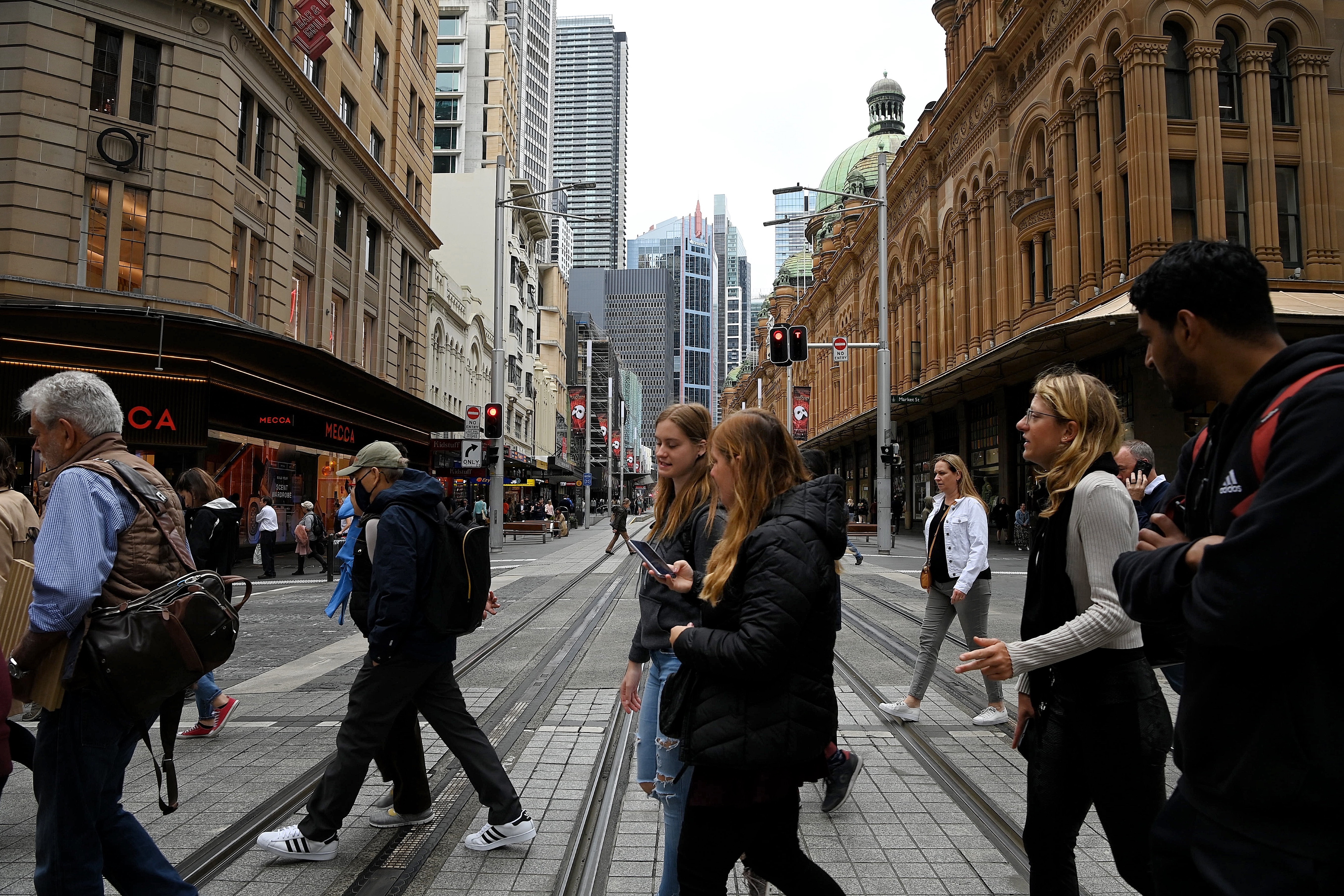
And breaking down demographics at a local level bears this out, with more children being born, and earlier, in more affordable regional areas and the outer suburbs of big cities.
"They're areas where you can, presuming you're a decent salary, afford housing," Capuano said.
Migrants to Australia, usually stereotyped – sometimes negatively – as having larger families, are also bucking the trend.
Capuano said birth rates to couples resident in but not born in Australia were actually lower than those of Australian-born couples.
READ MORE: Footage shows moment Russian drone strikes Ukrainian kindergarten
He said these trends meant Australia needed to consider how it could support new families – and how the country should look at immigration.
"If you have a look at these birth rates, population decline sets in at around 2050," Capuano said.
That's when deaths per year begin to outnumber births per year.
"We want to avoid a situation like they have in Japan, where they're losing one million people more a year than are being born," he said.
'Doom and gloom'
Emeritus Professor of Demography Peter McDonald from the Australian National University points to flaws in the methodology used to calculate Australia's birth rate, saying Australians, as in citizens, had one of the highest birth rates in OECD countries.
He points to the "impossible scenario" of births in Victoria rising 9400 in 2024, while falling nationally by 4100.
"According to Births Australia 2024, from 2023 to 2024, the number of births in Victoria increased by 9400 while, in the rest of Australia, the number of births fell by 4100.
"This does not reflect reality because the births data are births by year of registration, not by year of occurrence," he said.
"Registrars in NSW and Victoria very often do not process the births that have occurred in sufficient time for them to be included in the ABS stats for a year, but then excess births are recorded in the following year when the registrations catch up."
The ABS noted the same phenomenon in its report.
"Births Australia 2024 shows that the average number of births that women have had by age 50 was most recently 2.02 and this number has been flat for the past five years," McDonald said.
"This, termed cohort fertility, is a better way to measure fertility because the annual number, the total fertility rate (TFR), is affected by the delay of births, most of which take place at a future time."
He said another reason for the falling TFR was a surge in Australia's "temporary" population, such as international students, whose fertility rate was "close to zero".
"As an indication of this effect, the TFR in 2024 was 1.64 for Australia women and 1.25 for overseas-born women. A rate of 1.64 is one of the highest in the OECD countries," he said.
"The result is that Australia is one of the youngest countries in the OECD and, while we are ageing and will continue to age, the rate and final level of population ageing is much more manageable than it is in most OECD countries."