Tag Archives: oceania

Call for witnesses after body found in burnt-out car in NSW’s north-west

NSW Police is asking for public assistance after a body was found in a burnt out car in the state's north-west.

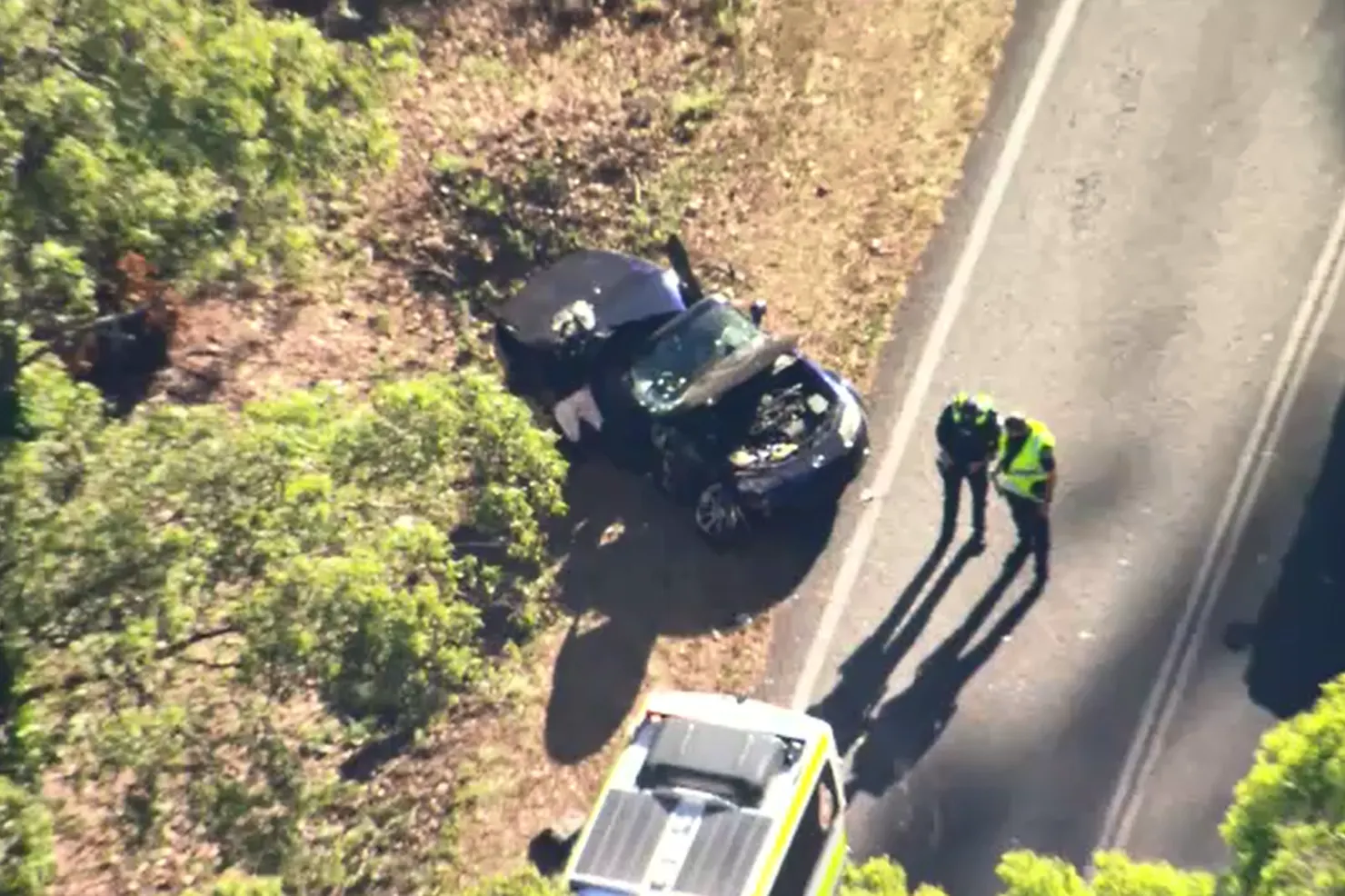
Emergency services responded to an SUV found on fire on the Kamilaroi Highway at Brewarrina, 787 kilometres from Sydney on Sunday morning.

A body was found in the burning wreck of the car, but it hasn't been identified yet.

READ MORE: Aussies have $25 billion in unworn clothing. They can donate it those in need without leaving home

Detective Inspector Andrew Barnes said police are treating the death as suspicious and are asking anyone with information about it to come forward.

"Due to the circumstances surrounding the discovery of the body we are treating the death as suspicious," he said

"While we are awaiting the results of a post-mortem examination, my detectives have been provided with information which indicates a possible identity of the deceased."

READ MORE: Mushroom murderer to lodge appeal against convictions

Bourke Police Station

The vehicle has been identified as being a green 1996-model Nissan Pathfinder station wagon with NSW registration CR21TG.

Checks have revealed the vehicle is unregistered.

Barnes stressed it is believed there is no ongoing risk to the public, and confirmed investigations were ongoing.

"I can confirm detectives have spoken with a number of people in the local area, and hope anyone with information – or dashcam vision – of the vehicle, or the person driving that vehicle before it was found alight on Sunday, to come forward," he said.

Anyone with information they believe can assist police is urged to contact Bourke Police or Crime Stoppers on 1800 333 000.

DOWNLOAD THE 9NEWS APP: Stay across all the latest in breaking news, sport, politics and the weather via our news app and get notifications sent straight to your smartphone. Available on the Apple App Store and Google Play.
Driver who deliberately swerved to kill two kangaroos spared jail

A man who deliberately swerved to kill two kangaroos with his ute after drinking with his mates has been spared a stint in prison.

Leo Boland drove his mother's Holden ute at speed and ran over two kangaroos while his passenger filmed the whole ordeal.

The 21-year-old from Balgowlah Heights in Sydney's northern beaches was sentenced today after killing the kangaroos on a dirt road at Running Stream, about 200km north-west of Sydney, in July 2024.

READ MORE: A wild party broke out at Elaine's house. Weeks later, she vanished

Manly Local Court magistrate Daniel Reiss rejected Boland's pleas to escape conviction and said the facts of the case were "disturbing".

Boland deliberately swerved the car at high speed to kill the national icons even as they attempted to escape.

He then stopped the car near the dead body of one of the kangaroos, the agreed facts of the case state.

READ MORE: Police hunting rapper over deadly servo shooting

Boland's lawyer cast the incident as a "moment of complete foolishness" and the young man should not be convicted, due to the embarrassment he felt.

Both Boland and his mother have been subjected to an "enormous amount of vile abuse on Facebook," Ben Clark said.

That argument was dismissed by the magistrate.

File image: Two kangaroos were killed when hit by Boland's ute.

READ MORE: Scorching October looms after Sydney's second-hottest September

The fact the 21-year-old ran down the kangaroos knowing his passenger was filming indicated he was happy to do it and for the possibility the footage would be published, Reiss said.

Boland's drinking earlier in the day with a group of friends also elevated the seriousness of the offence, the magistrate said.

"Young men, alcohol, stupidity – not a good mix," Reiss said.

In August, Boland pleaded guilty to one charge of recklessly beating and injuring an animal while another charge of torturing an animal was withdrawn.

He also pleaded guilty to having lied to police when he told them he did not know who was driving or in the passenger seat when the animals were killed.

READ MORE: Australians caught in Israel's interception of aid flotilla to Gaza

Boland's denials came two weeks after police had already seized the phone of the passenger and obtained the videos of the brutal rampage, which were also posted on social media.

Lying to the police about driving the car despite knowing he was being filmed was also a factor in the magistrate's decision to convict.

Reiss expressed confusion about why Boland initially pleaded not guilty to the charge of lying, especially because alcohol was not a factor as it was during the kangaroo killing.

He ordered the young man to serve 200 hours of community service and be of good behaviour for 18 months.

Boland must also pay a total fine of $1500.

DOWNLOAD THE 9NEWS APP: Stay across all the latest in breaking news, sport, politics and the weather via our news app and get notifications sent straight to your smartphone. Available on the Apple App Store and Google Play.
Aussies have $25b in unworn clothing. They can donate it without leaving home

Australians have an estimated $25 billion of unworn clothing hiding in wardrobes around the country, and the Red Cross is trying to make it easier to get some of that hidden fashion fortune to the people who need it most.

New research from Red Cross and Uber found that the average Australian owns 63 items of clothing, with nearly a fifth (17 per cent) of it going unworn.

That adds up to more than 231 million items of clothing sitting idle – enough to cover 42 football fields.

READ MORE: A wild party broke out at Elaine's house. Weeks later, she vanished

It comes as the two organisations team up for the seventh year for the Uber x Red Cross Clothing Drive.

On Saturday, October 18, Australians in Sydney, Melbourne, Brisbane, Adelaide, and Perth can book a free Uber Courier pick-up from 10am to 4pm so they can donate high-quality unwanted clothes to the Red Cross without having to leave home.

"Our research shows Australians are proactive about decluttering, with nearly half clearing out their wardrobes every six to 12 months, but some people are confused about what – and how – to donate," Red Cross head of retail Richard Wood said.

READ MORE: Police hunting rapper over deadly servo shooting

"The nation is holding onto billions of dollars' worth of clothes that can be helping people in need. With Uber by our side, the clothing drive is a simple, free way to give back without even leaving your home."

The organisation's research found 61 per cent of Australians would give to charity if it was easier, while others are too time poor or uncertain to donate properly.

"We're now calling on Australians to do their spring cleaning with a great cause in mind, and donate clothes that are clean, wearable and in good condition," Wood said.

READ MORE: Scorching October looms after Sydney's second-hottest September

"Every item helps stock our Australian Red Cross Shops, which directly fund our humanitarian programs to support some of our most vulnerable communities. We see the impact these donations make every day, and all Aussies can be a part of this."

On October 18, the Uber and Uber Eats apps will display a Red Cross Clothing Drive option for people to book the free courier.

Donated items should be in a box or container that weighs no more than 20kg.

DOWNLOAD THE 9NEWS APP: Stay across all the latest in breaking news, sport, politics and the weather via our news app and get notifications sent straight to your smartphone. Available on the Apple App Store and Google Play.
The headlight habit that could cost you $1000

Millions of Australians will drive with their high beams on in 2025 without realising a few hundred metres is all that stands between them and fines of up to $1000.

Some mistakenly believe high beams, typically the brightest lights on a vehicle, can only be used on dark country roads without streetlights.

Others think high beams must be switched off as soon as another car is visible on the road, but that's not true either.

READ MORE: Trump's war chief opens fire on 'beardos' and the 'enemy within'

Cars in traffic during dusk, showcasing headlights and city lights, with a blurred background reflecting urban life

And some are even in the bad habit of leaving their high beam on until right before they pass an oncoming car.

Here's what you need to know about the road rules for high beams and the penalties for breaking them.

What are the rules for high beams in Australia?

The Australian Road Rules are quite specific about how high beams can be used.

Drivers can use high-beams on any road or street, but they must switch to low-beam when driving:

  • less than 200 metres behind a vehicle travelling in the same direction
  • less than 200 metres from an oncoming vehicle

Drivers also must not use any light on their vehicle, including high beams, to dazzle other people on the road.

They may, however, briefly flash their high beams immediately before beginning to overtake a vehicle.

These rules apply in all Australian states and territories.

READ MORE: Nicole Kidman officially files for divorce from Keith Urban

Can you get fined for misusing your high beams?

Breaching the rules around high-beam use can attract costly fines, depending on where a driver is caught.

The lowest fine is in the NT, where the penalty is $50.

In Queensland it's $66, in WA it's $100, and in NSW it's $140.

The fine in Tasmania is $202 and in the ACT it's $224.

In SA, fines range from $70 to $300, and in Victoria fines start at $305 and can exceed $1000 if the matter is taken to court.

Breaking the road rules around high-beams will also set drivers back one demerit in all states and territories.

READ MORE: Brisbane doctor revealed as mother found dead alongside daughter

Is it illegal to flash your high beams to warn other drivers?

Not specifically, but drivers who do it may still cop fines for inappropriate use of headlights.

"While flashing headlights to warn others of police presence is not a specific offence in NSW, it can result in charges for related offences such as dazzling a driver or illegal use of high beams," a Transport for NSW spokesperson said.

State and territory fines for these offences are typically in line with those listed above.

Drivers may also be charged with hindering a police officer, which may attract additional penalties.

DOWNLOAD THE 9NEWS APP: Stay across all the latest in breaking news, sport, politics and the weather via our news app and get notifications sent straight to your smartphone. Available on the Apple App Store and Google Play.
Execution date set for US state’s only woman on death row

The Tennessee Supreme Court has set execution dates for four people, including the only woman in the state on death row.

Christa Pike received the death sentence at age 18 for the 1995 torture slaying of Colleen Slemmer, who was a fellow Knoxville Job Corps student.

Slemmer, 18, was stabbed and beaten by Pike and Tadaryl Shipp, Pike's boyfriend at the time, on the University of Tennessee's Agricultural campus.

READ MORE: The US government has been shut down. What does that mean, exactly?

They carved a pentagram into Slemmer's chest, and investigators claimed Pike took a piece of the victim's skull for a souvenir. Shipp, of Memphis, was sentenced to life in prison with the possibility of parole.

Pike was also convicted in 2004 for trying to strangle a fellow inmate during a prison fight, which added 25 years to her sentence.

Pike's lawyers previously asked the state's high court to commute her sentence based on her youth and "severe mental illness at the time of her crime."

Pike suffered physical and sexual abuse and neglect as a child, according to her attorneys. She also suffered from bipolar and post-traumatic stress disorders that were not diagnosed until years after her arrest.

"With time and treatment … Christa has become a thoughtful woman with deep remorse for her crime," a Wednesday statement from her attorneys reads. Tennessee began a new round of executions in May after a three-year pause following the discovery that the state was not properly testing lethal injection drugs for purity and potency.

An independent review later found that none of the drugs prepared for the seven inmates executed in Tennessee since 2018 had been fully tested. The state Attorney General's Office also conceded in court that two of the people most responsible for overseeing Tennessee's lethal injection drugs " incorrectly testified " under oath that officials were testing the chemicals as required.

READ MORE: 'Deeply scared' woman interrupts treasurer's press conference with plea

Kelley Henry, a federal public defender who represents several death row inmates, said on Wednesday that the state still has not answered many questions about the last execution where Byron Black said he was "hurting so bad" while he lay on the gurney.

Black's autopsy found pulmonary edema, a condition of fluid in the lungs his attorneys have said would feel like drowning or suffocating.

"We will continue to fight to bring the truth of what happened to light before these executions move forward to protect our clients from being tortured the way Byron was," Henry said.

The court on Tuesday also set execution dates for Tony Carruthers, Gary Sutton and Anthony Hines.

DOWNLOAD THE 9NEWS APP: Stay across all the latest in breaking news, sport, politics and the weather via our news app and get notifications sent straight to your smartphone. Available on the Apple App Store and Google Play.
Elon Musk becomes first person worth $US500 billion

The staggering wealth of Elon Musk has hit new heights, with the Tesla CEO becoming the first person to be worth $US500 billion ($756 billion).

Musk hit the milestone after shares in Tesla surged nearly 4 per cent on the US sharemarket overnight, bumping up his personal wealth by $US9.3 billion, reports Forbes.

The electric vehicle maker's share price has almost doubled since April when Musk said he would be spending more time running Tesla and stepping down as head of US President Donald Trump's Department of Government Efficiency (DOGE).

READ MORE: New Epstein files mention Elon Musk, Peter Thiel, top Trump aide Steve Bannon

Musk's 12 per cent stake in Tesla is now worth $US191 billion.

But it would be worth much more if a 2018 stock options compensation package today worth $US133 billion had not been declared void by a US court judge in January 2024.

The value of those options have been discounted 50 per cent by Forbes, awaiting the result of a current court appeal by Musk.

Meanwhile, his fortune could be on track to hit $US1 trillion by 2033, on the back of the Tesla's board-proposed record-breaking pay package proposed last month.

That would hand Musk additional 423.7 million additional shares of Tesla stock worth up to $US1 trillion.

READ MORE: Chimp expert, legendary activist Jane Goodall dies aged 91

But he would get those shares only if the value of Tesla stock increases significantly in coming years.

Musk's half-a-trillion-dollar fortune has also been bolstered by the performance of his other companies.

His 42 per cent stake in SpaceX is worth $US168 billion, while his shares in xAI Holdings, the AI company founded by Musk, are valued at $US60 billion.

DOWNLOAD THE 9NEWS APP: Stay across all the latest in breaking news, sport, politics and the weather via our news app and get notifications sent straight to your smartphone. Available on the Apple App Store and Google Play.
‘Chunk’ crowned winner of Fat Bear Week

In a ferocious competition, 12 chunky brown bears in Alaska's Katmai National Park and Preserve have been battling it out in one of the most cutthroat places on the planet – the internet.

As part of the park's annual Fat Bear Week, the oversized ursines are pitted against each other in online popularity contests, where fans from around the world vote for the bear they like best.

A live camera lets voters follow along with the bears as they forage for salmon in a last-gasp chance to pack on the pounds ahead of their upcoming winter hibernation.

READ MORE: A wild party broke out a Elaine's house. Weeks later, she vanished

Bear 32, Chunk, hunts for salmon in the Brooks River.This image provided by the National Park Service shows bear 901 at the Katmai National Park and Preserve in Alaska, on Sept. 12, 2025. (E Johnston/National Park Service via AP)

After one week of voting, bears competed against each other until only two challengers remained – numbers 856 and 32.

This year's winner is bear 32, AKA Chunk.

In addition to his impressive girth, Chunk's Cinderella story appealed to voters as he suffered from a jaw injury that threatened to derail his salmon-eating activities. He defeated bear 602, affectionately known as "Flotato," by roughly 70 per cent to 30 per cent in the semis to secure his place in the final.

Meanwhile, bear 856 beat last year's reigning champion, 128 Grazer, by around 68 per cent -32 per cent in the semis. Grazer was the last female bear left in the competition.

READ MORE: Wife 'in a state of shock' after WA dad drowned trying to save children

This image provided by the National Park Service shows members of the cubs 803s at the Katmai National Park and Preserve in Alaska on Sept. 7, 2025. (D. Colson/National Park Service via AP)This image provided by the National Park Service shows bear 602 at the Katmai National Park and Preserve in Alaska, on July 12, 2025. (T Carmack/National Park Service via AP)

Bear 856 lost out to Chunk 60.2 per cent – 39.8 per cent in the final round of voting, which was held Tuesday. The final total was 96,350 votes for Chunk and 63,725 for 856.

Beyond the fun of selecting a chubby champion, Fat Bear Week is also an opportunity to educate people about brown bears and their habitat in Alaska.

The contest, which began in 2014, spotlights the work rangers do at Katmai, the fourth-largest national park in the US.

To survive Alaska's punishing winters, brown bears spend the season hibernating in their dens.

READ MORE: Massive tree smashes cars in ritzy street

Grazer, a female bear who is the two-time defending champion in the popular online Fat Bear Week competition, is shown Sept. 27, 2024, in Katmai National Park and Preserve, Alaska. (M. Carenza/National Park Service via AP)This image provided by the National Park Service shows the cubs 803s at the Katmai National Park and Preserve in Alaska on July 19, 2025. (C. Loberg/National Park Service via AP)

The more weight they put on ahead of that, the more likely they are to survive the season. That goes double for pregnant bears, who usually enter their dens earlier than their peers.

As Katmai's website notes, "fat bears are successful bears," so it's safe to say all the park's brown bears are winners.

Chunk will now have his photo added to the Fat Bear Week Hall of Champions, where previous winners are honoured for their achievements.

Sign up here to receive our daily newsletters and breaking news alerts, sent straight to your inbox.

‘Not again’: WA kayakers survive close encounter with huge great white

A group of Western Australian sea kayakers has come face-to-face with a five-metre great white shark for the second time in four days.

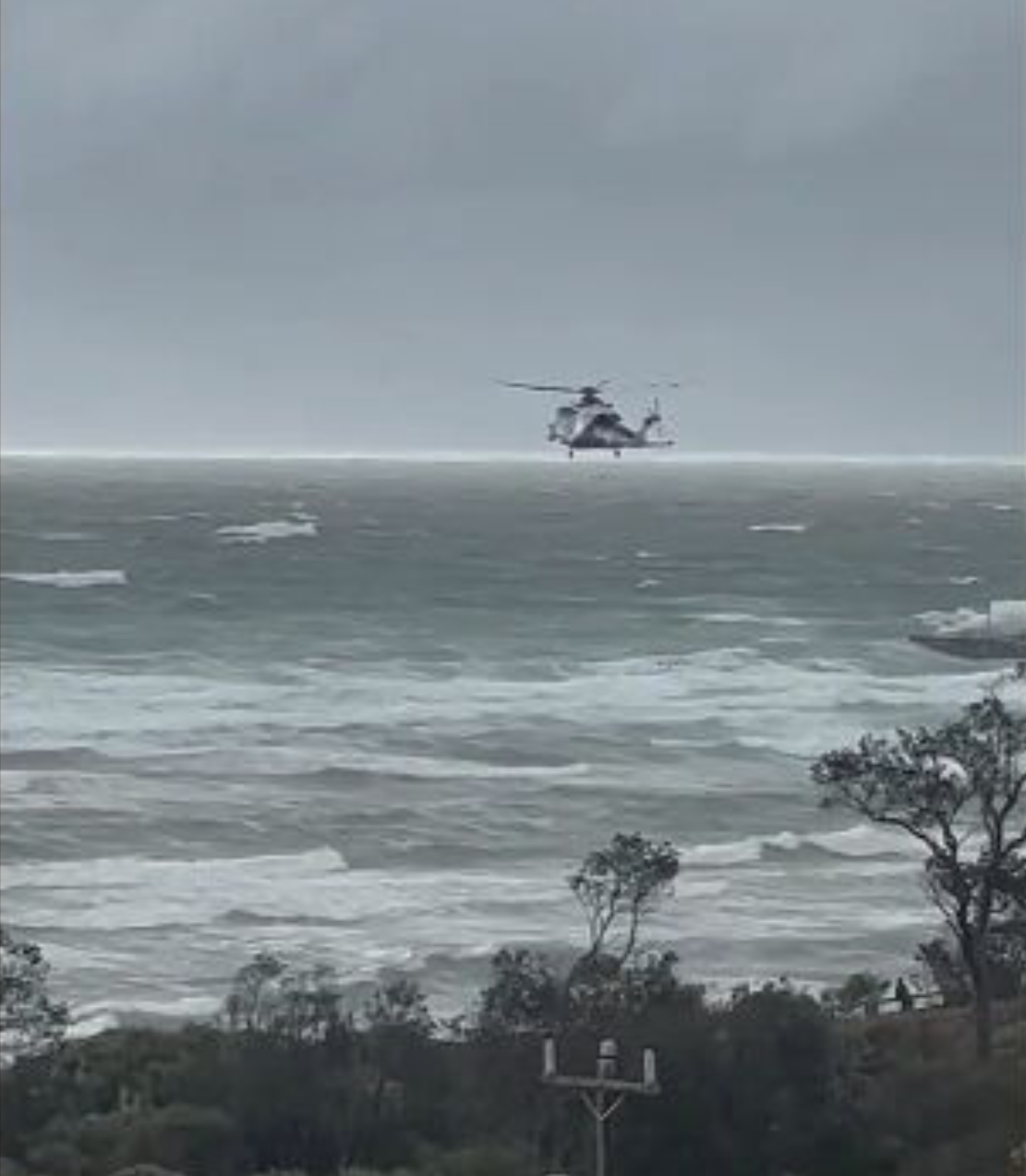
The group rafted together for safety while the sea predator circled them for 15 minutes yesterday, as a rescue helicopter and nearby boats raced to help them.

Last night, they were pinching themselves that they lived to tell the tale – twice.

READ MORE: Surge in counterfeit cash sparks warning from police

A group of Western Australian sea kayakers have come face-to-face with a five metre great white shark for the second time in four days.

After setting off yesterday morning from Hillarys Dog Beach in Perth's north, about 10am, the monster approached and lurked beneath the surface.

Allen Halsy was the first to spot the apex predator approaching.

"I just looked out of the corner of my eye and I saw something and looked and the shark came in really fast and it's fin was out of the water and it was going straight to the back of their boat," he told 9News.

The same kayaking club was out paddling out on Saturday when an almost identical situation occurred, with a different great white circling them in a similar spot.

"It was a different one because this was a tagged shark and I think it was a little bit smaller as well and I just said 'oh no, not again'," fellow kayaker Richard Lailey told 9News.

A group of Western Australian sea kayakers have come face-to-face with a five metre great white shark for the second time in four days.

Lailey said they didn't really know what the shark's intentions were.

"He carried on circling us and circling us and he swam under us a few times as well," he said.

It's an incredibly rare event many will never experience in a lifetime, let alone twice in four days.

"When you're just sitting in those little flimsy kayaks out there, you're really at very low water level [and] when that shark's coming up, you could just about touch it," Halsy said.

A shark warning was still in place for the state's northern beaches last night from Scarborough to Ocean Reef.

There have been 11 tagged sharks and sightings between Ocean Reef and Waterman's Bay since Saturday, with experts urging caution and warning that vessels such as kayaks offer little protection.

A group of Western Australian sea kayakers have come face-to-face with a five metre great white shark for the second time in four days.

It's not the first time in WA great whites have taken an interest in paddlers.

In 1997, Brian Sierakowski and John Hanrahan encountered a shark that attacked their surf ski off Cottesloe Beach.

Martin Kane's water craft was torn apart in Mullaloo by a great white in 2012.

Yesterday's kayakers said they were completely undeterred by the two close encounters and planned to get back on the water this weekend.

"These experiences come in threes, so I'll see you down here at the weekend," Lailey said.

DOWNLOAD THE 9NEWS APP: Stay across all the latest in breaking news, sport, politics and the weather via our news app and get notifications sent straight to your smartphone. Available on the Apple App Store and Google Play.
A wild party broke out at Elaine’s house. Weeks later, she vanished

On its surface, the NSW Sutherland Shire was a carefree place to grow up in the late 1970s, with sun, surf and good times for teenagers.

But, as portrayed in the classic novel and hit Netflix series Puberty Blues, there was also a dark underbelly to "The Shire", where wild parties, underage sex and rape could make it a dangerous place to be a young girl.

Elaine Johnson was 16 years old when she went missing in January 1980, never to reappear again. Her good friend Kerry Anne Joel was 17.

READ MORE: The US government has been shut down. What does that mean, exactly?

Elaine, who was one of five siblings, grew up in Cronulla and Kurnell in the NSW Sutherland Shire.

The disappearance of the two seemingly rebellious teenage girls appeared to cause barely a blip on the police radar.

When Elaine's dad Clifford reported her missing to police, she was dismissed as a runaway, her family says.

The girls' friends weren't interviewed until more than three decades later, in 2014, and, at an inquest in 2016, it was revealed Elaine's original police file had been lost.

Key shortcomings of the police investigation into Elaine and Kerry Anne's disappearance are now being revealed in a new podcast by investigative journalist Kate Kachor, with the first episode released on Wednesday.

Elaine's sister, Helen Cooper, was just 12 years old when Elaine went missing from their family home in Kurnell.

She remembers Elaine as a bright and bubbly girl who was well-liked.

"She was just fun-loving, and she was my big sister, we looked up to her," Helen told Nine.com.au.

"She was quietly spoken, though, she wasn't a rowdy person," she said, adding she didn't believe it was in her character to run away for good and cut ties with the family.

The 2016 inquest into Elaine and Kerry Anne's disappearance, held at the State Coroner's Court of New South Wales, found the girls had likely died not long after they went missing.

The case was referred to the unsolved homicide unit, where it has rested – undisturbed and unresolved – ever since.

However, the Johnson family has never given up in their search for answers about what happened to Elaine, and strongly believes someone from within the girls' wide circle of friends and acquaintances knows or saw something.

The year before Elaine went missing was one of increasing tension in the house between Elaine and her parents.

The family had moved from Cronulla to Kurnell and Elaine wasn't happy with the decision.

"After we moved to Kurnell, Elaine often stayed away from home for a number of nights at a time," Elaine's mother June told the podcast Out From The Cold: Searching For Elaine.

"I think it was possibly because she didn't want to live in Kurnell, but wanted to be closer to her friends around Cronulla."

Elaine disappeared when she was 16 years old, in January 1980.

While Elaine didn't appear to be using drugs or drinking a lot, the behaviour was a worry to her parents.

"We often had arguments with Elaine about her not telling us where she was going and staying out a lot," June said.

Things came to a head when the family returned from a camping trip in January 1980 to find the family home trashed.

Elaine had not gone on the camping trip and had instead stayed home and thrown a wild party in her parents' absence.

"The place was in a mess," Helen said.

"There was a car that hit the front wall of the house, and it was fibro, so it had gone in and made a hole."

The bathtub was full of beer bottles and there were plates everywhere.

Incensed, Elaine's dad Clifford spoke harshly to his daughter, telling her she needed to behave like the rest of the family or find somewhere else to live.

While Elaine's parents say that was the last time they saw Elaine at the house, Helen remembers her sister sneaking back into their shared bedroom window the next evening.

A night owl, Helen would often spend time with her older sister at night while the rest of the family was asleep.

"We were watching television on the floor … she was also mucking around and taping herself singing," Helen said.

"And then I remember her eating the scrambled eggs with tomato sauce. There was so much sauce it was more like red eggs.

"That was the last time I saw her."

Over the next fortnight, Elaine stayed briefly at a flat in Gymea and two other local caravan parks.

Elaine (left) and Kerry Anne (right) were last seen at a local caravan park.

From there, the trail goes cold and, as far as the family knows, the girls were not seen again.

A few weeks later, Elaine's worried father, who died in 2020, went to the police to report her missing.

But he had trouble convincing the police that she could be in danger.

"I know that police didn't listen to Dad properly and said, 'She's 16, she could have just run away'," Helen said.

One crucial event that could provide a clue to where Elaine went was the house party she threw, Helen said.

The odd thing was, no-one had ever admitted to being at that party, she added.

"Everyone's tight-lipped. We're wondering why. But the thing is, the more we ask, the more they sort of get hesitant," Helen said.

"It's crucial, because those people at the party would have been talking to them to get some sort of knowledge of where their headspace was, what they were thinking, where they were going."

Helen said she had heard rumours over the years of other shady activities which had been going on in the area, and felt perhaps people were covering for each other.

Given their suspicions that someone knows something, Helen and her family are calling for police to offer a reward for information that leads to solving the girls' case.

But the suggestion has so far been rebuffed.

"They should definitely offer a reward," Helen said.

"I don't understand what the problem is, because (the government) doesn't have to pay anything, unless somebody comes forth. Are they worried that someone will come forth?"

NSW Police said in a statement: "The disappearance of Kerry Joel and Elaine Johnson is an open case which sits with State Crime Command's Unsolved Homicide Team.

"A case with the Unsolved Homicide Team is never closed; it remains open until solved and is continually assessed and monitored for new information or avenues to progress the investigation."

Kachor is part of the Nine.com.au team and has been investigating Elaine and Kerry Anne's disappearance for the past two years as an independent project.

"Since I joined Helen and Wendy's search, I've been contacting old witnesses, reviewing evidence and speaking with experts to try and piece together what really happened," Kachor said.

"That's led us to some compelling new information.

"Ultimately Elaine's family is hoping that releasing this podcast will jog someone's memory – or lead a guilty conscience to finally get in touch with them or with the police."

Chimp expert, legendary activist Jane Goodall dies aged 91

Jane Goodall, the conservationist renowned for her groundbreaking chimpanzee field research and globe-spanning environmental advocacy, has died. She was 91.

The Jane Goodall Institute announced the primatologist's death in an Instagram post. According to the institute, Goodall died of natural causes while in California on a US speaking tour.

Her discoveries "revolutionised science, and she was a tireless advocate for the protection and restoration of our natural world," the Institute said.

READ MORE: Australian activists aboard Gaza flotilla talk about final approach

While living among chimpanzees in Africa decades ago, Goodall documented the animals using tools and doing other activities previously believed to be exclusive to humans, and also noted their distinct personalities.

Her observations and subsequent magazine and documentary appearances in the 1960s transformed how the world perceived not only humans' closest living biological relatives but also the emotional and social complexity of all animals, while propelling her into the public consciousness.

"Out there in nature by myself, when you're alone, you can become part of nature and your humanity doesn't get in the way," she told The Associated Press in 2021.

READ MORE: Munich's Oktoberfest fairgrounds reopen after bomb threat and deadly explosion

"It's almost like an out-of-body experience when suddenly you hear different sounds and you smell different smells and you're actually part of this amazing tapestry of life."

In her later years, Goodall devoted decades to education and advocacy on humanitarian causes and protecting the natural world. In her usual soft-spoken British accent, she was known for balancing the grim realities of the climate crisis with a sincere message of hope for the future.

From her base in the British coastal town of Bournemouth, she traveled nearly 300 days a year, even after she turned 90, to speak to packed auditoriums around the world. Between more serious messages, her speeches often featured her whooping like a chimpanzee or lamenting that Tarzan chose the wrong Jane.

READ MORE: Nicole Kidman files for divorce from Keith Urban after 19 years of marriage

While first studying chimps in Tanzania in the early 1960s, Goodall was known for her unconventional approach. She didn't simply observe them from afar but immersed herself in every aspect of their lives. She fed them and gave them names instead of numbers, something for which she received pushback from some scientists.

Her findings were circulated to millions when she first appeared on the cover of National Geographic in 1963 and soon after in a popular documentary. A collection of photos of Goodall in the field helped her and even some of the chimps become famous. One iconic image showed her crouching across from the infant chimpanzee named Flint. Each has arms outstretched, reaching for the other.

In 1972, the Sunday Times published an obituary for Flo, Flint's mother and the dominant matriarch, after she was found face down on the edge of a stream. Flint died about three weeks later after showing signs of grief, eating little and losing weight.

″What the chimps have taught me over the years is they're so like us. They've blurred the line between humans and animals,″ she told The Associated Press in 1997.

Goodall has earned top civilian honors from a number of countries including Britain, France, Japan and Tanzania. She was awarded the Presidential Medal of Freedom in 2025 by then-US President Joe Biden and won the prestigious Templeton Prize in 2021.

"Her groundbreaking discoveries have changed humanity's understanding of its role in an interconnected world, and her advocacy has pointed to a greater purpose for our species in caring for life on this planet," said the citation for the Templeton Prize, which honors individuals whose life's work embodies a fusion of science and spirituality.

Goodall was also named a United Nations Messenger of Peace and published numerous books, including the bestselling autobiography "Reason for Hope."

Born in London in 1934, Goodall said her fascination with animals began around when she learned to crawl. In her book, In the Shadow of Man, she described an early memory of hiding in a henhouse to see a chicken lay an egg. She was in there so long her mother reported her missing to the police.

She bought her first book – Edgar Rice Burroughs' Tarzan of the Apes – when she was 10 and soon made up her mind about her future: Live with wild animals in Africa.

That plan stayed with her through a secretarial course when she was 18 and two different jobs. And by 1957, she accepted an invitation to travel to a farm in Kenya owned by a friend's parents.

It was there that she met the famed anthropologist and paleontologist Louis Leakey at a natural history museum in Nairobi, and he gave her a job as an assistant secretary.

Three years later, despite Goodall not having a college degree, Leakey asked if she would be interested in studying chimpanzees in what is now Tanzania. She told the AP in 1997 that he chose her "because he wanted an open mind."

The beginning was filled with complications. British authorities insisted she have a companion, so she brought her mother at first. The chimps fled if she got within 500 yards (460 metres) of them. She also spent weeks sick from what she believes was malaria, without any drugs to combat it.

But she was eventually able to gain the animals' trust. By the fall of 1960 she observed the chimpanzee named David Greybeard make a tool from twigs and use it to fish termites from a nest. It was previously believed that only humans made and used tools.

She also found that chimps have individual personalities and share humans' emotions of pleasure, joy, sadness and fear. She documented bonds between mothers and infants, sibling rivalry and male dominance. In other words, she found that there was no sharp line between humans and the animal kingdom.

In later years, she discovered chimpanzees engage in a type of warfare, and in 1987 she and her staff observed a chimp "adopt" a three-year-old orphan that wasn't closely related.

Goodall received dozens of grants from the National Geographic Society during her field research tenure, starting in 1961.

In 1966, she earned a PhD in ethology – becoming one of the few people admitted to University of Cambridge as a PhD candidate without a college degree.

Her work moved into more global advocacy after she watched a disturbing film of experiments on laboratory animals at a conference in 1986.

″I knew I had to do something,″ she told the AP in 1997. ″It was payback time.″

When the COVID-19 pandemic hit in 2020 and halted her in-person events, she began podcasting from her childhood home in England. Through dozens of "Jane Goodall Hopecast" episodes, she broadcast her discussions with guests including US Senator Cory Booker, author Margaret Atwood and marine biologist Ayana Elizabeth Johnson.

"If one wants to reach people; If one wants to change attitudes, you have to reach the heart," she said during her first episode. "You can reach the heart by telling stories, not by arguing with people's intellects."

In later years, she pushed back on more aggressive tactics by climate activists, saying they could backfire, and criticised "gloom and doom" messaging for causing young people to lose hope.

In the lead-up to 2024 elections, she co-founded "Vote for Nature," an initiative encouraging people to pick candidates committed to protecting the natural world.

She also built a strong social media presence, posting to millions of followers about the need to end factory farming or offering tips on avoiding being paralysed by the climate crisis.

Her advice: "Focus on the present and make choices today whose impact will build over time."

DOWNLOAD THE 9NEWS APP: Stay across all the latest in breaking news, sport, politics and the weather via our news app and get notifications sent straight to your smartphone. Available on the Apple App Store and Google Play.