‘It would be counter-productive of me to steal from people who pay my wages’.
Tag Archives: oceania
Experts say the Health Star Rating system has failed. This is why
More than 10 years after Health Star Ratings were first introduced, experts say the voluntary system has failed because manufacturers have not been obligated to use it.
The system, which was launched in 2014, rates the overall nutritional profile of a packaged food product from 0.5 to 5 stars.
Currently just over a third of products (36 per cent) feature a Health Star Rating and, unsurprisingly, it's the 5-star products that are far more likely to feature the rating (61 per cent) compared to only 16 per cent of 0.5-star products.
READ MORE: What you do on the weekend could be ruining your sleep, experts reveal
"Voluntary uptake has failed," Dr Alexandra Jones, the head of Food Governance at The George Institute for Global Health said.
She said because the system was voluntary, it was applied "selectively… often for marketing purposes".
"Fundamentally people understand the concept of stars and they can use it to make a better choice," she said.
"In the real world their ability to actually use it has been mostly limited by the fact that it's only on a third of products."
In 2019, a review of the system found consumers understood the system but it was not on enough labels to adequately compare similar products.
The Australian, New Zealand and state and territory governments then set the industry a series of targets in an effort to lift the uptake.
The final target, 70 per cent by November 2025, almost certainly will not be met.
"Until it's mandatory, people will continue to struggle out there to understand how to make good choices," Dietitians Australia CEO Magriet Raxworthy said.
"Australians want easy, transparent nutrition information about the food they are choosing for themselves and their families, and mandating the system will bring more consistency and clarity across the shelves."
Jones said Food Standards Australia New Zealand (FSANZ) had been ordered to start the preparatory work for a mandatory system but she feared the timeline could blow out as far as 2029.
READ MORE: Australian Made vs Australian Owned. What's the difference?
"Now that we've had 10 years of voluntary operation we know a lot about how this system works and where it needs to be improved," she said.
"We don't want this to go on any longer than it has to."
She said mandatory country of origin labelling, which has seen an uptake of more than 90 per cent in a similar time frame, proved it was possible to implement a mandatory Health Star Rating system quickly.
"Rapid food labelling change is definitely possible when it is mandated," she said.
A spokesperson from FSANZ confirmed preparatory work to inform future decision-making by food ministers on whether the Health Star Rating system should be mandated was underway.
"If the voluntary uptake target (70 per cent of intended products displaying the HSR by 14 November 2025) is not met, FSANZ's preparatory work will enable an efficient process for incorporating the HSR system into the Australia New Zealand Food Standards Code, should ministers ask FSANZ to consider mandating the system," the spokesperson said.
How does the health star rating system work?
Manufacturers input the nutritional information of their product on a government website, which uses an algorithm to calculate the Health Star Rating of the product.
The algorithm gives points for protein, fibre, fruits, vegetables, nuts and legumes and removes points for saturated fat, sugar and salt.
Products are given a rating between 0.5 and 5 stars.
The manufacturer can then choose whether to display the rating on their product or not.
Consumers ideally then use the rating to compare similar products and ultimately make healthier choices.
The rating aligns with the Australian Dietary Guidelines and New Zealand Eating and Activity Guidelines.
DOWNLOAD THE 9NEWS APP: Stay across all the latest in breaking news, sport, politics and the weather via our news app and get notifications sent straight to your smartphone. Available on the Apple App Store and Google Play.
At 15, Brady thought his only options were jail or death. He’s not alone
By age 15, Brady Morris thought he knew where his life was headed.
"I was thinking, I'm either going to jail or I'm going to die. Either way, I wasn't going very far," he told 9news.com.au.
Growing up in Armidale, NSW, in the 2000s, he had started down a destructive path that could have turned deadly – and his story isn't unique.
READ MORE: Australians are consuming a lot more of these four drugs
There were 845 young Australians in detention on an average night in the June quarter of 2024.
Of them, 90 per cent were male and three in five were First Nations.
Keeping one of those kid in jail for a single day costs Australia about $3300, which adds up to more than $1.1 million per year.
In total, the country spends more than $1 billion on youth incarceration annually; almost double what was spent ten years ago ($544 million in 2014-15) when Morris was a teen.
But experts say jailing kids is more likely to harm them than deter crime or reduce reoffending.
"We're putting millions upon millions of dollars into things that are really not passing muster," BackTrack Youth Works Program founder Bernie Shakeshaft told 9news.com.au.
"We've got to start changing systems and doing things different."
Because if we don't, kids like Morris may not get the support they need to stay out of prison or survive to adulthood.
An alternative to incarceration
Morris was struggling when he first met Shakeshaft in his high school principal's office.
About one in five young Australians are disengaged from mainstream education and one in three have reported psychological distress.
Almost 15 per cent live in poverty and 40,000 experience homelessness each year.
Many end up abusing drugs and alcohol, engaging in violence or criminality, and facing jail time.
That's where BackTrack comes in.
READ MORE: Teen home invasion killer's sentence reduced on appeal
Shakeshaft developed the program in 2005 based on skills he'd learned from First Nations trackers when he was a young man working in the Northern Territory.
The goal was to keep disenfranchised young people in Armidale alive, off the streets, and out of jail by offering education, vocational training and wraparound support in a judgement-free environment.
Without it, Morris doubts he'd be the man he is today.
"It got me thinking about what I was actually doing and where I was going in life," he said.
At BackTrack there were no rules and no one gets kicked out.
Morris wasn't told what to do, he was asked, adults met him on his level, and he developed a sense of independence and belonging he'd never before experienced.
He joined the PawsUp working dog pack and competed at dog jumping events around the state, keeping him out of trouble on Friday and Saturday nights.
Through it all, Shakeshaft kept asking him one simple question: "what is your dream?
By 16, he knew the answer.
Breaking the cycle
Today, Morris is one of many former BackTrack participants who have returned as members of staff.
The father of four is a youth worker across the program's residential accommodation, Core and Works initiatives, supporting young people struggling like he once did.
"My dream is to be the best youth worker I can possibly be and help as many kids as I possibly can," he said.
"Now I'm just chasing that dream and setting that example for my own kids, and the kids I work with."
He's helped kids facing homelessness, addiction, and violence, teaching them resilience and leading them in community initiatives like disaster recovery work.
READ MORE: Over half Australia's full-time employees work from home
Just last week he and a team of kids spent hours clearing a local's property after Armidale was lashed by a sudden snowstorm.
"Seeing those kids at the end of day, knowing they've helped somebody, it's a very proud moment," he said.
Another group of former participants also came up with BackTrack's Night Crew, a new initiative to keep vulnerable young people off the streets and away from crime.
Seeing so many former participants return to keep the work going has been Shakeshaft's proudest achievement over the last 20 years and he knows how integral they are to the program's future.
"Each time I meet with those young fellas I go, who's the next CEO? Who's going to be the next accountant?" he said.
"You have to have the right, caring people and you've got to hang in for the long haul."
Sights set on the horizon
People like Morris are proof that programs like BackTrack work.
But there's only so much they can do on their own and young people need more support in 2025 than ever before.
Youth incarceration is on the rise is multiple states and territories and Shakeshaft is calling for systematic change and better funding for alternative programs that can help lower those statistics.
"The biggest challenge is trying to form a partnership with the government where we can look at holistic ways of looking after kids, and taking a 'child connection' as opposed to a 'child protection' model," he said.
That means funding programs aimed at breaking the cycle of violence and youth incarceration by meeting kids where they're at.
READ MORE: Australia flights among hundreds scrapped by global airline ahead of strike threat
BackTrack is already working on its 100 year vision and though he's approaching 60, Shakeshaft is in it for the long haul.
"The intention has always been to keep kids alive, out of jail and then chase their dreams," he said.
"But it takes time, and in a world where we want everything to be done just instantly, you can't resolve these things quickly.
"We have to tackle these things wherever the need is greatest [and] putting opportunities in front of young people is the clearest path to success."
DOWNLOAD THE 9NEWS APP: Stay across all the latest in breaking news, sport, politics and the weather via our news app and get notifications sent straight to your smartphone. Available on the Apple App Store and Google Play.
Australia’s large-scale military exercises near disputed South China Sea
Australia on Friday launched its largest military exercises with Philippine forces, involving more than 3600 military personnel in live-fire drills, battle maneuvers and a beach assault at a Philippine town on the disputed South China Sea, where the allies have raised alarm over Beijing's assertive actions.
The exercises are called Alon, meaning wave in the Philippine language Tagalog, and will showcase Australia's firepower.
The drills will involve a guided-missile navy destroyer, F/A-18 supersonic fighter jets, a C-130 troop and cargo aircraft, Javelin anti-tank weapons and special forces sniper weapons.
READ MORE: Trump's meeting with Putin could determine the trajectory of the Russia-Ukraine war
Military officials said defence forces from the United States, Canada, Japan, South Korea, New Zealand and Indonesia will join as observers.
"This exercise reflects Australia's commitment to working with partners to ensure we maintain a region where state sovereignty is protected, international law is followed and nations can make decisions free from coercion," Vice Admiral Justin Jones of the Royal Australian Navy said in a statement.
The combat exercises are "an opportunity for us to practice how we collaborate and respond to shared security challenges and project force over great distances in the Indo-Pacific," Jones said.
The exercises will run until August 29.
Australia is the second country after the US with a visiting forces agreement with the Philippines, allowing the deployment of large numbers of troops for combat exercises in each other's territory.
The Philippines has signed a similar pact with Japan, which will take effect next month. It is in talks with several other Asian and Western countries including France and Canada for similar defense accords.
China has deplored multinational war drills and alliances in or near the disputed South China Sea, saying the US and its allies are "ganging up" against it and militarising the region.
China claims most of the South China Sea, a busy global trade route, where it has had a spike of territorial faceoffs with the Philippines in recent years. Vietnam, Malaysia, Brunei and Taiwan also lay claims to the resource-rich waters.
On Monday, a Chinese navy ship collided with a Chinese coast guard ship while trying to drive away a smaller Philippine coast guard vessel in the Scarborough Shoal in the South China Sea.
The Australian Embassy in Manila expressed concern over "the dangerous and unprofessional conduct of Chinese vessels near Scarborough Shoal involving the Philippine Coast Guard" and said the incident "highlights the need for de-escalation, restraint and respect for international law."
In response, the US deployed two warships off the Scarborough on Wednesday in what it called a freedom of navigation operation to protest China's expansive claims, restrictions and its demand for entry notifications in the disputed waters.
In February, a Chinese J-16 fighter jet released flares that passed within 30 metres of an Australian P-8 Poseidon military surveillance plane in daylight and in international air space, Australian defence officials said at the time.
DOWNLOAD THE 9NEWS APP: Stay across all the latest in breaking news, sport, politics and the weather via our news app and get notifications sent straight to your smartphone. Available on the Apple App Store and Google Play.
All states and territories agree to rush through urgent childcare reforms
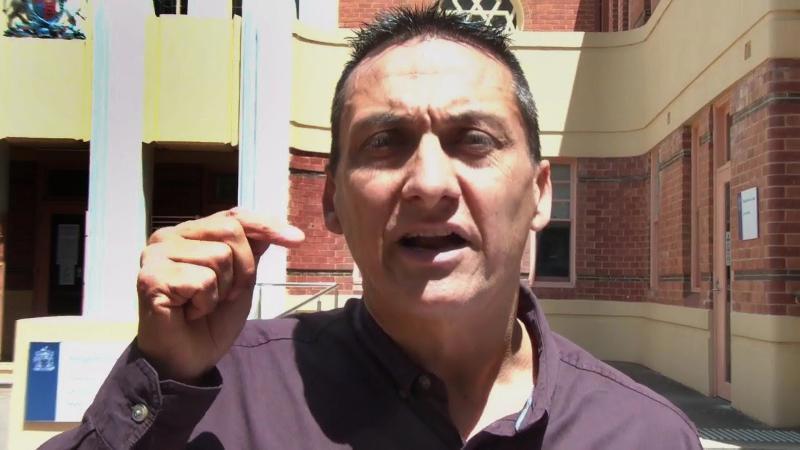
All states and territories have agreed to rush through urgent childcare reforms after allegations of abuse at centres across the country.
Attorney-General Michelle Rowland, flanked by her state and territory counterparts, has announced "banned in one, banned in all" legislation to prevent someone banned from working with children in one jurisdiction from working in another.
All jurisdictions have promised to implement these changes by the end of the year.
READ MORE: Aussie state becomes the first to stamp out soy sauce fish containers
"There is a firm commitment from all states and territories to pull out all stops, and we are working together as a team," Rowland said.
The attorneys-general have also agreed to raise their criteria on who can apply for a working with children check in each state and territory.
They will also strengthen information sharing to ensure that changes to someone's criminal history are captured and shared in real time under a National Continuous Checking Capability.
The Australian Criminal Intelligence Commission is currently working on a pilot for this program.
"It is notable that nefarious individuals have been shopping around the working with children, check system and exploiting loopholes," Rowland said.
"These are complex reforms, and they won't be delivered overnight."
READ MORE: Labor and Liberals announce candidates to replace disgraced former MP Gareth Ward
These changes were first recommended in the 2015 Royal Commission into Institutional Responses to Child Sexual Abuse.
Rowland admitted families have been let down by successive governments at all levels, but said "a moment of political will" has brought the recommendations forward now.
"These are complex areas, but that is no excuse for saying this is too hard," she said.
"The fact is that we have come together, noting that a significant body of work has occurred in the lead up to today's meeting."
Rowland also knocked back suggestions of a national working with children check database, saying it was up to each jurisdiction to administer as laws differed in each state and territory.
READ MORE: Mitchell and James are ready to start a family. Until now, one state wouldn't let them
These reforms come in the wake of allegations against childcare workers in NSW and Victoria.
Joshua Dale Brown, 26, has been charged with 70 offences allegedly committed while working at childcare centres in Melbourne.
David William James, 26, has been charged with 13 offences while working at out-of-school-hours care services in Sydney.
Today's announcement by the attorneys-general comes in addition to work being done by the Department of Education to raise standards and safety within the sector.
READ MORE: This could be the final nail in the coffin for working in the office
Thirty childcare centres slapped with compliance actions
Earlier today, the Department of Education slapped childcare centres across the country with compliance actions under urgent new laws that were pushed through parliament last month.
An investigation by the federal education department, in collaboration with states and territories, found 30 childhood education and childcare services failed to meet national quality standards for seven or more years.
The centres have 48 hours to notify parents of the compliance actions and have six months to bring their performance up to the national standard.
Education Minister Jason Clare said he hoped today's announcement would help rebuild confidence in the childcare system.
"This is not about closing centres down, it's about lifting standards up," he said.
"Over the next six months, these centres will need to lift their game or they will face further consequences, including the cutting off of funding.
READ MORE: Australians are consuming a lot more of these four drugs
"This action puts those centres on notice that they need to put the safety of our children first."
The Department of Education will release the names of those 30 childcare centres once parents are notified by next week.
The compliance actions do not relate to any criminal allegations.
Under new powers passed through parliament in July, the government can cut off funding to childcare centres that fail to meet the safety and quality standards, breach laws, or act in a way that puts child safety at risk.
The compliance actions are the first time these new powers have been used.
The country's education ministers will meet next Friday to discuss more measures to strengthen the childcare sector, including a national register of childcare workers, the role of CCTV and mandatory child safety training.
Support is available from the National Sexual Assault, Domestic and Family Violence Counselling Service at 1800RESPECT (1800 737 732).
Kids Helpline 1800 55 1800.
What we know about Trump and Putin’s historic meeting in Alaska tomorrow
The eyes of the world will be on Alaska tomorrow as US President Donald Trump and Russian President Vladimir Putin come face-to-face for a highly anticipated meeting.
The visit will mark the first time Putin has travelled to the US since his appearance at the United Nations General Assembly in New York in 2015.
Ahead of the historic meeting, Trump holds hopes Putin will "make a deal" on the conflict in Ukraine but White House officials are managing expectations by downplaying the meeting as a "listening exercise".
READ MORE: Trump 'disappointed and disgusted' with Albanese
When is the Trump and Putin meeting?
Putin's foreign policy aide Yury Ushakov has told reporters the world leaders would meet at the Joint Base Elmendorf-Richardson military site in Anchorage, Alaska at 11.30am on Friday (local time).
This is 5.30am (AEST) on Saturday in Australia.
The leaders are expected to first have a one-on-one discussion with the help of interpreters.
Ushakov told reporters this would be followed by a business lunch.
He said the length of the discussions "will depend on the presidents".
"Following the talks, Vladimir Putin and Donald Trump will hold a joint press conference, in which they will sum up the results of the negotiations," Ushakov told reporters.
Trump said he could give solo remarks if the meeting "doesn't end well".
What are they discussing?
The world leaders are expected to discuss the settlement of the war in Ukraine.
We can also expect Trump and Putin to talk about potential economic cooperation between Russia and the US.
In the lead-up to the meeting, Trump has threatened Russia with "very severe consequences" if Putin doesn't agree to end the war in Ukraine.
However, when reporters asked if this meant new sanctions or tariffs, he simply said: "I don't have to say."
Trump has previously threatened Moscow with new sanctions as a punishment for the Ukraine war but has not followed through on the threats to date.
Before his journey to the US, Putin said the current US administration had made "energetic and sincere efforts" to stop the conflict in Ukraine.
Earlier this week, Trump indicated there could be some "land swapping" to end the war but this was a move both the Ukraine and Russia have rejected.
Why isn't Zelenskyy there?
Trump suggested his goal was to move toward a trilateral meeting with Ukrainian President Volodymyr Zelenskyy shortly after the summit if discussions went well.
A Ukrainian source has told CNN it would not be logistically feasible for Zelenskyy to meet with the US President and Russian president in Alaska immediately after their talks.
"Remember that every international trip out of Kyiv starts with a 12-hour train journey. Getting to Alaska would take nearly two days," the source told the news outlet.
However, the Ukrainian source said "if a trilateral meeting is to be held, Ukraine would want Russia to agree to a ceasefire as a first step", before any talks could happen.
They added Trump is expected to call Zelenskyy to debrief him on the outcome of the Alaska summit and discuss future steps.
DOWNLOAD THE 9NEWS APP: Stay across all the latest in breaking news, sport, politics and the weather via our news app and get notifications sent straight to your smartphone. Available on the Apple App Store and Google Play.
Barking dog alerts woman with partial deafness to arson attack on home
A barking dog alerted a woman with partial deafness to a firebombing attack on her home in Sydney's west.
Melanie Sullivan and her dog were inside her home on Hope Street in Penrith when flames erupted about 10pm yesterday.
CCTV shows two hooded men making their way around the brick home moments before one threw accelerant on the front door.
READ MORE: Beloved film critic David Stratton dies aged 85
The other man was seen setting the liquid alight.
The footage shows one of the men appearing to have burnt himself.
The pair then quickly fled the scene.
Sullivan told 9News she lives with epilepsy and partial deafness and was only alerted to the fire because of her barking dog, Buddy.
"I'm deaf in my right ear. If it wasn't for my dog barking, it might have been too late," she said.
Sullivan ran out of her home and grabbed a garden hose in an attempt to control the blaze.
"Lucky I had fire extinguishers and a fire blanket. Managed to put the fire out before the fire brigade even got here," she said.
READ MORE: All states and territories agree to rush through urgent childcare reforms
No one was injured, and there was only damage to the front door.
Sullivan said she has no idea who the hooded men were or why they would firebomb her home.
"I feel like crap. I'm really shaking, it was a really big ordeal," she said.
"It could have killed me. I could have lost everything and my dog and me."
Police are investigating what they say was a targeted attack.
"It's obviously a very brazen attack," Detective Inspector Michael Cantrell said.
"At this stage, we've got a number of lines of inquiry. We believe it is a targeted attack."
Police are searching for the two men. Anyone with information can contact Crime Stoppers on 1800 333 000.
DOWNLOAD THE 9NEWS APP: Stay across all the latest in breaking news, sport, politics and the weather via our news app and get notifications sent straight to your smartphone. Available on the Apple App Store and Google Play.
Government considers challenge to teen killer’s lesser sentence
A state attorney-general says she will consider a High Court challenge after a teenage murderer was granted a reduced sentence on appeal.
The teenager, who murdered a mother of two during a Christmas holiday home invasion, has had his time in detention reduced by almost 18 months on appeal.
The boy, who cannot be named as he was aged 17 at the time of the offences, fatally stabbed Emma Lovell in the heart after he broke into her family's house north of Brisbane about 11.30pm on Boxing Day in 2022.
READ MORE: Warning illegal pregnancy devices could be associated with baby deaths
Following a successful appeal on Friday, the teen will now serve a minimum of about eight years and four months in detention instead of about nine years and nine months before he is released under supervision.
Queensland Attorney-General Deb Frecklington said the appeal was an unacceptable outcome and claimed it was caused by the previous Labor government's "weak laws".
"I am now looking at my options to make an appeal to the High Court," she said.
Queensland Labor has been contacted for comment.
READ MORE: Police smash alleged $10 million shoplifting network
Mrs Lovell's husband, Lee, who was wounded during the home invasion, was unable to attend court on Friday when the appeal decision was handed down.
The home invasion led to "adult crime, adult time" changes in Queensland law that allow for youth offenders to face a mandatory life sentence for murder with a minimum 20 years before parole.
"The murder of Emma Lovell rocked the State and Queenslanders made it very clear enough is enough and change needed to occur," Frecklington said.
"The community and Emma's family will be devastated by this outcome and our thoughts are with them on another very difficult day they should never have had to endure."
Justice Tom Sullivan in May 2024 sentenced the teen, then aged 19, to a maximum of 14 years with a requirement to serve 70 per cent of that time in detention, after he found the crime to be "particularly heinous".
The Court of Appeal on Friday allowed the teen's appeal against the length of his sentence, finding it was "manifestly excessive".
Justice David Boddice found the 14-year sentence should stand but reduced the detention period to 60 per cent.
He cited the teen's guilty plea, "genuine remorse and prospects of rehabilitation" as special circumstances justifying his release from detention after serving less than the statutory 70 per cent.
The teen had appealed Sullivan's "particularly heinous" finding in a bid to get his overall sentence reduced to 10 years.
However, Boddice found Sullivan's decision to impose the maximum overall sentence available at the time to be "plainly correct".
"The death of an entirely innocent person, on their own front lawn, as the consequence of a knife attack by a youthful offender… is properly described as provoking a sense of outrage," Boddice stated.
READ MORE: Putin praises Trump's efforts to end Ukraine war ahead of summit in Alaska
The teen now has five years left to serve in detention after 500 days of pre-sentence custody in May 2024 were recognised as time served.
The teen's male co-offender, also a juvenile, was acquitted of murder at a judge-only trial in October.
He was found guilty of burglary and the assault of Mr Lovell and in December he was sentenced to 18 months' detention – time he has served.
Massey assault: ‘Several people’ in police custody, two injured
Two people were injured in an incident on Colwill Rd, Massey.
Hamilton schoolboy films police officer using phone while driving
Police say officers can use phones if it’s operationally critical.