The man was taken to hospital with serious injuries, police said.
Tag Archives: oceania
Judge Ema Aitken challenges referral to Judicial Conduct Panel after alleged incident at Northern Club during Winston Peters speech
NZ First claims she shouted: ‘He’s lying! How can you let him say that?’.
Person dies after being hit by train in Invercargill – second such death in a week
KiwiRail says the Invercargill tragedy happened at a pedestrian crossing.
Woman planned to sell dead man’s toes found in dog vomit, court hears
A woman who planned to sell human toes on an online black market after dogs regurgitated them has pleaded guilty to her ghoulish crime.
Joanna Kathlyn Kinman was employed at a Victorian animal shelter as a ranger when two dogs vomited up the toes and other remains in February 2024.
The dogs had been surrendered to the shelter after the death of their owner, whose name is suppressed.
READ MORE: 'I don't need my life anymore': Nation rocked by worst tragedy in memory
The man died of natural causes before his pets had eaten parts of his body.
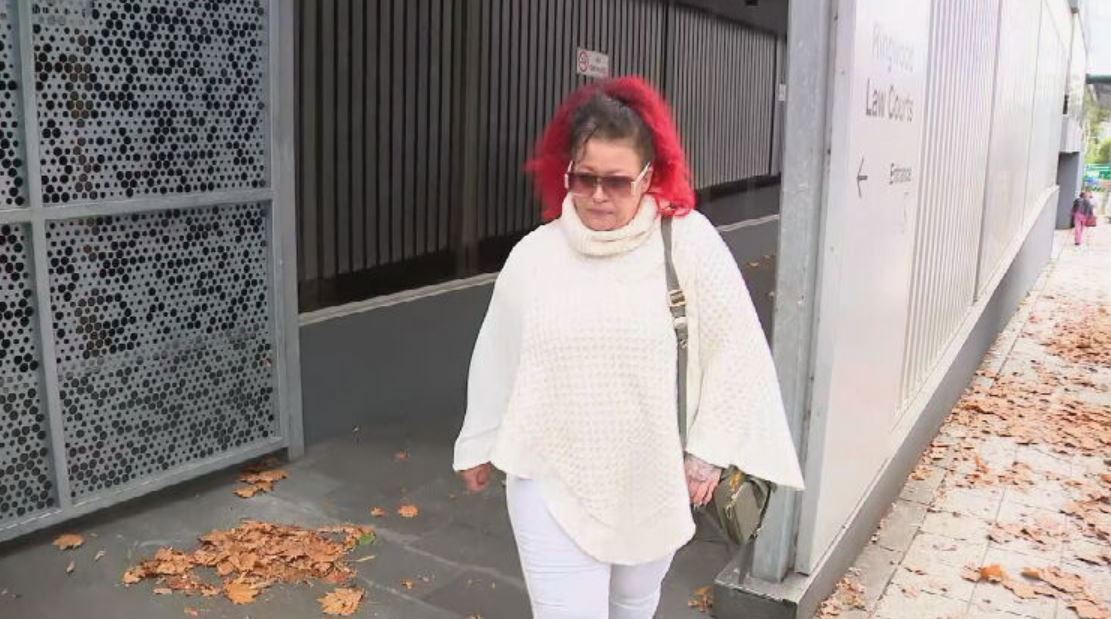
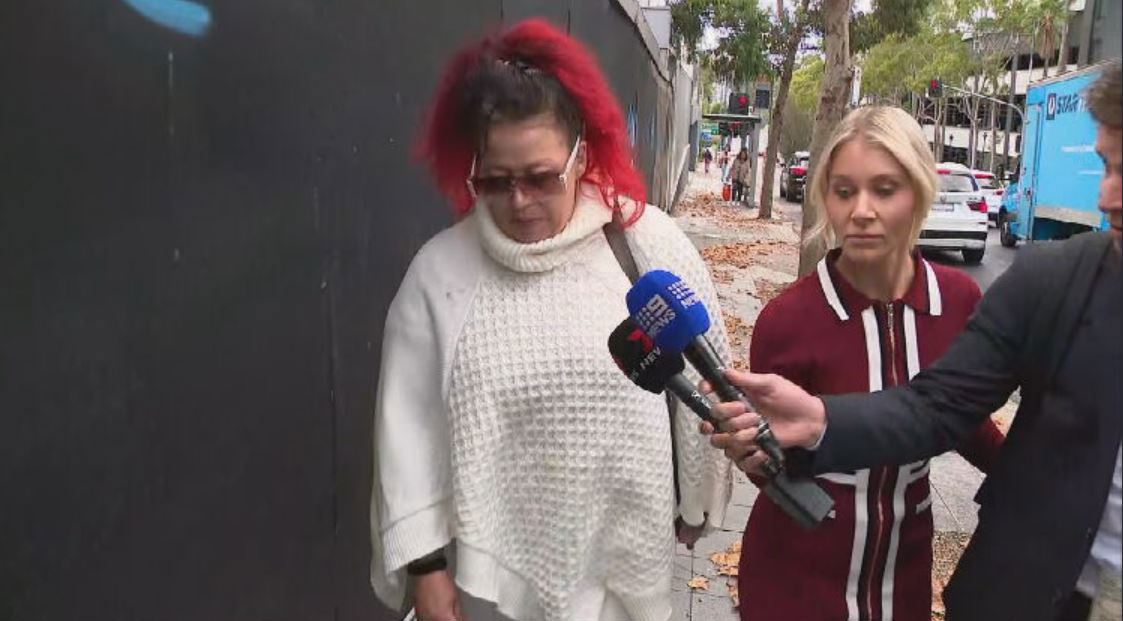
Kinman faced Ringwood Magistrates Court today, where she pleaded guilty to offensive conduct involving human remains.
The 48-year-old was not required to speak during her appearance and was supported by her 17-year-old son.
Prosecutor Melissa Sambrooks said Kinman was not present when the dogs regurgitated the remains, but searched a wheelie bin looking for the toes.
"She located two human toes and took them home and placed them in a jar containing formaldehyde," Leading Senior Constable Sambrooks said.
Later, during a phone call with her daughter, Kinman discussed how she planned to sell the toes online and research suggested she could get as much as $400.
Police soon arrived at her Lilydale home after a tip-off from an unknown source.
Kinman made full admissions to possessing the remains and intending to sell them online.
She showed police where the jar with the toes was located, beside other oddities including an alligator claw, a bird skull, guinea pig trotter and her childrens' teeth.
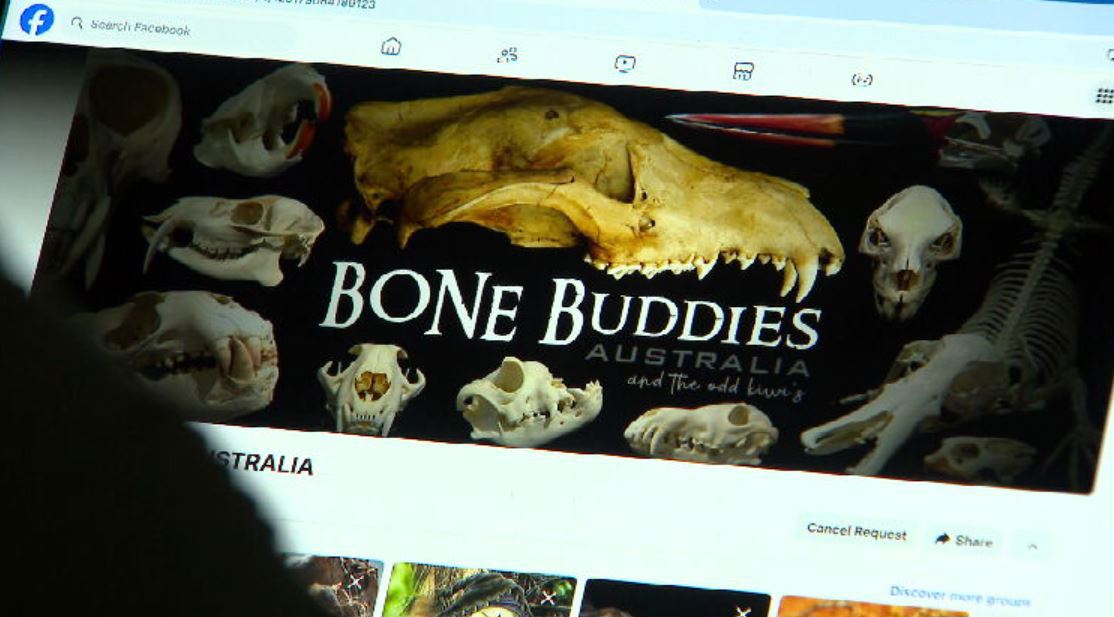
Police found the mother-of-five was a member of the "Bone Buddies Australia" Facebook group, commonly used to buy, swap and sell specimens online.
Snr Const Sambrooks said Kinman was an avid contributor to the site and had previously sold "wet specimens" of a stillborn kitten and puppy.
She did not say where those remains were sourced.
READ MORE: Search for dad who rolled his ute, extracted kids and fled
During her police interview, Kinman told officers she was curious about the toes and took them because "I know someone who collects weird things… I thought 'cool' its a toe".
Many of the dead man's relatives are unaware of the crime, with his son choosing to shield them from the investigation, saying his family had already suffered enough.
Kinman's lawyer Rainer Martini told Magistrate Andrew Sim his client had also been impacted by her "spontaneous" crime.
He said she lost her job and had her name spread online by a community which was "unsurprisingly repulsed by her behaviour".
"She has regretted fulsomely … not just for herself but for the impact on the family of the deceased," Martini said today.
Sim said it was "hardly surprising" Kinman, who had studied psychology as well as animal science, lost her job over the "entirely odd behaviour".
"I find it remarkable that someone of the accused experience and education would not know it was an offence," he told the court.
"It's astounding that she didn't understand taking two toes that had been vomited up by one or two dogs from a deceased person and sell them on the internet was the wrong thing to do.
"I'm still struggling to understand – it's astonishing – her behaviour."
Sim adjourned the hearing until Kinman could be assessed for a community corrections order.
The maximum penalty for the charge is two years in prison, but both the prosecutor and Kinman's lawyer agreed she should be assessed for a corrections order.
She is expected to be sentenced later today.
Kinman gave no comment to media outside court.
DOWNLOAD THE 9NEWS APP: Stay across all the latest in breaking news, sport, politics and the weather via our news app and get notifications sent straight to your smartphone. Available on the Apple App Store and Google Play.
Police crack down on Manawatū boy racers, say supporters will face consequences
Police dished out fines and impounded a vehicle in Manawatū over the weekend.
John G. Davies’ Te Tupua – The Goblin – returns to Auckland, sparks cultural discussion
John G. Davies: Perhaps our practitioners are afraid to be labelled.
Malcolm Turnbull argues AUKUS deal is ‘terrible’ for Australia
Former Prime Minister Malcolm Turnbull has described the AUKUS partnership as a "terrible deal" for Australia.
The ex-Liberal PM ripped into the trilateral defence pact with the US to deliver nuclear submarines and warned Australia could end up empty-handed.
"AUKUS is a terrible deal. It is so unfair to Australia," Turnbull said during a doorstep interview in Canberra's Parliament House.
READ MORE: 'I don't need my life anymore': Nation rocked by worst tragedy in memory
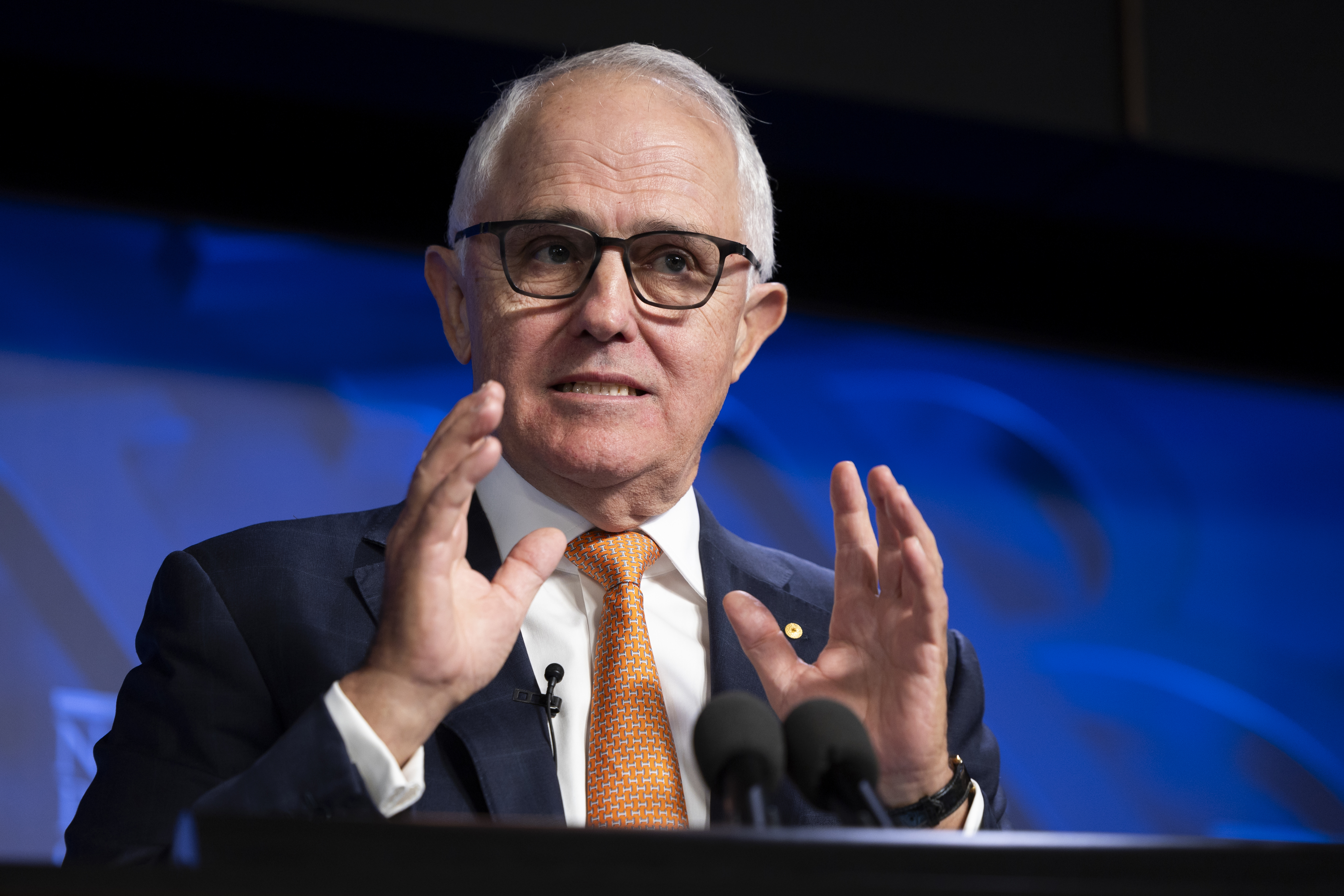
"The most likely outcome of the AUKUS pillar one is that we will end up with no submarines of our own."
He added: "We will have lost both sovereignty and security, and a lot of money as well.
"That's why I say it is a really bad deal."
When questioned over reports US President Donald Trump supports the AUKUS deal, Turnbull said "of course" he would like it.
He said the Trump administration would be pleased with the $3 billion dollar deal and claimed there was "no guarantee" Australia would ever be handed the promised US nuclear-powered submarines.
READ MORE: Inside the brutal foreign prison where Trump is sending 'criminals'
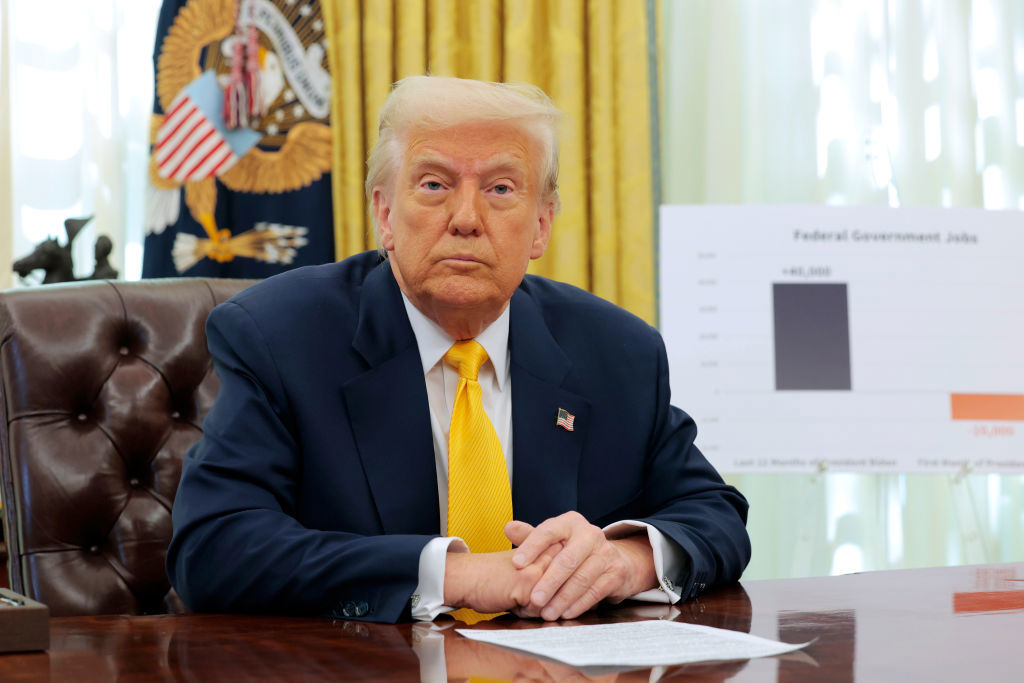
"Of course he'd like it, it's such a bad deal for us," Turnbull added of the security agreement with Australia, the United Kingdom and US for a free and open Indo-Pacific.
"He will be thinking who are these dumb guys who agreed to this deal?"
Earlier today, Turnbull similarly savaged Australia's role in the AUKUS deal on ABC Radio Sydney and said it was a "fiasco".
"The fundamental problem is that we are very, very likely, I would say, almost certain, never to get any Virginia class submarines,'' he said.
US Defence Secretary Pete Hegseth said Trump was "supportive" of the deal in a meeting with Australia's Defence Minister and Deputy Prime Minister Richard Marles at the Pentagon in February.
The Albanese government made a $US500 million ($798 million) payment to Washington as part of the AUKUS deal ahead of the meeting between Marles and Hegseth.
READ MORE: Search for dad who rolled his ute, extracted kids and fled
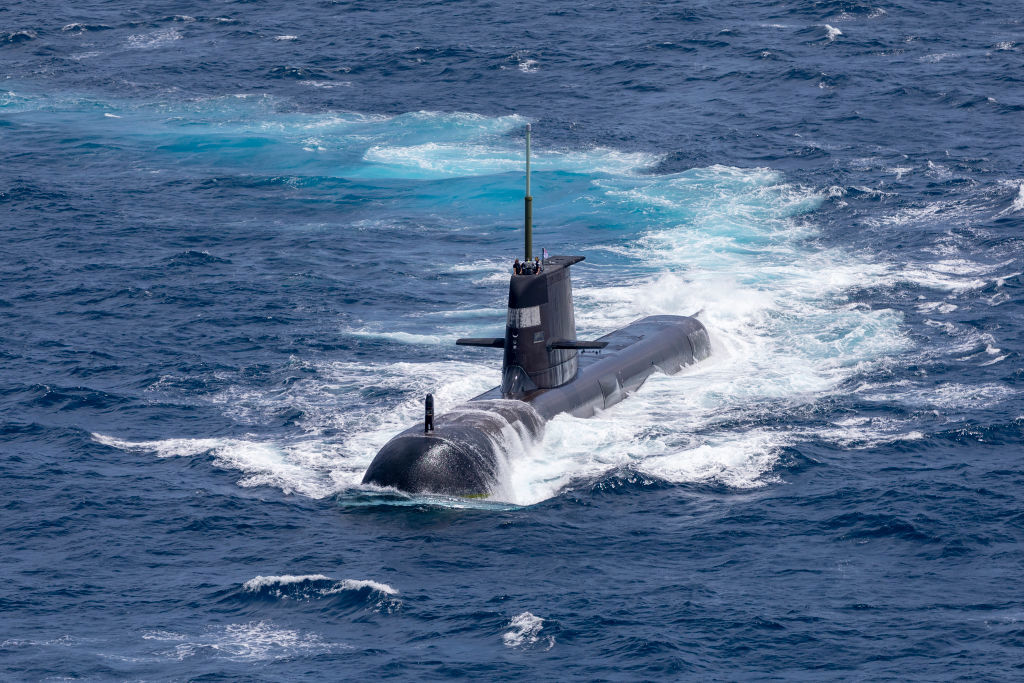
The plan would provide Australia with three Virginia-class submarines from the US, which is supposed to boost America's lagging rate of submarine production.
"The president is very aware, supportive of AUKUS and … the investment Australia is willing to make," Hegseth said.
He also said the Trump Administration "sure hopes" to have them delivered on time, with the first one due by the early 2030s.
DOWNLOAD THE 9NEWS APP: Stay across all the latest in breaking news, sport, politics and the weather via our news app and get notifications sent straight to your smartphone. Available on the Apple App Store and Google Play.
Health NZ refuses to release rent costs for Lower Hutt sick baby unit that doesn’t exist
Negotiations are under way with another health provider to take on the lease.
Rising crocodile attacks in Indonesia leave residents on edge
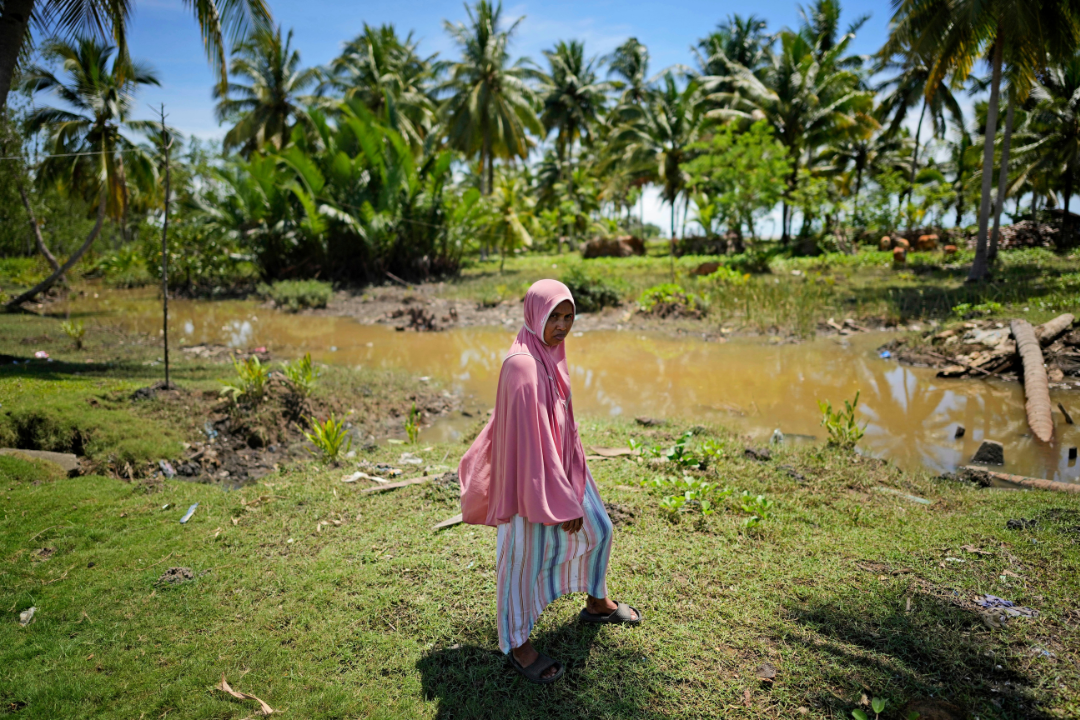
Nearly seven months after a crocodile attack almost took her life, Munirpa walked to the estuary outside her home with her husband and her children, ready to brave a reenactment.
Munirpa, who like many Indonesians only uses one name, recounted how one early morning in August, she threw her household garbage into a creek about 50 metres away from her house, as she normally would.
She didn't see what was coming next.
READ MORE: Trump silences Voice of America, 1300 employees put on leave
By the time she realised a crocodile had attacked her, the four-metre-long beast had already sunk its teeth into most of her body, sparing only her head.
She fought hard, trying to jab its eyes. Her husband, hearing her screams, ran over and tried to pull her by the thigh out of the crocodile's jaws.
A tug-of-war ensued; the reptile whipped him with its tail. Fortunately, he saved Munirpa in time, eventually dragging her out of the crocodile's grip.
READ MORE: Election push for permanent four-day work week
People have long feared the ancient predators in the Central Mamuju district of Indonesia’s West Sulawesi, where the Budong-Budong River meets the sea.
For Munirpa, 48, that fear turned into a brutal reality when she became one of nearly 180 recorded crocodile attack victims in Indonesia last year.
Residents like her are learning to coexist with the crocodiles, a legally protected species in Indonesia, as they balance conservation with looking out for their safety.
But as attacks rise, several residents and experts have called for better government interventions to stop the problem from getting even worse.
READ MORE: Police seize $800k yacht, Rolex watches and art in organised crime bust
Communities near the crocodiles are on edge
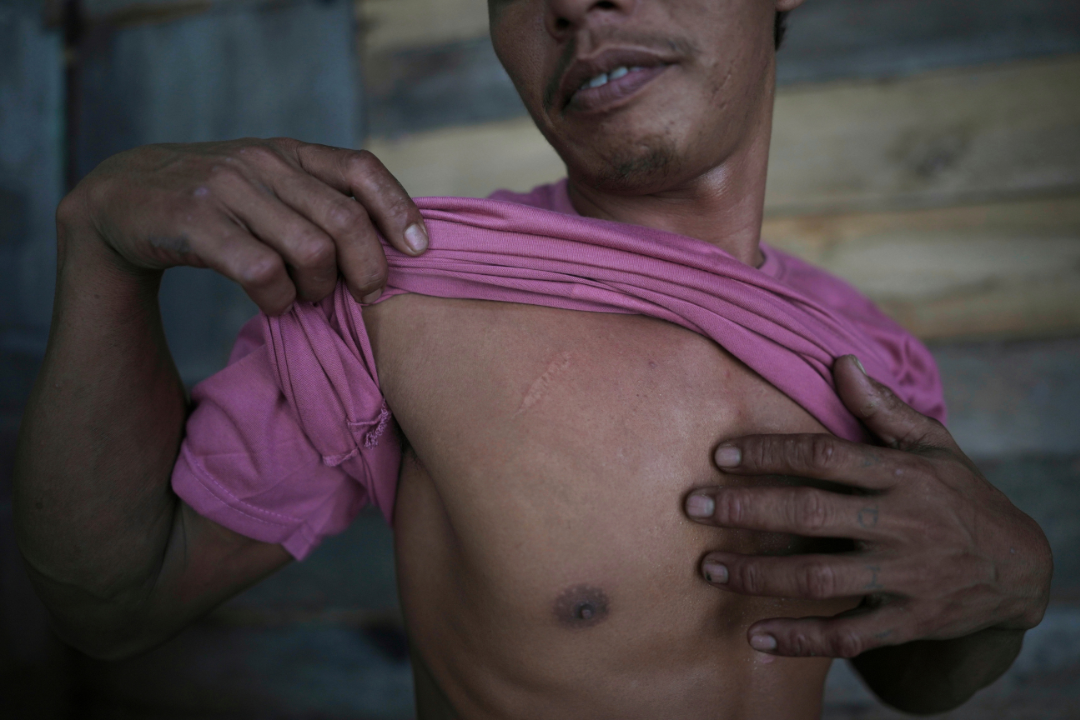
Following the attack, Munirpa was hospitalized for a month and has had two surgeries. By February this year, her fear was still clearly visible, as were the scars on her legs and thighs.
“I am so scared. I don’t want to go to the beach. Even to the back of the house, I don’t dare to go," said Munirpa. “I am traumatized. I asked my children not to go to the river, or to the backyard, or go fishing."
In the villages surrounding the Budong-Budong River, like Munirpa's, crocodiles have become a daily topic of conversation.
READ MORE: 'I don't need my life anymore': Nation rocked by worst tragedy in memory
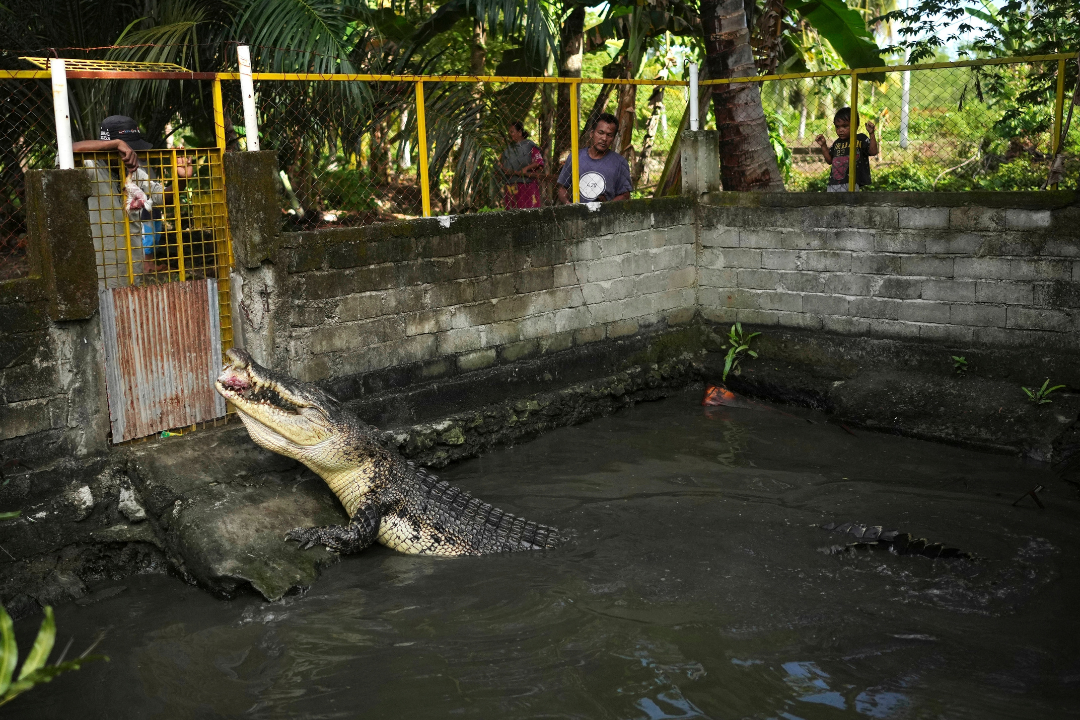
Their presence has become so common that warning signs now mark the areas where they lurk, from the river mouth to the waterways which were once a popular swimming spot for children.
In 2024, there were 179 crocodile attacks in Indonesia, the highest number of crocodile attacks in the world, with 92 fatalities, according to CrocAttack, an independent database. Social media videos showing crocodile appearances and attacks in Sulawesi and other regions in Indonesia are also on the rise.
The increase in attacks began about 12 years ago with the rise of palm oil plantations around the river mouth, said 39-year-old crocodile handler Rusli Paraili.
READ MORE: Inside the brutal foreign prison where Trump is sending 'criminals'
Some companies carved artificial waterways, linking them to the larger part of the Budong-Budong River. That was when the crocodiles started straying, leaving the river and creeping to nearby residential areas, such as fish and shrimp ponds, he explained.
Palm oil plantations now dominate the landscape in West Sulawesi, from the mountains to the coast, and patrolling for crocodiles has become part of people's daily routine.
When residents check the water pumps in their ponds, they have no choice but to keep out an eye for the beasts — flashlights in hand, scouring up, down and across canals and waterways — resigned to the uneasy reality of sharing their home with a predator.
READ MORE: Search for dad who rolled his ute, extracted kids and fled
Balancing conservation and safety
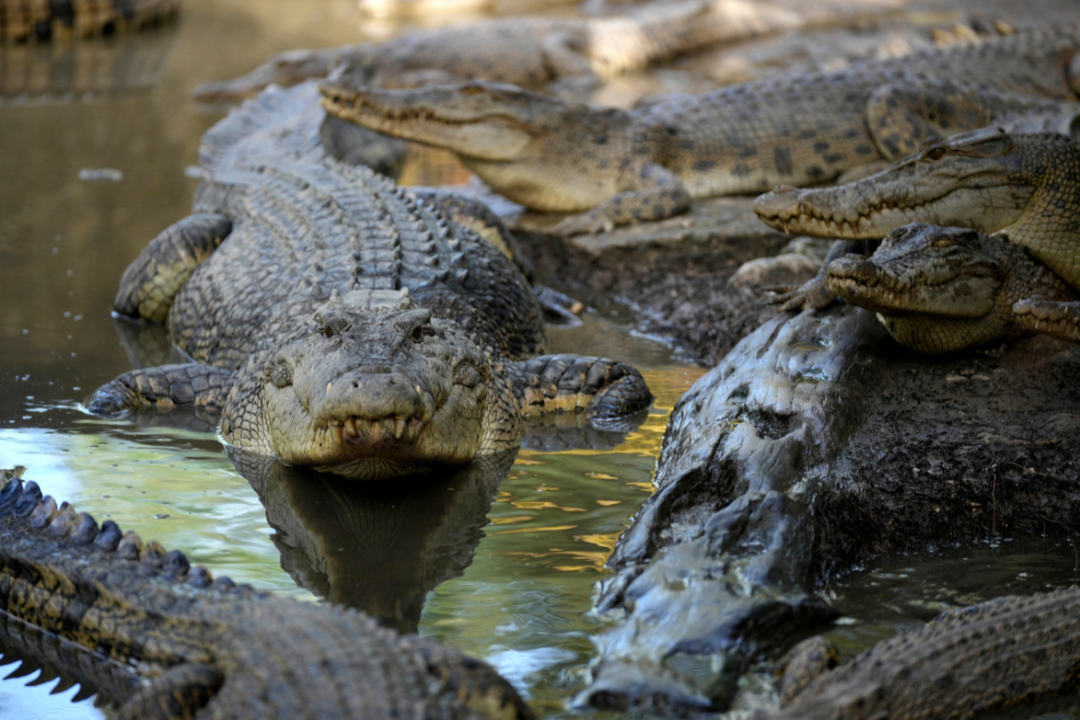
The saltwater crocodile has been a legally protected species in Indonesia since 1999, making it an animal that cannot be hunted freely. As a top predator, there is also no population control in nature.
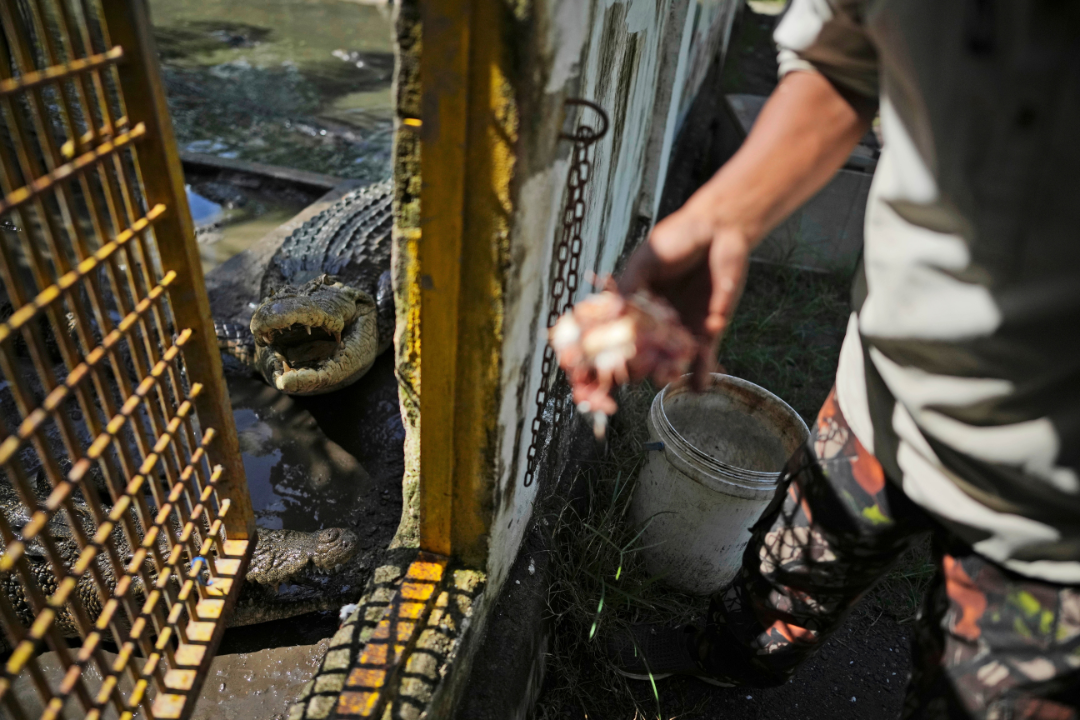
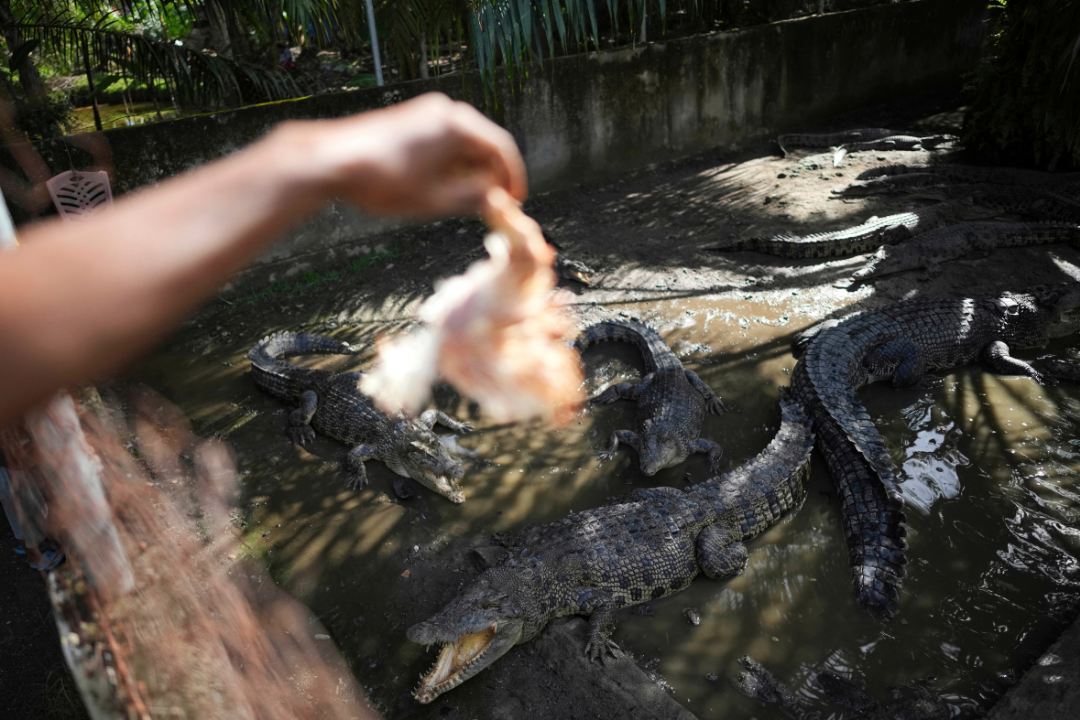
Paraili, the crocodile handler, said that while the law protects crocodiles from being killed, the rise in attacks is a major concern. In response, he's taken care of some of the crocs in a specially-designed farm away from human populations.
He's received some financial support from the government and community donations, as well as support from palm oil companies for the last five years.
The farm has four ponds and around 50 reptiles. Some have names: Tanker, the largest, shaped like a ship, or Karossa, named after the sub-district the animal was caught after fatally attacking someone.
READ MORE: Ex-Cyclone Alfred blows $1.2 billion hole in upcoming federal budget
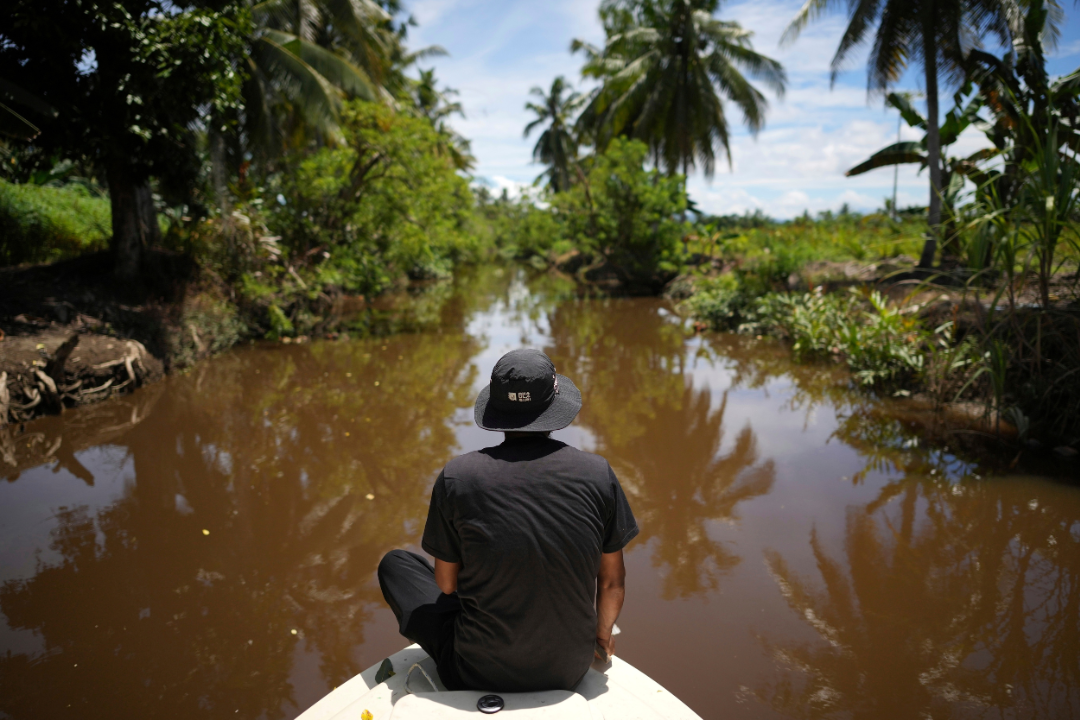
When funds run low, he uses his own money to ensure they’re fed, at least once every four days.
Amir Hamidy, who studies reptiles at the National Research and Innovation Agency, worries the rise in attacks indicates that crocodile numbers are becoming far too dangerous. Hamidy supports better population control.
Being a protected species “does not necessarily mean that the population cannot be reduced when it is at a level that is indeed unsafe," he said.
READ MORE: These 'woolly mice' could signal extinction is 'a thing of the past'
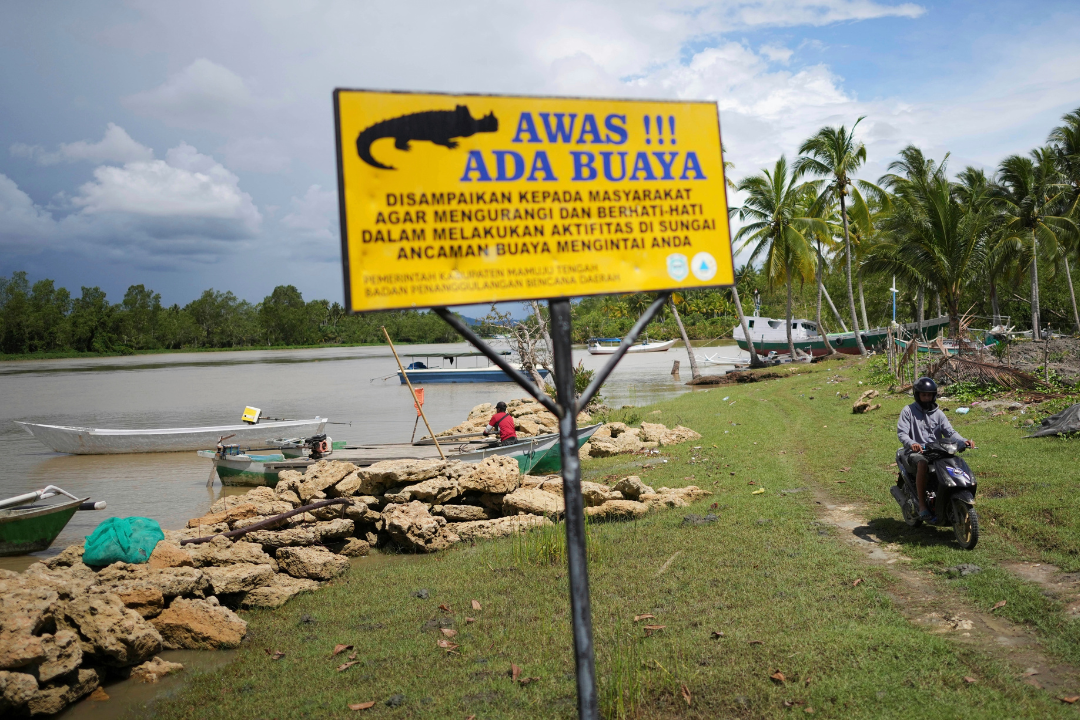
Improving protection for residents
Around a year ago in Tumbu village, Suardi, who goes by one name, was harvesting coconuts when they fell into the river. When he went to retrieve them, he was attacked by a crocodile he initially didn't notice. He's since made a full recovery.
Still, the experience has made him more cautious. “Yes, I am worried. But what else can we do," Suardi said. “The important thing is that we are careful enough.”
Along with Munirpa, Suardi is one of 10 people in the region who was attacked by a crocodile last year. Three of those attacked were killed.
READ MORE: Starbucks ordered to pay $79m to delivery driver burned by hot drink
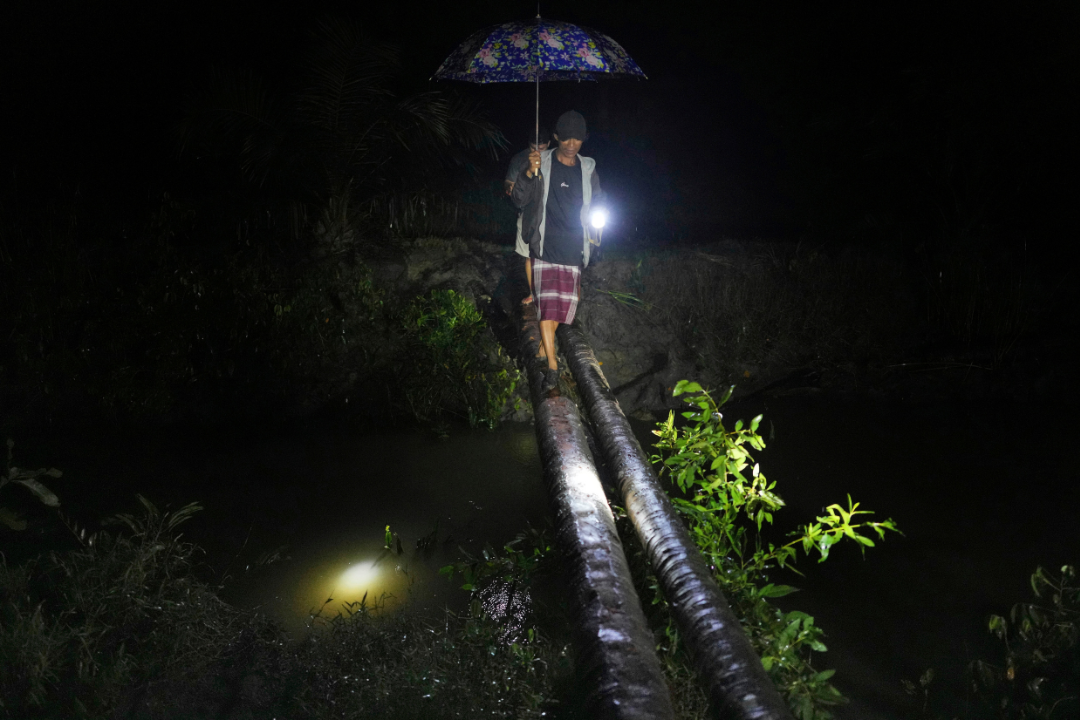
Suyuti Marzuki, who's head of West Sulawesi Marine and Fisheries Agency, said the crocodile habitat shift is making people's everyday activities — like harvesting coconuts, fishing or even disposing of garbage like Munirpa — very risky.
Marzuki said the government is looking at possible options that can provide both safety and economic alternatives for residents.
While he acknowledged that crocodile population numbers and ecosystems need to be protected, Marzuki also raised the possibility of bolstering the local economy through the crocodile skin trade. That industry is controversial because of conservation and animal welfare issues.
Paraili, the crocodile handler, also urged serious government interventions.
"This is a matter of human lives. So when the government is not serious, then our brothers and sisters in the future — in five or 15 years — there will be even more who will die from being attacked by crocodiles,” he said.
Residents like Munirpa and Suardi are waiting for more immediate and realistic steps from the authorities to ensure their community's and families' safety.
“It is enough that I've been bitten by a crocodile," Munirpa said. “I won’t let it happen to my children.”
In Pictures: Dozens killed as tornadoes, fires and dust storms rip through US
Residents across Missouri, Mississippi, Alabama, Texas, Arkansas and Oklahoma are now in recovery mode as they assess the wreckages left behind.