The Trinidad and Tobago government will hold a three day retreat in Tobago this week, amid concerns that there is need for a serious re-examination of the existing socio economic policies occasioned by the coronavirus (COVID019) pandemic.
Prime Minister Dr. Keith Rowley, speaking on a television program on Tuesday, said also that the recent decision by the International Monetary Fund (IMF) to allocate an estimated US $644 million to Trinidad and Tobago from the largest allocation of Special Drawing Rights (SDRs) in its history, will also be an agenda item at the retreat.
Minister “This pandemic has affected us three times as bad …and it is so widespread and all pervasive in that the global financial crisis basically was dealing with people who had money and was losing money and those who did not have, have nothing to lose,” he told the “Brighter Morning with Bhoe” program hosted by former government minister Dr. Bhoe Tewarie.
“But this pandemic affects every body…in the world and it has a much larger damaging impact on the world’s economies and that is why the IMF has come in. I mean why you read, like here in the CARICOM (Caribbean Community) some countries are pointing to a huge percentage of loss in GDP (gross domestic product), here in Trinidad and Tobago we are still trying to assess the extent of the loss of our GDP simply by being in this pandemic situation.
Crisis Many Times More Devastating
Rowley told his audience that the Washington-based financial institution has recognized that this is a crisis that is many times more devastating than the global financial crisis that was experienced in 2009.
“We are very happy for their response and our share of that support is going to be utilized much to our benefit,” Rowley said, adding that from time to time when “one speaks of the IMF, they speak of the old guard they know, but on this occasion I hope you understand being a member of the IMF has its great benefit.
IMF managing director, Kristalina Georgieva, said that the US$650 billion SDR allocation is a significant shot in the arm for the world and, if used wisely, a unique opportunity to combat this unprecedented crisis.
“SDRs are being distributed to countries in proportion to their quota shares in the IMF. This means about US$275 billion is going to emerging and developing countries, of which low-income countries will receive about US$21 billion, equivalent to as much as six per cent of gross domestic product (GDP) in some cases,” she said.
“Countries can use the space provided by the SDR allocation to support their economies and step up their fight against the crisis,” she added.
Funds will strengthen Trinidad and Tobago Position
Rowley said that Trinidad and Tobago would use its allocation “mainly to strengthen our position going forward encouraging export marketing, ensuring that we can fund the recovery that has to be done in a variety of ways and it is going to prevent us from having to borrow as much as we would have had to borrow from other sources if we were without this kind of support.
Asked whether the new funding would also be used to assist in both import or export substitution for local businesses, Rowley replied “absolutely.
“What we will be using it for is to ensure that what we wanted to and would have been funded by the scare resources or the expensive we will have to find. We are going to have to support those who are engaged in that activity (export marketing) and it will be whatever that is to help us get into the market place and to earn from that market”.
He said the funds would also help to provide a number of businesses that would have used up their resources to sustain them during the pandemic and allow for their re-entry into the market “strong and productive.
“We have to come up with modules of expenditure, very carefully administered to allow this funding to be had without it being a largess or a gift which does not solve the problem and we already doing that and I could tell you the Cabinet meets in retreat next week in Tobago for three days and this is the kind of thing we will be focusing on.
“There will be certain shifts that we will have to make,” Rowley said, noting that much of government’s revenue is spent on subsidies.
“I know once you mention that people begin to see oh hardship because without these subsidies you are going to have hardship…but if we don’t address these things we end up requiring more and more of that kind of support which is unproductive,” Rowley said, noting that Trinidad and Tobago had spent an estimated TT$30 billion (one TT dollar=US$0.16 cents) on subsidizing fuel in recent years.
“If one is to be honest and ask ourselves look at where we are now. Suppose we had not done that and we had used most of that money either in savings or in doing other productive things, wont we have been better off because we subsidize fuel for everybody in the country.
Subsidies and Disruptions
‘You buy a million dollar car and the state is subsidizing your fuel. Is that a good idea? And we have to address these things frontally and fairly and honestly and this pandemic is pushing us in that direction if we were not going there before because there is no other way out.
“We have to do things differently and there might be some disruption before, but we hoping as we do them we will minimize those disruptions, the inconvenience and the hurt and build a new platform that gives our children a more confident future,” Rowley told the television program.
CMC
============================================
Barbados Economy “Remains Severely Depressed.”
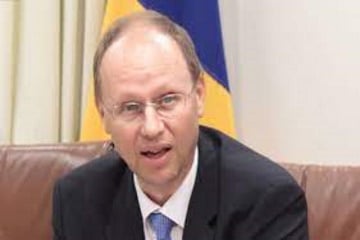
A delegation from the International Monetary Fund (IMF) Friday ended a visit to the island, indicating that the Barbados economy “remains severely depressed” as a result of the ongoing global coronavirus (COVID019) pandemic.
The IMF delegation, headed by Bert van Selm had conducted a staff visit via videoconferencing between August 24-27 at the invitation of the Barbados government of Prime Minister Mia Motley.
According to a statement issued here, while tourism is expected to recover gradually in the second half of 2021 and the first half of 2022, risks to the outlook remain.
But the IMF official said that despite this very challenging environment, Barbados continues to make good progress in implementing its ambitious and comprehensive economic reform program, while expanding critical investments in social protection.
It said indicative targets under the IMF’s Extended Fund Facility (EFF)-supported program for end-June 2021 were met, and since then international reserves have been further boosted by the recent global special drawing rights (SDR) allocation.
The head of the IMF delegation said that the tourism activity has picked up in recent months but remains at a fraction of normal levels.
“The economy is estimated to have grown 5.5 per cent in the second quarter of 2021 relative to the second quarter of 2020,” he said, noting that Hurricane Elsa, a category one storm struck Barbados in July and caused significant damage to the island’s housing.
“Economic growth for the second half of 2021 and the first half of 2022 is premised on a gradual recovery of tourism,” the IMF official added.
He said in this very challenging environment, Barbados continues to make good progress in implementing its ambitious and comprehensive economic reform program, while expanding critical investments in social protection.
“Indicative targets for end-June under the EFF were met. The global SDR allocation that became effective on August 23, 2021, including an allocation of about US$129 million to Barbados, has further boosted international reserves, to more than US$1.4 billion.
“”Structural reforms are ongoing, and structural benchmarks under the EFF were met. The government developed plans to recapitalize the Central Bank of Barbados and address medium and long-term challenges for the National Insurance Scheme (NIS) stemming from the debt restructuring and the COVID pandemic, and recapitalization of the NIS has started.”
He said that a medium-term fiscal framework was tabled in Parliament to enhance transparency and accountability in fiscal policy, while retaining sufficient flexibility to respond to the pandemic and other economic shocks.
The IMF official said that the delegation is looking forward to conducting discussions for the sixth review under the EFF in November.
Barbados entered into a four-year US$290 million EFF arrangement with the IMF in October 2018 and following a virtual mission between May 3-7, the Washington-based financial institution said then that the island would receive US$24 million.
CMC/
The post Depressed Econmies: T&T, Barbados Given IMF Cash Lifelines appeared first on The St Kitts Nevis Observer.