BBC- Inside a New York courtroom, the president of Honduras, Juan Orlando Hernández, was known simply as “Co-conspirator 4”.
Yet being stripped of the deference his position traditionally commands was the least of his concerns. US prosecutors now consider him to be intimately and demonstrably linked to violent drug cartels.
In 2019, his younger brother, Juan Antonio “Tony” Hernández, was found guilty of smuggling tonnes of cocaine into the United States during a criminal career that spanned over a decade.
To have your brother sentenced to life plus 30 years for drug trafficking would be a stain on any politician’s record. But under the full glare of the world’s media, prosecutors alleged his government was corrupt to its core – causing irreparable damage to his legitimacy as president.
And it is not just the case against his brother in which US prosecutors have identified the Honduran president.
During the recent trial in New York of Honduran drug trafficker Geovanny Fuentes Ramírez, the prosecutor painted a grim picture of Honduras as a “narco-state” where the cartels had infiltrated “police, military and political power… mayors, congressmen, military generals and police chiefs, even the current president”.
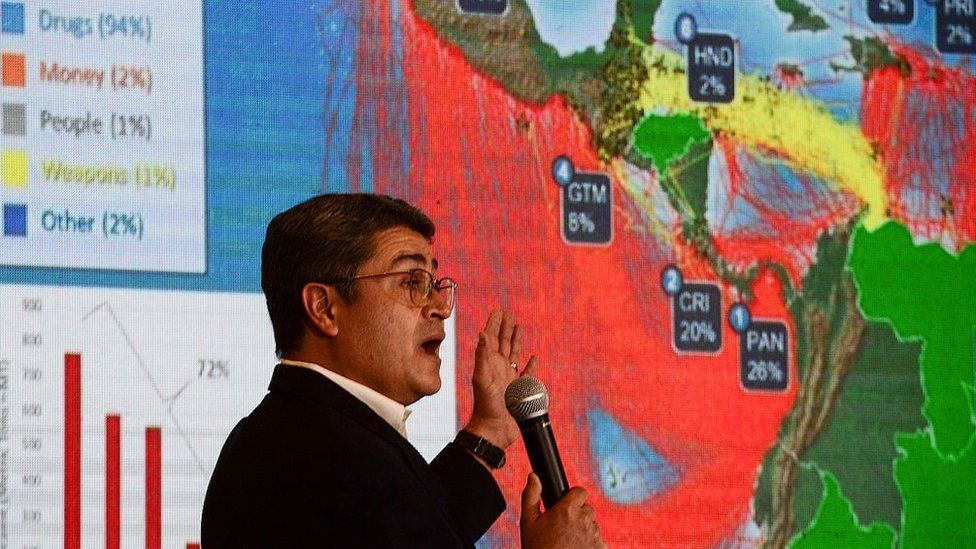
image copyrightAFP
image captionPresident Juan Orlando Hernández has denied the allegations against him
“In the 10 years before 2010, the traditional narcos had acquired so much political power in Honduras that they then began to co-opt the state itself to ensure their safety,” says a former Honduran state attorney, Edy Tabora.
That period coincided with the rise of Tony Hernández in the drug world and his older brother into politics. Once Juan Orlando became president in 2014 and Tony Hernández a member of Congress for the National Party, they were effectively “narco-politicians”, alleges Mr Tabora.
‘State-sponsored drug trafficking’
President Hernández called his brother’s sentence “outrageous” and repeated his constant refrain that the conviction was based on the testimony of known criminals with an axe to grind.
Tony Hernández was found guilty of receiving $1m (£720,000 in current figures) from the notorious drug lord, Joaquin “El Chapo” Guzmán, for his brother’s election campaign.
US prosecutors also allege that President Hernández accepted bribes in exchange for the protection of his security forces and planned to “shove the drugs right up the noses of the gringos”, referring to potential foreign users.
It was, they argued, nothing less than “state-sponsored drug trafficking”.
The accusation is that – unlike countries where drug cartels work in tandem with corrupt elements of the state or the security forces – in Honduras the drug traffickers are the state, the very same people who control the apparatus of power.
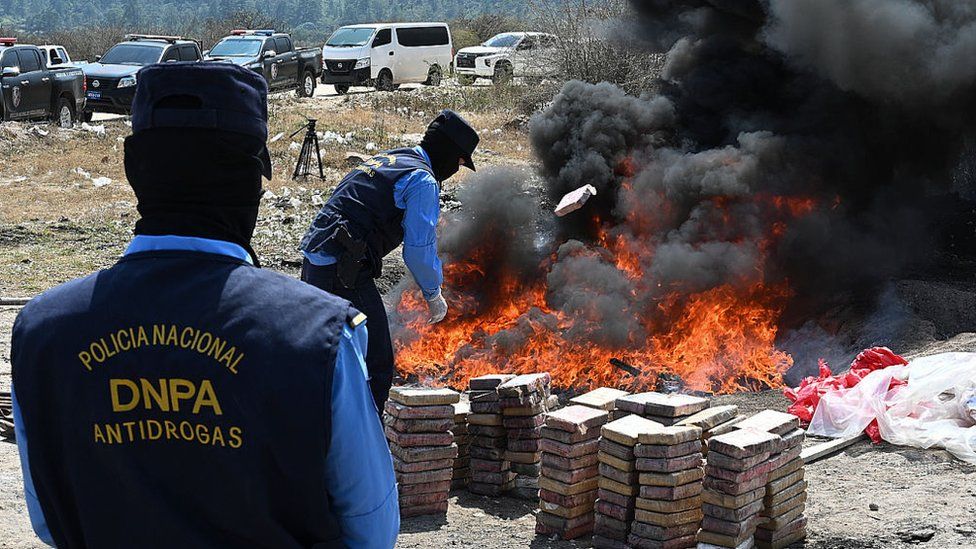
image copyrightAFP
image captionPresident Hernández points to the seizure of large drug hauls as evidence that he is fighting the drugs trade
“That’s the most important point to understand about Honduras”, argues Mr Tabora. “The problem here is that the public functionaries wanted control over the drug trade.”
The BBC asked President Hernández’s office for an interview or a statement. So far, neither has been provided.
“We’re talking about an entire political class,” says Jennifer Ávila, editor-in-chief of Contra Corriente, a digital media outlet in Honduras.
“We’ve seen former parliamentary deputies on trial and members of the economic elite, one of whom is standing for president this year,” she says, referring to Yani Rosenthal, a presidential candidate for the opposition Liberal Party who was convicted of laundering money for the Cachiros cartel in 2017.
‘He may try to remain in power perpetually’
Juan Orlando Hernández is a headache for US President Joe Biden. He is the first sitting Latin American president since Manuel Noriega in Panama in the late 1980s to have his name so closely linked to drug trafficking in a US court.
One might expect the White House and the state department to impose sanctions or, at the very least, distance themselves from the alleged “narco-president”. Instead Washington’s economic and security interests are undoubtedly at play, especially regarding undocumented immigration.
image copyrightAFP
image captionThe sentencing of Tony Hernández shone a spotlight on Honduras
Honduras was quick to comply with President Donald Trump’s harshest policies on immigration but as his brother was convicted, President Hernández indicated that bilateral security co-operation could “collapse” over the affair.
“At this moment he is the elected president of Honduras, we are going to work with his government, we are going to look for areas of common interest,” said Juan González, President Biden’s top adviser on Latin America.
“It doesn’t surprise me,” retorts Jennifer Ávila. “What most interests the US is preserving governability. They don’t want a political vacuum or a transitional government because that would bring more instability to Honduras and generate more migration.”
Were Juan Orlando Hernández to be forced out, she says, the country simply “isn’t prepared for a crisis of that magnitude”.
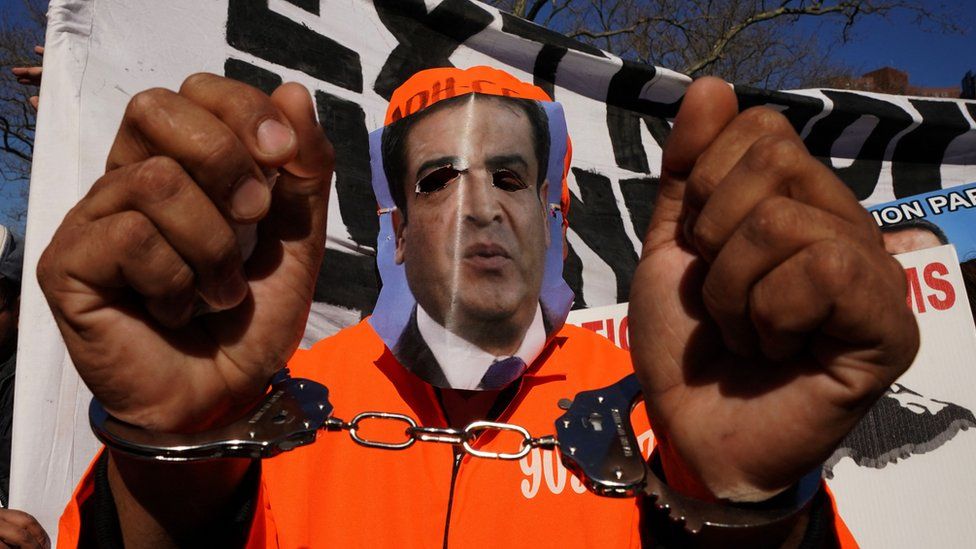
image copyrightAFP
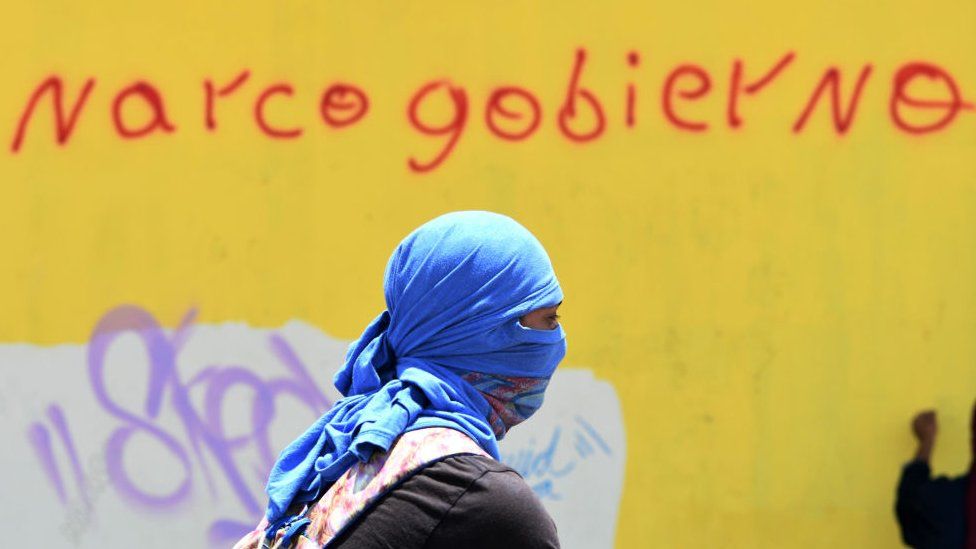
image caption“Narco-government”: The president has faced protests in recent years demanding his resignation
Washington appears to prefer the status quo – even one tainted by drug money.
“When Trump left office, clearly we’d hoped for a different position from the Biden administration,” explains Gabriela Amador of the Pro-Honduras Network, an anti-corruption group of US-based Hondurans that covered every moment of the trials in New York.
“What worries us as Hondurans is that it’s been shown that cartels have invested millions into politics and Juan Orlando Hernández may try to remain in power perpetually through fraudulent means.”
His previous election win in 2017 sparked violent protests after the vote count was considered untrustworthy by international election observers.
Although President Hernández refutes the allegations, the convictions obtained by the US Department of Justice reveal a country mired in drug-related corruption – a description which former state attorney Edy Tabora reluctantly accepts about his homeland.
“The prosecutors in New York put it best when they called Honduras a ‘corrupt narco-state’,” he says, “because both mechanisms – corruption and drug trafficking – were used to seize the state’s resources.”
Spread of Indian Covid variant has not deterred PM from return of cinemas and indoor hospitality and permitting mixing at home
Bars, museums and cinemas are among the venues that will be able to reopen for indoor business from 17 May in England. Photograph: Oli Scarff/AFP/Getty Images
Friends and family will be able to hug and mix indoors from next week, while cinemas and museums can reopen, Boris Johnson is to confirm on Monday despite growing concerns over the spread of the India coronavirus variant.
Yat, scientists warned this weekend that cases are doubling in some areas where the variant, B1.617.2, has been detected. More deprived areas and those with large ethnic minority communities where vaccination rates may be lower are most affected, they said.
But at a press conference today the prime minister will hail the Covid vaccine rollout, with more than two-thirds of UK adults having had a first dose and a third now fully vaccinated. Just two deaths within 28 days of a positive test were reported on Sunday.
Johnson will confirm that the next stage in the easing of Covid restrictions for England will go ahead from 17 May. Indoor drinks and meals will be allowed for groups of up to six or two households, while cinemas, galleries and the rest of the accommodation sector will reopen.
International leisure travel will be possible, with some destinations given a “green light” enabling return without self-isolation, and ministers indicated that “intimate contact” will once more be permissible.
“The roadmap remains on track, our successful vaccination programme continues – more than two-thirds of adults in the UK have now had the first vaccine – and we can now look forward to unlocking cautiously but irreversibly,” Johnson said in comments released overnight.
Speaking on BBC One’s Andrew Marr Show on Sunday, the Cabinet Office minister, Michael Gove, said that the government wants to see families able to hug again. “As we move into stage three of our roadmap it will be the case that we will see people capable of meeting indoors. And without prejudice to a broader review of social distancing, it is also the case that friendly contact, intimate contact, between friends and family is something we want to see restored,” he said.
Prof Susan Michie, director of UCL’s Centre for Behaviour Change, talked of a mixed picture. If people carry on getting vaccinated at the current rate, it should be possible to keep transmission low, she said.
But the spread of the virus was very uneven. “We have pockets of high rates of transmission, especially in more deprived communities, and where you get high rates of transmission, you obviously also get the likelihood of variants that might undermine the vaccine programme,” said Michie.
Cases of the Indian variant are thought to be doubling every week. “There’s definite signs of community transmission in London. Now that’s obviously concerning, because we don’t yet know what effects it’s likely to have on our vaccine programme,” she added.
Paul Hunter, professor in medicine at the University of East Anglia, said it was “the Indian variant that is giving me most unease”. The Kent variant (B.1.1.7) had been collapsing in recent months but the Indian variant had been increasing quite rapidly. “I do worry that we will see cases increasing again soon when and if the Indian variant B.1.617.2 becomes dominant,” he said.
But it was difficult yet to know how serious an issue this was. “The signs are troubling but probably not yet strong enough to delay the next stage of lockdown easing. In particular we don’t know how severe the Indian variant will be in people who have been vaccinated,” he said.
Michael Head, senior research fellow in global health at Southampton University, said his personal view was that we could encourage larger outdoor gatherings but leave the reopening of indoor settings until all adult groups are vaccinated, which is expected by mid-July.
“Meeting friends and relatives outdoors is much lower risk. Personally, I’d be happier to spend two hours sat outdoors in a sports stadium with a few thousand spectators than I would be inside a cinema watching a film with 100 other people,” he said.
Michie said she thought the public should be given more information about the importance of ventilation indoors to prevent aerosol transmission. Hugs, as long as people did not breathe in each other’s faces, were not so risky, she said. “I think the issue about opening up all the indoor spaces, whether it’s pubs, restaurants, cinemas, theatres, etc, is the ventilation. I don’t know how that’s going to be communicated.”
US ‘turning the corner’ on pandemic but pressure grows to help other nations
Daily new cases plummet in US with advent of vaccines while they rise at alarming rates in south Asia, with India bearing the brunt
Left to right: White House press secretary Jen Psaki, Covid response coordinator Jeff Zients and Dr Anthony Fauci brief reporters on 13 April 2021 in Washington. Photograph: Chip Somodevilla/Getty Images
The US is approaching a turning point where Covid vaccinations are sharply reducing infection and hospitalization rates, key figures in the fight against the disease said on Sunday, though the Biden administration is facing mounting pressure to do more to help other nations still in the grip of the disease.
“We are turning the corner,” said Jeffrey Zients, the White House Covid response coordinator. With about 58% of adult Americans having received at least one shot of vaccine, and with some 113 million people now fully vaccinated, the country was on track to meet Joe Biden’s goal of 70% of the population at least partially vaccinated by 4 July, he said.
“I think everyone is tired, and wearing a mask can be a pain. But we are getting there, and the light at the end of the tunnel is brighter and brighter,” Zients said, speaking on CNN’s State of the Union show.
Anthony Fauci struck a similar upbeat note on ABC News’s This Week. The nation’s top infectious diseases expert said it was time to start loosening guidelines and allowing Americans to start enjoying the benefits of vaccination.
“Yes we do need to start being more liberal as we get more people vaccinated,” Fauci said. But he added that the battle was still on to get the overwhelming proportion of the population vaccinated, because when that happened “the virus has nowhere else to go”.
The daily load of new Covid cases has plummeted with the advent of vaccines in the US, from a seven-day average of more than 250,000 per day in January to the current average of about 43,000. Hospitalisations and deaths are also dramatically down.
But as the US begins to feel the benefits of widespread vaccination, other parts of the world are still mired in the depths of the pandemic. The World Health Organization (WHO) has called the inequity in access to vaccines “grotesque” and a “moral outrage”.
The WHO has pointed out that across the globe the past two weeks have seen more cases recorded than in the entire first six months of the pandemic, with India bearing the brunt. Daily cases are rising at alarming rates across south Asia, and observers are especially worried about Nepal, Sri Lanka and the Maldives.
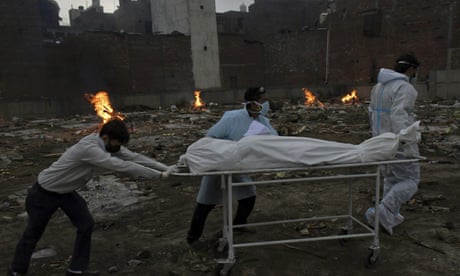
India continues to smash global records for new cases – more than 400,000 – and deaths (3,915). The country is grappling with dire shortages of oxygen and other essential hospital supplies.
Last month Biden promised that the US would send oxygen-related supplies and vaccine materials to India. The US has also indicated it will provide up to 60m doses of AstraZeneca vaccine to other countries struggling to protect their people from the virus, an act of altruism arguably diminished by the fact that the AstraZeneca vaccine is not approved for use in the US.
In addition, the Biden administration has backed the campaign to waive patents on vaccines to allow low-income countries to make their own versions.
Despite these recent concessions, Biden has come under intense pressure to do more to help ailing nations. In the early weeks of his presidency he refused to budge from the position that the US would only send vaccines abroad once all Americans had had the chance of being immunised.
On Sunday, Fauci called on the manufacturers of vaccines in the US to scale up production “in a great way” to allow large quantities of supplies to reach India quickly. He said the ambition would be for “literally hundreds of millions of doses” destined for India and other needy countries.
Picture of two pandemics: Covid cases fall in rich west as poorer nations suffer
Asked whether waiving intellectual property rights on the patents would prevent the big US companies from making more vaccines for transport abroad, Fauci said “I don’t think that’s the case. They can scale up. I think the waiving of the patents is not going to necessarily interfere with that right now.”
The contrast between countries in Africa where only 1% of the population is vaccinated and the US where almost 60% of adults have received at least one shot is all the more glaring given that at home in the US the emphasis now is not on accessing supplies of vaccines but on overcoming vaccine hesitancy. Several states are turning away allotted vaccines because demand is so low.
Fauci said the group of those who were “recalcitrant” was relatively small. The Biden administration was seeking to overcome resistance among them by making vaccinations extremely easy to obtain, through walk-in pharmacies and mobile units, he said.
The other method being pursued was to use “trusted messengers” – whether sports or entertainment stars, clergy or family doctors. They would spread the word that vaccines were a safe way of getting back to what Fauci described as “what we used to remember as ‘normal’ before all this happened”.
WARNING: This article contains graphic sexual details that may be distressing. A Palmerston North Number One Shoe employee has been arrested after allegedly taking candid photos of co-workers and customers before performing sex…
Dunedin resident Jenny McDowell was doing her shopping at a Countdown supermarket in Dunedin when she heard screaming. “I looked up and witnessed a man stabbing one of the female staff members,” she said. McDowell was one of…
The horticulture industry that saw crops of fruit and vegetable rot over summer due to Covid-19 border restrictions is welcoming a new scheme to bring in more skilled overseas workers. The Government announcement, which includes…
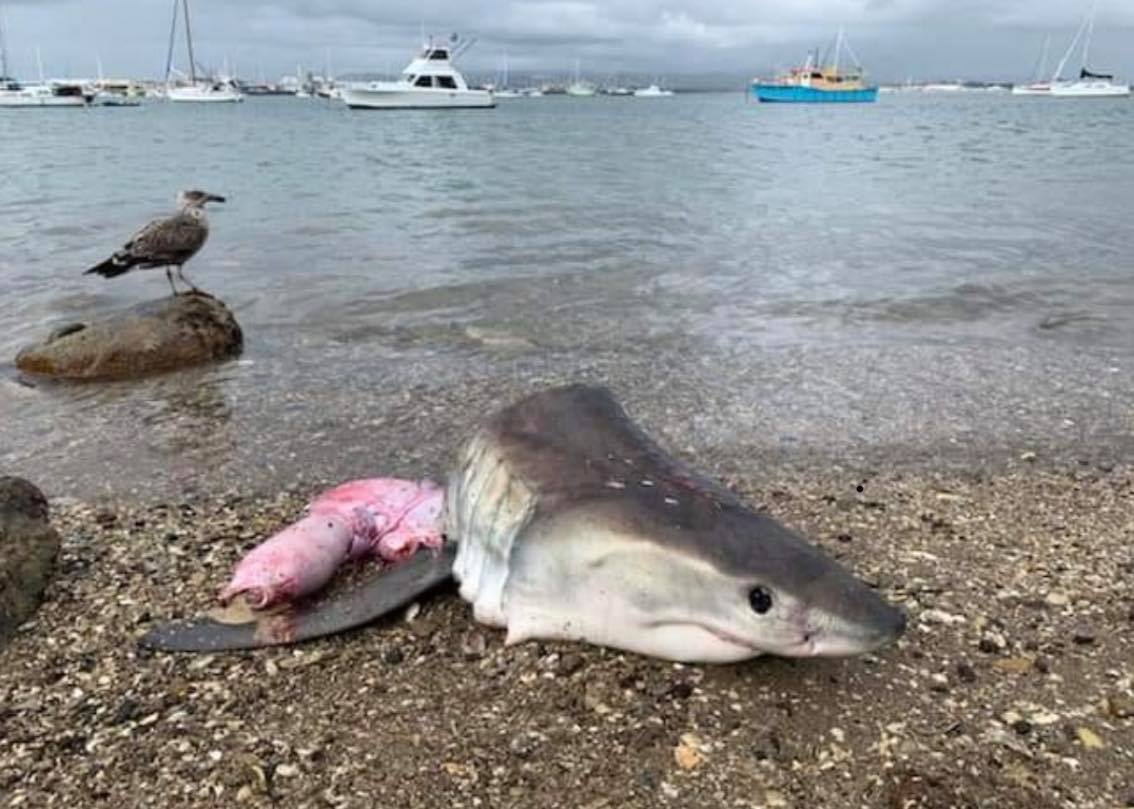
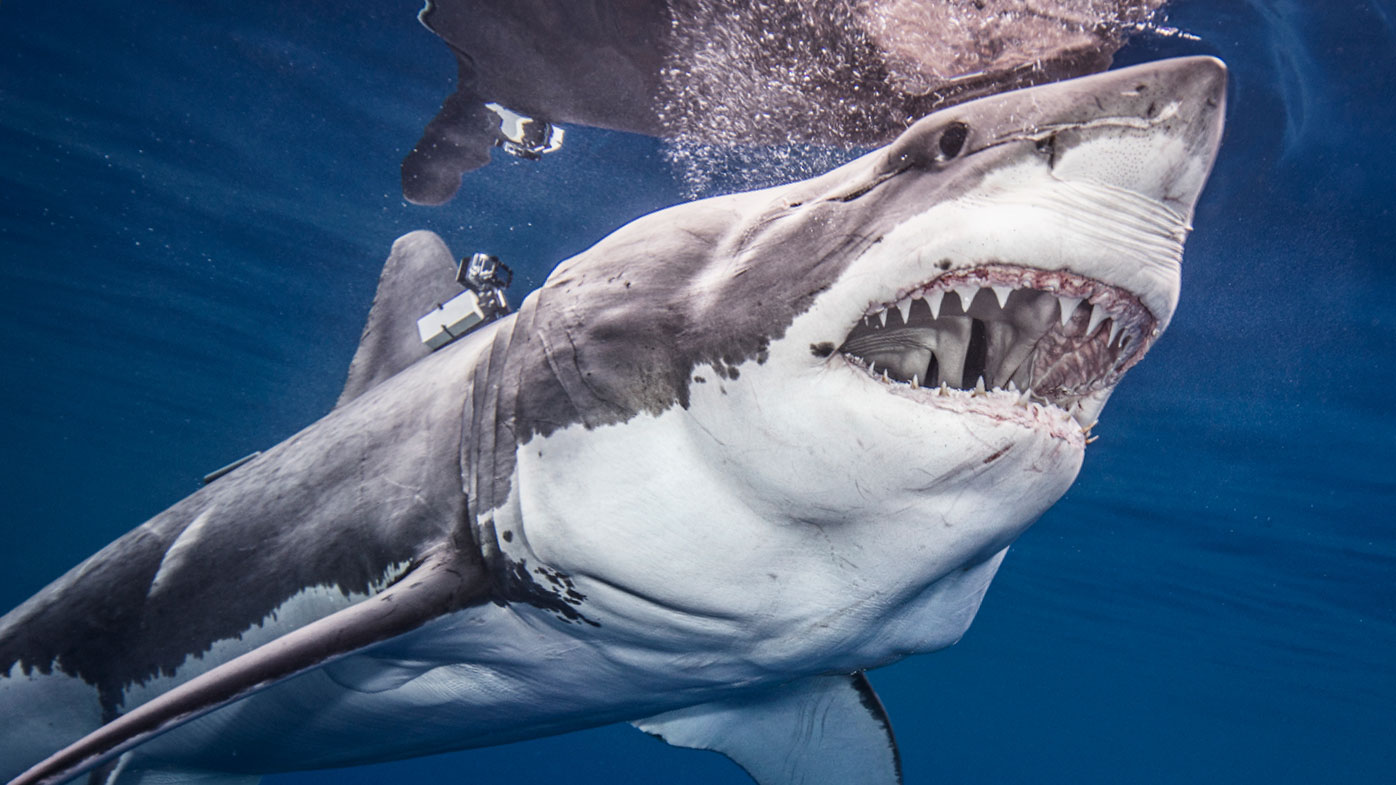
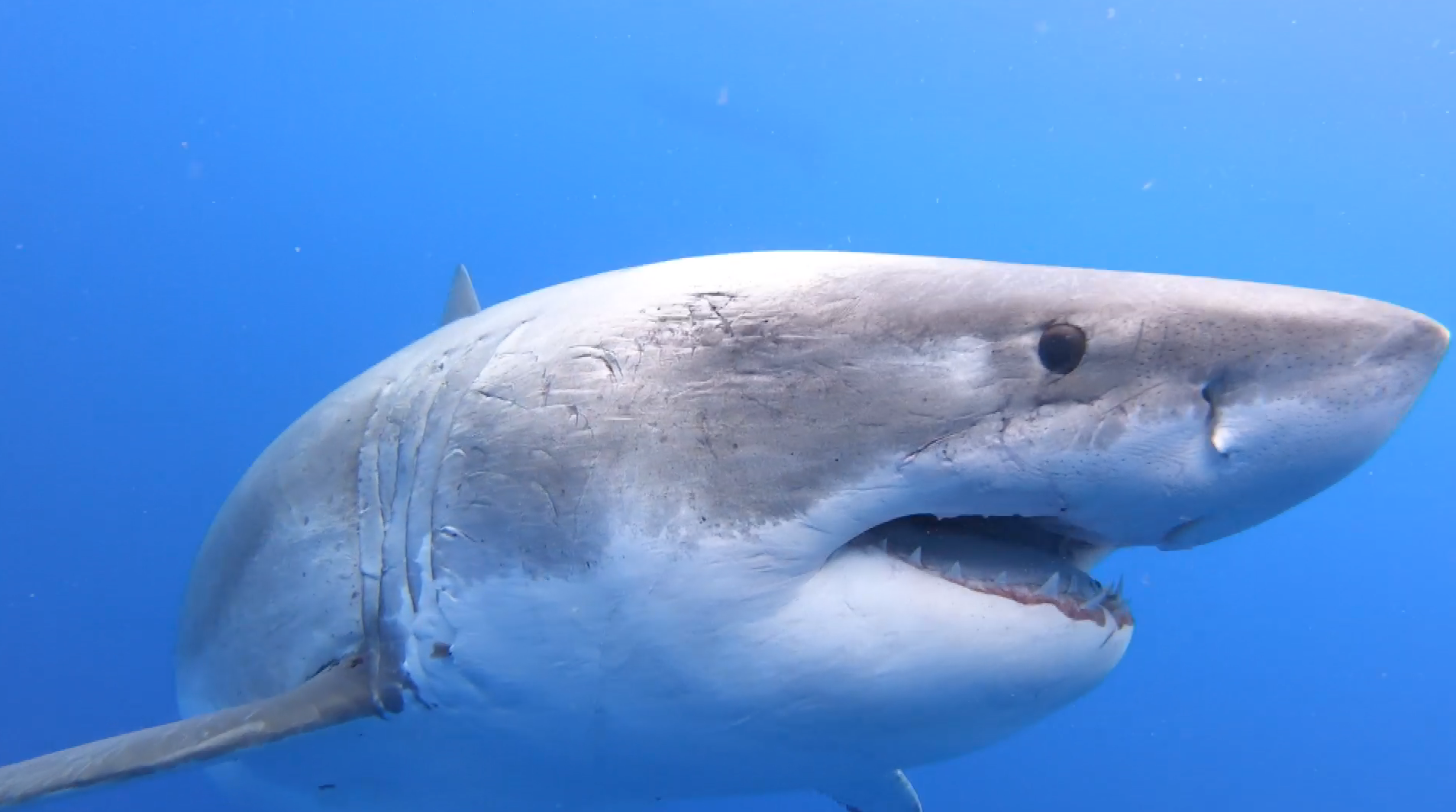
The New Zealand Department of Conservation is investigating a "very unusual event" after a juvenile Great White Shark was found killed, for what appears to be its meat.
An image shared by White Shark Conservation Trust on Saturday showed a picture of the shark, which is missing its lower half, in Pilot Bay, Tauranga.
The post said it appeared the shark had been killed to consume, and it also had stab wounds to its head, indicating it had been killed after it was brought to shore.
"We don't often get them walking away with the bulk of the animal."
However, he couldn't think of any other reason someone would do that besides wanting to eat it.
Duffy said someone would have to be living under a rock to not recognise the shark as a Great White.
"It's illegal to retain any part of it.
"They are totally protected."
Between Eastern Australia and New Zealand he said there were about 750 adult Great White Sharks and 12,000 juvenile.
It is illegal to catch a Great White deliberately, but it isn't illegal to catch them by accident.
However, they had to be released straight away and Fisheries NZ or DOC are meant to be contacted.
Some sharks didn't survive being released and Duffy said they probably saw about a dozen dead Great White Sharks wash up on the beaches or caught in nets a year.
Department of Conservation principal compliance officer Dylan Swain said they were aware of the remains.
"We are investigating what has occurred here and how the remains of the animal have ended up at this site, in this state.
"At this point details and information are sparse – so we would encourage any members of the public who have information on what happened to contact us, or provide information anonymously via the police Crimestoppers line.
The maximum penalties for the unlawful killing or taking of protected species are a fine of $250,000 and/or imprisonment of two years.
Ministry for Primary Industries national manager of fisheries compliance Steve Ham said they had not received any complaints about the shark.
But they are aware of the Facebook post and are looking into it, he said.
"We encourage anyone with information regarding potential fisheries or animal welfare offences to report it to MPI's hotline: 0800 4 POACHER."
Public engagement on Let’s Get Wellington Moving’s proposed changes to Thorndon Quay and Hutt Rd kicks off tomorrow. People can have their say until June 8 and can do so online, as well as at “open days” on May 21 and 22. Wellington…
Global tenor star Simon O’Neill has added his voice to buy St David’s Church on Khyber Pass in Auckland and repurpose it for acoustic music.The Presbyterian Church is planning to sell the 100-year-old building, which sits on a large…