Category Archives: headline

Brisbane hospital 'placed into lockdown'

jasA Brisbane hospital is in lockdown and contact tracing is underway after a worker tested positive for COVID-19.

Queensland Health confirmed the decision on Friday evening after a positive test result was received earlier in the day.

All non-essential visits to patients at the Princess Alexandra Hospital have been banned, elective surgeries postponed and a mask mandate for anyone attending the hospital.

READ MORE: Early vaccine supplies 'a lot less than anticipated', concedes PM

Princess Alexandra Hospital at Buranda.

The PA Hospital staff member had contact with COVID-19 patients early on March 10 and was infectious in the community the following day, Queensland Health said.

The department said all patients, staff and families who had contact with the infected staff were being identified and public exposure sites would likely be shared tomorrow.

Queensland Health said the emergency department would remain open but urged potential patients to choose another hospital or GP if possible.

"Staff will wear masks at all times," a Queensland Health statement said.

"Patients will be required to wear masks at all times unless it is not clinically appropriate.

"Non-urgent outpatient bookings and elective surgery will be postponed."

Queensland Premier Annastacia Palaszczuk also shared the message on Twitter.

https://twitter.com/AnnastaciaMP/status/1370334066642276352

In an email to staff, seen by 9News, the worker was described as a "medical officer".

"Effective immediately, PAH is classified as 'moderate risk' which requires flat surgical masks to be worn by all staff, patients and visitors [without] exception when interacting within 1.5 metres of others on the campus," the email read.

"Please follow the advice of your line manager and the concierge staff and please talk with your patients so that they can contact their family members to prevent visitors attending the campus who we cannot accommodate at this time."

Anyone with COVID-19 symptoms is urged to get tested immediately and isolate until receiving a negative result.

Deepening Vaccine Nationalism is Causing Nations to Produce Their Own Shots

DESSAU, Germany (Reuters) – In the German town of Dessau, one of the sites of the Bauhaus art school, an institute was set up in 1921 to mass-produce vaccines that later helped strengthen the German Democratic Republic. Exactly 100 years later, the site is gearing up to be a one-stop shop to produce COVID-19 vaccines for Germany’s pandemic response.

It’s just one example of a rash of efforts by governments across the globe to access fragmented vaccine production after manufacturing setbacks deprived European Union members of drugs made on their own soil this year. From Australia to Thailand, states planning home-based vaccine plants are starting to reshape the industry.

The German venture has the backing of the regional government, as part of a national effort to secure supplies and add vaccines to Germany’s exports. Saxony-Anhalt premier Reiner Haseloff said he believes Germany could become a swing producer of vaccines, in the same way that power companies maintain capacity for times of strong demand.

“Ultimately, this is comparable to the energy industry, where the state also pays to keep power plants in reserve,” Haseloff told Reuters.

Unlike the United States, where the government’s Operation Warp Speed began funding the expansion and retrofit of pharmaceutical manufacturing sites early in the pandemic, few countries globally have the option to commandeer factories. The German plan is one of more than half a dozen by governments around the world to avert shortages by supporting drug companies’ local production.

Some – including Australia, Brazil, Japan and Thailand – are setting up manufacturing partnerships with Swedish drugmaker AstraZeneca PLC. Elsewhere, Italy has pledged state backing for a public-private vaccine production centre, while Austria, Denmark and Israel plan a joint research and development fund and will explore whether to produce their own next-generation vaccines.

India plays a significant role in vaccine production globally, and the United States, Japan and Australia also plan to help finance vaccine production capacity there, a senior U.S. administration official told Reuters.

The moves aim to address a global shortage of doses. With vaccines key to restart economies, some countries have pre-purchase agreements to secure their supply.

2 BILLION DOSES

The vaccine crunch in Europe has shown that states that depend on deliveries from multinationals can be vulnerable. In January, AstraZeneca cut supplies to the bloc by more than half for the first and second quarters, and told Brussels it was not able to divert Belgian-made drugs that were earmarked for the United Kingdom. The cut heightened tensions between London and Brussels and prompted European leaders to set curbs on exports of vaccines made in the EU – starting this month, when Italy blocked exports of AstraZeneca’s shot.

Germany is a net importer of all vaccines, with a $720 million trade deficit in this area. Berlin plans to change that, and Germany’s former “Bacterial Institute of the Anhalt Counties” in Dessau will help. Now a family-owned firm called IDT Biologika, it and AstraZeneca plan to invest more than 100 million euros ($120 million) to expand the plant into a factory for complete vaccines.

The company says it aims to make between 30 million and 40 million doses a month from the end of 2022, producing the bulk vaccine and also dispensing it into vials, which Chief Executive Juergen Betzing told Reuters would make it one of Europe’s biggest manufacturers and add capacity for at least 360 million doses a year from within the EU.

Germany has not yet reserved the right to purchase any of these vaccines, but the government wants to come up with a plan on measures to support and incentivise long-term vaccine production capacity by May 1, according to a document seen by Reuters. A government source said drug company representatives have told Berlin long-term purchase guarantees would be more important to their investment decisions than aid.

The IDT plant will also be able to produce vaccines for other companies and, together with a cluster of firms in Saxony-Anhalt, form the heart of a government strategy to make Germany a new centre for vaccine production in Europe.

Berlin is targeting an annual capacity of 2 billion COVID vaccine doses from IDT and other facilities, a person familiar with the matter told Reuters. For comparison, AstraZeneca has stated its ambitions to produce up to 3 billion doses of its vaccine by the end of this year, which would make it the largest COVID-19 vaccine producer globally.

Berlin’s target could prove to be far in excess of the EU’s needs for its 450 million people, but it isn’t yet clear how often vaccinations will be needed to bolster immunity.

The COVID pandemic is an unprecedented challenge to inoculate billions. While the drugs are badly needed in the near term, such piecemeal plans reflect the lack of any coherent global strategy to cover vaccination in a pandemic, which the world needs, according to Robert Van Exan, a consultant and former Sanofi executive.

“It takes time to build that infrastructure properly, and some thought has to go into it,” Van Exan said.

LESSONS LEARNED

Previous vaccine disputes between allies have served as a prelude to the COVID-era fight for supplies.

In a flu scare in 1976, the United States blocked vaccine exports, derailing a vaccination plan in Canada. Ottawa learned a lesson: During the H1N1 flu pandemic of 2009, it bought drugs from a local producer, and waited until its outbreak was largely over before then donating extra doses to the World Health Organization.

And then, in the years after the 2009 pandemic, Washington paid hundreds of millions to several companies to build or expand private facilities that could be used to make and package a pandemic vaccine on short notice within the country’s borders.

When COVID-19 hit, at least two of those sites became part of Operation Warp Speed, producing vaccines for Johnson & Johnson, AstraZeneca and Moderna Inc . Federal officials used the Defense Production Act to put participating companies first in line for supplies made by other U.S. companies, and the U.S. Army Corps of Engineers directly oversaw some construction projects. When companies struggled to hire enough qualified staff, 16 Department of Defense employees were sent to work in quality control at two manufacturing sites, according to a recent federal report.

RUBIK’S CUBE

Globally, vaccines are manufactured across drug firms’ existing networks and often need to pass through several countries – and even between continents – before they are ready to inject into arms. Within the EU alone, more than 30 plants from Sweden to Spain are involved in the production of COVID-19 vaccines. AstraZeneca says it has manufacturing capacity in 25 sites across 15 countries, in a chain of partnerships that one company executive likens to a Rubik’s Cube puzzle.

It’s a similar picture for others, including vaccines made by Russia and China, and hitches are common when trying to accelerate production across multiple sites and borders. Switzerland-based Lonza Group AG makes the ingredients for Moderna’s vaccine which then go to Spain to be put into vials. J&J’s shot is made in the Netherlands and sent to the United States for bottling. Pfizer-BioNTech has contracted factories across a network of 13 sites to meet production needs this year – their supplies to Europe also briefly fell short when a plant had to be re-engineered.

But friction between AstraZeneca and the EU in Brussels has continued to chafe since a supplier to the drugmaker in Seneffe, Belgium ran into difficulty in January.

AstraZeneca’s vaccine production starts with living cells being infected with a modified form of the virus. The cells are grown in tanks, or bioreactors, harvested and purified over about two months. Once the active ingredient is created, water and proteins are added and the liquid is bottled – a stage known as ‘fill and finish.’ Sometimes, different stages happen at different sites.

Problems at the Belgian plant, combined with AstraZeneca’s contractual commitments to supply the United Kingdom, meant that even though the product involved was made a short drive from Brussels, EU citizens were left wanting.

The German company IDT Biologika now plans to cover all stages of the cycle. Other German vaccine developers BioNTech SE and CureVac NV, which are at the forefront of new vaccine technology and have both received government funding, will also be part of Germany’s cluster. BioNTech recently brought a new German plant online to produce up to 750 million doses per year and pharma giant Bayer AG will help make CureVac’s shot.

The developers of the Russian vaccine, Sputnik V, have also made inquiries about producing it in the region, Saxony-Anhalt premier Haseloff said. Russia’s sovereign wealth fund Russia’s Direct Investment Fund (RDIF), which is promoting Sputnik V internationally, declined to comment.

AstraZeneca’s arrangement with IDT is similar to other deals the company has reached, for instance in Japan and Australia. Arrangements like this also help reduce the risk for companies.

AstraZeneca declined to comment on the deals it has reached, but one of its executives has said in the past the company tried hard to create independent supply chains to enable full access to the vaccine around the world.

MAKING MONEY

Building up vaccine production capacity makes sense given the need to vaccinate the world, potentially repeatedly, against COVID-19, as well as the threat of future pandemics.

But large manufacturing sites are the most efficient and at some point, extra capacity spread across many countries may not be economical.

Prashant Yadav, a senior fellow at the U.S.-based Center for Global Development, said the advantages of scale kick in once you can produce at least 100 million doses per year.

He believes four or five countries could likely scale up without raising costs, but if many build small operations, “I think we get to a point where everybody will end up paying a higher price.”

In Canada, the federal government is building a publicly-owned facility in Montreal that would make about 2 million vaccine doses per month beginning next year, leaving it well below that 100 million annual dose threshold.

Asked if the small size will raise costs, Canada’s National Research Council said it is not meant to compete with the private sector: “The objective of the facility is to respond quickly to future health emergencies.”

Caroline Copley reported from Berlin, Andreas Rinke from Dessau and Allison Martell from Ottawa; Additional reporting by Ludwig Burger in Frankfurt, Douglas Busvine in Berlin and Polina Nikolskaya in Moscow; Edited by Sara Ledwith and Josephine Mason

The post Deepening Vaccine Nationalism is Causing Nations to Produce Their Own Shots appeared first on The St Kitts Nevis Observer.

Eddie Murphy to be Inducted into NAACP Hall of Fame

LOS ANGELES (AP) — Eddie Murphy will be inducted into the NAACP Image Awards Hall of Fame this month.

The NAACP announced Thursday that Murphy will be inducted during the March 27 ceremony, which will air on CBS. The actor-comedian will be presented the award by his longtime friend and “Coming 2 America” co-star Arsenio Hall.

The hall of fame induction is bestowed on an individual who is viewed as a pioneer in their respective field and whose influence shaped the “profession for generations to come.”

Previous inductees include Oprah Winfrey, Stevie Wonder, Spike Lee, Ray Charles and Sidney Poitier. The most recent honourees to be inducted were Cheryl Boone Isaacs and Paris Barclay in 2014.

“To this day, Eddie Murphy’s work continues to bring joy and laughter to individuals around the world, and he is an amazing example of Black excellence, creativity, and artistry,” said Derrick Johnson, the president and CEO of the NAACP.

Murphy began his career as a stand-up comic while a teenager and eventually joined the cast of “Saturday Night Live.”

He starred in the box office hit “48 Hours” and made his mark in a slew of films such as “Beverly Hills Cop,” “Coming to America,” “The Nutty Professor,” “Dr. Dolittle” and “Dolemite Is My Name.” His latest film “Coming 2 America” released on Amazon last week.

The organisation announced that singers Maxwell and Jazmine Sullivan are set to perform during the live telecast.

The NAACP Image Awards honouring entertainers and writers of colour will also simulcast on BET, MTV, VH1, MTV2, BET HER and LOGO.

The post Eddie Murphy to be Inducted into NAACP Hall of Fame appeared first on The St Kitts Nevis Observer.

Associated Press World View: Pandemic & Children, Biden & Vaccines, Prince William on Meghan, More

The Rundown

I'm an image

PARIS (AP) — By the time his parents rushed him to the hospital, 11-year-old Pablo was barely eating and had stopped drinking entirely. Weakened by months of self-privation, his heart had slowed……Read More

I'm an image

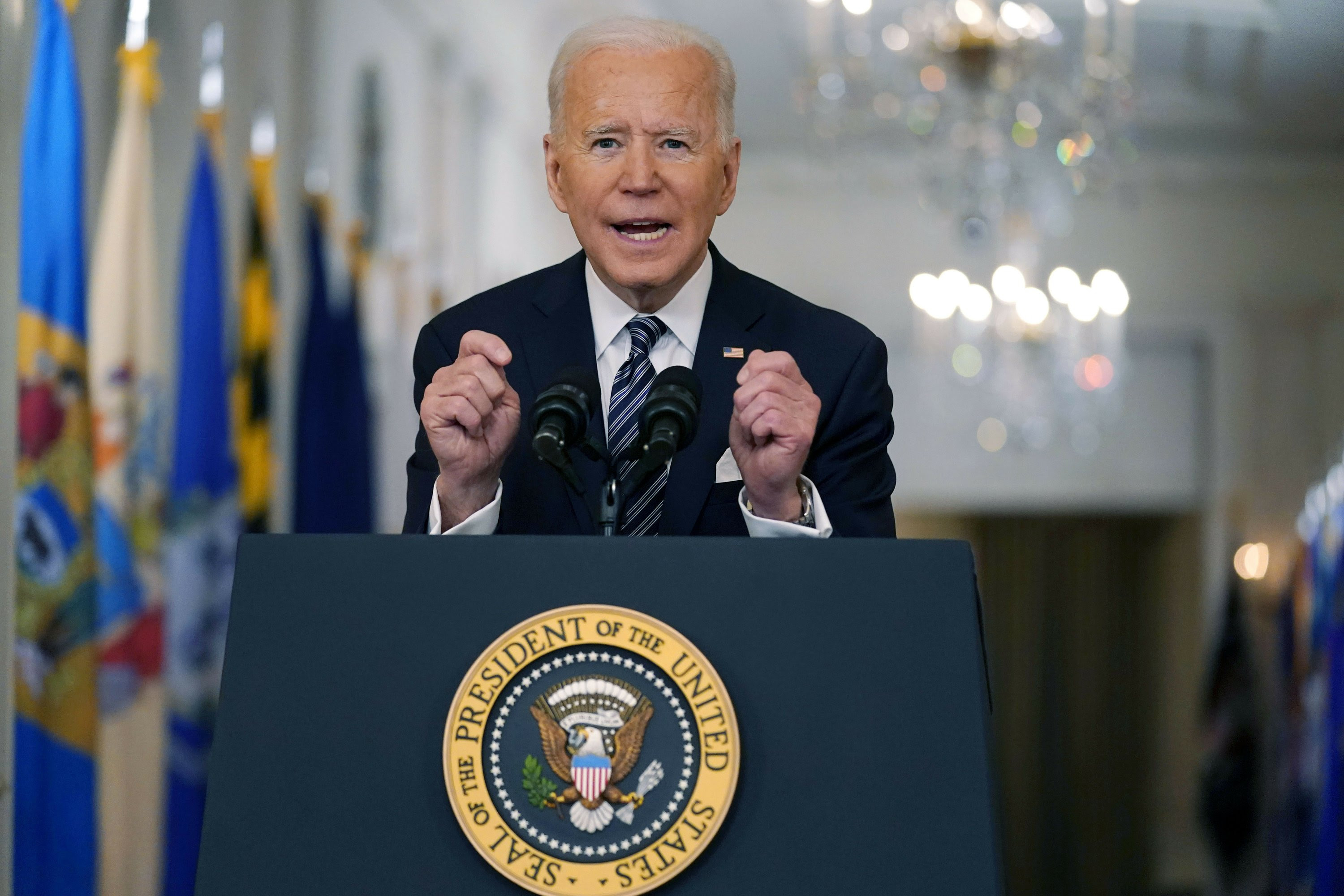
WASHINGTON (AP) — One year after the nation was brought to a near-standstill by the coronavirus, President Joe Biden pledged in his first prime-time address to make all adults eligible for… …Read More

I'm an image

WASHINGTON (AP) — President Joe Biden’s $1.9 trillion COVID-19 relief package is being hailed by Democrats and progressive policy advocates as a generational expansion of the social safety net,… …Read More

I'm an image

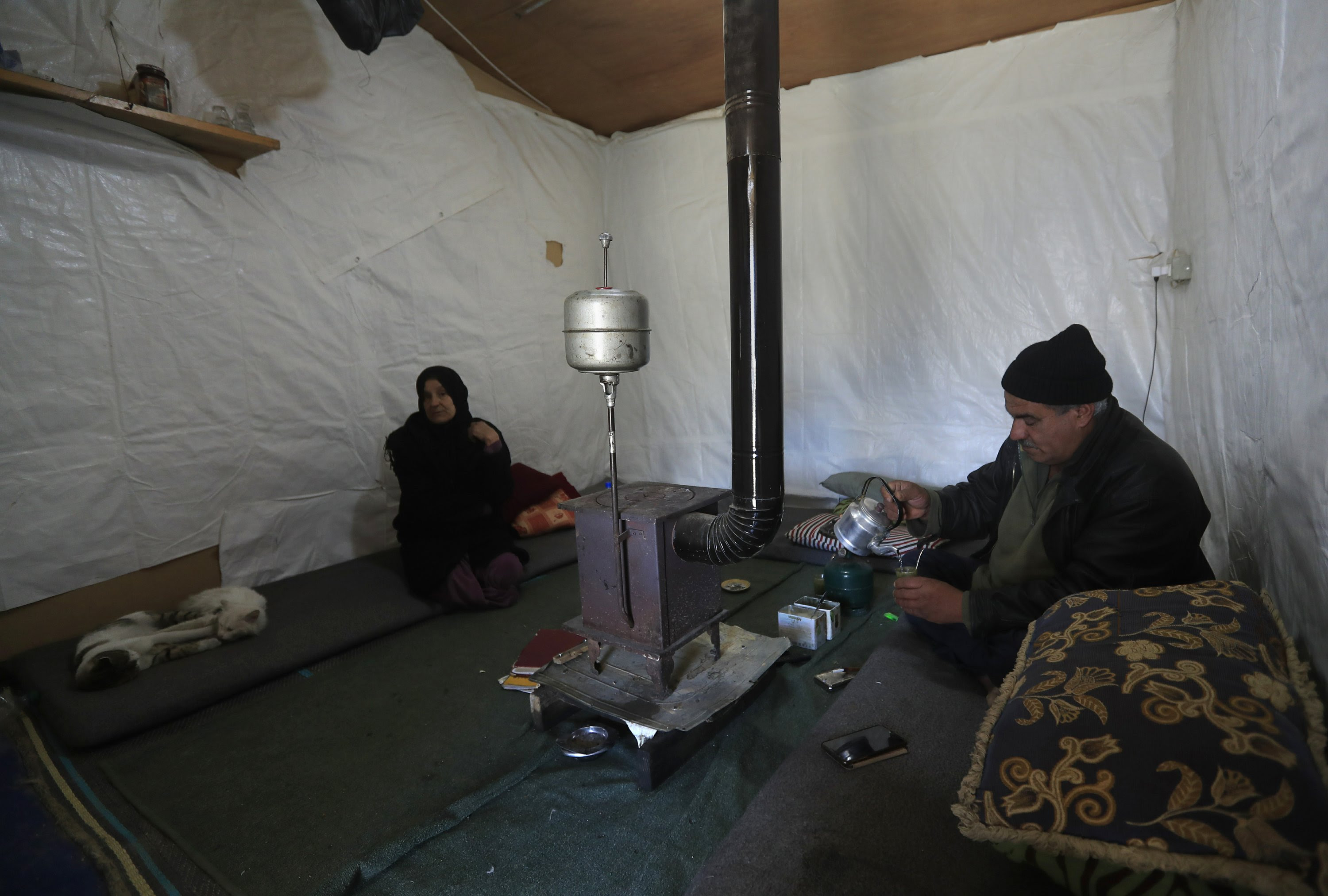
BAR ELIAS, Lebanon (AP) — Mohammed Zakaria has lived in a plastic tent in eastern Lebanon’s Bekaa Valley for almost as long as war has raged in his native Syria. He and his family fled… …Read More

I'm an image

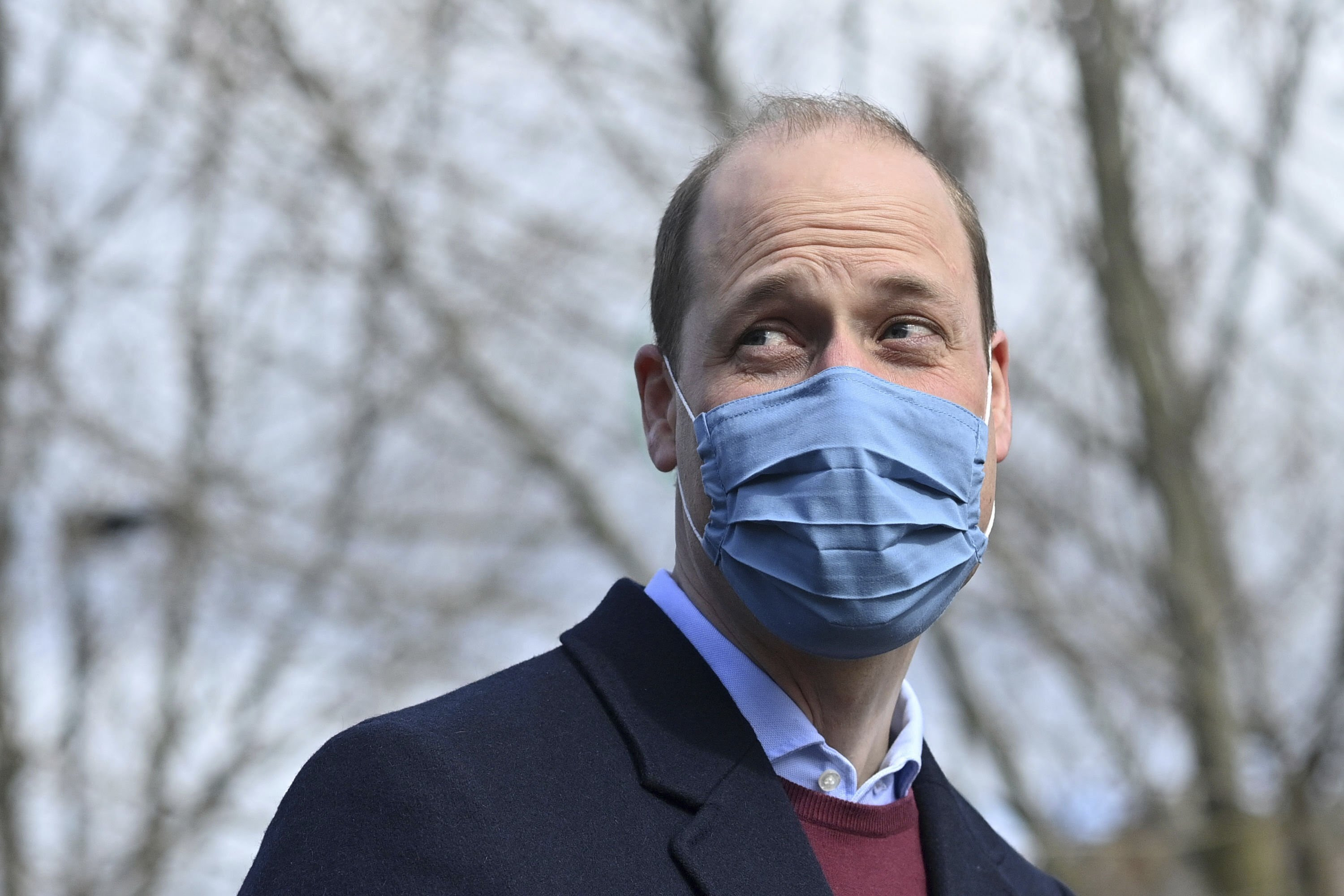
LONDON (AP) — Prince William insisted Thursday that his family is not racist as he became the first member of Britain’s royal family to speak out about accusations of bigotry made by Prince Harry…..Read More

OTHER TOP STORIES

With vaccination against COVID-19 in full swing, social platforms like Facebook, Instagram and Twitter say they’ve stepped up their fight against misinformation that aims to…Read More

ANSAN, South Korea (AP) — For the first time in years, Choi Bok-hwa didn’t get her annual birthday call from her mother in North Korea. Each January, Choi’s mother had climb…Read More

DHAKA, Bangladesh (AP) — A Bangladeshi satellite television station has hired the country’s first transgender news anchor, saying it hopes the appointment will help change s…Read More

Ken is turning 60, two years after his best friend Barbie did. Mattel launched a reproduction of the original Ken doll on Thursday to commemorate his 1961 debut. That slende…Read More

The post Associated Press World View: Pandemic & Children, Biden & Vaccines, Prince William on Meghan, More appeared first on The St Kitts Nevis Observer.

US Needs to Slash Greehouse Gases to Meet 2050 Goal

WASHINGTON (Reuters) – The United States needs to set a target to slash its greenhouse gas emissions between 57% and 63% below 2005 levels by 2030 in order to achieve the Biden administration’s longer-term goal of net-zero emissions by 2050, according to a new analysis released on Thursday.

Climate Action Tracker (CAT) analyzed President Joe Biden’s plans to decarbonize the electricity sector, commercial buildings and new vehicle fleet and found that in order for the United States to do its share to limit the rise of global temperatures to 1.5 degrees Celsius – the goal of the Paris Agreement – it needs to cut at least 57% of its emissions by the end of the decade.

The analysis comes before the United States is due to announce its new Paris Agreement pledge for 2030 known as a Nationally Determined Contribution ahead of a climate leaders’ summit the country will host on April 22.

European Union officials and environmental groups are calling on Washington to reduce emissions at least 50% this decade below 2005 levels.

“Having the U.S. taking such strong action would reverberate across the world, and result in other countries also stepping up to adopt the kind of targets they need to make global net zero a reality,” said Bill Hare of Climate Analytics, a co-partner of the CAT with the NewClimate Institute.

Other environmental groups including the Union of Concerned Scientists (UCS) joined the World Resources Institute, Environmental Defense Fund, Natural Resources Defense Council have coalesced around a 50% reduction target for 2030.

Biden’s climate team, led by National Climate Adviser Gina McCarthy and Climate Envoy John Kerry, is working with all government agencies and holding meetings with utilities and car companies as it crafts its new goal.

The CAT report says that the Biden administration plan to decarbonize the U.S. power sector by 2035 is consistent with a Paris Agreement pathway but it needs to strengthen plans to slash emissions in buildings and vehicles.

(Reporting by Valerie Volcovici; Editing by Marguerita Choy)

The post US Needs to Slash Greehouse Gases to Meet 2050 Goal appeared first on The St Kitts Nevis Observer.

Novavax’s Incredible 96% Efficacy Against COVID

Novavax has reported that data from a pivotal Phase III trial of its vaccine candidate, NVX–CoV2373, in the UK showed an efficacy of 96.4% against mild, moderate and severe disease caused by the original Covid-19 strain.

A protein-based vaccine candidate, NVX-CoV2373 is engineered from the genetic sequence of SARS-CoV-2.

The Phase III trial enrolled over 15,000 subjects aged between 18 and 84 years.

Data showed that the vaccine’s efficacy was 96.4% against the original virus strain and 86.3% against the B.1.1.7/501Y.V1 variant circulating in the UK.

The primary efficacy endpoint showed an overall vaccine efficacy of 89.7%. Of 106 cases detected, ten were in the vaccine arm while 96 in the placebo arm.

The randomised, observer-blinded, placebo-controlled South Africa Phase IIb clinical trial of NVX-CoV2373 had two cohorts. One cohort analysed efficacy, safety and immunogenicity in 2,665 healthy adult subjects while the second cohort analysed safety and immunogenicity in 240 medically stable, HIV-positive adults.

Data showed that the efficacy of 55.4% was observed among the HIV-negative trial participants in a region where the vast majority of strains are B1.351 escape variants.

In both trials, the vaccine showed 100% protection against severe disease, including hospitalisation and death and also achieved statistical success criteria.

The vaccine was well-tolerated with reduced levels of severe, serious (SAEs) and medically attended adverse events at day 35 balanced between the vaccine and placebo arms in the UK and South African trials.

Novavax president and CEO Stanley Erck said: “We are very encouraged by the data showing that NVX-CoV2373 not only provided complete protection against the most severe forms of disease, but also dramatically reduced mild and moderate disease across both trials.

“Importantly, both studies confirmed efficacy against the variant strains.”

Last month, Novavax concluded enrolment in its pivotal Phase III PREVENT-19 study of Covid-19 vaccine candidate, NVX-CoV2373, in the US and Mexico.

In a separate development, ImmunityBio has announced the development of a novel hAd5 ACE2 Decoy therapeutic vaccine for neutralising the SARS-CoV-2 virus, including the E484K and N501Y mutations.

The hAd5 ACE2 Decoy candidate is based on modified ACE2 receptors that would compete with ACE2 on respiratory tract cells for binding of the virus.

The post Novavax’s Incredible 96% Efficacy Against COVID appeared first on The St Kitts Nevis Observer.

Puerto Rico Sees a Surge in Tourism During Pandemic

Low-cost flights have enticed travelers, but relaxed restrictions have led to large gatherings, fights and Covid rule-breaking.
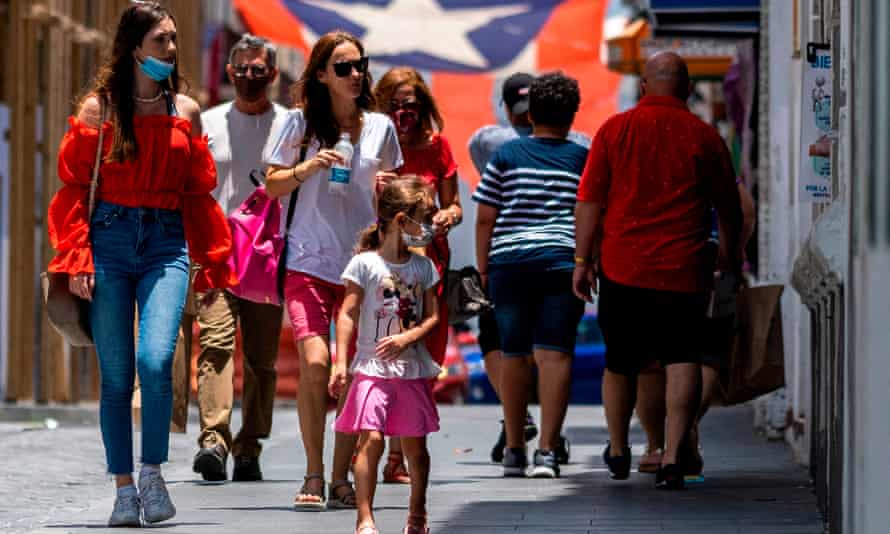
Tourists walk down a street in Old San Juan, Puerto Rico.
Tourists walk down a street in Old San Juan, Puerto Rico. Photograph: Ricardo Arduengo/AFP/Getty Images
At the Condado Vanderbilt Hotel in San Juan, Puerto Rico, Christian Correa clocked in to work the night-shift as a doorman and braced for the worst.

Correa, who is also a bellman at the hotel, has seen a surge in tourists coming to the US territory in the last three months and the hotel has been busy. Although he used to enjoy high season before the pandemic, recently, many tourists arriving to Puerto Rico have enraged local residents and hospitality workers as the island eases its Covid-19 restrictions.

“The tourists think they can do whatever they want,” says Correa, 24, who’s also a student at the University of Puerto Rico. “We’ve seen fights, parties in the rooms and aggressive behavior.”

Should you book a holiday for 2021 yet? And what about refunds?

Low-cost flights to Puerto Rico have enticed many travelers to choose the island as a vacation spot during the pandemic. A one-way flight to Puerto Rico from Florida booked two days in advance could be as low as $62.

Hotel occupancy reached 60% during Presidents’ Day holiday weekend in February, according to the island’s destination marketing organization, Discover Puerto Rico. It was the highest number since Christmas, and hotels expect to reach the same occupancy rates for the forthcoming spring break.

“We are certainly seeing the effects of increased traveler confidence coinciding with vaccine distribution in the US,” said Brad Dean, CEO of Discover Puerto Rico.

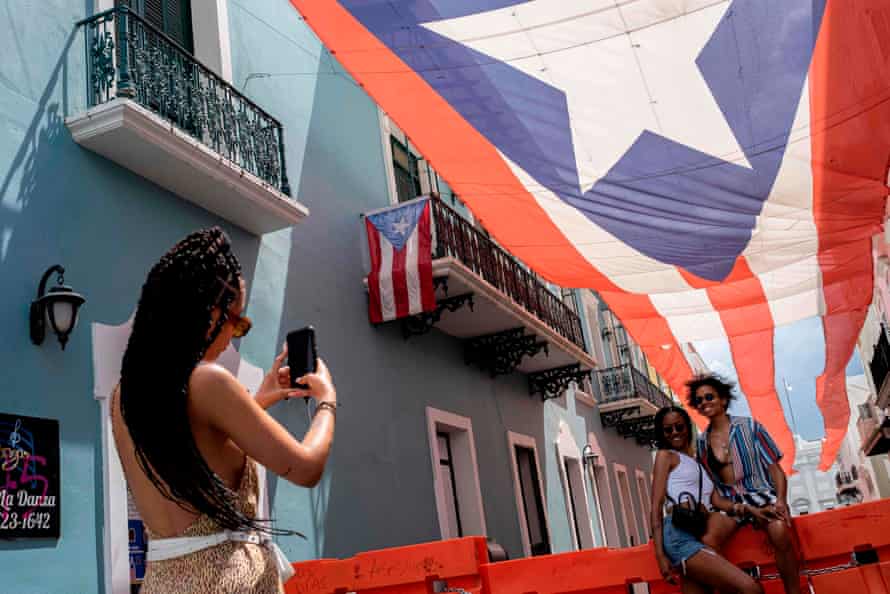
Tourists take pictures in front of the governor’s mansion in San Juan, Puerto Rico.
Tourists take pictures in front of the governor’s mansion in San Juan, Puerto Rico. Photograph: Ricardo Arduengo/AFP/Getty Images

For José Silva, owner of El Chicharrón restaurant, tourists arriving in the last weeks have put him on edge due to the large crowds without face masks forming on the weekends. His restaurant is located in La Placita de Santurce, a popular tourist area. Silva says the police close the streets around the area on weekends, making it hard for Ubers or taxis to pick up tourists after bars and restaurants close.

“We’ve asked the police to help keep everyone distanced and look for an alternative for this area,” says Silva.

In Old San Juan, another popular tourist area, Cristina Colón has been questioning whether her job as a waitress in Pirilo Pizza is worth the money as she sees a rise in clientele who don’t want to abide by the Covid-19 precautions.

“I’m not only concerned with my physical health, but my mental health too,” says Colón. “I’m nervous about myself and for the friends and family I surround myself with because I have no idea where this person who doesn’t want to wear a mask is coming from.”

Puerto Rico went into lockdown last March. Though restrictions were eased slightly over the summer, and former governor Wanda Vázquez reopened beaches fully in September, they were closed again from November until January.

Those restrictions hit the hospitality industry hard. “The executive orders implemented by Wanda Vanquez put the hotel industry under threat,” said Joaquín Bolívar, the president of Puerto Rico’s Hotel and Tourism Association.

Several hotels fluxed within single-digit occupancy percentages. “Some hotels were questioning their survival,” says Bolivar.

Now, Puerto Rico is under curfew from 12am to 5am and indoor establishments can operate at 50% capacity as the newly-elected governor Pedro Pierluis has increasingly been easing restrictions since January. Beaches are also open for recreational use.

The combination of US residents wanting to escape cold weather, cheap flight tickets and easing restrictions on the island has been bringing tourists en masse.

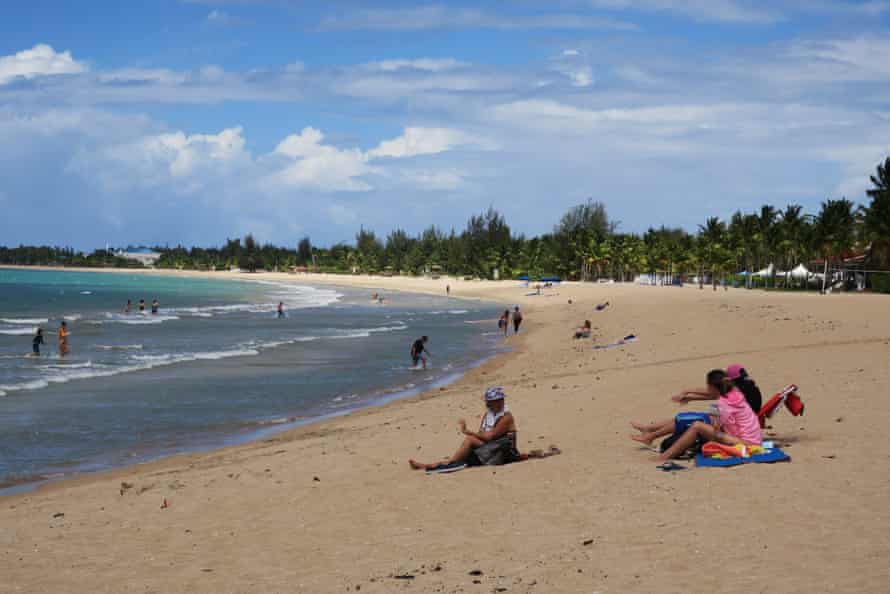
People enjoy Pine Grove beach in Isla Verde, Puerto Rico.
People enjoy Pine Grove beach in Isla Verde, Puerto Rico. Photograph: Jorge Muniz/EPA

With restrictions having relaxed, Bolivar admits hotels have experienced issues with some guests, but said many incidents, such as large gatherings and excessive noise, occur mostly in Airbnbs.

“We’re seeing a lot of tourists in the streets not wanting to cooperate with the executive order,” says Bolivar. “The association has brought the claim to the government, municipal government and the police.”

Videos circulating on social media show aggressive tourists starting fights, disrespecting local workers and residents, and disregarding Covid-19 precautions, including not wanting to wear face masks and having large gatherings as the travel influx to the island continues.

In February, one video showed tourists assault a woman in a wheelchair after they were told to wear masks. The women, who were staying at an Airbnb in San Juan, threw their drinks at the resident’s face and told her to speak English. Airbnb removed the guest from the platform due to the incident.

Another incident includes an alleged sexual assault by a US tourist against a 23-year-old resident in Rincón, located in the western region of Puerto Rico. Last month, the Sex Crimes and Child Abuse Division in Puerto Rico filed charges against the North Carolina resident, Devin Sanders. The Guardian tried to reach Sanders’ lawyer for comment, but the number for his office was disconnected.

With spring break coming up and the spread of new variants still on the rise, Discover Puerto Rico is encouraging travelers to participate in outdoor activities, such as visiting El Yunque national rainforest or the beaches. Bolivar expects hotel rooms to sell out.

Correa, at the Condado Vanderbilt, says he hasn’t seen a descent of guests at the hotel since Presidents’ Day weekend and thinks it will stay that way for spring break. He expects to keep running into misbehaving guests and continue calling the guests’ attention for walking the halls without a mask and reminding them there’s a curfew in place.

“They never believe me when I tell them there’s a curfew,” says Correa. “Minutes after they go outside late at night looking for a party, they come back and ask, ‘Is the curfew thing actually real?’”

The post Puerto Rico Sees a Surge in Tourism During Pandemic appeared first on The St Kitts Nevis Observer.

Antigua: Caribbean COVID Variant Found in UK

A new Covid variant from Antigua has been found in the UK after two people returned from the Caribbean.

Public Health England (PHE) said the strain shares some traits of other variants but would not be categorised as concerning for now.

The health authority said today the variant, known as VUI-202103/01 (lineage B.1.324.1) was designated a variant under investigation
on March 4.

The two cases were found in the South East of England.

“The variant contains the spike mutations E484K and N501Y, both usually associated with Variants of Concern (VOC), however it does not feature specific deletions that would lead to a designation as a VOC,” PHE said in a statement

Clinical staff wear Personal Protective Equipment (PPE) as they care for a patient ITU at Royal Papworth Hospital

efficacy.

The post Antigua: Caribbean COVID Variant Found in UK appeared first on The St Kitts Nevis Observer.

US: Biden Wants Nation Vaccinated by July 4th

President Joe Biden has said he is hopeful that America can “mark independence” from Covid-19 on 4 July if people get vaccinated.

In his first primetime address as president, Mr Biden said he would order states to make all adults eligible for vaccinations by 1 May.

Current measures prioritise people by age or health condition.

Mr Biden was speaking exactly a year to the day after the outbreak was classified a global pandemic.

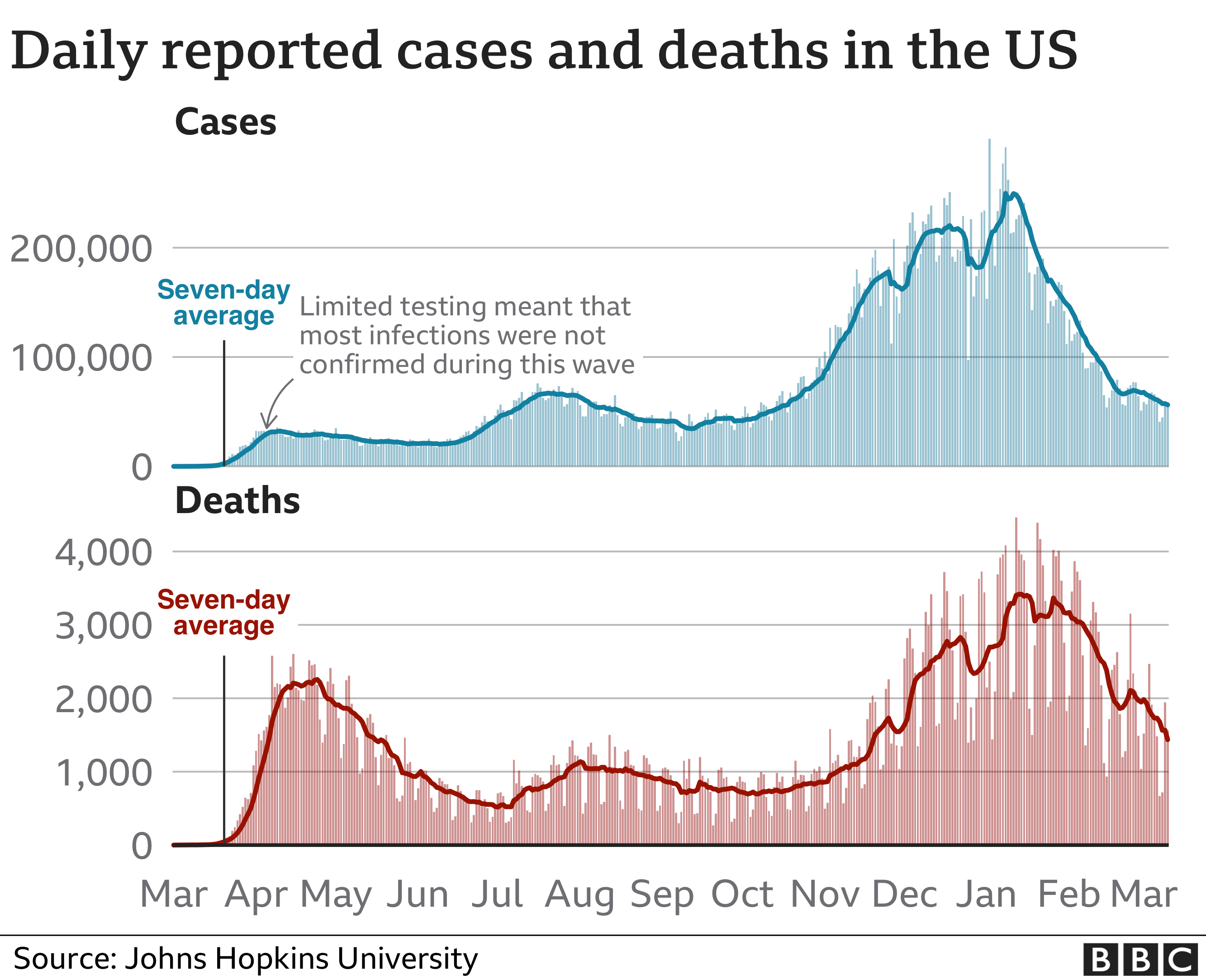
Half a million Americans have since died – more than the death toll from World War One, World War Two, and the Vietnam War combined.

Schools have been closed, businesses shuttered and people kept apart.

In his speech, President Biden set a timetable for when small groups could potentially meet again.

“If we do this together, by 4 July, there is a good chance you, your family and friends can get together in your backyard or in your neighbourhood and have a cookout or a barbecue and celebrate Independence Day,” Mr Biden said.

He predicted that the country would be able to not only celebrate Independence Day but also “independence from this virus”.

Chart showing US cases and deaths
Presentational white space

The US health system is complex and individual states are in charge of public health policy. While the federal government is responsible for getting the vaccine distributed to the states, it has largely relied on them to handle the distribution.

But as part of the plans to expand vaccinations, President Biden said the number of places where people could be immunised would be increased, with veterinarians and dentists among those also allowed to vaccinate people.

Mobile units will travel into local communities to provide vaccinations in underserved communities, he said.

Mr Biden previously set a target of 100 million vaccinations by his 100th day in office, but in his address on Thursday, he said this target would be reached on day 60.

He was speaking shortly after signing a $1.9tn (£1.4tn) economic relief bill, which marks an early legislative victory for his administration. It includes a $1,400 direct payment to most Americans, along with other measures to help people out of poverty and provide additional funding to local and state governments.

Despite the good news on vaccinations, Mr Biden warned that the “fight is far from over”.

He called on people to maintain social distancing measures, hand washing and wear a mask.

“Beating the virus and getting back to normal relies on national unity,” he said.

Mr Biden said last month he hoped that life would return to “normal” by Christmas 2021. Dr Anthony Fauci, the top US infectious diseases expert, described this timetable as “reasonable”.

The president’s caution is at odds with some states such as Texas and Mississippi, which are relaxing restrictions in order to boost their economies.

line
Analysis box by Anthony Zurcher, North America reporter

One year ago, the United States joined the world in facing a brutal truth. The coronavirus pandemic was going to fundamentally alter everyday life. Businesses shuttered. Citizens sheltered in their home. Life ground to a halt.

On Thursday night, in his first prime-time televised address to the nation, President Joe Biden said there was light at the end of the tunnel.

The big news from his speech was that all adult Americans would be eligible for a vaccine by the beginning of May – a pace, he boasted, that was the best in the world.

His most important message, however, may have been his urging that all Americans should get the jab when it’s their turn. “I know they’re safe,” he said.

A recent opinion poll showed that nearly half of Republicans are sceptical of the vaccine. If their doubt becomes inaction, Mr Biden’s promises – widespread school openings, an ability to travel and Independence Day celebrations – will go unrealised.

His speech was part promise, part warning. Get vaccinated, continue social distancing, wear masks – or else.

“America is coming back,” he said. But, he added, Americans needed to do their part.

line

This time last year, there were 1,000 confirmed cases of Covid-19 in the US and about 30 people had died.

All US major sport was cancelled and then-President Donald Trump suspended travel from Europe, saying he hoped the US would be open again for Easter 2020. This prediction was repeatedly revised.

The pandemic has now left more than 529,000 people dead in the US and has infected more than 29 million.

In his speech, President Biden criticised the Trump administration by saying the virus was initially met with “denials for days, weeks, then months, that led to more deaths, more infections, more stress, more loneliness”.

He also denounced “vicious hate crimes” against Asian Americans, who he said had been “attacked, harassed, blamed and scapegoated” for the pandemic. Mr Trump repeatedly referred to coronavirus as the “China virus”.

The post US: Biden Wants Nation Vaccinated by July 4th appeared first on The St Kitts Nevis Observer.