NEW DELHI (AP) — As coronavirus cases ravaged India this spring, Anil Sharma visited his 24-year-old son Saurav at a private hospital in northwest New Delhi every day for more than two months. In May, as India’s new COVID-19 cases broke global…Read More
WILMINGTON, Del. (AP) — The United States is in an “unnecessary predicament” of soaring COVID-19 cases fueled by unvaccinated Americans and the virulent delta variant, the nation’s top infectious diseases expert said Sunday. …Read More
TOKYO (AP) — Caeleb Dressel got started on his quest for six gold medals in swimming, while Katie Ledecky found herself in a very unusual position. Second place. Dressel led off a U.S. …Read More
PARIS (AP) — While most French health care workers are vaccinated against the virus, a small but vocal minority is holding out. With infections exploding, a new law requiring them to get the shots is exposing the divide. …Read More
DALLAS (AP) — It was the start of a steamy Friday two Augusts ago when Jason Whisler settled in for a working breakfast at the Coffee Ranch restaurant in the Texas Panhandle city of Borger. The most pressing agenda item for city officials that…Read More
Although the pandemic disrupted family life across the U.S. since taking hold in spring 2020, some parents are grateful for one consequence: They’re now opting to homeschool t…Read More
TIANJIN, China (AP) — America’s No. 2 diplomat has arrived in China to discuss the fraught relationship between the countries on Monday with two top Foreign Ministry officials…Read More
VALPARAÍSO, Mexico (AP) — When they heard gunfire in the valley, residents locked their doors and cowered inside their homes. Some 200 armed men had just looted a gas station,…Read More
VATICAN CITY (AP) — A cardinal who allegedly induced an underling to lie to prosecutors. Brokers and lawyers who pulled a fast one over the Vatican No. 2 to get him to approve…Read More
BOGOTA, July 23 (Reuters) – Colombia on Friday gave the green light for exports of dried cannabis for medical and other industries, as the Andean country took another step to develop its marijuana industry, where progress has been slow despite high potential.
President Ivan Duque signed a decree lifting a prohibition on exporting dried cannabis flower, a move seen as crucial by investors.
The directive also allows for the expansion of sales of cannabis-based medicines and streamlines regulatory procedures.
While Colombia has been hailed as a pioneer in regulating the possession, production, distribution, commercialization and export of seeds, plants and substances derived from cannabis – like oils, creams and extracts for medicinal purposes – investors have long complained about what they say is a tortuous export-approval process.
“This means Colombia can enter to play a big role in the international market,” Duque said after signing the decree, adding the new rules would allow Colombia’s cannabis industry to expand into food and drinks, cosmetics and other sectors.
Latin American cannabis exports could be worth $6 billion, Duque said.
“Lifting the prohibition on exporting the dry flower will start a regulatory process which we hope will be performed in great detail, to the highest international standards,” Juan Diego Alvarez, vice president of regulatory issues for cannabis producer Khiron, told Reuters.
Colombian cannabis industry association Asocolcanna urged the country to seize the opportunity to make the most of its competitive advantages.
“It’s crucial for Colombia to achieve its potential at a time when the global cannabis industry is being refined,” Asocolcanna said in a letter published on its website.
In countries where the medicinal cannabis industry has more mature regulation, like the United States, the United Kingdom, Germany and Israel, dried cannabis is the most developed sector of the market, accounting for more than 50% of all sales.
Reporting by Nelson Bocanegra in Bogota Writing by Oliver Griffin Editing by Matthew Lewis
MOSCOW, July 24 (Reuters) – Russia has sent a shipment of coronavirus-related humanitarian assistance to Cuba, including 1 million medical masks, the defence ministry said on Saturday, adding President Vladimir Putin had given instructions for the aid.
Cuba, which kept coronavirus infections low last year, earlier this week reported the highest rate of contagion per capita in Latin America. That has strained its healthcare sector and helped stoke rare anti-government protests earlier this month on the Communist-run island.
Two military planes carrying 88 tonnes of aid – including food and personal protective equipment, including over 1 million medical masks, departed from an airfield near Moscow on Saturday, the defence ministry said in a statement.
“On the instructions of the Supreme Commander-in-Chief of the Armed Forces of the Russian Federation, Vladimir Putin, military transport aircraft are delivering humanitarian aid to the Republic of Cuba,” the ministry said.
The ministry did not mention the United States, but with its aid to longstanding ally Havana, Russia could also be looking to make a point against Washington.
The Cuban government has blamed the protests mostly on what it calls U.S.-financed “counter-revolutionaries” exploiting economic hardship caused by decades-old U.S. embargo. Government critics say the island’s economic woes are caused largely by the inefficiencies of the state-run system.
Mexico said on Thursday it would send to Cuba two navy ships loaded with medical and food supplies, including syringes, oxygen tanks and masks, along with powered milk, cans of tuna, beans, flour, cooking oil and gasoline.
Mexican President Andres Manuel Lopez Obrador has blamed the U.S. embargo for fomenting the unrest in Cuba.
With a population of 11 million, Cuba reported nearly 4,000 confirmed coronavirus cases per million residents over the last week, nine times more than the world average, in an outbreak fuelled by the arrival of the more contagious Delta variant on the island.
Reporting by Polina Ivanova Editing by Frances Kerry
CARACAS, July 25 (Reuters) – Venezuelan President Nicolas Maduro said that he was aiming to begin a dialogue with the country’s political opposition next month in Mexico facilitated by Norway, a process he hoped the United States would embrace.
In May the opposition changed strategy and indicated its willingness to return to negotiations to resolve the political crisis in OPEC member Venezuela.
Maduro has overseen an economic collapse in once-prosperous Venezuela since taking office in 2013, and stands accused by his domestic opponents, the United States and the European Union of corruption, human rights violations and rigging his 2018 re-election. Maduro denies the accusations.
In June, top diplomats in Washington, Brussels and Ottowa said they would be willing to revise their sanctions on Maduro’s government if the dialogue with the opposition led to significant progress toward free and fair elections.
“I can tell you that we are ready to go to Mexico,” Maduro said in an interview on the state-funded Telesur television network late on Saturday. “We have begun to discuss a complicated, difficult agenda.”
Venezuela’s opposition, led by Juan Guaido, has accused Maduro of using previous rounds to buy time in the face of diplomatic and sanctions pressure by the United States and others. Guaido is recognized by Washington and several other Western democracies as the country’s rightful leader.
Opposition groups have said they are willing to negotiate the conditions for presidential and parliamentary elections with Maduro’s government.
Maduro, in turn, has said he wants the negotiations to focus on the lifting of U.S. sanctions targeting the financial and oil sectors.
He added that the negotiations would include “all the oppositions,” a reference to opposition politicians who broke with Guaido’s call to boycott the 2020 parliamentary elections, which were won handily by Maduro’s ruling United Socialist Party of Venezuela.
Reporting by Vivian Sequera Writing by Luc Cohen; editing by Grant McCool
SAO PAULO, July 24 (Reuters) – Protesters took to the streets in several Brazilian cities on Saturday to demand the impeachment of far-right President Jair Bolsonaro, whose popularity has fallen in recent weeks amid corruption scandals against the backdrop of the pandemic.
This week, news broke that Brazil’s defense ministry told congressional leadership that next year’s elections would not take place without amending the country’s electronic voting system to include a paper trail of each vote.
Bolsonaro has suggested several times without evidence that the current system is prone to fraud, allegations that Brazil’s government has denied.
Bolsonaro is facing reelection next year, in a race in which he is likely to face his political nemesis, former leftist President Luiz Inacio Lula da Silva. Polls currently show Bolsonaro losing against Lula.
Saturday’s protests were at least the second time this month that Brazilians have taken to the streets in several cities to oppose Bolsonaro.
“I’m here because it is time to react to the genocidal government that we have, that has taken over our country,” said Marcos Kirst, a protester in Sao Paulo.
Over 500,000 Brazilians have died of COVID-19 under Bolsonaro’s leadership, who has been widely criticized for dismissing the severity of the disease and opposing masks and social distancing measures.
Bolsonaro is now being investigated in the Senate, which is probing the possibility of corruption tied to the purchase of an Indian coronavirus vaccine.
In Sao Paulo’s Paulista Avenue, the traditional location for political protests, over a thousand people were gathering as of 4 p.m. Saturday.
Bolsonaro was in Brasilia, the capital, on Saturday and went out for a motorcycle ride while greeting supporters.
Reporting by Marcelo Rochabrun; Additional reporting by Pedro Fonseca; Editing by Leslie Adler
The president’s widow Martine, who was injured in the attack and treated in hospital in the US, was at the funeral with three of her children.
“Cry for justice. We don’t want revenge, we want justice,” she said, according to Reuters news agency.
The president’s coffin was carried by men in military uniform. It sat on a stage in a Haitian flag, surrounded by white flowers. A Roman Catholic priest blessed it.
But even the funeral could not escape the unrest suffered by Haiti for so long.
Protesters clashed with police outside the venue and witnesses smelt tear gas at the ceremony, but it seems nobody was hurt.
Some officials faced the anger of demonstrators, with police chief Leon Charles accused of being an “assassin”.
Haitian police accuse a group made up of 26 Colombians and two Haitian Americans of carrying out the killing. At least 20 were detained, while three were killed by police and five are still on the run.
Moïse, 53, had been president of Haiti, the poorest nation in the Americas, since 2017. His time in office was rocky as he faced accusations of corruption and there were widespread demonstrations against him earlier this year.
Also this week, a new prime minister, Ariel Henry, was sworn in after a political row with a rival.
He has called for unity and said he would form a temporary government until elections, due in September.
“It’s the best thing I’ve found in 31 years of diving,” says Maurice Belgrave, pointing to the spot where a centuries-old shipwreck lay hidden under the water for more than 200 years.
Here at the Antigua Naval Dockyard, historic anchors, cannons and capstans are on bountiful display, testimony to the pivotal role it played as a safe harbour for Royal Navy warships protecting Britain’s valuable sugar-producing islands.
The murky waters around it, however, conceal a wealth of secrets.
Over the years, commercial diver Mr Belgrave has found everything from 18th Century tobacco pipes to live cannon balls deep in the sediment beneath.
“Most of the real history is on the seabed,” he tells the BBC.
In 2013, a routine job cleaning an anchor chain unearthed his most impressive discovery to date: the remarkably well-preserved remains of a 250-year-old naval vessel.
“Whenever I’m down there, I run my hands through the mud,” he explains. “I saw the lumbers and realised it was the skeleton of a real big boat.”
image copyrightGemma Handy
Maurice Belgrave has been diving in the area for more than three decades
The presence of the 40-metre (130-ft) wooden ship was finally confirmed last month by a team of visiting archaeologists.
Not only does its sheer size set it apart from other wrecks around the Caribbean island, but local historians also believe it to be the 1762 Beaumont, a French merchant ship later bought by a private individual, renamed the Lyon and used in the American Revolutionary War.
The mud which kept it concealed just feet below the surface, traversed by hundreds of yachts a year, is credited with keeping it intact, offering archaeologists a veritable time capsule to explore.
Historians had long suspected the Beaumont was there – and a hydrographic survey, also in 2013, had given weight to that – but poor visibility made it tricky to locate.
Lack of funds hindered efforts to professionally scour the identified spot until recently, when the French and Martinique governments – as well as the US-based Richard Lounsbery Foundation – paid for a visit by a group of international experts.
image copyrightGemma Handy
The Antigua Naval Dockyard is the only working Georgian dockyard in the Western Hemisphere
The timing was impeccable too, preceding celebrations for this month’s fifth anniversary of the dockyard’s award of Unesco World Heritage Site status. Dr Reginald Murphy, Antigua’s Unesco representative, says this is a “major historical find”.
“You read about the Age of Sail and the size of the ships, but it’s not until you actually see one that you realise how massive and powerful they were; it’s a way of reaching into history,” he says.
“We have many artefacts and buildings from that era but nothing compared to this. It’s a real touch of reality.”
The six-day excavation revealed the vessel’s measurements to match the dimensions of the 900-ton Beaumont.
Further research is required but if it is indeed the Beaumont, it could be the only shipwreck of its kind in the world, explains Antigua-based archaeologist Dr Christopher Waters.
image copyrightDieppe Museum
image captionHistorians believe the wreck to be the 1762 Beaumont, a heavily armed French merchant ship
The Beaumont was built by the French East India Company, an imperial commercial enterprise founded in 1664 to compete with English and Dutch trading firms in what is today east Asia.
While there are other wrecks of vessels built by the company, there are no known ones with an intact hull, Dr Waters says. Its discovery is comparable to the Mary Rose “in terms of its size and the stories we may be able to tell of it”, he adds.
Leading the underwater team was Jean-Sebastian Guibert, an associate professor at the University of the Antilles in Martinique. He describes finding the ship – using high-tech sonar equipment and a magnetometer – as “like hitting the jackpot”.
Mr Guibert says it is the largest wreck he has seen in 15 years working in the region.
One thing researchers are not expecting to find as investigations continue is a “treasure trove”, Dr Waters says, as the vessel was likely stripped down. Neither will it be raised due to the expense and complexity of doing so.
But the ship could offer new insight into 18th Century wooden ship construction.
image copyrightGemma Handy
Centuries-old artefacts found in the dockyard over the years include a toothbrush made from bone
As a heavily armed merchant ship, the Beaumont was designed to travel from France to the Indian and Pacific oceans. After the collapse of the French East India Company, it served as a 56-gun warship in the French Navy from 1770 to 1772 before being bought and renamed.
It was later captured by HMS Maidstone in 1778 while supporting the Thirteen Colonies in the American War of Independence.
“We know it was brought here; we just don’t know what happened to it,” Dr Waters says. “But it was very badly damaged and probably never left the harbour again.”
The ship’s size means far more funding is needed to continue the research. But its mere existence enhances the profile of the dockyard, the only working Georgian dockyard in the Western Hemisphere and a cornerstone of Antigua’s tourism industry.
For Mr Belgrave, the significance goes deeper still.
As historians continue to piece together the stories of the enslaved Africans who built the dockyard 300 years ago and from whom many Antiguans are descended, this particular discovery has a special resonance.
“There’s a sweet music to this one,” he says. “I feel delighted that something so significant was rediscovered by me as an African.”
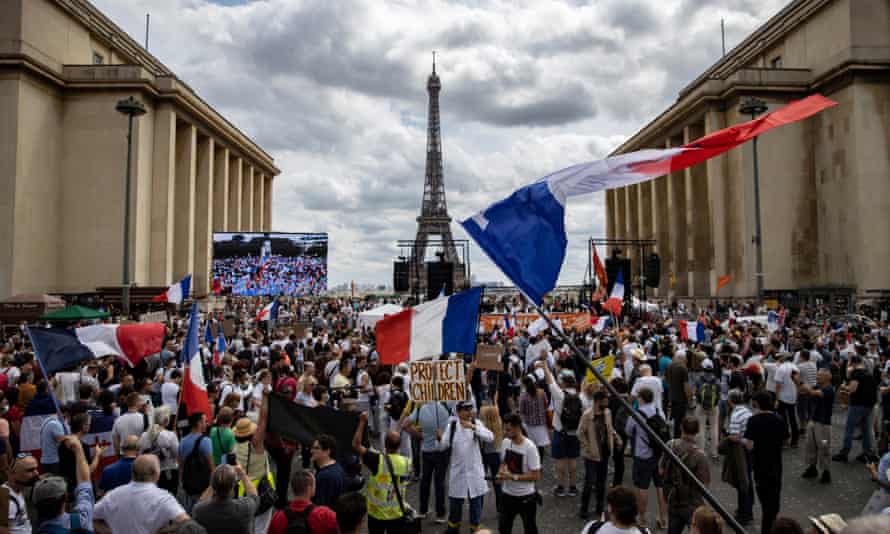
People in Paris protest against the ‘pass sanitaire’, France’s requirements on vaccine certification for access to venues. Photograph: Ian Langsdon/EPA
With the school term finally over, Britons are flying to Europe in their tens of thousands, record levels for this Covid year. They are arriving in countries where the Delta variant paralysing Britain is just becoming dominant – and Europe is responding by clamping down.
Some countries have tightened border controls, with Malta barring entry to unvaccinated travellers and Germany bringing in stricter quarantine rules for people arriving from Spain and the Netherlands. More broadly, authorities from Greece to Italy and France to Portugal are bringing in what are effectively vaccine passports for a wide range of activities, although most are shying away from using that term, which has become incendiary.
Italy will require proof of vaccination – through the Europe-wide “green pass” – to do anything from visiting a museum, to working out at a gym or watching a film. Similar rules in France have sparked two weekends of headline-grabbing protests attended by tens of thousands, including far-right activists on Saturday. But most French adults are fully vaccinated now and polls show a majority support the new measures.
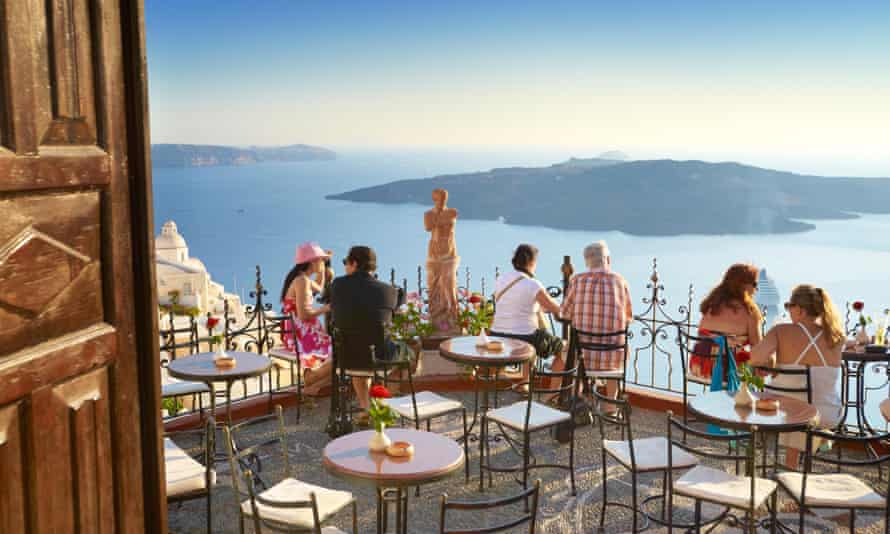
In Greece, bars and restaurants can now only welcome vaccinated customers inside, a curb that Portugal introduced at the start of July.
The WHO said on Friday that the Delta variant has now become dominant in much of Europe. And politicians have cited the rapid rise of this highly transmissible form of Covid to justify moves restricting much of public life to the vaccinated. “The Delta variant is even more of a threat than the other variants,” Italy’s prime minister, Mario Draghi, told reporters. “The green pass is not arbitrary, but a necessary condition not to shut down the economy. Without vaccinations, everything will have to close again.”
The head of the European Central Bank, Christine Lagarde, warned of the specific risks caused by Delta as the bank voted to keep its vast Covid stimulus programme in place last week. “The reopening of large parts of the economy is supporting a vigorous bounce-back in the services sector. But the Delta variant of the coronavirus could dampen this recovery in services especially, in tourism and hospitality,” she said.
In Greece, bars and restaurants can now only welcome vaccinated customers inside. Photograph: Jan Wlodarczyk/Alamy
Current data shows that the Delta variant is about 60% more transmissible than the Alpha variant, which in turn is 60% more transmissible than the original variant from China, according to Martin Hibberd, professor of emerging infectious disease at the London School of Hygiene and Tropical Medicine.
So 10 people infected with the original Covid strain would pass the disease to about 25 other people, without restrictions such as lockdown or vaccinations. But 10 people infected with the Delta variant will make between 60 and 70 people ill.
Scientists say Europe is now facing the same race between vaccination and the Delta variant that has been under way in the UK for several months. “Clearly the UK is doing well with getting the vulnerable groups like the over-50s vaccinated, and yet we’re still seeing more hospitalisations than the NHS would like at the moment, so it’s going to be tricky for Europe. And I think the answer is to do more vaccinations,” said Hibberd.
“Europe probably needs to expand [mass testing] a little bit more so that people can be more aware about whether they’re positive or not and then isolate if they are. [Europe] haven’t been quite as good at that: you can’t get free tests quite as easily across Europe as you can in the UK.”
There is mounting anecdotal evidence that requiring vaccines at schools, work, and leisure venues can spur people to get their jabs. In the week after Emmanuel Macron, the French president, announced tighter controls on 12 July, a record 3.7 million French citizens signed up for a vaccination, Reuters reports.
In Italy, Draghi’s decision also prompted a pickup in vaccine bookings, officials said. “I think the prime minister has achieved what he wanted to achieve,” said Giovanni Toti, president of the region of Liguria.
Overall, more than half of the EU’s population has now been fully vaccinated, but there are significant differences between countries. And the fast rise in cases can even put the fully vaccinated at risk.
“Sadly in many countries in our region we’re seeing a significant rise in cases associated with the spread of the highly transmissible Delta variant,” said Hans Henri P Kluge, the WHO’s regional director for Europe. “Despite tremendous efforts by member states to vaccinate people across the region, millions more remain unvaccinated and therefore at risk of ending up in hospital.”
The bleak example of Britain’s summer wave of infections may have pushed European politicians to bring in tighter controls, showing them what could lie ahead if they don’t act.
“Aside from vaccine rates, I’d say the way the UK has handled Delta is precisely the opposite of how it should be done,” said Stephen Griffin, associate professor in the school of medicine at the University of Leeds.
“Allowing mass infection alongside partial vaccination is not only causing avoidable illness and death, including under-18s, it will cause profound morbidity from long Covid and represents a huge experiment in virus evolution that could generate more dangerous variants.”
Europe, he noted, is at least protecting children over 12 by rolling out vaccines. The UK is still restricting eligibility to over-18s, even though mixing at schools appeared to be fuelling some of the increase in cases.
The UK’s high levels of Delta variant mean British tourists are banned from European countries including the Netherlands and Bulgaria. But summer holiday hotspots across the south of the continent that rely on tourism for a significant slice of their GDP are still encouraging travellers from the UK. EasyJet said this would be its busiest weekend of the year so far, carrying over 135,000 passengers to locations across Europe. That may well fuel an even faster spread of the dangerous variant.
“The UK was responsible for exporting Alpha, and now Delta. Countries across Europe, especially the UK, still haven’t learned the value of regulated quarantine,” said Griffin. Control measures including green pass rules “will all help”, he said. “But to control Delta properly you should ideally use both vaccination and restrictions in a concerted effort – unlike the UK.”
================================================
Covid: Delta variant spreads globally as cases soar
BBC
image copyrightReuters/Indonesia Out
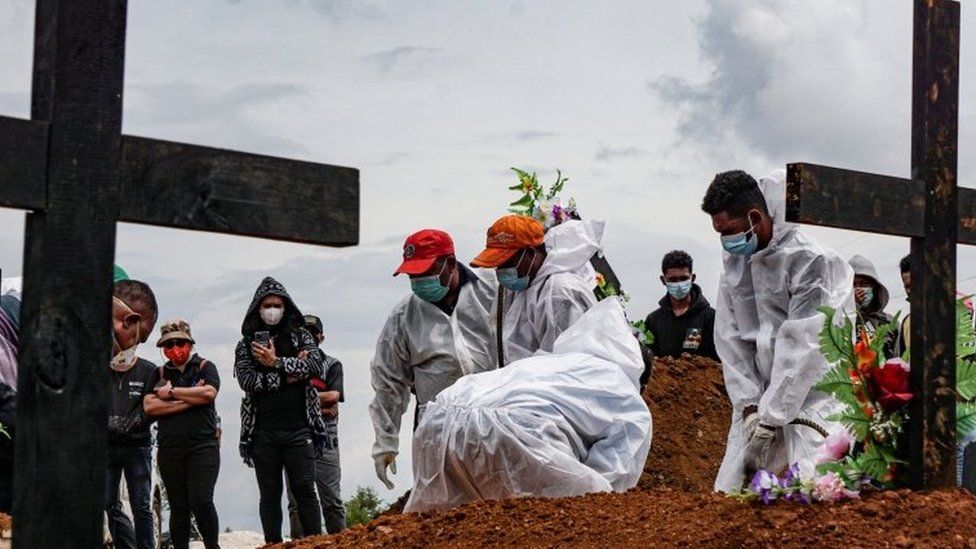
image captionIndonesia has seen cases soar in recent weeks after the Delta variant arrived in the country
The Delta variant of Covid-19 has now been detected in 124 territories worldwide, the World Health Organization (WHO) says.
It is expected to become the dominant variant globally in the coming months, with the WHO predicting that there could be more than 200 million confirmed cases within a matter of weeks.
Infections are rising, particularly in Europe and the western Pacific region. Some Western countries have started to ease restrictions as death rates have dropped. But those without access to vaccines or with a slower vaccine rollout are facing a deadlier threat.
Here, BBC journalists around the world give a sense of the toll the Delta variant is taking and what impact its spread could have.
Indonesia – Demand for funerals soars
By Valdya Baraputri, BBC News Indonesia
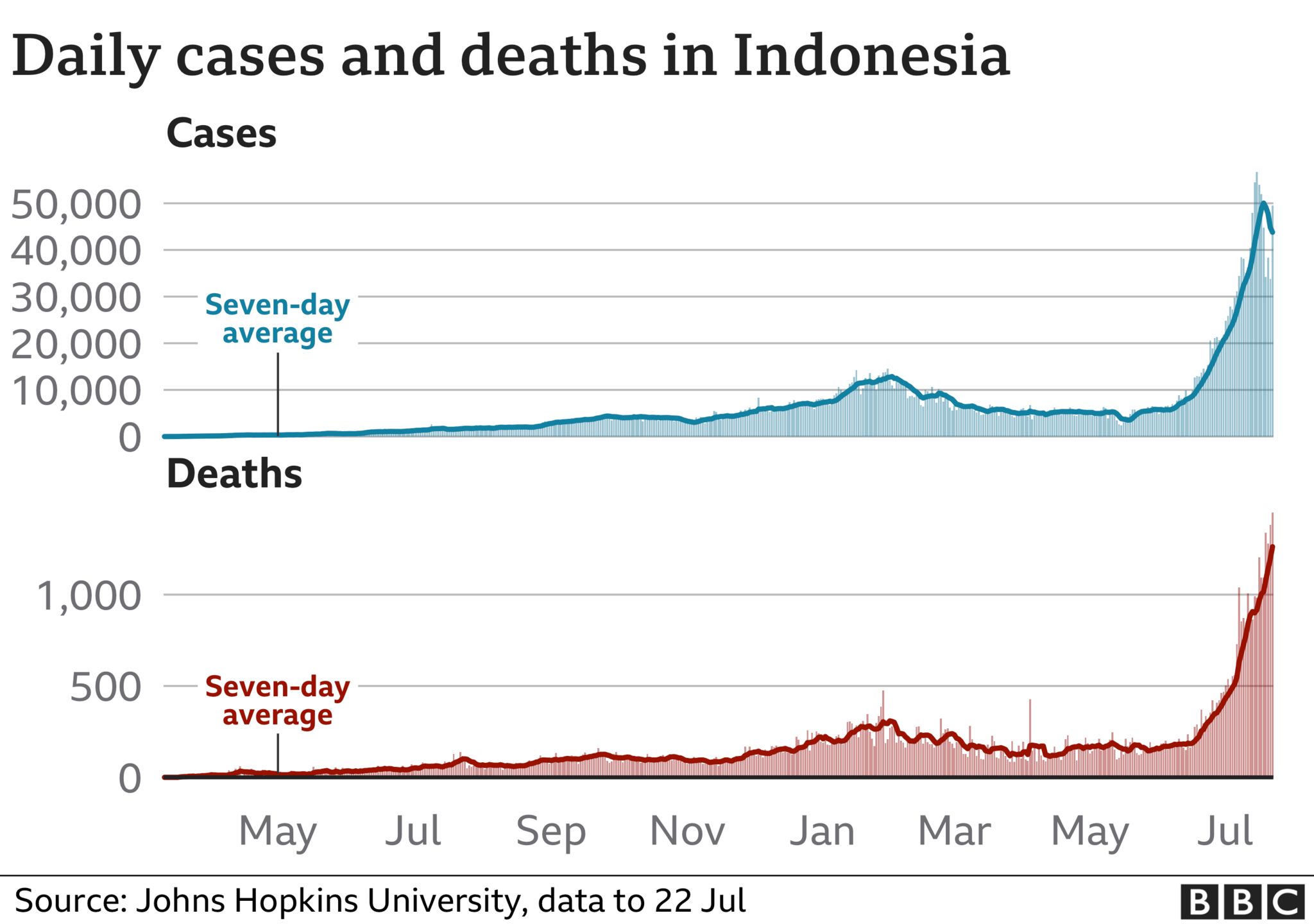
With more than 1,300 deaths in a day, Indonesia has become Asia’s new Covid epicentre. Hundreds of people have died in self-isolation – possibly because they could not get immediate treatment or were turned away by overwhelmed hospitals.
Wirawan, a firefighter in the capital city of Jakarta, sees the worsening crisis first-hand. He and his team are tasked with picking up bodies from homes before finally delivering them for burial. Before the latest spike in cases, he arranged two or three funerals a day. Now, he gets calls for up to 24 funerals a day.
That’s more than he can handle, so the bodies need to wait.
The country is recording more than 50,000 new daily cases, and the government is keeping emergency restrictions until at least the end of this week. It is likely to extend the measures on Monday.
As the new highly transmissible Delta variant, which was first detected in India, continues to ravage the country, Indonesia is racing to vaccine its people. From 208 million people eligible for vaccines, only around 16 million have received both doses.
What is the Delta variant?
By Michelle Roberts, BBC Health editor
The first cases were identified in India, but it has been reported in lots of countries around the world
It is a variant of concern, meaning it has undergone some genetic changes that are potentially worrying in terms of transmissibility and vaccine escape
In some countries, including the UK, Delta has become the dominant type of Covid circulating
Experts say vaccines still work well to protect against severe disease caused by this variant
Tunisia – Pizza offers for vaccine registration
By Rana Jawad, BBC North Africa correspondent
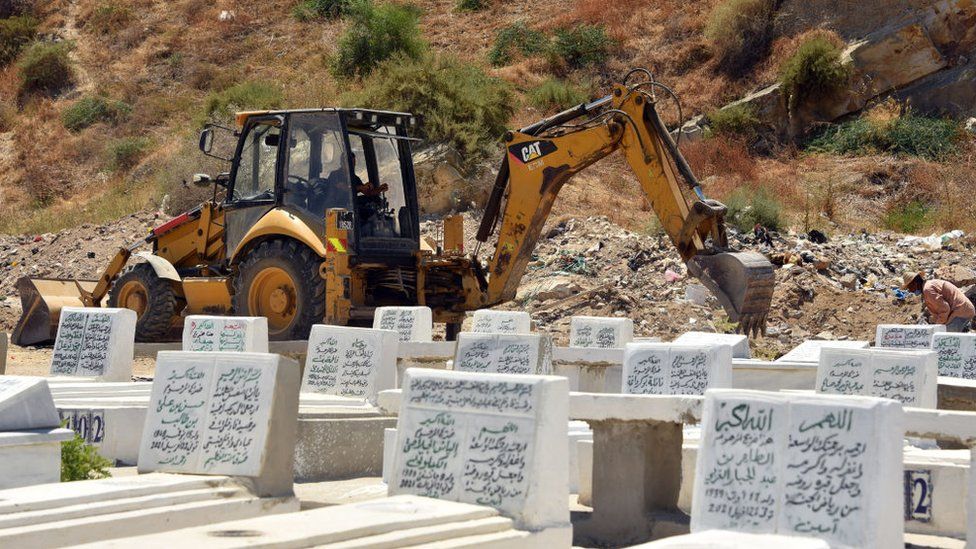
Tunisia is now witnessing the most devastating impact of Covid since the global pandemic took hold.
It’s not known whether most of the new infections are the Delta variant specifically, but case numbers grew after its known arrival here.
Hospitals across the country are completely overwhelmed, with some medics filmed crying over a shortage of oxygen concentrators as they are forced to decide who lives and who dies.
image copyrightGetty Images
image captionIn July a health ministry spokeswoman described the Covid situation in Tunisia as “catastrophic”
Infection rates are soaring, and the vaccination campaign has been very slow with less than 8% of the population fully jabbed. Rights organisations have accused the government of mismanaging the crisis, and on Tuesday the health minister was sacked.
In recent days, Tunisia’s national telecoms agency has offered 1GB of free internet for those who follow a mobile text prompt to register for a vaccine. At least one known pizza place in Tunis offered a 10% discount if customers showed proof of vaccine registration.
The situation could turn a corner next month after Tunisia received donations of vaccines, oxygen tanks and other medical supplies from European and Arabic countries, with several countries pledging to deliver more aid.
Mexico – People tire of the crisis
By Marcos González Díaz, BBC Mundo correspondent
Mexico is facing its third wave of the pandemic. The number of infections has risen to more than 15,000 a day, reaching the peak we saw at the beginning of the year.
Authorities are concerned about the advance of the Delta variant, which in the capital Mexico City already accounts for around 60% of cases.
The government admitted that the spread of this variant in Mexico and the US is the reason they have extended the closure of the land border between the two countries to non-essential travel.
Most of those affected in Mexico are young and unvaccinated people. Only one in four over 18 year-olds in the country are fully vaccinated.
But with 65% of beds available, hospitals do not show for now the collapse seen in the worst moments of the pandemic.
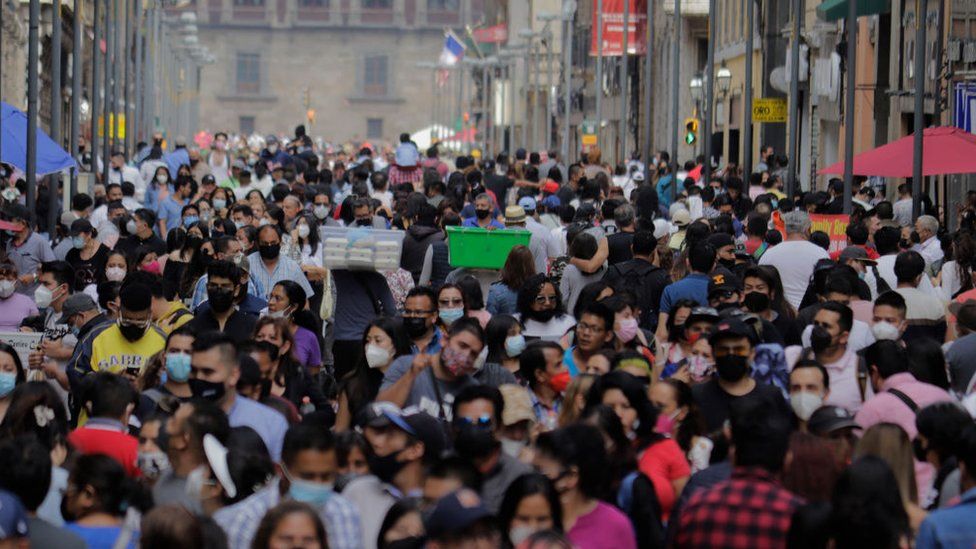
In the streets, the feeling is almost of apparent normality among a population exhausted by this crisis. Many of them must leave home daily to work selling food or in other informal jobs, in order to earn the money they need to survive.
This is why the government does not plan to increase restrictive measures or shut down economic activities once again, despite the risk of Delta.
image copyrightGetty Images
image captionDespite warnings of a third wave, the government has said it does not plan to bring back restrictions in Mexico
Rwanda – Delta brings fresh restrictions
By Samba Cyuzuzo, senior digital journalist for BBC Great Lakes
Until recently, Rwanda had been praised for its swift and strong measures to contain the virus.
But since mid-June, the virus has hit harder. Cases and deaths have spiked to record highs week after week. By early July, all Covid treatment centres were said to be full.
“We have never been here before in this pandemic,” the health minister told the state broadcaster on 6 July. Two days later he confirmed the arrival of the faster spreading and deadlier Delta variant.
On 17 July, the country announced a 10 day lockdown in the capital Kigali and eight districts to try to halt virus. Cases and casualties, however, remain relatively high.
More than 400,000 people are fully vaccinated – around 3% of Rwanda’s population.
Conflicting mask recommendations and orders from all levels of government and advocacy groups have emerged over the past few weeks, flustering the public as back-to-school season approaches.
Confusion is mounting over whether children should wear masks in school and whether their vaccination status should play a role in any guidance ahead of next month, when many schools plan to fully reopen for in-person learning.
President Biden addressed the debate this week, saying during a Wednesday town hall that he expects the Centers for Disease Control and Prevention (CDC) to urge unvaccinated students to wear masks in schools and to continue to advise vaccinated students that they don’t need masks.
“The CDC is going to say that what we should do is, everyone under the age of 12 should probably be wearing a mask in school,” Biden said at the town hall, as those under 12 years old are currently ineligible to get vaccinated.
But the American Academy of Pediatrics issued contradictory recommendations days before, calling for all students older than 2 t o wear masks in school, regardless of their vaccination status.
The organization said many students can’t get vaccinated and that most schools are not planning to track the vaccination status of the children, although it noted that it “strongly recommends in-person learning.”
Mark Schleiss, a professor of pediatrics at the University of Minnesota Medical School, supports requiring masks for all children despite their vaccination status, saying that children make up an increasing percentage of new cases as more adults and seniors are vaccinated.
“We need to value and cherish the lives of these kids,” he said. “This idea that children are resistant to COVID-19, that they don’t have serious disease with COVID-19 is — I’m so tired of hearing that because it’s just simply not true.”
The CDC has documented almost 500 deaths among children during the pandemic.
He also pointed out that creating rules based on vaccination status could “single certain kids out” and put an “onerous burden” on schools to verify that status.
In the meantime, states and cities are taking matters into their own hands by announcing different school mask recommendations and mandates, leading to a patchwork of rules across the country.
This week, Chicago, Boston and Washington, D.C., announced plans to require all students to wear face coverings in school in the fall.
Meanwhile, at least nine states, including Florida and Texas, so far have banned school districts from requiring masks in schools, according to a CNN analysis.
White House press secretary Jen Psaki criticized Florida Gov. Ron DeSantis’s (R) decision to prohibit mask mandates on Thursday, saying, “if I were a parent in Florida, that would be greatly concerning to me because kids under the age of 12 are not vaccinated.”
The Pfizer-BioNTech vaccine is the only shot authorized for children aged 12 and older, while the Moderna and Johnson & Johnson vaccines can be given only to adults. Children younger than 12 years old are currently ineligible to get vaccinated, and it’s unclear if they will be able to by the time school returns.
Just 39 percent of 12- to 17-year-olds have received at least one dose of the vaccine, according to data from The New York Times. In comparison, almost 70 percent of adults and nearly 90 percent of those 65 and older have gotten at least one shot.
National Education Association President Becky Pringle said bans against masks are “not from the science.”
“We will fight against any effort to take away any strategies that will keep our students and educators safe,” Pringle said, adding that the union will “follow the science” and recommendations from scientists.
“We want to be in school together and in person, and if it takes wearing masks, then that’s what we want to do,” she said.
Both kinds of mandates requiring and banning masks, however, stray from the current CDC guidance on masking in schools.
The CDC updated its school masking recommendations earlier this month, saying that fully vaccinated students and teachers do not need to wear a mask indoors or outdoors. Unvaccinated students and staff could go without a mask outside during gym and recess but are urged to wear one indoors.
Amber D’Souza, a professor of epidemiology at the Johns Hopkins Bloomberg School of Public Health, said finding a nationwide solution is difficult with varying rates of COVID-19 cases, hospitalizations and deaths across the country.
Areas with surges should “consider masking because there is a real risk to the children and the community,” she said.
“So if we need a one-size-fits-all [approach], what’s happened in the past four weeks is pushing us more and more to needing masks,” she said. “But we need to respond to the data and look locally as well as nationally.”
“Each state and each district has to look at their rates, and if there is a concern that it will not be safe, I think it is much preferable to keep kids in person in school and wear masks than to have to revert to virtual learning,” she added.
Biden’s chief medical adviser, Anthony Fauci, said on Tuesday that parents should do “what is locally asked for” in terms of masking students in schools.
Virginia took a different route this week by recommending students and staff wear masks indoors but allowing local school divisions to determine whether to implement requirements based on COVID-19 rates and expert recommendations.
The dispute over masks has also extended to adults amid the current rise in COVID-19 cases in many states and nationwide as well as the spread of the highly transmissible delta variant.
Los Angeles County reinstituted a mask mandate for all people indoors regardless of vaccination status last weekend. St. Louis city and county followed, saying residents will have to wear masks in indoor public places and on public transportation no matter if they were vaccinated.
Three (3) prisoners who escaped custody on Saturday, July 24, 2021, were quickly caught by Prison and Police Officers and are back in custody at Her Majesty’s Prison (HMP).
Lashon Hendrickson (24 years old) of Ponds Pasture, Jonothan Rawlins (19 years old) of Newtown, and Estevan Lawrence (26 years old) of St. Peters are on remand at Her Majesty’s Prison where they are awaiting trial. Through a joint operation, Hendrickson was captured by Police Officers in the vicinity of Hart Street shortly after escaping. Rawlins and Lawrence were
both captured by Prison Officers on the grounds of the former Basseterre High School. The matter will be investigated by the Police and the relevant charges will be laid.
While several measures have been implemented to improve security at the Prison, which was constructed in 1840, its management team will conduct an assessment to determine what additional steps can be taken to prevent further occurrences.
SAN SALVADOR, July 22 (Reuters) – El Salvador has ordered the arrest of former president Salvador Sanchez Ceren and nine top officials from a past administration as part of a money laundering and corruption probe, the Attorney General’s office said on Thursday.
The office said Sanchez Ceren was out of the country, but five former high-ranking members of former president Mauricio Funes’s government from 2009 to 2014 have been detained.
Sanchez Ceren was vice president at the time, before becoming president in the following term. His successor, President Nayib Bukele, has drawn rebukes for a string of controversial moves, including removing the attorney general and closing an anti-corruption office. read more
The Attorney General’s office said Sanchez Ceren and the other officials – including former heads of the health, finance, labor, agriculture and environment ministries – are wanted on charges of money laundering, embezzlement and illicit enrichment after they were transferred unauthorized funds.
Sanchez Ceren could not immediately be reached for comment.
“They were favored with the payment of bonuses,” the Attorney General’s office said in a statement.
Speaking at a news conference, Attorney General Rodolfo Delgado added he would seek international help to locate Sanchez Ceren.
“We’ve issued arrest orders and later we will request a red alert for Interpol to activate its search mechanisms against Salvador Sanchez Ceren,” he said.
Bukele on Twitter described Sanchez Ceren as a “fugitive from justice” who left the country in December 2020.
Sanchez Ceren and the other members of Funes’ government belong to the Farabundo Marti National Liberation Front (FMLN), the leftist party that Bukele represented early in his career, including as mayor of San Salvador.
Two years after becoming mayor in the capital, the FMLN expelled him, saying he had sowed division and violated party statutes, accusations that Bukele denies.
In recent months, some of Bukele’s own government officials, as well as opposition figures, have been deemed suspected of corruption by the United States. read more
Reporting by Nelson Renteria, Writing by Daina Beth Solomon; Editing by Simon Cameron-Moore and Michael Perry
 *****@
 *****@


 *****@
 *****@

 *****@
 *****@

 *****@
 *****@

 *****@
 *****@