The website was shut down earlier this year.
Tag Archives: oceania
Hospital drop-off homicide: Murder defendant Jimel Burns-Wong-Tung testifies at her trial
Lawyers say Jimel Burns-Wong-Tung not the “cold-blooded killer” of Rangiwhero Ngaronoa.
Election 2023: Is National planning $2b of spending cuts, tax hikes – or a mix of both?
National says its tax policy will be self-funded.
Global sandwich chain sells in near $15 billion deal
Subway has sold itself to private equity firm Roark Capital, ending a six-month-long search for a buyer. It brings to an end the sandwich chain's near six-decade run as a family-owned business.
In a statement, Subway said that the transaction is a "major milestone in Subway's multi-year transformation journey, combining Subway's global presence and brand strength with Roark's deep expertise in restaurant and franchise business models."
Roark holds investments in a number of large restaurant chains, including Arby's, Auntie Anne's, Buffalo Wild Wings, Carvel and Sonic, among others.
READ MORE: Donald Trump's mugshot released

"This transaction reflects Subway's long-term growth potential, and the substantial value of our brand and our franchisees around the world," Subway CEO John Chidsey said in a statement.
"Subway has a bright future with Roark, and we are committed to continuing to focus on a win-win-win approach for our franchisees, our guests and our employees."
Terms of the deal weren't disclosed. However, the Wall Street Journal reported the purchase price was "around $US9.6 billion ($14.8 billion)," which would be slightly below the chain's $US10 billion asking price.
The deal's closure is "subject to regulatory approvals and customary closing conditions," Subway said.
Subway put itself up for sale in February.
Roark's deal is one of the biggest acquisitions in fast food history, coming in just under Inspire Brands' $US11.3 billion ($17.6 billion) purchase of Dunkin' in October 2020.
Roark owns Inspire, which also operates Subway rival Jimmy John's.
Subway has turned itself around in recent years with a revamped menu featuring freshly sliced meat, store renovations and a bigger emphasis on international growth.
In July, the company announced its 10th consecutive quarter of positive sales at stores open at least a year, including a 9.5 per cent increase at its North America locations (it didn't reveal specific numbers).
READ MORE: Australia's 3G network is shutting down. This is what you need to know
Despite the sales turnaround, the number of US Subway stores declined to 20,576 last year according to Technomic.
That's a sharp decrease from its peak in 2015 when it had 27,219 locations.
Another issue for Roark: Yearly sales at Subway US restaurants are still much lower compared to its sandwich-making rivals.
Data from QSR Magazine reveals that its three main competitors (Jersey Mike's, Firehouse Subs and Jimmy John's) pull in about $US1 million per unit ($1.5 million), with an average Subway location raking in less than $US500,000 ($780,000).
However, US revenue has rebounded in recent years to $US9.8 billion ($14.8 billion) in 2022, which is up 4 per cent compared to the year prior, but well off from its 2015 peak when it raked in $US11.5 billion ($17.9 billion).
"Roark has inherited a solid and sizeable business in Subway but needs to make changes to improve both sales and profitability," wrote Neil Saunders, managing director of GlobalData, in a note.
READ MORE: Qantas posts $1.74 billion profit, first full year in the black since COVID-19
"This includes enhancing efficiency by trying to consolidate the number of franchisees, looking at ways to increase its share of meal occasions in a very competitive market, and engaging consumers more with menu innovations."
Saunders added that given Roark's "extensive experience and investments in the foodservice sector and its record of nurturing restaurant brands and helping them to grow, it clearly sees an opportunity to apply the same playbook to Subway."
Earlier this month, Subway announced that Trevor Haynes, president for Subway's North America operations, was leaving after being with the company for 18 years.
He's being replaced by Douglas Fry next month, who's the current leader of Subway's Canada operations.
Supermarkets record huge profits as Aussies face cost of living crisis
Consumers continue to feel the pinch of soaring interest rates, stubborn inflation and high cost of living pressures as corporations announce billion-dollar profits from the past financial year.
Supermarket giants Coles and Woolworths recorded profits in excess of $1 billion with a nearly 5 per cent increase on the previous year.
A significant part of these profits are from the groups' grocery arms, with Woolworths seeing a nearly 20 per cent rise in earnings while Coles recorded a 2.9 per cent rise.
But the question lies in whether these major profits are coming at the expense of Aussies' own wallets.
READ MORE: Your landlord has just slugged you with a huge rent increase – what can you do now?
Jim Stanford, economist and director of Centre for Future Work, told 9news.com.au these billion-dollar profits are "absolutely" at the expense of the consumer during a time when budgets are already squeezed.
"For people who go to the grocery store and pay $200 for a cart, that's adding insult to injury," he said.
He said the two supermarkets have a "cosy oligopoly" in Australia and can price their products above and beyond what is required to cover their own costs due to a lack of competition in the market.
"They have increased their own bottom line," he said.
"There's no doubt supermarkets have profited from this inflation even as Australians struggle to put food on the table."
Coles and Woolworths both claimed the higher prices of products are to cover the margin between supply and demand, with both supermarkets recording a 6 to 7 per cent inflationary increase in grocery product costs.
Woolworths' group gross margin of 26.8 per cent is "driven by Australian food", the grocer said.
Coles' margin is 26.4 per cent, which was mostly driven by retail theft due to cost of living pressures, the supermarket added.
READ MORE: How to save money fast
But Stanford said supermarkets have more than passed on higher costs to consumers and added to their bottom line.
"You only need grade school math to realise if a company's profits grow, it means their revenue went up more than their costs," he said.
Consumer behaviour researcher at UNSW Professor Nitika Garg agreed with Stanford that supermarkets have a stronghold on the Australian market without major competition, meaning they can keep prices high and benefit from profits.
"Prices went up with crises but they haven't come down," she said.
"Consumers are now used to paying the increased price so (supermarkets) just say, 'Oh well, let's continue with it.'
"You are squeezing the consumer when you're no longer being squeezed."
It's not just supermarkets, there's a 'system-wide problem'
Airlines, energy suppliers, and banks are all fattening their bottom lines at the cost of Australians, Stanford said.
It comes as Qantas recorded a staggering $2.47 billion in profits before tax while Australia waits for banks, floated by increased interest rates, to post their full-year results.
"There is a system-wide problem arises because these companies have got huge market share, huge pricing power and it's not just consumers but their own workers and sometimes their own suppliers suffer because of it," he said.
Stanford said it started during the COVID-19 pandemic when companies took advantage of disruptions to "charge whatever the market would bear".
READ MORE: What to do if you can't make mortgage payments
But is it a result of cost of living pressures?
Inflation and interest rates are hot topic terms as Australia and the world face the post-COVID-19 pandemic economic headwinds, adding to a cost of living crisis.
Australia's inflation sits at 7 per cent, which the Reserve Bank of Australia said is driven by consumer spending including at supermarkets, wages and a low unemployment rate.
"More jobs and higher wages increase household incomes and lead to a rise in consumer spending, further increasing aggregate demand and the scope for firms to increase the prices of their goods and services," the central bank said.
And the bank's main task?
To bring down inflation through the only accessible tool of raising interest rates to 4.1 per cent to reduce consumer spending power.
But Stanford argued these powerful companies like supermarkets, airlines and energy companies are the ones raising inflation, not Australians.
"We're labouring under the myths that the problem is workers," he added.
"The RBA focuses on wages that they say are too high and the RBA says profits are not the problem … that's completely at odds with the reality people face every day."
READ MORE: What is sticky inflation, and what's causing it in Australia?
Data from the Centre for Future Work shows that 69 per cent of higher inflation in Australia was caused by higher corporate profits.
Stanford said it is "blaming the victim" – or the average Australian – for having too much in savings and spending too much to contribute to inflation and therefore higher costs from corporations.
"Wages haven't gone up as much as prices and Coles, Qantas and the banks have made higher profits than ever," he added.
What do we do about it?
Garg said the government and relevant regulatory bodies should be looking at supermarket margins and setting a price cap.
"In other cases, you might want to collect taxes from companies that have made extra money and redistribute that money back to the consumers who have paid those high prices in the first place," Stanford added.
Stanford added there could be changes to competition policies to try and curtail power or break up large corporations and their stronghold on the Australian market.
"There's no magic bullet that instantly solves the problem," he added.
Jets of plasma spotted spitting out of sun at mind-boggling speed
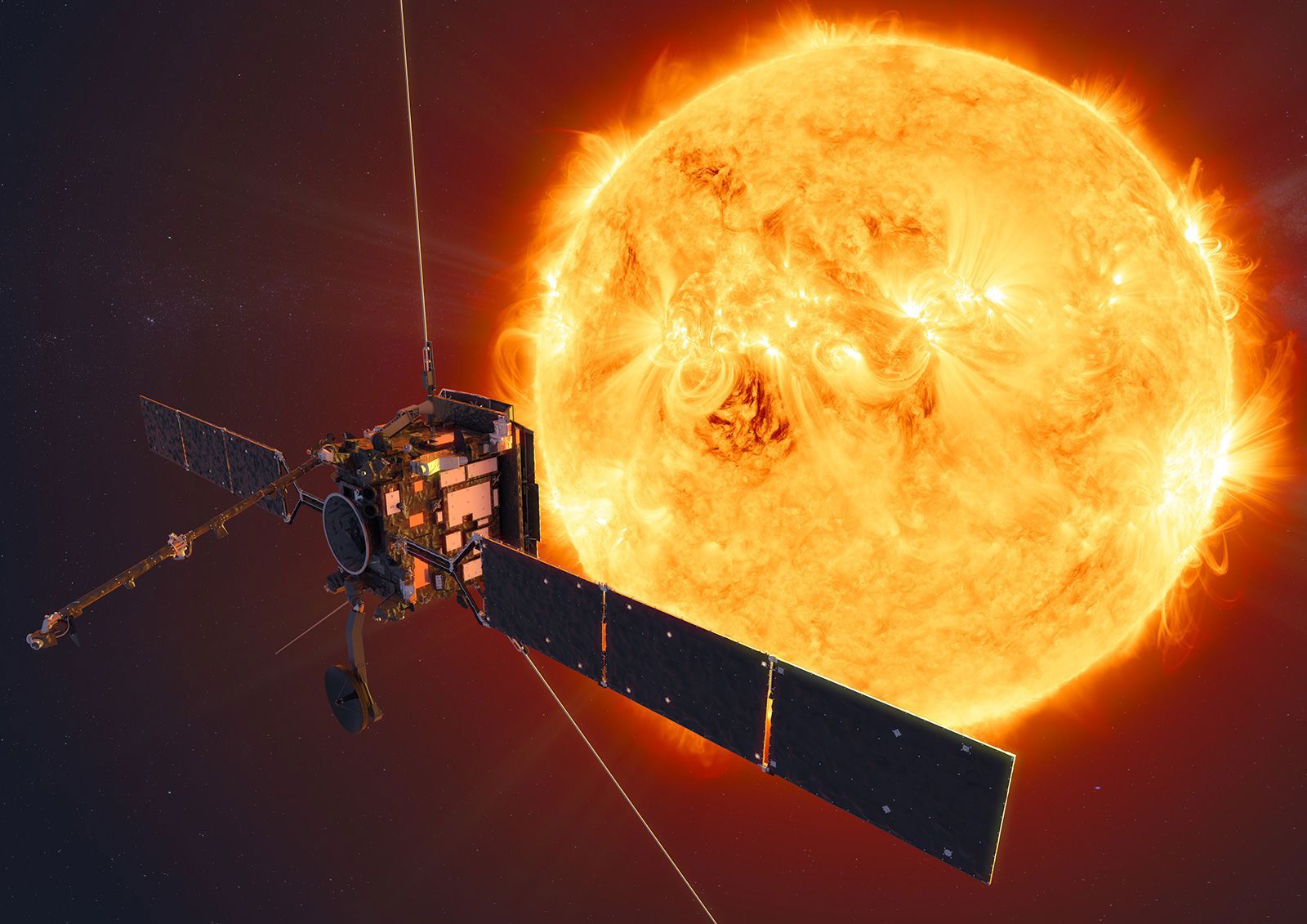
The Solar Orbiter mission has discovered jets of material rapidly releasing from the sun's outer atmosphere.
Astronomers believe these jets could be the source of the solar wind, a stream of charged particles that continuously flows from the sun across the solar system.
The jets of charged particles, called plasma, last between 20 and 100 seconds each and move at about 360,000 kilometres per hour.
READ MORE: Donald Trump's mugshot released

Solar Orbiter, a joint mission between NASA and the European Space Agency, launched in 2020 to capture an unprecedented look at the sun by providing images of its north and south poles.
Having a visual understanding of the sun's poles is important because it can provide more insight about the star's powerful magnetic field and how it affects Earth.
The spacecraft is equipped with 10 instruments that can capture observations of the sun's corona (or superhot outer atmosphere), the poles and the solar disk.
The probe can also measure the sun's magnetic fields and solar wind.
Solar Orbiter's Extreme Ultraviolet Imager, or EUI, was used to take images of the sun's south pole in March 2022.
The images, released along with a new study published Thursday in the journal Science, show the faint, ephemeral jets, some of which are shaped like the letter Y.
"We could only detect these tiny jets because of the unprecedented high-resolution, high-cadence images produced by EUI," said lead study author Lakshmi Pradeep Chitta, a research group leader at the Max Planck Institute for Solar System Research in Germany, in a statement.
READ MORE: India becomes fourth country to land spacecraft on the moon
Astronomers have known about the existence of the solar wind for decades.
But understanding the exact nature of how and where it is created by the sun has been more difficult – until now.
The advanced instruments aboard Solar Orbiter, as well as NASA's Parker Solar Probe, are helping to unlock the biggest mysteries that remain about the sun.
How the sun affects activity on Earth
Understanding the sun's magnetic field and solar wind is key because they contribute to space weather, which affects Earth by interfering with networked systems such as GPS, telecommunications, and the operations of objects in low-Earth orbit such as satellites and the International Space Station.
When the solar wind collides with Earth's magnetic field, it can also create colorful auroras, such as the northern and southern lights.
Previous observations have helped astronomers to determine that part of the solar wind stems from magnetic structures on the sun called coronal holes.
These features are regions where the magnetic field extends outward, rather than turning back into the sun.
The sun's magnetic field is so massive that it stretches beyond Pluto, providing a pathway for solar wind to travel directly across the solar system.
But the remaining question that scientists have been puzzling over was how the charged particles were released in the first place.
Solar Orbiter's observations captured a coronal hole containing tiny individual jets at the south pole.
Each jet is releasing a small amount of plasma, which suggests that the solar wind is less of a continuous flow than previously believed.
Energy flow from coronal holes
The new results show that the particles are being expelled from the sun's atmosphere.
Solar Orbiter's observations captured a coronal hole containing tiny individual jets at the south pole.
Each jet is releasing a small amount of plasma, which suggests that the solar wind is less of a continuous flow than previously believed.
"One of the results here is that to a large extent, this flow is not actually uniform," said study coauthor Andrei Zhukov, senior research scientist at the Royal Observatory of Belgium, in a statement, adding that "the ubiquity of the jets suggests that the solar wind from coronal holes might originate as a highly intermittent outflow."
READ MORE: Girl allegedly stabbed by classmate at Adelaide primary school

Solar Orbiter is on a seven-year mission and will eventually come within 42 million kilometres of the sun.
Currently, the spacecraft is closer to the sun's equator, and it will gradually shift toward the poles.
"It's harder to measure some of the properties of these tiny jets when seeing them edge-on," said ESA's Daniel Müller, project scientist for Solar Orbiter, in a statement, "but in a few years, we will see them from a different perspective than any other telescopes or observatories so that together should help a lot".
Solar Orbiter's position will incline as the sun's activity increases and nears the peak of its 11-year cycle, which means more coronal holes and jets may appear in different places for the spacecraft to observe.
Solar Orbiter works in tandem with Parker Solar Probe, which is orbiting the sun on a seven-year mission after launching in August 2018.
Parker will eventually come within nearly 6.4 million kilometres of the sun – the closest a spacecraft has ever flown by our star.
The probe is "tracing the flow of energy that heats and accelerates the sun's corona and solar wind," according to NASA.
Together, the missions can provide more data to researchers than either could accomplish on its own.
Parker can sample particles coming off the sun up close, while Solar Orbiter will fly farther back to capture more encompassing observations and provide broader context.
Dashcam shows truck almost taking out car on Victorian highway
Dashcam footage of a truck veering onto the wrong side of the road and almost taking out a car on a Victorian highway has been shared as police search for the truck driver.
The driver allegedly did not stop after he forced the driver of the car to swerve off Hopkins Highway in Warrnambool to avoid a collision on Wednesday about 9.15am.
Footage released by police shows the truck's trailer fishtail on a sharp bend in the road, with the trailer veering into the path of an oncoming car near the intersection of Spring Flat Road.
READ MORE: Two dead after car slams into tree in Melbourne's south-west
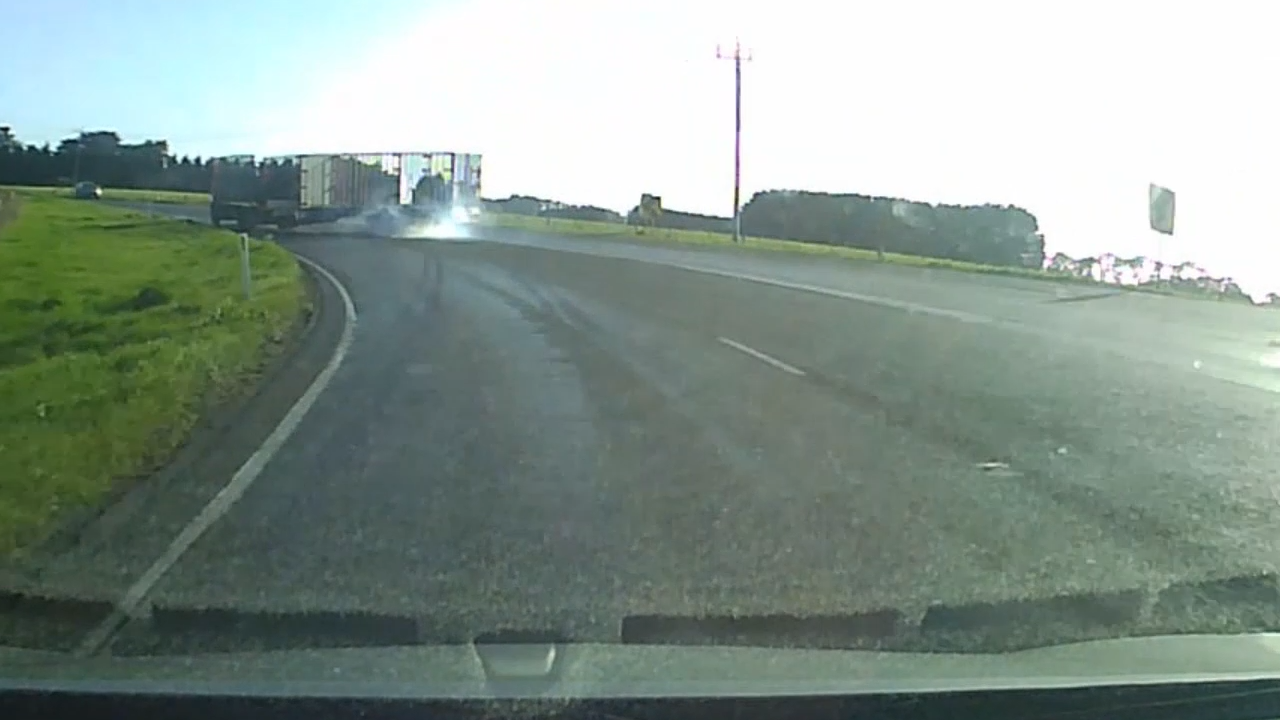
"The other driver, a 36-year-old man, was forced to take evasive action and drove into a ditch to avoid being hit," a police spokesperson said.
Fortunately, the local man and his five-year-old Labradoodle were not injured.
The truck driver continued on and did not check on the man.
Police are hoping someone may recognise the truck involved and contact police.
Anyone who witnessed the near incident, has dashcam footage or information is urged to contact Crime Stoppers on 1800 333 000 or submit a confidential report online at www.crimestoppersvic.com.au
Entire colonies of baby penguins killed by ice loss, researchers say
The loss of ice in one region of Antarctica last year likely resulted in thousands of emperor penguin chicks dying, researchers reported today.
Emperor penguins hatch their eggs and raise their chicks on the ice that forms around the continent each Antarctic winter and melts in the summer months.
Researchers used satellite imagery to look at breeding colonies in a region near Antarctica's Bellingshausen Sea. The images showed no ice was left there in December during the Southern Hemisphere's summer, as had occurred in 2021.
READ MORE: Plane crash that killed Wagner boss 'deliberate'
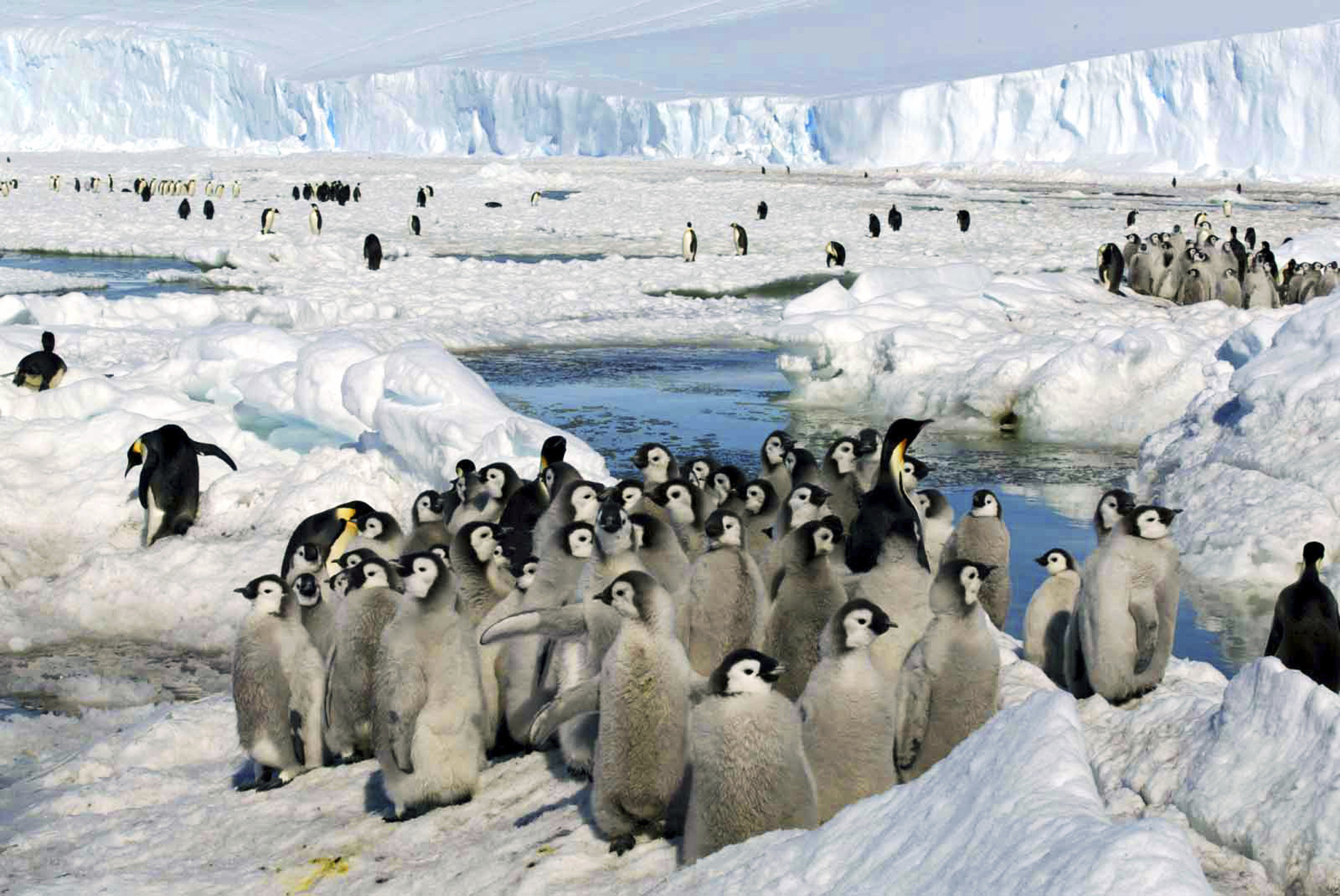
Researchers said it is likely that no chicks survived in four of the five breeding colonies they examined. Penguin chicks don't develop their adult waterproof feathers until close to the time they usually fledge, in late December or January, scientists say.
"If the sea ice breaks up under them, the young chicks will drown or freeze to death," said Peter Fretwell, a researcher at the British Antarctic Survey and co-author of the study published Thursday in the journal Communications Earth & Environment.
Overall, the ice around Antarctica reached near record low levels last year. The researchers say that climate change will make such losses more frequent in the future.
READ MORE: Donald Trump's historic mugshot released
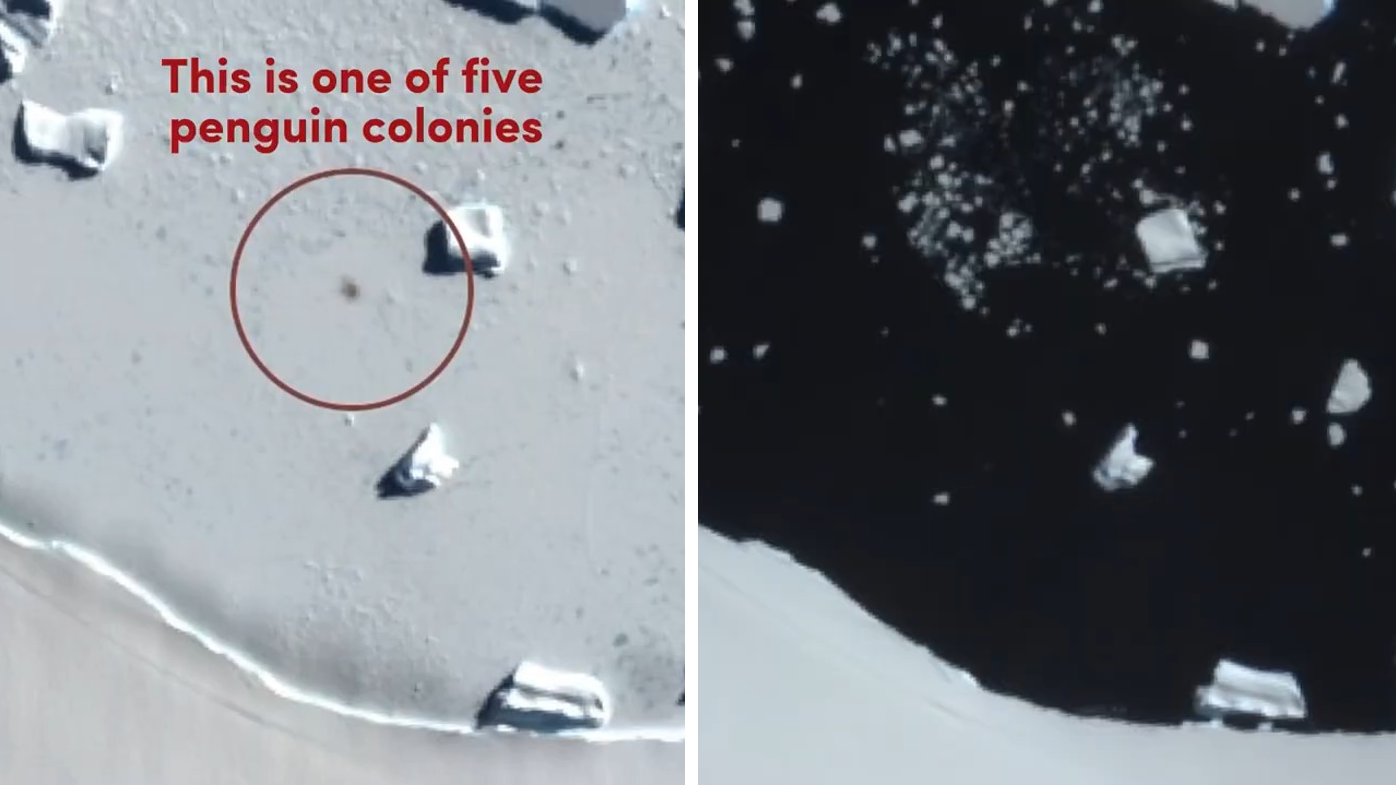
Fretwell's team has also completed a preliminary analysis of known nesting sites — visible in satellite photos because of colored guano, or faecal stains, left on white ice — across Antarctica, the only continent where the emperor penguin lives. There are about 300,000 breeding pairs left of the world's largest penguins.
Of 62 known penguin colonies, around 30 per cent were harmed by low sea-ice levels last year — and 13 likely failed entirely, Fretwell said.
"That this could happen doesn't shock me, but I'm shocked that it has happened already. I thought it would be further down the line," said Daniel Zitterbart, a researcher who studies Antarctica for the Woods Hole Oceanographic Institution, but was not involved in the new paper.
READ MORE: 'High-end illegal casino' busted in Melbourne
If penguins aren't successful breeding in one location, they may look for another site the next year, he said.
While it's possible for the population to recover from one or two bad breeding years, he's worried about the future.
"If you look further out down the line, how many suitable places will be left?" he asked.
The faces of Donald Trump's alleged White House conspiracy
Trump is the first former US President in history to have his mugshot taken. Here are all the members of his team who have also been booked – and what they are accused of.
How Trump's historic surrender to jail unfolded
It was the first time a US president had a mugshot taken – but the imagery around Trump's day in jail was just as powerful.