The charges include kidnapping and aggravated robbery.
Tag Archives: oceania
Revealed: Gang members arranged return of stolen Lindauer paintings in secret prison deal
Suppression orders mean public will never know the full story behind return of artworks.
Murder trial: woman had bruises frequently in time before she was killed
‘None of this is normal,’ a friend told woman a week before she died.
Second Auckland councillor forced to correct records because of Auckland Airport shareholding
It comes ahead of a vote tomorrow on selling the council’s airport stake.
Iconic weight loss company Jenny Craig goes under in Australia
Collapsed weight loss giant Jenny Craig has been unsuccessful in finding a buyer for its physical stores and will now "immediately cease trading" with all staff being made redundant, the business' administrators announced.
Jenny Craig Australia announced back in May it would continue to trade while administrators investigate options for restructuring the popular business, the move coming days after its US parent company officially filed for bankruptcy.
In a statement today FTI Consulting revealed it that "despite best efforts", a buyer was unable to be found and as result the company will be liquidated.
READ MORE: Why weight loss giant Jenny Craig faces uncertain future
"The Administrators sought to sell the Australian and New Zealand operations of the Jenny Craig Group as a going concern with the intent of preserving as many jobs as possible and limiting the losses for creditors and sought offers from interested bidders," the statement said.
"The bidding and sale process resulted in 15 interested parties participating, four of which submitted non-binding indicative offers.
"Despite best efforts, the Administrators were unable to find a buyer for the physical stores and employees of the Australian and New Zealand business.
"The Administrators have today advised all of the employees in Australia New Zealand that a sale of the business with the stores continuing to trade and staff continuing their employment has not been achievable.
"This has resulted in a decision to immediately cease trading from stores and employees being made redundant, which is an unfortunate outcome and one which the Administrators had sought to avoid."
READ MORE: Global weight loss company Jenny Craig 'on brink of closure'
Administrators "have agreed to sell the online capability of the business to Eucalyptus", the statement went on, which describes itself as healthcare technology company.
It will continue to offer online weight loss solutions to customers.
Jenny Craig became a household name, known for its strict meal programs to help people lose weight.
It offered person-to-person support with nutrition and lifestyle plans.
Celebrities, including actors Kirstie Alley, Jason Alexander, Mel B and singer-songwriter Mariah Carey were recruited to promote the company.
Sign up here to receive our daily newsletters and breaking news alerts, sent straight to your inbox.

Fraser Island officially reclaims K'gari name
Queensland's Fraser Island has officially reclaimed its traditional name of K'gari, renouncing the title it held for some 180 years.
After Captain James Fraser and his wife Eliza became shipwrecked on coastline back in 1836, the spot was named after the explorer, who was later believed to have been killed by the local Indigenous inhabitants.
The push to revert the island's name back to its original title – meaning paradise in the local Butchulla language – had ramped up in recent years and follows the renaming of a number of Aussie destinations formally named after British colonial figures.
READ MORE: 'A brighter future': Melbourne council renamed, ending slavery ties
K'gari, as it will now be known, is the world's largest sand island, spanning 123 kilometres along the south coast of Queensland and located about 250 kilometres from the state's capital of Brisbane.
A ceremony held today to commemorate the occasion was attended by hundreds of locals, traditional owners and government officials.
https://twitter.com/AnnastaciaMP/status/1666288137075826688?s=20
The renaming comes over a decade after the Bligh government added K'gari as an alternative name for spot and two years after the name of the Fraser Island World Heritage Area was reverted.
Famous for its pristine stretches of coastline and its large native population of dingoes, hundreds of thousands of tourists visit the island every year.
READ MORE: Ben Boyd National Park in NSW to be renamed over links to slavery
It had been known as Sandy Island by early European settlers, before it was renamed Fraser Island after Captain Fraser.
Fraser, alongside his wife Eliza, became shipwrecked on the island during a foiled attempt to sail to Singapore.
Their ship was believed to have struck coral along the Great Barrier Reef, forcing the duo to make their way to shore on a lifeboat.
Eliza, heavily pregnant at the time, gave birth during the voyage, but the baby drowned as the lifeboat took on water.
Fraser is believed to have been speared by the local inhabitants, leaving Eliza stranded on the island and taken captive, until she was later found by a convict living in the bush.
Sign up here to receive our daily newsletters and breaking news alerts, sent straight to your inbox.
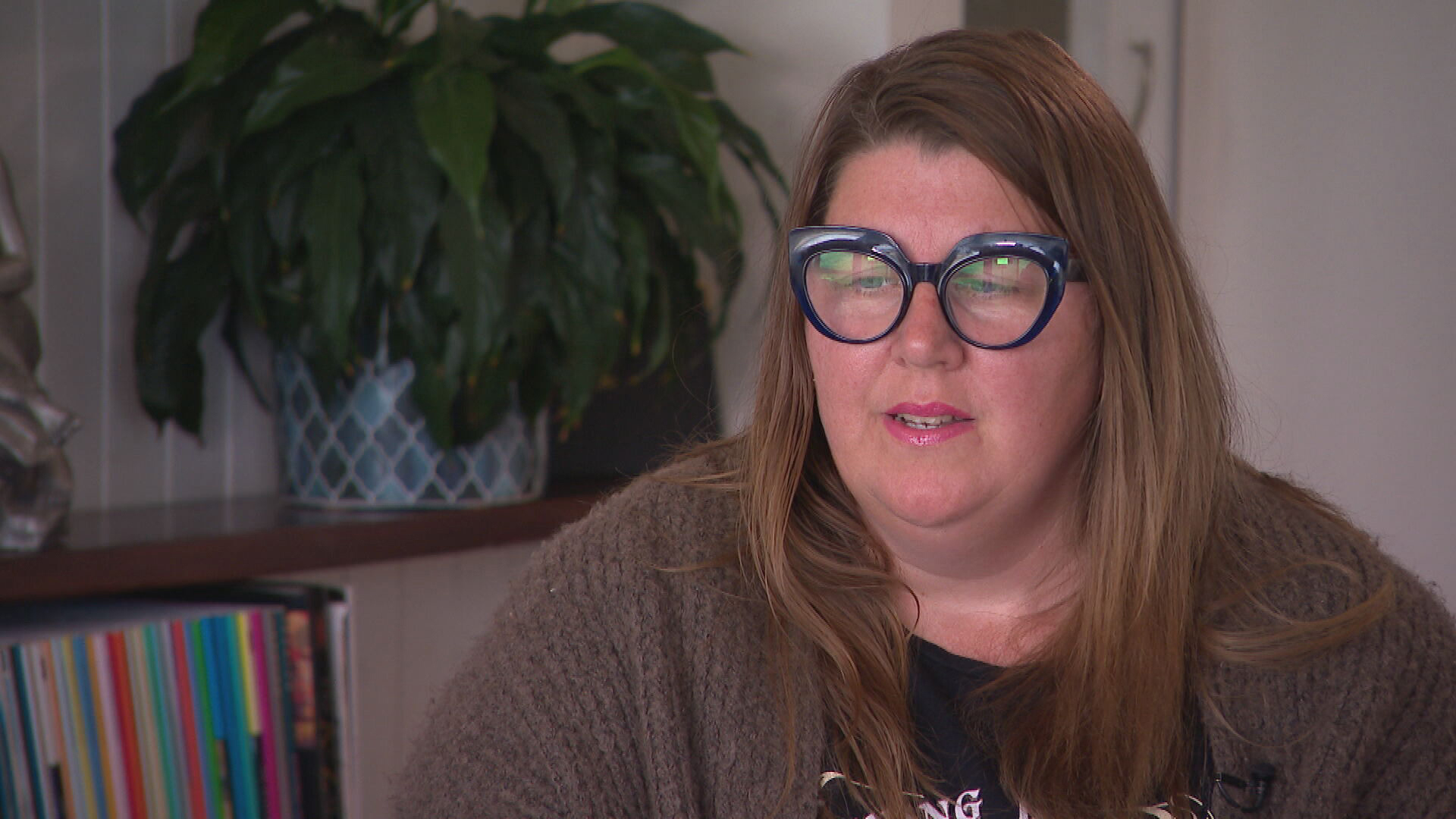
Australia's major hotspots for shark attacks revealed
A new interactive map has launched online unveiling Australia's major hotspots for shark attacks, with two states in particular emerging as danger zones.
US-based company Florida Panhandle collated the data of every global shark attack – including both incidents that proved deadly as well as non-fatal attacks – over the past 47 years.
The result paints a grim picture for Aussies, with almost every jurisdiction having recorded an attack of some kind in the last five decades.
READ MORE: Tasmanian boy, 11, recovering in hospital after shark attack off WA coast
The map reveals that in New South Wales and Queensland, particularly around the states' joint border, shark attacks appear particularly prevalent.
Some 50 attacks were recorded between the two states, almost two dozen of them fatal.
The map's emergence comes as the US and Australia were crowned homes of the most unprovoked shark attacks around the globe in 2022, according to
The International Shark Attack File.
READ MORE: Tributes flow for much-loved teacher feared dead after shark attack off South Australian coast
According to the data, there were 57 unprovoked shark attacks around the world in the past 12 months.
This is down from 73 in 2021, and ties with 2020 for the fewest number of reported incidents in the last 10 years.
Just last month, a much-loved South Australian school teacher was suspected to have been killed by a shark at Walkers Rock Beach on the Eyre Peninsula.
Sign up here to receive our daily newsletters and breaking news alerts, sent straight to your inbox.

New barrier for Aussie travellers to enter Europe
Australians looking to enter Europe from next year will need to apply for a new special permit to travel through 30 countries, as the European Union looks to beef up security.
From 2024, Australian would-be visitors will need to apply with the European Travel Information and Authorisation System (ETIAS) in order to enter.
The ETIAS system has been put in place for citizens of otherwise visa-exempt countries. Here's what you need to know.
READ MORE: Severe weather to lash Australia's south-east
How will ETIAS affect my travel plans?
If you plan to travel to one or more of these 30 European countries from 2024 on, you will need ETIAS travel authorisation.
The authorisation is linked to your passport, so make sure you have the same one you applied to ETIAS with.
ETIAS authorisation still does not guarantee entry to any of the participating European countries – you will need to pass entry requirements at the border.
READ MORE: Cheques to be phased out in Australia by 2030
How do I get my ETIAS authorisation?
When applications are open, you will need to apply through the ETIAS website.
You will need a valid travel document, such as a passport, that will not expire in less than three months, and is less than 10 years old.
ETIAS will also ask applicants for personal information such as their name and contact details, intended length of visit, and criminal history.
Most applications will take "minutes" to process after they're lodged, ETIAS claims, but some could take up to four days.
READ MORE: Homes flooded as Russia accused of dam blast
Do I have to apply every time I want to travel to Europe?
An ETIAS travel authorisation is valid for three years or until the passport you applied with expires – whichever comes first.
But it's for short-term stays. Authorisation entitles you to travel in participating countries for up to 90 days within any 180-day period.
You must be in possession of a valid ETIAS travel authorisation during your entire stay. You can leave and come back at any time, as long as you respect this time limit.
READ MORE: Which states and territories get a long weekend for the King's Birthday?
Is it free to apply?
You'll need to fork over an application fee of €7 ($11.22 as of June 7, 2023, but this may vary depending on the exchange rate).
People under 18 or over 70 are exempt, as are family members of EU citizens.
What about the UK?
The UK is not part of the ETIAS system – in fact, UK citizens will have to go through the same process as Australians to visit Europe.
Travel rules to the UK from Australia remain unaffected.
Sign up here to receive our daily newsletters and breaking news alerts, sent straight to your inbox.
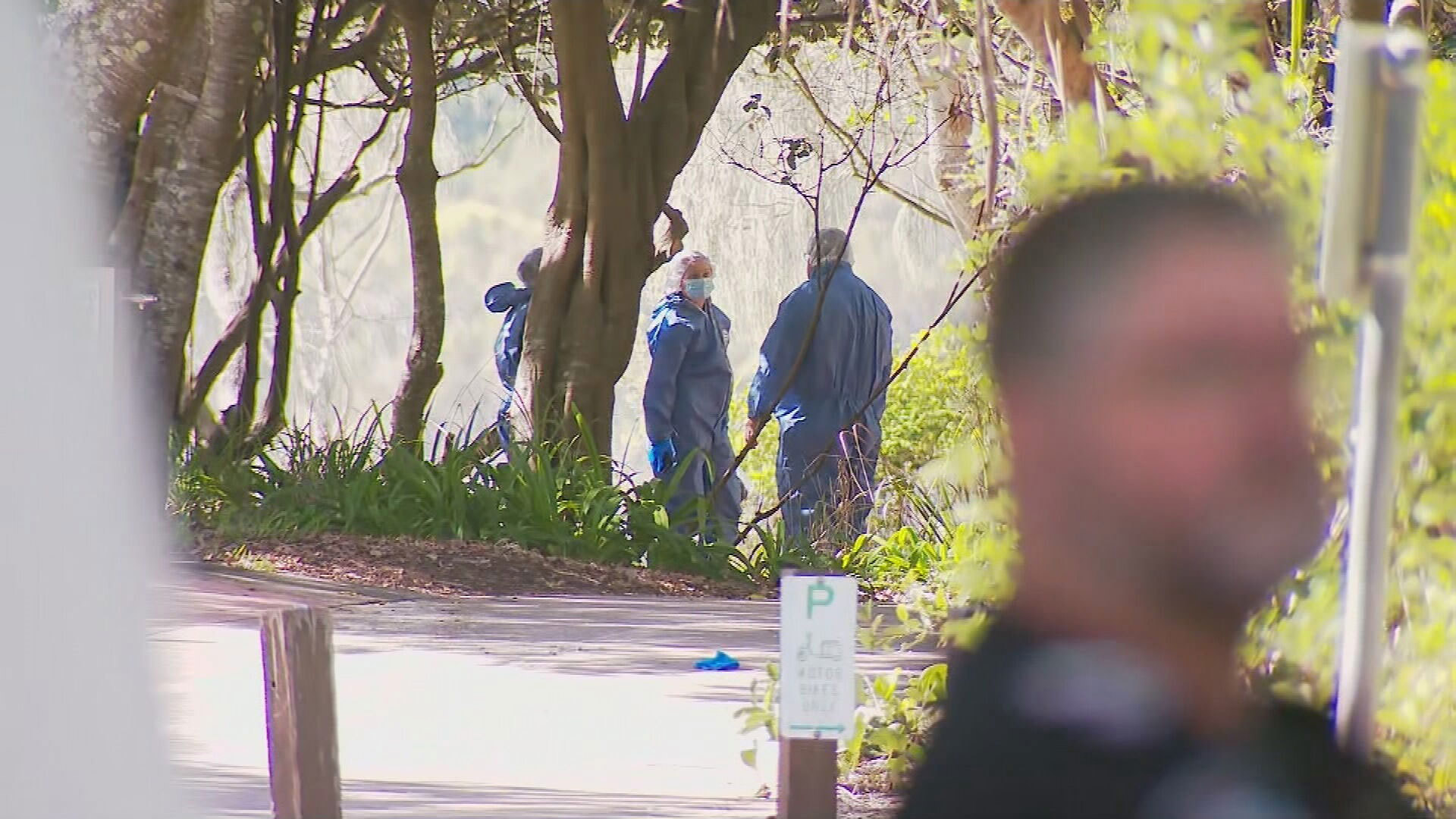
Cruel disorder robs previously healthy teen of almost all movement
When she is awake, Sydney teenager Chelsea Speirs is unable to talk, walk or even move her arms and legs.
The 17-year-old from Hornsby, in Sydney's north, is almost completely immobile and seemingly trapped in her own body.
"She is able to move her fingers and her hands slightly," Chelsea's mother, Meredith Speirs, said.
READ MORE: Severe weather to lash Australia's south-east
"She can also very slightly nod or shake her head – so you can get 'yes' or 'no' answers from her; otherwise she has to type it into her phone."
This all changes dramatically, however, when Chelsea is asleep.
"She rolls over and moves around…she doesn't stop moving," Speirs said.
"Last night, I saw her pull the cover over herself.
"But then, the movement starts to slow as she gets into a lighter sleep.
"From the minute she wakes up, whatever position she is in, she can't move from.
"So she'll often wake up on her tummy, arms above her head, and then we have to roll her and get her comfortable for the day."
READ MORE: Cheques to be phased out in Australia by 2030
Chelsea has a condition called functional neurological disorder (FND), which affects roughly four-12 people per 100,000 in Australia – to varying degrees. In New South Wales, there are 200 to 300 people diagnosed with FND every year.
FND is a neurological condition which occurs when there is a disconnect between the brain receiving and sending information to the rest of the body.
For Chelsea, the severely debilitating and life-changing condition developed out of nowhere.
A year ago, she was a happy and healthy teenager with "a wicked sense of humour", Speirs said.
Chelsea, who is autistic and also has ADHD, was attending a mainstream Sydney school and working hard towards her goal of studying astrophysics at university.
"She was like most other Year 10 girls, doing what she wanted to do. She was doing a fitness class at the gym. We thought everything was going great," Speirs said.
Then, in June last year, Chelsea caught a gastro bug and everything changed.
"It wasn't a particularly bad case of gastro. There are bouts of gastro where you are sick for a couple of days, but hers only lasted for six hours or so," Speirs said.
However, after the gastro symptoms passed, Chelsea was left feeling weak all over.
Speirs said she and her husband put this down to a lack of food, as she had only been drinking liquids.
But while Chelsea regained the strength in her upper body over the next few days, her lower body was still weak and she was having trouble walking.
"She could only walk with her legs locked in a straight position…the minute she bent that knee joint, she would fall to the floor," Speirs said.
Concerned and puzzled, Speirs took her daughter to Hornsby Hospital, where – after some tests – she was diagnosed with FND, a disorder the family had never heard of.
Speirs said the news that came with the diagnosis was initially promising.
"We were told that she would be back to school in two weeks, and that she'd be fine after a bit of physio," Speirs said.
But, over time, Chelsea's symptoms of FND have only grown more and more severe.
A month after she began having trouble walking, Chelsea lost her voice.
Speirs said at first she thought her daughter was having an autistic shutdown, something that had happened twice before.
But when Chelsea woke up the next morning and was still not talking, Speirs began to suspect it was related to her FND.
READ MORE: Homes flooded as Russia accused of Dam blast
A few times over the next week, Chelsea would say a word here or there – in a seemingly automatic and instinctual way – without thinking.
"One morning, she opened her bedroom door and said, 'Good morning' to her sister," Speirs said.
"She used to feed the dogs their dinner and I called out, 'Chelsea, the dogs (need their) dinner' and she yelled out, 'Yes, okay.'"
That was the last time Speirs heard her daughter talk.
After that first week, Chelsea's voice disappeared completely.
"It's been really hard," Speirs said. "I look back at videos on my phone and think I didn't get enough of her talking. I want to hear her voice."
In December last year, another blow came when Chelsea's legs grew so weak they could no longer support her weight. Chelsea started needing a wheelchair to get around.
But, despite the setback, Chelsea remained remarkably positive and resilient, Speirs said.
She started studying through Sydney Distance Education High School and discovered a love of wheelchair basketball, her mother said.
"When she first tried wheelchair basketball her face just lit up. She had an absolute blast and she was really good," Speirs said.
But then, in February this year, Chelsea's condition took another cruel turn.
After a physio session, Chelsea suddenly lost almost all of the movement in her body.
Chelsea spent the next three months in hospital, seeing a range of doctors, psychologists and physios. However, none of the movement in her body has returned.
After a mammoth and determined effort, her family managed to bring Chelsea home from hospital a few weeks ago, just in time for her 17th birthday.
Chelsea currently needs two carers to help with her personal needs, however, Speirs said she was still struggling to get the proper funding support for her daughter through the National Disability Insurance Scheme (NDIS).
Although Chelsea is able to get some funding because of her autism, the National Disability Insurance Agency (NDIA), which administers the funding scheme, does not recognise FND as a permanent condition.
"They won't cover FND. They say they need evidence of the impairment being permanent – that seems to be the sticking point," Speirs said.
"This is despite her having made no improvement since her diagnosis almost 12 months ago. She has only declined, yet they still won't accept it."
When contacted by 9news.com.au, an NDIA spokesperson said the agency's priority was "ensuring participants and their families receive the disability-related supports they need".
"The Agency acknowledges the complexity of Chelsea's situation, including the intersection with the health system, and will continue to support her and her family. This includes ongoing coordination with the health system to ensure Chelsea's needs are met," the spokesperson said in a statement.
Speirs said she was at a loss to understand why Chelsea was not able to be given temporary funding to support her current needs.
With Speirs having been unable to work since last year, relatives have now set up an online fundraiser to help with Chelsea's medical costs.
Speirs said she was determined to help her daughter in whatever way she could.
The family has set up a miniature keyboard, connected to a laptop, which has allowed Chelsea to continue with her distance education.
"She loves to learn. She started physics this year and loves it," Speirs said.
"She is still wanting to do astrophysics at university. So I'm like, 'Okay, go for your life and I'll just support you and do whatever I can behind the scenes to help you get there.'"
Contact reporter Emily McPherson at Sign up here to receive our daily newsletters and breaking news alerts, sent straight to your inbox.
China lifts trade sanctions on Australian fruit
China's lifting of a ban on Australian fruit, including mangoes and citrus, has offered a "huge" opportunity for local producers.
After two years of trade restrictions, Chinese officials gave the green light this week for the resumption of Australian exports.
It means citrus, stone fruit, mango and cherry producers can now ship their products into the lucrative market.
READ MORE: Which states and territories get a long weekend for the King's Birthday?
https://omny.fm/shows/the-rural-news/china-lifts-trade-barriers-on-australian-fruit/embed
Australian Mango Industry Association chief executive Brett Kelly told radio 3AW the Chinese market was potentially worth hundreds of millions of dollars.
"China has always been a major opportunity and in particular with the middle class which is growing substantially.
"The potential is huge for Australian growers."
The good news for the fruit industry is the latest development in warming trade relations between Beijing and Canberra.
Fruit was on a list of exports subjected to official and unofficial Chinese trade barriers imposed in 2020 after Australia called for an independent inquiry into the origins of the COVID-19 pandemic.
The list that included coal, wine, timber, barley, beef, seafood, cotton and copper was estimated to cost Australian exporters about $20 billion a year.
READ MORE: Cheques to be phased out in Australia by 2030
But last month, the Asian superpower reopened its door to Australian timber products after exporters had satisfied Chinese officials' quarantine concerns.
Trade Minister Don Farrell raised the trade sanctions when he met his Chinese counterpart in Beijing last month.
Farrell said there was "positive momentum" from the negotiations.
Sign up here to receive our daily newsletters and breaking news alerts, sent straight to your inbox.