A woman has died from her injuries after her car was engulfed in flames in a crash on Wellington’s Centennial Highway yesterday.The single-car crash, located on the southbound lane under the Newlands bridge over-ramp, was reported…
Tag Archives: oceania
Cochlear implants: 50yo man hears for the first time since he was a teen
When Simon Baldock was asked if he still wanted cochlear implants after years of waiting, he replied, “Is the Pope Catholic?” The 50-year-old psychologist had struggled to hear since he was a teenager. For years, “everyone sounded…
Māori high school students gain entry to top world universities
Five winning students have walked away with scholarships worth up to $20,000 each to work towards their desired universities. Te Ara a Kupe Beaton Scholarship was founded in 2017 to encourage young Māori representation on the…
Gang violence: Fatal shooting and violent brawl as survey reveals gang fears
One person is dead and at least two others seriously injured after a shooting and a gang-related brawl in different parts of the country over the weekend.The violence comes as a new survey reveals Kiwis are fearful of a more visible…
Herald morning quiz: May 24
Test your brains with the Herald’s morning quiz. Be sure to check back on nzherald.co.nz at 3pm for the afternoon quiz. To challenge yourself with more quizzes, CLICK HERE.
Fighter jet intercepts commercial flight, activist arrested
A leading Belarusian opposition activist has been arrested in Belarus after President Alexander Lukashenko ordered a fighter jet to escort his Ryanair plane to Minsk, according to Pull Pervogo, the Belarusian state broadcaster.
Raman Pratasevich, in exile and a vocal critic of President Alexander Lukashenko's regime, was detained at Minsk airport, the Belarusian Ministry of Internal Affairs said on Sunday.
The original flight route was Athens, Greece, to Vilnius, the Lithuanian capital.
READ MORE: Protesters call for resignation of Belarus President amid claims of rigged election win
https://twitter.com/flightradar24/status/1396443632954183681
Lithuanian President Gitanas Nauseda has demanded Belarus release Mr Pratasevich. Mr Nauseda called the incident "abhorrent" and an "unprecedented event" in a tweet.
He said a "civilian passenger plane flying to Vilnius was forcibly landed in Minsk."
The Belarusian "regime is behind the abhorrent action," he tweeted and demanded Mr Pratasevic be freed "urgently."
https://twitter.com/GitanasNauseda/status/1396454557866242050
Other world leaders to condemn the apparent forced landing included European Commission President Ursula von der Leyen, Irish European Affairs Minister Thomas Byrne and French Minister for Europe and Foreign Affairs Jean-Yves Le Drian.
https://twitter.com/vonderleyen/status/1396487685011816449
Mr Pratasevich is the founder of the Telegram channel Nexta, which was broadly used to organise anti-government protests, and another similar channel critical of the government, both of which are classified as extremist in Belarus.
Mr Pratasevich is also on a government wanted list for terrorism. There are differing reports as to why the budget airline Ryanair plane was forced to land.
The Minsk airport told Russian state media RIA Novosti, that the plane made the emergency landing after an unconfirmed bomb threat.
However a spokesperson for Lithuania airports, told LRT National Radio that it was due to a conflict between a passenger and one of the crew members. Lina Beishene said the Lithuanian civil aviation authorities had not been informed about a bomb threat.
A leading opposition figure said the Belarusian regime "forced the landing of the plane in Minsk to arrest journalist and activist Raman Pratasevich."
On Twitter, Sviatlana Tsikhanouskaya said Mr Pratasevich faced the death penalty in Belarus. "We demand the immediate release of Raman, an @ICAO (international aviation group) investigation and sanctions against Belarus."
https://twitter.com/Tsihanouskaya/status/1396435123592179714
The Foreign Minister of Lithuania said the news of the forced landing was disturbing.
Gabrielius Landsbergis tweeted that he was "working with international partners to secure safe passage back to Vilnius for all passengers."
Italian cable car plunges to the ground in fatal tragedy
A mountaintop cable car has plunged to the ground in northern Italy, killing at least 12 people and sending two children to hospital, authorities say.
Rescue crews were continuing to search the area on Sunday (Monday AEST) given possible indications a 15th person might have been in the cable car, said Walter Milan, spokesman for Italy's Alpine rescue service.
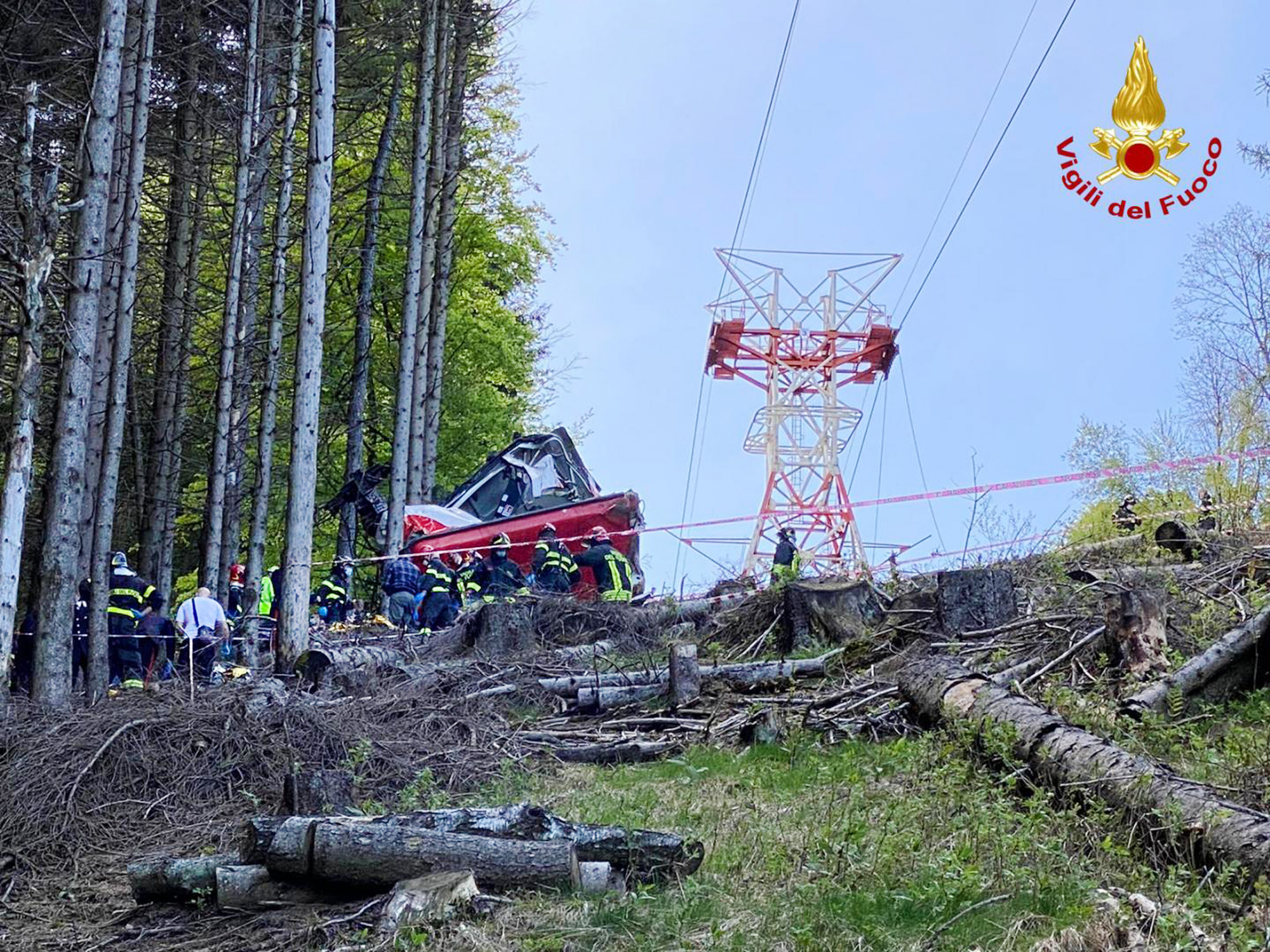
The scene of the wreckage showed the crushed and crumpled remains of the cable car in a clearing of a thick patch of pine trees near the summit of the Mottarone peak overlooking Lake Maggiore.
READ MORE: Remains of 'lost' village emerge from Italian lake
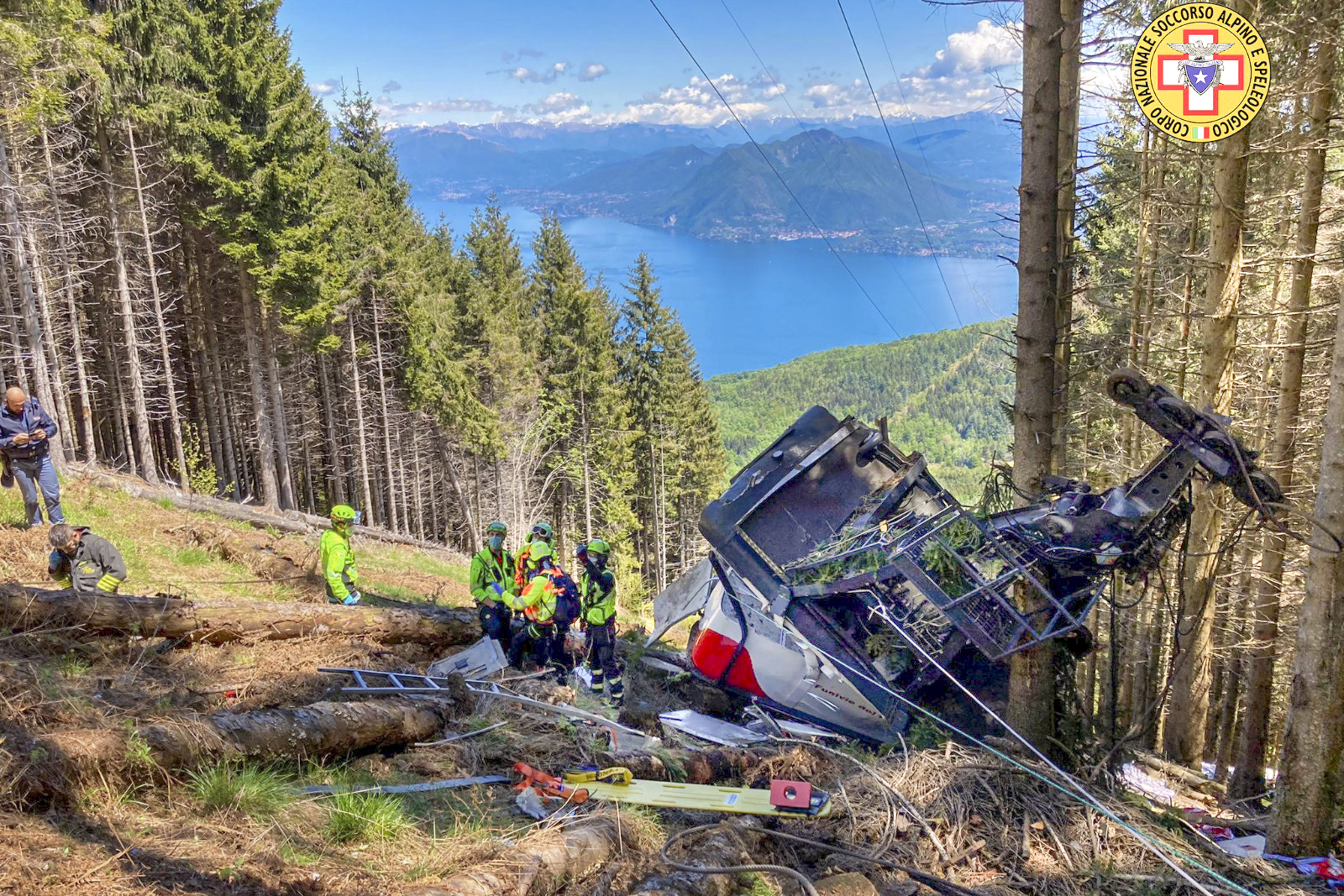
At that location, about 100 metres before the final pilon, the cables of the lift were particularly high off the ground, said Walter Milan, spokesman for the Alpine rescue service.
He noted that the cable line had been renovated in 2016 and had only recently reopened after coronavirus lockdowns forced the closures of ski lifts across Italy.
Sunday was a beautiful, sunny day in the area, and Mr Milan hypothesised that families were taking advantage of the weather to enjoy a day in nature after months of lockdown.
Italy only reopened a few weeks ago, allowing travel between regions after a winter of COVID-19 restrictions.
Mottarone reaches a height of 1491 metres and overlooks several picturesque lakes and the surrounding Alps of Italy's Piedmont region.
Mr Milan said a total of 15 people were believed to be in the cable car at the time, though the exact number wasn't certain. The two children were in serious condition and were taken to a Turin hospital, he said.
Premier Mario Draghi offered his condolences to the families of the victims "with a particular thought about the seriously injured children and their families."
The trip up the mountain from the base at the lake features a cable car to get up most of the way and then a chairlift to reach a small amusement park, Alpyland, which has a children's rollercoaster offering 360-degree views of the scenery.
The site offers mountain bike paths and hiking trails, as is common for many Italian mountain areas that are popular with tourists and locals in spring and summer.
The Stresa-Mottarone cable car line advertises a panoramic, 20-minute trip up the mountain from its base at the lake, offering a view of a total of seven lakes at the peak.
It appeared to be Italy's worst cable car disaster since 1998 when a low-flying US military jet cut through the cable of a ski lift in Cavalese, in the Dolomites, killing 20 people.
Italy's transport minister, Enrico Giovannini, was following the rescue effort, which involved the deployment of three helicopters to the mountainside.
While the cause hasn't been determined, it's the latest incident to raise questions about the quality of Italy's transport infrastructure. In 2018, the Morandi bridge in Genoa collapsed after years of neglect, killing 43 people.
The frustration of young Palestinians is stronger than ever
A young Palestinian boy in thick eyeglasses stood dumbstruck as Israeli police dragged his grandmother, Rifqa, out of his family home.
His eyes shifted between the uniformed men and the 92-year-old woman who squirmed in their clutches.
Shouts rang out and, within minutes, the family was driven out of half of their home in East Jerusalem.
READ MORE: Israeli-Hamas truce 'just a ceasefire', cautions Middle East expert
It was a hot August day in 2009. CNN witnessed those scenes, which the then 12-year-old Mohammed el-Kurd says he can barely remember today.
Abutting his current family residence is the part of the house his grandmother — who died last year at the age of 103 — once lived.
A Jewish man lives there now — a settler, according to international law. Outside, a playground that was once an island of serenity for the Kurd children is strewn with litter and thick overgrowth. An olive tree his family planted in 2000 stands in the middle of the garden.
"It was the first time I felt how minuscule I was in comparison to the hundreds of army and police and occupation forces that were accompanying settlers and throwing people outside of their homes," Mr Kurd told CNN from the family's home in Sheikh Jarrah neighbourhood of Jerusalem this week.
"So much has been erased from my memory because of the intensity of the situation."
Mr Kurd is now a poet. His first book of poems centred on Palestinians' struggles is about to be published. He called it Rifqa.
READ MORE: Palestinians fear loss of family homes as evictions loom
Mr Kurd is also a vocal advocate of Palestinian rights, and his family once again faces the possibility of forced displacement from what remains of his home.
As the conflict between Israel and Hamas raged on this month, he was outspoken in his activism around the plight of Palestinians in Gaza.
After the declaration of a ceasefire brought an end to more than 11 days of conflict between Gaza and Israel, Mr Kurd and other Palestinians say they can rest a little easier. But they say their day-to-day reality hasn't changed.
"For clarification, our neighbourhood's situation is still terrible, and we are still closed off (to non-residents) and our displacement remains a possibility," he tweeted just after the ceasefire announcement, referring to Sheikh Jarrah, the epicentre of unrest that gripped Israel and the Palestinian territories this month.
Sheikh Jarrah galvanises Palestinians
The Palestinian families facing possible eviction have been living in the Sheikh Jarrah neighbourhood, just north of the Old City, since 1956, in an arrangement brokered by the United Nations to find homes in East Jerusalem — then under Jordanian control — for those displaced during the establishment of the state of Israel in 1948.
Now, an Israeli nationalist organization called Nahalat Shimon is using a 1970 law — passed after Israel gained control over East Jerusalem in 1967 — to argue that the owners of the land before 1948 were Jewish families, so the current Palestinian inhabitants should be evicted and their properties given to Israeli Jews.
More than 700,000 Palestinians were displaced during the creation of the state of Israel, according to the United Nations agency supporting Palestinian refugees.
READ MORE: Egyptian mediators hold talks to firm up Israel-Hamas truce
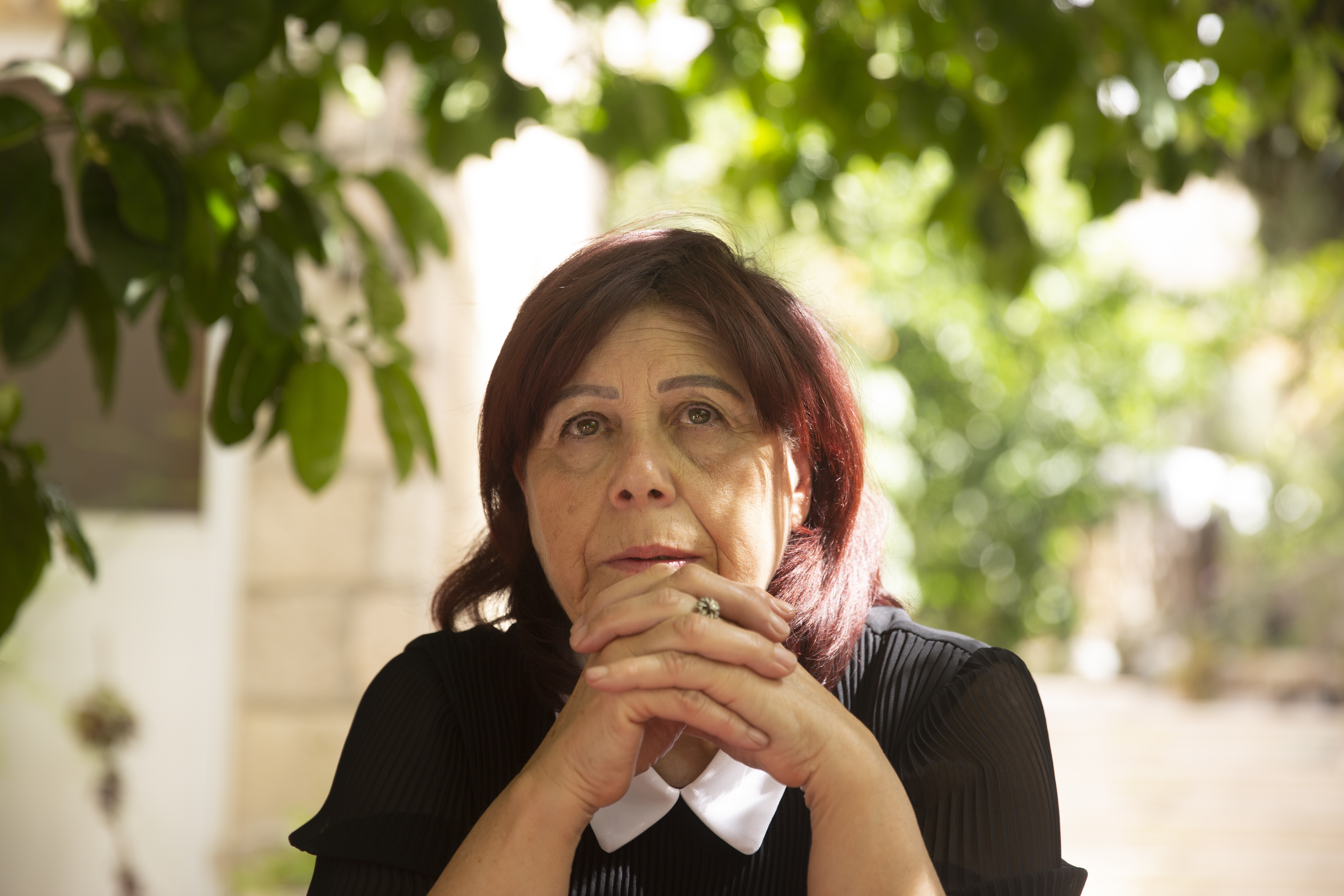
Palestinians contend that restitution laws in Israel are unfair because they themselves have no legal means to reclaim the property they lost to Jewish families in the late 1940s, in what became the state of Israel.
Israeli officials have described the issue as a "real estate dispute."
The UN says the evictions are illegal under international law.
In recent weeks, Palestinian protests on behalf of families facing the threat of eviction in Sheikh Jarrah galvanised a youth movement that spread through Jerusalem, the West Bank as well as among Arab communities in Israel, many of whom identify strongly as Palestinian.
In the midst of the Jerusalem protests earlier this month, police tear-gassed and sprayed foul-smelling "skunk water" at protesters at the Old City's Damascus Gate.
As Palestinian demonstrators threw rocks at police, Israeli forces entered the Al Aqsa mosque, Islam's third holiest site, firing stun grenades at protesters and worshipers.
The incendiary scenes spurred even more Palestinians to take to the streets. And for the first time in years, Hamas militants in Gaza fired rockets at Jerusalem, in what Hamas said was a reaction to Israeli police actions in Al Aqsa.
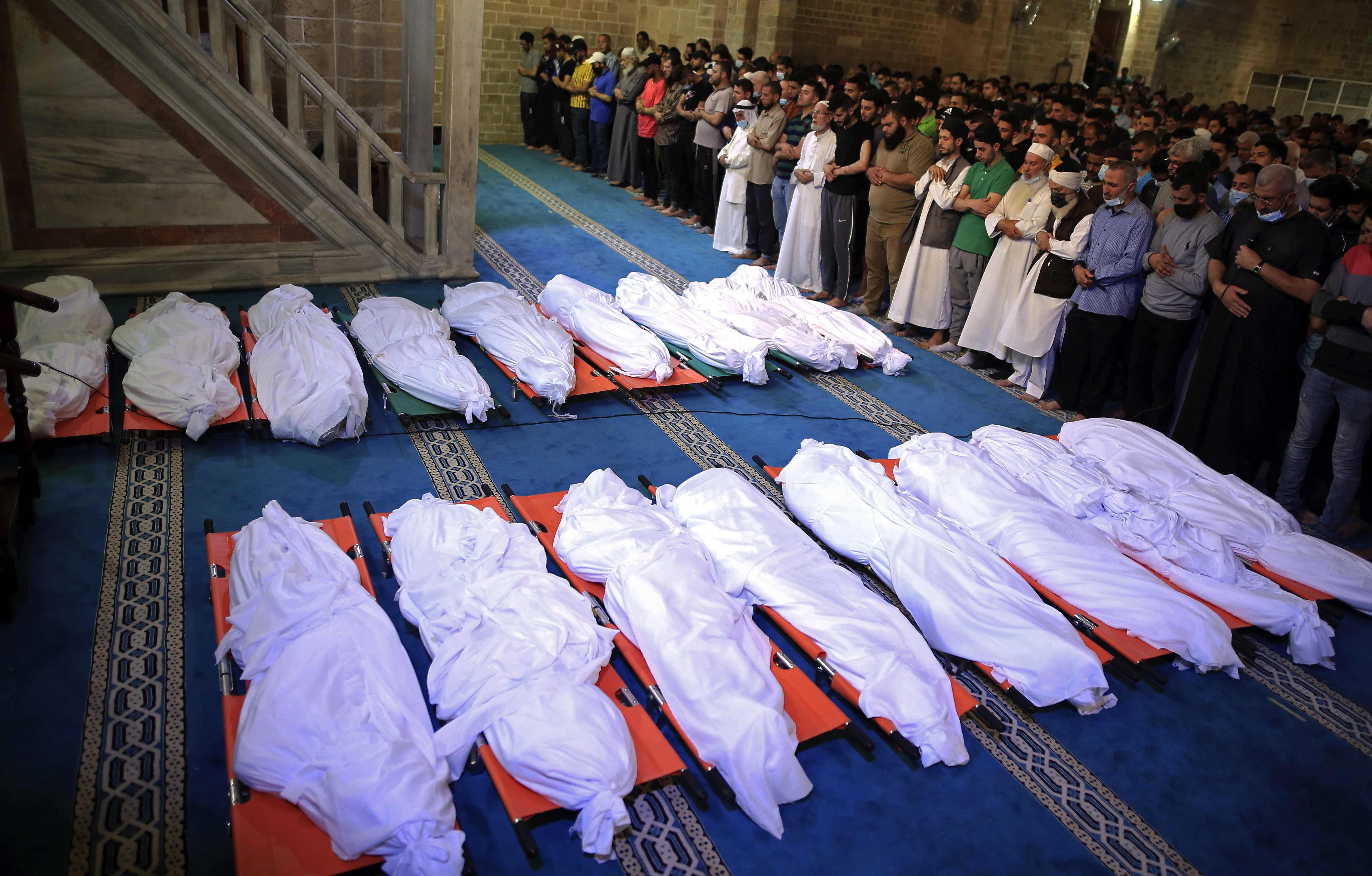
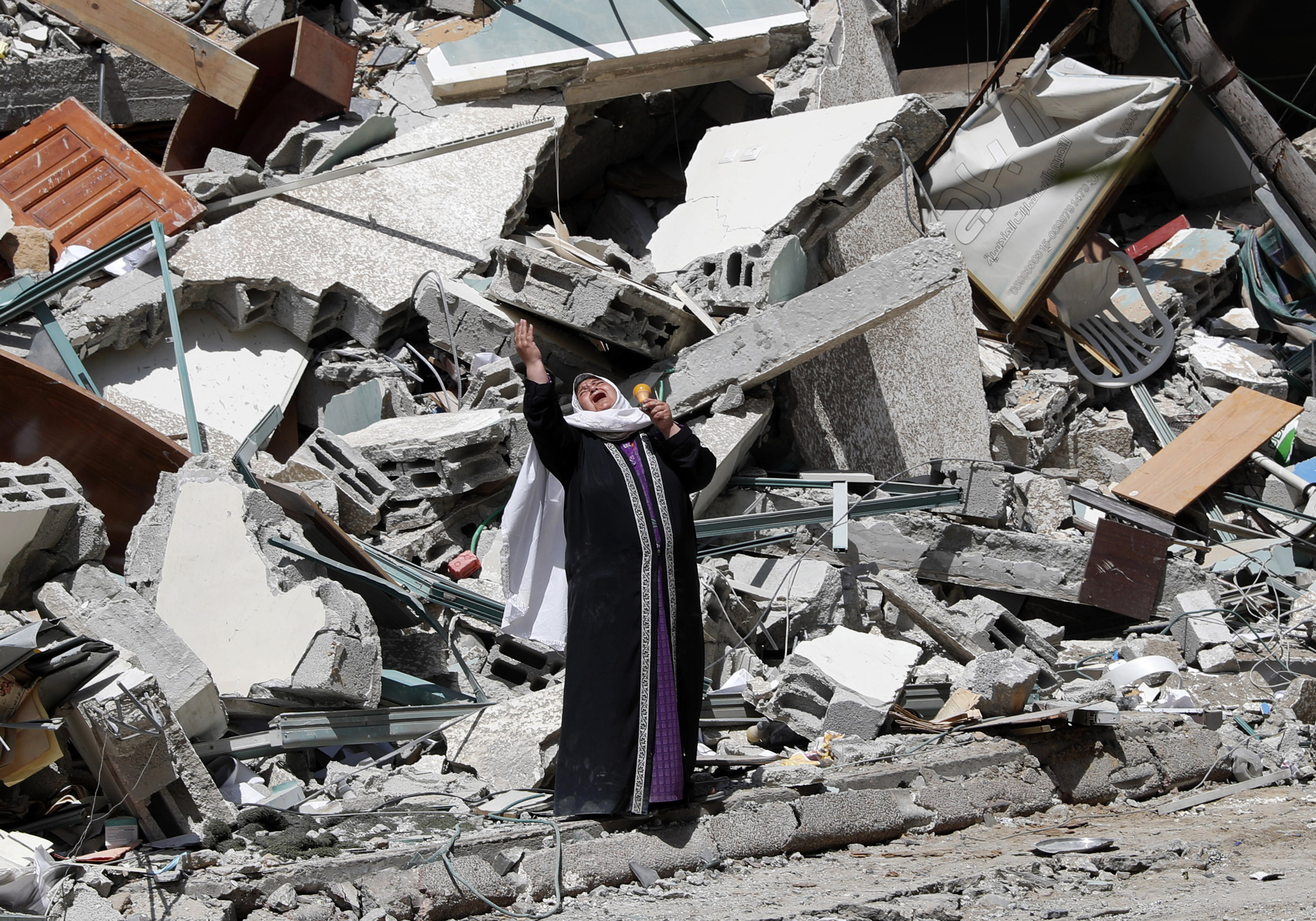
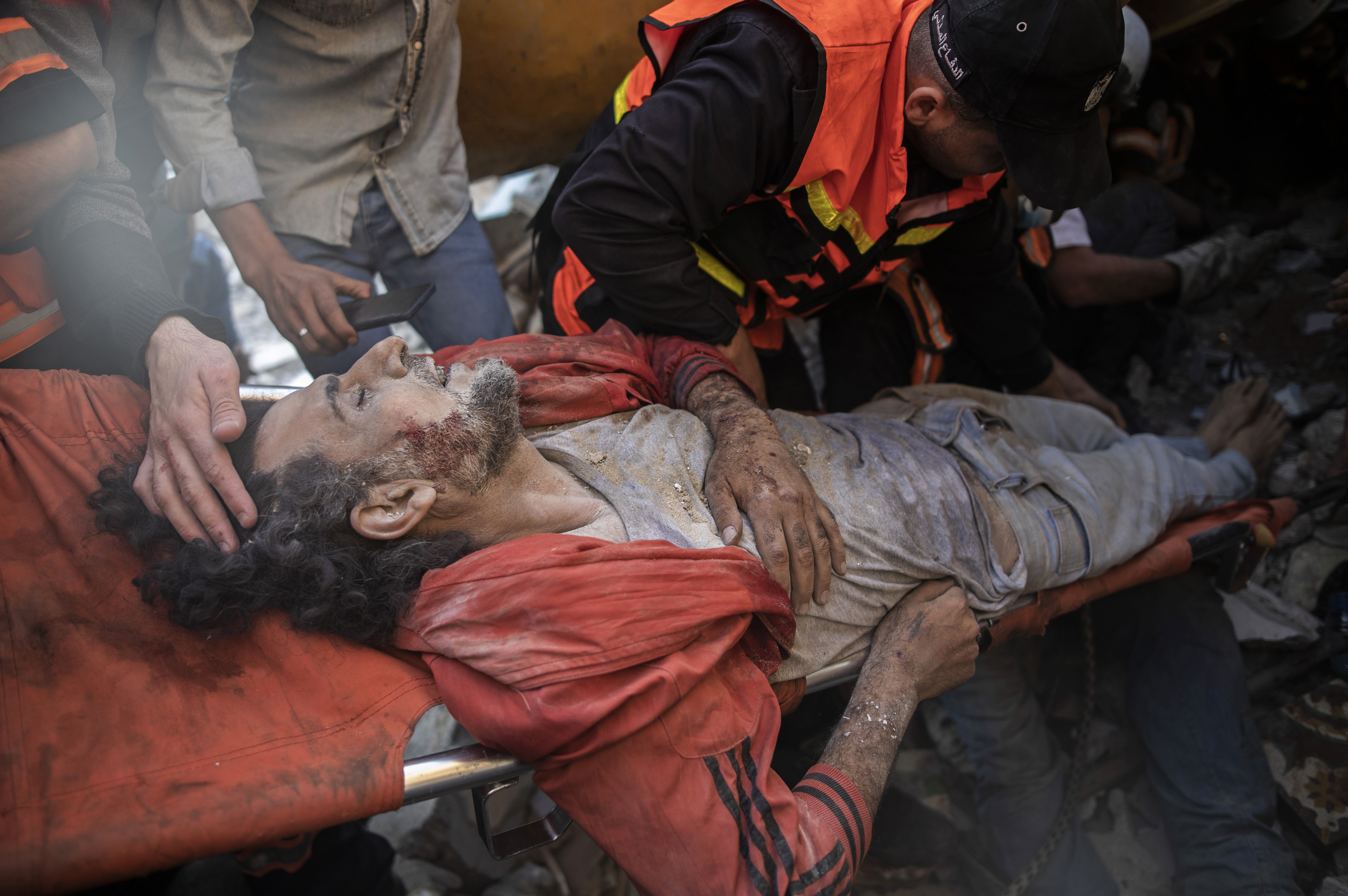
For 11 days, Israel and Hamas exchanged fire. More than 1800 Israeli airstrikes destroyed a number of buildings, including scores of residential towers and 33 media institutions, and killed at least 230 people in Gaza, including 60 children, according to the Ministry of Health based in Gaza, which is governed by Hamas.
Twelve people, including two children, died in Israel as a result of more than 4000 Hamas rockets, according to Israeli officials.
After the ceasefire went into effect on Friday, the leaders of Israel and Hamas were both quick to claim victory.
READ MORE: Shouts, a hurried evacuation, and then the bombs came
Human rights issues
Despite the truce, the underlying issues that spurred Palestinians into the streets in the first place haven't gone away, rights groups and analysts say.
Last month, a 217-page Human Rights Watch report said Israel "institutionally discriminates" against Palestinians in the West Bank and Gaza, as well as in Israel, accusing it of committing "crimes of apartheid and persecution."
In January, the Israeli rights group B'Tselem declared Israel "a regime of Jewish supremacy from the Jordan River to the Mediterranean Sea: This is apartheid."
Israeli authorities have vehemently denied the accusations by such groups.
Israel's Ministry of Foreign Affairs called the HRW report "fiction" and said the claims were "preposterous and false," accusing them of advancing an "anti-Israeli agenda actively seeking for years to promote boycotts against Israel."
But the rights groups have cited one of Israel's own recent laws as the premise of their reports. Israel's 2018 Basic Law determines that the "State of Israel is the nation-state of the Jewish People," and that exercising "the right to national self-determination in the State of Israel is unique to the Jewish People."
It is this law, argues Marwan Muasher, vice president for studies at the Carnegie Endowment for International Peace, that has contributed to mobilising Palestinians across Israel, as well as in the occupied West Bank and Gaza.
"Israel today has employed two separate legal systems, one for the Palestinian Arabs and one for the Israeli Jews, which is the textbook definition of apartheid," said Mr Muasher, a former Jordanian foreign minister and his country's first ambassador to Israel.
"The word apartheid was taboo a few years ago. Today, it is no longer taboo."
"We are living in the George Floyd era where racial injustice inside the United States is no longer tolerated, and injustice anywhere should not be tolerated," he added.
"I think there is an appetite developing internationally that supports this."
READ MORE: Media demand Israel explain destruction of news offices
A growing frustration with Palestinian leadership
But the Palestinian popular landscape is shifting in more ways than one. Across communities, the chasm between the young people driving the protests and their leadership is growing ever wider.
Palestinians in the West Bank, where the Palestine Liberation Organisation rules, are increasingly frustrated at repeated delays to elections, along with the perception of widespread corruption. The PA denies allegations of corruption.
In Gaza, more and more Palestinians have grown disenchanted with the once-popular Hamas, although the group has seen an uptick in its popularity since the recent flare-up with Israel.
Alternate parties are beginning to bubble up, and despite being fledgling and inchoate, seem to embody Palestinian desires more than the established leadership.
"The youth are fed up with their leadership. They might have answers. They might not have structures, but they're all unified in rejecting the old order," said Mr Muasher.
All this blew up into clear view after the Sheikh Jarrah protests over the forced evictions.
"There's a lot of frustration among the Palestinians particularly because of the Sheikh Jarrah incident," he said.
"There is no Palestinian that doesn't feel the pain of being forced out of their homes."
Back in Sheikh Jarrah, the Kurd family continues to fight a court battle to keep what's left of their home, despite feeling certain that the Israeli justice system will rule against them.
Israel's Supreme Court postponed the latest hearing, which was set for May 10, due to tensions surrounding the case, and a new date has not yet been set.
"To this day, there's not enough room for us inside the house," said Mr Kurd, as he stood outside the part of his home where a Jewish settler now lives.
Video showing the man from New York went viral after Kurd's sister confronted him about inhabiting the home.
"We sleep on the couch. The recent development in the uptick of police violence has forced us to even sleep with our shoes on," Mr Kurd said.
"Because we're afraid of when they're coming."
Alleged arsonist arrested over fire spree
A suspected arsonist is behind bars after being accused of lighting at least five properties on fire in Adelaide's southern suburbs.
Residents of Parkside were forced to rush to the aid of retired Glazier Terry Leigh after his front fence was set alight, potentially threatening his home.
READ MORE: 'Good condition' of Somerton man remains give investigators fresh hope
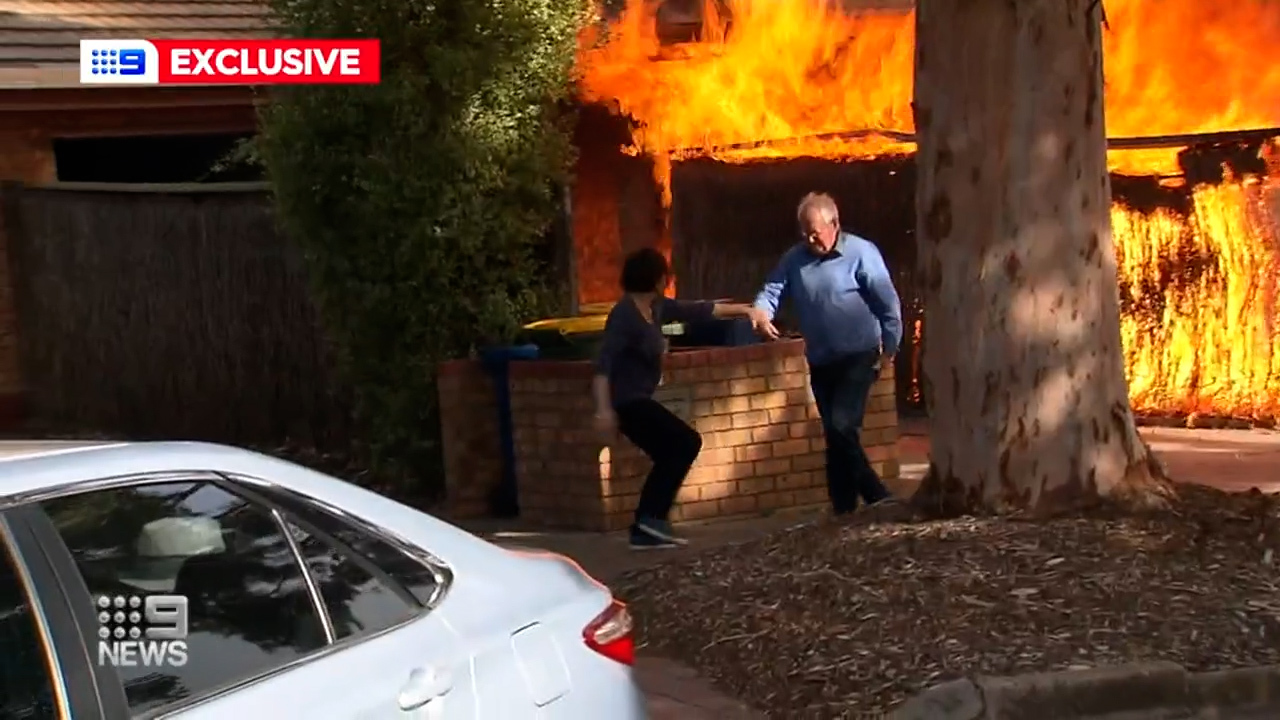
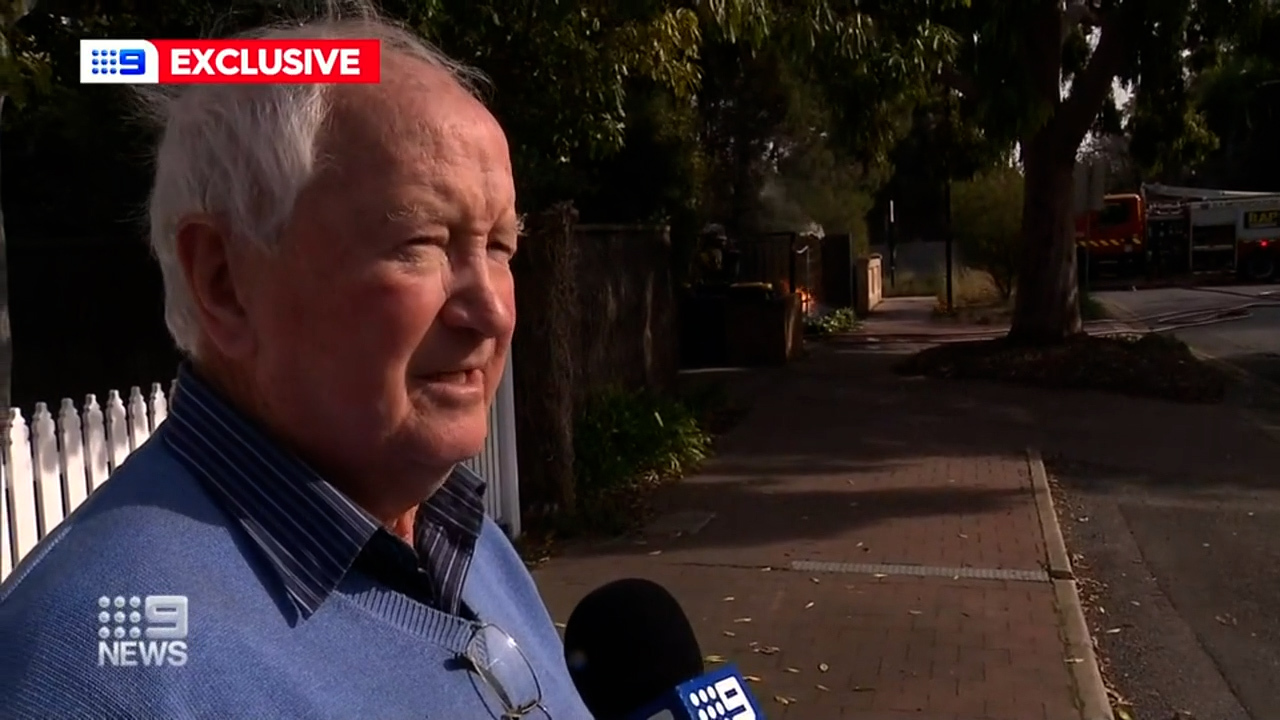
"I had a little bit of fear going through the garage," Me Leigh told 9News.
"It was getting very hot by then but I managed to run through it."
The alleged attack on Mr Leigh's house at 1.45pm was one of at least five fences targeted by a suspected firebug in a 60-minute spree.
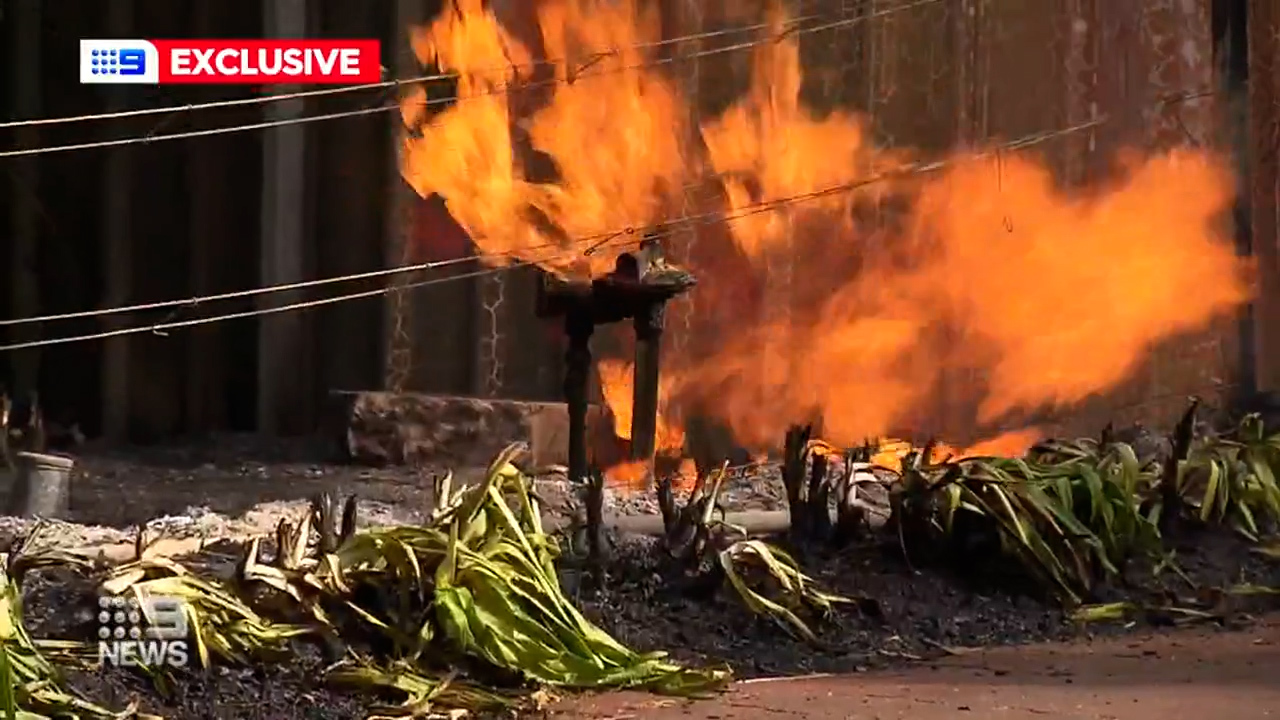
Fifteen minutes later at 2pm, South Australia Police arrested a 47-year-old man on nearby Oxford Terrace.
The Croydon Park man was refused bail and is expected to be charged with multiple offences tomorrow.
AstraZeneca cleared for patients with history of clots
Australia's chief vaccine safety body has issued new advice affirming the safety of the AstraZeneca COVID-19 vaccine for people with a history of many blood clotting disorders.
But the Australian Technical Advisory Group on Immunisation also added two specific conditions to the list of health issues that should trigger a preference for the Pfizer vaccine.
In a joint statement released on Sunday, ATAGI and the Thrombosis and Haemostasis society of Australia and New Zealand (THANZ) said there were "no known markers for increased risk" from the vaccine.
A full list of the TGA's latest advice on clotting related conditions and which vaccine to receive can be found below.
READ MORE: Two million Pfizer doses every week from October, says government

Specifically, Australians who have a family history of blood clots or incidences of deep vein thrombosis do not have a higher chance of vaccine-induced thrombotic thrombocytopenia – or TTS – occurring after receiving an AstraZeneca dose.
"TTS is a rare condition with a different mechanism to most other causes of thrombosis and/or thrombocytopenia," ATAGI said in a statement.
"Among case reports, there are no known markers for increased risk for TTS."
READ MORE: High-risk under 50s in WA soon able to access Pfizer vaccine

ATAGI was careful to point out that TTS "is a very rare potential complication" and that vaccination remains the best way to prevent severe illness from COVID-19.
"People who choose to delay vaccination until a vaccine other than AstraZeneca COVID-19 vaccine is available should be aware they may not be protected against COVID-19 for months," the statement reads.
"The risk of potential outbreaks of COVID-19 is ever-present. The Australian population remains largely unimmunised and susceptible to COVID-19 risks."
Currently, almost 3.6 million COVID-19 vaccines have been administered to Australians.
To date there have been 24 reports of blood clot cases in Australia relating to the AstraZeneca vaccine.
READ MORE: Hospital staff 'should have checked for blood clots', say SA family

Two doses of AstraZeneca or Pfizer vaccine 'highly effective' against Indian strain: UK study
A new study by Public Health England has found two doses of either the AstraZeneca or Pfizer COVID-19 vaccine are "highly effective" against the B.1.617.2 variant first identified in India.
The study found that from April 5 to May 16, two doses of the Pfizer vaccine was 88 per cent effective against the strain and a similar dosage of the AstraZeneca vaccine was 60 per cent effective.
"The difference in effectiveness between the vaccines after two doses may be explained by the fact that rollout of second doses of AstraZeneca was later than for the Pfizer-BioNTech vaccine, and other data on antibody profiles show it takes longer to reach maximum effectiveness with the AstraZeneca vaccine," the researchers write.
"As with other variants, even higher levels of effectiveness are expected against hospitalisation and death."
READ MORE: Australia could be manufacturing mRNA vaccines within a year
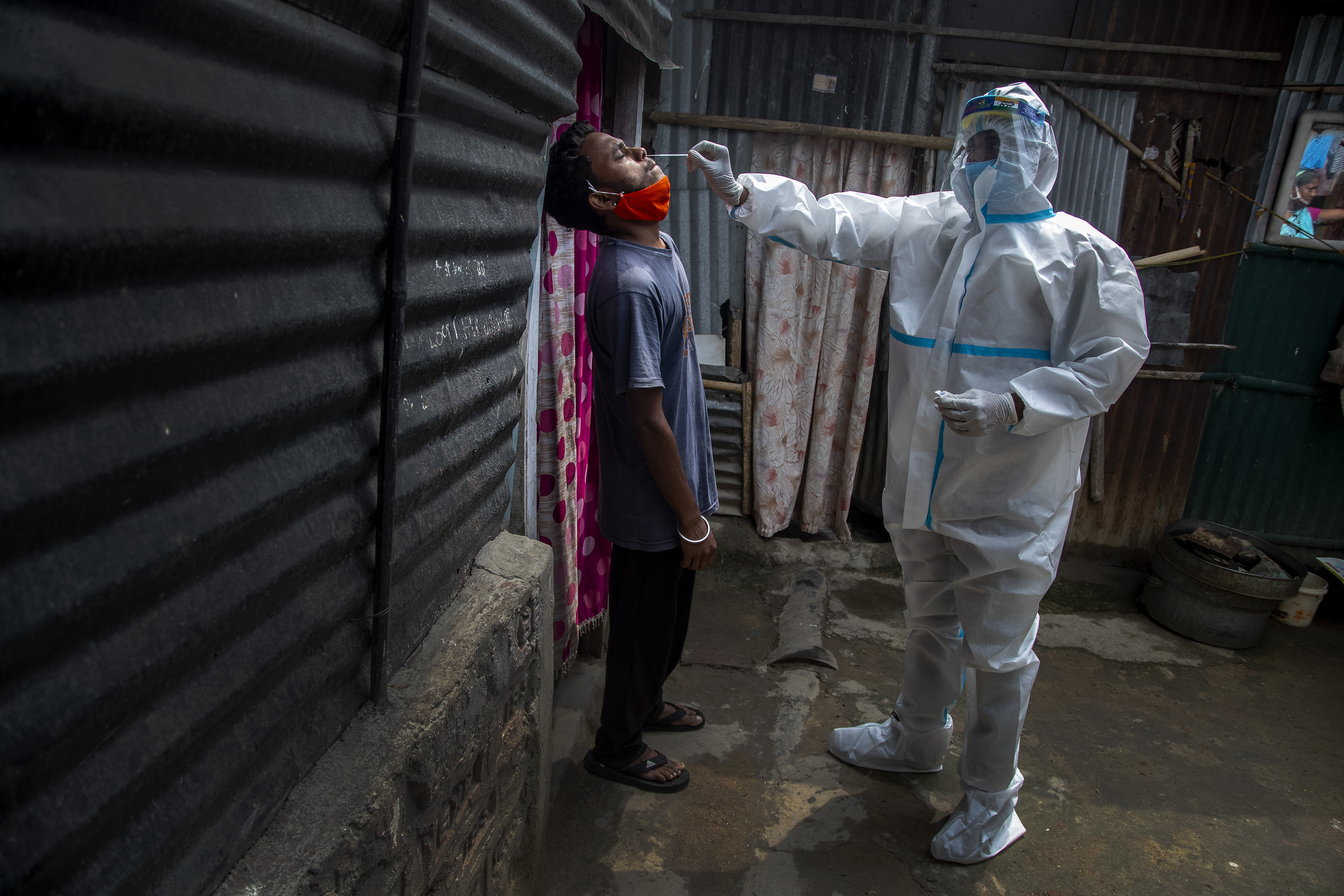
The following groups of people can receive COVID-19 vaccine AstraZeneca:
- People with a past history of venous thromboembolism in typical sites, such as deep vein thrombosis or pulmonary embolism
- People with a predisposition to form blood clots, such as those with Factor V Leiden, or other non-immune thrombophilic disorders
- People with a family history of clots or clotting conditions
- People currently receiving anticoagulant medications
- People with a history of ischaemic heart disease or cerebrovascular accident
- People with a current or past history of thrombocytopenia.
Pfizer is preferred for anyone with:
- A past history of cerebral venous sinus thrombosis (CVST)
- A past history of heparin-induced thrombocytopenia (HIT)
- A past history of idiopathic splanchnic (mesenteric, portal and splenic) venous thrombosis
- Anti-phospholipid syndrome with thrombosis
- People with contraindications to COVID-19 Vaccine AstraZeneca