Category Archives: headline

Victoria's lockdown extended

Victoria will not exit lockdown as planned at midnight tomorrow as the state records 12 new local cases of coronavirus and a further four infections from overnight.

Premier Daniel Andrews said a decision would be made about when lockdown would end tomorrow, once further test results and interviews had taken place.

Four additional cases of COVID-19 have been detected in the state today, which will be reported in tomorrow's numbers.

The cases had all been isolating during their infectious period.

LIVE UPDATES: Families, workplaces, major drivers of NSW outbreak
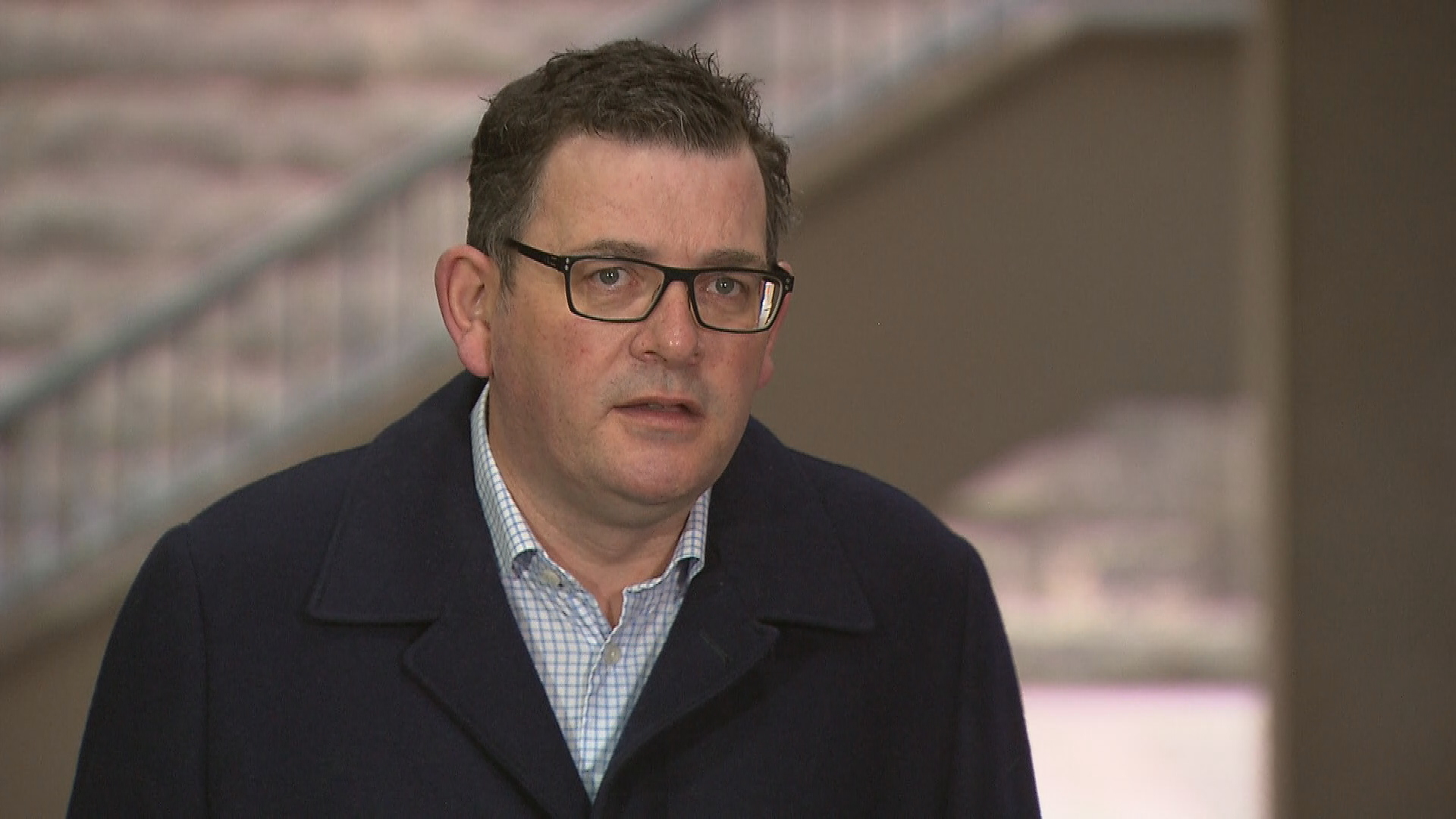
"I know it is frustrating that I can't stand here and tell you what rules and timeframes will apply from midnight tomorrow night," Mr Andrews said.

READ MORE: Dozens more exposure sites listed, some as far away as Mildura

"The Chief Health Officer will provide advice to me and my senior colleagues, that will occur over tonight and tomorrow morning, and it will be based on the best information, the most complete set of facts that we can pull together.

"Exactly how much more time, that advice is not with me yet, those decisions have not been made yet, those decisions will be made in turn based on the complete picture.

"We do need the remainder of today and whatever happens overnight to be able to make that full assessment."

Mr Andrews said the choice was either a "short lockdown, or one that's much, much longer", adding he did not want cases to explode like they had in Sydney.

"If we were to let it run, and say it's too hard, look at Sydney's hospitalisation rates and the other healthy young people who are in ICU.

"Look at the rest of the world, we will finish up with our hospitals very full."

All new local cases linked to current outbreaks

More than 54,800 people came forward to be tested in the last 24 hours, with the Department of Health confirming all the new local cases were linked to current outbreaks.

One of the cases – found in a Mildura man – in regional Victoria, was made public yesterday, with his household contact now testing positive.

The breakdown of infections include:

  • A household contact of the Mildura man
  • Four cases linked to Ms Frankie restaurant in Cremorne
  • Another two students linked to Trinity Grammar School
  • A social contact of the Phillip Island case
  • One case linked to AAMI Park
  • One case linked to Young and Jacksons pub
  • One case linked to Bacchus Marsh Grammar who was isolating during their infectious period.
  • One case which has emerged from the Euro finals event at the Crafty Squire

Mr Andrews said heath authorities were doing their best to stem the spread of the Delta variant, which has now reached regional Victoria.

READ MORE: What you need to know about Victoria's lockdown extension

He earlier said the infections in Mildura would mean regional areas would not come out of lockdown earlier than Melbourne.

The results of contact tracing interviews and tests will impact tomorrow's lockdown decision.

Mr Andrews said he was trying to avoid multiple lockdowns or an outbreak like NSW was currently enduring.

https://twitter.com/VicGovDH/status/1416886071955128320

"We do not want that to happen here … we know that if we had been open then it would be just like Sydney," he said.

"We would have hundreds and hundreds and hundreds of cases. We would not be looking at a short lockdown, we would be looking at something entirely different."

CHO flags pub as venue of great concern

Victoria's Chief Health Officer Professor Brett Sutton said the case who attended the Crafty Squire pub in Melbourne CBD for the European Championships final was of great concern.

"It is an example of how quickly this variant is moving and the short time we are seeing between exposure and being infectious and onward transmission," he said.

READ MORE: NSW records 98 new cases as lockdown rules tighten
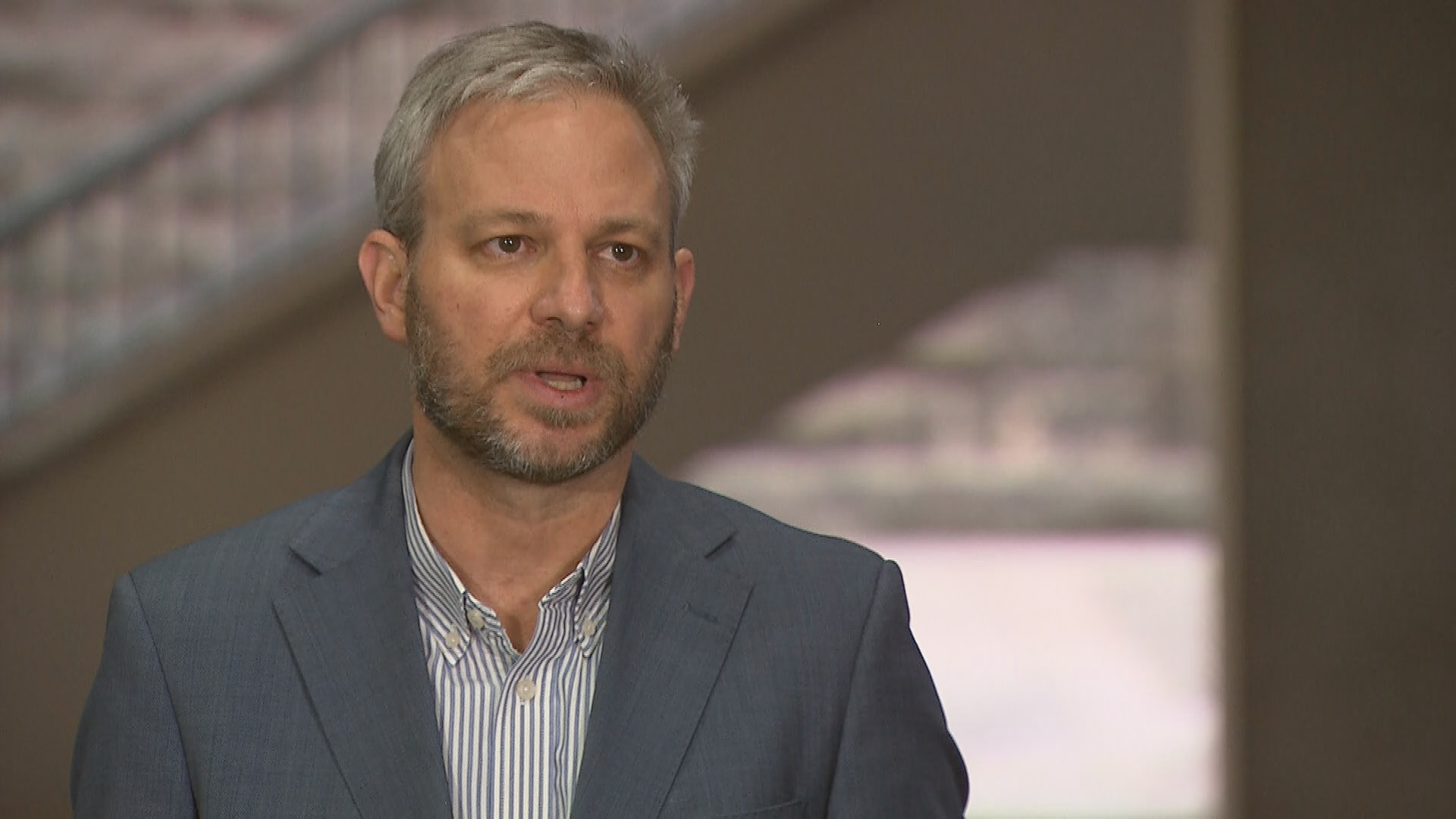
"Last year, we would not have seen any circumstances where someone who had been exposed was transmitting to someone else a day and a half later.

"Less than 48 hours later simply was not seen last year with other variants."

Professor Sutton said health officials had not expected transmission to occur at the venue.

"So for it to have occurred 30 hours after the exposure is very much a characteristic of the Delta variant."

Anyone who was present at the event at Crafty Squires from 3am to 8am on July 12 must isolate, get tested and quarantine immediately for the full 14 days.

MCG close contacts list expanded

Primary close contacts for people who sat in the MCC Member's Reserve section of the MCG at the Geelong v Carlton game have been expanded.

Professor Sutton said health authorities were seeing transmission between strangers, including people who sat outside for the entire time and those who did not sit near one another.

People who attended the Percy Beames Bar must quarantine for 14 days and those seated in sections N40-46 of Level 2 must get tested.

Today's case linked to AAMI Park was not sitting near the previous infection found.

Authorities believe the virus may have been spread upon entry into the stadium.

A number of sections inside the stadium have been expanded to become Tier Two exposure sites.
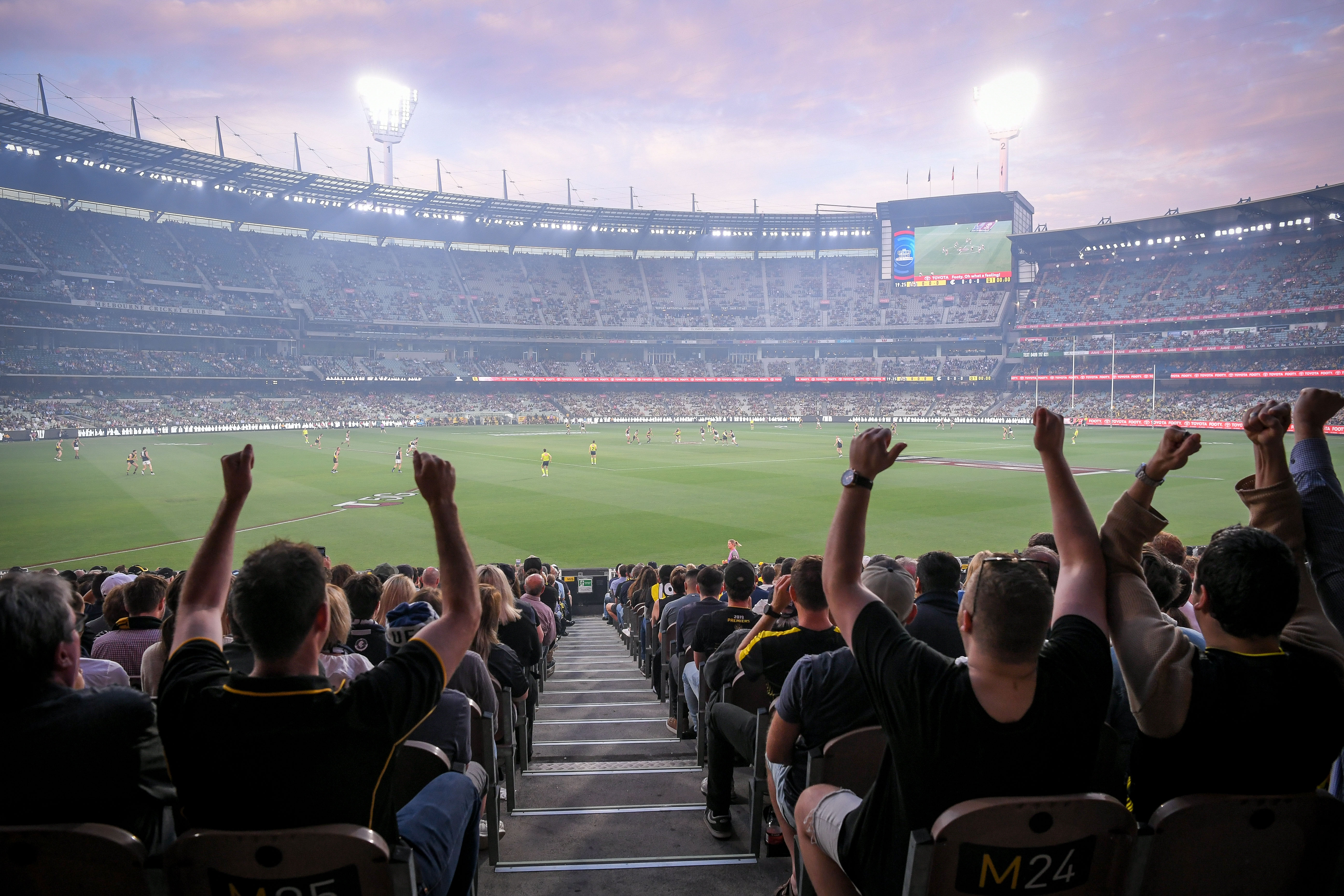
"We are now also declaring sections 81 to 91 of the grounds as Tier Two areas, requiring you to get tested and isolate until negative," Professor Sutton said.

Footy fans who sat on Level 2 of the MCC Member's Reserve at the MCG have been requested to get a second COVID-19 test when possible.

People who do not have symptoms do not have to isolate while awaiting their second test result.

Professor Sutton said the Delta variant was "hugely challenging".

"It is an absolute testament to contact tracing that all cases thus far have been linked," he said.

"I don't think there's been an outbreak of this size in Australia where all cases have been linked."

Extending the lockdown would give health authorities the best chance possible to beat the deadly Delta variant.

"Life as normal puts at risk hundreds of cases becoming thousands of cases becomes then tens of thousands of cases," Professor Sutton said.

"So these are awful and difficult decisions."

Fears for regional Victoria

There are now also fears the Melbourne outbreak has spread to regional areas as exposure sites balloon to 200 across the state.

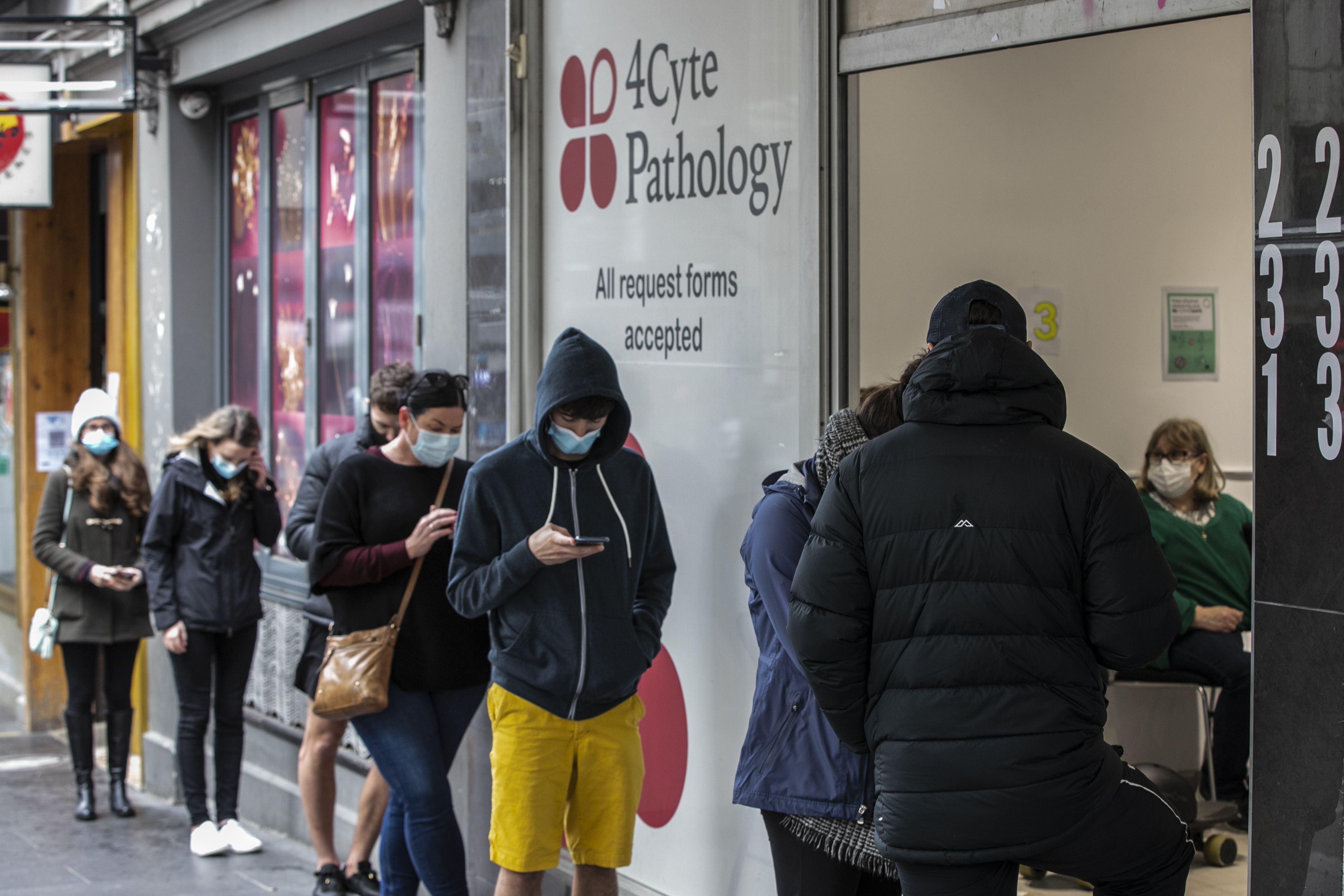
Additional staff have been brought in from Bendigo to deal with the surge in people coming forward for testing and authorities are urging anyone who thinks they may have been exposed to come forward, even if they don't have symptoms.

READ MORE: Calls to overhaul Victoria's vaccine booking system
Medical staff at St Vincent's Hospital in Melbourne may have also been exposed to COVID-19 after a positive case attended the Fitzroy site on Friday, July 16.

In a statement to 9News, the hospital confirmed the primary source of exposure related to the Department of Anaesthesia.

"Our contact tracing team are responding to this potential exposure as a matter of priority," the statement read.

"Anyone who may have been exposed is being placed in precautionary quarantine as part of our contact tracing process.

"No patients have been identified as close contacts and we are providing support to affected staff."

Cafe Courtyard 55, located adjacent to the main hospital building, has been identified as a potential exposure site.

Anyone who attended Courtyard 55 on Friday between 2pm and 2:30pm, must urgently get a COVID-19 test and self-isolate until they receive a negative result.

Four additional cases of COVID-19 have been detected in Victoria that will be reported in tomorrow's numbers.

They have all been isolating during their infectious period.
Back Home: Honduran Toddler Found Alone in Mexico

CABAÑAS, Honduras, July 18 (Reuters) – Wilder, the 2-year-old Honduran boy found abandoned and half-naked on a secluded Mexican highway near a truck carrying migrants, was welcomed home with cake and fireworks by relatives in the poor rural town of Cabañas in western Honduras.

The toddler made international headlines when Mexican security agents found him crying alone in southern Mexico in June near the cargo truck that contained dozens of people trying to make their way to the U.S. border.

The boy, who is in good condition, was flown on Friday to the northern Honduran city of San Pedro Sula where he was reunited with his mother after nearly 20 days in the custody of Mexican authorities. read more

“Never again will I let my child go. I’m so happy to have him with me,” Lorena Garcia, 23, told Reuters by phone. “Eating beans and corn, we’ll get by,” said Garcia, a farmer, who lives in a modest home with dirt floors.

Grandparents, uncles and cousins greeted the boy on Saturday with fireworks and a sign reading: “Welcome back Wilder.”

Garcia said her husband, Noel Ladino, left with Wilder in a bid to migrate to the United States with a human smuggler. It was unclear why the father and son became separated before the boy was found by Mexican authorities.

Elated to have her son back in her arms, Garcia lamented not being able to reunite as well with her husband, who she said is detained in Mexico. “I hope he comes back to help us too,” Garcia said.

The young family survived on Noel Ladino’s precarious salary of 100 lempiras a day, the equivalent of $4, when he could find work, which is scarce in the area, Garcia said.

They are among the thousands of people living in Cabañas in the mountains of the Copan department of Honduras, where 94% of the inhabitants are poor, according to official data.

Hundreds of thousands of Hondurans, including families with children, have set off for the United States in recent years to escape poverty, violence and corruption. Many are turned back by Mexico or the United States.

There has been an increase this year in unaccompanied children, mainly from Central America, arriving at the U.S.-Mexico border, even as President Joe Biden’s administration warns migrants not to come.

Reporting by Jose Cabezas in Cabañas, Honduras and Gustavo Palencia in Tegucigalpa; Writing by Anthony Esposito; Editing by Peter Cooney

The post Back Home: Honduran Toddler Found Alone in Mexico appeared first on The St Kitts Nevis Observer.

Mangoes to arrive on greengrocer shelves early

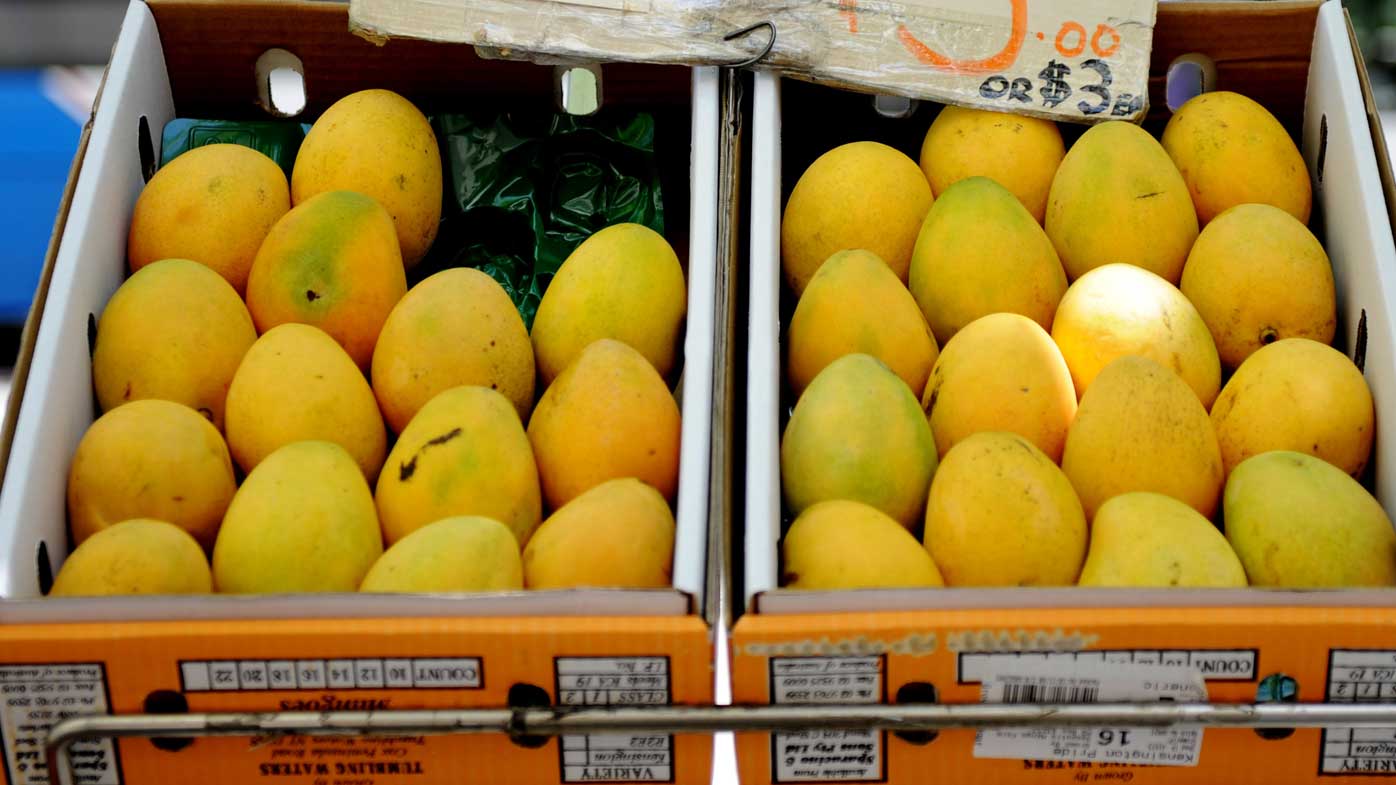
Mangoes are set to hit greengrocer shelves early this year, bringing a welcome taste of summer as NSW endures a difficult COVID-19 winter.

Prime growing conditions in the northern parts of Australia have meant large quantities of premium Kensington Pride mangoes could make an appearance a few months ahead of schedule.

"They've been around for a couple of weeks now, they had a bit of warm weather up north, which brought the flowers on earlier, and they come in a bit earlier," Moustapha Obeid from Aussie Roma Fresh said.

READ MORE: NSW records fifth death from COVID-19 Delta outbreak

Kensington Pride mangoes. (AAP)

Already this week, mangoes are being harvested and put into crates ready for dispatch to Sydney.

Normally not available until September, industry experts said mangoes should arrive in coming weeks and could last up until March 2022.

"Because the growing conditions have been so good now, the flavour is there," Chris Oliverio from Tristate Produce said.

Biden says Cuba Is a Failed State’ and Calls Communism ‘a Universally Failed System’

(CNN) President Joe Biden said on Thursday that Cuba is a “failed state” and called communism a “failed system” as protests play out against the Caribbean nation’s repressive regime.

During a news conference with German Chancellor Angela Merkel, Biden said that the United States is looking into ways to possibly reinstate access to the internet in Cuba but indicated that the US is not considering reestablishing US to Cuba remittances — the practice of Americans transferring money to their Cuban relatives — over concerns that the regime would confiscate the funds.
“Cuba is unfortunately a failed state and repressing their citizens. There are a number of things that we would consider doing to help the people of Cuba, but it would require a different circumstance or a guarantee that they would not be taken advantage of by the government,” Biden said. “For example, the ability to send remittances back to Cuba. We would not do that now because the fact is it’s highly likely the regime would confiscate those remittances or big chunks of it.”

When asked about his views on communism, the President added: “Communism is a failed system — a universally failed system. And I don’t see socialism as a very useful substitute. But that’s another story.”

Thousands of Cubans took to the streets across the island nation last weekend to protest chronic shortages of basic goods, curbs on civil liberties and the government’s handling of a worsening coronavirus outbreak, marking the most significant unrest in decades.

Since Biden’s arrival in office, Cuba policies have remained in review.

Under the Obama administration, Cuba oversaw the reopening of embassies and relaxing of many restrictions long in place since the embargo. But the Trump administration enacted some of the toughest economic measures against Cuba in decades, reinstated travel restrictions and — before leaving office — named Cuba a state sponsor of terrorism.

On Friday, Cuban President Miguel Díaz-Canel responded to Biden’s comments by calling on him to repeal Trump’s moves.

“If President Joe Biden really had humanitarian concerns for the Cuban people he would eliminate the 243 measures applied by President Donald Trump, including 50 imposed cruelly during the pandemic,” Diaz-Canel posted on his official Twitter account. He added, “The US has failed in its attempts to destroy Cuba, although by trying to achieve it has wasted millions of dollars.”

The demonstrations in Cuba, along with the recent presidential assassination in Haiti, has forced the Biden administration to place a focus on foreign policy with nations in the Caribbean. The President confirmed that he plans to send US Marines to Haiti to secure the US embassy there, but no plans are in the works for additional troops to go to Haiti.

Biden said he was ready to send Covid-19 vaccines to Cuba, but the nation has not joined the international vaccine coalition, COVAX, with whom the US is working closely.

“I’d be prepared to give significant amounts of vaccine if in fact I was assured an international organization would administer those vaccines and would do it in a way that average citizens would have access to those vaccines,” he continued.

The President volunteered information about reinstating internet access in Cuba, telling reporters, “We’re considering whether we have the technological ability to reinstate that access.”

Earlier this week social media platforms were being restricted in Cuba, according to internet monitor NetBlocks. The NetBlocks website said its metrics showed that WhatsApp, Facebook, Instagram and some Telegram servers were being disrupted.

This story has been updated with additional information.

The post Biden says Cuba Is a Failed State’ and Calls Communism ‘a Universally Failed System’ appeared first on The St Kitts Nevis Observer.

Drone spotted delivering cigarettes to hotel quarantine on Gold Coast

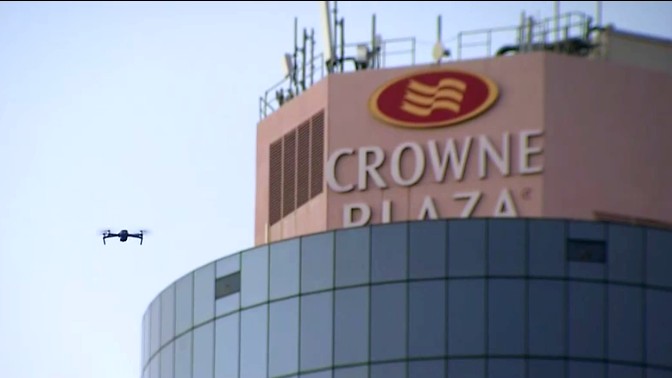
A woman undergoing hotel quarantine on the Gold Coast has breached her isolation conditions after receiving a packet of cigarettes delivered via a flying drone.

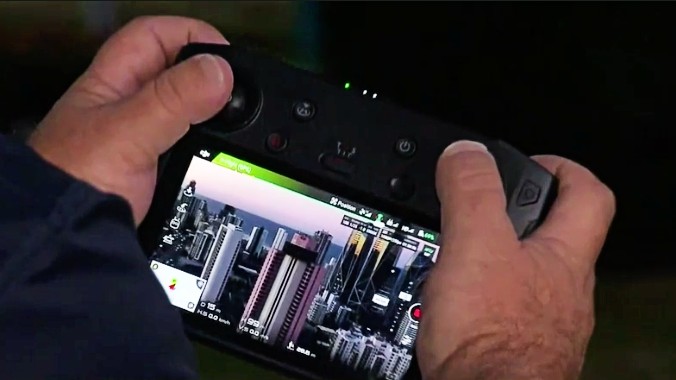
A man is believed to have been operating the drone from outside the Crowne Plaza at Broadbeach last Sunday, July 11.

The drone was observed delivering a packet of cigarettes to a woman in hotel quarantine by flying to her balcony.

READ MORE: Meteor-like object spotted flying across Queensland night sky

The sneaky exchange was spotted by a hotel staff member who notified police and interviewed the quarantining woman. 9News understands that a man and woman were spotted outside the Crowne Plaza at Broadbeach last Sunday July 11 with the former operating the drone.

The sneaky exchange was spotted by a hotel staff member who notified police and interviewed the quarantining woman.

Police have since given the woman a $1,300 fine for the stunt.

The drone operator may also face penalties from the Civil Aviation Safety Authority for breaching safe flying regulations.

Haiti: Moise’s Widow Back Home After Treatment in US

The widow of Haiti’s assassinated president has returned to the Caribbean nation after being treated in Florida for wounds suffered in the attack.

Martine Moïse was seen wearing an arm sling and a bulletproof vest after arriving by plane at Port-au-Prince airport on Saturday.

Her husband Jovenel Moïse was killed by assassins in their home on 7 July.

Mrs Moïse was injured in the attack, and was flown to a hospital in Miami, Florida for treatment.

In a tweet, a Haitian official said Mrs Moïse had returned to the country to prepare for her husband’s funeral next week.

Flanked by security agents, she was pictured being greeted by Interim Prime Minister Claude Joseph and other officials on the tarmac.

Mrs Moïse has made few comments since the attack, for which police have blamed a group of foreign mercenaries, most of them Colombians.

From her hospital bed, she recorded an audio message in which she described the moment assassins “riddled” her husband with bullets after bursting into their home in the middle of the night.

Mrs Moïse said the attack happened so quickly that her husband was unable to “say a single word”. Earlier this week, she tweeted: “This pain will never pass.”

Mr Moïse, 53, had been president of Haiti, the poorest nation in the Americas, since 2017. His time in office was rocky as he faced accusations of corruption and there were widespread demonstrations against him earlier this year.

Correspondents say that as a witness to the attack, Ms Moïse could help investigators understand who carried out the assassination and why.

Many of the details surrounding the attack remain a mystery.

Haitian police say a group of mainly foreign mercenaries – 26 Colombians and two Haitian Americans – made up the group that carried out the killing.

At least 20 have been detained, while three were killed by police and five are still on the run.

Haitian police have also arrested a Florida-based Haitian doctor, Christian Emmanuel Sanon, whom they described as a “key suspect” in the assassination.

The post Haiti: Moise’s Widow Back Home After Treatment in US appeared first on The St Kitts Nevis Observer.

Latin American Foto Festival: Strength and Resistance

Portraits of survival and resistance go on show in New York, at The Bronx Documentary Center’s fourth Annual Latin American Foto Festival.

Works by artists from Colombia, Argentina, Chile, Mexico, Venezuela, Peru and El Salvador are displayed from a variety of long-term projects focusing on social issues.

Here is a selection of some of this year’s featured photographers alongside their comments on their projects.

Five-year-old Alfred Flores holds a bunch of quenettes in Patanemo, Venezuela.image copyrightAndrea Hernandez Briceno
image captionFive-year-old Alfred Flores holds a bunch of quenettes in Patanemo, Venezuela.

Andrea Hernández Briceño

“We call it mango season. It happens every year in the dry season when the fruit starts falling from the trees, abundant and generous to those who are hungry.

“In Venezuela this past year, its arrival was particularly celebrated, as the pandemic wore away access to basic necessities in a country wracked by deepening poverty and crisis.

“I made these images while walking on the streets of Caracas, the capital, and smaller towns. On my long trips I observed that most Venezuelans eat fewer than two meals a day.”

line
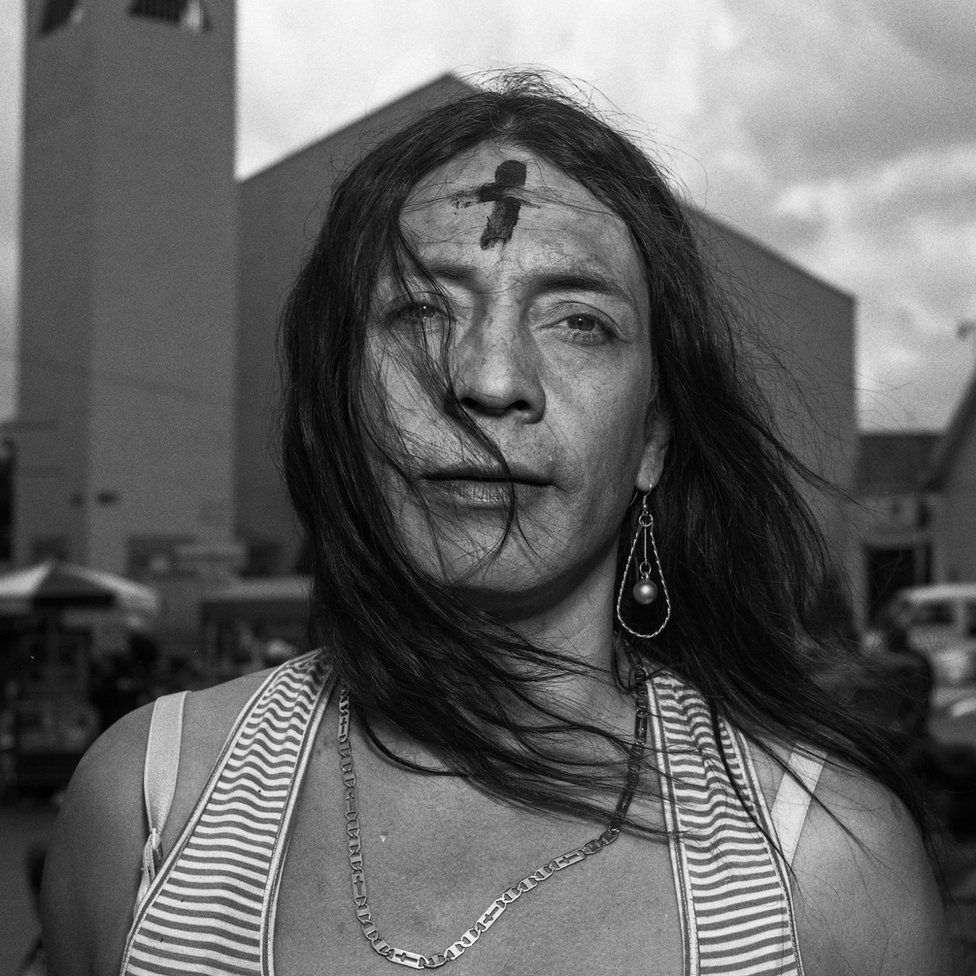
Paola during Ash Wednesday.image copyrightCarlos Saavedra
image captionPaola during Ash Wednesday. In her youth, she was a victim of sexual violence perpetrated by paramilitaries.

Carlos Saavedra

“This photo project concentrates on a community called ‘La Isla’, composed of mainly displaced Afro-Colombians from the Pacific coast of the country, one of the most affected sectors due to the internal violence from guerrillas, paramilitaries and the Colombian Army.

“We worked with the community members targeted by the social cleansing campaigns – some are reformed drug addicts, some live with NGOs and some are activists who advocate against these violent ‘cleansings’.

line
Camilo Gálvez, 24, is a sound technician, Puente Alto, Santiagoimage copyrightCamilo Gálvez
image captionCamilo Gálvez, 24, is a sound technician who lives in Puente Alto, Santiago
1px transparent line

Cristóbal Olivares

“Camilo received the impact of a pellet that lodged in his right eye on 15 November 2019, near the Catholic University of Santiago, Chile. His diagnosis was an ocular burst and fracture with total loss of the right eye.

“Four hundred and sixty people have had serious eye injuries, 34 of whom suffered total loss due to the indiscriminate use of pellets and tear gas bombs by the Carabineros, Chilean special forces.”

line
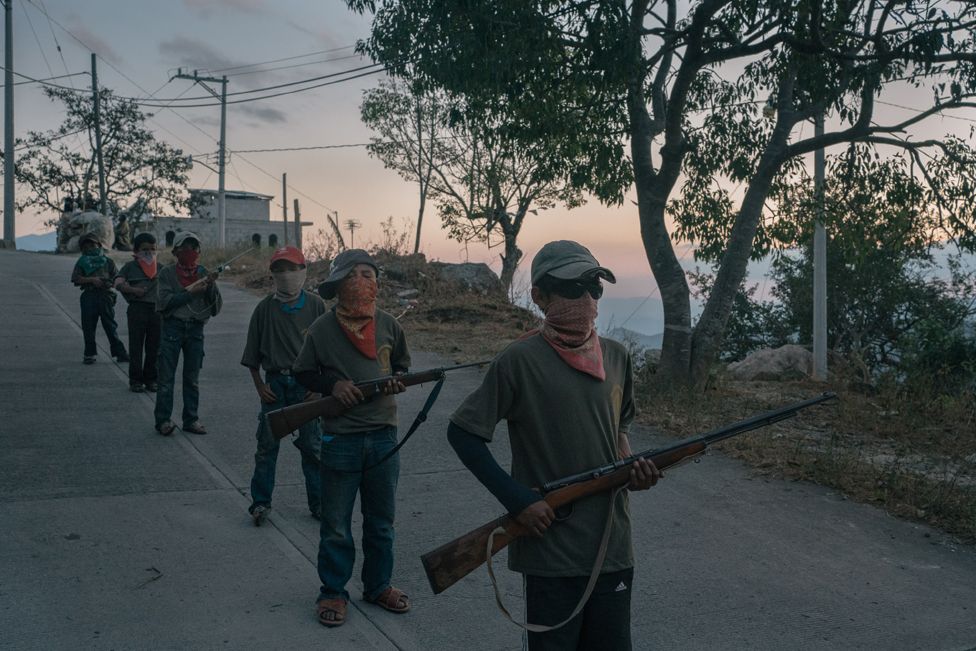
Alex (13), right, and other children stand during a Regional Co-ordinator of Community Authorities community police force gun training presentation in Ayahualtempa, Guerrero state, Mexico.image copyrightLuis Antonio Rojas
image captionAlex, 13, right, and other children stand during a Regional Co-ordinator of Community Authorities community police force gun training presentation in Ayahualtempa, Guerrero state, Mexico.
1px transparent line

Luis Antonio Rojas

“Documenting the way organised crime has ripped through Mexico was never something I intended to do.

“I grew up in a safe place in Mexico City, where violence never reached me directly, and I was unsure about how to cover such baffling and obscure events.

“But these realities cannot escape the daily news or documentary projects, and covering them is fundamental for many Mexican photographers.

“Alex had to stop attending high school in the town of Hueycantenango due to the presence of drug cartel Los Ardillos.”

line
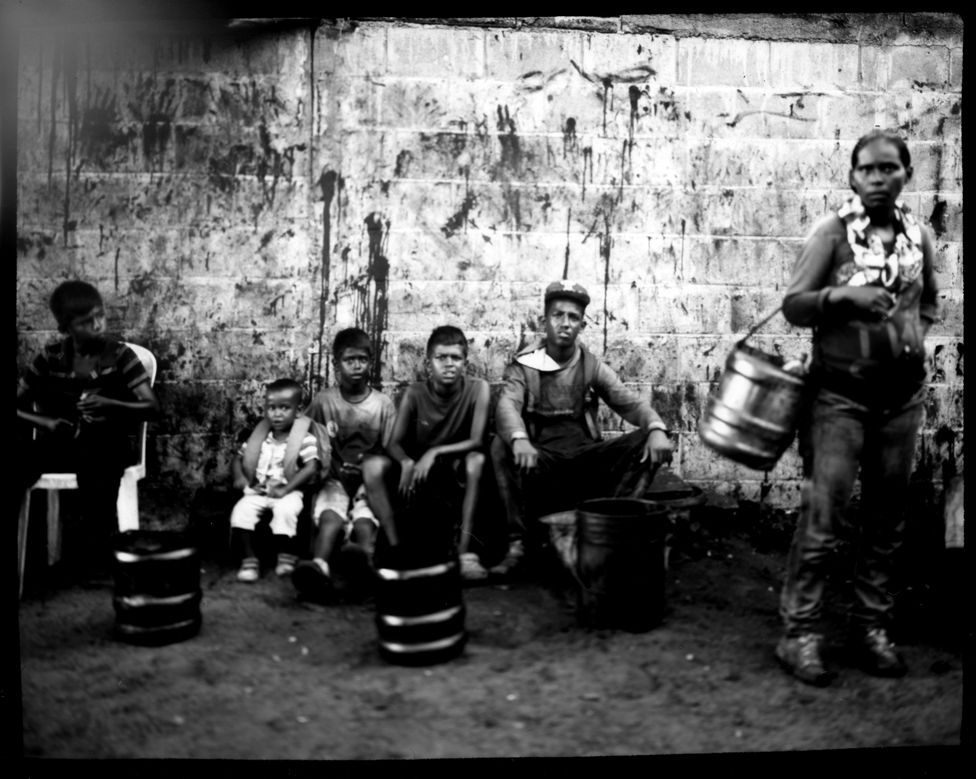
Villagers take a break from cleaning oil off freshly harvested crabs from Lake Maracaibo, in Punta Gorda, Cabimas, Venezuela.image copyrightRodrigo Abd
image captionVillagers take a break from cleaning oil off freshly harvested crabs from Lake Maracaibo, in Punta Gorda, Cabimas, Venezuela.
1px transparent line

Rodrigo Abd

“The wreckage of Venezuela’s oil industry, once the richest in the world, lies all around fishermen and their families who live in villages clustered on the edge of Lake Maracaibo.

“Their struggles on a briny bay fouled by petroleum leaks and derelict oil rigs are etched on to their faces and stained into their clothes.

“Seeing these people and this place on an earlier reporting trip, I knew I had to return with my wooden box film camera to make black-and-white portraits of the fishermen and the industrial decay they call home.

“The slower pace and mood of box photography would help capture the poignancy and pain of Cabimas, where fishermen live and work among the idle, grey machinery.”

line
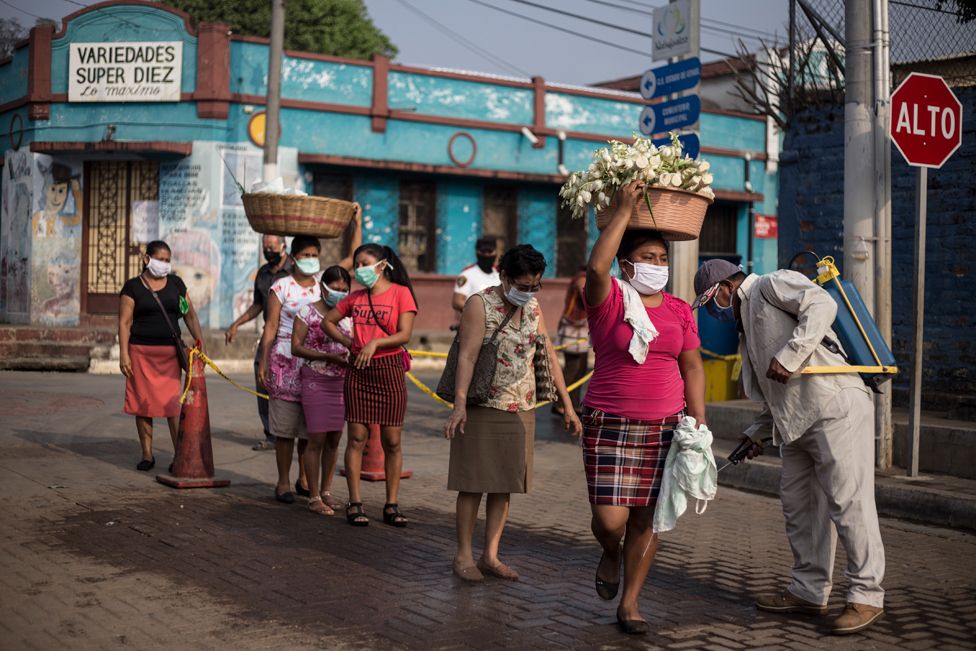
Informal vendors disinfect their bodies before entering the municipal market in Nahuizalco, Sonsonate, to sell their fruit and vegetables.image copyrightVíctor Peña
image captionInformal vendors disinfect their bodies before entering the municipal market in Nahuizalco, Sonsonate, to sell their fruit and vegetables.
1px transparent line

Víctor Peña

“The pandemic health crisis in El Salvador has become a political crisis.

“In the cities and in the small villages, the streets were silent and lonely during the quarantine, with the lockdown enforced by the military.

“Most of the country’s economic activity was paralysed for those three months. El Salvador’s economy will suffer the greatest decline in Central America.”

line
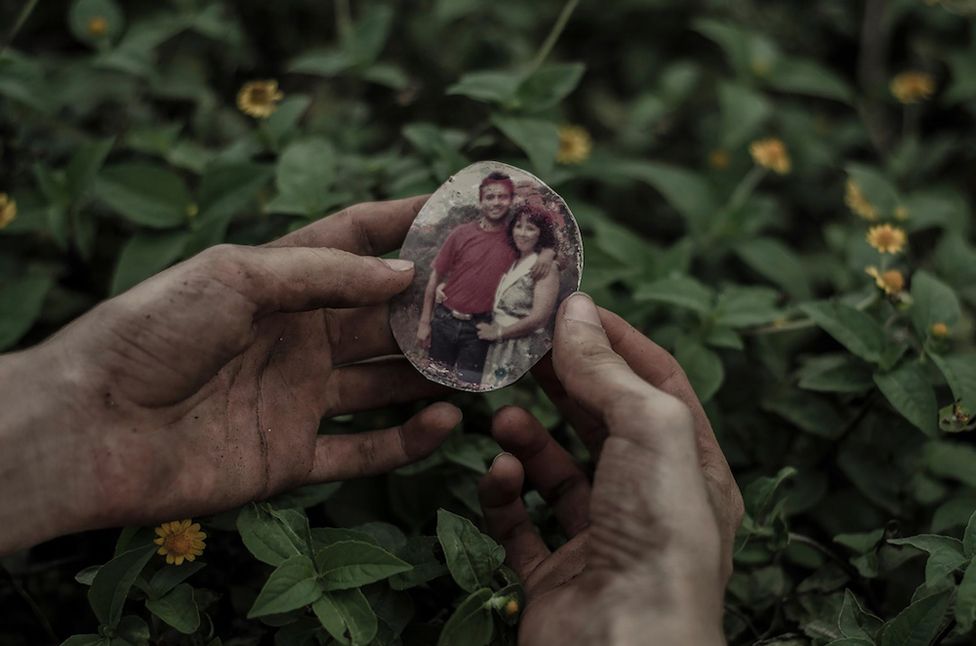
A hand holding a photograph of two people on a locketimage copyrightVictoria Razo
image captionSometimes I think that I don’t want my parents to go through the pain of searching and recognising my body. Veracruz, Mexico.
1px transparent line

Victoria Razo

“Resilience is a series of photographs taken over the years that I have lived and walked with a camera in my hand, portraying episodes from my personal life, and documenting the stories of women who have crossed my path.

“It is a series that helps me to know my own history of violence, questioning and reflecting while I relive the memory, and to fight for the construction of a more equitable society – one in which being a woman does not imply a risk to life itself.

“In this project, I have tried to make resilience visible. I photograph the pain and anger of mothers who scratch the earth to find their missing loved ones; through the women who endured domestic abuse and in the resistance of trans women who live in violence after understanding and assuming their gender identity.”

The Bronx Documentary Center’s fourth Annual Latin American Foto Festival is taking place in New York, until 1 August 2021.

Related Topics

The post Latin American Foto Festival: Strength and Resistance appeared first on The St Kitts Nevis Observer.

Covid-19: Second Doses Run Dry in Brazil’s Scramble to Vaccinate

By Ana Ionova
Rio de Janeiro


Vinicius Alexis da Cruz felt a wave of relief when his turn came to take the Covid-19 vaccine.

As the virus ravaged Brazil, the 32-year-old had spent more than a year risking his life, working as an Uber driver. Diabetes and high blood pressure made Mr Cruz especially vulnerable. But he kept driving passengers across São Paulo to make ends meet.

“I was really scared of getting sick,” said the father of one, who lost his job as a sports commentator before the pandemic hit. “But I was taking the risk because I had to keep working.”

Mr Cruz got his first dose of CoronaVac in late May. But when the time came to get his second jab, he was turned away. “Nobody had a vaccine for me,” he said. “I went to five clinics near my house. I couldn’t find it anywhere. The same thing happened the next day, and the day after that.”

He scoured the city for four days before he got his hands on a second shot. “Finally, I’m fully vaccinated. But it became really clear to me just how short we are on vaccines.”

Like Mr Cruz, millions are struggling to get their second shot of the Covid-19 vaccine, dealing a blow to Brazil’s already troubled vaccination campaign. Some 3.1 million Brazilians had not had their second jab as of 4 July despite being eligible for it, according to researchers tracking vaccinations.

Some have intentionally skipped their second dose, falling for misinformation campaigns that have sowed doubts about the vaccine or claimed a single shot offers enough protection. But the main hurdle has been a supply crunch of doses driven by a rushed vaccine rollout, said Dr Ligia Bahia, a public health specialist at the Federal University of Rio de Janeiro.

“There is this drive to speed up vaccination with the first dose,” said Dr Bahia, one of the researchers tracking immunisations. “And the second dose has ended up on the backburner.”

Coronavirus has claimed more than 530,000 lives in Brazil, a toll second only to the United States. Yet only about 40% of Brazilians have received at least one dose of the vaccine and just 15% are fully immunised.

The post Covid-19: Second Doses Run Dry in Brazil’s Scramble to Vaccinate appeared first on The St Kitts Nevis Observer.

19 July: England Covid Restrictions Ease as Variant Surges, World Stats

By Hazel Shearing
BBC News

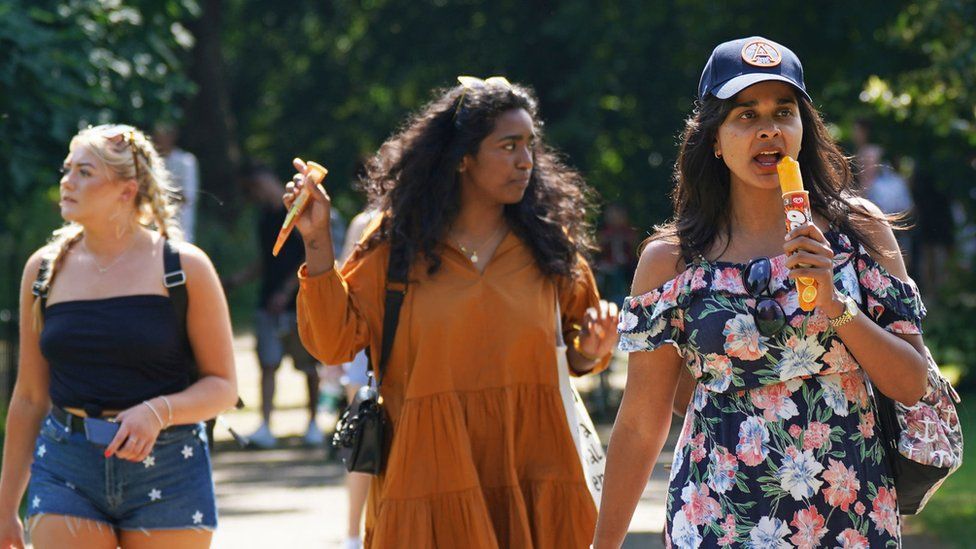
People in the sunshine in St James's Park, Londonimage copyrightPA Media

Prime Minister Boris Johnson has urged caution as most legal restrictions on social contact are lifted in England.

There are now no limits on how many people can meet or attend events, nightclubs reopened at midnight, and table service will not be necessary in pubs and restaurants.

Face coverings will be recommended in some spaces, but not required by law.

Vaccine Minister Nadhim Zahawi said he would make an announcement on vaccinating 12 to 17-year-olds later.

The PM, chancellor and the health secretary are self-isolating, and there are warnings cases will surge.

Some scientists are predicting that UK infections – currently at about 50,000 a day – could reach 200,000 a day later in the summer.

But with more than 68% of UK adults fully vaccinated modelling suggests hospital admissions, serious illness and deaths from Covid-19 will be at a lower level than in earlier peaks.

In a video posted on Twitter on Sunday afternoon, the prime minister said now was the “right moment” to move to the final stage of England’s roadmap out of lockdown.

“If we don’t do it now we’ve got to ask ourselves, when will we ever do it?” he asked, adding that the virus would have the “advantage of the cold weather” in autumn and winter.

“But we’ve got to do it cautiously. We’ve got to remember that this virus is sadly still out there. Cases are rising, we can see the extreme contagiousness of the Delta variant.”

Labour’s shadow health secretary Jonathan Ashworth said ending legal mask requirements and the recommendation to work from home was “reckless” and warned of a “day of chaos” on the transport network as people returned to offices after months away.

“The last thing we want on a day like this is chaos and for the public health measures to be undermined,” he told BBC Radio 4’s Today programme.

But Nadhim Zahawi defended the reopening, saying 90% of the most vulnerable had been vaccinated and it was right for people to take “personal and corporate responsibility” over measures such as wearing masks.

“We’re doing the right thing to get as close to normal as possible, as quickly as possible,” he told BBC Breakfast, saying that the end of the school term would reduce the spread of the virus.

He also said he had received the recommendation from the Joint Committee on Vaccination and Immunisation about vaccinating children aged 12 to 17 and would make a statement to Parliament on Monday afternoon.

The committee has recommended giving the vaccine to children with conditions that make them vulnerable to Covid, children who live with someone vulnerable and those who are close to turning 18.

As restrictions ease in England, businesses such as nightclubs – and large events – will be encouraged to use the NHS Covid Pass to check people are fully vaccinated, have natural immunity from infection or have a recent negative test.

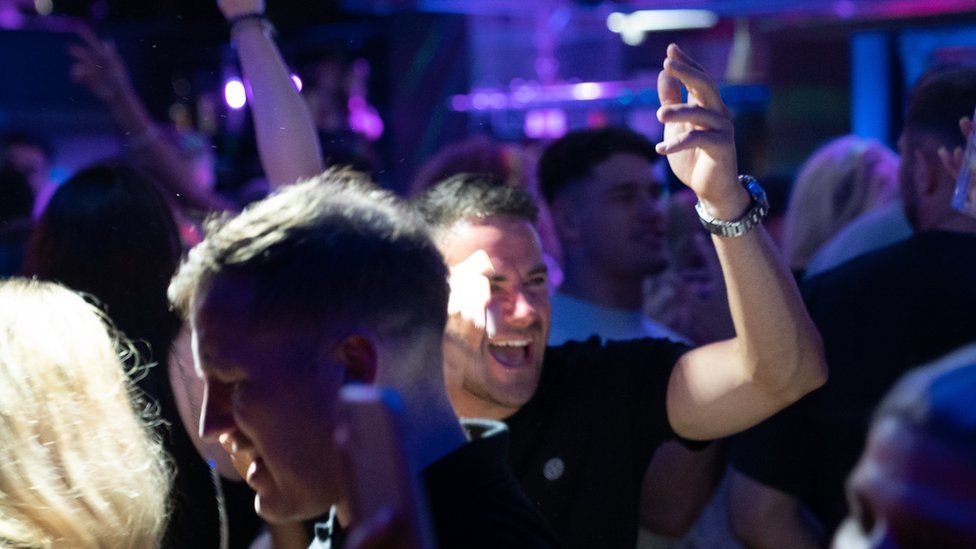
media caption‘This is what life’s about’ – clubbers in England enjoy their first night out in 16 months

At Fibre in Leeds, these checks were not being used. While some clubgoers said they were a little nervous, most were overjoyed to return to the dance floor.

“It’s been literally the best night of our lives. We’ve been waiting for this since we turned 18. This has been like life has come back to normal all of a sudden,” said Mollie, 20.

Mark, an estate agent, said he had previously had Covid and was now fully vaccinated. “I want my life back,” he said.

Terry George, the owner of Fibre, said many of his customers told him they had not been vaccinated or only had one dose so they would not get in if proof of full vaccination was required. But he also said the government had not provided the tools to scan for vaccination status.

Contact tracing and self-isolation requirements will remain in place as other restrictions end.

UK-wide guidance recommending against travel to amber list countries is also being removed. Adults who have been fully vaccinated in the UK will not have to self-isolate for 10 days after visiting these countries – with the exception of those returning from France to England, Scotland or Wales, because of concerns over the spread of the Beta variant of the virus.

line
Clubbers at Fibre in Leeds

‘They just wanted to dance’

By Hannah Morrison, BBC Newsbeat at Fibre nightclub in Leeds

The countdown began, midnight struck, confetti cannons went off and the queue erupted into cheers and screams of joy.

Then the doors opened and hundreds of people poured into Fibre – a nightclub in the centre of Leeds. No proof of a negative test required, no Covid passports needed here, just the option of hand sanitiser on the door.

It was straight onto the dance floor for most people; arms in the air singing along to the DJ’s carefully selected first track – Ultra Nate’s Free.

No-one was wearing masks and it felt like everything was normal again. No-one wanted to talk about rising cases of coronavirus or the risks – they just wanted to dance. And for the first time in 16 months they could.

line

As the legal requirement for masks ended, signs at Manchester Piccadilly station urged travellers to continue wearing them, but several people declined.

Mark Dawson, on his way to Scunthorpe for work, said: “I’ll do what the government tells me to do but if they say I don’t have to, I won’t.”

Another man said he was confused about the rules. “I just wish there was one clear message to either do it or don’t do it,” he said.

Scotland is easing restrictions so that pubs and restaurants can open until midnight – but limits on outdoor meetings will remain, the return of workers to offices will be delayed and face coverings will still be mandatory.

Restrictions are set to be relaxed in Wales on 7 August and in Northern Ireland on 26 July.

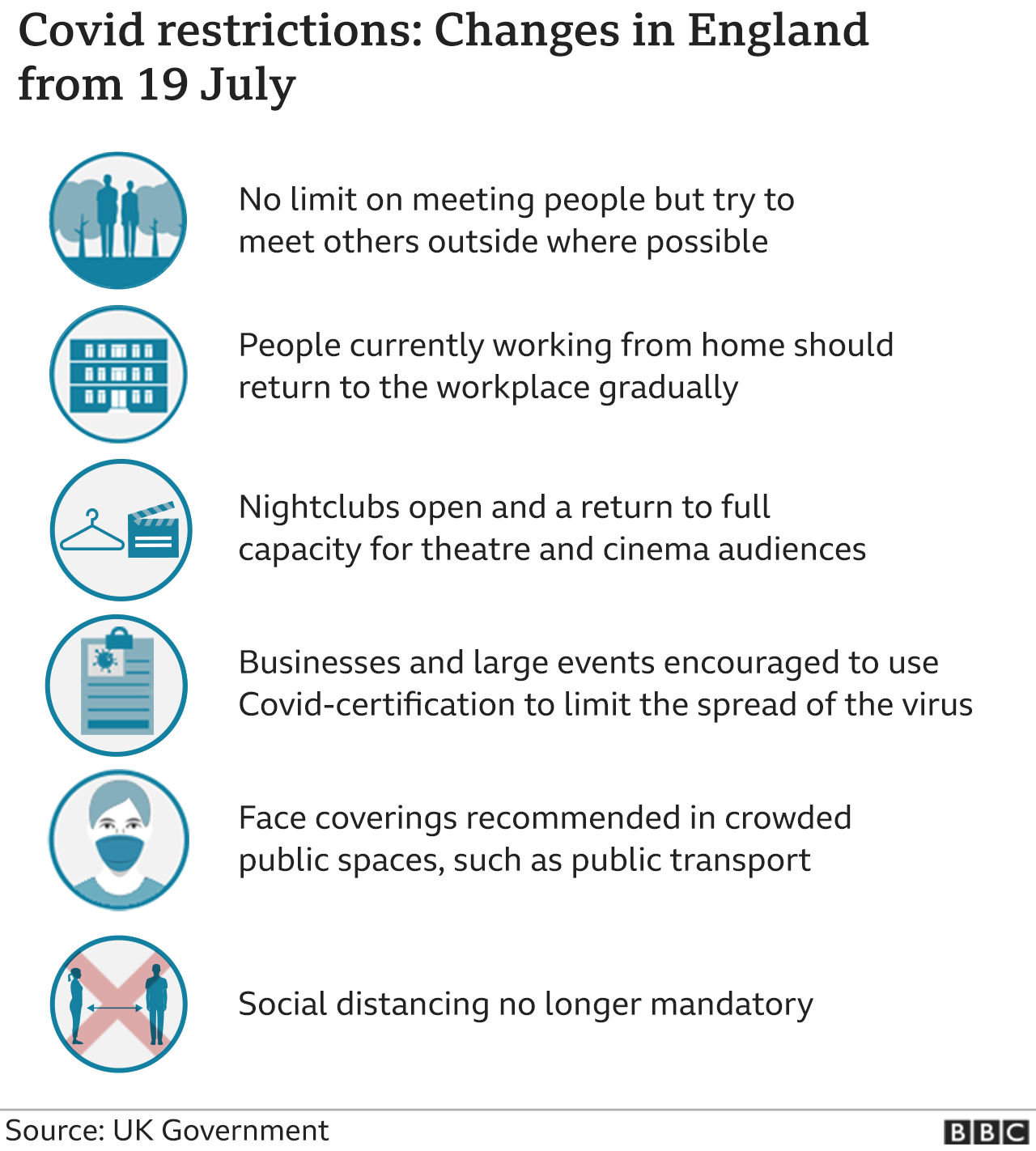
Graphic showing changes from 19 July

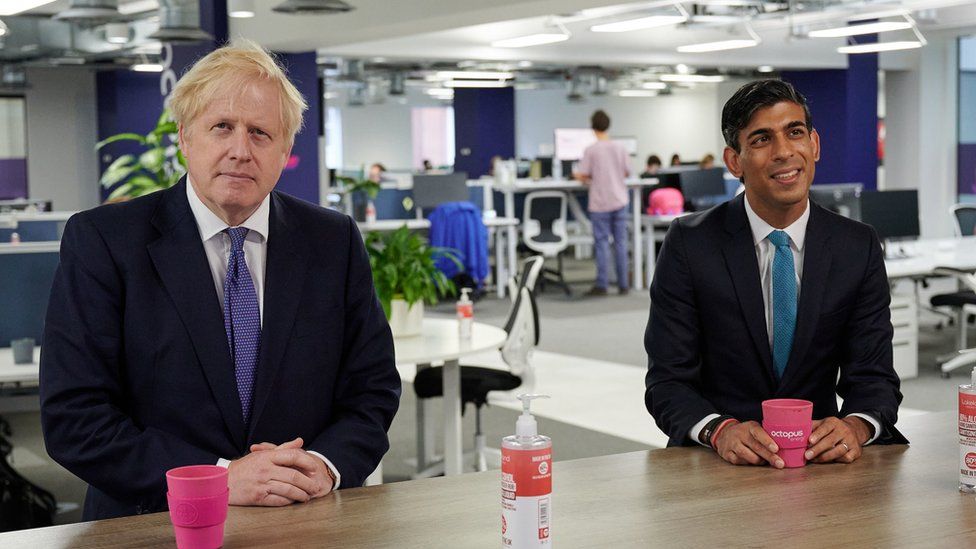
Mr Johnson and Chancellor Rishi Sunak are self-isolating after contact with the health secretary, who announced on Saturday that he had tested positive for coronavirus.

No 10 initially said they would not have to isolate, as they were taking part in a pilot scheme that involves daily testing instead – sparking a backlash from opposition parties and businesses affected by staff quarantining.

Boris Johnson and Rishi Sunakimage copyrightPA Media
image captionRishi Sunak and Boris Johnson will both be self-isolating on the day restrictions are being eased

The UK recorded a further 48,161 cases and 25 deaths within 28 days of a positive coronavirus test on Sunday. On both Friday and Saturday daily cases exceeded 50,000 – the first time this level has been reached since mid-January.

Almost 88% of adults in the UK have had a first dose of a Covid vaccine, and 68.3% are double jabbed, according to the government’s coronavirus dashboard.

A decision on routinely offering Covid jabs to under-18s is expected within days.

However, the scientist whose modelling led to the first nationwide restrictions has expressed concern that the UK could see as many as 200,000 cases and 2,000 hospital admissions a day.

=====================================================

WORLD STATS

Coronavirus Cases:

191,265,853

Deaths:

4,106,672

Recovered:

174,211,540
Highlighted in green
= all cases have recovered from the infection
Highlighted in grey
= all cases have had an outcome (there are no active cases)

[back to top ↑]

Latest News

July 19 (GMT)

Updates

  • 3,103 new cases and 8 new deaths in Japan [source]
  • 24,633 new cases and 719 new deaths in Russia [source]
  • 440 new cases and 15 new deaths in Bolivia [sou


The post 19 July: England Covid Restrictions Ease as Variant Surges, World Stats appeared first on The St Kitts Nevis Observer.